Udupi Krishna Temple and Murudeshwar Guide: Coastal Circuit
Plan your coastal Karnataka pilgrimage with this Udupi Krishna temple and Murudeshwar guide covering Kanakana Kindi, the 123-ft Shiva statue, and NH66 transit.
Coastal Karnataka features one of India’s most spiritually enriching corridors along the Arabian Sea. The journey between the ancient monastery town of Udupi and the seaside peninsula of Murudeshwar connects two distinct architectural masterpieces and devotional traditions.
This complete Udupi Krishna temple and Murudeshwar guide outlines everything required to navigate this sacred 102-kilometer coastal stretch. Devotees experience centuries-old Dvaita Vedanta rituals in Udupi, drive along the scenic coastal highway, and stand beneath the world’s second-tallest Shiva statue overlooking ocean waves.
From early morning window darshans to evening ocean aartis, this circuit balances temple worship with coastal landscapes. Following a structured itinerary ensures smooth transit, authentic temple dining, and time to admire dramatic coastal monuments.
Circuit & Darshan Essentials
- Total Corridor Distance: 102 km along National Highway 66 (approximate driving time of 2 hours and 15 minutes).
- Udupi Darshan Method: Viewing the deity solely through the silver nine-hole window known as Kanakana Kindi.
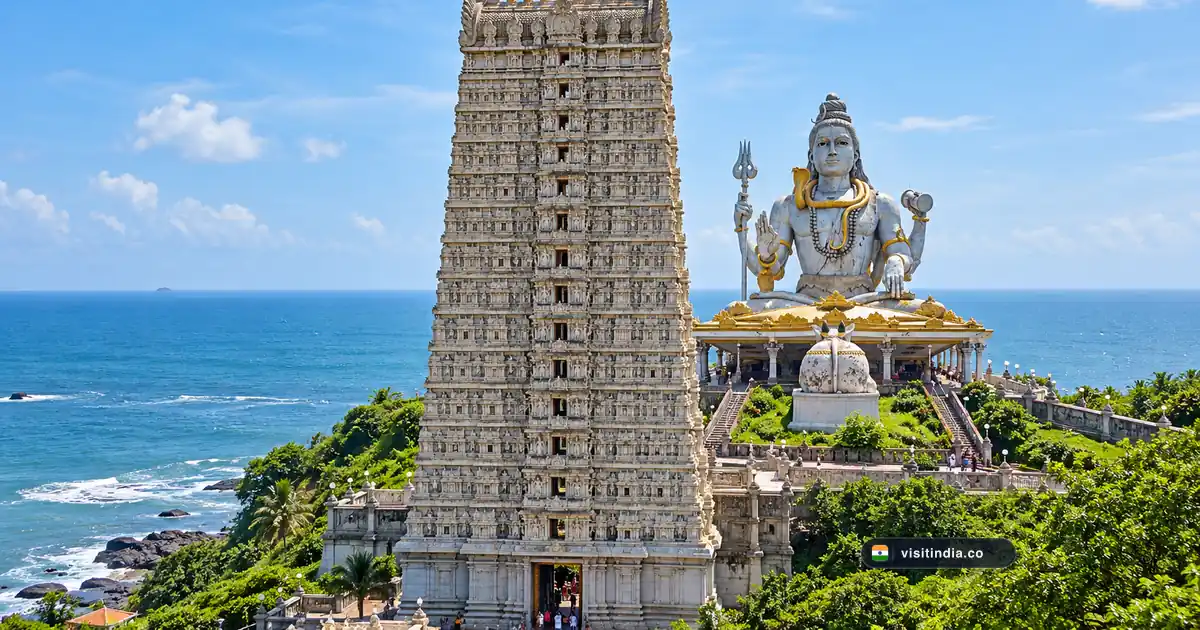
- Murudeshwar Landmark: 123-foot colossal Lord Shiva statue on Kanduka Hill and a 249-foot, 20-storey entrance Raja Gopura.
- Dress Code Requirements: Men must remove shirts and vests before entering inner sanctums; modest traditional Indian clothing required for all visitors.
- Dining Highlights: Free community noon meals (Anna Prasada) served daily to thousands inside Udupi Matha’s vast dining halls.
Udupi Sri Krishna Matha: Kanakana Kindi and Sanctum Darshan
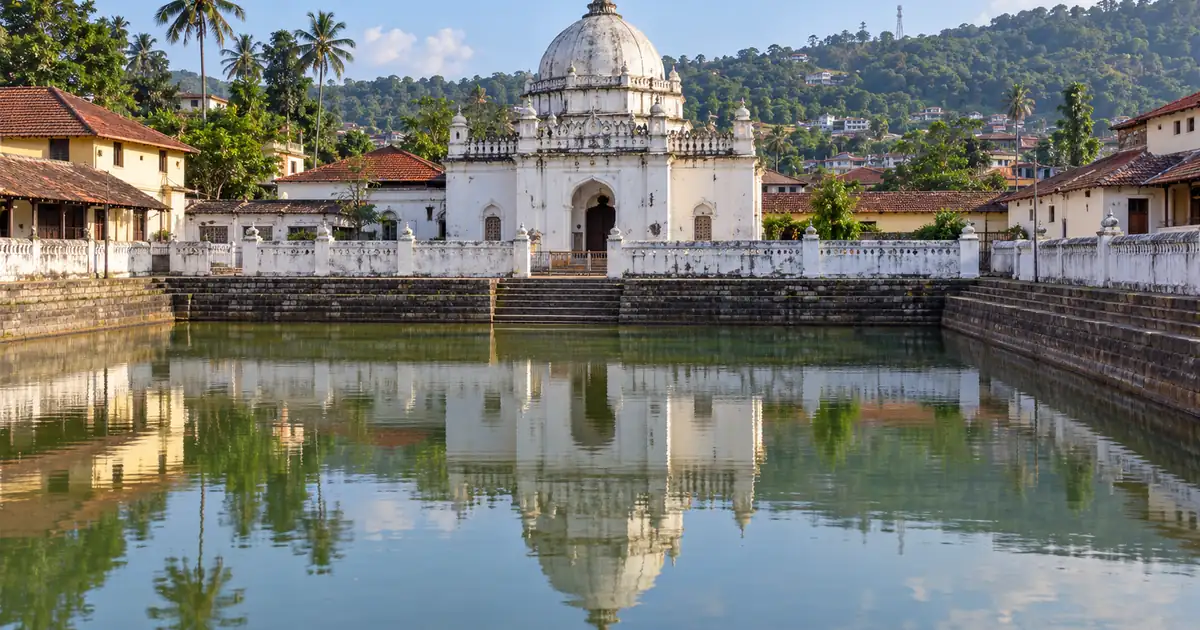
Established during the thirteenth century by the Dvaita philosopher saint Jagadguru Sri Madhvacharya, the Sri Krishna Matha in Udupi is one of south India’s revered pilgrimage centers. Unlike conventional Hindu shrines where devotees face the sanctum directly through open doors, Udupi Krishna is viewed through an intricately carved silver grill.
The sanctum houses a small, jewel-bedecked idol of child Krishna (Bala Krishna) holding a churning rod in his right hand and a rope in his left. Official town listings and district heritage details are provided by the District Administration Udupi Directory.
Devotees planning spiritual travels across southern Karnataka can also explore the ancient serpent shrine detailed in our guide to Kukke Subramanya Temple.
The Miracle of the Silver Nine-Hole Window
The signature tradition of viewing Lord Krishna through the Kanakana Kindi originates from a sixteenth-century legend involving the saint-poet Kanakadasa. Belonging to a marginalized shepherd community, Kanakadasa was prohibited from entering the temple inner courtyard by orthodox priests. Undeterred, he stood behind the western wall singing verses of devotion.
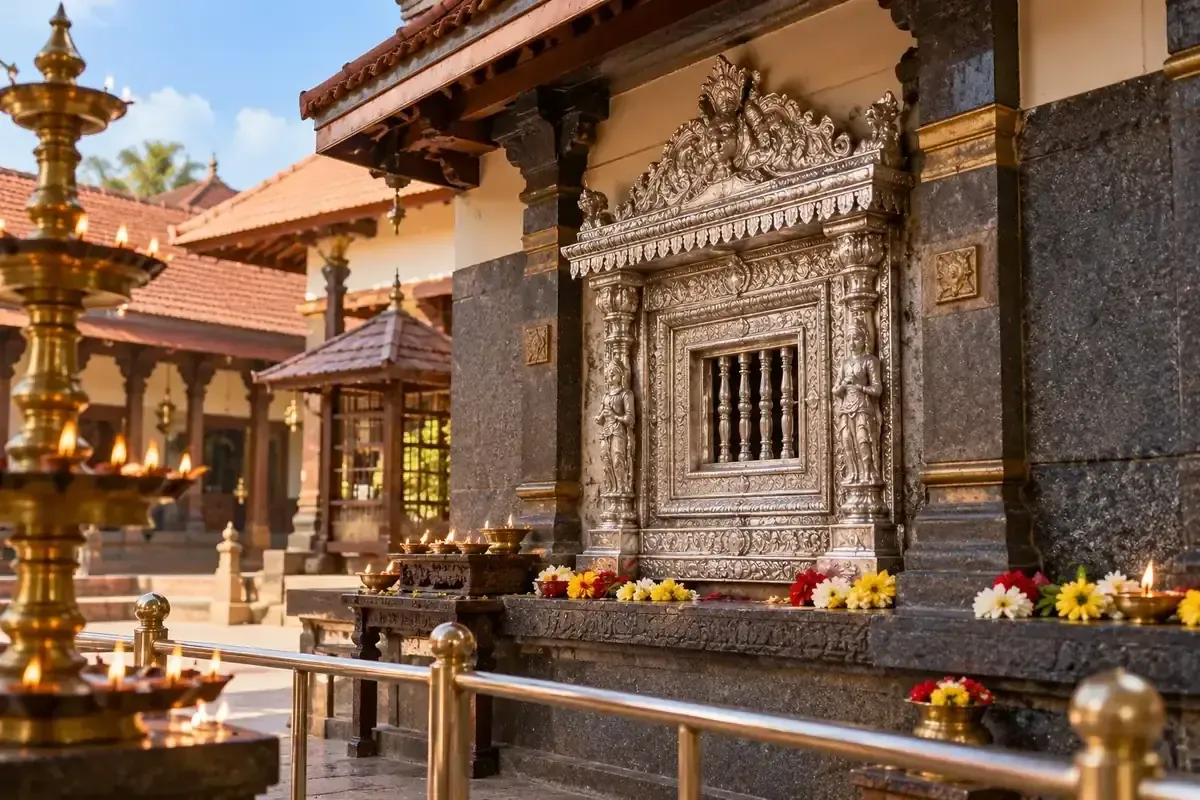
Pleased by his steadfast faith, the idol of Krishna miraculously turned around 180 degrees from east to west. A crack opened in the stone wall, allowing Kanakadasa to behold the Lord.
To commemorate this miracle, Sri Vadiraja Tirtha installed a nine-hole window (Navagriha Kindi) overlaid with silver bas-reliefs depicting the ten avatars of Lord Vishnu. Today, every pilgrim lines up in the covered corridor to view the glowing black stone idol through these sacred nine apertures.
Ashta Mathas and Daily Anna Prasada
To maintain uninterrupted daily worship, Sri Madhvacharya appointed eight of his monastic disciples to head eight individual monasteries, known collectively as the Ashta Mathas. These eight mathas (Paryaya, Palimaru, Admaru, Krishnapura, Puttige, Shirur, Sode, and Kaniyooru) manage the Krishna temple in rotation.
Every two years, during the spectacular Paryaya festival in mid-January, the administrative authority passes from one monastery to another in a ceremony celebrated since 1522.
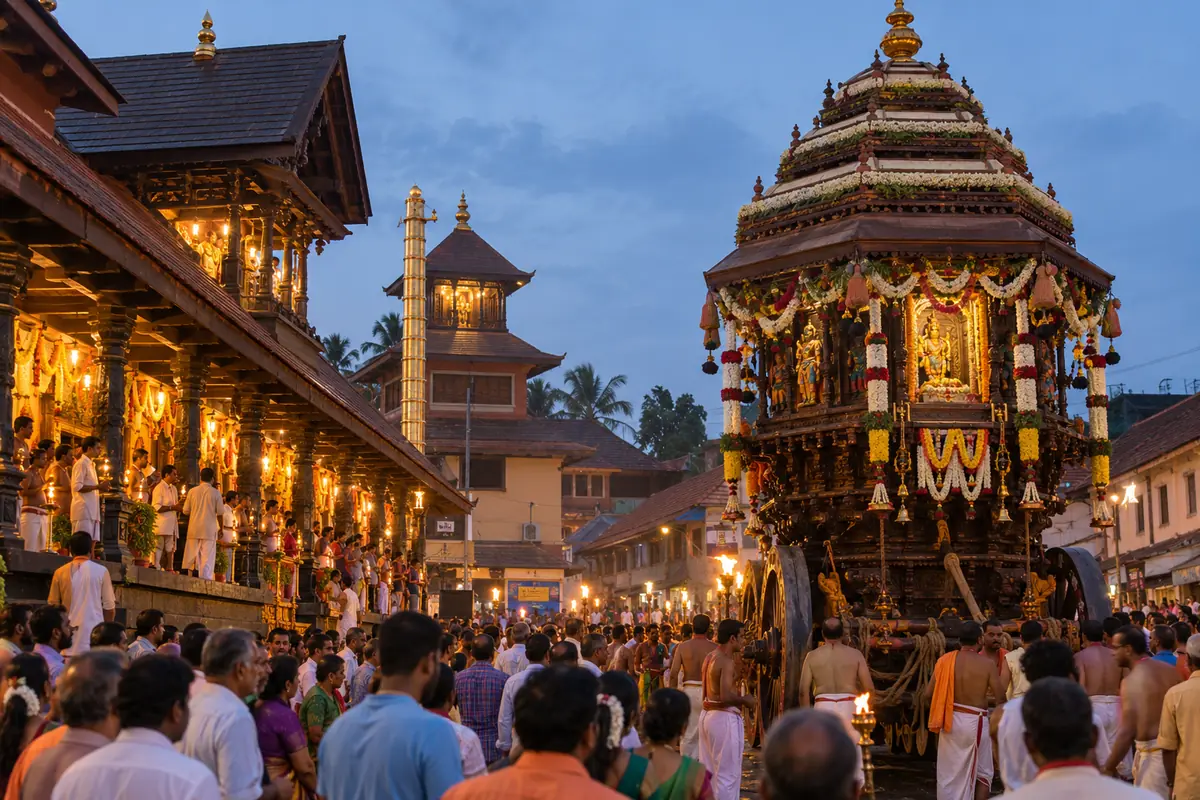
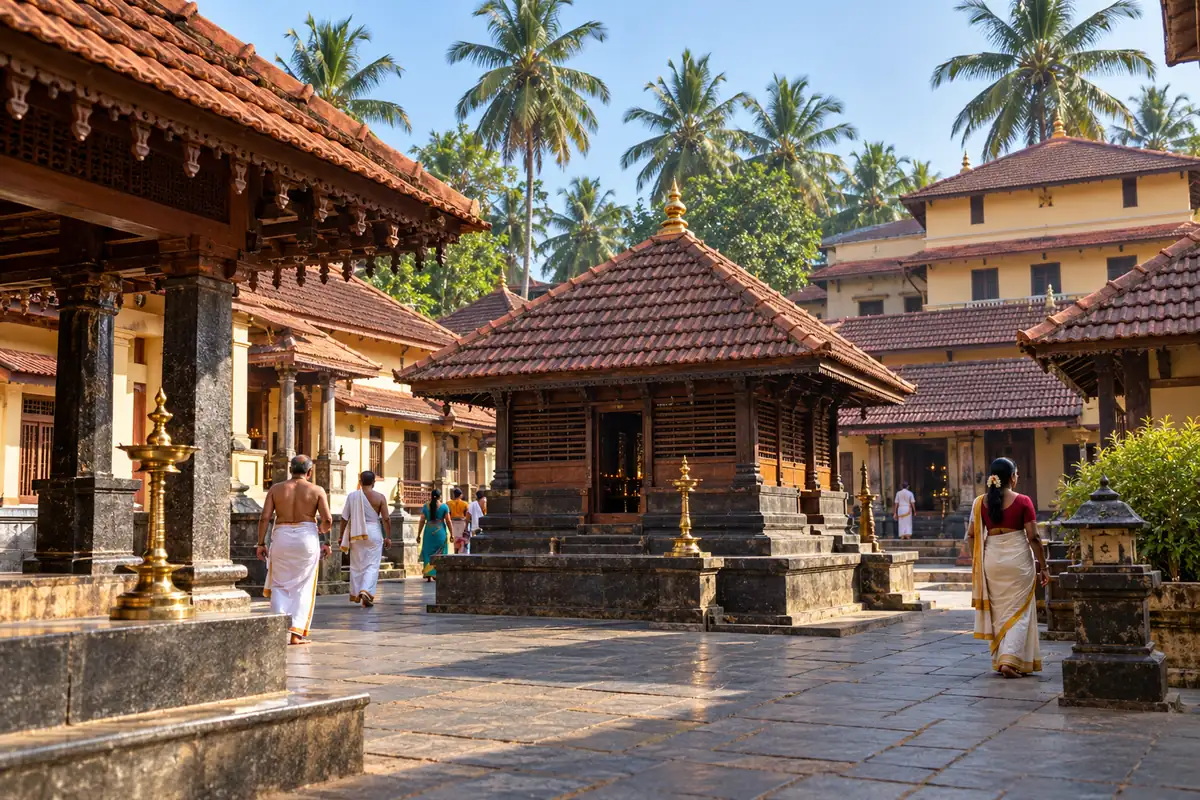
A central tenet of Udupi Matha is Annadana, the sacred offering of food. Every afternoon between 11:30 AM and 2:00 PM, and again during dinner hours, the matha serves free multi-course vegetarian meals to more than ten thousand visitors. Seated on traditional floor mats inside vast stone halls, guests receive warm rice, fragrant Udupi sambar, rasam, spiced vegetables, payasam, and buttermilk prepared without onions or garlic.
Murudeshwar Coastal Shrine: 123-Foot Shiva and Raja Gopura
Continuing 102 km northward along the Konkan shoreline brings travelers to the coastal town of Murudeshwar in Uttara Kannada district. The temple complex occupies Kanduka Hill, a rocky promontory surrounded on three sides by the waters of the Arabian Sea.
The temple centers around the Atma Linga of Lord Shiva, linking the coastal shrine to the mythological narrative of the demon king Ravana carrying the sacred linga from Mount Kailash to Lanka. Additional administrative context and regional tourist spots are published by the Uttara Kannada District Administration.
Kanduka Hill and Giant Statue Architecture
Rising from the crest of Kanduka Hill, the monumental statue of Lord Shiva stands 123 feet (37 meters) tall, making it the second-highest statue of Shiva in the world. Sculpted by master artisan Kashinath and financed by industrialist R. N. Shetty, the concrete colossus depicts Lord Shiva seated in meditative padmasana posture with four arms.
The statue faces eastward, catching the morning sun, while the silver-grey coating reflects changing light conditions throughout the afternoon. Beneath the colossal statue lies a subterranean museum cavern featuring twenty life-sized dioramas that recount the epic struggle of Ravana, Ganesha, and the emergence of the Murudeshwar Linga.
The coastal breeze and rhythmic crashing of ocean waves at the base of Kanduka Hill create a tranquil atmosphere for quiet contemplation.
18th-Floor Gopura Lift and Sea Panorama
The monumental entrance gateway to Murudeshwar Temple is the Raja Gopura, rising 249 feet across 20 distinct storeys. Built in authentic South Indian Dravidian style with hundreds of sculpted celestial figures, this gopura ranks among the tallest entrance towers in Asia.
A high-speed passenger elevator operates within the structure, transporting visitors to the 18th-floor observation gallery for a nominal ticket fee of ₹20 to ₹50 per person.
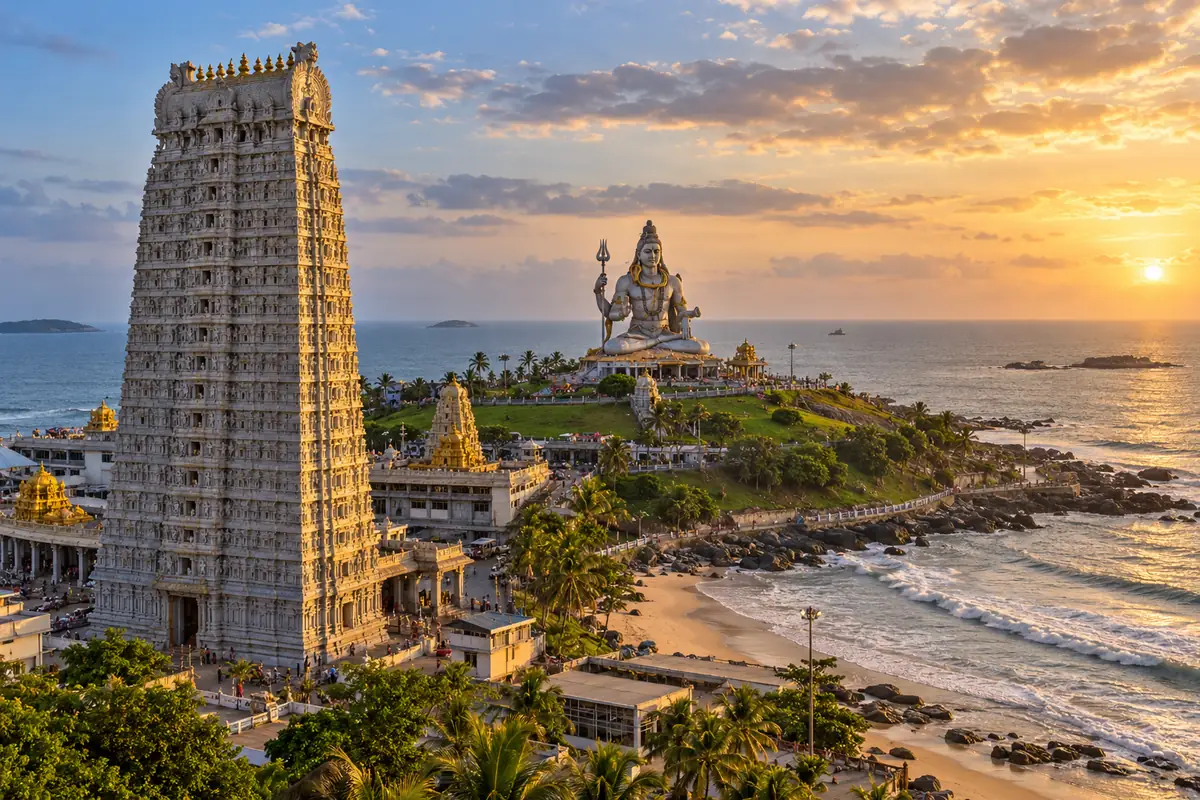
From the observation windows on the 18th floor, travelers enjoy sweeping 360-degree views across the entire Karnataka coastline. Looking west, the Arabian Sea stretches to the horizon; to the north, fishing boats dot the waters; and directly below, the colossal Shiva statue and manicured temple courtyards present a spectacular aerial perspective.
Complete Coastal Karnataka Driving Itinerary: NH66 Corridor
Touring this coastal corridor is most rewarding as a dedicated two-day road journey along National Highway 66. The highway is a well-paved four-lane expressway offering smooth transit between pilgrimage stops and coastal viewpoints, with many travelers extending inland across the Western Ghats to Dharmasthala temple.
Travelers can easily rent self-drive vehicles or hire private taxis from Mangaluru to execute this classic circuit comfortably.
| Day & Time | Location & Landmark | Key Activity & Travel Logistics |
|---|---|---|
| Day 1: Morning | Udupi Sri Krishna Matha | Kanakana Kindi darshan, Ashta Matha courtyards, Car Street stroll |
| Day 1: Midday | Udupi Anna Prasada Hall | Traditional multi-course satvik lunch served on banana leaves |
| Day 1: Afternoon | Malpe Beach & St. Mary’s | Hexagonal basaltic rock formations via ferry boat (seasonal) |
| Day 2: Morning | NH66 Drive to Maravanthe | Scenic coastal drive where river and ocean run parallel |
| Day 2: Midday | Anegudde Vinayaka Shrine | Brief prayer stop at Kumbhashi hill temple |
| Day 2: Afternoon | Murudeshwar Raja Gopura | 18th-floor lift panorama and subterranean museum exploration |
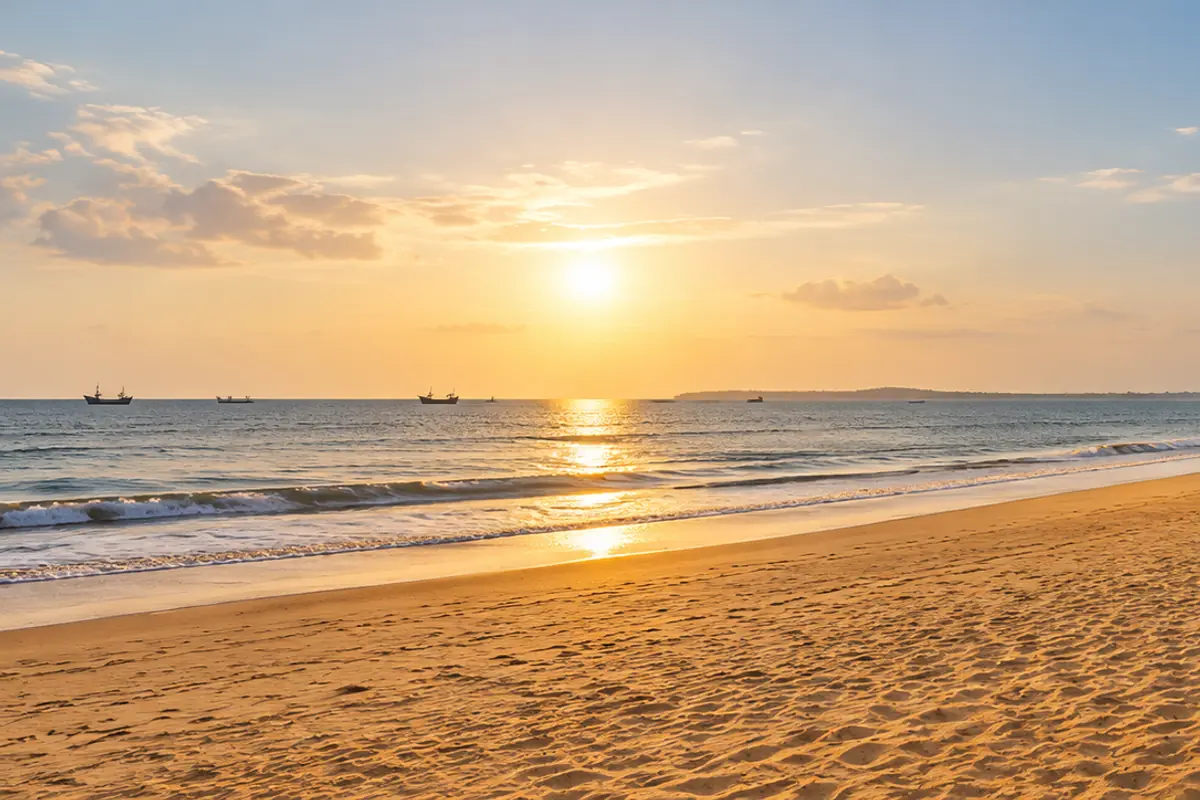
| Day 2: Evening | Murudeshwar Main Sanctum | Ocean sunset, sanctum Maha Mangalarathi, and shoreline walk |
Day 1: Mangaluru Arrival, Udupi Darshan, and Malpe
Begin your journey from Mangaluru, driving 60 km north along NH66 to reach Udupi in approximately 75 minutes. Check into your hotel near Car Street (Ratha Beedi) to stay within easy walking distance of the shrines.
Join the morning queue line outside the Krishna Matha by 8:00 AM to complete your Kanakana Kindi darshan before the midday crowds arrive. Spend time examining the wooden temple chariots lined along the outer street, and visit the adjacent Mukambika and Chandramouleshwara shrines.
After enjoying the communal Anna Prasada feast at noon, drive 6 km west to Malpe Beach. If sea conditions permit, board a passenger ferry to St. Mary’s Island, famous for its unique column-shaped volcanic basalt formations dating back tens of millions of years.
Day 2: Maravanthe Beach Drive and Murudeshwar
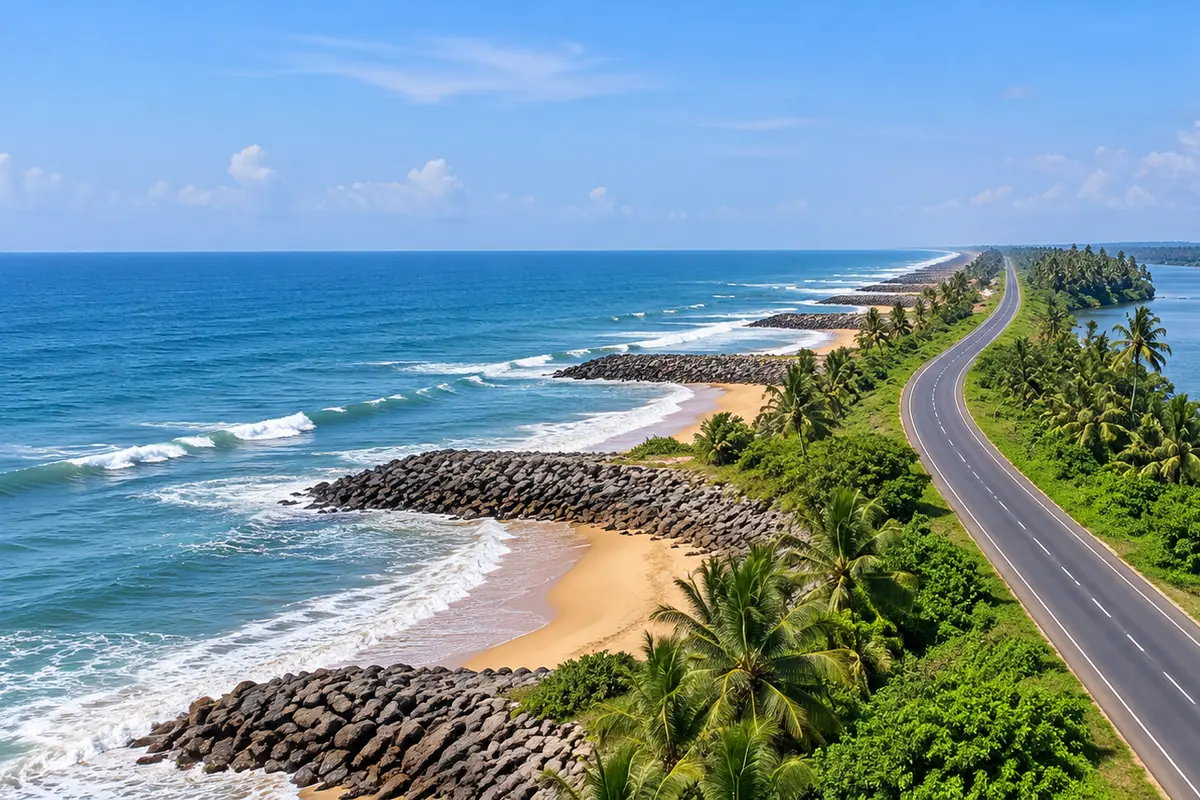
Depart Udupi early on the second morning, heading north along NH66 toward Murudeshwar. Approximately 50 km north of Udupi, you reach Maravanthe Beach, one of India’s most extraordinary scenic highway drives.
For a stretch of nearly two kilometers, the four-lane highway runs along a narrow coastal spit with the deep blue Arabian Sea on your left and the tranquil freshwater Souparnika River flowing parallel on your right. Stop at designated vehicle laybys to take photographs before continuing another 52 km north to Murudeshwar.
Arrive in Murudeshwar by noon, take the lift to the 18th floor of the Raja Gopura, and spend the late afternoon visiting the underground museum beneath the Shiva statue. Conclude the day by attending the evening Maha Mangalarathi inside the main sanctum at 7:30 PM.
Sacred Extension: Netrani Island and Coastal Excursions
Travelers with an extra day in the region can expand their coastal pilgrimage to include both natural marine reserves and famous temple towns located just beyond Murudeshwar.
The central Konkan coast provides straightforward connections northward into Uttara Kannada’s historic temple ports.
Netrani Island Marine Excursion
Located 19 km off the coast of Murudeshwar, Netrani Island (also known as Pigeon Island) is a heart-shaped coral island rising abruptly from the Arabian Sea. The crystal-clear waters surrounding the uninhabited island host Karnataka’s most prominent scuba diving and snorkeling reef.
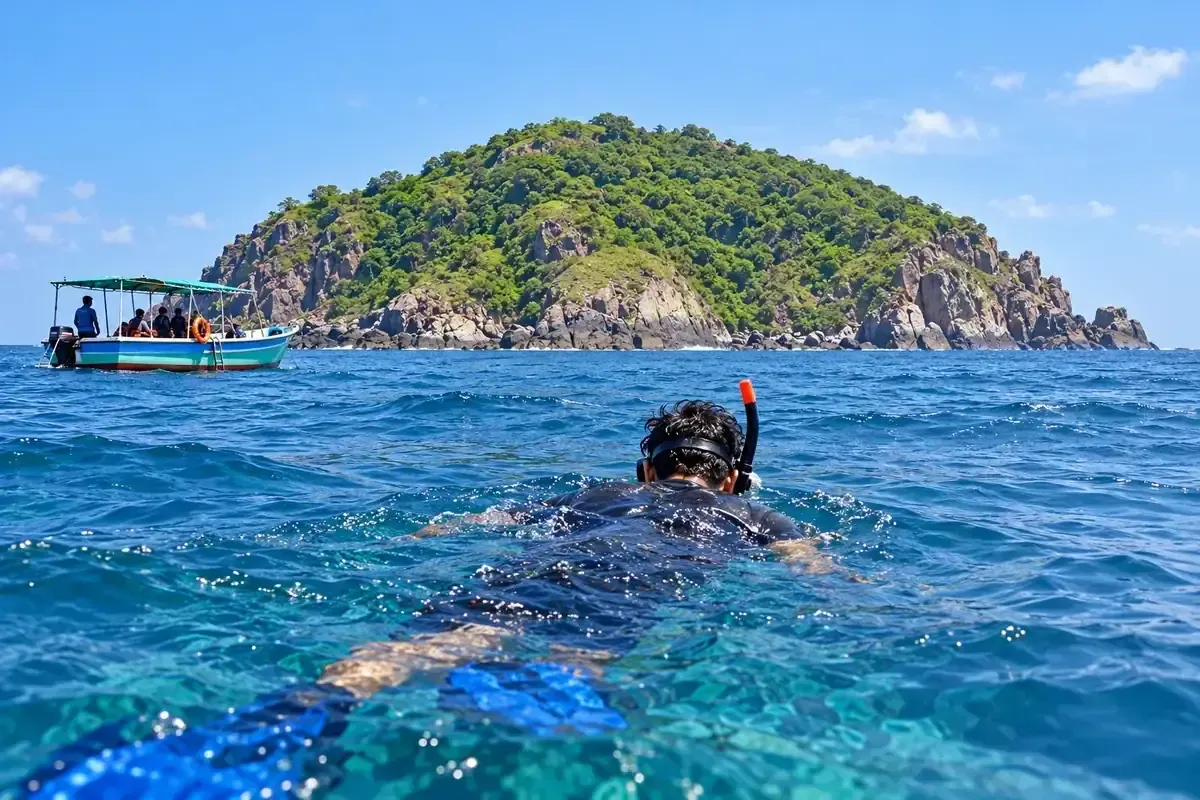
Certified diving operators in Murudeshwar organize daily speedboats to Netrani between October and May. Underwater visibility ranges from 15 to 30 meters, allowing divers to encounter butterflyfish, moray eels, barracudas, manta rays, and green sea turtles among thriving coral gardens.
Extending North to Gokarna Mahabaleshwar
From Murudeshwar, travelers can continue northward along NH66 for just 55 km (about one hour by road) to reach the sacred beach town of Gokarna. Gokarna is home to the venerable Mahabaleshwar Temple, which houses the primary Atma Linga that Ravana was tricked into placing on the ground. For devotees combining nearby shrines on the same trip, Guruvayur Temple Timings and Dress Code darshan and timings outlines practical temple hours and local access.
Pairing Murudeshwar with Gokarna completes the mythological narrative of the Atma Linga legend. To plan this onward coastal journey, read our detailed guide on key landmarks and neighborhoods in Gokarna.
Dress Code, Photography, and Practical Pilgrim Rules
Both Udupi and Murudeshwar welcome millions of devotees annually, yet each maintains strict codes of conduct designed to preserve religious sanctity. Understanding these local requirements prevents delays or embarrassment at temple checkpoints.
Careful attention to clothing and queue protocol ensures an enjoyable pilgrimage experience.
Temple Dress Code Protocols
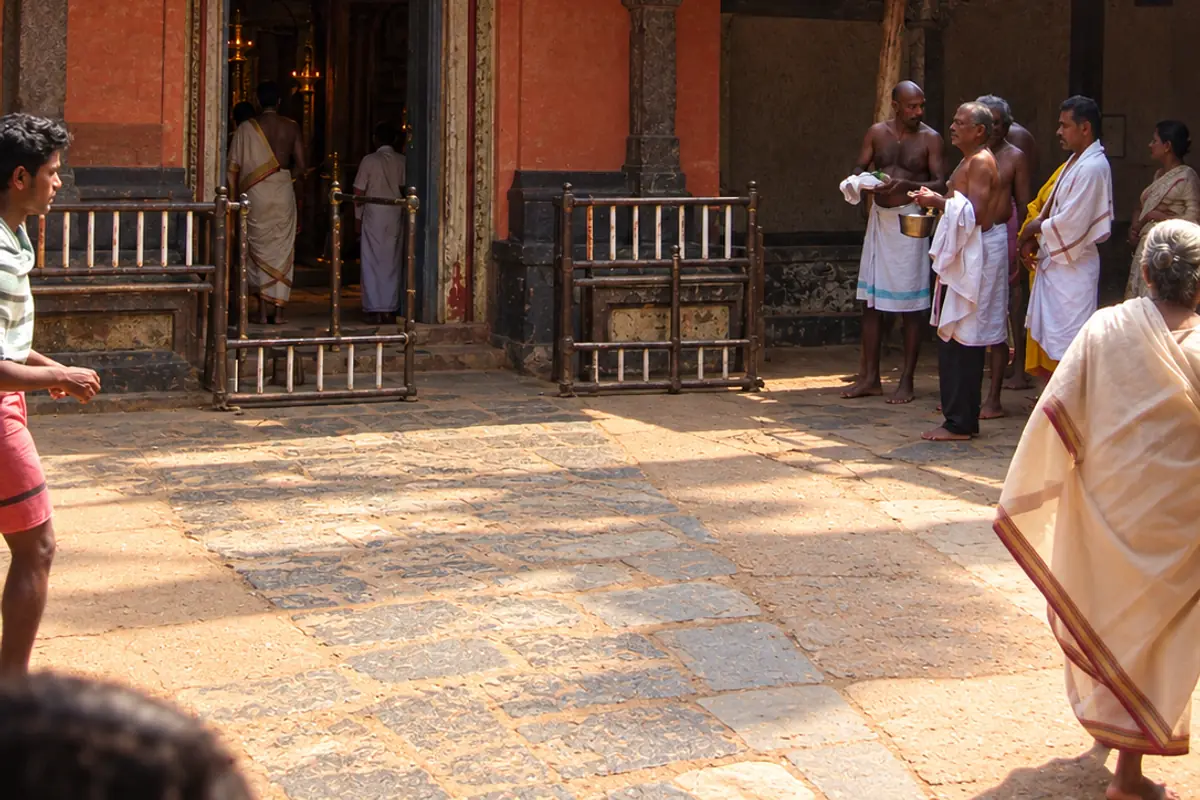
At Udupi Sri Krishna Matha, male devotees must remove their shirts, vests, and banyans before stepping into the inner sanctum corridor. Men must wear dhotis or modest cotton trousers. Women should wear traditional Indian clothing such as sarees, salwar kameez with dupattas, or long ethnic skirts.
At Murudeshwar Temple, modest clothing is mandatory throughout the grounds. While men are allowed to wear shirts inside the outer courtyard and gopura elevator, they must remove upper garments when entering the low-ceilinged sanctum around the sacred linga.
Shorts, miniskirts, sleeveless tops, and beachwear are strictly prohibited inside both temple premises.
Photography and Footwear Regulations
Footwear must be deposited at designated free and paid shoe stands outside temple gates before entering the stone courtyards. Mobile phones and cameras are prohibited inside the inner sanctum of Udupi Matha and the sanctum sanctorum of Murudeshwar.
However, outdoor photography is permitted throughout Murudeshwar’s hill complex, the Raja Gopura lift lobby, and Udupi’s Car Street.
Devotees planning broader journeys across the state can consult our comprehensive travel overview of Karnataka.
Transportation and Accommodation Along the Coastal Highway
The coastal corridor between Udupi and Murudeshwar is supported by reliable rail and highway infrastructure, making travel comfortable for independent visitors and family groups alike.
Choosing the right transit options and lodging ensures a smooth, stress-free road trip.
Reaching the Circuit by Rail and Road
The Konkan Railway line runs directly parallel to the coastline, serving both destinations with fast express trains. Udupi Railway Station (code: UD) sits 4 km from the town center, receiving daily services from Mumbai, Goa, Bengaluru, and Kerala. Murdeshwar Railway Station (code: MRDW) is located just 2 km from the beachfront temple.
Multiple daily express trains, including the Matsyagandha Express and Netravati Express, connect Udupi to Murdeshwar in approximately 90 minutes for a nominal second-class fare of ₹45 to ₹120.
For road travelers, regular KSRTC non-stop Rajahamsa and express buses ply National Highway 66 every twenty minutes, linking Udupi, Kundapura, Bhatkal, and Murudeshwar.
Regional heritage itineraries and scenic coastal road connections are cataloged by the Karnataka Tourism Official Portal.
Travelers seeking to combine coastal Karnataka with royal inland dynasties can also consult our detailed itinerary for places to visit in Hampi.
Recommended Places to Stay
In Udupi, several well-appointed hotels and pilgrim lodges are located along Car Street and near the Udupi City Bus Stand, with rooms ranging from ₹1,200 to ₹3,500 per night. Staying near Car Street allows easy access to the temple at dawn and late evening.
In Murudeshwar, beachfront resort properties such as RNS Residency and Naveen Beach Resort overlook the Arabian Sea right next to the temple gopura. These hotels offer sea-facing balconies where guests can watch the sun set over the giant Shiva statue.
Frequently Asked Questions About Udupi and Murudeshwar
What is the distance between Udupi Krishna Temple and Murudeshwar?
The road distance between Udupi and Murudeshwar is approximately 102 kilometers along National Highway 66. The drive takes roughly 2 hours to 2 hours and 15 minutes by car or private taxi.
Can you see Lord Krishna directly in Udupi Temple?
No, devotees do not view the deity directly through open doors. Lord Krishna is viewed exclusively through the sacred nine-hole silver window known as the Kanakana Kindi, in memory of the miracle granted to saint Kanakadasa.
What is the entry fee for the Murudeshwar Raja Gopura lift?
The high-speed elevator inside the 20-storey Raja Gopura costs between ₹20 and ₹50 per person. The lift carries visitors to the 18th-floor observation gallery, providing panoramic 360-degree views of the temple and Arabian Sea.
Is the Anna Prasada lunch free at Udupi Sri Krishna Matha?
Yes, Udupi Sri Krishna Matha provides completely free multi-course vegetarian meals to all pilgrims daily between 11:30 AM and 2:00 PM, and again during dinner hours. Seating is on floor mats inside the dining halls.
What is the best time of year to visit Udupi and Murudeshwar?
The best time to visit this coastal circuit is between October and March. Winter months offer pleasant temperatures between 23°C and 32°C with dry sunny days, making temple visits, beach walks, and boat trips comfortable.
Are men required to remove their shirts at Udupi Krishna Temple?
Yes, men must remove their shirts, vests, and banyans before entering the inner sanctum of Udupi Sri Krishna Matha. Men must wear dhotis or modest trousers, while women must wear traditional Indian attire.