Guruvayur Temple Timings and Dress Code: Darshan Guide
Complete Guruvayur temple timings and dress code guide with Nirmalya Darshan hours, mundu rules, Punnathur Kotta elephant sanctuary, and Thrissur transit.
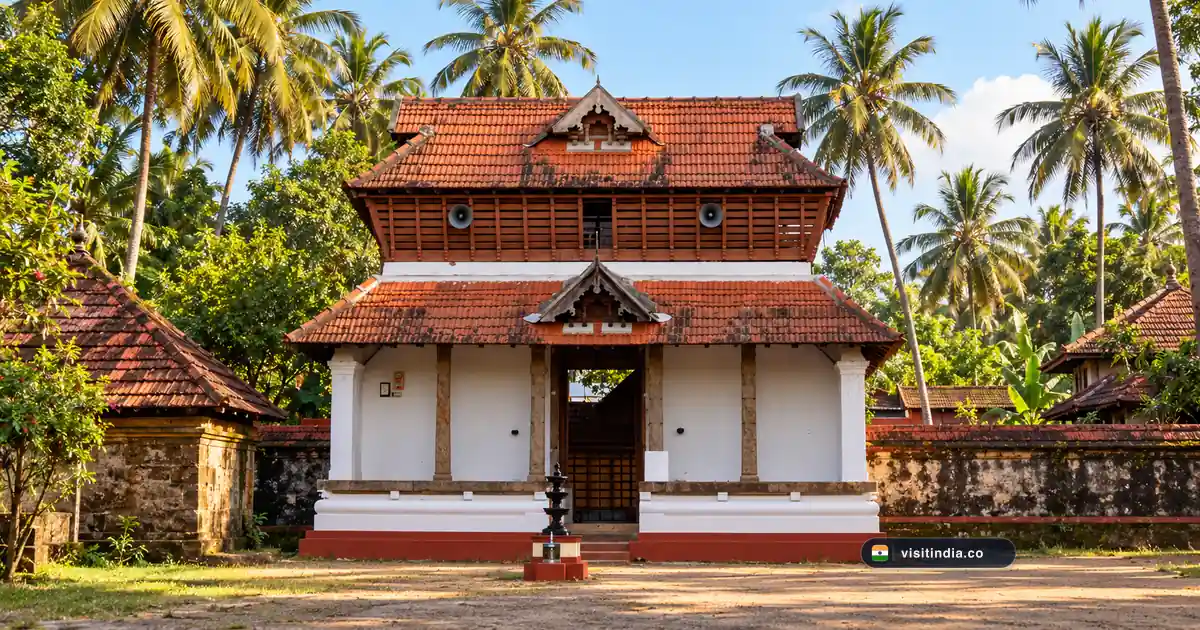
Revered across southern India as the Bhuloka Vaikuntha (Heaven on Earth), the Guruvayur Shri Krishna Temple in Thrissur district stands as one of Kerala’s most sacred pilgrimage destinations. The inner sanctum enshrines a four-armed standing idol of Lord Mahavishnu holding the conch, discus, mace, and lotus, carved from a rare medicinal stone known as Patala Anjana.
Navigating this holy complex requires strict adherence to traditional Vedic customs and specific Guruvayur temple timings and dress code protocols. Pilgrims must understand daily ritual windows, morning temple closures, and strict bans on modern electronic devices before passing through the eastern temple gate.
Every day, tens of thousands of devotees gather in the outer courtyard (Chuttambalam), waiting patiently in dawn queues to catch a glimpse of the Lord adorned in fragrant sandalwood paste and fresh basil garlands. Following these verified guidelines ensures a meaningful, peaceful visit to this ancient center of devotion.
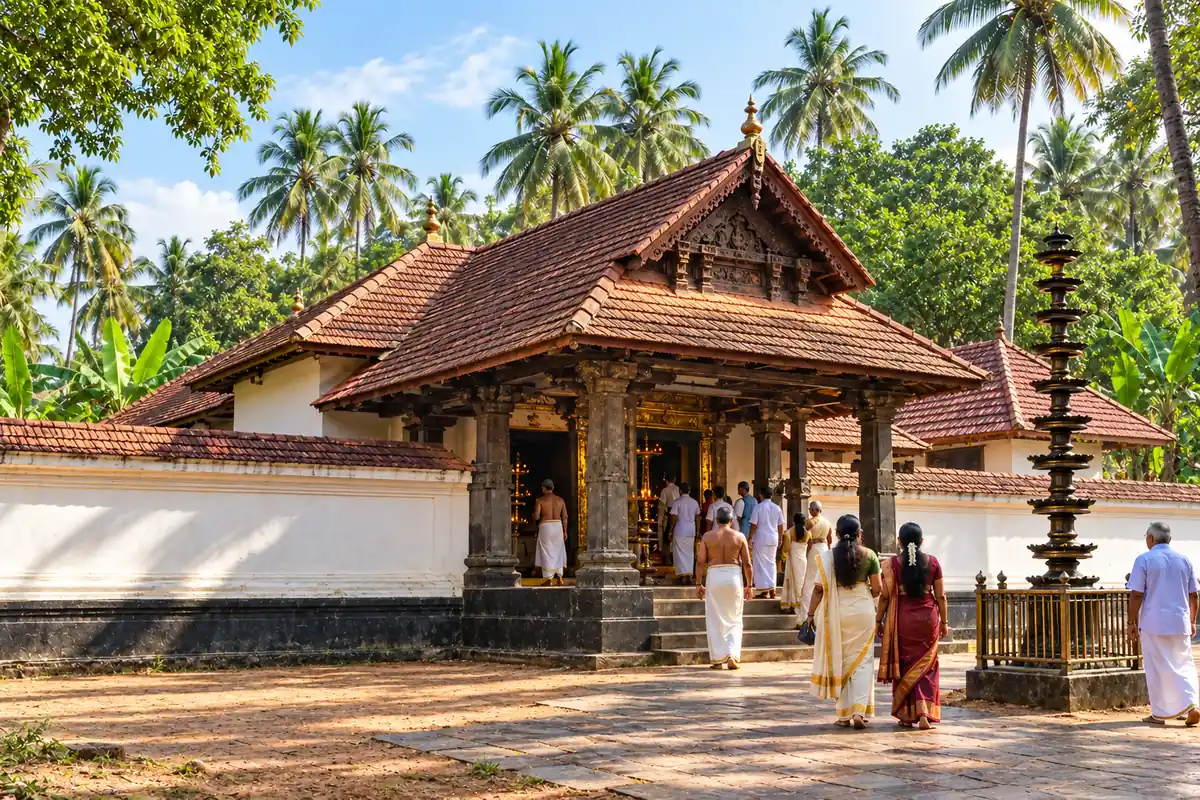
Darshan & Temple Essentials
- Shrine Location: East Nada, Guruvayur, Thrissur District, central Kerala (28 km northwest of Thrissur city).
- Core Daily Hours: Morning sanctum opening from 3:00 AM to 1:30 PM; evening session from 4:30 PM to 9:15 PM.
- Peak Ritual Hour: Nirmalya Darshan at 3:00 AM, viewing the deity in the previous evening’s flower decorations.
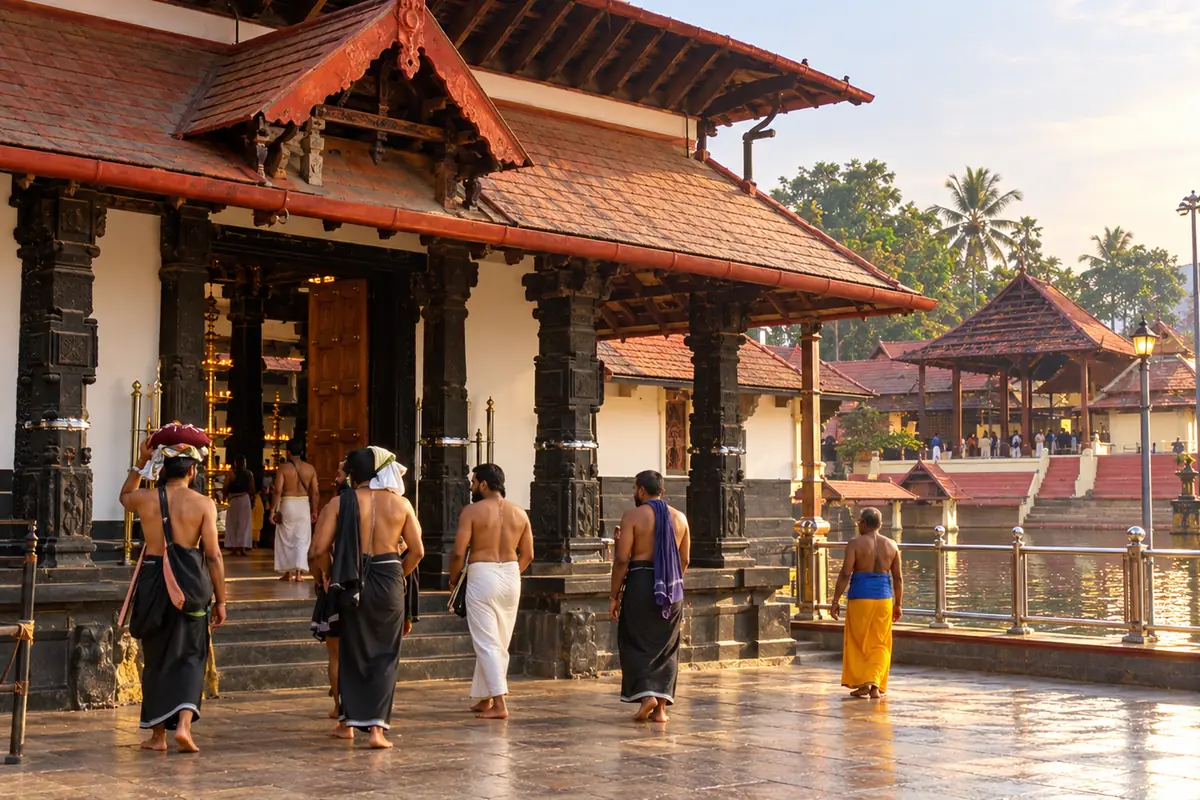
- Dress Code Requirements: Men must wear a plain mundu (dhoti) around the waist and remain bare-chested; women must wear sarees, set mundus, or traditional salwar suits.
- Prohibited Items: Mobile phones, cameras, leather belts, shoes, and non-traditional clothing are strictly barred past the security turnstiles.
Complete Daily Puja Schedule: 3:00 AM Nirmalya to Night Athazha
The daily liturgical cycle at Guruvayur follows centuries-old tantric rites formalized by the great saint Adi Shankaracharya. Unlike many north Indian temples with continuous viewing, the sanctum doors open and close multiple times throughout the day for elaborate bathing and offering ceremonies.
Planning your darshan around specific aartis ensures you witness signature temple traditions without getting caught in midday sanctum closures. Devotees extending their Kerala pilgrimage south to Sabarimala Temple will notice the same 3:00 AM Nirmalya Darshanam and afternoon sanctum break rhythm.
| Puja / Ritual Name | Scheduled Time | Spiritual Significance & Ceremony Highlights |
|---|---|---|
| Nirmalya Darshan | 3:00 AM - 3:30 AM | Most auspicious viewing of the deity adorned with previous night’s garlands |
| Vakacharthu & Abhishekam | 3:30 AM - 4:15 AM | Sacred herbal oil and vaka powder cleansing bath |
| Usha Pooja | 6:30 AM - 7:30 AM | Morning offering with sweet rice pudding (nai payasam) |
| Morning Seeveli | 7:00 AM - 7:30 AM | Ceremonial caparisoned elephant circumambulation around the courtyard |
| Uchha Pooja & Closure | 11:30 AM - 1:30 PM | Midday royal feast offering; sanctum closes at 1:30 PM sharp |
| Deeparadhana | 6:00 PM - 6:45 PM | Illumination of thousands of brass oil lamps (Vilakkumadam) at dusk |
| Athazha Pooja | 7:30 PM - 8:30 PM | Night dinner offering with sweet milk porridge |
| Night Seeveli & Tripuka | 8:45 PM - 9:15 PM | Final elephant procession and sanctum closure for the night |
The Power of Nirmalya Darshan at Dawn
Nirmalya Darshan is considered the most spiritually potent moment of the daily temple cycle. At exactly 3:00 AM, the chief priest (Melsanthi) opens the sanctum doors to the ringing of temple bells and blowing of conch shells.
Devotees view the deity decorated with the wilted flowers, basil leaves, and sandalwood paste applied during the previous evening’s final prayer. To secure a place in the front queue for Nirmalya, pilgrims must join the queue line outside the East Nada as early as 1:30 AM.
Afternoon Closure and Evening Deeparadhana
The sanctum closes firmly at 1:30 PM following the completion of the midday Uchha Pooja and remains shut during the warm early afternoon hours. The temple gates reopen at 4:30 PM for evening prayers.
At dusk, usually between 6:00 PM and 6:30 PM, temple attendants light thousands of small oil lamps lining the intricate wooden and brass framework of the Vilakkumadam outer walls. The resulting Deeparadhana ceremony illuminates the central courtyard in a glowing sea of flickering golden flames.
Strict Traditional Dress Code: Men, Women, and Children
Guruvayur enforces one of the strictest traditional dress codes among major Hindu temples in India. Temple guards at the security checkpoints inspect every visitor, turning away anyone dressed in modern western clothing or prohibited items.
Understanding these clothing rules before departing your hotel prevents unnecessary frustration at the entrance. Devotees traveling across India’s Shakti Peethas also compare temple queue etiquette with Tripura Sundari Temple in Northeast India.
Dress Code Rules for Men
Men must wear a clean traditional mundu (a white or cream cotton dhoti) wrapped securely around the waist. Synthetic trousers, jeans, shorts, and Bermudas are strictly prohibited.
Men must enter the temple bare-chested; shirts, vests, jackets, and banyans must be removed before entering the inner queue line. A small white cotton upper cloth known as an angavastram or veshti may be folded and draped across the shoulders, but it must be taken off and held under the arm when standing directly before the sanctum.
Dress Code Rules for Women
Women must wear a traditional Indian saree, a Kerala set-mundu (kasavu mundu), or a modest salwar kameez with a properly draped dupatta over the chest.
Western dresses, denim jeans, miniskirts, capris, tights, and tight-fitting leggings are strictly barred. While the Guruvayur Devaswom relaxed rules to permit salwar suits in recent years, traditional sarees remain the preferred garment for smooth, unquestioned entry.
Children and Toddler Guidelines
Young boys must follow the male dress code by wearing a small mundu or dhoti, remaining bare-chested. Small girls can wear traditional South Indian skirts and blouses (pattu pavada) or long ethnic gowns.
Infants are permitted to wear clean cotton clothes, though many parents wrap them in traditional white cotton towels for first-feeding ceremonies.
Important
Mobile phones, electronic watches, digital cameras, and leather belts are completely banned inside the temple. Deposit all electronic devices and leather goods in the official cloakroom counters located outside the East Nada before joining the entry queues.
Punnathur Kotta: 50+ Temple Elephants Sanctuary Guide
Situated 3 km north of the main temple complex in Kottapadi, Punnathur Kotta (also known as Anakkotta) is an extraordinary heritage property serving as the official sanctuary for Guruvayur’s temple elephants.
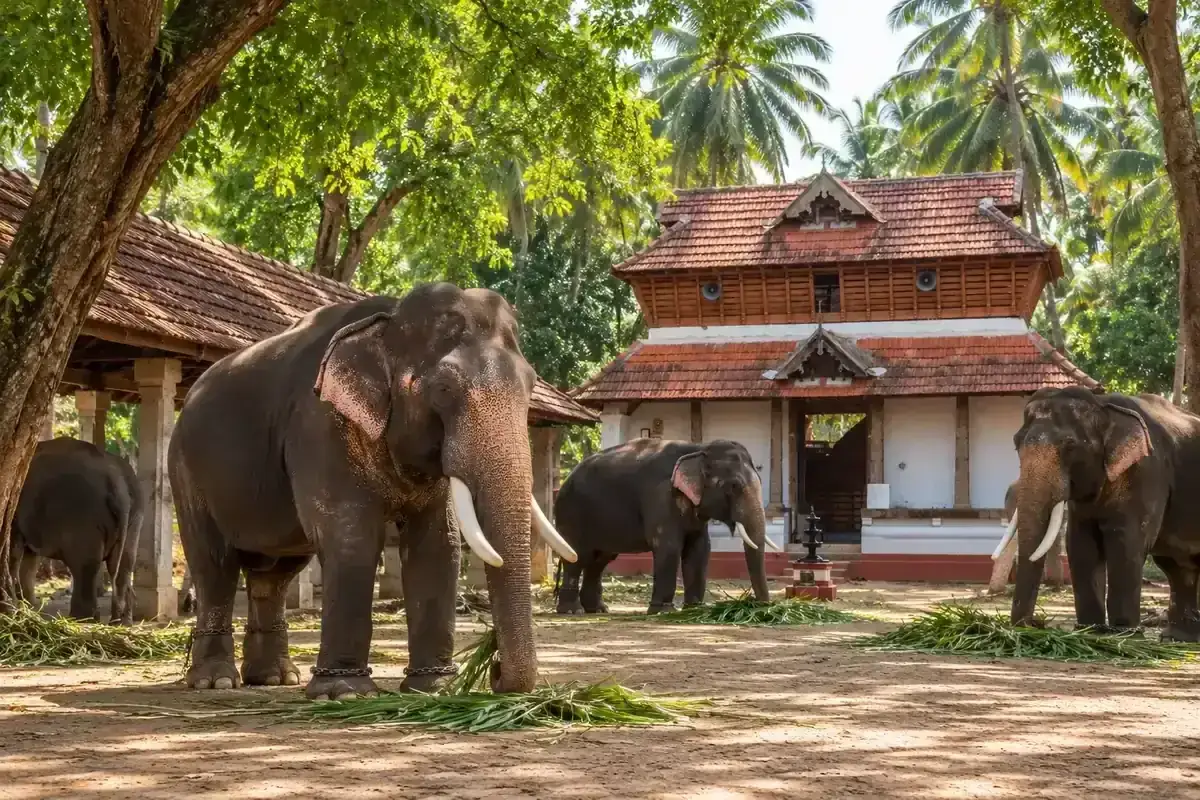
Once the fortified palace of the local Punnoothur Raja, the ten-acre walled estate features leafy coconut groves and traditional Kerala architecture. The estate is home to over 50 majestic Asian elephants donated to Lord Krishna by devotees over the decades.
Visiting hours are from 9:00 AM to 5:00 PM daily. An entry ticket of ₹20 per adult is payable at the gate, with a nominal camera fee of ₹25. Official sanctuary visiting hours and heritage notices are cataloged by the District Administration Thrissur Directory.
Visitors can walk along shaded paths to watch these gentle giants being bathed with coconut husks, fed massive bundles of palm leaves, and trained by traditional mahouts for temple festival processions.
The sanctuary features a small memorial dedicated to Guruvayur Keshavan, the most celebrated elephant in temple history, who served the deity for over five decades before passing away on the auspicious day of Guruvayur Ekadashi.
Special Darshan Lines, Senior Citizen Facilities, and Bookings
While general darshan through the main covered queue line is completely free of charge, waiting times on weekends and festival days can extend between two and four hours. The Guruvayur Devaswom operates specialized queue corridors to assist senior citizens, young families, and busy travelers.
Devotees can take advantage of these established facilities to manage their time effectively.
Priority Access Corridors for Senior Citizens
Senior citizens aged 65 and above are provided dedicated queue access during designated morning and evening time windows (usually from 5:30 AM to 8:00 AM and 4:30 PM to 6:00 PM).
Eligible seniors must present valid government photo identification displaying their date of birth at the special queue counter near the South Nada. A single accompanying attendant is permitted to assist elderly or physically frail pilgrims.
The Sacred Choroonu and Thulabharam Ceremonies
Guruvayur is internationally renowned as the preferred temple for Choroonu, the traditional Hindu ritual of feeding an infant their first solid food of cooked rice and sweet payasam. The ceremony is performed daily on raised wooden platforms outside the sanctum between 5:30 AM and 1:00 PM.
Another signature ritual is Thulabharam, where a devotee sits on one side of a massive balance scale and is weighed against an equivalent quantity of offerings. Devotees offer sugar, jaggery, bananas, ghee, or coins to fulfill personal vows. Official booking counters inside the temple manage weighing materials directly.
Pilgrims looking to book advance accommodation can reserve rooms at the official Devaswom guest houses, including Kausthubham and Panchajanyam, located two minutes on foot from the temple gate.
Cultural travelers exploring classic heritage cities across Kerala can also read our dedicated guide to top attractions in Thrissur.
Exploring Historic Shrines Around Guruvayur
A pilgrimage to Guruvayur is traditionally regarded as incomplete without paying respects at several closely connected regional shrines located within a five-minute drive of the town center.
Visiting these neighboring sanctuaries deepens the mythological narrative of Lord Krishna’s arrival in Kerala.
Mammiyoor Mahadeva Shiva Temple
Located 1.5 km northwest of Guruvayur, the Mammiyoor Shiva Temple is an ancient sanctuary dedicated to Lord Shiva and Goddess Parvati. Local legend holds that when Guru (the preceptor of gods) and Vayu (the god of wind) brought the idol of Krishna to Kerala, Lord Shiva graciously vacated his own shrine to make way for the deity, moving his residence to Mammiyoor.
Traditional belief mandates that every pilgrim who visits Guruvayur must conclude their prayers at Mammiyoor; otherwise, the pilgrimage is deemed incomplete.
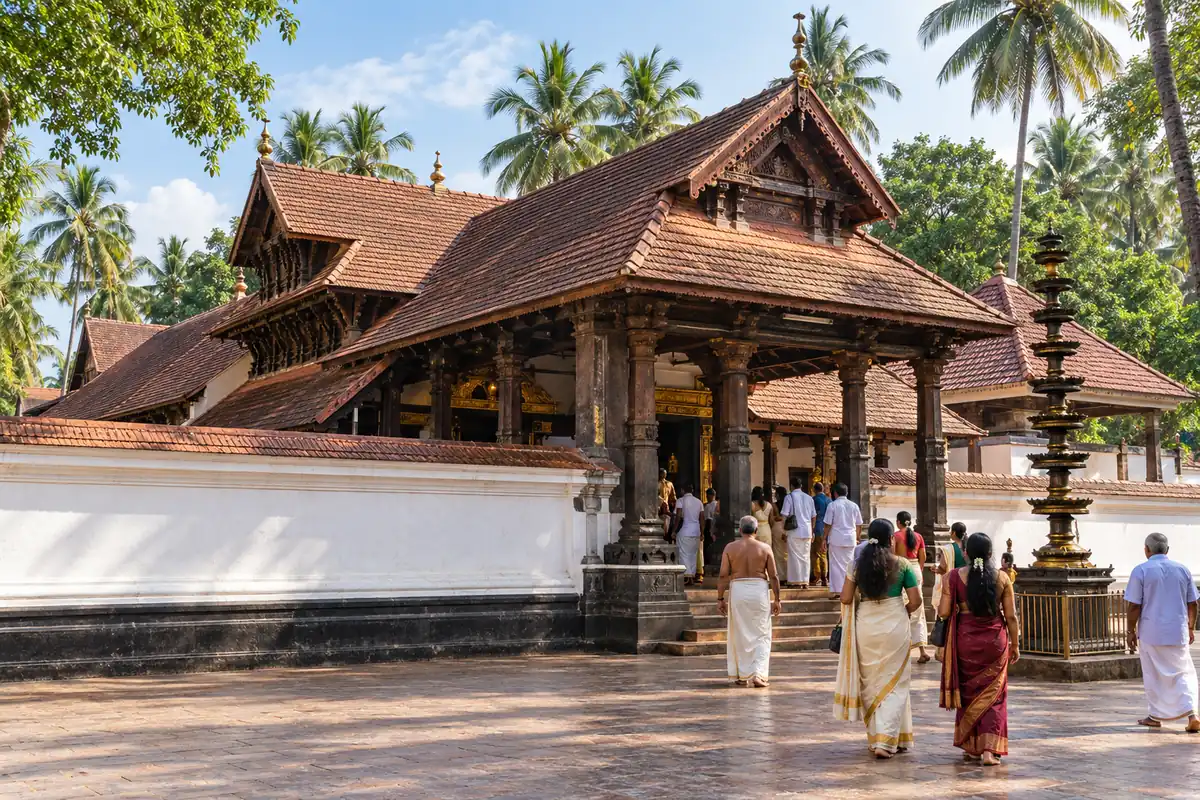
The temple displays wood carvings and wall frescoes depicting the cosmic dance of Shiva. Devotees traveling further south to the capital can compare these ancient Dravidian stone layouts in our guide to Padmanabhaswamy Temple Trivandrum temple overview.
Parthasarathy and Chamundeshwari Temples
Just one kilometer east of the main shrine stands the Parthasarathy Temple, where Lord Krishna is depicted in the chariot-driver form revealing the Bhagavad Gita to Arjuna. The temple chariot is shaped like an authentic stone war rath drawn by sculpted horses.
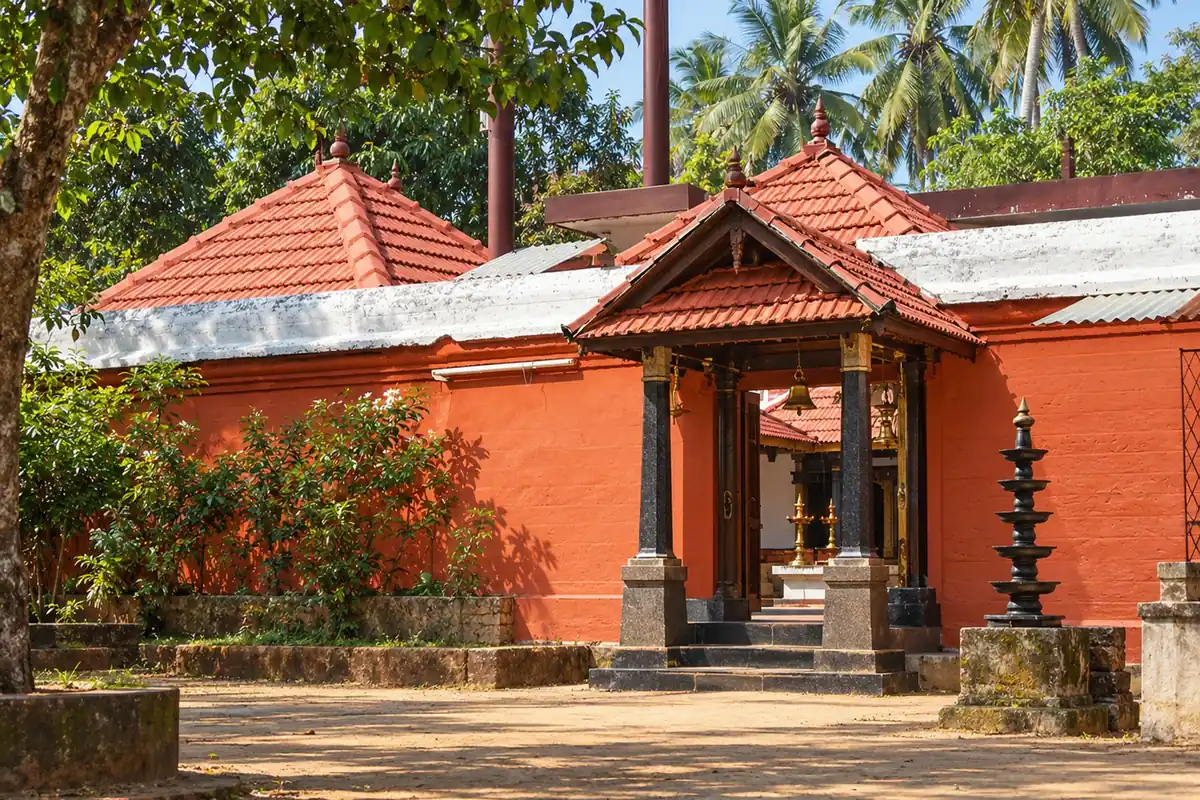
Nearby sits the Chamundeshwari Temple, dedicated to the fierce mother goddess who serves as the guardian deity of the surrounding rural settlements. Both shrines offer tranquil, uncrowded prayer environments away from the main town bustle.
How to Reach Guruvayur from Kochi, Thrissur, and Calicut
Guruvayur is located in central Kerala, with connections via regional rail corridors and state highways. Reaching the temple town from major airport hubs is straightforward.
Travelers can choose between direct train transfers, express bus connections, or private airport taxis.
By Train via Guruvayur and Thrissur Junctions
Guruvayur Railway Station (code: GUV) is situated just one kilometer east of the temple, handling daily passenger and express services connecting directly to Thrissur, Ernakulam, and Chennai.
For broader national rail connections, Thrissur Railway Station (code: TCR) sits 28 km southeast along the main north-south rail corridor. Superfast express trains from Mumbai, New Delhi, Bengaluru, and Chennai stop at Thrissur round the clock. Local passenger trains and regular city buses ferry passengers from Thrissur to Guruvayur in 45 minutes for ₹30 to ₹50.
By Air via Cochin International Airport
The nearest commercial airport is Cochin International Airport (code: COK) in Nedumbassery, situated 80 km south of Guruvayur. The airport handles daily non-stop domestic flights and direct flights from the Middle East and Southeast Asia.
Pre-paid airport taxis take approximately two hours to reach Guruvayur via the National Highway 66 coastal corridor for ₹2,400 to ₹3,000. Alternatively, Calicut International Airport (code: CCJ) sits 95 km north, reachable in 2.5 hours by taxi.
Travelers planning extended peninsular journeys can explore coastal heritage routes in our guide to places to visit in Kochi.
Official district tourism listings and local transit details are published by the District Tourism Promotion Council Thrissur.
Practical Pilgrim Guidelines: Annadanam Feasts and Prasadam
Experiencing the culinary and cultural hospitality of Guruvayur is an integral part of any temple visit. The temple operates one of the largest free community feeding programs in southern India.
Every visitor is invited to participate in the sacred meals prepared according to Ayurvedic vegetarian principles.
Pro Tip
Visit the Devaswom Prasadam sales counter near the South Nada between 8:00 AM and 11:00 AM to purchase fresh containers of Guruvayur Palpayasam (sweet milk dessert) and Neyyappam. These traditional sweets sell out quickly on festival days.
Free Midday Annadanam Feasts
Every afternoon between 10:30 AM and 1:30 PM, the temple trust serves a free community feast (Annadanam) to thousands of seated pilgrims inside the spacious dining halls of Agrasala.
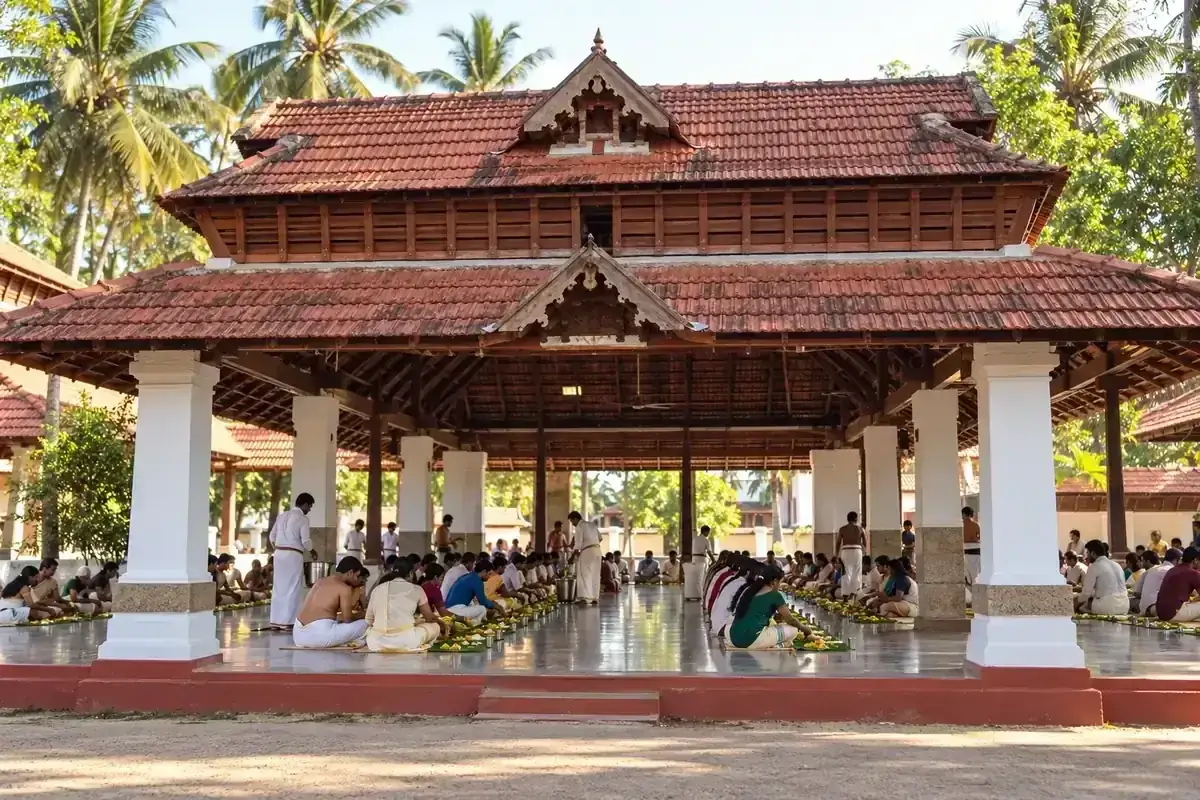
The meal is served on clean plantain leaves and features aromatic steamed Kerala matta rice, rich vegetable sambar, avial, cabbage thoran, spicy rasam, and fresh buttermilk. The feast is open to all visitors regardless of social background.
Evening Krishnanattam Classical Dance Performances
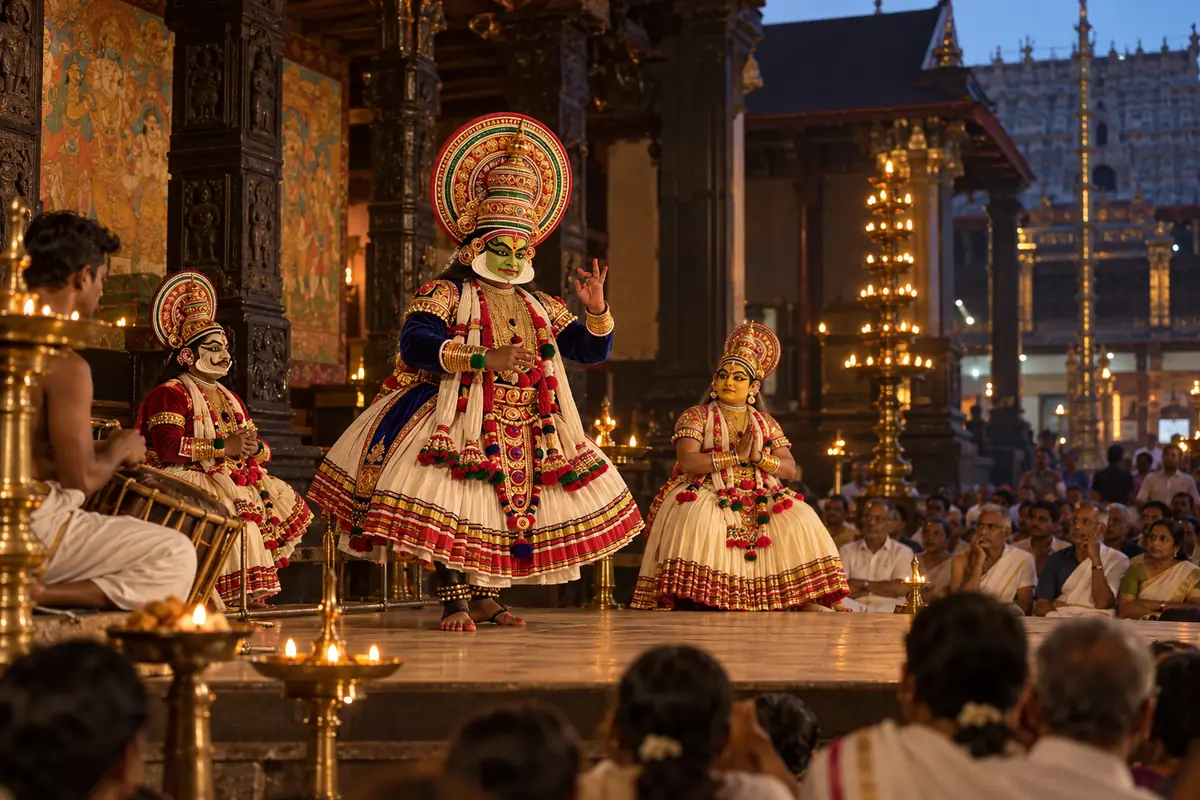
Inside the temple courtyard, devotees can watch nightly performances of Krishnanattam, a classical Sanskrit dance-drama created in the seventeenth century by the King of Calicut, Manaveda.
The eight-part dance cycle depicts the entire life of Lord Krishna, featuring painted wooden masks, headgear, and classical music. Performances begin after the final night aarti at 9:30 PM and continue until midnight.
Travelers looking for broader regional travel ideas across the state can consult our comprehensive guide to Kerala.
Official municipal services, temple helplines, and pilgrimage announcements are maintained by the District Administration Thrissur Portal.
Frequently Asked Questions About Guruvayur Temple
What are the general opening timings of Guruvayur Temple?
The temple opens for morning prayers daily from 3:00 AM to 1:30 PM, closing during the early afternoon. The sanctum reopens for evening darshan at 4:30 PM and remains open until final prayers conclude at 9:15 PM.
Can men wear pants or shirts inside Guruvayur Temple?
No, men are strictly prohibited from wearing shirts, t-shirts, jeans, trousers, or pants inside the inner temple courtyard. Men must wear a traditional plain cotton mundu (dhoti) around the waist and remain completely bare-chested.
Are mobile phones and cameras allowed inside the temple?
Mobile phones, digital cameras, smartwatches, and all electronic devices are strictly prohibited inside the Guruvayur Temple complex. Visitors must deposit their electronic devices and leather accessories in the official cloakrooms outside before entering.
What is the entry fee and timing for Punnathur Kotta elephant sanctuary?
Punnathur Kotta is open to visitors daily from 9:00 AM to 5:00 PM. The entry ticket costs ₹20 per adult, with a nominal camera fee of ₹25 for photography inside the elephant sanctuary grounds.
How far is Guruvayur Temple from Thrissur Railway Station?
Guruvayur Temple is located approximately 28 kilometers northwest of Thrissur Railway Station. Regular state transport buses, local passenger trains, and private taxis connect Thrissur to Guruvayur in about 45 to 60 minutes.
What is the special dress code for women visiting Guruvayur?
Women must wear a traditional saree, a Kerala set-mundu, or a modest salwar kameez with a properly draped dupatta. Modern western dresses, miniskirts, denim jeans, shorts, and leggings are strictly prohibited by temple security.