Places to Visit in Thrissur: Temples, Palaces & Festivals
Discover the top places to visit in Thrissur, Kerala's cultural capital. Explore Vadakkunnathan Temple, Athirappilly Falls, Shakthan Palace, and poorams.
Thrissur stands universally acknowledged as the cultural capital of Kerala. Centered around a massive hillock known as Thekkinkadu Maidan, this central Malabar city blends thousands of years of classical Sanskrit scholarship, royal palace architecture, and percussion music traditions. Its historical name, Thiru-Shiva-Per-Ur, translates as the sacred city of Lord Shiva, reflecting its deep religious foundation.
Beyond its world-famous temple festivals, Thrissur acts as the headquarters for leading literary, fine art, and performing arts academies. Travelers touring places to visit in Kerala discover a city where ancient rituals thrive alongside lush river valleys, protected wildlife forests, and classical dance schools.
Key Thrissur Highlights
- Cultural Status: Designated as the official Cultural Capital of Kerala by state academies.
- Central Landmark: Sree Vadakkunnathan Temple, honored with the UNESCO Asia-Pacific Heritage Award for Cultural Heritage Conservation.
- Grand Annual Festival: Thrissur Pooram, celebrated annually in the Malayalam month of Medam (April–May).
- Gothic Monument: Basilica of Our Lady of Dolours, featuring the 260-foot Bible Tower.
- State Heritage Registry: Documented in the Kerala Tourism Thrissur Cultural Capital Destination Guide.
- District Administration: Maintained under the District Administration Thrissur Tourism Registry.
Top Heritage Monuments and Sacred Temples in Central Thrissur
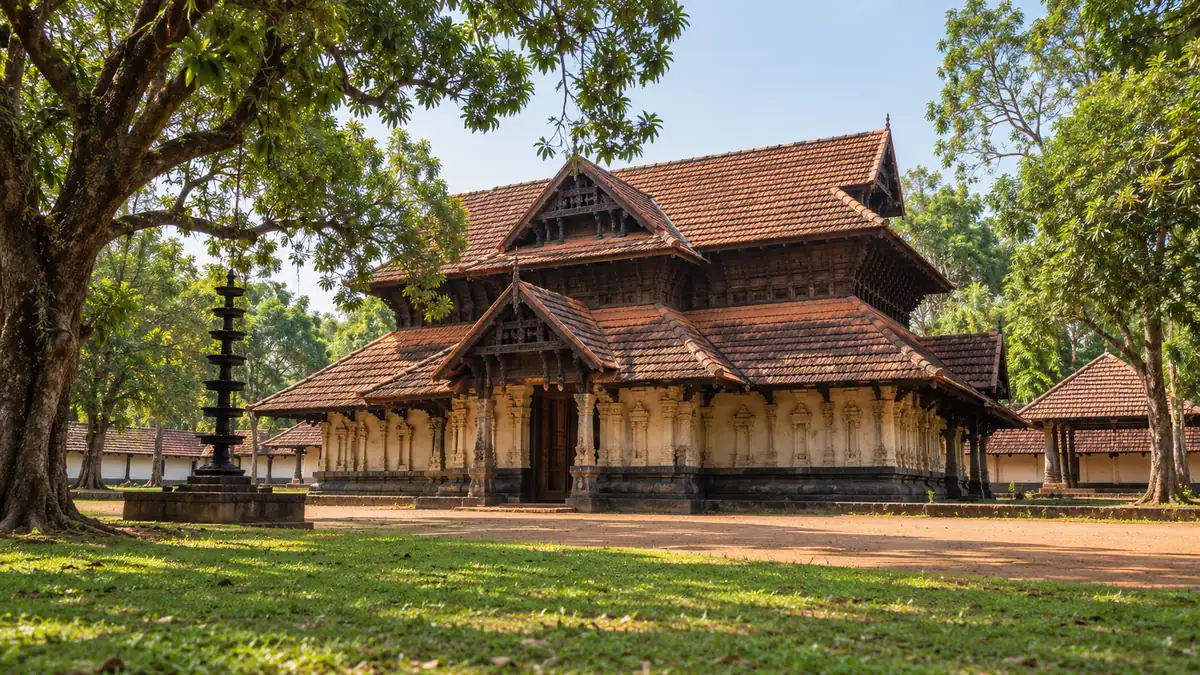
The urban layout of Thrissur radiates outward from Thekkinkadu Maidan, a sixty-five-acre elevated park enclosing the ancient Sree Vadakkunnathan Temple. Built in classic Kerala multi-tiered wooden architecture with sloping copper-tiled roofs, the temple houses centuries-old murals depicting episodes from the Mahabharata. A massive ghee lingam, accumulated from daily libations over centuries without melting, forms the miraculous sanctum center.
On opposite sides of the central circle sit Paramekkavu Bhagavathy Temple and Thiruvambadi Sri Krishna Temple. These two venerable institutions serve as the rival, friendly organizing factions that compete during the annual pooram processions.
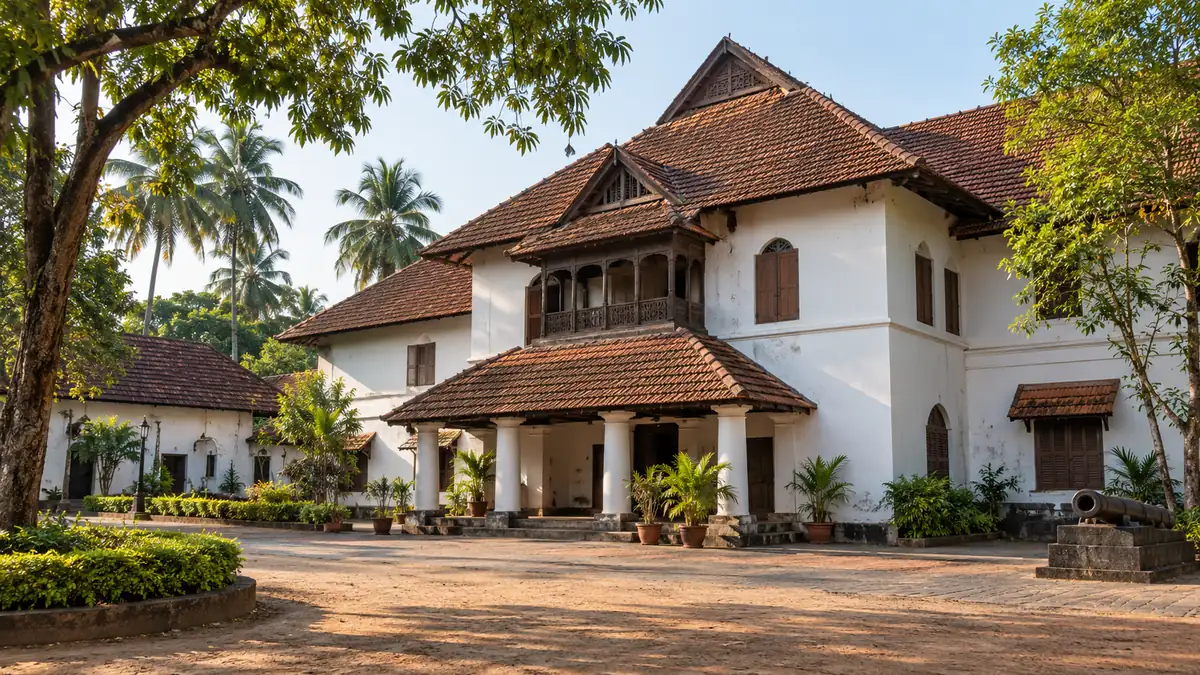
Just north of the central maidan stands the Shakthan Thampuran Palace, constructed in Dutch-Kerala architectural style by Maharaja Rama Varma IX in 1795. Conserved under the Kerala State Department of Archaeology Shakthan Thampuran Palace Dossier, the palace now houses a museum displaying megalithic urns, bronze idols, and coinage from the Cochin royal kingdom. Exploring these palace archives connects directly with royal collections found among places to visit in Kochi.
| Heritage Attraction | Key Significance | Architecture & Speciality | Visiting Hours |
|---|---|---|---|
| Vadakkunnathan Temple | Ancient Shiva shrine; UNESCO recognized | Kerala timber work, mural paintings | 3:00 AM – 10:30 AM, 4:00 PM – 8:30 PM |
| Paramekkavu Temple | Goddess Bhagavathy; Pooram co-host | Traditional stone and woodwork sanctum | 4:30 AM – 11:30 AM, 4:30 PM – 8:30 PM |
| Thiruvambadi Temple | Lord Krishna; Pooram co-host | Decorated gopuram, evening lamps | 4:30 AM – 11:00 AM, 5:00 PM – 8:30 PM |
| Shakthan Thampuran Palace | Royal seat of Cochin rulers | Dutch roofs, archaeological antiquities | 9:30 AM – 5:00 PM (Closed Mondays) |
Ecclesiastical Splendor: Basilica of Our Lady of Dolours
The Basilica of Our Lady of Dolours (Puthanpally) stands as one of the most prominent Christian shrines in southern India. Completed in 1929 under the Roman Catholic Archdiocese of Trichur, this majestic cathedral exhibits soaring Neo-Gothic architecture characterized by lofty spires, pointed archways, and delicate marble relief carvings.
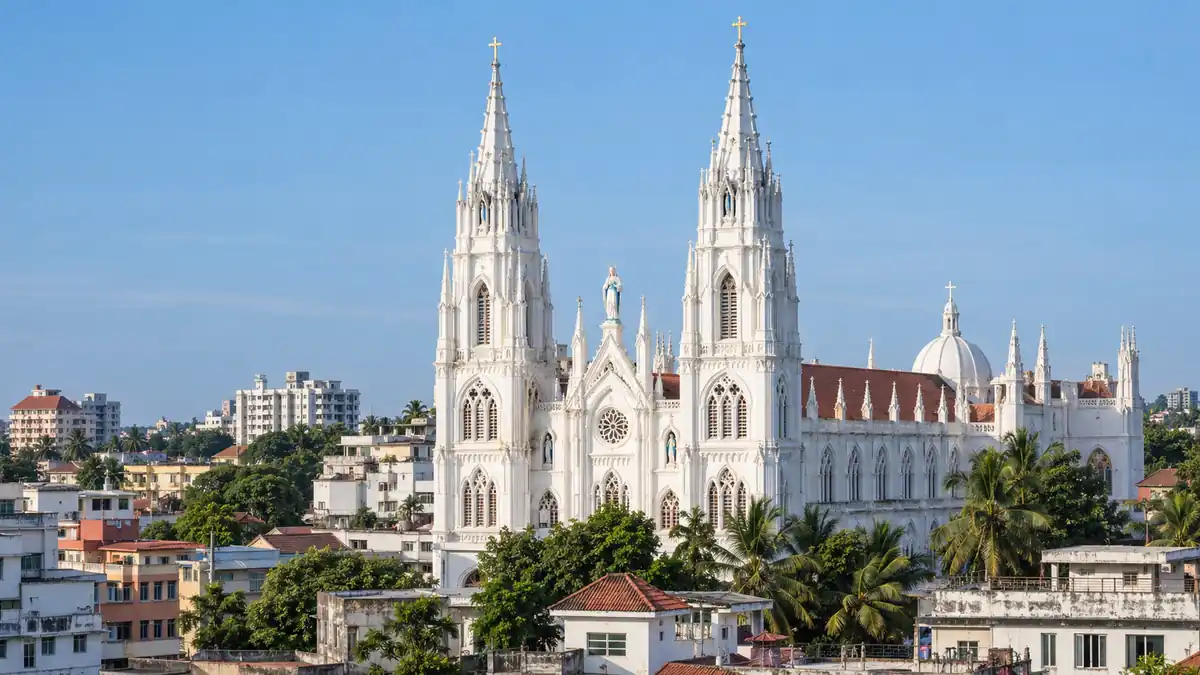
The interior features a nave lined with double rows of tall pillars supporting rib-vaulted ceilings. Beautifully colored stained-glass windows filter afternoon sunlight into the sanctuary, illuminating biblical scenes painted across side chapels.
Behind the cathedral rises the Bible Tower, an imposing 260-foot bell tower. A passenger elevator carries visitors up through narrative galleries of wood carvings and stained glass to an observation terrace. The upper platform provides an expansive bird’s-eye view stretching across Thrissur town and the green surrounding hills.
Scenic Escapes, Waterfalls, and Wildlife Sanctuaries
Beyond its urban monuments, Thrissur district extends eastward into forested mountain ridges of the Western Ghats. Foremost among natural attractions is Athirappilly Waterfalls, located approximately 55 kilometers southeast of the city along the Chalakudy River. Dropping 80 feet across a massive 330-foot granite cliff face, Athirappilly is widely acclaimed as the Niagara of India.
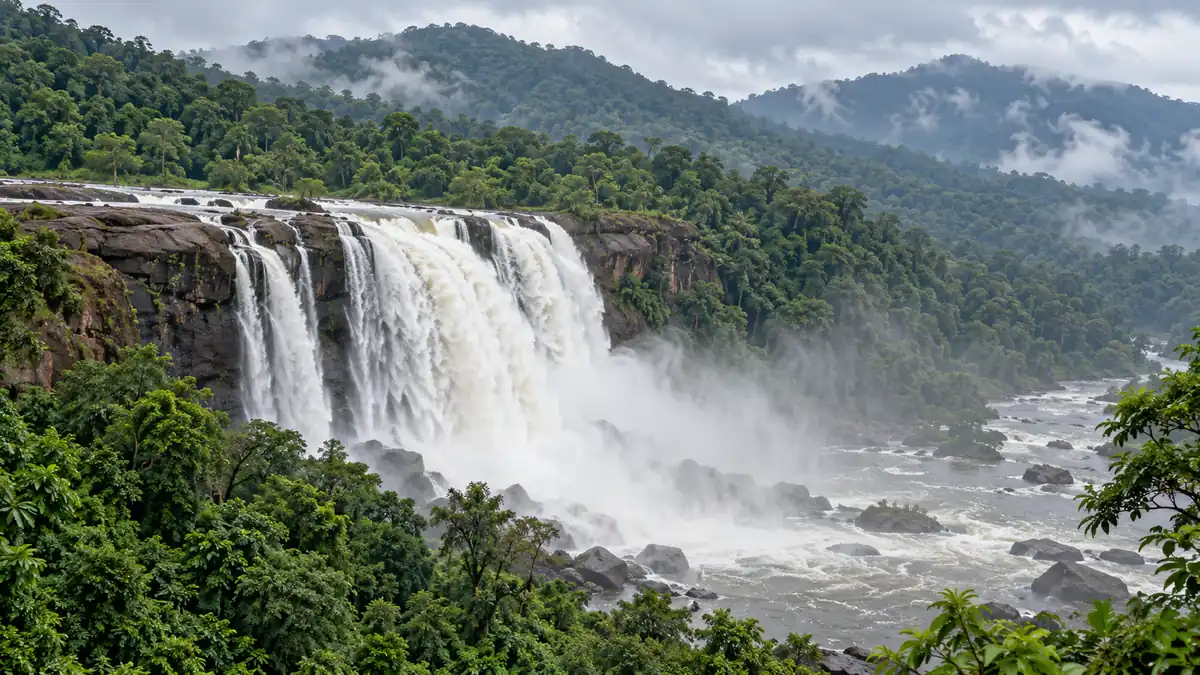
Just five kilometers upstream from Athirappilly lies Vazhachal Waterfalls and dense riparian rainforests home to endangered hornbill nesting colonies. These forest drives contrast sharply with the cooler hill station trails of Munnar further up the mountain pass.
Closer to town, Peechi Dam and the surrounding Peechi-Vazhani Wildlife Sanctuary offer outdoor escapes. Spread across 125 square kilometers of tropical deciduous forest, the reserve protects wild elephants, gaur, sambar deer, and over 200 bird species. Boating trips on the calm dam reservoir allow visitors to observe forest banks from the water.
Cultural Institutions and Classical Performing Arts Academies
Thrissur’s claim as Kerala’s cultural capital rests heavily on its foundational teaching institutions. At Cheruthuruthy, thirty kilometers north of the city on the banks of the Bharathapuzha River, sits Kerala Kalamandalam. Founded in 1930 by poet Vallathol Narayana Menon, this deemed university is the world’s foremost gurukula academy for Kathakali, Mohiniyattam, and Koodiyattam classical theater.
Within the municipal limits, the Kerala Sahitya Akademi preserves literary heritage, while the Kerala Sangeetha Nataka Akademi stages national drama and dance festivals. Travelers exploring northern Malabar culture through places to visit in Kozhikode frequently stop in Thrissur to attend evening classical performances and percussive recitals.
The Grand Thrissur Pooram: The Mother of All Poorams
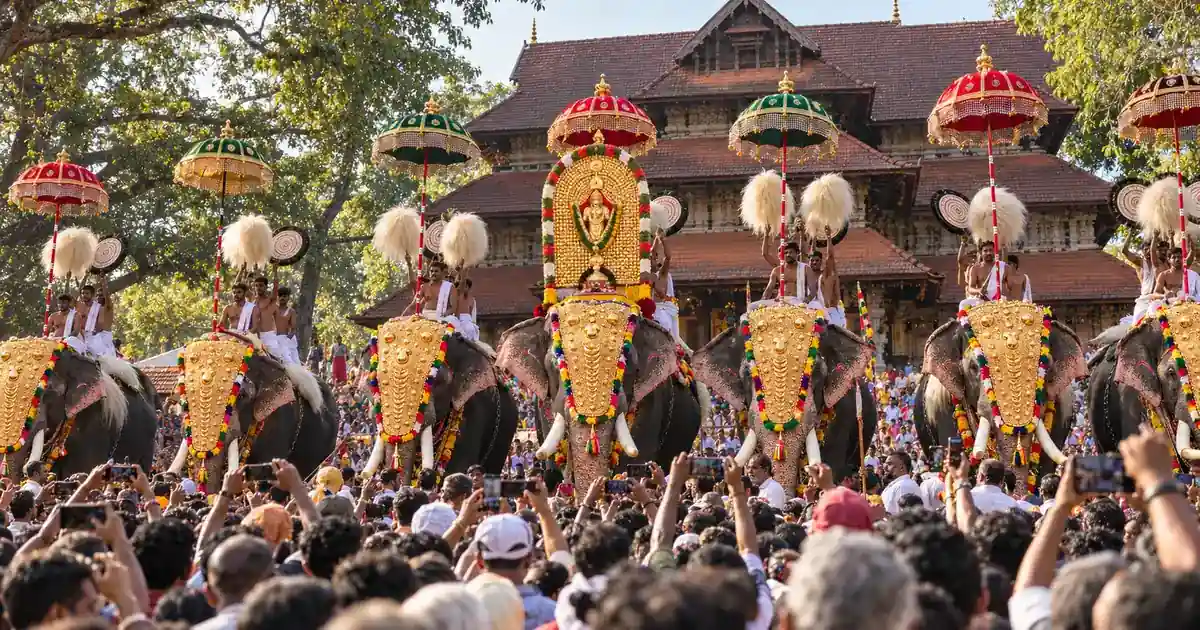
The Thrissur Pooram festival is celebrated annually at Thekkinkadu Maidan on the day of the Pooram star in the Malayalam month of Medam, usually falling between mid-April and early May. Established in 1798 by Maharaja Shakthan Thampuran, the festival gathers ten regional temples in a spectacular 36-hour continuous celebration.
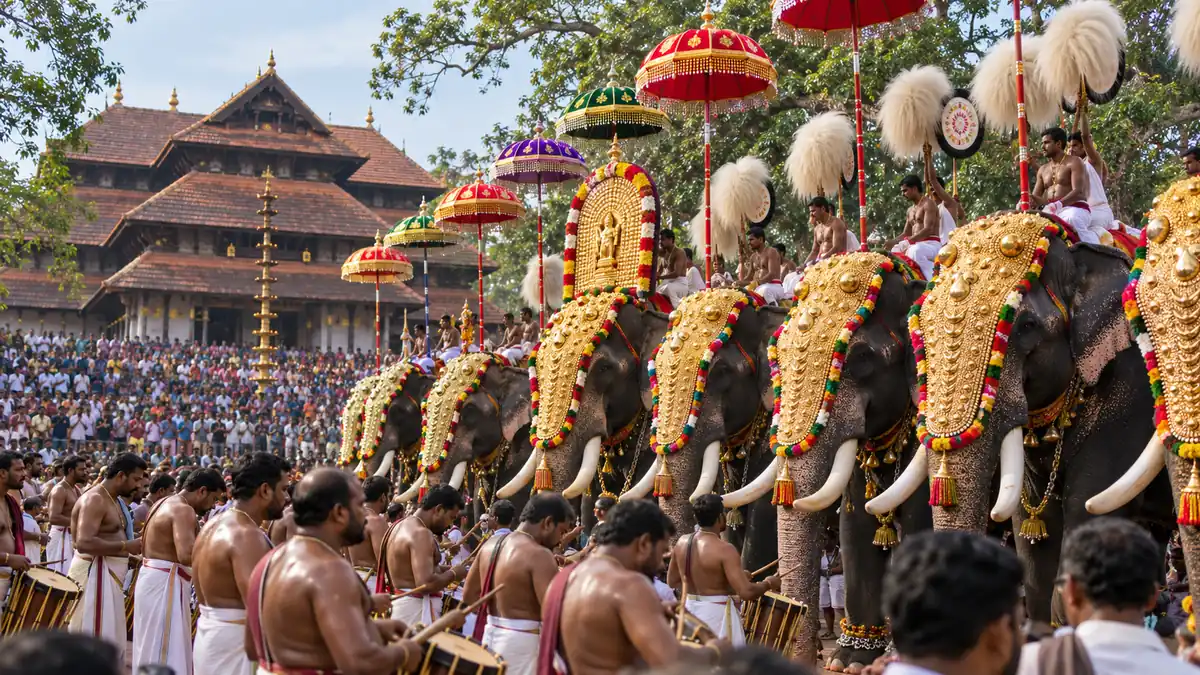
The focal event is the Ilanjithara Melam, an exhilarating traditional percussion ensemble held beneath an ancient tree inside the Vadakkunnathan complex. More than two hundred master musicians perform on chenda, elathalam, and kombu instruments in strict rhythmic cadence, captivating tens of thousands of spectators.
At dusk, the two competing temple contingents face each other across the maidan with rows of fifteen grandly caparisoned elephants for the Kudamattom ceremony. Priests standing atop the elephants exchange dozens of colorful, tiered silk parasols in rapid synchrony to roaring applause. The celebration culminates with a massive early-morning fireworks display lighting the night sky over Thrissur.
Practical Travel Guide: Best Time to Visit, Entry Fees, and Itineraries
The most comfortable period to tour Thrissur runs from October through March. Winter temperatures remain pleasant, ranging between 22°C and 31°C, making heritage walks and outdoor sightseeing enjoyable. Heavy monsoon rains arrive between June and August, transforming regional waterfalls into thundering torrents.
For travelers seeking a balanced trip before continuing south toward the cliffside beaches of Varkala, a two-day itinerary covers both central monuments and forest excursions:
- Day 1: Central Heritage & Culture: Morning darshan at Vadakkunnathan Temple and Paramekkavu; midday exploration of Shakthan Thampuran Palace museum; late afternoon ascent of Bible Tower at Dolours Basilica; sunset stroll through Thekkinkadu Maidan.
- Day 2: River, Waterfalls & Wilderness: Full-day excursion to Athirappilly and Vazhachal Waterfalls; afternoon boating at Peechi Dam reservoir; stop at Vilangan Kunnu hillock for evening city views.
| Destination | Distance from City Center | Nominal Entry Charge | Recommended Duration |
|---|---|---|---|
| Vadakkunnathan Temple | 0 km (Thekkinkadu) | Free (Traditional dress code) | 1.5 hours |
| Shakthan Palace | 2 kilometers | ₹20 adults / ₹10 children | 1.5 hours |
| Dolours Basilica & Tower | 1.5 kilometers | Free / Nominal tower lift ticket | 1 hour |
| Athirappilly Waterfalls | 55 kilometers | ₹50 per person | Half day |
| Peechi Dam & Sanctuary | 22 kilometers | ₹20 entry / Boating extra | 2 to 3 hours |
Connecting Thrissur with Central Kerala Travel Circuits
Thrissur is exceptionally well connected by rail and road networks across the state. Cochin International Airport (COK) in Nedumbassery is located just 52 kilometers to the south, accessible in approximately one hour via National Highway 544. Thrissur Railway Station (TCR) serves as an A1-class junction with direct trains to every major city in India.
Tourists can comfortably link Thrissur with maritime spice centers, highland plantations, or the calm backwater lagoons of Kollam. Many devotees and heritage travelers also travel 28 kilometers northwest to explore sacred ceremonies detailed in our Guruvayur temple timings and dress code guide. Its central position makes it an indispensable cultural crossroads in any comprehensive Kerala journey.
Frequently Asked Questions
What is the best time of year to visit Thrissur?
The ideal months to visit Thrissur are from October through March when the winter weather is pleasant and dry for sightseeing. Travelers wishing to witness the famous Thrissur Pooram should plan their trip specifically for April or early May during the Malayalam month of Medam.
Can non-Hindu tourists enter Vadakkunnathan Temple?
Entry into the inner sanctum of Sree Vadakkunnathan Temple is restricted to practicing Hindus following traditional dress codes, with men wearing dhotis and removing shirts. However, non-Hindu travelers can freely explore the surrounding open sixty-five-acre Thekkinkadu Maidan and admire the majestic exterior architecture.
How far are Athirappilly Waterfalls from Thrissur city?
Athirappilly Waterfalls are located approximately 55 kilometers southeast of Thrissur city center along the Chalakudy River road. The scenic drive passes through palm estates and rubber plantations, taking roughly 90 minutes by taxi or local KSRTC bus.
Which month is the Thrissur Pooram festival held?
Thrissur Pooram takes place annually during the Malayalam month of Medam, which corresponds to April or early May in the Gregorian calendar. The exact date is determined by the moon rising with the Pooram star over the temple grounds.
Which is the nearest airport to Thrissur?
Cochin International Airport (COK) in Nedumbassery is the closest airport to Thrissur, situated approximately 52 kilometers to the south. Direct airport taxis and express train services from nearby Angamaly cover the journey to Thrissur in roughly one hour.