Hampi Utsav Guide: Dates, Venues, Light Shows & Tips
Complete guide to Hampi Utsav: event dates, stage venues across UNESCO ruins, illuminated monuments, classical dance and music, tent stays, and transport.
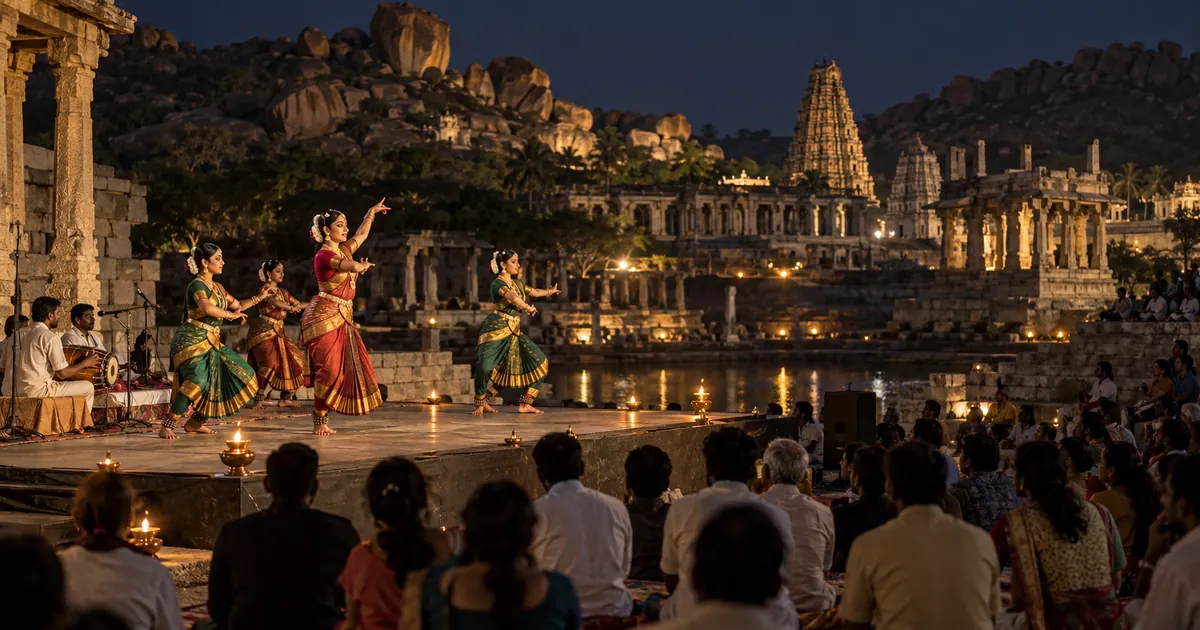
Hampi Utsav, also celebrated as Vijaya Utsav, stands as Karnataka’s most spectacular state-organized cultural festival, held amidst the UNESCO World Heritage ruins of the Vijayanagara Empire. Staged across three nights in the cool winter months between November and January, this grand festival brings the fourteenth-century imperial capital back to vivid life.
Centuries-old stone temples, royal pavilions, and monumental granite boulder hills are bathed in multi-colored floodlights. Renowned classical vocalists, Bharatanatyam and Kathak dancers, folk theater troupes, and contemporary music artists perform simultaneously across multiple open-air stages erected beside ancient stone monuments.
Festival Essentials
- Annual Event Window: Staged annually over 3 consecutive days, typically scheduled in November or January.
- Historic Epicenter: Hampi ruins landscape across Vijayanagara District, northern Karnataka.
- Main Performance Venues: Gayatri Peetha Main Stage, Eduru Basavanna Stage, and the Royal Enclosure.
- Public Admission: ₹0 (Free entry across all public performance arenas and monument grounds).
- Daily Event Timings: Cultural stages active from 6:00 PM to 11:30 PM; day processions begin at 3:30 PM.
- Official State Portal: Coordinated by the Karnataka Tourism Official Hampi Portal.
Experiencing classical ragas reverberate against giant granite boulders while the Tungabhadra River catches reflections of floodlit ruins creates a profound travel memory. The table below outlines key operational dimensions for travelers planning their visit to the festival.
| Festival Aspect | Operational Benchmark for Travelers |
|---|---|
| Event Duration | 3 Days (Friday evening through Sunday night) |
| Geographic Span | Over 25 square kilometers of UNESCO archaeological grounds |
| Number of Active Stages | 5 major themed cultural stages running simultaneous shows |
| Monument Illumination | 6:30 PM to 10:30 PM daily across 15+ royal and sacred sites |
| Nearest Railway Hub | Hosapete Junction (HPT), located 14 kilometers southwest |
| District Coordination | Managed by the Vijayanagara District Administration |
What is Hampi Utsav: Celebrating the Vijayanagara Empire
Hampi Utsav traces its spiritual and historical roots to the imperial victory celebrations (Vijaya Utsav) patronized by the monarchs of the Vijayanagara Empire. During the golden reign of Emperor Krishnadevaraya in the early sixteenth century, the empire commanded immense wealth, drawing diamond merchants, Portuguese chroniclers, and master artists from across the globe.
The contemporary festival was revived by the Government of Karnataka to celebrate this golden era of art, literature, architecture, and religious tolerance. Travelers wandering the open ruins discover an open-air historical museum that ranks among the top places to visit in India.
From Imperial Vijaya Utsav to Karnataka’s Grand Cultural Festival
Historical records documented by medieval travelers such as Domingo Paes and Fernao Nuniz describe the capital city of Vijayanagara as larger and more splendid than Rome. Annual harvest and coronation festivals featured miles of decorated bazaar streets, royal elephant processions, wrestling matches, and public dance dramas.
Today, Hampi Utsav honors that cultural legacy through a statewide celebration. The festival serves as an umbrella platform where classical Carnatic vocalists perform alongside rural Kannada folk musicians, preserving centuries of heritage across generations of artists.
The Magic of Floodlit UNESCO World Heritage Boulders and Temples
What distinguishes Hampi Utsav from all other cultural gatherings is its extraordinary natural and architectural setting. The surrounding landscape features balance-defying granite boulders piled high into rugged hills that have witnessed human history since prehistoric times.
During the three nights of the festival, specialized lighting engineers cast warm amber, emerald, and sapphire beams across the rock slopes and stone pillars. The soaring stone gopurams and carved friezes glow against the dark night sky, turning the silent ruins into a living theater of light and sound.
Festival Schedule and Key Stages Across the Ancient City
The festival program spans multiple dedicated performance stages strategically positioned across the archaeological complex. This decentralization allows tens of thousands of visitors to disperse comfortably across different monuments without overwhelming a single venue.
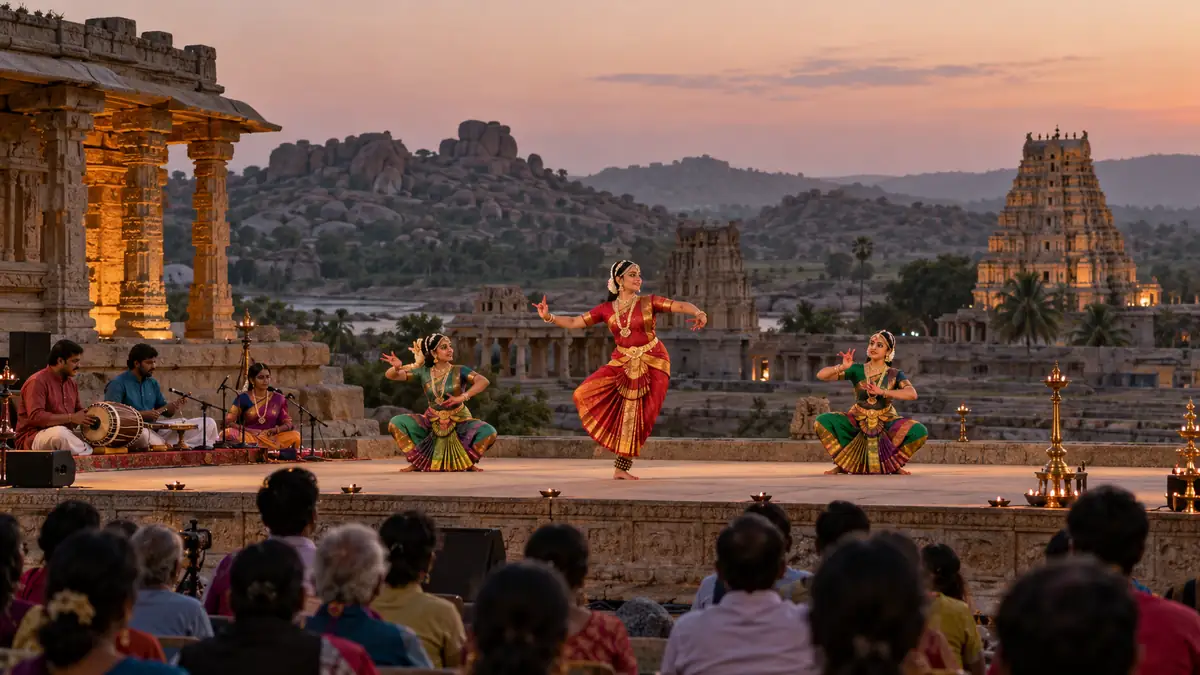
Knowing the location and character of each stage helps you choose where to spend your evenings. Performance programs begin near the historic stone towers of Virupaksha Temple in Hampi and radiate outward into the royal quarters.
| Stage Name | Monument Setting | Musical & Artistic Specialization |
|---|---|---|
| Gayatri Peetha | Open ground near the Tungabhadra riverfront | Headline music concerts, national classical dance troupes, and closing ceremonies |
| Eduru Basavanna | Eastern end of Hampi Bazaar facing Nandi | Classical Carnatic recitals, sitar duets, and temple dance performances |
| Royal Enclosure | Ancient court platforms and Mahanavami Dibba | Folk theater, Yakshagana, classical percussion ensembles, and poetry meets |
| Sasivekalu Ganesha | Hill base near the monolithic Ganesha shrine | Kannada literary symposiums, youth talents, and instrumental soloists |
| Malyavanta Hill | Elevated hill platform near the Raghunatha shrine | Meditative classical morning ragas, flute solos, and spiritual chants |
Gayatri Peetha Main Stage: Mega Dance and Musical Recitals
The Gayatri Peetha stage serves as the primary arena of Hampi Utsav, featuring the largest seating capacity and grandest audio-visual staging. Constructed along the open river plain near the Tungabhadra, this stage hosts national and international celebrity performers.
Audiences gather on open ground under the night sky to enjoy high-energy ensemble recitals, including synchronized Bharatanatyam, Odissi, and Kathak choreographies. As the evening progresses, popular fusion bands and classical masters deliver landmark musical sets that carry across the river.
Eduru Basavanna Stage: Facing the Grand Virupaksha Gopuram
The Eduru Basavanna stage offers an intimate architectural ambiance. Situated at the eastern terminus of the two-kilometer-long Hampi Bazaar, the stage sits directly in front of the colossal monolithic stone bull (Basavanna).
From the spectator stands, viewers look past the performers toward the soaring fifty-meter-high eastern gopuram of Virupaksha Temple glowing under golden floodlights. This stage focuses heavily on pure classical arts, featuring morning Carnatic vocal recitals, veena recitals, and temple dance forms.
Royal Enclosure and Sasivekalu Ganesha Platforms
Within the fortified citadel of the Royal Enclosure, stages are erected adjacent to the historic Mahanavami Dibba, the three-tiered stone throne platform where Vijayanagara kings once held military reviews.
These secondary stages highlight regional folk arts, Kannada literary debates, and theatrical plays recounting historical episodes of the empire. Nearby, the Sasivekalu Ganesha platform provides a relaxed outdoor space where visitors can enjoy soft instrumental melodies beneath towering neem and banyan trees.
Festival Highlights: Sound and Light Shows, Parades & Bazaars
Hampi Utsav extends far beyond stage concerts, offering a comprehensive regional cultural fair that engages all senses. The festival combines visual projections, daytime street parades, adventure sporting exhibitions, and local handicraft markets. Beyond the evening festivities, daytime travelers can explore the broader archaeological circuit using our detailed guide to the places to visit in Hampi.
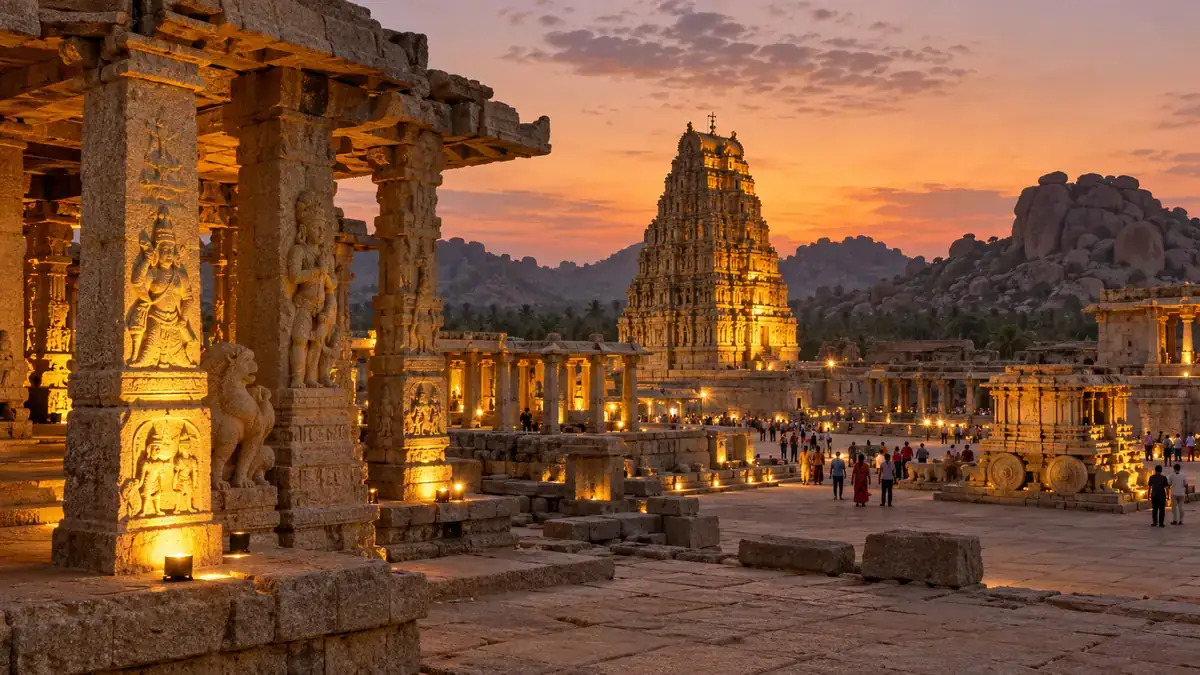
Planning your daily schedule to balance afternoon processions with night illuminations ensures you experience every facet of the festival. State cultural event details are highlighted through the Incredible India Hampi Guide.
| Event Highlight | Location / Timing | Unique Visual or Cultural Experience |
|---|---|---|
| Monument Illumination | Across all major monuments (6:30 PM to 10:30 PM) | Multi-hued architectural lighting over stone carvings and granite boulders |
| Shobha Yatra Parade | Starts at Kamalapur, ends at Hampi Bazaar (3:30 PM) | Decorated temple elephants, costumed folk dancers, brass bands, and royal chariots |
| Janapada Kalavahini | Rotating stages and street corners | Rare indigenous folk dance forms including Dollu Kunitha and Yakshagana |
| Sound and Light Show | Elephant Stables and Lotus Mahal lawn (8:00 PM) | Narrated theatrical history of the rise and fall of the Vijayanagara Empire |
| Hampi By Sky | Near Kamalapur helipad | Tethered hot air balloon rides offering aerial panoramas of illuminated ruins |
Illuminated Monuments: Stone Chariot, Lotus Mahal, and Queens Bath
The architectural illumination of Hampi’s monuments represents the visual signature of the festival. Specialized warm-spectrum LED lights accentuate the intricate relief carvings of the iconic Stone Chariot at the Vittala Temple complex.
The Indo-Islamic arched windows and plaster domes of the Lotus Mahal take on an ethereal golden glow against surrounding green lawns. At the Queen’s Bath, perimeter corridors and ornamental water basins are softly lit with floating earthen lamps, creating striking reflections that draw photographers from across the country.
Shobha Yatra Cultural Procession with Elephants and Folk Troupes
The festival officially opens with the grand Shobha Yatra, a ceremonial cultural procession that winds its way along a four-kilometer route from Kamalapur to Hampi Bazaar. The parade evokes the historical splendor of the empire’s royal pageants.
Caparisoned temple elephants with painted tusks lead the procession, followed by horse guards in historic Vijayanagara armor. Behind them march hundreds of folk artists playing traditional brass horns, drums, and cymbals, accompanied by dancers on stilts and performers balancing tiered brass pots atop their heads.
Janapada Kalavahini: Folk Art Forms of Karnataka
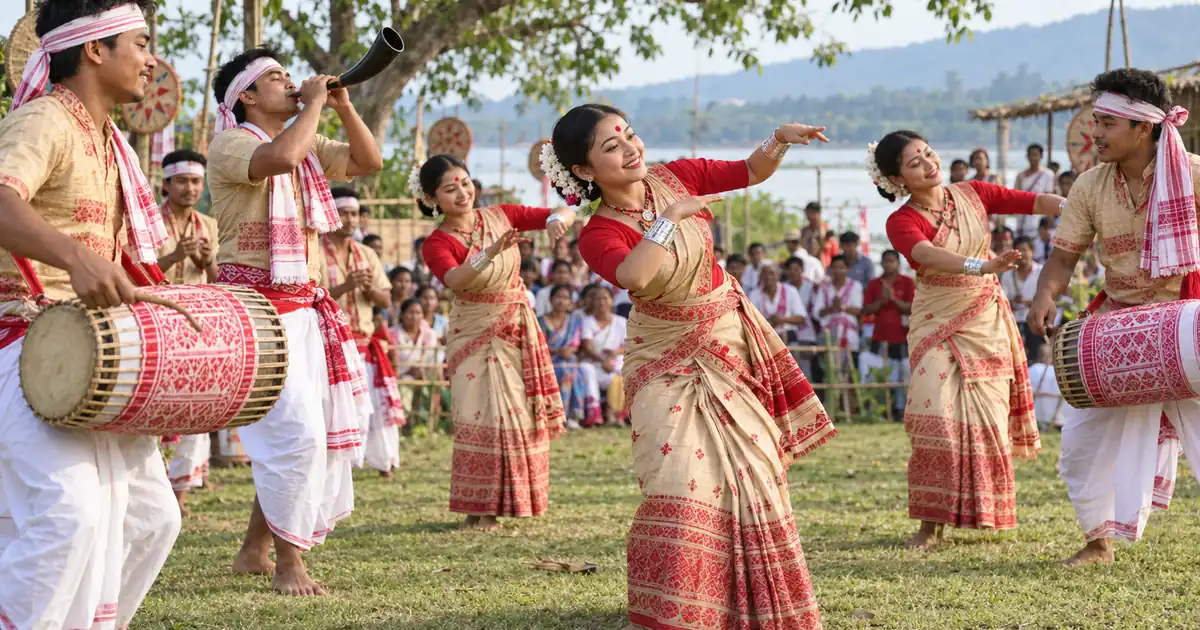
Hampi Utsav provides a celebrated stage for the folk arts of Karnataka under the Janapada Kalavahini banner. Spectators can witness Dollu Kunitha, a high-energy drum dance where performers beat massive drums strapped across their chests while executing acrobatic leaps.
Other featured traditions include Pooja Kunitha, where dancers carry five-foot-tall wooden deity frames, and Yakshagana, the elaborate coastal dance-drama featuring grand crown headdresses, expressive makeup, and vocal chanting based on the Mahabharata and Ramayana.
Spectator Planning: Entry Passes, Seating & Photography Tips
Attending Hampi Utsav is straightforward, as the state government maintains open public access to encourage wide cultural participation. However, managing crowd dynamics and navigating extensive ruin grounds in the dark requires practical preparation.
Equipping yourself with appropriate footwear, lighting gear, and transit plans ensures an enjoyable festival experience. Architecture lovers contrasting Vijayanagara granite pillars with Chola stone engineering can also explore our Brihadisvara Temple Thanjavur guide.
| Planning Domain | Recommended Practical Step | Operational Benefit on the Grounds |
|---|---|---|
| Entry Tariffs | No tickets required; open public seating at all venues | Saves money; allows free movement between simultaneous stages |
| Footwear Choice | Broken-in walking shoes or trail runners | Essential for navigating rocky paths and uneven ancient stone floors |
| Flashlight / Torch | Compact LED headlamp or high-power handheld torch | Guides safe walking between unlit rural paths connecting stages |
| Warm Clothing | Light fleece jacket, woolen shawl, or cardigan | Protects against sharp drops in winter night temperatures (15°C) |
| Cash Reserves | Carry adequate cash currency | Rural mobile networks become congested, disabling UPI and card machines |
Free Public Access and VIP Seating Protocols
Admission to all musical performances, dance stages, and daytime processions during Hampi Utsav is completely free of charge for both Indian citizens and foreign travelers. Spectator areas in front of the stages feature extensive rows of open plastic chairs arranged on level ground on a first-come, first-served basis.
A dedicated front enclosure is reserved for official state guests, senior artists, accredited journalists, and international travelers. Foreign visitors can present their original passports at the Karnataka Tourism Information Counter in Hampi Bazaar or Kamalapur to obtain special enclosure access badges.
Night Photography Across the Floodlit Ruin Landscapes
Photographing Hampi Utsav offers extraordinary creative opportunities, combining glowing ancient architecture with deep starry skies and dynamic stage lighting. A sturdy travel tripod is essential for capturing long exposures of the illuminated monuments without motion blur.
Use a wide-angle lens (16-35mm) to capture both the carved stone structures and the illuminated boulder hills framing them. For stage performances, a telephoto zoom (70-200mm f/2.8) allows you to capture crisp, detailed portraits of dancers and musicians from the spectator seating rows under low stage lighting.
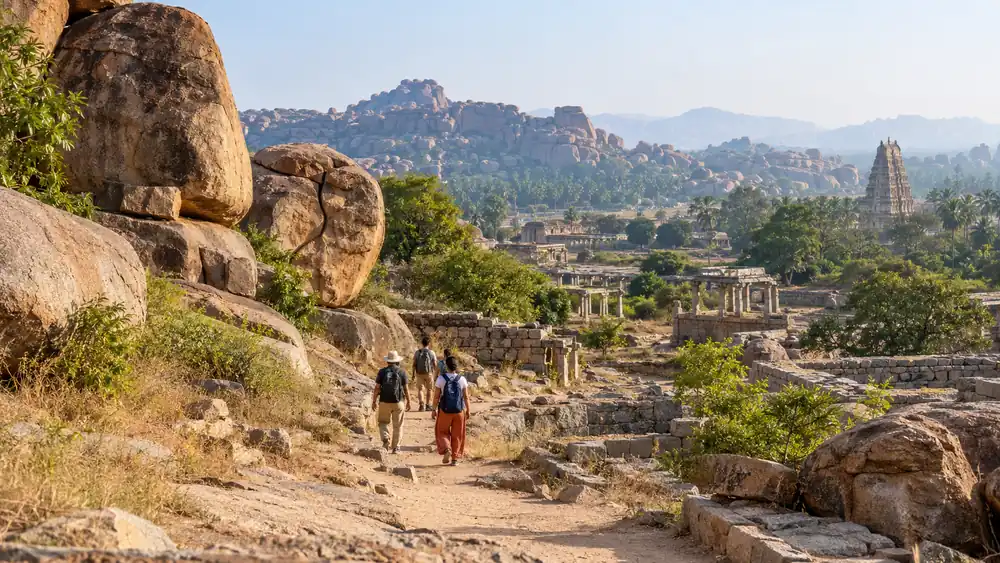
Daytime Ruin Exploration Between Evening Performances
Because the primary cultural programs begin after 6:00 PM, use your morning and early afternoon hours to explore Hampi’s expansive archaeological sites. Start early at 6:30 AM to climb Matanga Hill for sunrise over the boulder-strewn Tungabhadra valley.
During the cooler morning hours, tour the monumental musical pillars of the Vittala Temple, inspect the monolithic Narasimha and Badavilinga shrines, and explore the underground Shiva temple before retreating to shaded cafes during the warm midday sun.
Where to Stay: Karnataka Tourism Tent Cities and Heritage Stays
Accommodation in and around Hampi fills up rapidly during festival dates, as thousands of travelers arrive from Bengaluru, Hyderabad, and Goa. Booking your stay at least six to eight weeks in advance is essential to secure comfortable lodging.
Travelers can choose between temporary luxury tent cities erected specifically for the festival, established city hotels in nearby Hospet, or tranquil rural guesthouses across the river. Visitors coordinating extended Karnataka journeys can also explore the coastal water buffalo racing traditions in our Kambala Festival guide.
| Accommodation Area | Distance to Main Stages | Character and Traveler Appeal |
|---|---|---|
| KSTDC Tent City | 2 to 4 km (Near Kamalapur) | Immersive festival atmosphere, luxury swiss tents, on-site cultural dining |
| Hospet (Hosapete) | 12 to 15 km southwest | Modern business hotels, multi-cuisine restaurants, and rail station proximity |
| Kamalapur Village | 4 to 6 km southeast | Quiet heritage resorts, government guesthouses, and quick road access |
| Sanapur & Anegundi | 5 to 8 km (Across the river) | Relaxed rural homestays, paddy field views, bohemian cafes, and boulder climbs |
Official KSTDC Tent City Packages and Camping Stays
During Hampi Utsav, the Karnataka State Tourism Development Corporation (KSTDC) sets up a temporary luxury Tent City near Kamalapur. The village features hundreds of waterproof, air-conditioned Swiss cottage tents equipped with twin beds, attached chemical bathrooms, and solar lighting.
Staying at the official Tent City offers great convenience, as organizers operate dedicated shuttle mini-buses running directly between the campsite and the main Gayatri Peetha performance arenas throughout the night.
Hospet City Hotels and Kamalapur Guesthouses
Hospet (Hosapete) serves as the primary commercial city supporting Hampi, offering the widest range of three-star and four-star accommodations. Properties such as Hotel Malligi, Royal Orchid Central Kireeti, and Heritage Resort Hampi provide air-conditioned rooms, swimming pools, and secure car parking.
Kamalapur village, located midway between Hospet and Hampi, offers closer proximity to the ruins. The KSTDC Hotel Mayura Bhuvaneshwari in Kamalapur is situated within walking distance of the Archaeological Museum and the Royal Enclosure.
Sanapur and Anegundi Riverside Homestays
For travelers seeking a peaceful rural escape, staying across the Tungabhadra River in Sanapur or historic Anegundi provides a scenic alternative. The northern bank is characterized by green emerald paddy fields, coconut groves, and rustic guest cottages.
While the river ferry service halts after sunset during the festival, travelers can commute between the northern bank and the festival stages via the road bridge at Bukkasagara. The peaceful morning views across Sanapur Lake provide the ideal setting to recharge after late-night concerts.
Travel Logistics: Reaching Hampi from Bengaluru, Goa, and Hubli
Hampi sits in central Karnataka, well connected by regional highways and an extensive railway network. Travelers can easily combine a trip to the festival with holidays along the coastal beaches of Goa or heritage circuits across the Deccan plateau.
Understanding transit options helps you choose the most efficient combination of flights, express trains, and local road transport.
| Transit Corridor | Route & Mode Recommendation | Approximate Travel Time |
|---|---|---|
| From Bengaluru (Bangalore) | Hampi Express overnight train or NH48/NH50 highway drive (350 km) | 6.5 to 8 hours |
| From Goa (Panaji / Madgaon) | Amravati Express train or road drive via Mollem and Hubli (310 km) | 6.5 to 7.5 hours |
| From Hyderabad | Road drive via Raichur and Gangavathi (380 km) | 7.5 to 8.5 hours |
| Nearest Airport (Domestic) | Jindal Vijaynagar Airport, Toranagallu (VDY, 38 km) | 50 minutes by taxi to Hampi |
| Major Commercial Airport | Hubli Airport (HBX, 160 km west) | 3 hours by highway taxi or train |
Nearest Airport Hubs: Jindal Vijaynagar and Hubli
The closest airport to Hampi is the Jindal Vijaynagar Airport (VDY) at Toranagallu, located 38 kilometers east of the ruins. The airport handles daily scheduled domestic flights from Bengaluru and Hyderabad operated by regional carriers.
Taxis from Toranagallu reach Hampi or Hospet in approximately 50 minutes. Alternatively, Hubli Airport (HBX), located 160 kilometers to the west, connects to major national metros including Mumbai, Delhi, and Chennai, with smooth four-lane highway connectivity to Hampi via National Highway NH67.
Overnight Trains to Hosapete Junction
Indian Railways provides the most comfortable and reliable transit option for domestic travelers heading to Hampi. Hosapete Junction (station code HPT) sits just 14 kilometers from Hampi Bazaar and connects directly to major cities across southern and western India.
The Hampi Express departs daily from Bengaluru City Railway Station in the late evening, arriving at Hospet early the next morning. The Amravati Express connects Vasco da Gama and Madgaon in Goa directly to Hospet, providing an effortless scenic rail journey through the Western Ghats.
Local Auto-Rickshaw Tariffs and Ferry Crossings
Navigating between Hospet, Kamalapur, and the scattered Hampi ruins is easiest using local three-wheeler auto-rickshaws. During Hampi Utsav, auto-rickshaw drivers operate on fixed festival tariffs regulated by the district transport department.
A one-way auto ride from Hospet railway station to Hampi Bazaar typically costs between ₹250 and ₹350. Within the ruins, hiring an auto-rickshaw for a full day of sightseeing costs approximately ₹1,000 to ₹1,400. Ensure you agree on waiting charges and pickup timings for the return journey after the evening cultural concerts conclude.
Frequently Asked Questions About Hampi Utsav
When is Hampi Utsav held each year?
Hampi Utsav is typically organized annually over three consecutive days during the winter months, usually in November or January. The exact dates are announced by the Karnataka Tourism Department and Vijayanagara District Administration several weeks in advance.
Is entry to Hampi Utsav free for the public?
Yes, admission to all performance stages, cultural programs, and illuminated monument zones during Hampi Utsav is completely free for all domestic and foreign visitors. Public seating is provided on a first-come, first-served basis.
Which monuments are illuminated during Hampi Utsav?
Major monuments across the UNESCO archaeological complex are illuminated with multi-colored floodlights, including the Stone Chariot and musical pillars at Vittala Temple, the Virupaksha Temple eastern gopuram, the Lotus Mahal, Elephant Stables, Queen’s Bath, and the Mahanavami Dibba.
What is the closest railway station to Hampi Utsav?
Hosapete Junction (HPT) is the closest railway station, situated 14 kilometers southwest of Hampi. The station operates daily direct express and superfast trains connecting Bengaluru, Goa, Hyderabad, and Mumbai.
What should visitors wear to Hampi Utsav?
Visitors should dress in comfortable, modest clothing suitable for walking across uneven stone ruins. Because winter night temperatures can drop to 15°C, bringing a light jacket, cardigan, or woolen shawl is recommended for open-air evening concerts. Comfortable walking shoes are essential.
Can tourists pair Hampi Utsav with other South Indian festivals?
Yes, travelers can coordinate attending Hampi Utsav with other prominent winter and spring cultural events across South India, including temple festivities in Tamil Nadu and contemporary arts at the Kochi-Muziris Biennale in Kerala.