Lepakshi Temple & Hanging Pillar: Timings, History & Trips
Plan your visit to Lepakshi Veerabhadra Temple with timings, hanging pillar mystery, monolithic Nandi, dress code, and a 1-day Bangalore road trip guide.
Lepakshi Temple Sightseeing Essentials
- Historic Origins: Sixteenth-century Vijayanagara architectural sanctuary built between 1530 and 1538 CE by royal treasurers Virupanna and Veeranna.
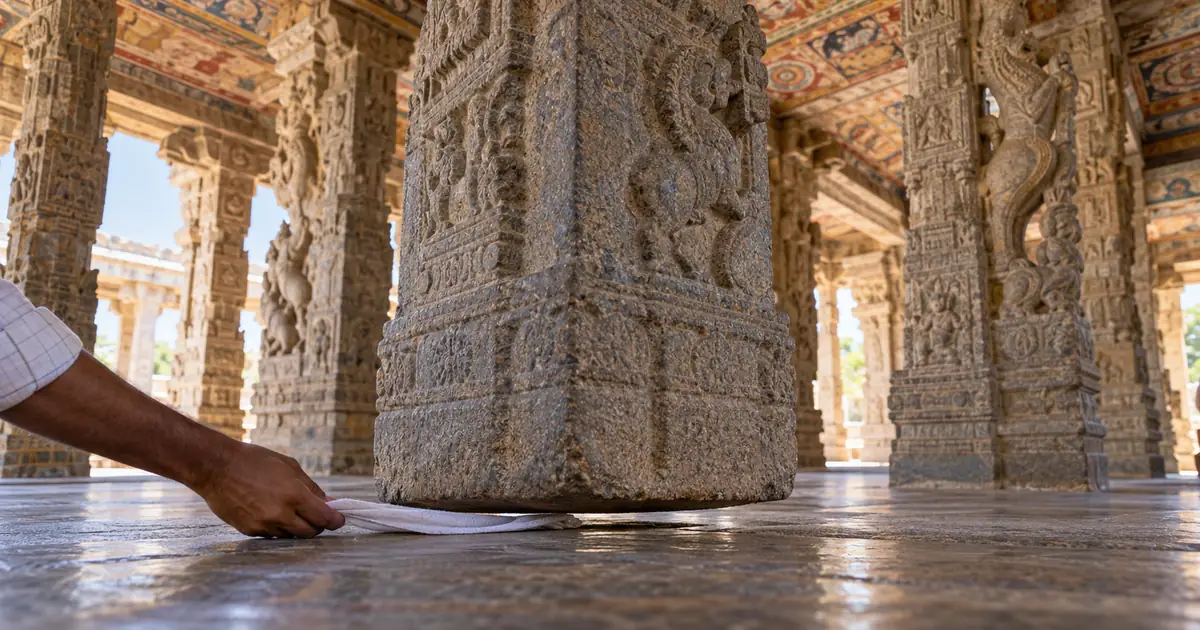
- The Hanging Pillar: A celebrated granite column in the Natya Mandapa that does not touch the stone floor, allowing cloth to pass underneath.
- Colossal Monolithic Sculptures: Features India’s largest monolithic Nandi bull (4.5 meters high, 8.2 meters long) and a dramatic seven-hooded Naga Linga.
- Mural Masterwork: Preserves Asia’s largest single ceiling fresco of Lord Veerabhadra (23 by 13 feet) created with natural mineral pigments.
- Weekend Excursion: Positioned 120 kilometers north of Bengaluru via National Highway 44, making it an effortless two-and-a-half-hour day trip.
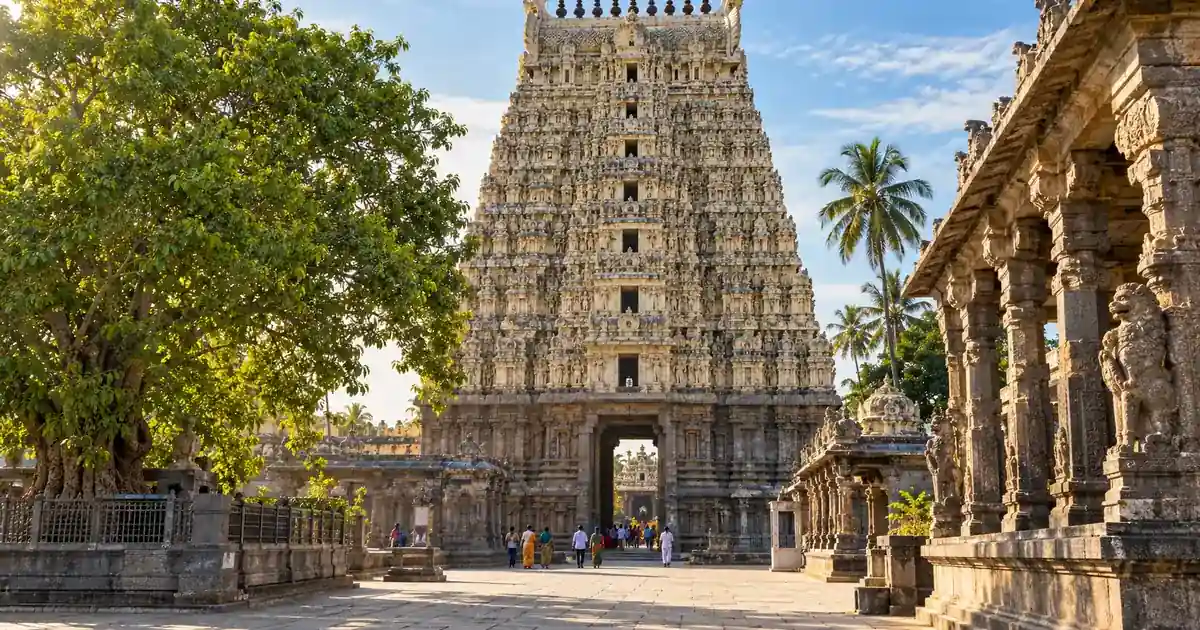
Lepakshi Veerabhadra Temple stands among the most remarkable architectural treasures of southern India. Located in the Sri Sathya Sai district of western Andhra Pradesh, this ancient temple complex displays the height of sixteenth-century Vijayanagara stone carving, advanced structural engineering, and celebrated mural painting. The sanctuary is widely famous for its enigmatic hanging pillar, a massive monolithic bull sculpture, and a multi-hooded serpent lingam carved from a single granite hillock.
Situated just 120 kilometers north of Bengaluru along a smooth highway corridor, Lepakshi has become a favored cultural day trip. Walking through its broad pillared courtyards reveals extraordinary friezes of celestial musicians, epic legends from the Ramayana, and quiet granite shrines sheltered beneath boulder ridges.
This complete visitor guide details the temple history, engineering mysteries, dress code rules, photography guidance, and an efficient one-day driving itinerary from Bangalore.
Historical Legacy and Vijayanagara Architecture of Veerabhadra Temple
The Veerabhadra Temple at Lepakshi was commissioned during the golden age of the Vijayanagara Empire during the reign of King Achyuta Deva Raya, who ruled from 1529 to 1542 CE. Construction was undertaken by two noble brothers, Virupanna and Veeranna, who served as royal treasurers and regional governors. The brothers selected the site known as Kurma Saila, an undulating granite ridge shaped naturally like a tortoise shell.
Local folklore connects the town’s name directly to the Treta Yuga and the epic Ramayana. Legend recounts that the demi-god eagle Jatayu fought valiantly against the demon king Ravana as he abducted Goddess Sita in the sky.
Ravana clipped Jatayu’s wings, causing the bird to fall mortally wounded upon this granite mound. When Lord Rama and Lakshmana arrived in search of Sita, Rama spotted the brave bird and compassionately uttered in Telugu, “Le Pakshi”, which translates to “Rise, bird”.
Historical and conservation milestones cataloged on the Archaeological Survey of India World Heritage Directory confirm the monument’s submission on the UNESCO World Heritage Tentative List. The temple is built entirely of hard local granite, demonstrating the distinct late-Vijayanagara architectural idiom. This style emphasizes open-air mandapas, deeply undercut bracket figures, carved rearing mythical beasts, and extensive narrative ceiling paintings.
The temple complex consists of three concentric enclosures. The outermost enclosure features a massive granite perimeter wall with towering gateways. The intermediate courtyard contains open pavilions, sacred wells, and commemorative stone carvings, while the inner sanctum houses the fierce deity Veerabhadra, an avatar of Lord Shiva created from his matted locks during Daksha’s sacrifice.
The Hanging Pillar Mystery: Architectural Engineering and Colonial Investigation
Among the seventy sculpted stone pillars that support the roof of the Natya Mandapa (dance pavilion), one corner pillar commands worldwide fascination. Known traditionally as the Aakasa Stambha or floating pillar, this heavy granite column does not make complete contact with the stone floor.
A slender clearance exists between the carved stone base and the pavement. This small gap allows visitors to pass a thin cloth, sheet of paper, or scarf smoothly beneath it from one side to the other.
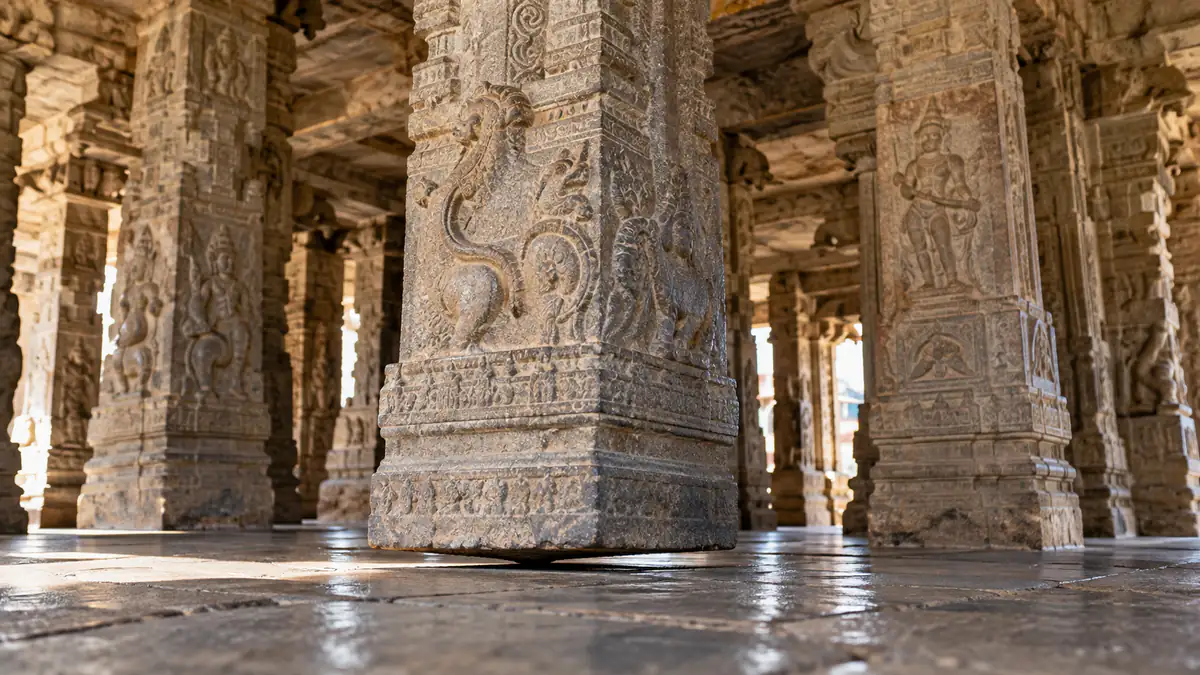
Structural Details of the Hanging Pillar:
- Location: Southwest corner of the Natya Mandapa (Ardha Mandapa).
- Material: Solid gray granite, elaborately sculpted with divine attendants.
- Physical Gap: Roughly half an inch of clearance along the base corners.
- The Cloth Test: Demonstrators slide thin shawls underneath to prove the lack of ground contact.
- Structural Function: Acts as a cantilevered ceiling anchor rather than a weight-bearing floor support.
During the British colonial period, an English engineer named Hamilton sought to decipher how a multi-ton stone column could stand without resting on the foundation. In an attempt to uncover the secret joinery, Hamilton inserted an iron crowbar beneath the pillar and applied strong mechanical leverage.
His intervention shifted an adjacent load-bearing column by several millimeters, causing cracks to appear across neighboring ceiling lintels. Recognizing that forcing the pillar could bring down the entire hall, Hamilton abruptly abandoned his attempt.
Modern structural engineers explain that the pillar is supported from above through an ingenious cantilever principle. The ceiling beams and interlocking roof slabs bear the downward gravitational forces, holding the column suspended like a decorative pendulum. The master masons of the Vijayanagara era calibrated the center of gravity so precisely that the pillar remains stable without pressing down upon the floor stones.
Monolithic Sculptural Wonders: Colossal Nandi and Seven-Hooded Naga Linga
Lepakshi is celebrated for two colossal monolithic sculptures carved with astonishing precision from natural granite boulders. These sculptures demonstrate the technical audacity of medieval stonecutters who worked directly on exposed rock outcrops rather than assembling quarry blocks.
The Monolithic Nandi Bull
Located approximately 200 meters east of the main temple gates, the colossal Nandi sits proudly beside the entrance highway. Carved from a single massive granite ridge, this statue ranks among the largest monolithic bulls in India. The bull measures an impressive 4.5 meters (15 feet) in height and 8.2 meters (27 feet) in length.
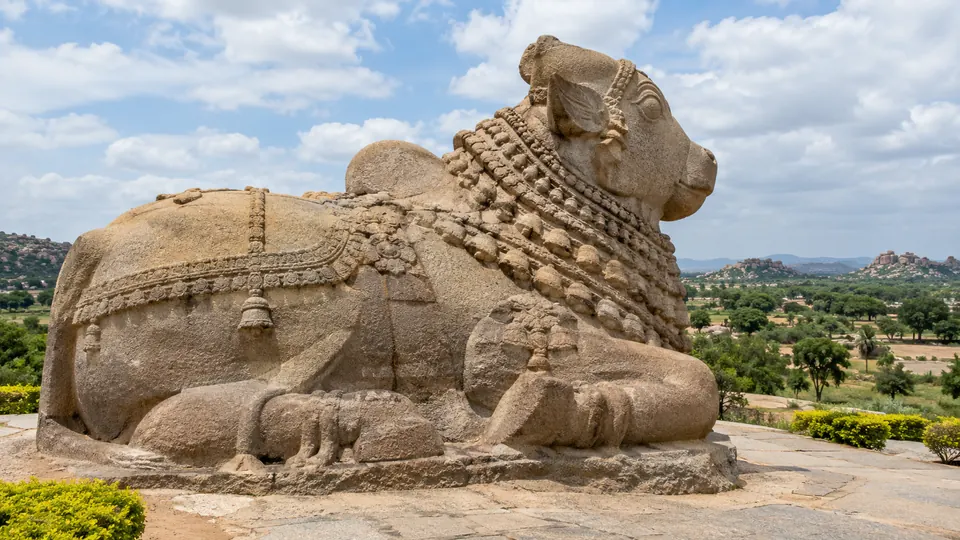
The sculpture portrays Lord Shiva’s sacred mount in a poised, semi-recumbent posture. Ornate ropes, chains of brass bells, dangling tassels, and beaded garlands are chiseled in high relief across its muscular neck and rounded flanks.
The expression of the bull appears calm and dignified, with its head held high and its gaze directed westward toward the temple. Travelers visiting historic temple towns across southern India often compare this sculpture with the sacred bull at Omkareshwara Temple in Coorg.
The Seven-Hooded Naga Linga
Inside the inner courtyard of the temple, directly behind the main sanctum, stands the magnificent monolithic Naga Linga. This sculptural composition features a colossal seven-hooded serpent, Adisesha, coiled three times around a polished black granite Shiva lingam.
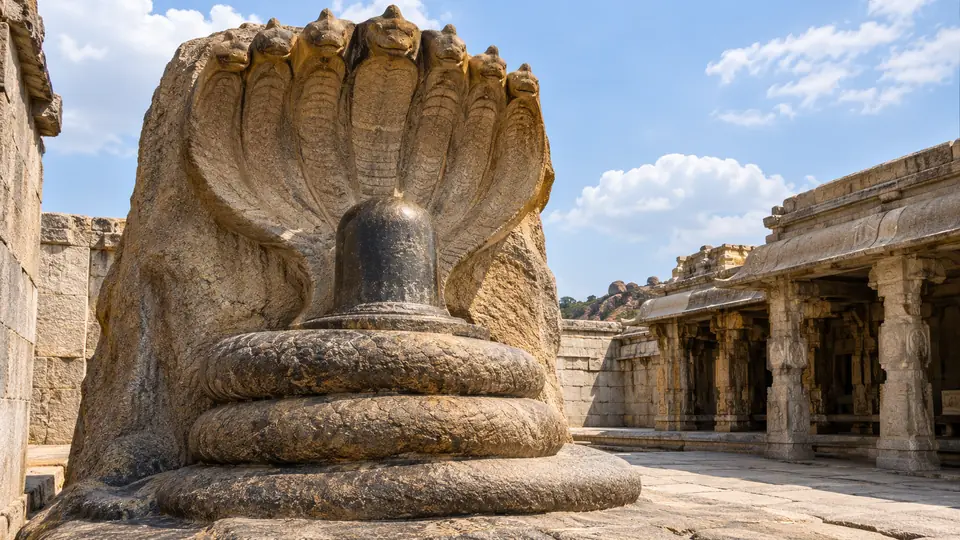
The hoods of the serpent spread outward like a broad protective umbrella over the lingam, shielding it from sun and rain. Folk legends recount that royal sculptors carved this entire sculpture out of an enormous rock outcropping in a single day while waiting for their mother to cook their midday meal.
The precision of the coils and the gentle arch of the serpent heads make it one of the most photographed heritage monuments in Andhra Pradesh. Pilgrims often spend several minutes admiring the subtle stone textures preserved on the hood underside.
| Monument Feature | Material | Physical Dimensions | Cultural Significance |
|---|---|---|---|
| Monolithic Nandi | Single granite boulder | 4.5m high, 8.2m long | Faces west toward the temple Naga Linga |
| Seven-Hooded Naga Linga | Single granite outcrop | 3.8m high with 3 coils | Protective serpent umbrella over Shiva lingam |
| Hanging Pillar | Solid carved granite | Approx. 3.5m height | Suspended cantilever column in dance hall |
| Veerabhadra Fresco | Natural mineral pigments | 23 feet by 13 feet | Asia’s largest single ceiling mural painting |
| Kalyana Mandapa | Carved granite pillars | 38 open-air columns | Commemorates divine marriage of Shiva-Parvati |
Veerabhadra Temple Ceiling Frescoes and Painted Murals
The Natya Mandapa and the interior ardha mandapa of Lepakshi preserve the finest surviving examples of Vijayanagara mural art in India. Painted directly onto plastered stone ceilings using natural mineral and vegetable pigments, these murals display a distinctive pictorial tradition characterized by dynamic linework, elongated eyes, and patterned drapery.
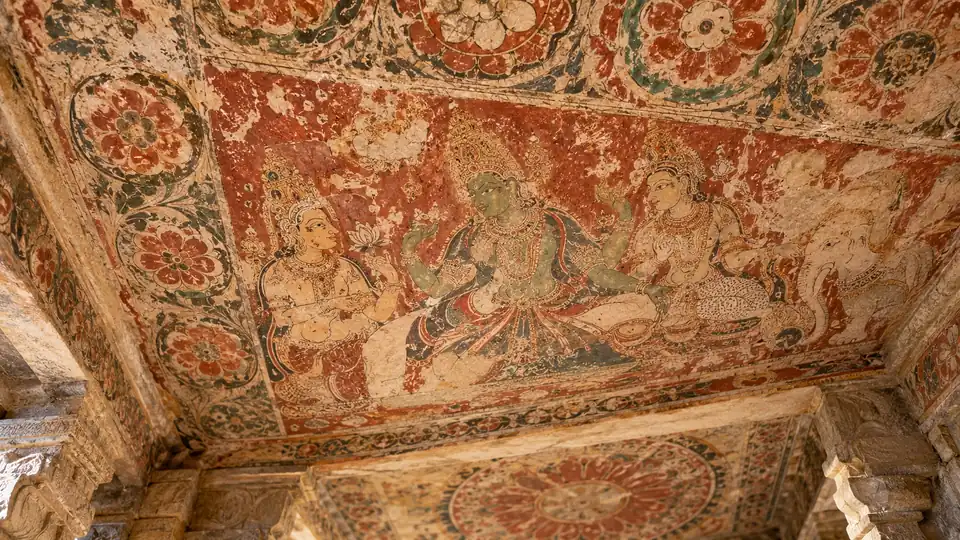
Mural Highlights Across the Ceilings:
- Veerabhadra Masterpiece: Asia’s largest single ceiling fresco measuring 23 by 13 feet, depicting the ferocious deity with fourteen arms surrounded by celestial sages.
- The Story of Manunithi Cholan: Illustrates the legendary Tamil king who dispensed royal justice to a cow whose calf was accidentally killed by his son’s chariot.
- Puranic Narrative Panels: Scenes portraying the marriage of Lord Shiva and Goddess Parvati, along with the churning of the cosmic ocean (Samudra Manthan).
- Royal Portraits: Depictions of builder brothers Virupanna and Veeranna dressed in conical Vijayanagara turbans and flowing courtly dhotis.
According to conservation registers maintained by the Archaeological Survey of India, the artists utilized an organic palette dominated by warm ochre, lampblack, deep brick red, lime white, and copper green. The figures wear rich textiles featuring delicate geometric prints, floral borders, and pleated sashes, providing historians with invaluable documentation of sixteenth-century South Indian fashion and royal court dress.
Unlike earlier Ajanta wall paintings that relied on soft shading and three-dimensional modeling, Lepakshi frescoes favor bold black profile outlines and flat decorative color planes. Even after five centuries of exposure to fluctuating humidity and natural light, large sections of the ceiling retain their remarkable visual intensity.
Kalyana Mandapa and the Sacred Footprint of Sita
Toward the rear of the inner enclosure stands the Kalyana Mandapa, an open-air wedding pavilion constructed to celebrate the celestial marriage of Shiva and Parvati. The pavilion stands elevated on a carved stone plinth and features thirty-eight elaborately sculpted pillars. Each pillar depicts a different deity, celestial apsara, or Vedic sage gathered as wedding guests.
The hall remains striking for its incomplete state, lacking a completed stone ceiling. Historical legend explains that King Achyuta Deva Raya was informed by jealous court rivals that Virupanna was depleting the royal treasury on temple construction without royal sanction. Angered by the report, the king dispatched soldiers with orders to blind Virupanna.
Hearing of the royal decree, the faithful treasurer chose to execute the punishment with his own hands. Virupanna plucked out his eyes and dashed them against the stone wall of the temple. Two dark red stains remain visible today on the western wall of the courtyard, traditionally revered by locals as the indelible blood marks of the devout builder.
The Sacred Footprint of Sita
Located on the rocky courtyard floor near the Kalyana Mandapa, this natural indentation resembles a large human right foot. A constant trickle of cool spring water seeps upward from the stone crevices, keeping the depression permanently moist. Devotees revere this spot as the blessed footstep left by Goddess Sita when Jatayu fell in battle.
A short distance from the wedding pavilion lies this sacred Footprint of Sita, known locally as Sita Mata’s Padam. Pilgrims wash their hands in this cool spring water and touch the stone in reverent prayer.
Lepakshi Temple Timings, Entry Fees, and Dress Code
Lepakshi Veerabhadra Temple functions as both an active place of daily worship and a protected monument of national importance under the Archaeological Survey of India. The gates open early in the morning and close at sunset, allowing plenty of daylight hours for visitors to tour the grounds.
Operating Schedule:
- Daily Opening Hours: 6:00 AM to 6:00 PM (Open seven days a week).
- Morning Darshan Window: 6:30 AM to 9:30 AM (Pleasant weather, quietest atmosphere).
- Midday Break: Sanctum doors may close briefly between 1:00 PM and 2:00 PM for priestly rituals, but the outer pavilions remain open.
- Sunset Aarti: 5:30 PM to 6:00 PM.
Admission to the entire temple complex and the nearby monolithic Nandi is completely free for both Indian and foreign visitors. No ticket counters operate at the entrance. Devotees seeking to combine this heritage site with renowned pilgrimage circuits in Andhra Pradesh can also review darshan rules for Tirumala Venkateswara Temple in Tirupati.
| Item or Service | Associated Fee | Important Practical Details |
|---|---|---|
| Entry Ticket (Indian Citizens) | Free | Protected national monument under ASI |
| Entry Ticket (Foreign Citizens) | Free | No admission fees or online passes needed |
| Mobile Photography | Free | Permitted throughout open courtyards |
| Professional Video Camera | Prior ASI permit required | Monopods and commercial gear restricted |
| Shoe-Keeping Counter | ₹5 to ₹10 (Voluntary) | Managed outside the outer perimeter gate |
| Licensed Heritage Guides | ₹300 to ₹500 | Available at gate; negotiate rates in advance |
Visitors must adhere to respectful dress standards before entering the sacred plinth. Modest clothing covering the shoulders and knees is mandatory, with dhotis, kurtas, sarees, and salwar suits preferred over western casuals. Footwear must be removed at the shoe counter outside before stepping onto the stone platforms.
Curated 1-Day Road Trip Itinerary from Bangalore
The easy highway connectivity from Bangalore makes Lepakshi one of the most popular weekend road trips in South India. Driving north along National Highway 44 takes travelers past Kempegowda International Airport and the scenic rocky hills of Chikkaballapur.
Morning Schedule:
- 6:00 AM to 7:30 AM: Depart central Bengaluru early to clear city traffic. Follow the airport elevated expressway onto NH44 toward Devanahalli and Chikkaballapur.
- 7:30 AM to 8:15 AM: Stop for breakfast along the highway. Popular family dhabas and South Indian restaurants near Chikkaballapur serve piping hot dosas, idlis, and filter coffee.
- 8:15 AM to 9:15 AM: Continue north past Bagepalli toward the Andhra Pradesh state border. Turn left at the Kodikonda checkpost onto the rural state road leading fourteen kilometers into Lepakshi village.
- 9:30 AM to 10:15 AM: Begin your tour at the Monolithic Nandi statue located on the eastern approach road. Spend forty-five minutes photographing the giant bull in soft morning light before walking to the main temple.
Midday and Afternoon Schedule:
- 10:30 AM to 12:30 PM: Enter Veerabhadra Temple. Hire a local licensed guide to explore the Natya Mandapa, witness the hanging pillar demonstration, inspect the seven-hooded Naga Linga, and admire the ceiling frescoes.
- 12:30 PM to 1:15 PM: Walk around the open Kalyana Mandapa and observe the sacred Footprint of Sita.
- 1:30 PM to 2:45 PM: Enjoy lunch at the Andhra Pradesh Tourism Development Corporation Haritha Hotel located near the temple, or return to highway restaurants along NH44.
- 3:00 PM to 4:30 PM: Optional stopover at the historic fort town of Penukonda, located thirty kilometers north, or begin your relaxed return drive toward Bangalore.
- 6:00 PM to 7:00 PM: Arrive back in Bengaluru ahead of evening traffic peaks.
Pilgrims exploring grand Shaivite traditions across Andhra Pradesh can also link these architectural insights with the ancient hill sanctuary of Mallikarjuna Jyotirlinga at Srisailam. Both temples demonstrate the profound devotion and artistic genius that flourished across medieval Andhra kingdoms.
| Time Window | Activity | Location |
|---|---|---|
| 6:00 AM – 7:30 AM | Highway Drive from Bengaluru | Bangalore Airport Expressway (NH44) |
| 7:30 AM – 8:15 AM | Traditional Breakfast Break | Highway restaurants near Chikkaballapur |
| 8:15 AM – 9:30 AM | Drive to Lepakshi via Kodikonda | Border crossing onto State Road |
| 9:30 AM – 10:15 AM | Photograph Monolithic Nandi | Eastern entry garden |
| 10:30 AM – 1:15 PM | Veerabhadra Temple Comprehensive Tour | Natya Mandapa, Naga Linga, Murals |
| 1:30 AM – 2:45 PM | Traditional Andhra Meals / Lunch | APTDC Haritha or highway food courts |
| 3:00 PM – 5:30 PM | Return Highway Drive to Bengaluru | National Highway 44 southward |
How to Reach Lepakshi by Road, Train, and Air
Lepakshi is situated in the southwestern corner of Andhra Pradesh, very close to the Karnataka state border. The town’s proximity to major highways, trunk railway lines, and an international airport makes reaching it straightforward for travelers coming from across India.
Travel Modes Breakdown:
- By Road: Reaching Lepakshi by car or motorcycle is the most convenient choice. Drive along National Highway 44 (Bengaluru-Hyderabad Highway) past Bagepalli. At the Kodikonda checkpost (roughly 105 km from Bangalore), take the left exit onto the state highway and drive fourteen kilometers directly to Lepakshi.
- By Train: Hindupur Railway Station (station code HUP) is the closest railway hub, located just fourteen kilometers away. Regular express trains running between Bengaluru, Mumbai, and Hyderabad halt at Hindupur. Local auto-rickshaws, shared taxis, and state buses run frequently between Hindupur and Lepakshi.
- By State Bus: Karnataka State Road Transport Corporation (KSRTC) and Andhra Pradesh State Road Transport Corporation (APSRTC) operate direct buses from Bangalore’s Majestic bus terminal to Hindupur. From Hindupur, local connecting buses reach Lepakshi in twenty minutes.
- By Air: Kempegowda International Airport (BLR) in Bengaluru is the nearest commercial airport, situated approximately 100 kilometers south. Taxis can be hired directly from the airport terminal to reach Lepakshi in under two hours.
Regional heritage profiles documented across the Sri Sathya Sai District History Archives provide valuable context on Rayalaseema monument networks. Paved highway surfaces ensure smooth driving conditions throughout the year. Travelers planning longer circuits across Andhra Pradesh can also link these heritage plains with the Eastern Ghats mountain railway in our Araku Valley and Borra Caves guide.
| Route Origin | Travel Distance | Recommended Transport | Estimated Travel Time |
|---|---|---|---|
| Bangalore (City Center) | 120 kilometers | Private car or taxi via NH44 | 2 hours 30 minutes |
| Bangalore Airport (BLR) | 100 kilometers | Highway cab via NH44 | 1 hour 45 minutes |
| Hindupur Railway Station | 14 kilometers | Local auto-rickshaw or taxi | 20 minutes |
| Anantapur | 125 kilometers | Train or highway bus | 2 hours 15 minutes |
| Hyderabad | 480 kilometers | Superfast train or road drive | 7 to 8 hours |
Essential Visitor Guidelines and Photography Etiquette
To ensure a comfortable and meaningful visit to Lepakshi Veerabhadra Temple, visitors should prepare for the unique physical conditions of touring an open granite sanctuary.
Practical Travel Tips:
- Pack Extra Socks: Because footwear is strictly prohibited inside the complex, walking barefoot on the exposed granite stone during sunny midday hours can be very uncomfortable. Wearing thick cotton socks protects your feet from hot stone slabs.
- Carry Drinking Water: Carry reusable water bottles to stay hydrated during warm daytime hours. Clean drinking water dispensers are situated near the entrance.
- Engage a Local Guide: The intricate iconography, hidden monolithic carvings, and ceiling fresco stories are easily missed without explanation. Authorized local guides charge modest fixed fees and provide rich historical context in English, Telugu, Kannada, and Hindi.
- Flash Photography Ban: Flash photography is strictly forbidden near the ceiling frescoes to prevent light-induced degradation of the ancient vegetable dyes. Maintain natural camera exposure settings.
- Avoid Touching Murals: Never touch or lean against the painted plaster surfaces. Preserving these fragile sixteenth-century murals depends entirely on visitor restraint.
Visiting during the cooler months from October to March ensures pleasant morning weather and comfortable walking across the extensive open courtyards.
Frequently Asked Questions About Lepakshi Temple
What are the daily opening timings for Lepakshi Temple?
Lepakshi Veerabhadra Temple is open to visitors every day from 6:00 AM until 6:00 PM. Arriving between 6:30 AM and 9:00 AM provides pleasant temperatures and the best morning light for photographing the granite carvings.
Does the hanging pillar at Lepakshi truly float above the ground?
Yes, the celebrated corner pillar in the Natya Mandapa does not make direct contact with the stone floor, leaving a visible gap through which visitors pass cloth or paper. Architectural engineers note it is held firmly in place from the ceiling through ingenious cantilevered stone joinery.
Is there an entry ticket fee to visit Lepakshi Temple?
Admission to Lepakshi Veerabhadra Temple is completely free for both Indian citizens and international travelers as it is a protected monument under the Archaeological Survey of India. Small voluntary fees apply only for shoe-keeping counters and footwear safekeeping.
What is the recommended dress code for visiting Lepakshi Temple?
Visitors should wear modest clothing that keeps shoulders and knees covered, with traditional Indian attire like kurtas, dhotis, or sarees highly appreciated. Footwear must be deposited at the shoe counter outside before stepping onto the stone platforms.
How long does it take to drive from Bangalore to Lepakshi?
The 120-kilometer drive from central Bengaluru takes approximately two to two and a half hours via the smooth multi-lane National Highway 44. Turning left at the Kodikonda checkpost brings travelers onto a brief 14-kilometer country road directly into Lepakshi village.