Andhra Pradesh Travel Guide: Top Places, Circuits & Itineraries
Plan your trip with our Andhra Pradesh travel guide covering Tirupati Balaji, Srisailam Jyotirlinga, Araku Valley, Lepakshi temple, and Coromandel coast.
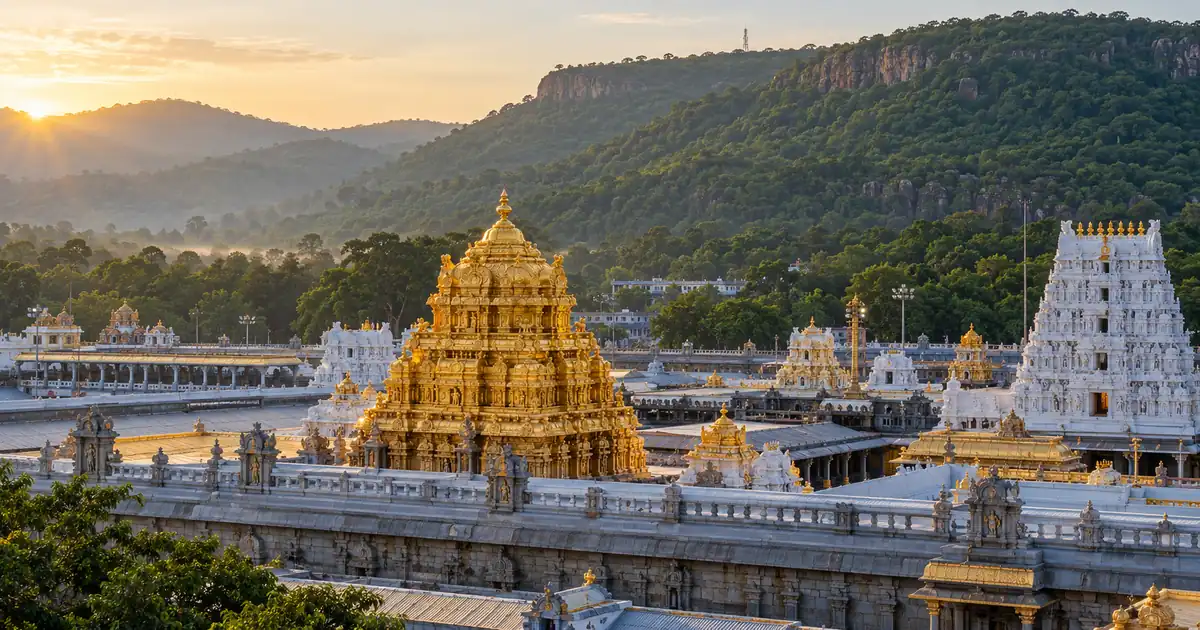
Andhra Pradesh spans 162,970 square kilometers along the southeastern coast of peninsular India, ranking as the seventh-largest state in the country. Bordered by the Bay of Bengal along a 974-kilometer coastline, the region unites ancient river deltas, deep limestone caverns, and sandstone gorges.
Administratively partitioned into twenty-six districts, Andhra Pradesh divides into three historical zones: Coastal Andhra, Rayalaseema, and Uttarandhra. Travelers encounter sacred Vedic pilgrimage centers, Vijayanagara stone monuments, Eastern Ghats coffee highlands, and protected river canyons.
State Travel & Circuit Essentials
- Andhra Pradesh encompasses 162,970 square kilometers in southeastern India across 26 administrative districts, bordered by a 974-kilometer shoreline along the Bay of Bengal.
- Amaravati serves as the state capital on the southern bank of the Krishna River, while the coastal port city of Visakhapatnam anchors international trade, industry, and naval operations.
- Peak travel season extends from October through March, when dry winter skies and daytime temperatures between 18°C and 30°C create comfortable conditions across coastal beaches and inland heritage sites.
- Major transit corridors include the Chennai-Kolkata coastal highway (NH16), the central Deccan highway (NH44), and major railway junctions at Vijayawada, Visakhapatnam, and Tirupati.
The territory links directly to major domestic and global gateways through international airports at Visakhapatnam, Vijayawada, and Tirupati. Travelers mapping journeys across southern India often evaluate these coastal routes alongside circuits highlighted in our best places to visit in India guide.
Andhra Pradesh Destinations Master Matrix
The master matrix organizes primary travel regions by cultural zone, administrative district, recommended stay duration, signature highlights, and main transit gateways. Visitors can use these pairings to connect adjoining districts into continuous rail or road journeys. Travelers spending a weekend in the northern port city can follow our dedicated itinerary of places to visit in Visakhapatnam across two days.
| Destination Region | Cultural Zone & District | Ideal Duration | Signature Highlights | Primary Transit Gateway |
|---|---|---|---|---|
| Tirupati & Seshachalam | Rayalaseema (Tirupati) | 2 to 3 Days | Sri Venkateswara Swamy Temple, Kapilatheertham, Chandragiri Fort | Tirupati Airport (TIR) / Tirupati Main (TPTY) |
| Srikalahasti & Swarnamukhi | Rayalaseema (Tirupati) | 1 to 2 Days | Srikalahasteeswara Temple, Rahu Ketu Pooja, Vayu Lingam | Renigunta Junction (RU) / Tirupati Airport (TIR) |
| Srisailam & Nallamala | Rayalaseema (Nandyal) | 2 Days | Mallikarjuna Jyotirlinga, Bhramaramba Shakti Peetha, Krishna Gorge | Markapur Road (MRK) / Kurnool Airport (KJB) |
| Lepakshi & Penukonda | Rayalaseema (Sri Sathya Sai) | 1 to 2 Days | Veerabhadra Temple, Monolithic Nandi, Hanging Pillar, Penukonda Fort | Hindupur Station (HUP) / Bengaluru Airport (BLR) |
| Araku Valley & Borra Caves | Uttarandhra (ASR District) | 2 to 3 Days | Vistadome Mountain Rail, Million-Year Borra Caves, Katiki Waterfalls | Visakhapatnam Airport (VTZ) / Araku Station (ARK) |
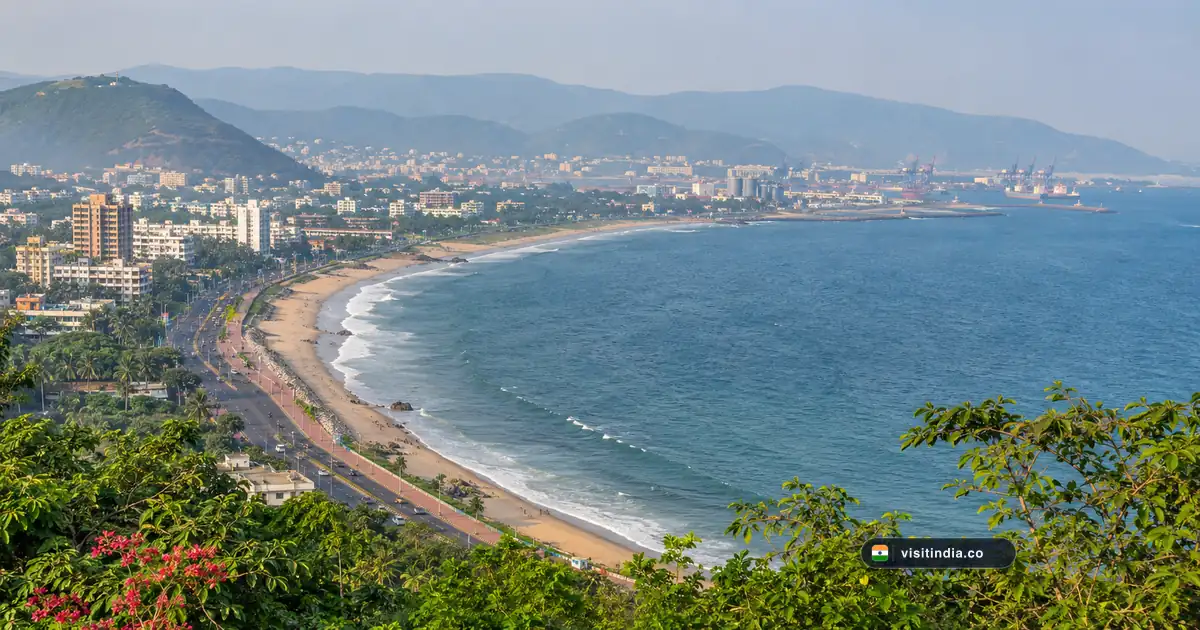
| Visakhapatnam Coast | Uttarandhra (Visakhapatnam) | 2 to 3 Days | Submarine Museum, Kailasagiri Hill, Rishikonda Beach, Dolphin’s Nose | Visakhapatnam Airport (VTZ) / Vizag Junction (VSKP) |
| Vijayawada & Amaravati | Coastal Andhra (NTR & Guntur) | 2 Days | Kanaka Durga Temple, Undavalli Rock Caves, Dhyana Buddha, Prakasam Barrage | Vijayawada Airport (VGA) / Vijayawada Junction (BZA) |
| Godavari Delta & Konaseema | Coastal Andhra (East Godavari) | 2 to 3 Days | Papikondalu Boat Cruise, Havelock Bridge, Coconut Lagoons, Coringa Mangroves | Rajahmundry Airport (RJA) / Rajahmundry Station (RJY) |
| Gandikota & Belum Caves | Rayalaseema (YSR Kadapa & Nandyal) | 2 Days | Pennar River Canyon, Gandikota Fort, 3.2 km Belum Caverns, Yaganti Temple | Kadapa Airport (CDP) / Tadipatri Station (TU) |
Geographic Landscape, Coastline, and Three Regional Zones
Andhra Pradesh occupies the southeastern edge of the Deccan Plateau and the wide coastal lowlands along the Bay of Bengal. The terrain rises from sea level along sandy beaches to 1,690 meters atop Jindhagada Peak in the Eastern Ghats.
Geographers divide the territory into three broad regions: Coastal Andhra, Rayalaseema, and Uttarandhra. Coastal Andhra stretches along the fertile deltas created by the Godavari and Krishna rivers, producing expansive green paddy fields, coconut groves, and mangrove waterways.
Rayalaseema occupies the arid southwestern interior plateau, encompassing eight districts characterized by red laterite soils, rocky granite outcrops, and deep river gorges. The region was the historic heartland of the Vijayanagara Empire, preserving fortified hill citadels and stone temples.
Uttarandhra forms the northeastern mountain frontier adjoining Odisha, where the Eastern Ghats meet the sea. Forested valleys, coffee estates, and tribal settlements define this upland belt. Bordering the northwestern plateau, the upper river basins connect directly with heritage and temple corridors detailed in our Telangana highlights and timings. State circuit maps and official destination updates can be checked directly through the Andhra Pradesh Tourism Official Portal.
Tirumala Tirupati Balaji and the Sacred Seshachalam Sanctuary
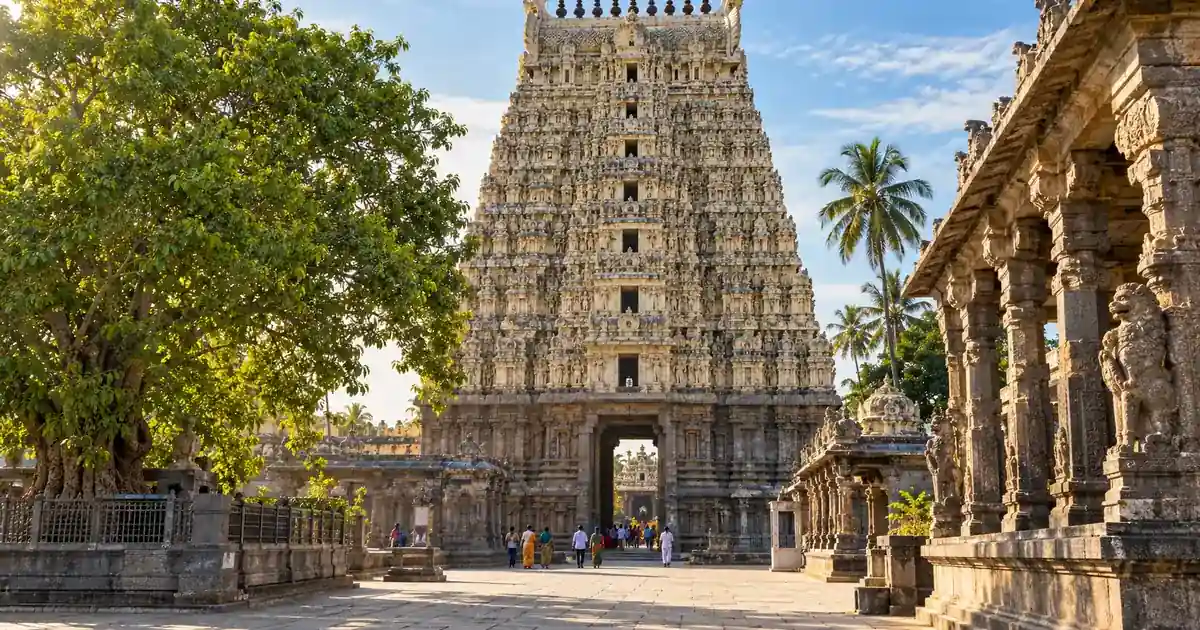
The Sri Venkateswara Swamy Temple at Tirumala crowns the seventh peak of the Seshachalam range at an elevation of 853 meters. Dedicated to Lord Venkateswara, a form of Lord Vishnu, this sacred sanctuary stands among the most visited pilgrimage complexes in the world.
Pilgrims climb the mountain by motor road or on foot across traditional stone steps along the Alipiri or Srivari Mettu pedestrian trails. The inner sanctum features the gold-plated Ananda Nilayam tower, which rises directly above the self-manifested granite deity adorned with diamond crowns.
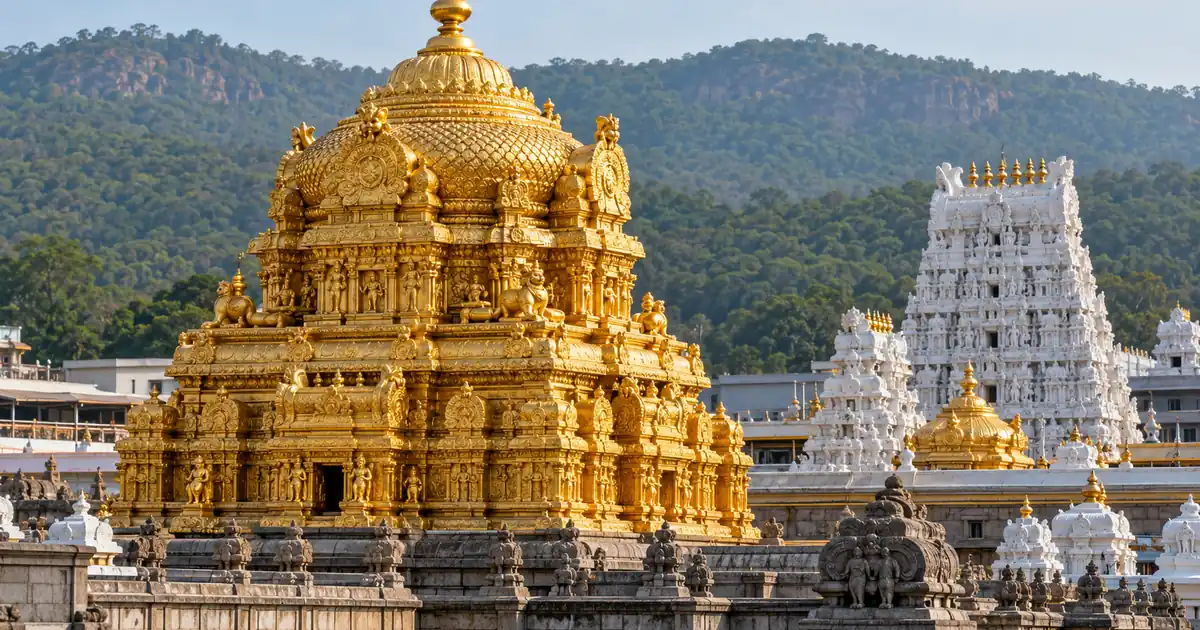
Devotees can book Seeghra Darshan tickets for ₹300 or participate in special sevas through the Tirumala Tirupati Devasthanams Official Portal. Comprehensive booking rules, queue management insights, and daily ritual timings are detailed in our Tirumala Tirupati Balaji guide.
Down in the foothills, the city of Tirupati houses ancient support shrines, including the Sri Govindaraja Swamy Temple and the rock-cut waterfalls of Kapilatheertham. Five kilometers south lies the Sri Padmavathi Ammavari Temple at Tiruchanur, where custom requires pilgrims to offer prayers to Goddess Lakshmi.
Eleven kilometers west of Tirupati stands Chandragiri Fort, constructed during the eleventh century by the Yadava Rayas and later used as the fourth capital of the Vijayanagara Empire. The Raja Mahal palace displays Indo-Saracenic arches, stucco ceilings, and an archaeological museum exhibiting bronze statues and weapons.
Srikalahasti Temple, Rahu Ketu Pooja, and the Sacred Vayu Sthalam
Situated 36 kilometers east of Tirupati along the banks of the Swarnamukhi River, Srikalahasti Temple represents one of the most prominent Shiva sanctuaries in southern India. The temple honors Lord Shiva as Srikalahasteeswara and Goddess Parvati as Gnanaprasunambika.
The sanctuary serves as the single Vayu Sthalam (wind element) among the five sacred Pancha Bhuta Sthalams of South India. Inside the inner sanctum, an oil lamp placed before the granite lingam continuously flickers even when all surrounding doors remain closed, symbolizing the physical presence of air.
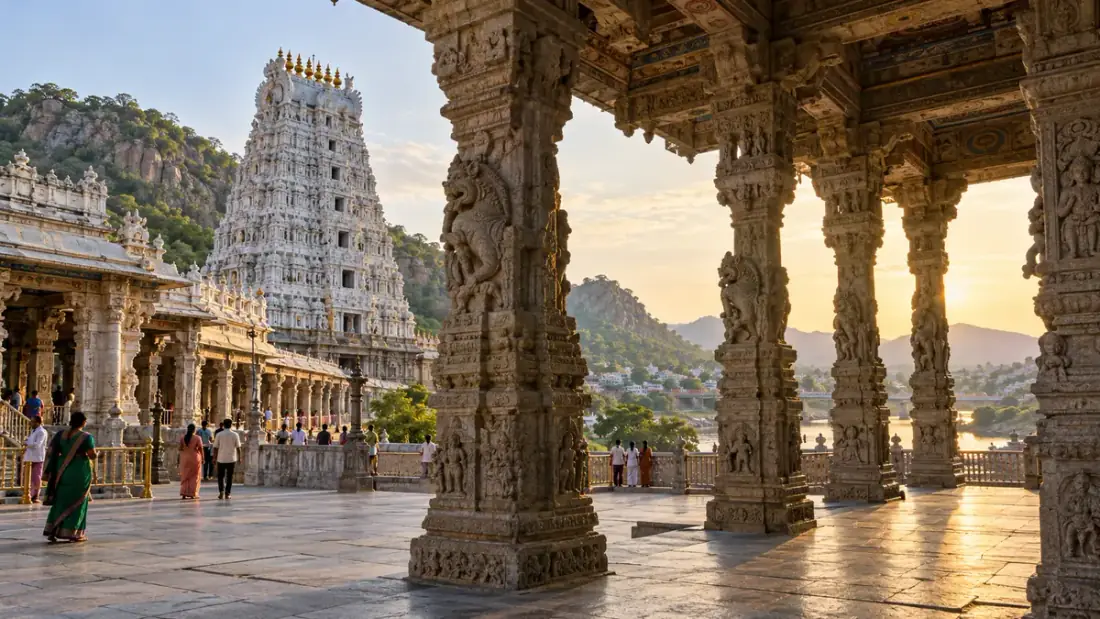
Pilgrims travel from across the country to perform the Rahu Ketu Sarpa Dosha Nivarana Pooja to alleviate planetary astrological afflictions. Specific ticket counters, batch timings, and required traditional dress codes are fully explained in our Srikalahasti Temple Rahu Ketu Pooja guide.
Architecturally, the complex reflects royal patronage from the Chola kings during the eleventh century and substantial expansion by Emperor Krishnadevaraya in 1516 CE. The hundred-pillared hall and ornate granite gopurams stand against the backdrop of the sacred Durgam hill.
Srisailam Mallikarjuna Jyotirlinga and Nallamala Forest Shrines
The holy town of Srisailam perches on a high plateau in the Nallamala Hills overlooking the deep canyon of the Krishna River in Nandyal district. This sacred hill town ranks among the rarest holy sites in India by combining both a Jyotirlinga and a Maha Shakti Peetha.
Lord Shiva is worshipped here as Mallikarjuna Swamy, the second among the twelve sacred Jyotirlingas, while Goddess Parvati is venerated as Bhramaramba Devi. Kings of the Satavahana, Ikshvaku, Pallava, Kakatiya, and Vijayanagara dynasties expanded the stone fortifications surrounding the temple.
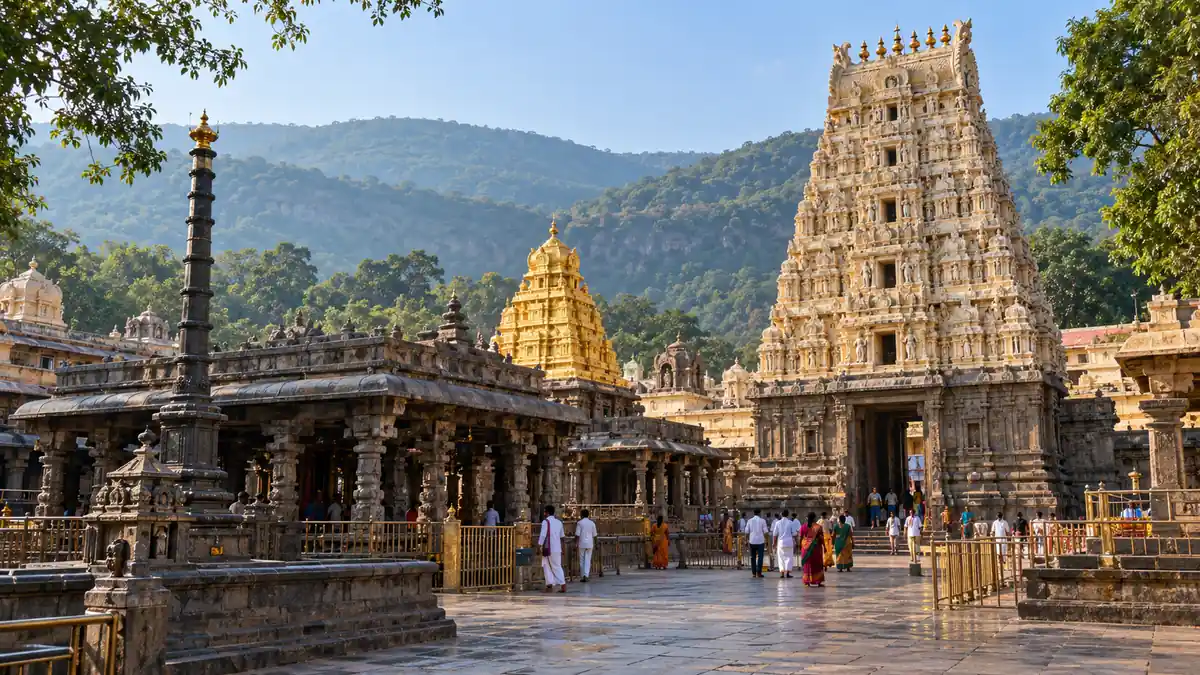
Devotees can take the ropeway down the rocky river cliff to Pathalaganga for ritual baths or book boating rides across the reservoir. Complete darshan queues, Sparsha darshan rules, and road routes from Hyderabad and Vijayawada are compiled in our Mallikarjuna Jyotirlinga Srisailam guide.
Online accommodation reservations, specialized archana tickets, and daily festival calendars are managed officially on the Srisailam Devasthanam Official Portal. Surrounding the temple town, the Nallamala forest spreads across deep ravines, sheltering prehistoric rock shelters and seasonal waterfalls like Phaladhara and Panchadhara.
Lepakshi Veerabhadra Temple, Monolithic Nandi, and Vijayanagara Art
Lepakshi rests in Sri Sathya Sai district in southwestern Andhra Pradesh, roughly 120 kilometers north of Bengaluru Kempegowda International Airport. Built in the sixteenth century by the merchant brothers Virupanna and Veeranna under the Vijayanagara Empire, the complex honors Lord Veerabhadra.
The temple exhibits some of the finest Vijayanagara architectural and artistic achievements in India, carved directly from coarse grey granite. The Natya Mandapa (dance hall) features seventy carved pillars depicting divine musicians, heavenly dancers, and celestial drummers carved in high relief.
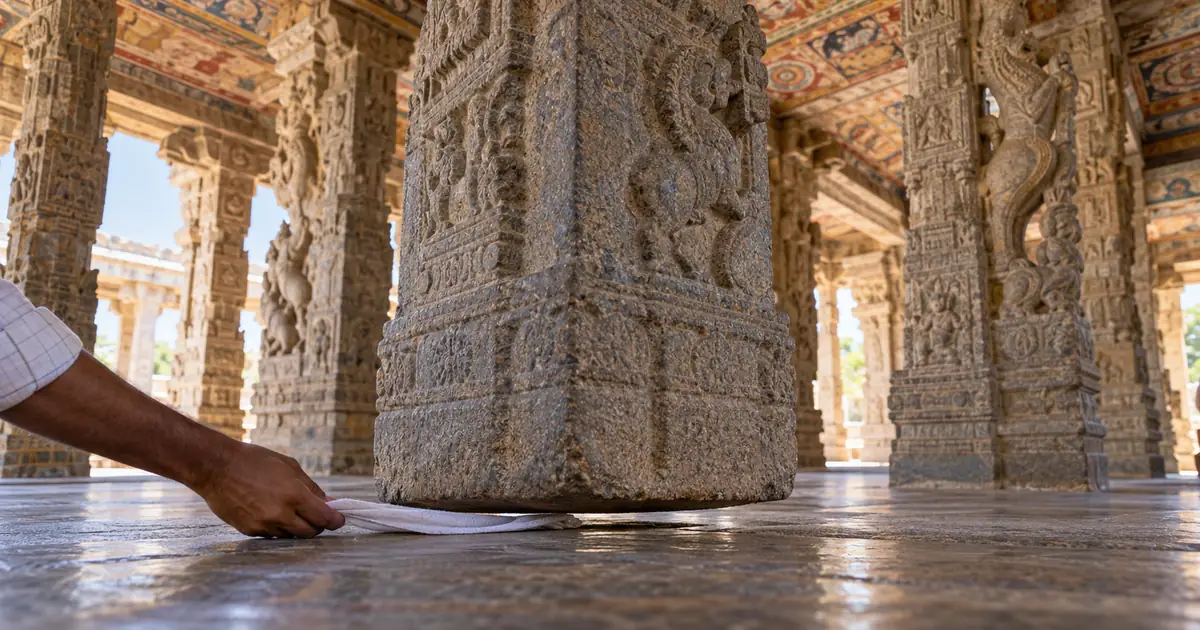
Among these stone columns stands the celebrated Hanging Pillar of Lepakshi, which remains detached from the granite floor at its base. Visitors slide thin pieces of fabric or paper underneath the pillar to verify the engineering marvel achieved by medieval stone masons.
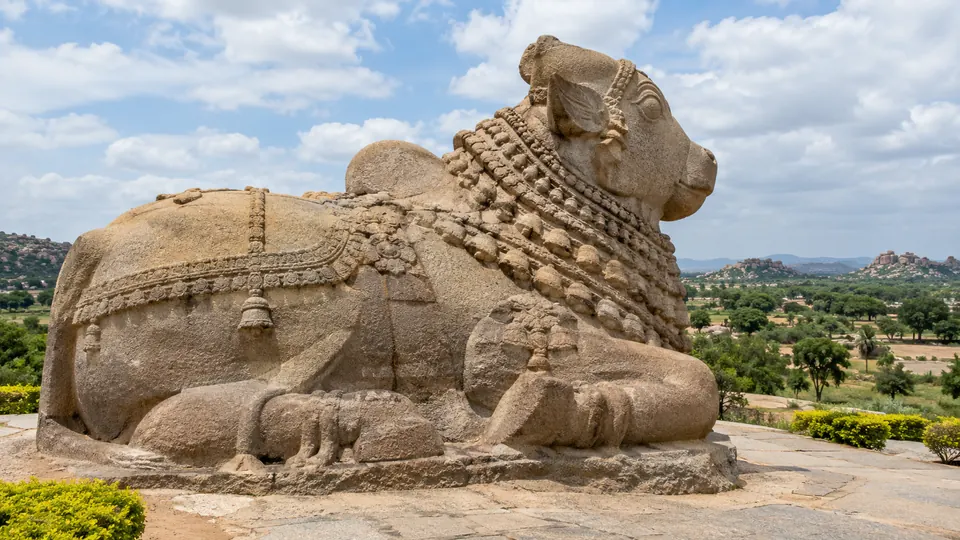
Five hundred meters east of the main shrine rests the colossal monolithic Nandi bull, carved from a single granite boulder measuring 4.5 meters tall and 8.2 meters long. Detailed historical background, mural preservation notes, and road transit routes are covered in our Lepakshi Temple guide.
The Archaeological Survey of India protects the complex, maintaining ceiling frescoes that portray scenes from the Mahabharata, Ramayana, and Puranas. Conservation documentation and monument hours can be referenced through the Archaeological Survey of India Portal.
Araku Valley Highlands, Borra Caves, and Eastern Ghats Trails
Araku Valley rises 911 meters above sea level in the Ananthagiri hill range of the Eastern Ghats in Alluri Sitharama Raju district. Located 115 kilometers west of Visakhapatnam, the valley offers a cool mountain climate, terraced coffee plantations, and waterfalls.
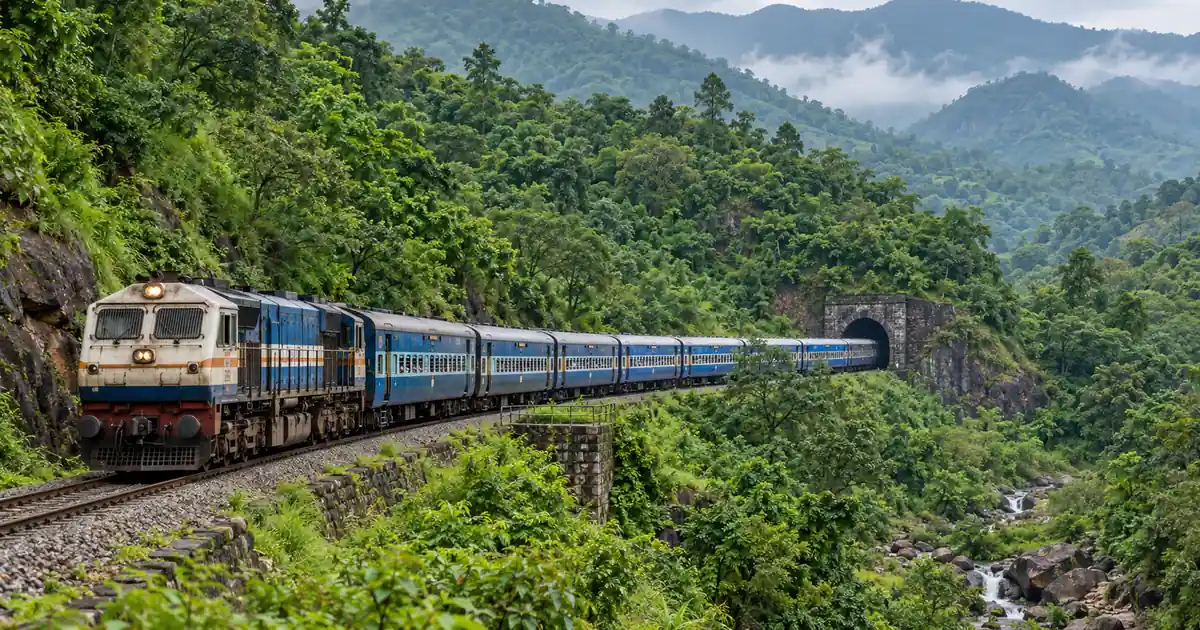
The mountain rail journey from Visakhapatnam to Araku ranks among the most scenic railway routes in South India. Daily passenger trains equipped with glass-ceiling Vistadome coaches pass through 58 mountain tunnels and cross 84 stone bridges across forested gorges.
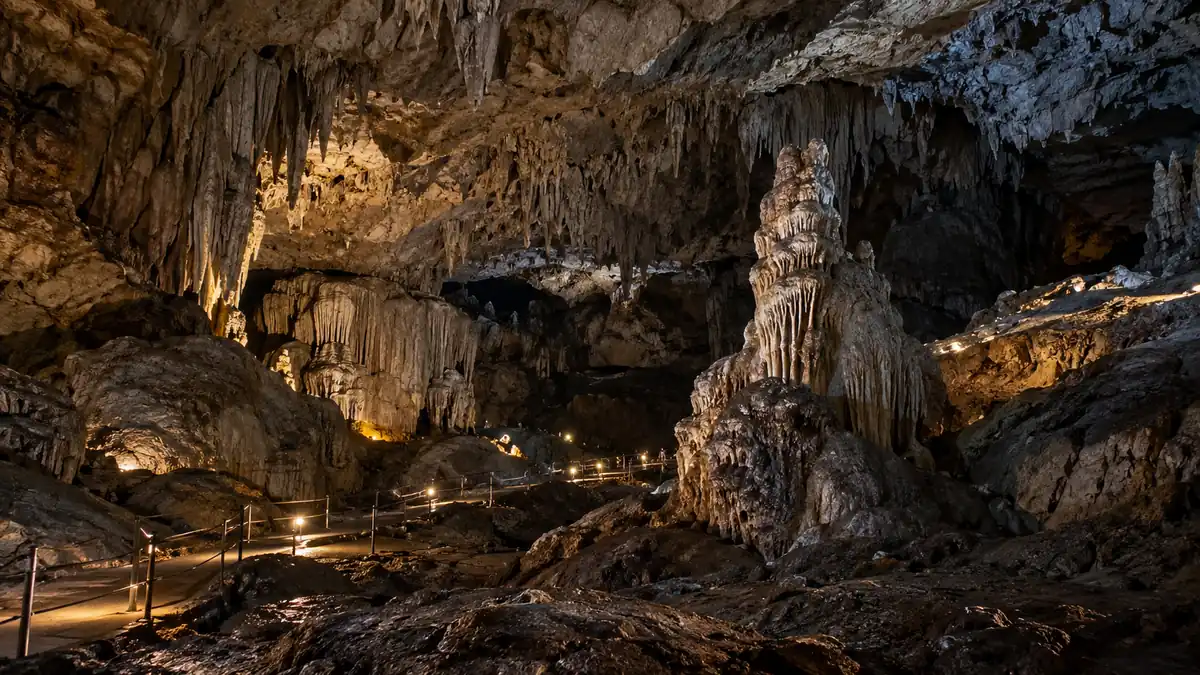
Near the base of the Ananthagiri hills lie the million-year-old Borra Caves, discovered by British geologist William King in 1807. The karstic limestone caverns plunge 80 meters deep, displaying natural stalactites and stalagmites illuminated by multi-colored lights around a natural Shiva lingam.
Detailed rail ticketing tips, cave exploration guidelines, and Katiki Falls jeep logistics are provided in our Araku Valley and Borra Caves guide. Visitors touring the valley can also sample organic GI-tagged Araku Arabica coffee and observe traditional Dhimsa tribal folk dances.
Further down the Eastern Ghats slopes toward the coast, Chaparai water cascade flows over smooth granite river stones where families picnic under forest canopies. Upland tribal cooperatives operate roadside stalls selling wild forest honey, pepper, turmeric, and local wood-roasted bamboo chicken.
Vijayawada Gateway, Undavalli Rock-Cut Caves, and Amaravati Heritage
Vijayawada stands on the banks of the Krishna River in NTR district, functioning as the primary commercial and transportation crossroads of coastal Andhra Pradesh. The city takes its name from Vijaya, an epithet of Arjuna, who performed penance here atop Indrakeeladri Hill.
Perched above the river, the Sri Kanaka Durga Temple serves as the spiritual crown of Vijayawada, attracting millions of worshippers during the annual Dasara festival. The temple provides wide views of the river and the 1,223-meter Prakasam Barrage, which regulates irrigation canals across the delta.
Five kilometers southwest across the Krishna River in Guntur district lie the ancient Undavalli Caves, carved during the fourth to seventh centuries CE. This four-story sandstone monument blends early Jain, Buddhist, and Hindu rock-cut styles, highlighted by a colossal five-meter reclining Vishnu sculpture on the second tier.
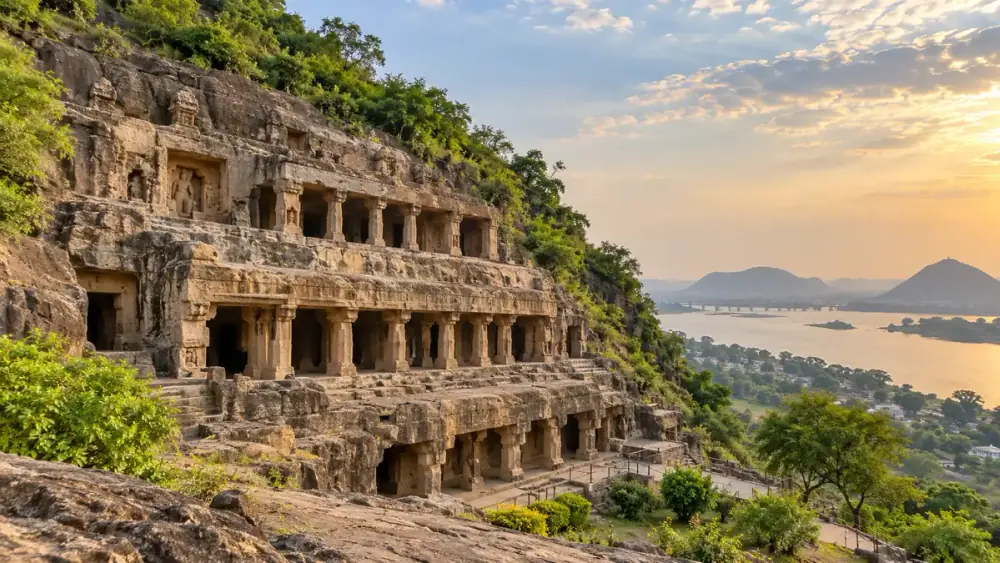
Thirty kilometers west along the river lies Amaravati, the ancient capital of the Satavahana Empire and the planned legislative capital of Andhra Pradesh. The town preserves the Amaravati Mahachaitya, an ancient Buddhist stupa founded during the third century BCE under Emperor Ashoka.
Beside the archaeological park stands the modern 125-foot Dhyana Buddha statue, seated in meditation over an eight-pillared lotus base overlooking the river. Amaravati also houses the Amareswara Swamy Temple, one of the five sacred Pancharama Kshetras where Shiva is worshipped as a tall marble lingam.
Godavari River Delta, Konaseema Waterways, and Papikondalu Gorge
The Godavari River enters coastal Andhra Pradesh by cutting through the Eastern Ghats, forming one of the most fertile and biodiverse river basins in South India. The historic city of Rajahmundry (Rajamahendravaram) anchors this delta region, celebrated as the cultural birthplace of the Telugu language.
Rajahmundry features three monumental bridges across the four-kilometer-wide Godavari River: the 1900 stone-pier Havelock Bridge, the 1974 Rail-cum-Road Bridge, and the 1997 Godavari Arch Bridge. Devotees gather at Kotilingeswara Ghat along the riverbank for evening prayers and sacred river bathing rituals.
North of Rajahmundry, motorized passenger boats operate full-day river cruises through the Papikondalu gorge, where the Godavari narrows between green mountain walls. The river journey passes tribal riverbanks, sandy islands, and dense jungle ridges before reaching the reservoir basin of the Polavaram irrigation project.
South of Rajahmundry spreads the Konaseema delta, a network of river distributaries, coconut lagoons, and tranquil canals bounded by East Godavari and Dr. B.R. Ambedkar Konaseema districts. Often compared to the backwaters of Kerala, Konaseema offers overnight stays in wooden houseboats cruising along palm-fringed waterways.
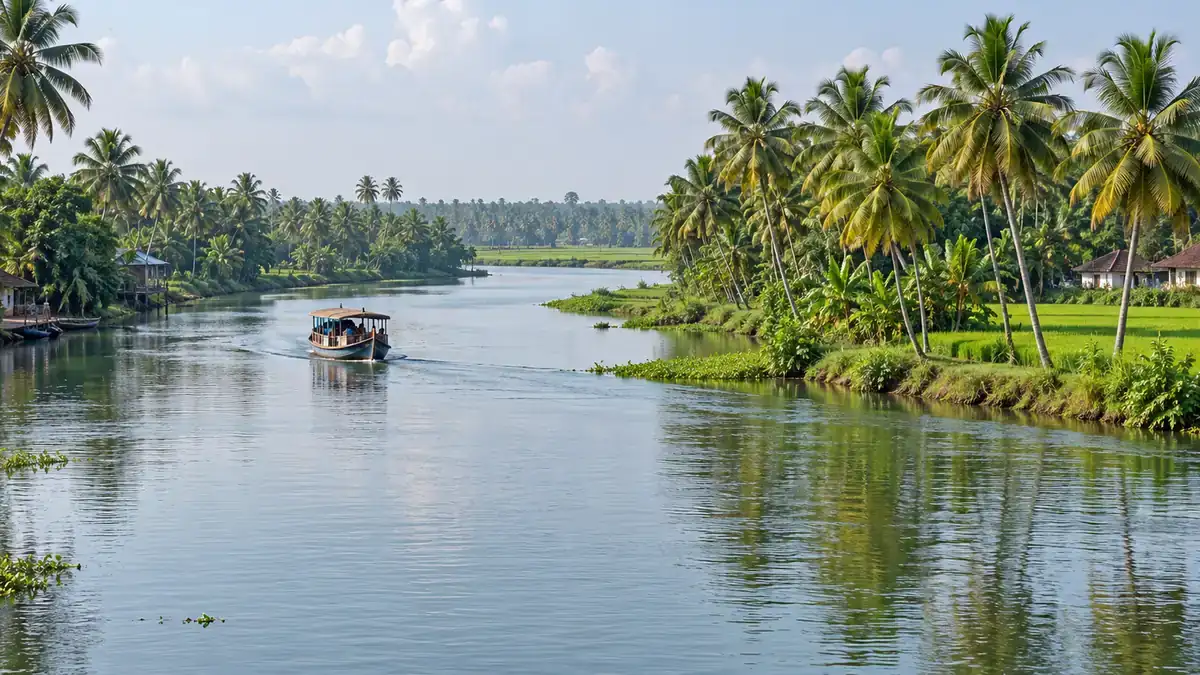
Near the coastal edge of Konaseema lies Antarvedi, where the Vashishta Godavari distributary empties into the Bay of Bengal beside the ancient Sri Lakshmi Narasimha Swamy Temple. Nearby, Atreyapuram village produces the famous paper-thin sweet called Pootharekulu, rolled by hand using rice flour sheets and pure ghee.
Gandikota Canyon, Belum Limestone Caves, and Rayalaseema Fortresses
The rugged interior of Rayalaseema preserves some of the most striking geological landmarks and medieval fortifications in peninsular India. Foremost among these is Gandikota, widely celebrated as the Grand Canyon of India, situated in YSR Kadapa district.
At Gandikota, the Pennar River cuts a 300-foot-deep gorge through massive red sandstone cliffs of the Erramala range. Perched directly above the canyon rim stands Gandikota Fort, founded in 1123 CE and later fortified by the Pemmasani Nayaks and the Golconda Sultanate.
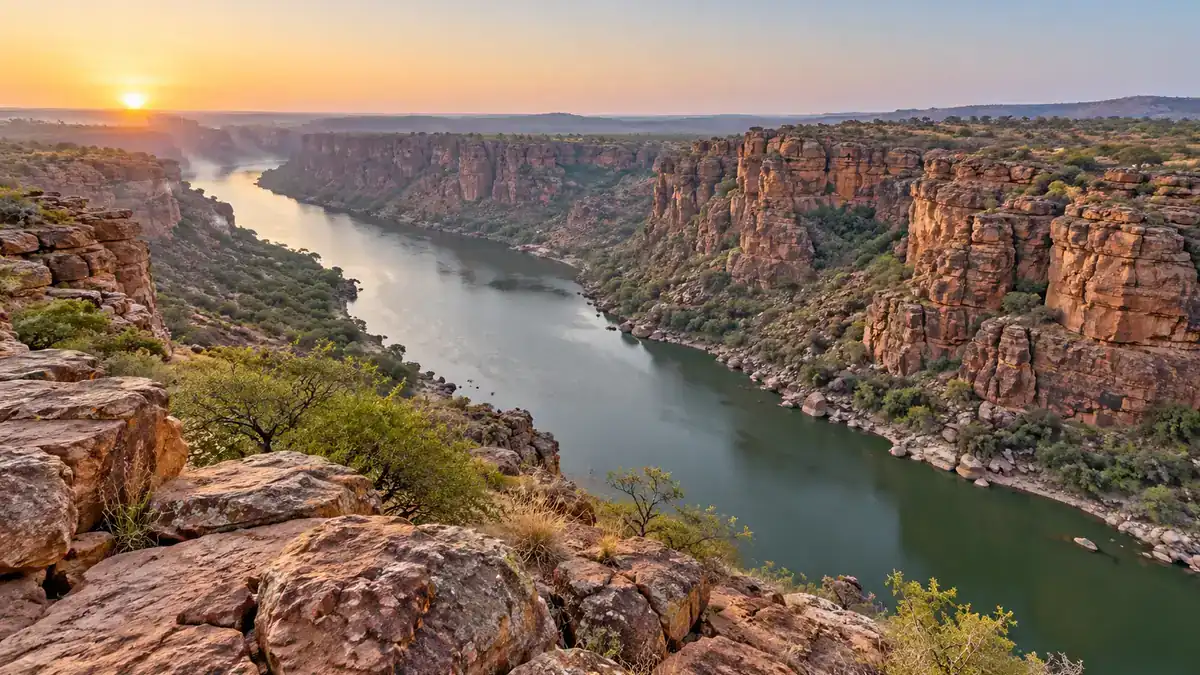
Inside the fortress walls, visitors explore the carved granite pillars of the Madhavaraya Temple, the stone arches of Jamia Masjid, and the royal granary. The natural gorge viewpoints offer sweeping vistas at sunrise, when the morning light turns the tiered canyon rocks a vivid crimson.
Sixty kilometers northwest in Nandyal district lie the Belum Caves, the second-largest natural cave system in the Indian subcontinent. Extending 3,229 meters underground with depths reaching 46 meters at the Patalaganga subterranean stream, the limestone passages display stalactite formations and large cavern halls.
Nearby at Yaganti, the Sri Yagantiswamy Temple worships Lord Shiva through an Ardhanareeswara sculpture carved from single stone. The temple is famous for its growing Nandi bull statue, which local legends and archaeological measurements suggest gradually expands in volume over decades.
Sacred Pilgrimage Circuits: Pancharama Kshetras and Shakti Peethas
Andhra Pradesh maintains an exceptional concentration of classical Shaivite and Shakta shrines that form established pilgrimage routes across the state. Prominent among these networks are the five Pancharama Kshetras, sacred temples dedicated to Lord Shiva across the Godavari and Krishna river valleys.
According to Hindu puranic tradition, these five lingams originated from a colossal crystal Shiva lingam worn by the demon Tarakasura, shattered into five fragments during battle. Each fragment was installed and consecrated by a different divinity at five separate locations across coastal Andhra:
- Amararama (Amaravati): Consecrated by Lord Indra along the Krishna River in Palnadu district, featuring a fifteen-foot-tall white marble lingam.
- Draksharama (Draksharamam): Installed by the Sun god Surya in Konaseema district, where Lord Bhimeswara is worshipped beside Goddess Manikyamba.
- Somarama (Bhimavaram): Established by Chandra (the Moon god) in West Godavari district, noted for a lingam that subtly shifts color with lunar phases.
- Ksheerarama (Palakollu): Consecrated by Lord Vishnu in West Godavari district, featuring a towering nine-tiered gopuram and milky-white crystal lingam.
- Kumararama (Samalkota): Established by Lord Kartikeya (Kumara Swamy) in Kakinada district, preserving a two-story sanctum built by Chalukya kings.
Alongside the Pancharama circuit, Andhra Pradesh houses two revered shrines belonging to the classical 51 Shakti Peethas in India guide. Bhramaramba Devi at Srisailam represents the neck of Goddess Sati, while Manikyamba at Draksharamam represents her left cheek.
Devotees frequently combine these Shaivite and Shakta temples into three-day delta driving routes starting from Vijayawada or Rajahmundry. The shrines remain active throughout the liturgical calendar, reaching peak devotion during the month of Kartika and on Maha Shivratri.
National Parks, Tiger Reserves, and Coastal Wetland Sanctuaries
Over 23 percent of Andhra Pradesh’s land area is covered by forests and coastal wetlands, sheltering remarkable wildlife populations across distinct ecological zones. The state contains one of India’s largest continuous wilderness landscapes in the Nallamala forest belt.
The Nagarjunsagar-Srisailam Tiger Reserve spans 3,728 square kilometers across five districts, ranking as the largest Project Tiger sanctuary in India by total area. The deciduous hill forest provides habitat for Bengal tigers, Indian leopards, sloth bears, dholes, chital, and mugger crocodiles along the Krishna River.
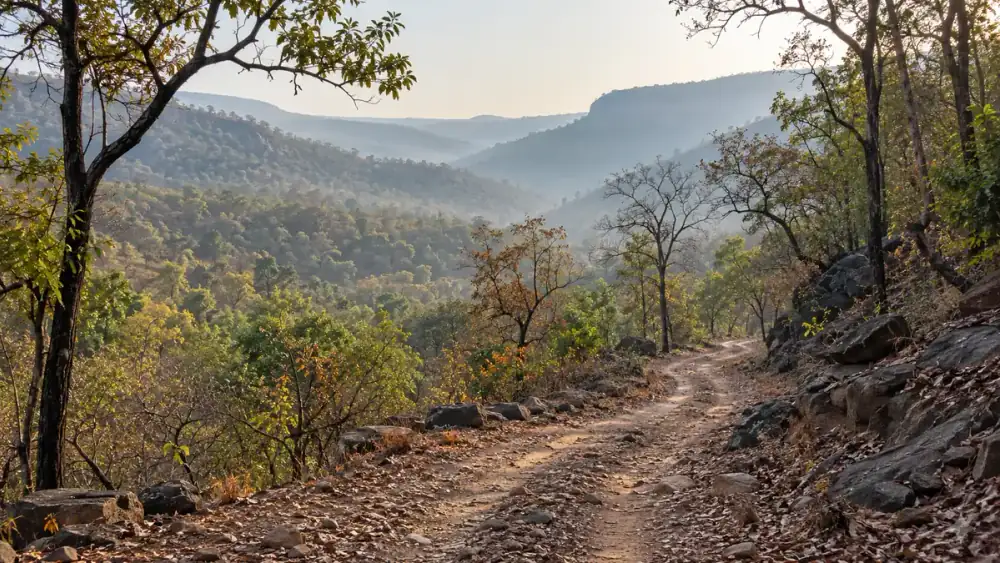
Along the coast near Kakinada, Coringa Wildlife Sanctuary protects 235 square kilometers of estuarine mangrove forest, forming the second-largest mangrove ecosystem on India’s eastern coast after the Sundarbans. Elevated wooden boardwalks allow visitors to observe rare fishing cats, smooth-coated otters, and nesting olive ridley sea turtles.
In southern Andhra Pradesh, Pulicat Lake Bird Sanctuary spans the border with Tamil Nadu, creating India’s second-largest brackish water lagoon. Between November and February, more than 150,000 migratory waterfowl, including greater flamingos, spot-billed pelicans, and painted storks, gather across the shallow lagoon flats.
Adjacent to Tirupati, Sri Venkateswara National Park conserves the unique biodiversity of the Seshachalam Biosphere Reserve. The rugged sandstone valleys protect endangered endemic flora, notably the rare red sanders tree (Pterocarpus santalinus), alongside slender lorises, golden geckos, and Indian leopards.
Andhra Gastronomy, Spice Profiles, and Legendary Temple Prasadam
Andhra cuisine is celebrated across the Indian subcontinent for its fiery spice profiles, tangy tamarind broths, and diverse local preparations. The cuisine varies noticeably between the coastal deltas, the dry Rayalaseema plateau, and the northern hill districts.
Rice serves as the dietary foundation of every Andhra meal, accompanied by bowls of spiced dal (Pappu), sour leafy greens, clarified butter, and vegetable curries. Pickles form an essential cornerstone of the pantry, led by Gongura Pachadi (sorrel leaf chutney) and fiery Avakaya (raw mango pickle with mustard and red chili).
| Culinary Zone | Signature Curries & Tiffins | Chutneys, Pickles & Snacks | Iconic Sweets & Temple Offerings |
|---|---|---|---|
| Coastal Andhra & Delta | Chepala Pulusu (tangy fish curry), Royyala Iguru (spicy prawns), Gutti Vankaya | Gongura Pachadi, Avakaya, Kandi Podi (spiced lentil powder) with Ghee | Atreyapuram Pootharekulu, Kakinada Gottam Kaja, Bandar Laddu |
| Rayalaseema Plateau | Ragi Mudde (finger millet balls), Natu Kodi Pulusu (country chicken curry) | Uggani (seasoned puffed rice), Mirchi Bajji, Groundnut Chutney | Tirupati Laddu (GI-tagged sacred offering), Kadapa Karam Dosa |
| Krishna & Guntur Hub | MLA Pesarattu (green gram dosa with upma), Gongura Mamsam (mutton curry) | Guntur Red Chili Chutney, Tomato Nilva Pachadi, Ulava Charu (horse gram soup) | Thotapalli Madatha Kaja, Bellam Jalebi, Badam Milk |
| Uttarandhra & Araku | Bongu Kodi (tribal bamboo chicken), Senaga Pappu Koora, Teepi Pulusu | Nuvvula Pachadi (sesame chutney), Majjiga Charu (buttermilk stew) | Madugula Halwa, Bellam Gavvalu, Araku Arabica Filter Coffee |
In Vijayawada and Guntur, breakfast centers on MLA Pesarattu, a crisp green gram crepe stuffed with savoury semolina upma and paired with tangy ginger chutney. Guntur district produces some of the world’s most pungent red chili varieties, which give regional curries their intense crimson color.
Beyond commercial restaurants, Andhra Pradesh maintains sacred culinary traditions rooted in temple kitchens. The Tirupati Laddu, prepared daily by Tirumala Tirupati Devasthanams using pure cow ghee, gram flour, sugar, cardamom, and cashews, holds an official Geographical Indication (GI) tag protecting its recipe.
Signature Festivals: Brahmotsavam, Sankranti, and Krishna River Fairs
The cultural calendar of Andhra Pradesh reflects centuries of agrarian rhythms, temple pageantry, and classical performing arts. Community celebrations peak during the post-monsoon autumn and the winter harvest months, drawing large numbers of visitors.
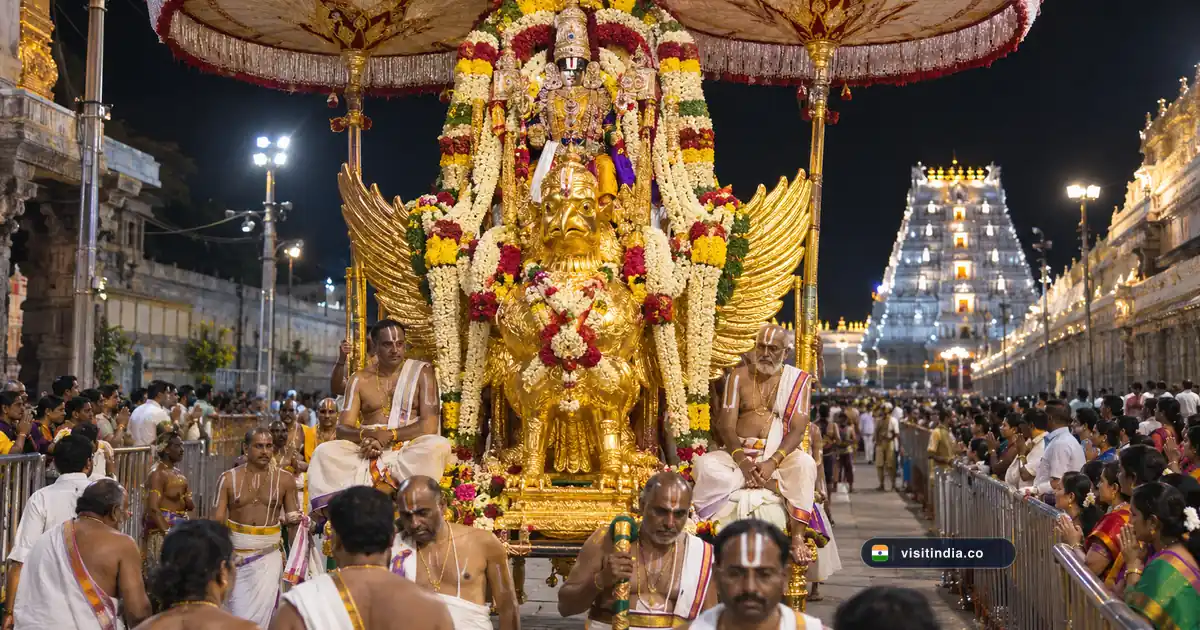
The grandest religious celebration in the state is the nine-day Srivari Brahmotsavam, held annually at Tirumala during September or October. On the fifth evening, the sacred procession draws over 400,000 pilgrims as detailed in our Tirupati Brahmotsavam Garuda Seva guide, where the processional deity Malayappa Swamy rides an ornate golden eagle carrier around the temple quadrangle.
In January, the harvest festival of Makara Sankranti spans three festive days across every village and town in Andhra Pradesh:
- Bhogi (Day 1): Families light community bonfires at dawn to discard old household items, welcoming renewal with colorful rice flour rangoli patterns (Muggu).
- Makara Sankranti (Day 2): The primary harvest day features prayers to Surya the Sun god, preparation of sweet Pongal rice, and performances by wandering Haridasu singers.
- Kanuma (Day 3): Agrarian communities honor farm cattle with floral garlands, followed by festive family gatherings, rooster fairs, and regional sporting contests.
In Vijayawada, the Dasara festival at Indrakeeladri Hill culminates in the spectacular Teppotsavam (swan-boat float festival) on the Krishna River. Priests carry the deities of Goddess Durga and Lord Malleswara aboard an illuminated swan-shaped barge that circles the river beneath the floodlit hill.
The classical dance drama of Kuchipudi, recognized as one of India’s classical dance forms, originated in the village of Kuchipudi in Krishna district. During annual winter cultural festivals, dancers perform complex footwork and rhythmic hand gestures depicting episodes from Hindu epics.
Recommended Andhra Pradesh Travel Circuits and Road Itineraries
Because Andhra Pradesh stretches over 900 kilometers from the Tamil Nadu border north to Odisha, traveling the entire state requires methodical route planning. Travelers can select from three balanced itineraries designed around primary transportation hubs.
Circuit 1: The 5-Day Sacred Rayalaseema and Heritage Trail
This southern heritage route focuses on the architectural monuments and temple towns of the Rayalaseema plateau, starting from Chennai or Bengaluru:
- Days 1 to 2 (Tirupati & Tirumala): Arrive at Tirupati Airport (TIR) or railway station. Spend Day 1 ascending to Tirumala for Seeghra Darshan at Sri Venkateswara Temple, followed by visits to Kapilatheertham and Padmavathi Temple in Tiruchanur.
- Day 3 (Srikalahasti & Chandragiri): Drive 36 kilometers east in the morning to attend Rahu Ketu Pooja at Srikalahasti Temple along the Swarnamukhi River. Tour the Vijayanagara fortifications and Raja Mahal palace at Chandragiri Fort during the afternoon.
- Days 4 to 5 (Lepakshi & Gandikota): Drive west on NH40 toward Lepakshi to explore the Veerabhadra Temple, the hanging pillar, and the monolithic Nandi bull. Proceed north to Gandikota on Day 5 to witness sunset over the Pennar River gorge before departing via Kadapa Airport.
Pilgrims extending their journey south toward Tamil Nadu often link this itinerary with the classical five-element shrines outlined in our Pancha Bhuta Sthalams circuit guide.
Circuit 2: The 6-Day Godavari Delta, Konaseema, and Wildlife Route
This central coastal itinerary explores river waterways, lush coconut plantations, and ancient Shaivite shrines between Vijayawada and Kakinada:
- Days 1 to 2 (Vijayawada & Amaravati): Land at Vijayawada Airport (VGA). Visit the hill shrine of Kanaka Durga and the 4-story rock-cut Undavalli Caves on Day 1, followed by a day trip to the ancient Buddhist stupa and Dhyana Buddha at Amaravati.
- Days 3 to 4 (Rajahmundry & Papikondalu): Travel two hours by Vande Bharat express to Rajahmundry. Board a full-day riverboat cruise on Day 4 through the Papikondalu gorge on the Godavari River, admiring high forested mountain slopes.
- Days 5 to 6 (Konaseema & Coringa Mangroves): Cruise the quiet canals of Konaseema on a traditional houseboat, tasting local Pootharekulu sweets in Atreyapuram. On Day 6, walk the wooden mangrove trails of Coringa Wildlife Sanctuary near Kakinada before flying out from Rajahmundry.
Circuit 3: The 10-Day Grand Andhra Pradesh Odyssey
This comprehensive cross-state loop combines the northern Eastern Ghats, the central coastal river deltas, and the southern Rayalaseema heritage citadels:
- Days 1 to 3 (Visakhapatnam & Araku Valley): Arrive in Visakhapatnam. Ride the scenic Vistadome morning train through 58 mountain tunnels to Araku Valley, explore Borra Caves and Katiki Falls, and tour Vizag’s submarine museum and RK Beach.
- Days 4 to 6 (Rajahmundry, Konaseema & Vijayawada): Journey south to Rajahmundry for the Papikondalu gorge cruise, explore the palm-lined canals of Konaseema, and transfer to Vijayawada for the Undavalli Caves and Kanaka Durga Temple.
- Days 7 to 8 (Srisailam & Nallamala Forest): Drive into the Nallamala Hills to Srisailam. Tour the Mallikarjuna Jyotirlinga, take the Pathalaganga river gorge ropeway, and visit the Srisailam Dam.
- Days 9 to 10 (Gandikota, Lepakshi & Tirupati): Visit the Pennar River canyon at Gandikota, tour the sixteenth-century Vijayanagara stone carvings at Lepakshi, and conclude with darshan at Tirumala Tirupati Balaji.
Seasonal Weather, Cyclone Precautions, and Best Time to Visit
Andhra Pradesh experiences a tropical climate shaped by its long coastline and interior Deccan topography. Weather conditions shift markedly between the hot summer months, the monsoon storm seasons, and the mild winter window.
| Season | Calendar Months | Temperature Range | Regional Weather Conditions | Best Destinations & Activities |
|---|---|---|---|---|
| Winter (Peak Season) | October to March | 18°C to 30°C (12°C in Araku hills) | Dry, clear skies, pleasant breezes, low humidity | Tirupati, Lepakshi, Gandikota canyon, Araku Valley coffee trails, Visakhapatnam beaches |
| Summer | April to June | 32°C to 44°C (Hot inland plains) | High heat across Rayalaseema and Vijayawada; warm humid coast | Araku Valley hill retreat, early morning temple darshan, indoor museum tours |
| Southwest & Northeast Monsoon | July to November | 24°C to 34°C (Heavy rainfall & storms) | High precipitation; cyclonic depressions in Oct-Nov along Bay of Bengal | Papikondalu river cruise, Katiki and Talakona waterfalls, lush green Konaseema canals |
Winter from October through March represents the best overall window for traveling in Andhra Pradesh. Daytime temperatures remain comfortable for walking through the outdoor ruins of Lepakshi and exploring the sandstone canyon rim at Gandikota, while hill mornings in Araku Valley drop to a crisp 12°C.
Summer brings severe heat from April to June, with afternoon highs frequently crossing 42°C in Vijayawada, Guntur, and Kurnool. Travelers visiting during summer should restrict sightseeing to early morning and late evening hours, staying hydrated and carrying sun protection.
The monsoon season brings heavy rainfall between July and November, driven initially by the southwest monsoon and followed by the retreating northeast monsoon. Travelers visiting coastal districts during October and November should monitor regional weather forecasts for cyclonic depressions that can disrupt ferry operations and beach access.
Transportation Logistics, Coastal Rail, and Regional Aviation
Andhra Pradesh possesses an advanced multi-modal transportation network linking coastal ports, industrial corridors, and pilgrimage hubs across South India:
- Aviation Gateways: Visakhapatnam International Airport (VTZ) serves the northern coast with nonstop domestic flights to major metros and international routes to Southeast Asia. Vijayawada International Airport (VGA) connects the state capital region, while Tirupati International Airport (TIR) provides modern passenger facilities for pilgrims. Regional domestic airports at Rajahmundry (RJA), Kurnool (KJB), and Kadapa (CDP) offer daily turboprop connections.
- Railway Network: Managed primarily by South Central Railway and East Coast Railway, the state contains vital broad-gauge arteries. Vijayawada Junction (BZA) ranks among the busiest railway interchange stations in India, linking northern, western, and southern rail corridors. Semi-high-speed Vande Bharat Express trains connect Visakhapatnam, Rajahmundry, Vijayawada, and Tirupati with Hyderabad and Chennai, as detailed in our Vande Bharat Express tourist routes guide.
- Highways and State Buses: National Highway 16 (NH16) provides a four-to-six-lane coastal highway from Chennai to Visakhapatnam and Kolkata. National Highway 44 (NH44) cuts through western Rayalaseema, linking Anantapur and Kurnool with Bengaluru and Hyderabad. The Andhra Pradesh State Road Transport Corporation (APSRTC) runs a large bus fleet, operating Garuda Plus and Amaravati multi-axle air-conditioned coaches on long-distance interstate routes.
Frequently Asked Questions About Andhra Pradesh
How many days are needed to visit Andhra Pradesh?
A focused regional holiday exploring either the sacred Rayalaseema heritage circuit or the Visakhapatnam and Araku Valley hills requires five to six days. Travelers planning a complete state journey connecting Tirupati, Vijayawada, Rajahmundry, and the northern coast should reserve ten to twelve days.
What is the best time to visit Andhra Pradesh?
The best travel season runs from October through March when cool, dry weather brings comfortable daytime temperatures between 18°C and 30°C across the state. Travelers should avoid the extreme summer heat of April and May, while monitoring coastal cyclone advisories during October and November.
What are the top pilgrimage temples in Andhra Pradesh?
The state’s most revered shrines include the Sri Venkateswara Swamy Temple at Tirumala Tirupati, the Mallikarjuna Jyotirlinga and Bhramaramba Shakti Peetha at Srisailam, and the Srikalahasteeswara Vayu Sthalam at Srikalahasti. Other prominent spiritual destinations include the Kanaka Durga Temple in Vijayawada and the five ancient Pancharama Shiva temples across the coastal deltas.
How do I reach Araku Valley from Visakhapatnam?
Travelers can board the daily morning passenger train from Visakhapatnam Junction featuring glass-domed Vistadome coaches that cross 58 mountain tunnels on a scenic four-hour climb into the Eastern Ghats. Alternatively, visitors can hire private taxis along the well-paved 115-kilometer mountain highway via S. Kota and Ananthagiri.
What is Gandikota and how do I plan a visit?
Gandikota is a dramatic 300-foot-deep gorge carved by the Pennar River through red sandstone cliffs in YSR Kadapa district, often called the Grand Canyon of India. Visitors can reach the site by driving from Kadapa or Bengaluru, tour the medieval Gandikota Fort, and camp on the gorge plateau or stay at the government Haritha resort.