Chhath Puja 2026-27 Bihar & UP: Dates, Rituals & Top Ghats
Celebrate Chhath Puja 2026-27 in Bihar and UP with verified Nahay Khay to Usha Arghya dates, 36-hour fast rituals, Patna and Varanasi ghats, and visitor rules.
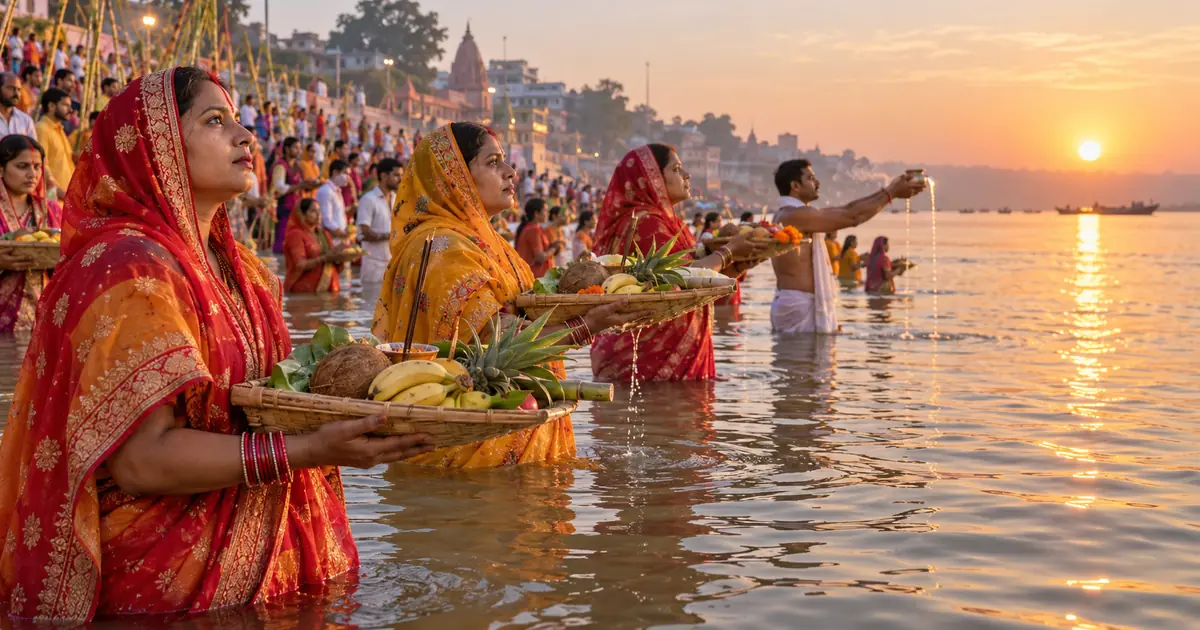
Every autumn six days after Diwali, riverbanks across Bihar and eastern Uttar Pradesh glow with thousands of clay oil lamps, sugarcane canopies, and folk hymns as millions gather for Chhath Puja. Dedicated to Surya (the Sun God) and Chhathi Maiya, this four-day Vedic festival stands apart for its strict physical austerity, zero idol or priestly intermediaries, and eco-conscious bamboo and earthen offerings.
Witnessing Sandhya Arghya at dusk and Usha Arghya at dawn along the Ganga in Patna, Bhagalpur, Varanasi, or Prayagraj requires knowing exact lunar dates, 36-hour fasting milestones, ghat etiquette rules, and peak holiday transit schedules. This guide details verified 2026 and 2027 dates, the four-day ritual cycle, sacred Thekua and Soop offerings, top ghats, and visitor logistics.
Chhath Puja Festival Essentials
- 2026 Festival Dates: Nahay Khay (Nov 13), Kharna (Nov 14), Sandhya Arghya (Nov 15), and Usha Arghya & Paran (Nov 16, 2026).
- 2027 Festival Dates: Runs November 2 to November 5, 2027 (Sandhya Arghya on Nov 4 around 5:06–5:15 PM; Usha Arghya on Nov 5 around 5:59–6:08 AM).
- 36-Hour Fast: Vratis observe an unbroken 36-hour waterless (nirjala) fast starting after evening Kharna prasad on Day 2 until sunrise Paran on Day 4.
- Signature Prasad: Hand-pressed wheat-and-jaggery Thekua sweets packed alongside fruits and diyas in woven bamboo soops and dauras.
- Public Ghat Access: Completely free entry across Patna’s 100+ riverfront ghats and Varanasi’s 84 stone ghats; remove shoes near family mats.
Chhath Puja 2026 and 2027 Dates, Arghya Timings, and Overview
Chhath Puja takes place over four consecutive days during Kartika Shukla Paksha, running November 13 to 16 in 2026 and November 2 to 5 in 2027. Peak Sandhya Arghya occurs around sunset between 4:30 PM and 5:45 PM on Day 3, while Usha Arghya unfolds at sunrise between 5:30 AM and 6:30 AM on Day 4.
Unlike noisy street festivals, Chhath radiates quiet communal discipline, making it one of the most moving sacred gatherings alongside Maha Shivratri in the Hindu calendar. Local municipal corporations prepare wide sand embankments, lighting towers, barricades, and medical tents days before Nahay Khay.
| Festival Parameter | Practical Detail for Observers |
|---|---|
| 2026 Dates (Kartika Shukla 4–7) | Nov 13 (Nahay Khay), Nov 14 (Kharna), Nov 15 (Sandhya), Nov 16 (Usha) |
| 2027 Dates (Kartika Shukla 4–7) | Nov 2 (Nahay Khay), Nov 3 (Kharna), Nov 4 (Sandhya), Nov 5 (Usha) |
| Ritual Water Bodies | Ganga, Yamuna, Gandak, Sone rivers or clean neighborhood ponds |
| Key Offering Vessels | Woven bamboo winnowing trays (soop) and circular baskets (daura) |
| Typical Arghya Timings | Evening: 4:30 PM–5:45 PM; Dawn: 5:30 AM–6:30 AM (varies by sunset/sunrise) |
| Patna Riverfront Span | 15 kilometers connecting 100+ prepared municipal ghats |
| Varanasi Riverfront Span | 7 kilometers connecting 84 continuous stone ghats |
| Visitor Entry Cost | ₹0 (Free public access across all riverfront ghats) |
2026 and 2027 Four-Day Lunar Calendar Breakdown
In 2026, Nahay Khay begins on Friday, November 13, Kharna falls on Saturday, November 14, Sandhya Arghya gathers at sunset on Sunday, November 15, and Usha Arghya concludes at sunrise on Monday, November 16.
In 2027, the sequence shifts earlier to Tuesday, November 2 through Friday, November 5, with Sandhya Arghya around 5:06 PM in Patna (5:15 PM in Varanasi) on November 4 and Usha Arghya around 5:59 AM in Patna (6:08 AM in Varanasi) on November 5.
Vedic Sun Worship Heritage Across Bihar and Purvanchal
Rooted in Rigvedic solar hymns thanking nature for sustaining crops, health, and family wellbeing, Chhath Puja bypasses priestly mediation entirely. Vratis (predominantly women, alongside dedicated male observers) offer prayers straight to the setting and rising sun while standing ankle-to-waist-deep in flowing river water.
The Four-Day Ritual Sequence: Nahay Khay to Usha Arghya & Paran
Devotees (vratis) begin Day 1 (Nahay Khay) with a purifying bath and a single pure meal of arwa rice, chana dal, and bottle gourd seasoned with rock salt. Day 2 (Kharna) features a sunrise-to-sunset fast broken with jaggery rice kheer (Rasiaav), initiating a strict 36-hour waterless fast through Day 3 Sandhya Arghya and Day 4 Usha Arghya.
Every step across these four days follows meticulous household purity (pavitrata), where separate earthen hearths and mango-wood fires are used exclusively for festival cooking. Observers comparing multi-day North Indian heritage festival traditions are often struck by the silent endurance and serenity of Chhath vratis fasting without even a drop of water for thirty-six continuous hours.
| Chhath Day | Ritual Name | Lunar Phase | Primary Spiritual Action |
|---|---|---|---|
| Day 1 | Nahay Khay | Kartika Shukla Chaturthi | River bath, home cleaning, and single satvik lauki-chana meal |
| Day 2 | Kharna (Lohanda) | Kartika Shukla Panchami | Day-long fast; evening Rasiaav kheer-roti; 36-hour nirjala fast starts |
| Day 3 | Sandhya Arghya | Kartika Shukla Shashthi | Sunset river procession; waist-deep water & milk offering to setting sun |
| Day 4 | Usha Arghya & Paran | Kartika Shukla Saptami | Dawn offering to rising sun; fast broken (paran) with ginger & prasad |
Day 1 Nahay Khay and Day 2 Kharna (Rasiaav & 36-Hour Fast)
On Nahay Khay morning, vratis bathe in the Ganga or using Gangajal at home before preparing boiled arwa rice, split Bengal gram lentils, and bottle gourd cooked in pure cow ghee without onion, garlic, or turmeric contamination. On Day 2 (Kharna), families wait in near-silence until sunset so the vrati can offer and eat Rasiaav (jaggery and milk rice pudding) with ghee-brushed wheat rotis before distributing Kharna prasad to neighbors.
Day 3 Sandhya Arghya and Day 4 Usha Arghya Sunrise Offerings
Late afternoon on Day 3 sees entire neighborhoods walk barefoot to the Ganga singing devotional Maithili and Bhojpuri songs behind male family members balancing woven bamboo dauras on their heads. At sunset, devotees stand waist-deep in water holding bamboo soops while relatives pour raw cow’s milk and Ganga water as arghya toward the descending sun.
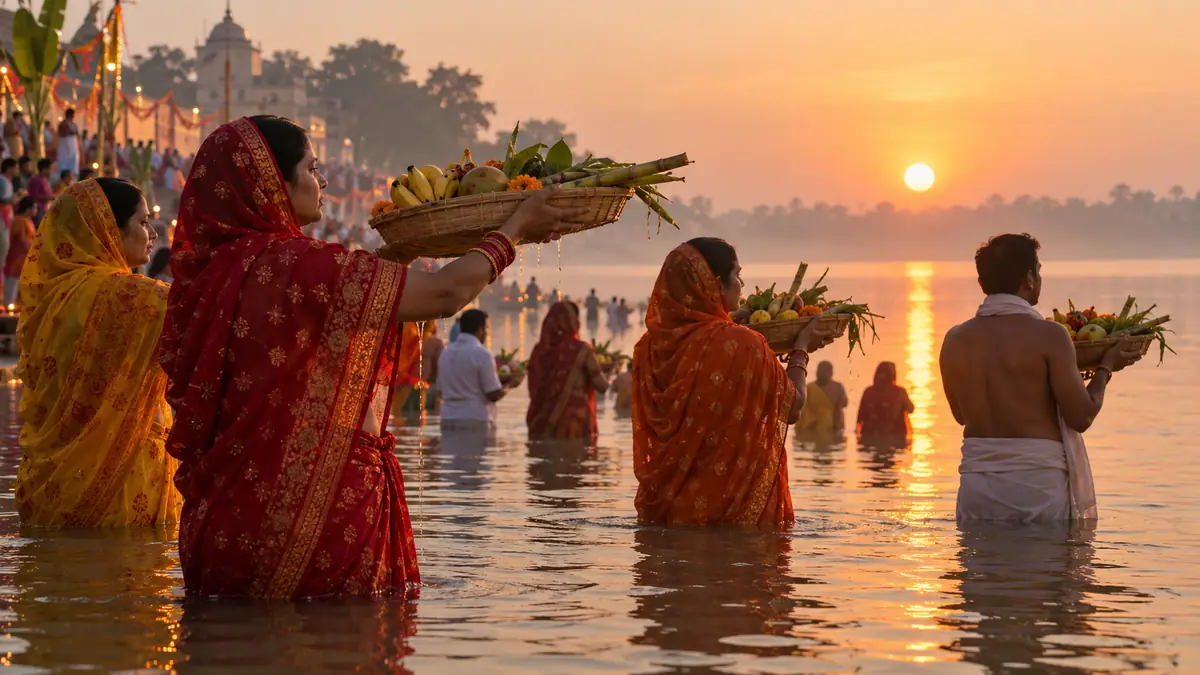
Before 4:30 AM on Day 4, families return to the identical riverfront spots under crisp misty skies, lighting clay diyas and standing in cool river water until the first golden rays break over the eastern horizon. Following final Usha Arghya prayers, the vrati breaks the 36-hour fast (paran) with fresh ginger, water, and prasad.
Sacred Prasad & Offerings: Thekua, Bamboo Soop, Daura, and Sugarcane
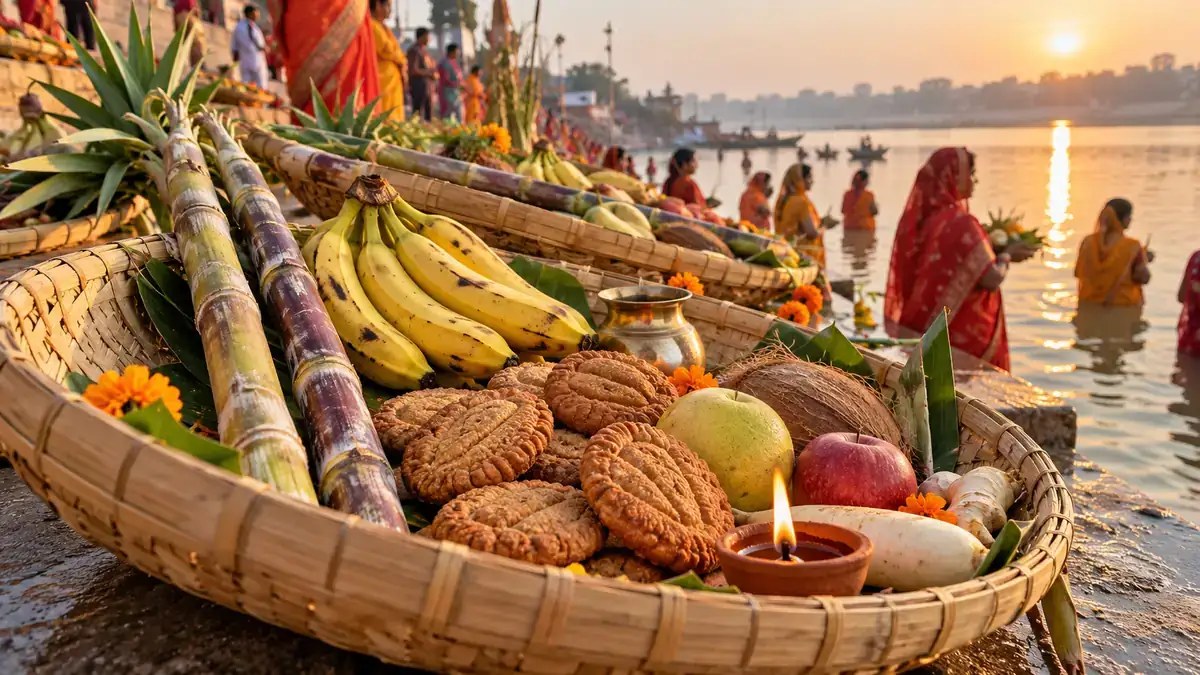
Every Chhath family prepares hand-pressed wheat-and-jaggery Thekua sweets in pure cow ghee, arranging them inside woven bamboo baskets (daura) and winnowing trays (soop) alongside whole sugarcane stalks, large pomelos (gaghal), ginger with leaves, bananas, and glowing terracotta diyas.
Because every vessel and ingredient is raw, seasonal, and biodegradable, Chhath leaves almost no chemical pollution when rituals conclude cleanly. Food historians comparing eastern traditions like Kolkata Durga Puja prize Thekua for its timeless simplicity, requiring only whole wheat flour, melted jaggery, grated coconut, fennel, and pure ghee pressed against carved wooden molds.
| Sacred Element | Material & Design | Ritual Symbolism & Purpose |
|---|---|---|
| Thekua | Whole wheat flour, jaggery, cow ghee & cardamom | Signature golden sweet prasad stamped on wooden leaf molds |
| Soop | Handwoven natural yellow bamboo winnowing tray | Holds fruit, coconut, and lamps during Arghya offerings |
| Daura | Deep circular woven bamboo basket with lid | Carried barefoot on the head transporting all offerings to the ghat |
| Sugarcane Stalks | Tall intact canes with green leaf tops (koshli) | Tied in clusters of 4 or 5 forming a sacred canopy (chaura) |
| Earthen Diyas | Terracotta oil lamps lit with mustard oil or ghee | Symbolizes cosmic fire, light dispelling darkness, and gratitude |
Making Thekua and Packing the Bamboo Daura
Preparation of Thekua takes place on freshly plastered earthen chulhas burning mango wood, accompanied by acoustic folk songs passed orally across generations. Once cooled, Thekua, bananas, whole coconuts, water chestnuts (singhara), radishes, and sweets fill the bamboo daura, carefully covered with clean yellow or red cloth until reaching the ghat.
Zero-Plastic Eco Ethos and Folk Geet Traditions
Classic Chhath folk songs sung effortlessly by women in Bhojpuri, Magahi, and Maithili, such as “Kanch Hi Baans Ke Bahangiya”, narrate the exact journey of carrying bamboo baskets to the river and praying for family health. Modern municipal drives across Patna and Varanasi increasingly encourage keeping riverbanks free of polythene bags so the festival retains its traditional zero-plastic purity.
Best Ghats to Witness Chhath Puja in Patna, Varanasi, and Prayagraj
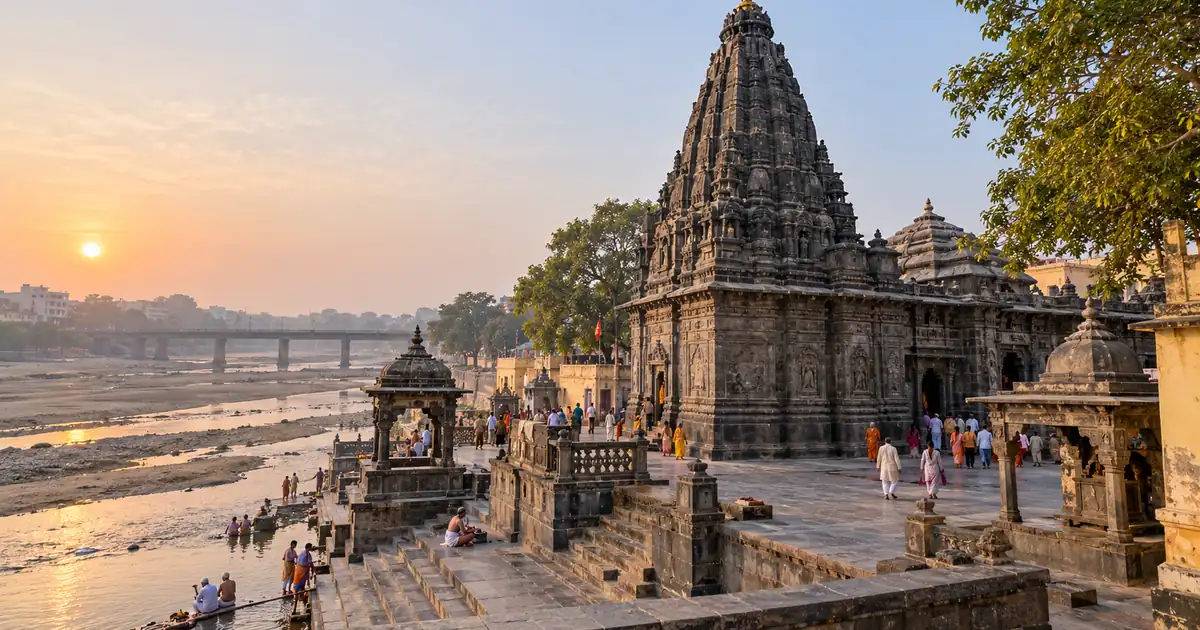
Patna stages India’s largest Chhath gathering along a 15-kilometer riverfront connecting over 100 municipal ghats, led by Digha Ghat, Patliputra Ghat, Collectorate Ghat, and Gandhi Ghat. Across eastern Uttar Pradesh, Varanasi’s 84 continuous stone ghats (Assi, Dashashwamedh, Tulsi, Namo) and Prayagraj’s Triveni Sangam offer unforgettable heritage backdrops.
State tourism directories including the Incredible India Bihar destination guide, Patna District Administration tourist places portal, and Uttar Pradesh Tourism Varanasi riverfront guide publish annual civic ghat safety maps each autumn. Visitors timing an extended Uttar Pradesh river journey around Kartika month frequently pair Chhath in Varanasi with Dev Deepawali ten days later on Kartik Purnima.
| City & River | Iconic Ghat Locations | Ambiance and Traveler Experience |
|---|---|---|
| Patna (River Ganga) | Digha Ghat, Gandhi Ghat, Collectorate Ghat, NIT/Patna College Ghat | Massive civic organization, pontoon bridges, and continuous folk singing |
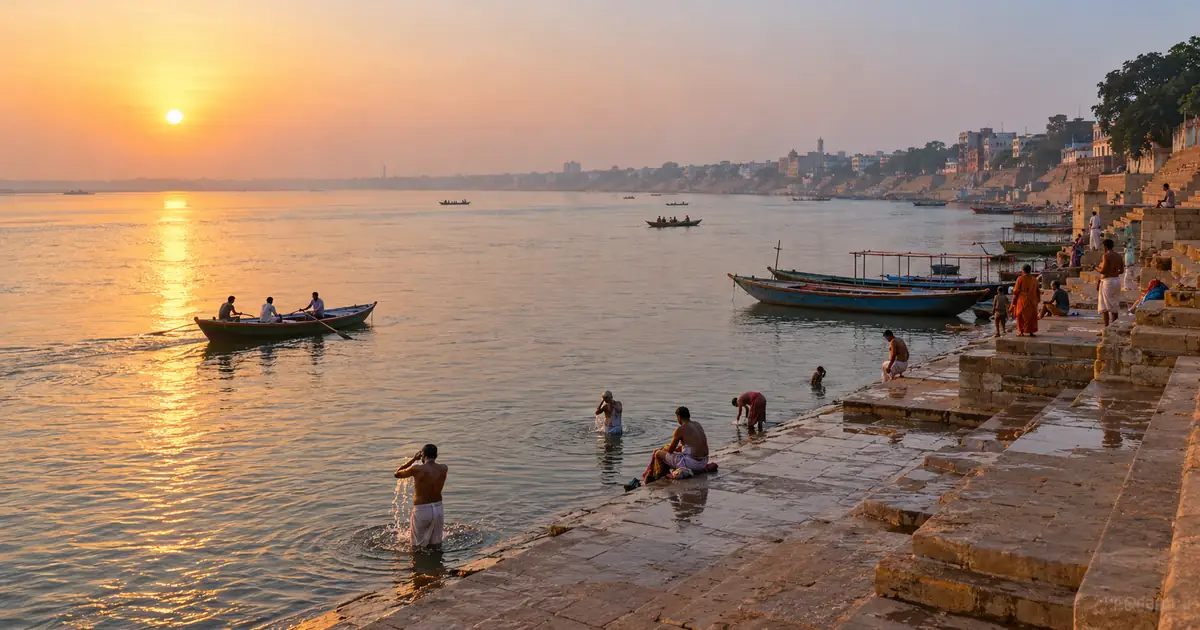
| Varanasi (River Ganga) | Assi Ghat, Dashashwamedh Ghat, Tulsi Ghat, Namo Ghat | Tiered ancient stone staircases and historic palace facades |
| Bhagalpur (River Ganga) | Barari Ghat, Manik Sarkar Ghat, Sultanganj | Traditional Anga customs and broad calm river vistas |
| Prayagraj (Triveni Sangam) | Sangam Nose, Ram Ghat, Arail Ghat | Wide sandy confluence banks and peaceful dawn boat views |
Patna Ganga Riverfront: Digha, Collectorate, and Gandhi Ghats
In Patna, where the Ganga widens across shifting seasonal sandbars, district engineers lay kilometers of steel pontoon walkways, corrugated pathways, floodlight masts, and bamboo barriers each October so hundreds of thousands of residents reach flowing water safely. Watching sunrise at Gandhi Ghat or Digha Ghat as endless lines of oil lamps flicker across the water is deeply memorable.
Varanasi and Prayagraj Stone Ghats & Bhagalpur Banks
Unlike Patna’s sandy banks, Varanasi’s steep stepped stone ghats pack families onto orderly terraces right below sandstone palaces and temples. Assi Ghat and Namo Ghat provide slightly wider horizontal space for first-time photographers compared to tightly packed Dashashwamedh Ghat.
Visitor Etiquette, River Safety, and Travel Logistics for Chhath
All Chhath ghats welcome observers free of charge, provided visitors respect strict ritual purity: remove shoes before stepping near family offering mats, never cross directly between a praying vrati and the sun, and stay inside designated river barricades. Reserve Patna (PAT) or Varanasi (VNS) flights and rail tickets 90 to 120 days ahead due to intense homecoming demand.
Just like peak festival travel planning in India for major cultural gatherings, securing walkable riverside lodging early eliminates stress when traffic bans close approach roads on Days 3 and 4.
| Safety Domain | Essential Precaution | Practical Rationale |
|---|---|---|
| Deep Water Safety | Stay strictly inside bamboo and rope river barricades | Hidden river drop-offs, silt, and strong currents |
| Personal Space | Never walk between a vrati and the sun during Arghya | Disrupts sacred contemplation and family prayer space |
| Footwear Protocols | Remove shoes outside woven family carpets (koshli) | Preserves ritual purity (pavitrata) around prasad |
| Lost Child Alerts | Place ID wristbands or phone slips in children’s pockets | Heavy crowds and patchy mobile data at twilight |
| Boat Travel Rules | Board only licensed boats carrying life jackets | Overloading is strictly barred during Arghya windows |
| Logistics Factor | Key Consideration | Strategic Advice for Travelers |
|---|---|---|
| Flight Bookings | High homecoming demand into Patna (PAT) & Varanasi (VNS) | Book 90–120 days early or route via Gaya/Kolkata/Lucknow |
| Train Reservations | Heavy rush on all eastbound Indian Railways trunks | Target early quotas or Rajdhani/Vande Bharat expresses |
| Hotel Availability | Ghat-adjacent guesthouses sell out first | Stay within 1.5 km walking distance of target ghats |
| Morning Weather | Pre-dawn riverbanks feel cool and misty (14 C to 18 C) | Pack light fleece jackets, shawls, and slip-on shoes |
| Local Road Traffic | Riverfront vehicular bans enforced on Days 3 and 4 | Walk or use cycle-rickshaws from outer drop-off zones |
Ghat Etiquette, Photography Respect, and Crowd Safety
Always ask politely before photographing families performing prayers, keep flash photography turned off during twilight and dawn, and never step over soops or touch offerings uninvited. When devotees distribute warm Thekua prasad after Usha Arghya, accept it respectfully with your right hand (or both hands) after removing gloves.
Peak Rail, Flight, and Walking-Only Traffic Planning
On Sandhya Arghya afternoon (from roughly 1:00 PM onward) and Usha Arghya morning (from 3:00 AM until 8:00 AM), municipal police close riverside roads in both Patna and Varanasi to cars and autos. Leaving your hotel on foot by 3:45 PM for evening Arghya and 4:30 AM for dawn Arghya ensures calm riverside vantage points before crowds peak.
Pro Tip
Best First-Time Observation Spot: In Varanasi, walk onto the wide southern steps of Assi Ghat or spacious Namo Ghat, where broad riverfront aprons make it easy to observe rituals respectfully without crowding praying families.
Frequently Asked Questions About Chhath Puja
When are the Chhath Puja 2026 and 2027 dates?
In 2026, Chhath Puja runs from November 13 (Nahay Khay) to November 16 (Usha Arghya), with Sandhya Arghya on November 15. In 2027, the four-day festival takes place from November 2 to November 5, 2027.
What are the four days of Chhath Puja called?
The four sacred days are Day 1 Nahay Khay (purification bath and satvik meal), Day 2 Kharna (day fast ending in Rasiaav kheer), Day 3 Sandhya Arghya (evening sunset offering), and Day 4 Usha Arghya & Paran (dawn sunrise offering and breaking the 36-hour fast).
Where is Chhath Puja best experienced in Bihar and UP?
Patna’s 15 km Ganga riverfront (including Digha, Gandhi, and Collectorate ghats) hosts the largest celebration in Bihar, while Varanasi’s Assi, Dashashwamedh, and Namo ghats and Prayagraj’s Triveni Sangam offer iconic stepped stone riverfront views in Uttar Pradesh.
Is there any ticket or entry fee to watch Chhath Puja at the ghats?
No, all public riverfront ghats in Patna, Varanasi, Bhagalpur, and Prayagraj are 100% free and open to respectful visitors without tickets or passes.
What etiquette should travelers follow during Chhath Puja?
Remove footwear before stepping near family mats, never walk between a devotee and the sun during Arghya, stay strictly inside safety barricades along the river, and ask permission before photographing families up close.
What is Thekua in Chhath Puja?
Thekua is the traditional sweet prasad of Chhath Puja, crafted from whole wheat flour, melted jaggery, coconut, and pure cow ghee, stamped with carved wooden molds, and offered inside bamboo soops and dauras.