Bihar Travel Guide: Buddhist Circuit, Nalanda, Rajgir & Heritage
Plan your trip with our complete Bihar travel guide covering Bodh Gaya, Nalanda ruins, Rajgir glass bridge, Vishnupad Gaya, and Valmiki safaris.
Bihar spans 94,163 square kilometers across the fertile plains of the middle Ganga river basin in eastern India, bordered by Nepal to the north, West Bengal to the east, Jharkhand to the south, and Uttar Pradesh to the west. This comprehensive Bihar travel guide provides verified logistical information for exploring sacred Buddhist pilgrimage sites, ancient residential university ruins, high-altitude ropeways, and Himalayan foothill tiger habitats across 38 administrative districts.
The state stands as the historic cradle of two world religions, Buddhism and Jainism, while serving as the imperial seat of the ancient Maurya and Gupta empires that once governed much of the Indian subcontinent. Travelers encounter an extraordinary concentration of UNESCO World Heritage monuments, active monastic settlements, and deep-rooted rural traditions centered along sacred river ghats.
State Travel & Circuit Essentials
- Bihar covers 94,163 square kilometers in eastern India, divided into 38 administrative districts governed under nine regional divisions.
- Patna serves as the state capital, with Jay Prakash Narayan Airport (PAT) and Gaya Airport (GAY) providing primary air access.
- The ideal travel season extends from October through March, when dry winter conditions bring pleasant temperatures between 10°C and 25°C.
- Primary travel corridors follow the Buddhist Circuit connecting Bodh Gaya, Rajgir, Nalanda, and Vaishali via National Highway 22 and National Highway 120.
Modern four-lane highways and expanded rail connections now permit efficient travel between major historical towns. Travelers exploring northern and eastern heritage routes regularly pair Bihar with spiritual journeys featured across the must-see cities and heritage regions in India.
Bihar Destinations Master Matrix
Navigating Bihar requires organizing travel plans around distinct geographic and cultural corridors. The following master matrix outlines the primary travel regions across the state, their signature attractions, recommended stay lengths, and primary transit gateways:
| Destination Region | Focus & Character | Ideal Stay | Signature Sights | Primary Transit Gateway |
|---|---|---|---|---|
| Bodh Gaya Spiritual Belt | Buddhist World Heritage | 2 Days | Mahabodhi Temple, Sacred Bodhi Tree, Great Buddha Statue, Thai Monastery | Gaya Airport (GAY) / Gaya Junction (GAYA) |
| Rajgir & Nalanda Valley | History & Scenic Hills | 2 Days | Nalanda Mahavihara Ruins, Rajgir Glass Bridge, Vulture Peak, Vishwa Shanti Stupa | Rajgir Station (RGD) / Bakhtiyarpur (BKP) |
| Gaya Sacred Shrines | Hindu Pitru Paksha Rites | 1 to 2 Days | Vishnupad Temple, Falgu River Ghats, Akshay Vat, Mangla Gauri Shaktipeeth | Gaya Junction (GAYA) / NH 22 |
| Patna & Pataliputra | State Capital & Riverfront | 1 to 2 Days | Golghar, Patna Museum, Bihar Museum, Takht Sri Patna Sahib, Ganga Marine Drive | Patna Airport (PAT) / Patna Junction (PNBE) |
| Vaishali Ancient Republic | Buddhist & Jain Heritage | 1 Day | Ashokan Pillar, Relic Stupa, Kundalpur, Shanti Stupa, Coronation Tank | Muzaffarpur Junction (MFP) / Patna (PAT) |
| Valmiki Tiger Reserve | Shivalik Wilderness | 2 to 3 Days | Sal Forest Jeep Safaris, Gandak River Rafting, Valmiki Ashram, Eco-Huts | Bagaha Station (BUG) / Gorakhpur (GOP) |
| Sasaram Heritage Belt | Afghan Imperial Architecture | 1 Day | Sher Shah Suri Tomb, Rohtasgarh Fort, Manjhar Kund Waterfall | Sasaram Junction (SSM) / Grand Trunk Road |
| Mithila Cultural Region | Folk Art & Sacred Shrines | 2 Days | Madhubani Painting Villages, Janaki Temple Sitamarhi, Ahilya Sthan | Darbhanga Airport (DBR) / Madhubani (MBI) |
Understanding these regional hubs allows travelers to craft balanced itineraries combining deep spiritual exploration with monumental heritage and nature reserves.
Sacred Buddhist Pilgrimage Circuit
The Buddhist Circuit in Bihar represents one of the most sacred pilgrimage routes on earth, marking the geography where Siddhartha Gautama attained enlightenment and preached his core doctrines. Pilgrims from Japan, Thailand, Sri Lanka, Myanmar, and Vietnam join domestic travelers along this holy corridor.
Bodh Gaya and the Enlightenment Sanctuary
Bodh Gaya represents the spiritual heart of the Buddhist world, located 12 kilometers south of Gaya town along the bank of the Falgu River. The center of veneration is the UNESCO-listed visiting Mahabodhi Temple Bodh Gaya, constructed around the exact spot where the Buddha attained Supreme Enlightenment in 531 BCE.
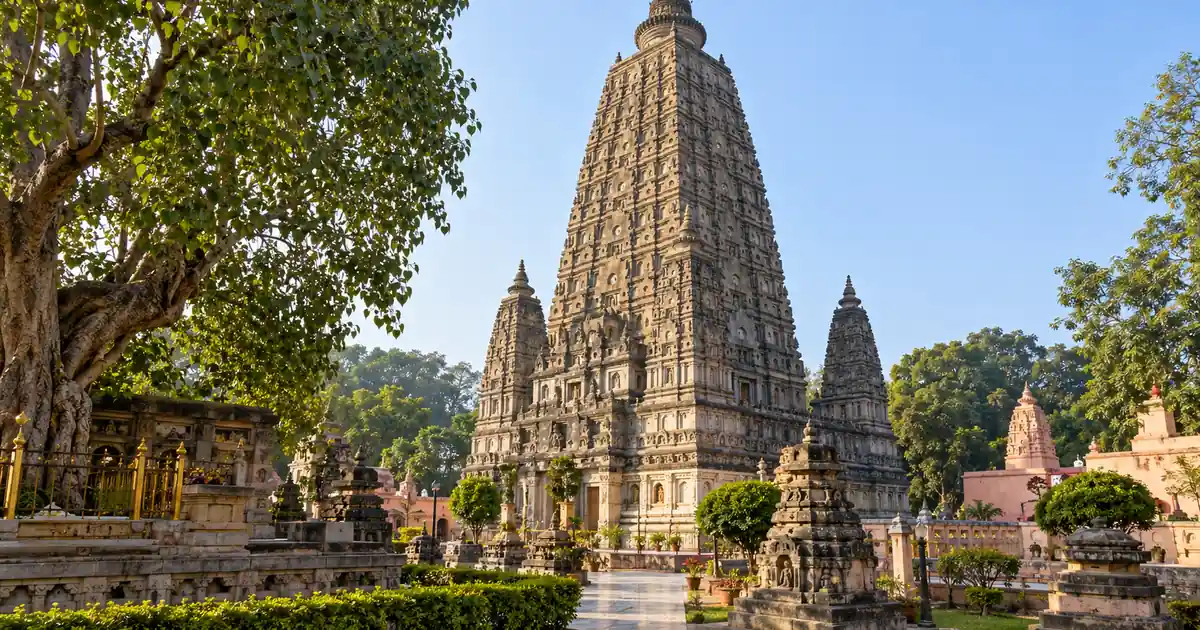
Within the temple sanctuary, visitors meditate beside the sacred Bodhi Tree (Ficus religiosa) and the polished sandstone Vajrasana (Diamond Throne) erected by Emperor Ashoka in the third century BCE. The surrounding town houses dozens of monasteries built by international Buddhist communities, showcasing distinctive architectural styles from Bhutan, Japan, Cambodia, and Tibet. Official sanctuary preservation guidelines can be reviewed on the UNESCO World Heritage Mahabodhi Portal.
Rajgir and the Vulture Peak Sanctuary
Encircled by seven rocky hills and thermal mineral springs, Rajgir served as the first capital of the ancient Magadha kingdom. The Buddha spent twelve years residing at Rajgir, delivering foundational sermons on Gridhakuta Hill (Vulture Peak), including the Heart Sutra and Lotus Sutra.
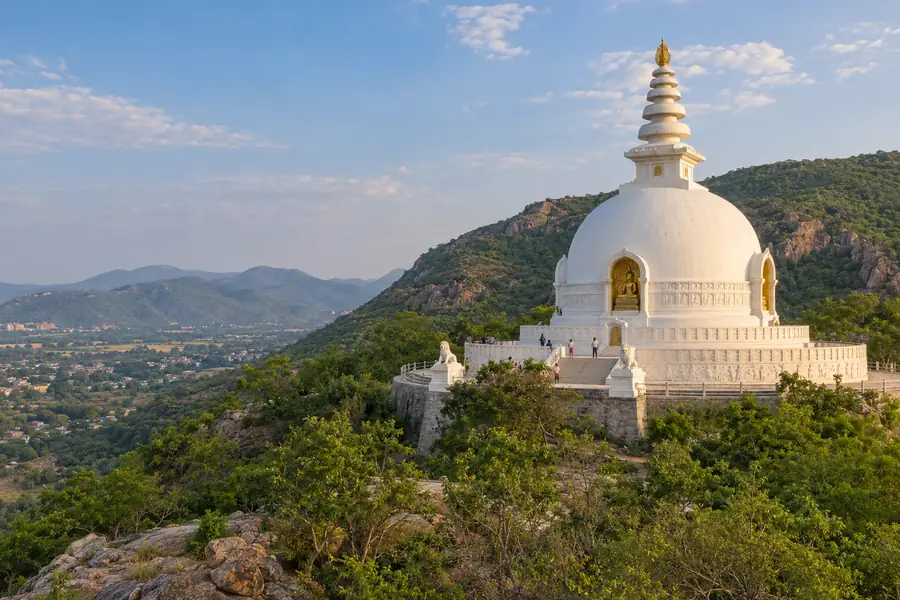
Travelers ascend Gridhakuta Hill either on foot along an ancient stone pathway or via an aerial chairlift to reach the dazzling white Vishwa Shanti Stupa (World Peace Pagoda) built by the Japanese Buddhist monk Nichidatsu Fujii. Down in the valley, the bamboo grove of Venuvana provides shaded stone paths where king Bimbisara originally gifted an orchard retreat to the monastic order.
Visitors can verify monument rules and seasonal circuit travel packages through the Bihar Tourism Destinations Portal, which coordinates state transport services.
Ancient Knowledge Centers and Modern Attractions
Bihar holds a distinguished place in the intellectual history of Asia, housing institutions that attracted scholars from across China, Korea, Persia, and Central Asia more than a thousand years ago.
Nalanda Mahavihara Archaeological Ruins
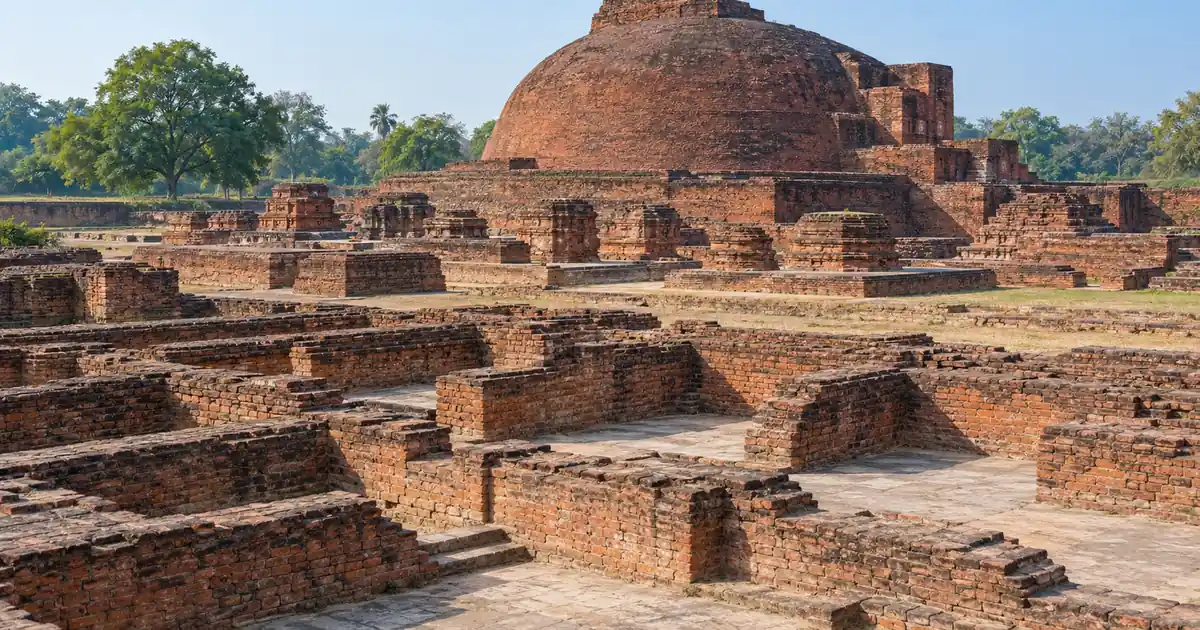
Located 15 kilometers north of Rajgir, the monumental brick ruins of Nalanda Mahavihara represent the world’s first great residential university. Operating between the fifth century and thirteenth century CE under the patronage of the Gupta and Pala dynasties, Nalanda accommodated over 10,000 students and 2,000 teachers in its heyday.
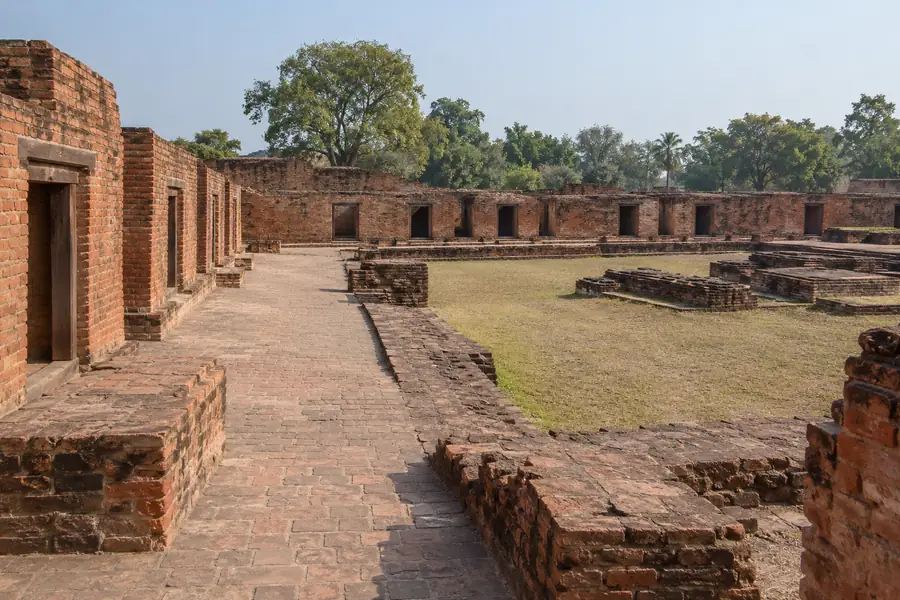
Extensive excavations preserved under the ASI World Heritage Monuments Register reveal monumental red-brick monasteries, lecture courtyards, meditation cells, and the towering votive terraces of Stupa No. 3. Detailed visitor planning, ticket booking protocols, and museum guidelines are covered in our dedicated guide to the Nalanda ruins and Rajgir glass bridge.
Rajgir Nature Safari and Sky Glass Bridge
Complementing its ancient monuments, Rajgir has developed innovative eco-tourism attractions centered around the Rajgir Nature Safari in the Jethian forest range. The standout attraction is India’s high-altitude Sky Glass Bridge, cantilevered over a 250-foot gorge to offer panoramic views across the rocky Shivalik-ridge forests.
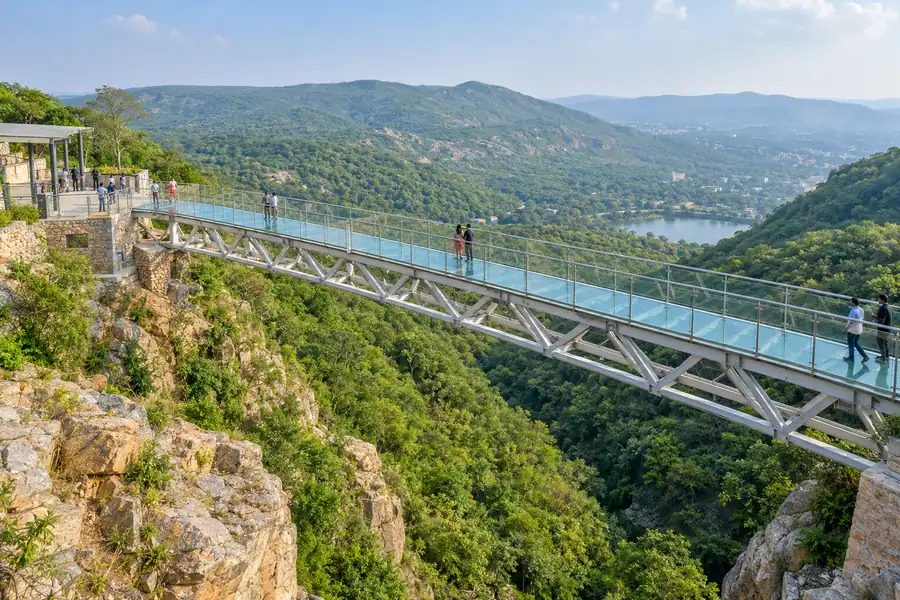
The surrounding nature park includes a suspension bridge, zipline courses, an aviary, and a butterfly park, creating an engaging blend of adventure and wildlife appreciation for families and students.
Hindu Pilgrimage Corridors and River Ghats
In addition to its Buddhist sanctuaries, Bihar serves as a vital epicenter of orthodox Hindu devotion, centered around ancestral rites and sacred river crossings.
Gaya and Ancestral Pind Daan Rites
Gaya holds an irreplaceable role in Sanatana Dharma as the foremost national center for performing ancestral rites (Shraddha). According to ancient Puranic texts, offering sacred rice cakes (pindas) at Gaya guarantees spiritual liberation for departed ancestors across generations.
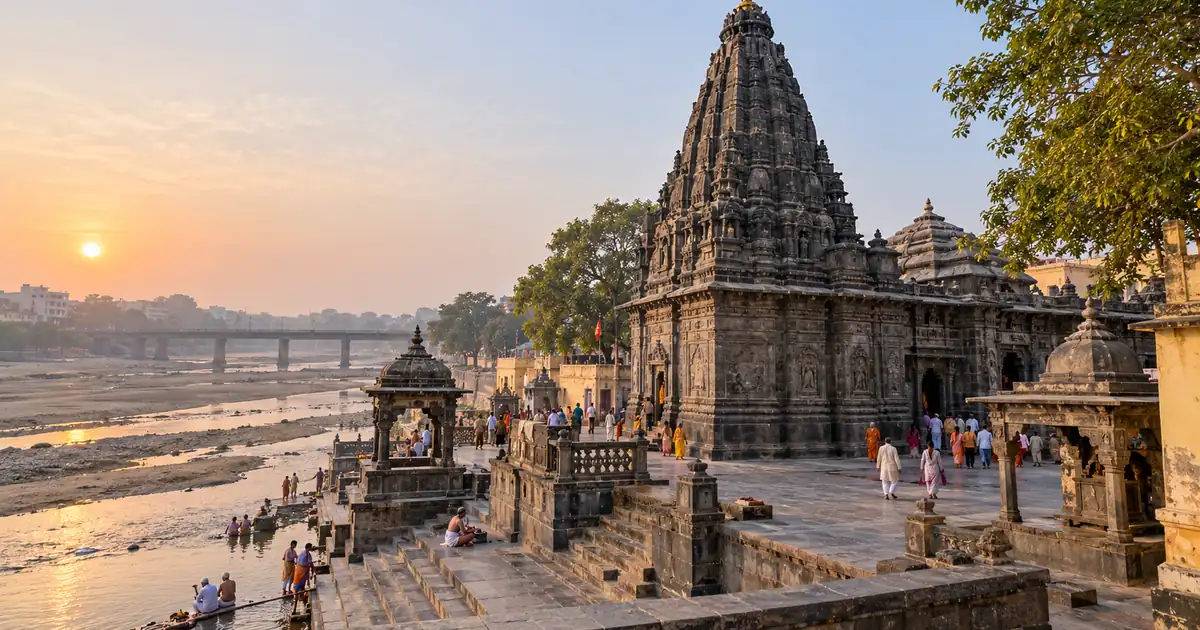
The sacred precinct centers around the black granite visiting Vishnupad Temple Gaya & Pind Daan, which encloses an ancient footprint of Lord Vishnu embedded in solid basalt rock. During the annual Pitru Paksha Mela, hundreds of thousands of pilgrims congregate along the Falgu River ghats and under the immortal banyan tree (Akshay Vat) to conduct formal ceremonies led by traditional Gayawal priests.
River Ganga Ghats and Cultural Festivities
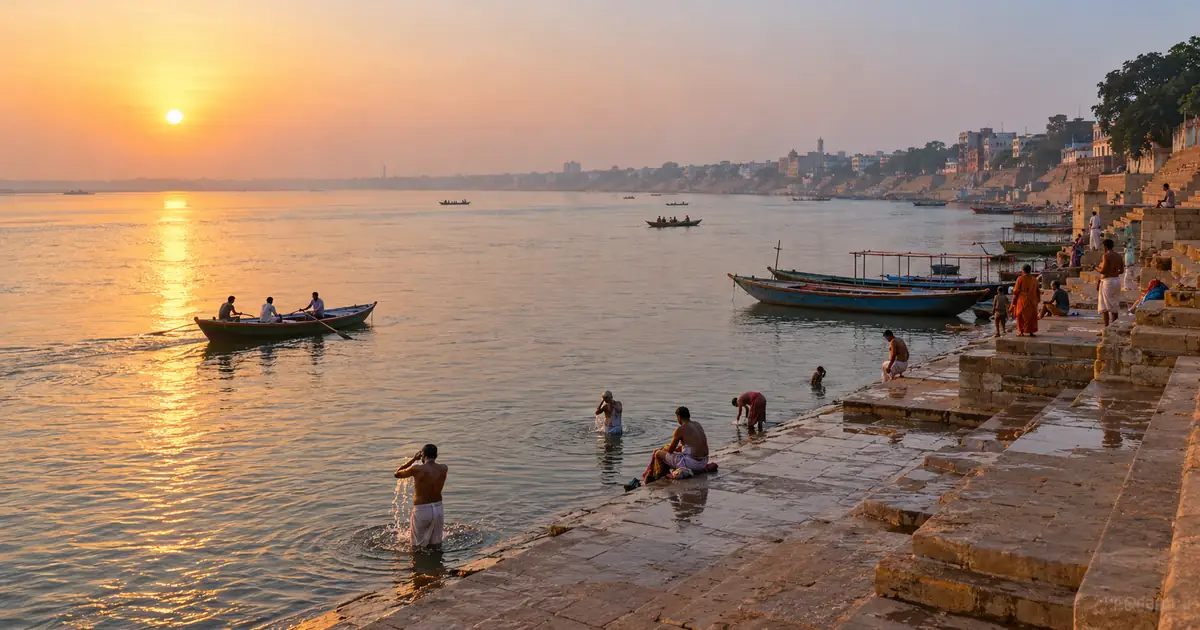
The river Ganges flows west to east across the heart of Bihar, dividing the state into northern and southern halves. Riverfront cities such as Patna, Munger, and Bhagalpur feature historic stone bathing steps where daily evening aartis take place.
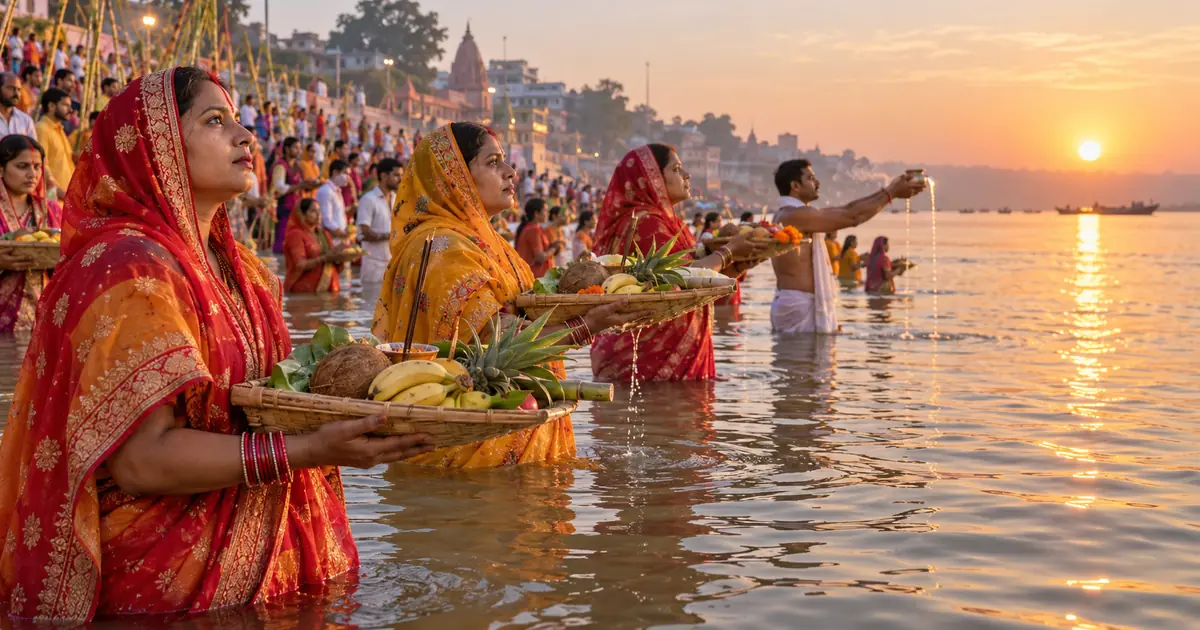
Each autumn, six days following Diwali, the riverbanks host the monumental four-day solar festival of Chhath Puja. Millions of fasting devotees gather along the water’s edge to offer prayers to the setting and rising sun, an ancient Vedic ritual detailed in our comprehensive Chhath Puja guide.
Wildlife and Wilderness Sanctuaries
Beyond its historical towns and spiritual temples, Bihar preserves important biodiversity hotspots spanning dense sub-Himalayan jungles and major river wetlands.
Valmiki Tiger Reserve
Situated in the West Champaran district along the international boundary with Nepal, Valmiki Tiger Reserve forms the easternmost limit of the Himalayan terai sal forests. Spanning over 898 square kilometers, the reserve provides critical sanctuary for royal Bengal tigers, Indian leopards, one-horned rhinoceroses, and wild Asian elephants.
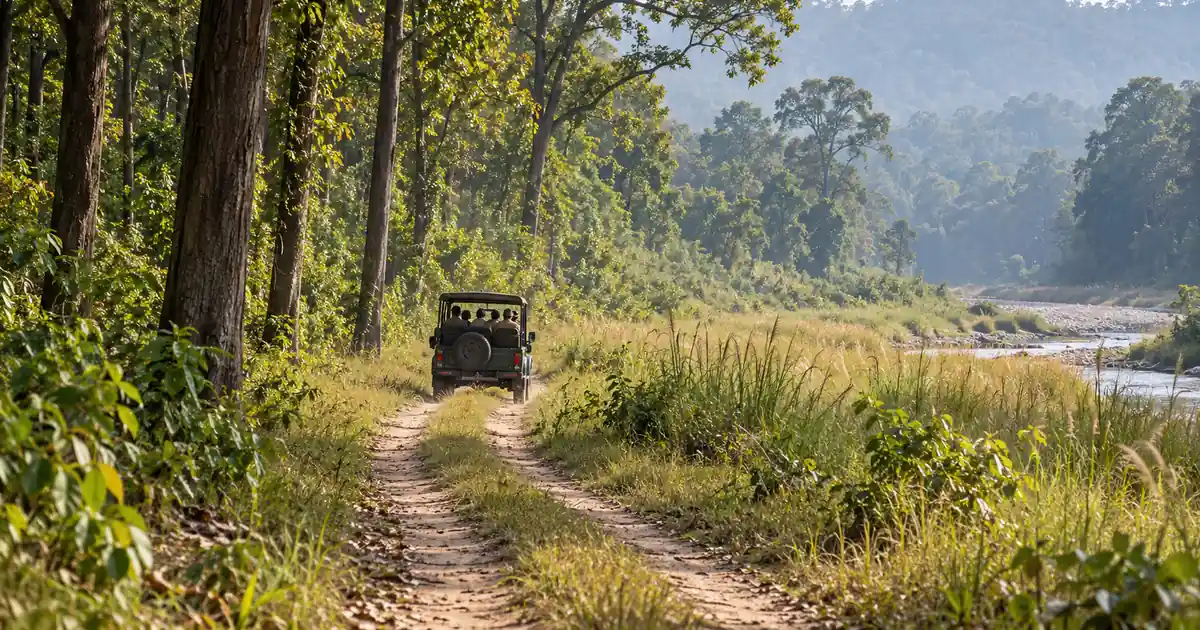
The sanctuary features scenic forest lodges at Valmikinagar, motorboat excursions along the Gandak River, and guided safari trails through deep sal canopies. Detailed permit procedures and route planning are provided in our complete Valmiki Tiger Reserve safari guide.
Vikramshila Gangetic Dolphin Sanctuary
Covering a 60-kilometer stretch of the Ganges River between Sultanganj and Kahalgaon in Bhagalpur district, this protected aquatic corridor is India’s only dedicated sanctuary for the endangered Gangetic river dolphin (Platanista gangetica).
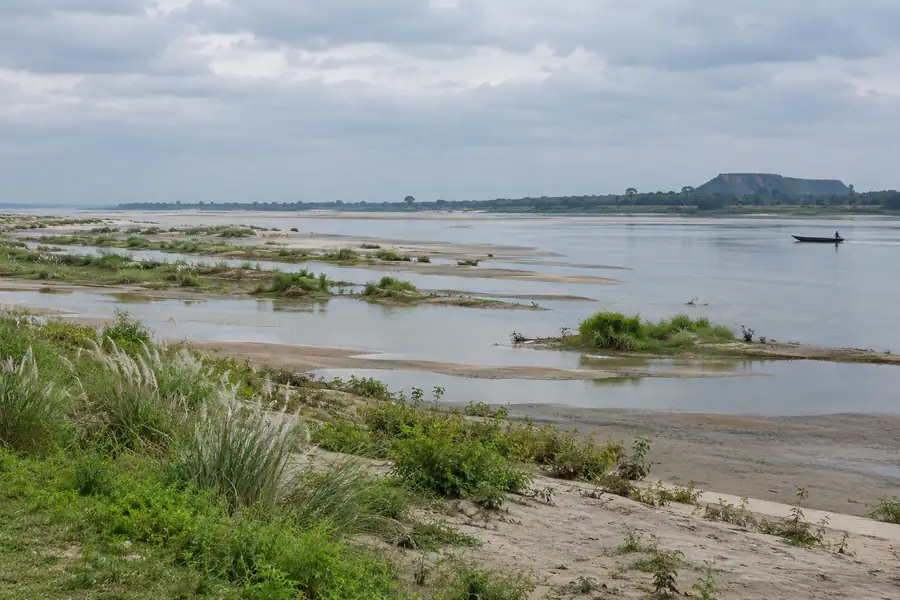
Visitors board quiet country wooden boats with local fishermen guides to observe these blind, echolocating freshwater mammals surfacing for breath in the river currents, especially during morning hours between October and March.
Regional Gastronomy and Culinary Highlights
Bihar offers a distinctive rustic cuisine centered around whole grains, roasted gram flour (sattu), mustard oil, and seasonal river valley produce. The culinary traditions emphasize nutrition, slow earthen-pot cooking, and distinct sweet preparations.
The following table highlights signature traditional dishes and where to sample them across the state:
| Culinary Specialty | Ingredients & Flavor Profile | Traditional Origin Region | Best Places to Sample |
|---|---|---|---|
| Litti Chokha | Baked whole-wheat dough balls stuffed with spiced sattu, served with roasted eggplant and tomato mash | Bhojpuri & Magadhi Belt | Maurya Lok Complex (Patna), highway dhabas along NH 22 |
| Khaja of Silao | Multi-layered crisp pastry fried in pure ghee and dipped in light sugar syrup (GI Tagged) | Silao Village (Nalanda) | Traditional sweetmakers lining the main street of Silao |
| Tilkut of Gaya | Pounded white sesame seed confection bound with winter jaggery or refined cane sugar (GI Tagged) | Gaya Town | Ramna and Tekari Road bazaar stalls in Gaya |
| Dal Pitha | Steamed rice flour dumplings stuffed with spiced lentils or chana dal mixture | Mithila & Magadh | Traditional home kitchens, state food festivals in Patna |
| Mithila Makhana Kheer | Rich milk pudding simmered with puffed fox nuts, cardamom, saffron, and almonds | Darbhanga & Madhubani | Mithila regional thali restaurants in Darbhanga |
| Sattu Sharbat | Savory chilled drink of roasted gram flour with cumin, black salt, lemon, and chopped green chilies | Pan-Bihar Street Beverage | Street stalls outside Patna Junction, Gaya Station |
Sampling these authentic dishes offers travelers a direct sensory connection to Bihar’s agrarian heritage and centuries-old culinary crafts.
Transit Logistics: How to Reach and Travel Around Bihar
Reaching and navigating Bihar has become straightforward thanks to substantial investments in four-lane national highways, modernized railway junctions, and commercial regional airports.
Travel by Air
Bihar operates three commercial passenger airports handling daily domestic services:
- Jay Prakash Narayan International Airport, Patna (PAT): Offers high-frequency non-stop connections to New Delhi, Mumbai, Bengaluru, Kolkata, Hyderabad, Chennai, and Lucknow.
- Gaya Airport (GAY): Handles direct flights to New Delhi and Kolkata, alongside seasonal international charter services from Bangkok, Colombo, and Yangon catering to Buddhist pilgrims.
- Darbhanga Airport (DBR): Serves northern Bihar with direct domestic connections to Delhi, Mumbai, and Bengaluru under the regional connectivity scheme.
Travel by Train
Bihar possesses one of the densest railway networks in India, operated by the East Central Railway zone headquartered at Hajipur. Patna Junction (PNBE), Gaya Junction (GAYA), and Pt. Deen Dayal Upadhyaya Junction (DDU) receive multiple daily Vande Bharat Express, Rajdhani Express, and Tejas Express trains connecting the state to New Delhi in under eleven hours.
Travel by Road
Major road corridors include National Highway 19 (the historic Grand Trunk Road) linking southern Bihar to Kolkata and Delhi, National Highway 22 linking Patna to Gaya and Muzaffarpur, and the modern Bakhtiyarpur-Tajpur highway network. The Bihar State Road Transport Corporation (BSRTC) operates air-conditioned luxury bus services connecting Patna to all district headquarters.
Best Time to Visit and Seasonal Guidance
Travelers planning an extended journey through Bihar should align their dates with the winter season to ensure comfortable daytime sightseeing conditions:
- Winter (October to March): The ideal travel window. Daytime temperatures average 18°C to 24°C, with crisp sunny mornings perfect for walking through archaeological ruins and boat safaris. Nights can dip to 8°C in January, requiring woolen jackets.
- Summer (April to June): Characterized by intense heat and dry winds known locally as loo, with temperatures frequently exceeding 42°C. Sightseeing during mid-day is uncomfortable, though morning monument visits remain feasible.
- Monsoon (July to September): Brings heavy seasonal rainfall and river swelling. While rural landscapes become lush and green, rural roads can experience waterlogging, and river cruises are curtailed due to high currents.
Frequently Asked Questions About Bihar Travel
Is Bihar safe for solo travelers and international tourists?
Bihar is safe and welcoming for tourists, especially along established pilgrimage circuits in Bodh Gaya, Rajgir, Nalanda, and Patna. Standard travel precautions apply, such as avoiding late-night rural road travel and booking verified taxis through hotel desks or registered state tourism operators.
How many days are needed to cover the major highlights of Bihar?
A well-paced journey requires 5 to 7 days to cover the primary Buddhist Circuit of Bodh Gaya, Nalanda, and Rajgir alongside Patna’s museums. Travelers wishing to add wildlife safaris in Valmiki Tiger Reserve or explore Sasaram should plan an itinerary of 9 to 10 days.
What is the most convenient way to travel between Bodh Gaya, Rajgir, and Nalanda?
Hiring a private air-conditioned taxi from Gaya or Patna is the most efficient option, as the three sites lie within an 80-kilometer driving triangle connected by smooth state highways. Regular local trains and state transport buses also run between Gaya, Rajgir, and Bihar Sharif.
Can tourists visit the Nalanda ruins and Rajgir glass bridge on the same day?
Yes, Nalanda and Rajgir are separated by just 15 kilometers, making it convenient to visit the ancient Nalanda Mahavihara ruins during the morning and experience the Rajgir glass bridge and ropeway in the afternoon. Advanced online booking is strongly advised for the glass bridge to avoid long queues.