Nalanda Ruins & Rajgir Glass Bridge: Ticket Booking & Guide
Complete guide to Nalanda University ruins and Rajgir Nature Safari glass bridge: ticket booking, aerial ropeway timings, museum, and travel tips.

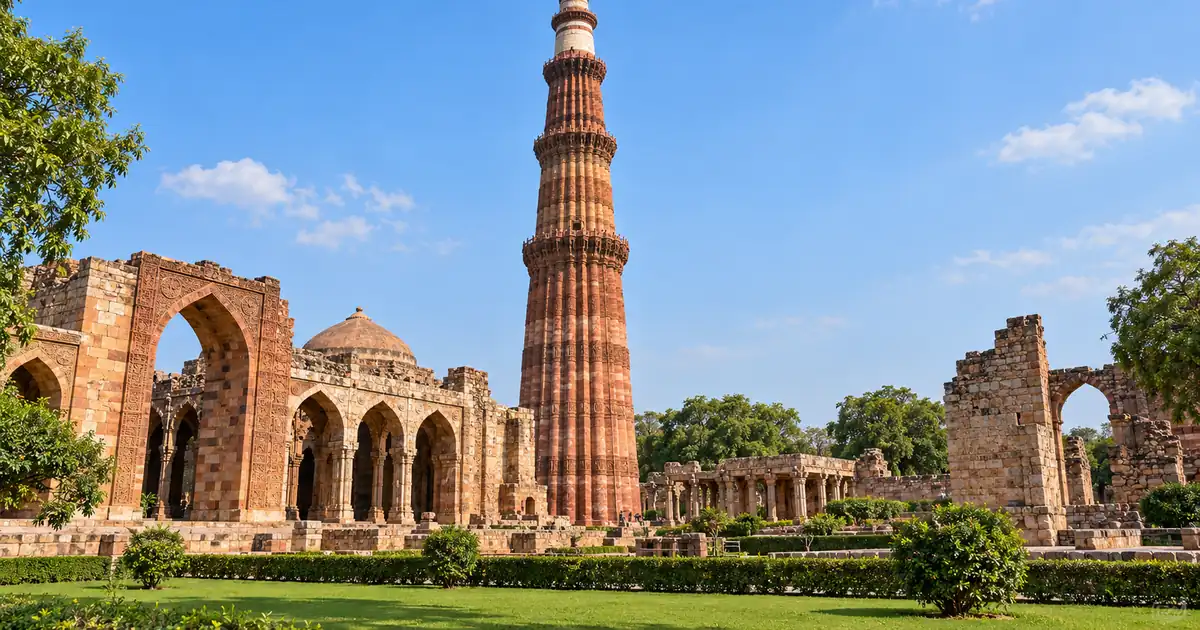
The historical corridor connecting the archaeological ruins of Nalanda Mahavihara and the hill valley of Rajgir forms the central cultural circuit of central Bihar, located 85 kilometers southeast of Patna. This comprehensive travel guide delivers verified daily operational hours, online ticket booking procedures, aerial ropeway schedules, and transit advice for exploring these complementary destinations.
Separated by just 15 kilometers of smooth state highway, Nalanda preserves the red-brick monasteries of ancient Asia’s greatest university, while Rajgir pairs ancient Buddhist hill sanctuaries with the popular Rajgir Nature Safari and Sky Glass Bridge. Travelers can comfortably combine both landmarks in a single well-structured day trip starting from Patna, Bodh Gaya, or Rajgir town.
Visitor Essentials & Transit Snapshot
- Nalanda archaeological ruins open daily from 9:00 AM to 5:00 PM, with admission tickets costing ₹50 for Indian citizens and ₹550 for foreign nationals.
- The Rajgir Sky Glass Bridge operates within the Rajgir Nature Safari from 9:00 AM to 5:00 PM (closed every Monday), requiring mandatory advance online ticket booking.
- The driving distance between Nalanda ruins and central Rajgir is 15 kilometers, taking approximately 25 minutes along State Highway 78.
- The Vishwa Shanti Stupa on Gridhakuta Hill in Rajgir is accessible via an aerial single-chair ropeway operating from 9:00 AM to 5:00 PM for ₹120 round-trip.
Travelers exploring northern Buddhist routes regularly incorporate this sector into broader state travel plans detailed in our complete Bihar visitor overview.
Nalanda and Rajgir Timings and Ticketing Overview
Coordinating a visit across both locations requires understanding their differing operating schedules, ticket offices, and weekly closure days. The following comparison table outlines essential planning parameters:
| Operational Parameter | Nalanda Mahavihara Ruins | Rajgir Sky Glass Bridge & Nature Safari | Rajgir Aerial Chairlift & Peace Pagoda |
|---|---|---|---|
| Daily Opening Hours | 9:00 AM to 5:00 PM | 9:00 AM to 5:00 PM | 9:00 AM to 5:00 PM (Lunch break 1:00 PM to 1:45 PM) |
| Weekly Holiday | Open 7 Days a Week | Closed Every Monday | Open 7 Days a Week (Subject to high winds) |
| Domestic Entry Fee | ₹50 (Counter) / ₹45 (Online QR) | ₹250 (Includes Glass Bridge + Forest Entry) | ₹120 (Two-way chairlift ticket) |
| Foreigner Entry Fee | ₹550 (Counter) / ₹500 (Online QR) | ₹500 (Includes Glass Bridge + Forest Entry) | ₹120 (Two-way chairlift ticket) |
| Booking Mechanism | On-site counter or ASI online portal | Advance online booking via state safari portal | Counter purchase at the base station |
| Ideal Visit Duration | 2 to 3 Hours | 2 to 3 Hours | 1.5 to 2 Hours |
Purchasing Nalanda tickets through the online QR system saves time at the entrance gate, while Rajgir Glass Bridge slots frequently sell out days in advance during winter weekends.
Exploring the UNESCO Ruins of Nalanda Mahavihara
Nalanda Mahavihara flourished between the fifth and thirteenth centuries CE as the preeminent residential monastic university of ancient Asia. Founded under the patronage of Gupta Emperor Kumaragupta I and later supported by King Harshavardhana and Pala rulers, the institution accommodated over 10,000 Buddhist monks and students studying philosophy, astronomy, medicine, logic, and Sanskrit grammar.
Excavations conducted by the Archaeological Survey of India cover an area of 14 hectares, representing only a fraction of the historical campus. The site is laid out systematically along a north-south axis, featuring two parallel rows: eleven grand residential monasteries (viharas) on the east facing eight monumental temple shrines (chaityas) on the west.
Stupa No. 3 and Monastic Courtyards
The most recognizable landmark within Nalanda is Stupa No. 3, also known as the Sariputta Stupa, named after the prominent disciple of the Buddha who was born and attained nirvana in this region. The monument represents seven successive rebuildings over centuries, resulting in a towering multi-tiered structure flanked by decorative corner towers, staircases, and exquisite stucco Buddha images in meditative postures.
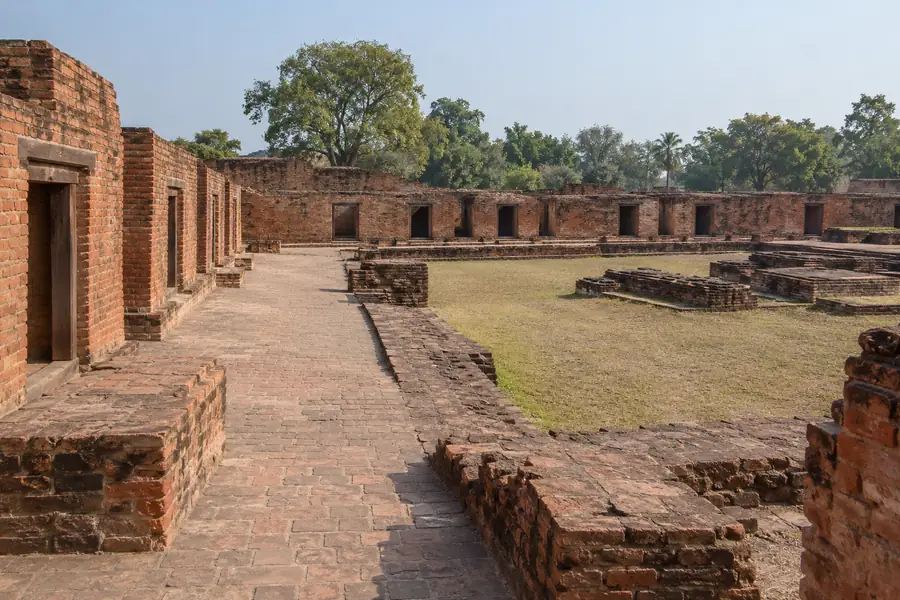
Adjacent monasteries display sophisticated ancient civic planning. Each monastery features a central sunken courtyard surrounded by shaded verandahs, individual monk cells with stone sleeping ledges, drainage systems, private wells, and dedicated lecture podiums. Formal conservation details are recorded on the UNESCO World Heritage Nalanda Listing.
Archaeological Museum of Nalanda
Located directly opposite the ruins entrance, the Archaeological Museum of Nalanda houses hundreds of excavated artifacts discovered across the campus. Standout exhibits include intricate bronze sculptures from the Pala period, terracotta sealings bearing the official university insignia, inscribed stone slabs, and ancient pottery.
Additional galleries display charred rice grains recovered from ancient granaries alongside statues of Hindu and Buddhist deities. The museum opens daily from 9:00 AM to 5:00 PM (closed Fridays), with an admission fee of ₹5.
Official monument conservation notices and catalog entries are maintained through the ASI World Heritage Nalanda Register.
Rajgir Nature Safari and the Sky Glass Bridge
Situated in the Jethian forest reserve 8 kilometers west of central Rajgir, the Rajgir Nature Safari represents one of eastern India’s newest eco-tourism attractions. Designed to promote environmental awareness, the park spans rugged Shivalik hills cloaked in dry deciduous forest.
Walking the 250-Foot Sky Glass Bridge
The centerpiece of the safari is the high-altitude Sky Glass Bridge, cantilevered dramatically over a 250-foot gorge. Built from heavy-duty tempered glass panels measuring 85 feet in length and 6 feet in width, the bridge allows up to 40 visitors at a time to look straight down through transparent flooring into the rocky canyon below.
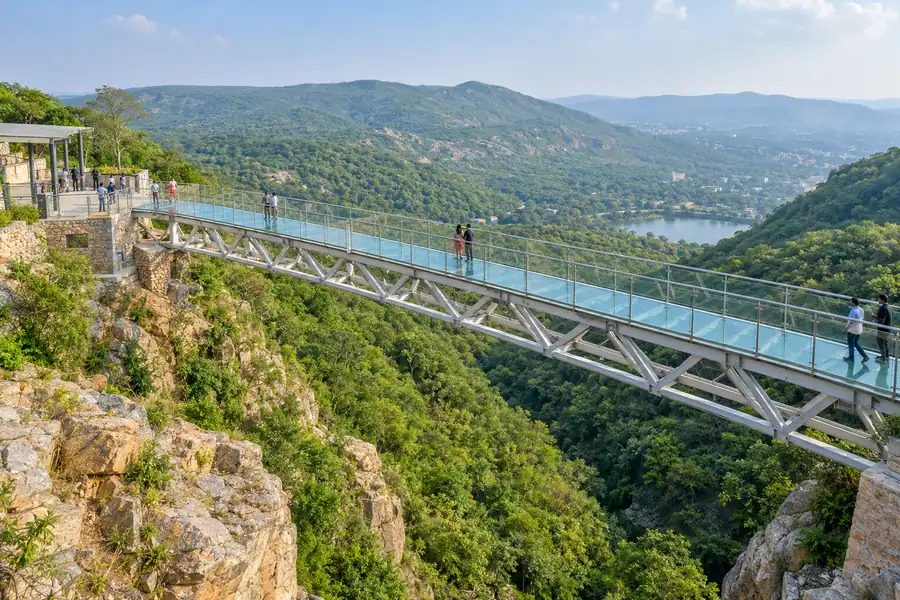
Visitors must remove their shoes and wear protective fabric shoe booties provided by park staff before stepping onto the glass deck. Running, jumping, and carrying tripods onto the bridge are strictly prohibited for safety reasons.
Advance Ticket Booking for the Glass Bridge
Due to high demand and strict hourly capacity limits, travelers should book their entry slots online through the official state forest safari booking portal several days ahead of travel. Tickets are divided into timed morning and afternoon slots. Unreserved counter tickets are limited and typically exhaust before 10:00 AM during peak winter months.
Complementary attractions within the Nature Safari compound include a 150-meter suspension bridge, an aerial zipline course, a rock climbing wall, a butterfly park, and battery-operated buggy transport.
Historic Sanctuaries and Scenic Ropeway of Rajgir
Beyond modern adventure parks, Rajgir preserves profound spiritual landmarks set amidst the lush valley encircled by the Ratnagiri, Vipulagiri, Vaibhargiri, Songiri, and Udaygiri hills.
Aerial Chairlift to Vishwa Shanti Stupa
The single-seat aerial ropeway at Rajgir carries travelers over rugged hill slopes to the summit of Ratnagiri Hill in under eight minutes. At the peak stands the gleaming white marble Vishwa Shanti Stupa (World Peace Pagoda), rising 120 feet tall and housing four golden statues representing the birth, enlightenment, first sermon, and death of the Buddha.
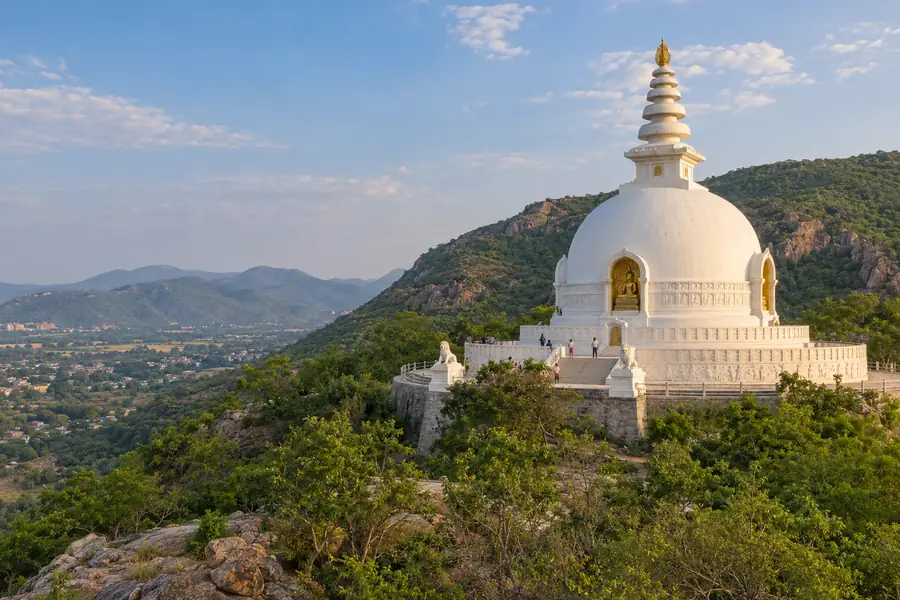
Adjacent to the stupa, a walking trail leads to Gridhakuta Hill (Vulture Peak), where natural rock shelters mark the exact spot where the Buddha meditated and delivered foundational Mahayana discourses to disciples.
Thermal Springs and Ancient Venuvana
At the base of Vaibhargiri Hill, natural sulfur-rich thermal springs feed stone bathing tanks known as the Saptaparni and Brahmakund. Devotees bathe in the hot mineral waters, which maintain a constant temperature of 45°C and are believed to have therapeutic healing properties.
Nearby, the restored bamboo garden of Venuvana provides tranquil walking trails under tall groves where King Bimbisara of Magadha hosted the Buddha during early monastic retreats. Additional circuit details are available on the Bihar Tourism Nalanda Destination Portal.
Travelers often connect their heritage exploration in Rajgir with early morning meditation at the sacred Mahabodhi Temple Bodh Gaya darshan and timings, situated 70 kilometers to the southwest.
How to Reach Nalanda and Rajgir
The Nalanda-Rajgir circuit is well connected to major urban centers in eastern India by rail and road networks:
- By Train: Rajgir Railway Station (RGD) connects directly to New Delhi via the daily Shramjeevi Superfast Express, and to Kolkata via regular express services. Bakhtiyarpur Junction (BKP), located 55 kilometers north on the main Delhi-Howrah rail line, provides high-frequency express train connectivity with taxis readily available.
- By Air: Jay Prakash Narayan Airport in Patna (PAT) is 85 kilometers northwest of Nalanda, offering regular non-stop flights to major Indian metropolitan cities. Gaya Airport (GAY) is 75 kilometers southwest.
- By Road: Smooth four-lane state highways link Patna to Bihar Sharif, from which State Highway 78 branches south towards Nalanda and Rajgir. Regular air-conditioned buses operate from Patna’s Bairiya Inter State Bus Terminal (ISBT).
Travelers exploring religious heritage across the state frequently pair this circuit with ancestral rituals performed at Vishnupad Temple Gaya & Pind Daan darshan and timings.
Best Time to Visit and Travel Advice
The recommended window for visiting Nalanda and Rajgir is from October through March, when daytime temperatures stay between 16°C and 25°C. Walking across the open unshaded brick ruins of Nalanda requires comfortable walking shoes, a broad-brimmed sun hat, and adequate drinking water.
Visitors planning extended winter vacations can also connect this journey to northern wilderness safaris detailed in our complete guide to Valmiki Tiger Reserve in Bihar. During the summer months of April to June, temperatures exceed 40°C, making midday exploration physically demanding. Visiting Nalanda early at 9:00 AM and scheduling the Rajgir Nature Safari or ropeway for the late afternoon ensures comfortable sightseeing throughout the year.
Frequently Asked Questions About Nalanda and Rajgir
How far is the Rajgir glass bridge from Nalanda university ruins?
The Rajgir Sky Glass Bridge is located 18 kilometers southwest of the Nalanda university ruins. Driving between the two sites takes approximately 30 minutes by private taxi or autorickshaw along State Highway 78.
Is advance online booking mandatory for the Rajgir glass bridge?
Advance online booking through the official Bihar forest department safari portal is strongly recommended, as entry slots are capped daily for safety. A small quota of offline tickets is sold at the morning counter, but tickets frequently sell out early during peak winter weekends.
Can elderly visitors access the Vishwa Shanti Stupa in Rajgir?
Yes, elderly visitors can ride the single-seat aerial chairlift to the summit of Ratnagiri Hill, avoiding the steep stone stairway. However, boarding and disembarking the continuous chairlift requires standing up promptly with the assistance of staff.
How much time should travelers allocate for Nalanda and Rajgir?
Travelers should allocate a minimum of one full day, spending two to three hours at the Nalanda archaeological ruins and museum in the morning, followed by four to five hours for the Rajgir glass bridge, ropeway, and peace pagoda in the afternoon.