Vishnupad Temple Gaya & Pind Daan: Rituals, Timings & Ghats
Complete guide to Vishnupad Temple in Gaya: Pind Daan rituals, Falgu river ghats, temple timings, Akshay Vat, priest charges, and travel tips.
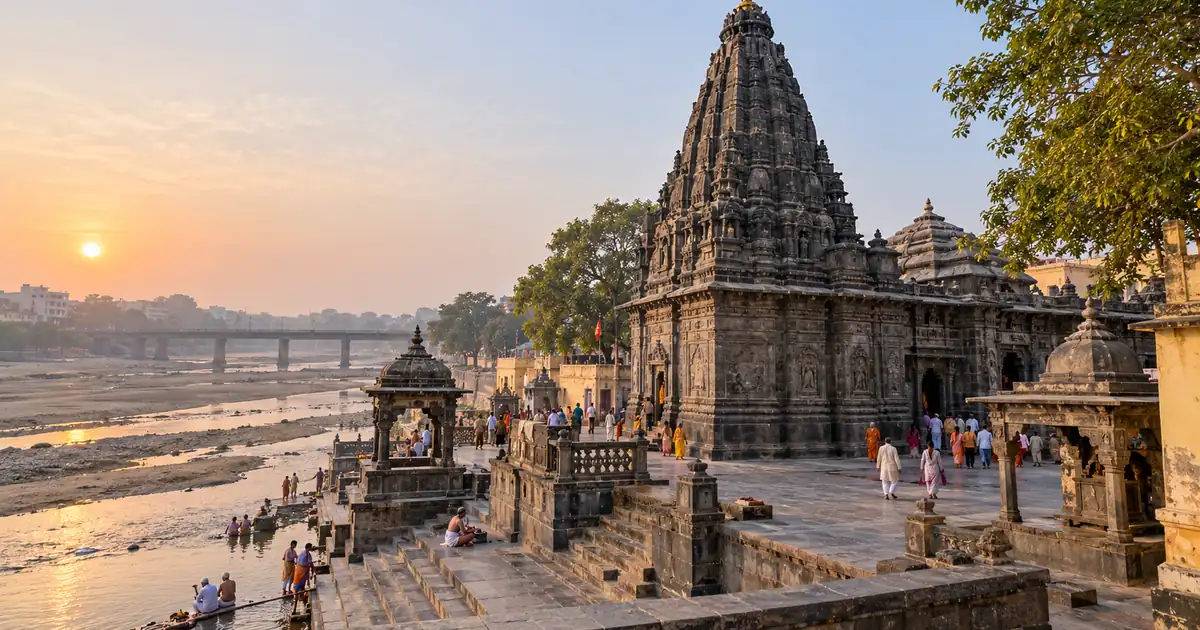
The Vishnupad Temple stands along the western bank of the sacred Falgu River in the old quarter of Gaya, southern Bihar. This comprehensive visitor guide provides verified daily darshan hours, detailed ritual sequences for ancestral Pind Daan rites, priest consultation advice, and logistical guidance for visiting this ancient Sanatana Dharma pilgrimage landmark.
Celebrated in the Mahabharata, the Ramayana, and multiple Puranic texts, Gaya is revered as the ultimate geographical location on earth for performing post-mortem ancestral oblations (Shraddha). Devotees believe that offering sacred barley cakes (pindas) at the footprint of Lord Vishnu frees departed souls from worldly bondage and grants them entry into Vaikuntha.
Darshan & Pind Daan Essentials
- Vishnupad Temple gates remain open daily from 6:00 AM to 9:00 PM, with admission completely free for all general devotees.
- The central sanctum encloses the 40-centimeter Dharmasila footprint (Charan Paduka) of Lord Vishnu embedded in solid basalt rock and bordered by silver plating.
- Ancestral Pind Daan ceremonies require visiting three core ritual nodes: the Falgu River ghats, Vishnupad Temple sanctum, and the immortal banyan tree (Akshay Vat).
- While general courtyard entry is welcoming, the inner sanctum footprint enclosure is traditionally reserved for practicing Hindu pilgrims observing ritual purity.
Travelers and pilgrims frequently combine rites at Gaya with broader circuits detailed in our complete Bihar highlights and timings.
Vishnupad Temple Timings and Daily Ritual Schedule
The temple follows an uninterrupted daily liturgical cycle managed by the hereditary Gayawal Brahmin community. The following timetable details operational hours and signature devotional aartis:
| Temple Milestone | Operational Timing | Devotional Activity & Access Guidelines |
|---|---|---|
| Morning Temple Opening & Mangala Aarti | 6:00 AM to 6:30 AM | Sanctum doors open; priests wash the sacred footprint with holy water |
| Pind Daan Ritual Hours at Ghats & Courtyard | 6:30 AM to 1:00 PM | Prime morning hours for family ancestral offerings with priests |
| Bhog Offering & Midday Rest | 1:00 PM to 2:00 PM | Inner footprint sanctuary temporarily curtained for sacred food offering |
| Afternoon Darshan Window | 2:00 PM to 6:30 PM | Open circumambulation and general viewing of the silver-plated footprint |
| Evening Shringar Aarti & Deep Daan | 7:30 PM to 8:15 PM | Footprint decorated with sandalwood paste and fresh lotus garlands |
| Night Shayan Aarti & Gate Closure | 8:30 PM to 9:00 PM | Final hymn recitations; temple gates close for night cleaning |
Visiting between 6:30 AM and 9:00 AM allows travelers to observe morning temple aartis and riverfront rites before midday heat and temple crowd congestion peak.
Architectural Heritage and Queen Ahilyabai Holkar’s Legacy
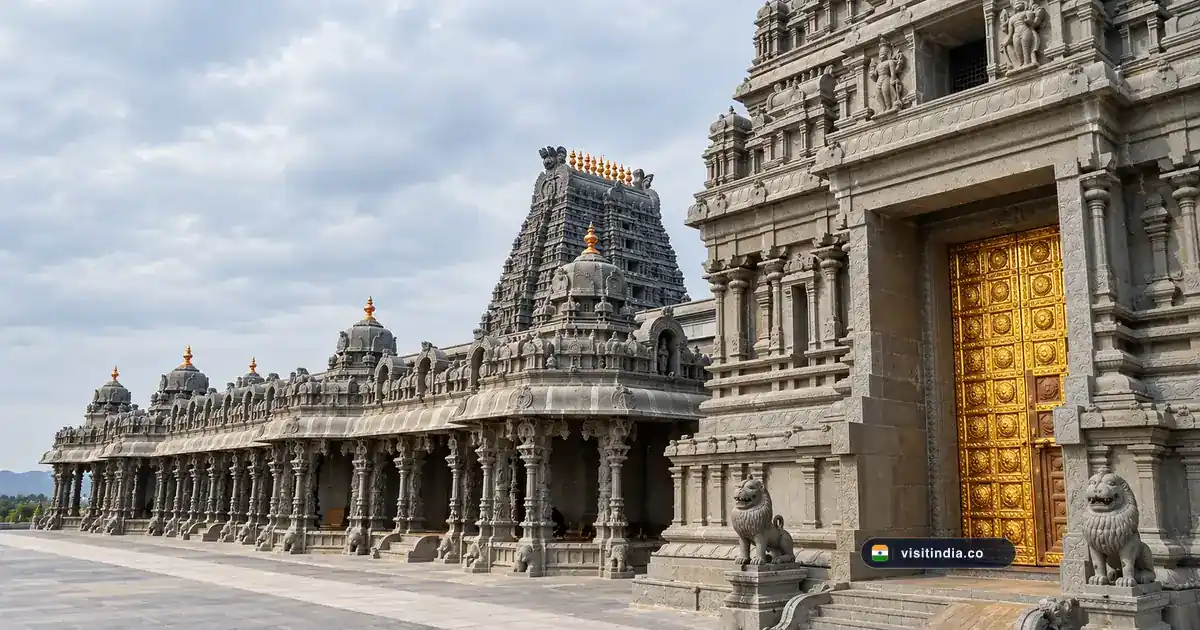
The present Vishnupad Temple structure represents an 18th-century masterwork of Hindu temple architecture. Following centuries of weathering, Queen Ahilyabai Holkar of Indore commissioned a complete reconstruction in 1787, hiring master stone artisans from Jaipur and local quarrymen to fashion the entire shrine from dense black basalt rock.
The temple features a 30-meter-tall (100-foot) octagonal shikhara constructed without mortar, utilizing interlocking carved stone blocks anchored by iron clamps. The tower is crowned by an amalaka and a 50-kilogram solid gold flag (kalash) and flagstaff donated by local devotees, reflecting morning sunlight across the Falgu River valley.
Inside the pillared sabha mandap, 58 intricately carved granite pillars support an open-domed roof, surrounding the central octagonal pit where the sacred footprint rests. Official district heritage notices and pilgrimage infrastructure programs are documented on the Gaya District Tourism Portal.
The Dharmasila Footprint and Mythological Origins of Gayasur
The theology of Gaya centers around the legend of Gayasur, a devout demon king whose intense austerities alarmed the devas. Lord Vishnu granted Gayasur a boon that anyone who touched his body would instantly achieve spiritual liberation and heavenly abode.
When heavenly realms grew overcrowded, the devas requested Gayasur to permit a sacred sacrificial fire upon his chest to stabilize cosmic order. When the demon’s body continued to shift, Lord Vishnu placed his right foot upon Gayasur’s chest, pressing a heavy stone (Dharmasila) into the ground to immobilize him permanently.
In return for his supreme sacrifice, Lord Vishnu blessed the spot, proclaiming that the impression of his foot would remain visible for eternity, and that any devotee performing ancestral rites here would redeem seven generations of ancestors. The 40-centimeter footprint bears nine distinct divine emblems carved into the stone, including the conch (Shankha), discus (Chakra), mace (Gada), and lotus (Padma).
The Three-Step Pind Daan Ritual Sequence
A complete pilgrimage ritual (Tirtha Shraddha) in Gaya follows a rigorous sequence spanning three mandatory sacred locations (Vedi):
Step 1: Ritual Bathing and Sand Pinda at the Falgu River Ghats
Pilgrims begin their morning along the Falgu River, which flows adjacent to the eastern boundary of the temple. Due to a mythological curse uttered by Sita during the Treta Yuga, the Falgu River runs subterranean for most of the year, appearing as a broad dry sandy riverbed.
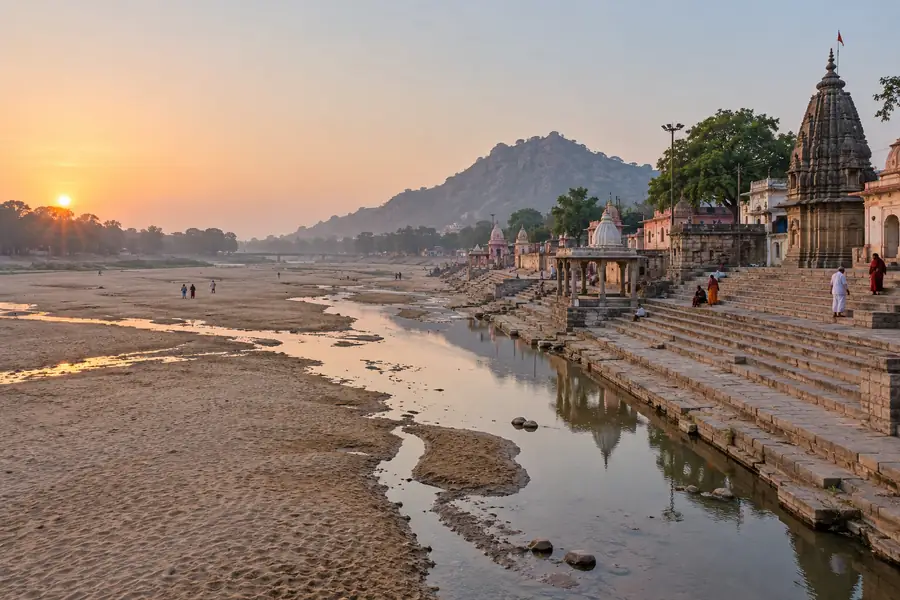
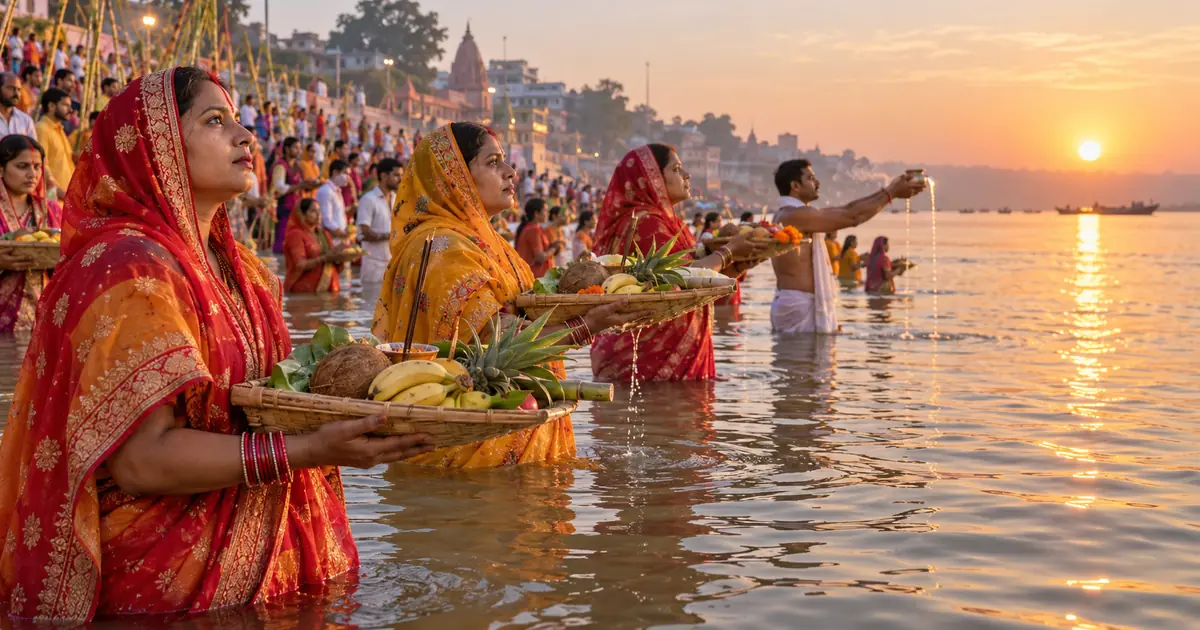
Devotees dig small pits into the sand to uncover clear flowing subsurface water for purification. Accompanied by family priests, pilgrims prepare pindas made from moist river sand, barley flour, sesame seeds, and cow milk, offering prayers for the satisfaction of ancestors.
Step 2: Footprint Darshan and Milk Abhishekam at Vishnupad Temple
Following river rituals, pilgrims enter the Vishnupad Temple courtyard carrying brass thalis containing white sesame seeds, tulsi leaves, and cooked rice balls. Devotees offer their pindas directly onto the silver rim surrounding the sacred footprint while the presiding priest chants Vedic mantras.
Pilgrims pour fresh milk, rose water, and holy Ganga jal over the stone footprint, receiving tulsi leaves and sandalwood paste as sacred blessings (prasad).
Step 3: Immortal Blessing Under the Akshay Vat Banyan Tree
The ritual concludes three kilometers south at the ancient banyan tree known as the Akshay Vat. According to legend, this immortal tree witnessed Sita performing pind daan for King Dasharatha using sand when Lord Rama had gone to collect ritual items.
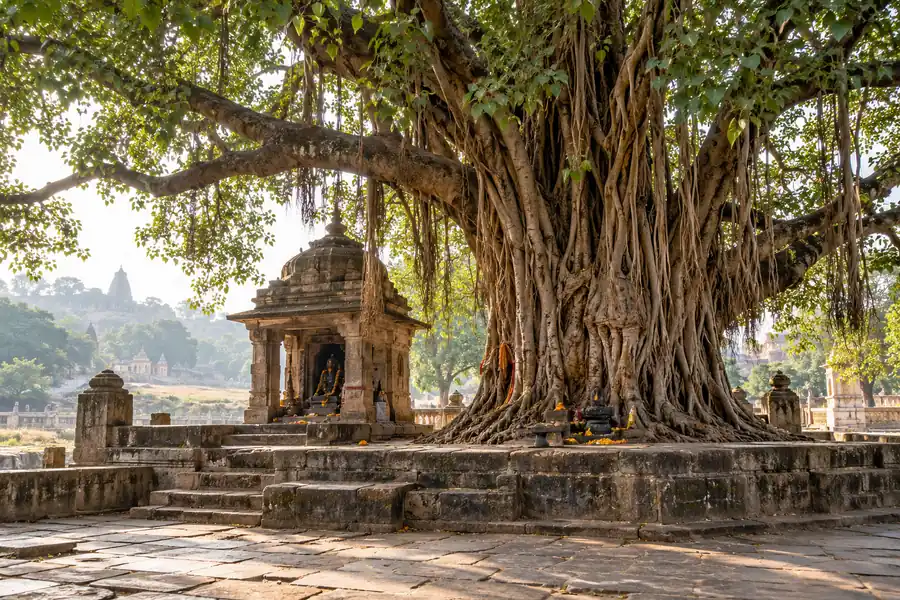
Under the sprawling canopy of the Akshay Vat, pilgrims perform the final ritual (Sujal), offering water and receiving the official blessing of completion (Gayawal Panda Ashirwad), which confirms that their ancestors have reached peace.
Official destination profiles and transit maps are cataloged on the Bihar Tourism Gaya Portal.
The Annual Pitru Paksha Mela and Panda Etiquette
The most significant spiritual period in Gaya is the 16-day Pitru Paksha Mela, held annually during the lunar waning fortnight of Bhadrapada and Ashvin (September or October). During this fortnight, over 500,000 pilgrims converge on Gaya from across India and the diaspora.
Family lineages in Gaya are historically linked to specific hereditary priests known as Gayawal Pandas, who maintain centuries-old handwritten genealogical registers (Vamshavali). When visiting:
- Locating Your Family Panda: Travelers can inquire at the Panda association offices near the temple or present ancestral village details to locate their traditional family scribe.
- Ritual Expenses and Dakshina: Standard priest guidance for a simple single-day pind daan ranges from ₹1,100 to ₹3,100 inclusive of ritual ingredients (samagri). Comprehensive multi-vedi ceremonies may cost ₹5,100 to ₹11,000 based on family choice.
- Avoiding Unofficial Touts: Independent visitors should engage directly with priests inside the temple compound rather than middleman agents approaching travelers outside railway exits.
After concluding their spiritual rites, many pilgrims travel 12 kilometers south to meditate at the UNESCO-listed Mahabodhi Temple Bodh Gaya temple overview.
How to Reach Vishnupad Temple
Vishnupad Temple is situated in central Gaya and is easily accessible from regional transit points:
- By Train: Gaya Junction (GAYA) is a major junction on the Indian Railways network, located 4.5 kilometers north of the temple. Electric autorickshaws and app-based cabs take 15 to 20 minutes to reach the temple gate.
- By Air: Gaya Airport (GAY) is located 9 kilometers southwest, with taxis reaching the riverfront in 20 minutes. Patna Airport (PAT) is 110 kilometers north, connected via National Highway 22 in under three hours.
- By Road: National Highway 22 connects Gaya to Patna, and National Highway 19 (Grand Trunk Road) passes 30 kilometers south at Dobhi. State transport buses run continuously between Patna and the Gaya bus terminal.
Travelers often combine ancestral rituals with cultural sightseeing outlined in our guide to the planning a visit to Nalanda Ruins & Rajgir Glass Bridge. Official travel updates are cataloged on the national portal of Incredible India Bihar.
Frequently Asked Questions About Vishnupad Temple
Who can perform Pind Daan at Vishnupad Temple in Gaya?
Any family member, traditionally the eldest son, can perform Pind Daan rituals for departed parents and ancestors. In modern practice, women and daughters are also permitted to perform ancestral rites under the guidance of traditional Gayawal priests.
Are non-Hindus allowed inside the Vishnupad Temple?
Non-Hindus and international tourists are welcome to explore the outer temple courtyards, stone ghats, and riverside markets. However, entry into the inner sanctum housing the sacred footprint is traditionally restricted to practicing Hindus.
How much time is required to complete the Pind Daan ceremony?
A standard one-day Pind Daan ceremony covering the Falgu River, Vishnupad footprint, and Akshay Vat takes between three and four hours. Pilgrims undertaking the complete 45-vedi traditional circuit require three to seven full days.
What should visitors wear when visiting Vishnupad Temple?
Men performing rituals traditionally wear unstitched white cotton dhotis with bare shoulders, while women wear traditional cotton sarees or salwar kameez. General temple visitors should wear modest clothing that fully covers shoulders and knees.