Old Delhi Street Food Guide: Best Chandni Chowk Food Trail
Explore the ultimate Old Delhi street food trail in Chandni Chowk with timings, Paranthe Wali Gali, winter Daulat Ki Chaat, metro routes, and hygiene tips.
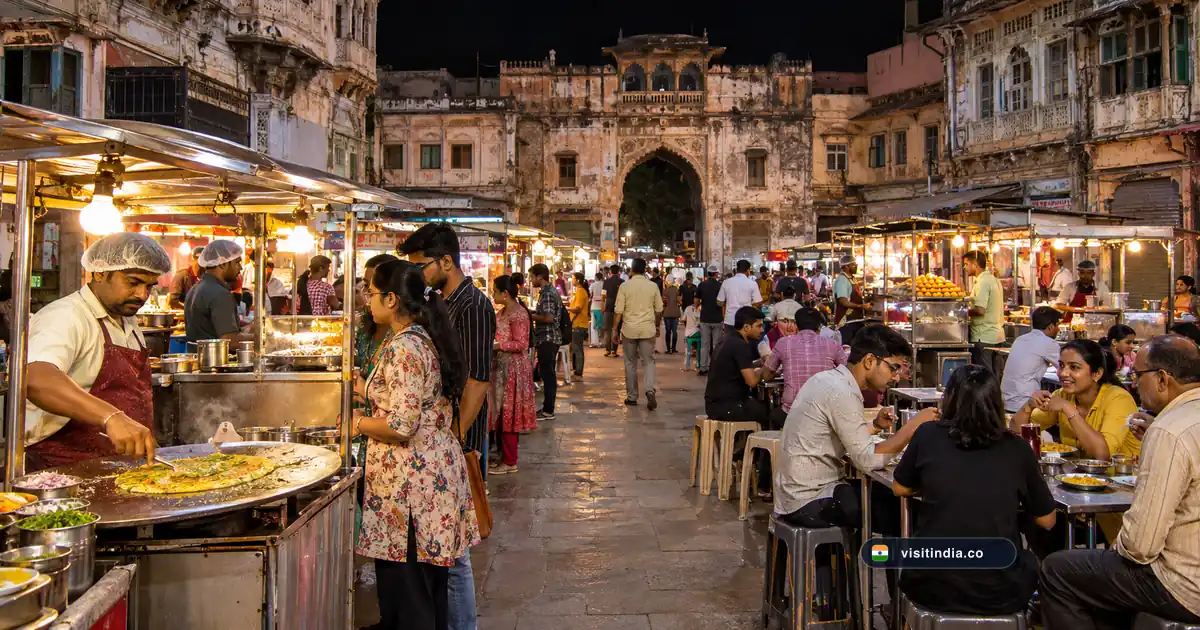
Constructed in 1648 under Mughal Emperor Shah Jahan and designed by his daughter, Princess Jahanara Begum, the historic walled city of Shahjahanabad contains one of the world’s most dense concentrations of living culinary history. For travelers seeking a broader orientation across monuments and transit lines, our comprehensive Delhi travel guide provides citywide itineraries and metro routing. Along the grand pedestrian avenue of Chandni Chowk and its labyrinth of tributary alleys, generations of traditional halwais and street vendors continue to operate from original family-run storefronts.
While the neighborhoods surrounding Jama Masjid are famous for rich Mughlai non-vegetarian fare, the main thoroughfare of Chandni Chowk, Paranthe Wali Gali, and Dariba Kalan preserves a centuries-old vegetarian heritage. Deeply influenced by Vaishnava and Jain merchant traditions, these historic recipes prioritize pure desi ghee, cooling yogurt, and complex spice blends prepared without meat or eggs.
Old Delhi Street Food Trail Essentials
- Metro Access: Alight at Chandni Chowk Metro Station on the Yellow Line and use Gate 5 for immediate pedestrian access to the main food spine.
- Breakfast Schedule: Morning halwai shops like Chaina Ram near Fatehpuri Masjid serve fresh Poori Chole from 8:00 AM to 11:30 AM.
- Winter Froth Window: Delicate saffron Daulat Ki Chaat is sold strictly from November through February between 8:30 AM and 1:30 PM.
- Heritage Institutions: Historic century-old establishments include Pt. Gaya Prasad Paranthe (est. 1872) and Old Famous Jalebi Wala (est. 1884).
- Average Culinary Spend: Budget between ₹250 and ₹450 per person for an expansive multi-stall food walk through the medieval katras.
Navigating Old Delhi’s culinary map requires timing your arrival around specific operational shifts. Certain delicate specialties, such as winter’s legendary Daulat Ki Chaat, dissolve under the afternoon sun, while long-established kachori and chaat vendors experience their peak rhythm as twilight settles over the red sandstone facades.
This comprehensive guide details the essential sweet and savory landmarks across Chandni Chowk, offering practical navigation routes, authentic stall recommendations, and sensible traveler advisories.
| Culinary Dimension | Architectural & Practical Detail |
|---|---|
| Primary Gastronomic Axis | Chandni Chowk Main Road, Paranthe Wali Gali, Dariba Kalan, Kinari Bazaar, Sitaram Bazaar |
| Nearest Transit Terminus | Chandni Chowk Metro Station (Yellow Line, Gate 5) |
| Dietary Specialization | Pure Vegetarian (Vaishnava and Jain traditional halwais dominant along the main avenue) |
| Morning Operating Hours | 8:00 AM to 11:30 AM (Poori Chole, early kachoris, and winter Daulat Ki Chaat) |
| Evening Operating Hours | 4:30 PM to 9:30 PM (Peak service for hot paranthas, jalebis, and dahi bhalle) |
| Cooking Medium | Pure Desi Ghee for frying and confections; cold-pressed mustard oil for savories |
| Typical Cost per Item | ₹40 to ₹90 per serving across historic stalls |
| Pedestrian Environment | Fully pedestrianized central boulevard; non-motorized cycle rickshaws permitted in side galis |
The Legendary Gali Paranthe Wali: History, Varieties, and Flavors
Branching off Chandni Chowk directly across from the historic Town Hall lies Gali Paranthe Wali. During the late nineteenth and early twentieth centuries, this compact alley housed as many as twenty rival parantha establishments patronized by freedom fighters, scholars, and prime ministers.
Today, three direct descendant shops continue this culinary lineage, shallow-frying unleavened flatbreads according to recipes unchanged since the late nineteenth century.
Six Generations of the Dixit Family (est. 1872)
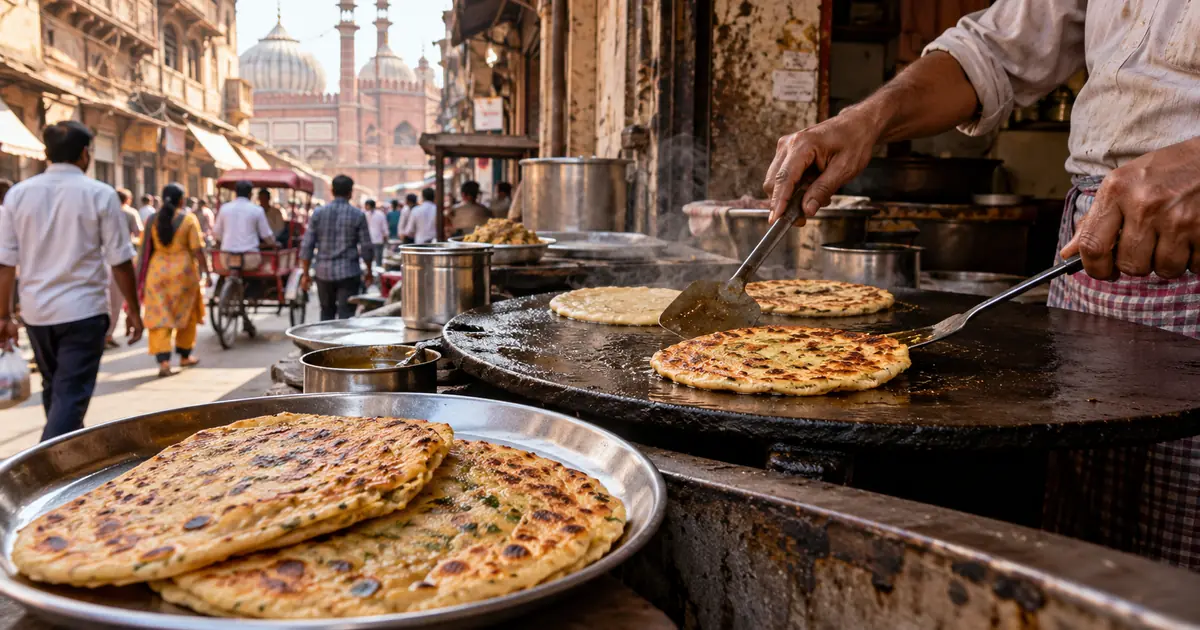
The culinary style of Gali Paranthe Wali differs radically from standard home-style tawa paranthas. Instead of dry-roasting on an iron griddle with light oil, these flatbreads are shallow-deep fried in wide, shallow iron karahis filled with boiling, golden desi ghee.
The technique produces a unique textural contrast:
- The Crisp Shell: The outer crust puffs into a golden, blistered shell that shatters delicately under fork pressure.
- The Tender Interior: The inner layers remain soft and steaming, thoroughly infused with the aroma of caramelized wheat and clarified butter.
- Sattvic Preparation: In accordance with the original Brahmin founders’ traditions, every parantha and accompanying curry is prepared strictly without onions or garlic.
Much like the early morning breakfast circuits detailed in our Varanasi Street Food highlights, the flatbreads are served piping hot on compartmented metal trays accompanied by five complimentary side dishes: sweet-sour pumpkin sabzi (sitaphal), spicy crushed potato curry, tangy mint-coriander chutney, sweet banana-tamarind sonth chutney, and pickled winter vegetables.
Iconic Savory and Sweet Parantha Varieties
The menus in Gali Paranthe Wali have expanded over the decades to encompass more than thirty inventive fillings.
Travelers can choose between classic savory staples and daring sweet options:
- Classic Savory Fillings: Aloo (spiced potato mash), Gobhi (finely grated cauliflower), Paneer (fresh crumbly cottage cheese), Matar (mashed spiced green peas), and Mooli (shredded winter radish).
- Specialty Savory Fillings: Papad (crushed spicy lentil poppadum), Nimbu (tangy spiced lemon paste), Karela (seasoned bitter gourd), and Mirch (fiery green chilli mash).
- Royal Sweet Fillings: Khoya (thick condensed milk solids), Rabri (clotted cream paste), and Kaju-Kishmish (sweet dry fruit paste), which function as warm, decadent dessert breads.
The two most authentic surviving establishments are Pandit Gaya Prasad Shiv Charan Paranthe Wale (established in 1872) and Pandit Kanhaiyalal Durgaprasad Dixit (established in 1875), located facing each other near the entrance of the lane.
| Parantha Shop | Founding Era | Signature Offerings | Average Plate Cost |
|---|---|---|---|
| Pt. Gaya Prasad Shiv Charan | 1872 CE | Mixed Dry Fruit Parantha, Mirch Parantha, Rabri Parantha | ₹70 - ₹90 (2 pieces) |
| Pt. Kanhaiyalal Durgaprasad | 1875 CE | Khoya Parantha, Matar Parantha, Nimbu Parantha | ₹70 - ₹90 (2 pieces) |
| Babu Ram Paranthe Wale | 1886 CE | Paneer Parantha, Papad Parantha, Aloo Parantha | ₹65 - ₹85 (2 pieces) |
Winter’s Cloud: The Art of Daulat Ki Chaat in Shahjahanabad
Visitors exploring Old Delhi between late November and February have the rare privilege of tasting Daulat Ki Chaat. Known poetically as the “wealth of the street” (daulat), this sweet delicacy is not a savory chaat at all, but rather an ethereal cloud of frothed milk that vanishes almost weightlessly upon the tongue.
Its creation is an intricate seasonal craft practiced by migrant artisans from Moradabad who travel to Shahjahanabad specifically for the winter months.
The Chilled Dew-Frothed Foam: Milk, Cream, and Saffron
The production of Daulat Ki Chaat requires a strict nocturnal sequence that depends on Delhi’s sharp winter drop in nighttime temperatures:
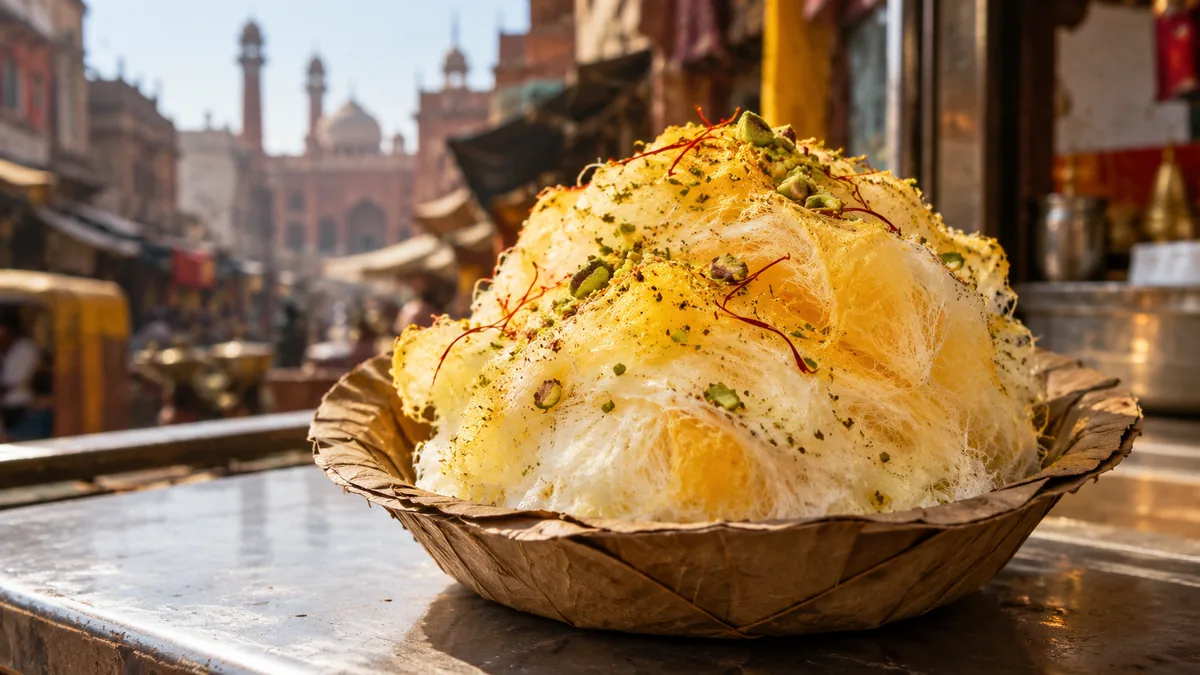
- Condensing the Milk: Fresh, raw buffalo milk is blended with fresh dairy cream and boiled down in large vessels before being chilled over slabs of natural ice.
- Night Fog Exposure: The chilled milk is poured into broad terracotta containers and set outdoors on rooftops or shaded alleys for six to eight hours. Exposure to the dense winter dew (shabnam) causes the milk fat molecules to cool and hold micro-droplets of cold moisture.
- Pre-Dawn Whisking: Between 3:00 AM and 4:30 AM, master artisans vigorously hand-whisk the milk using long wooden churns. As air is whipped through the chilled liquid, a delicate, snow-white foam rises to the surface.
- Assembly and Dressing: The foam is gently scooped onto large circular brass platters. One side of the platter is infused with saffron to create a golden-yellow layer. The display is dusted with crushed khoya (condensed milk crumbles), slivered pistachios, and unrefined powdered cane sugar (bhoora).
When served in a dry leaf dona, the froth collapses into sweet cream the moment it touches the warmth of your mouth, leaving a delicate hint of saffron and cardamom.
Top Stalls and Early Morning Availability
Because Daulat Ki Chaat contains no gelatin, stabilizers, or artificial thickeners, exposure to sunlight and ambient afternoon heat causes the micro-bubbles to liquefy.
Consequently, vendors sell out and pack up their carts by 1:30 PM:
- Khemchand Adesh Kumar Daulat Ki Chaat: Positioned along the narrow entrance of Kinari Bazaar near Dariba Kalan, this family has produced the most celebrated Daulat Ki Chaat in the walled city for over three generations.
- Naya Katra Corner Vendors: Wandering vendors operating portable wooden stands draped with muslin cloth around Katra Neel and Town Hall during the morning hours.
- Pricing: A generous serving in a compostable leaf bowl costs ₹50 to ₹70.
Travelers who appreciate northern winter breakfast traditions and rich dairy-based street sweets can also discover the tandoor flatbreads and thick malai lassis of Punjab in our local dishes and food walks in Amritsar Street Food.
State tourism initiatives and historical walk listings can be cross-checked on the Delhi Tourism Heritage Walk Portal.
Savory Classics of Chandni Chowk: Dahi Bhalle, Kachori, and Chaat
While sweet delicacies capture popular imagination, the savory street food of Shahjahanabad is renowned for its bold contrasts of sweet curd, tangy tamarind, and warming winter spices.
Rather than the modern commercial food stalls found elsewhere, Old Delhi’s savory counters have operated from the exact same street corners for upwards of eighty years.
Natraj Dahi Bhalle Corner (est. 1940)
Situated directly at the active corner of Bhai Mati Das Chowk, just steps from the Chandni Chowk Metro exit, Natraj Dahi Bhalle Corner is perhaps the single most popular snack counter in the entire quarter. The shop prepares only two items, and has perfected both over eight decades:
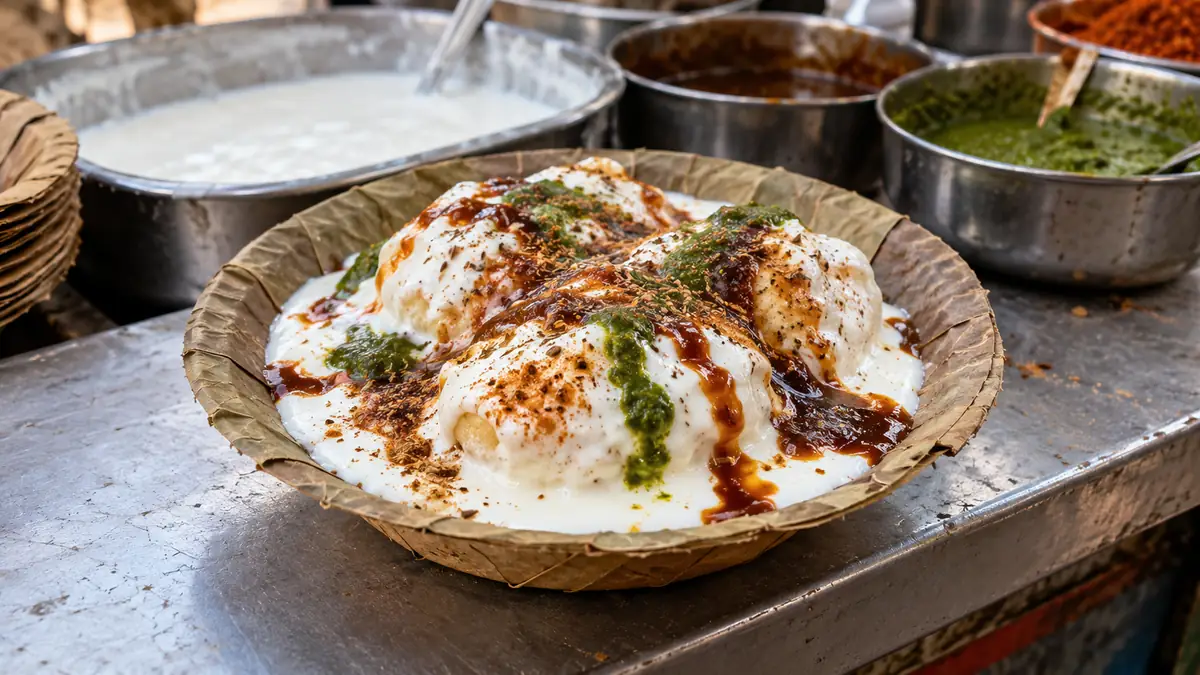
- Dahi Bhalla: Fluffy, golden dumplings crafted from stone-ground urad dal are soaked in water to remove excess oil, then steeped in chilled, sweetened whole-milk curd. The plate is finished with a ladle of spiced red tamarind sonth chutney and a proprietary blend of roasted cumin, black salt, and dried pomegranate seed powder. The dumplings are so tender they dissolve without needing to be chewed.
- Desi Ghee Aloo Tikki: Thick patties of boiled mashed potatoes stuffed with a savory core of spiced chana dal are fried slowly on a massive iron griddle in pure desi ghee until deeply browned and crisp. They are served hot, sliced into pieces, and covered with spicy green mint sauce and sweet sonth.
Unlike coastal snacks reviewed in our guide to the Best Cafes in Goa, these northern savories rely heavily on thick, cultured buffalo curds and heating spices designed to sustain energy through cold North Indian winters.
Fiery Aloo-Kachalu Gravy at Jung Bahadur Kachori Wala
For travelers who appreciate intense, sinus-clearing spice, Jung Bahadur Kachori Wala in Maliwara (near the entrance to Paranthe Wali Gali) is an essential stop. Operating out of an open-front stall since 1971, this vendor is famous for its fiery kachori-sabzi:
- The Kachoris: Two golden, brittle puris stuffed with spicy ground urad dal are crushed with the palm into an earthen paper bowl.
- The Gravy: The crushed kachoris are smothered in a fiery, thin gravy crafted from potatoes and colocasia root (kachalu), simmered with whole black peppercorns, dried mango powder (amchur), and crushed red chillies.
- The Topping: The dish is finished with chopped fresh coriander, raw ginger slivers, and a spoonful of pungent green chilli pickle.
| Savory Stall | Location Landmark | Specialty Dish | Typical Cost |
|---|---|---|---|
| Natraj Dahi Bhalle Corner | Bhai Mati Das Chowk (Opp. Town Hall) | Dahi Bhalla & Desi Ghee Aloo Tikki | ₹60 - ₹70 |
| Jung Bahadur Kachori Wala | Maliwara, Paranthe Wali Gali | Urad Dal Kachori with Fiery Kachalu Gravy | ₹45 - ₹55 |
| Bishan Swaroop Chaat Bhandar | Chandni Chowk Lane | Fruit Chaat with Lemon & Cumin Masala | ₹40 - ₹60 |
| Lala Babu Chaat Bhandar | Opposite Town Hall | Gobi Matar Samosa & Stuffed Golgappe | ₹35 - ₹50 |
Royal Confectionery: Desi Ghee Jalebis, Halwa, and Rabri Falooda
Confectionery in Old Delhi is an art form rooted in royal Mughal court kitchens and medieval celebratory traditions. The sweet makers of Chandni Chowk take exceptional pride in using exclusively pure milk fats, unadulterated khoya, and raw sugar extracts.
Old Famous Jalebi Wala at Dariba Kalan (est. 1884)
Occupying a prominent corner at the entrance of Dariba Kalan (the historic 17th-century jewelers’ street), Old Famous Jalebi Wala has operated continuously since 1884.
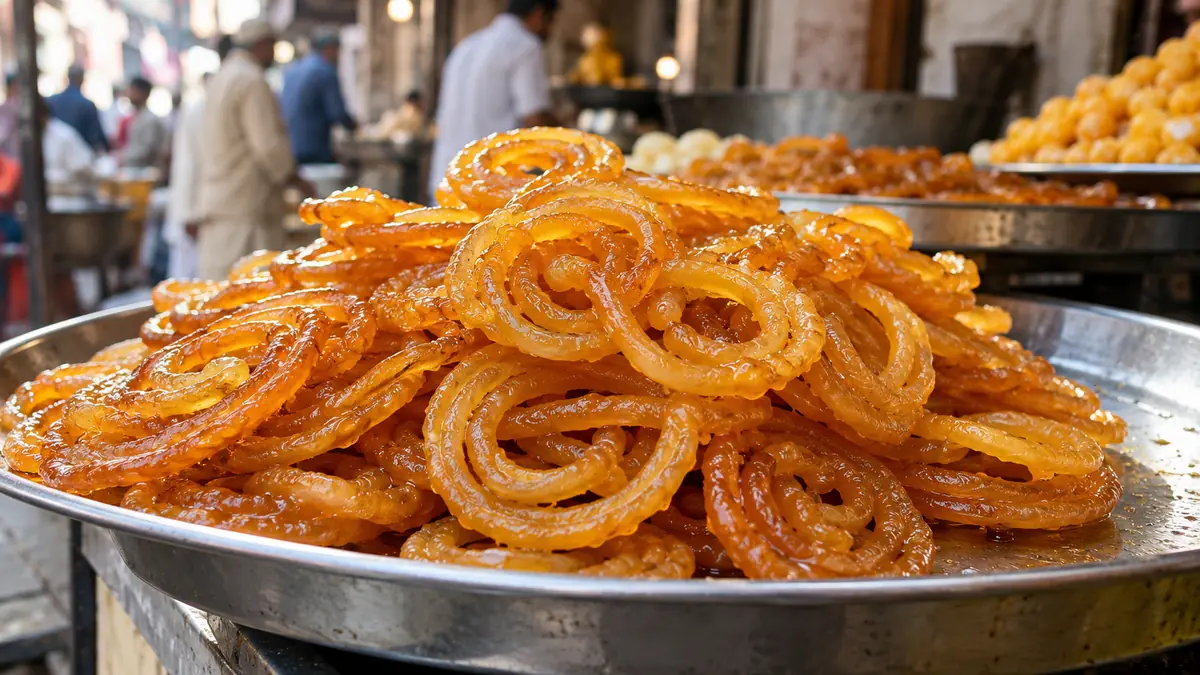
The jalebis here are visibly different from the thin, crunchy spirals found across normal sweet shops:
- The Fermented Batter: A thick batter of refined flour is fermented overnight to develop a pleasant, subtle sourdough tang.
- Charcoal-Fired Karahi: The jalebis are squeezed in thick, concentric rings into a giant iron pan boiling with pure homemade desi ghee heated over wood and charcoal embers.
- Khandsari Syrup Soak: Once fried to an even golden-amber crispness, the thick coils are submerged into a warm syrup made from traditional raw khandsari sugar rather than refined white sugar, infused with wild saffron strands.
- The Rabri Pairing: The massive, juicy jalebis are served steaming hot in leaf bowls, often crowned with a generous ladle of thick, unsweetened buffalo milk rabri that tempers the rich sweetness of the saffron syrup.
Chaina Ram Sindhi Confectioners and Giani’s Rabri Falooda
At the western terminus of Chandni Chowk, beside the historic sandstone arches of Fatehpuri Masjid, stand two celebrated dessert institutions:
- Chaina Ram Sindhi Confectioners (est. 1901): Renowned across the country for its pure desi ghee confections. Morning crowds gather from 8:00 AM to 11:30 AM for their legendary Poori Chole, accompanied by a slice of warm, glistening Karachi Halwa or rich Moong Dal Halwa.
- Giani’s di Hatti (est. 1956): Located along Church Mission Road near Fatehpuri, Giani’s is world-famous for its tall glasses of Rabri Falooda. Silky cornstarch vermicelli (falooda) is layered with crushed ice, dense clotted rabri, and fragrant rose syrup, creating an indulgent, cooling digestif. During winter months, Giani’s slow-cooks giant cauldrons of desi ghee Gajar Ka Halwa using sweet red Delhi carrots.
Mughal-era market chronicles and heritage conservation maps are cataloged on the Incredible India Delhi Destination Portal.
Frozen Artistry: Kuremal Mohan Lal Stuffed Fruit Kulfi
A fifteen-minute stroll southward into Sitaram Bazaar near Chawri Bazaar brings you to Kuremal Mohan Lal Kulfi Wale, a confectionery shop operating since 1906 that revolutionized traditional Indian ice cream.
While they prepare traditional rabri, pista, and malai kulfis on wooden sticks, Kuremal’s lasting claim to fame is their stuffed natural fruit kulfi:
- The Method: Whole fresh fruits are selected for uniform firmness. The top of the fruit is carefully sliced off to form a lid, and the internal seeds and pulp are hollowed out by hand without piercing the fruit skin.
- The Filling: Pure whole-milk rabri, slow-simmered for hours and gently flavored with cardamom, is poured into the hollowed fruit cavity.
- Natural Freezing: The fruit lid is placed back on, sealed with dough, and the entire fruit is embedded in earthenware vessels surrounded by rock salt and crushed ice until solidly frozen.
- The Serving: Upon ordering, the vendor retrieves the frozen whole fruit, peels the outer skin with a sharp knife, and slices the fruit into colorful, chilled cross-sections.
Iconic varieties include the Stuffed Mango Kulfi (where sweet Alphonso mango flesh encloses rich milk cream), Stuffed Whole Orange, Stuffed Pomegranate, and inventive tart flavors like Jamun (Black Plum) and Aam Panna Kulfi.
Practical Food Walk Navigation: Metro Exits, Timing, and Hygiene
Exploring Old Delhi on foot is an extraordinary sensory experience, but the high density of foot traffic and narrow corridors require strategic preparation.
Pedestrian Route Planning and Metro Connectivity
The main thoroughfare of Chandni Chowk stretching between the Red Fort and Fatehpuri Masjid was completely transformed into a dedicated pedestrianized promenade paved with red Chunar sandstone:
- Metro Arrival: Board the Delhi Metro Yellow Line and alight at Chandni Chowk Metro Station. Take Gate 5 (Town Hall / Katra Neel) to emerge directly onto the pedestrian avenue right beside Natraj Dahi Bhalle.
- Morning Itinerary (8:30 AM to 11:30 AM): Start at Fatehpuri Masjid for Poori Chole at Chaina Ram. Walk eastward along Chandni Chowk, sample early winter Daulat Ki Chaat in Katra Neel or Kinari Bazaar, and finish with a morning kachori at Jung Bahadur.
- Evening Itinerary (4:30 PM to 8:30 PM): Arrive at Chandni Chowk Metro Gate 5, start with Natraj Dahi Bhalle, walk into Paranthe Wali Gali for hot dinner paranthas, proceed into Dariba Kalan for Old Famous Jalebi Wala, and stroll to Sitaram Bazaar for Kuremal’s stuffed fruit kulfi.
- Metro Departure: Exit either from Chawri Bazaar Metro Station (if finishing near Kuremal Kulfi) or return to Chandni Chowk Metro Station.
For rapid station transit connections and official network schematics, consult the Delhi Metro Rail Corporation Transit Network.
Payment Realities and Traveler Health Advisories
Travelers exploring northern street food should keep these sensible field advisories in mind:
- Carry Small Cash Currency: While most prominent stalls now display UPI QR payment codes, deep covered alleyways often suffer from cellular data dead-zones. Carry ₹300 to ₹500 in physical cash denominations of ₹10, ₹20, and ₹50.
- Observe Food Turnaround: Frequent stalls with long customer lines where cauldrons of desi ghee and griddles remain constantly in motion. High turnaround ensures that items are served piping hot directly from the flame.
- Drink Bottled Water Only: Never drink unfiltered water from open carafes or steel jugs provided on street tables. Carry your own sealed mineral water bottle for hydration throughout your walk.
- Pace Your Meal Portions: Old Delhi food relies on pure clarified butter and concentrated dairy fats. Order single plates to share between companions, allowing you to sample multiple historic stops without physical fatigue.
International visitors preparing documentation and travel clearance should review our comprehensive India Tourist Visa Guide.
| Walking Route Leg | Approximate Distance | Landmark En Route | Recommended Stop |
|---|---|---|---|
| Leg 1: Metro to Paranthe Gali | 200 meters | Bhai Mati Das Chowk | Natraj Dahi Bhalle Corner |
| Leg 2: Paranthe Gali to Dariba | 350 meters | Historic Kinari Bazaar corner | Pt. Gaya Prasad Paranthe |
| Leg 3: Dariba Kalan to Town Hall | 250 meters | Silver jewelers corridor | Old Famous Jalebi Wala |
| Leg 4: Town Hall to Fatehpuri | 600 meters | Pedestrian main boulevard | Chaina Ram Confectioners |
| Leg 5: Chowk to Sitaram Bazaar | 800 meters | Chawri Bazaar copper market | Kuremal Stuffed Fruit Kulfi |
Pairing the Food Walk with Old Delhi Heritage Landmarks
An Old Delhi street food expedition integrates naturally with the grand Mughal, Sikh, and colonial heritage monuments of Shahjahanabad:
- The Red Fort (Lal Qila): Located at the eastern head of Chandni Chowk, this UNESCO World Heritage fortress was the seat of the Mughal empire for two centuries. Tour the fortress ramparts in the afternoon before starting your evening food trail.
- Gurudwara Sis Ganj Sahib: Positioned directly on Chandni Chowk, this sacred Sikh shrine commemorates the ninth Sikh Guru, Guru Tegh Bahadur. Step inside to experience peaceful hymns and view the community langar kitchen.
- Mirza Ghalib’s Haveli: Located in the historic alley of Ballimaran near Fatehpuri, this preserved 19th-century courtyard home preserves manuscripts and personal memorabilia of the legendary Urdu poet.
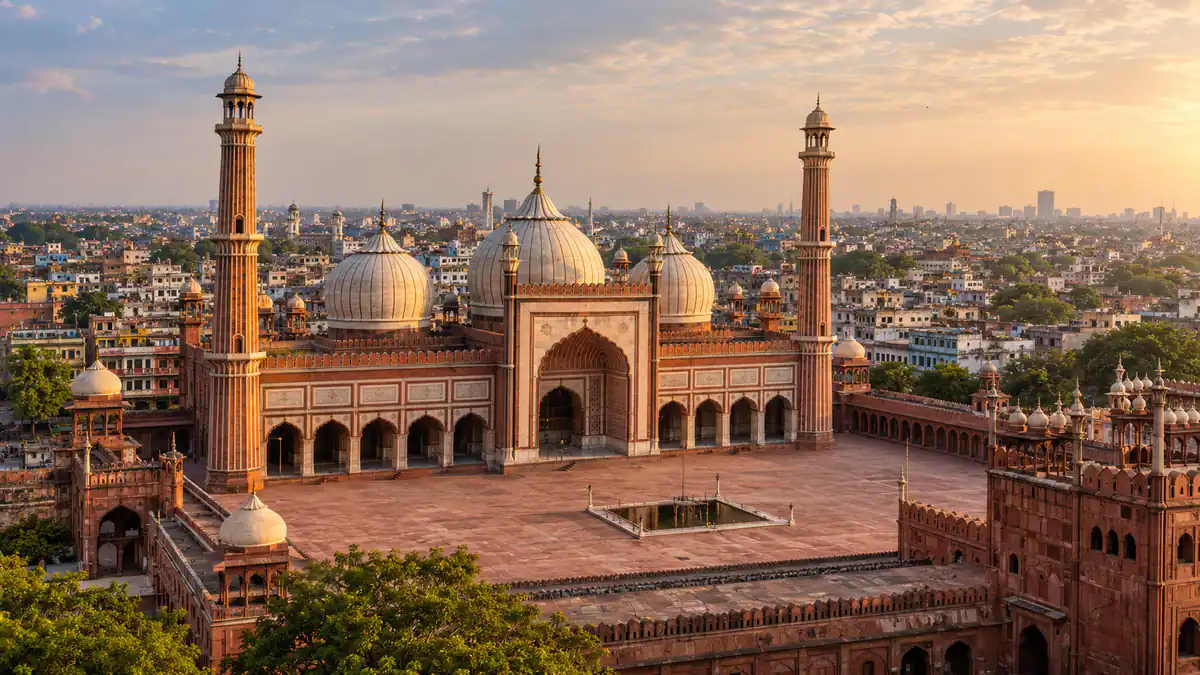
- Jama Masjid: One of India’s largest historic mosques, whose sandstone minarets overlook the ancient city rooftops. A morning climb to the southern minaret provides a bird’s-eye panorama over the dense alleys of Chandni Chowk.
To plan broader architectural excursions across the capital, explore our complete Delhi UNESCO monuments guide.
Frequently Asked Questions About Old Delhi Street Food
What is the most famous food to eat in Chandni Chowk?
The signature dishes of Chandni Chowk include the crisp desi ghee flatbreads of Paranthe Wali Gali, hot saffron jalebis with rabri at Old Famous Jalebi Wala, and Natraj’s soft dahi bhalle. During winter, the ethereal milk froth dessert Daulat Ki Chaat is an unmissable regional highlight.
Which metro station is closest to Paranthe Wali Gali in Old Delhi?
Chandni Chowk Metro Station on the Yellow Line is the closest transit point, with Exit Gate 5 leading directly onto the main road roughly 200 meters from the entrance of Paranthe Wali Gali. Chawri Bazaar Metro Station provides convenient access to southern alleys like Sitaram Bazaar.
What is Daulat Ki Chaat and when can you eat it in Old Delhi?
Daulat Ki Chaat is a feather-light dessert prepared by whisking sweetened milk and cream exposed to winter night fog. It is sold exclusively during winter mornings from November through February before 1:30 PM in Dariba Kalan and Kinari Bazaar.
Is the street food in Chandni Chowk vegetarian?
The vast majority of historic food stalls along Chandni Chowk, Paranthe Wali Gali, and Dariba Kalan are strictly 100% vegetarian, adhering to traditional Hindu and Jain culinary principles without using onions or garlic. Non-vegetarian Mughal specialties are concentrated separately in the Matia Mahal area near Jama Masjid.
What is the best time of day for an Old Delhi food tour?
The optimal schedule splits into two windows: mornings from 8:30 AM to 11:30 AM for fresh poori chole, kachoris, and winter Daulat Ki Chaat, or late afternoons from 4:30 PM to 8:30 PM when Paranthe Wali Gali, jalebi counters, and chaat stalls operate at full speed.
Can an Old Delhi food tour be combined with visiting Akshardham Temple?
Yes. Akshardham Temple is conveniently located along the Blue Line metro across the Yamuna River, roughly 25 minutes by metro from Old Delhi. Many travelers explore the monument in the afternoon and conclude their evening in Chandni Chowk, following the logistics in our Akshardham Temple Delhi guide.