Hyderabad Food Trail: Dum Biryani, Irani Chai & Haleem Guide
Explore our authentic Hyderabad food trail covering Hyderabadi mutton dum biryani, historic Irani chai cafes, Ramzan haleem, and old city street markets.
Hyderabad stands among the world’s preeminent gastronomic capitals, shaped by four centuries of royal patronage under the Qutb Shahi sultans and the Asaf Jahi Nizams. The city’s culinary identity is rooted in the Deccani tradition.
Here, slow-cooking methods from Central Asia merged with fragrant Southern Indian spices, sour tamarind, and local millets. Travelers navigating our authentic Hyderabad street food guide encounter a dining culture where centuries-old recipes remain fiercely protected.
From the steaming copper degs of mutton dum biryani in the Old City to marble-topped Irani cafes and wood-fired Ramzan haleem bhattis, eating in Hyderabad is a community ritual. Alongside royal Mughal and Persian banquets, the state preserves rustic Telugu agricultural dishes like crisp Sarva Pindi pancakes and fiery Gongura gravies. This guide outlines where to eat, what to order, and how to navigate the city’s historic culinary quarters.
Culinary Trail Essentials
- Hyderabad represents one of the world’s foremost gastronomic capitals, shaped by royal Qutb Shahi and Nizami banqueting traditions.
- Authentic Hyderabadi Dum Biryani relies on the kachchi gosht technique of slow dum cooking in sealed copper handis.
- Historic Irani cafes provide an enduring social ritual, pairing creamy double-boiled chai with savory-sweet Osmania biscuits.
- Hyderabadi Haleem holds Geographical Indication (GI) status, prepared over twelve hours during the holy month of Ramzan.
Hyderabad Culinary Landmarks and Food Trail Master Directory
Hyderabad’s food landscape divides into several historic quarters, each recognized for specific culinary specialties and timing windows. The Old City around Charminar excels in evening street kebabs and morning paya stews, while central districts like Hyderguda and RTC Crossroads house massive dining halls famous for lunch biryani. Statewide heritage circuits can be cross-referenced in our master Telangana travel guide.
The directory below details the top food neighborhoods across Hyderabad, their signature specialties, recommended dining hours, and typical costs.
| Food Neighborhood | Signature Specialty | Iconic Establishments | Service Hours | Average Price (INR) |
|---|---|---|---|---|
| Old City (Madina & Charminar) | Mutton Dum Biryani, Paya Nahari, Luqmi | Hotel Shadab, Hotel Nayab, Nimrah Cafe | 6:00 AM to 11:30 PM | ₹250 to ₹400 |
| Hyderguda & Basheerbagh | Aromatic Mutton Biryani, Irani Chai | Cafe Bahar, Grand Hotel | 11:00 AM to 11:30 PM | ₹220 to ₹350 |
| RTC Crossroads & Chikkadpally | Spiced Chicken & Mutton Biryani | Bawarchi, Astoria Restaurant | 11:30 AM to 11:00 PM | ₹220 to ₹320 |
| Tolichowki & Mehdipatnam | Arabian Mandi, Shawarma, Midnight Biryani | Shah Ghouse, Rumaan Restaurant | 12:00 PM to 2:00 AM | ₹200 to ₹450 |
| Sindhi Colony (Secunderabad) | Vegetarian Street Chaat, Pizza Dosas | Chachaji Wadapav, Dimmy Pan Palace | 5:00 PM to 1:00 AM | ₹50 to ₹180 |
| Lakdikapul & Khairatabad | Premium Irani Chai, Maskabun, Plum Cake | Niloufer Cafe & Bakers | 6:00 AM to 12:00 AM | ₹30 to ₹120 |
Authentic Hyderabadi Dum Biryani: The Kachchi Gosht Science
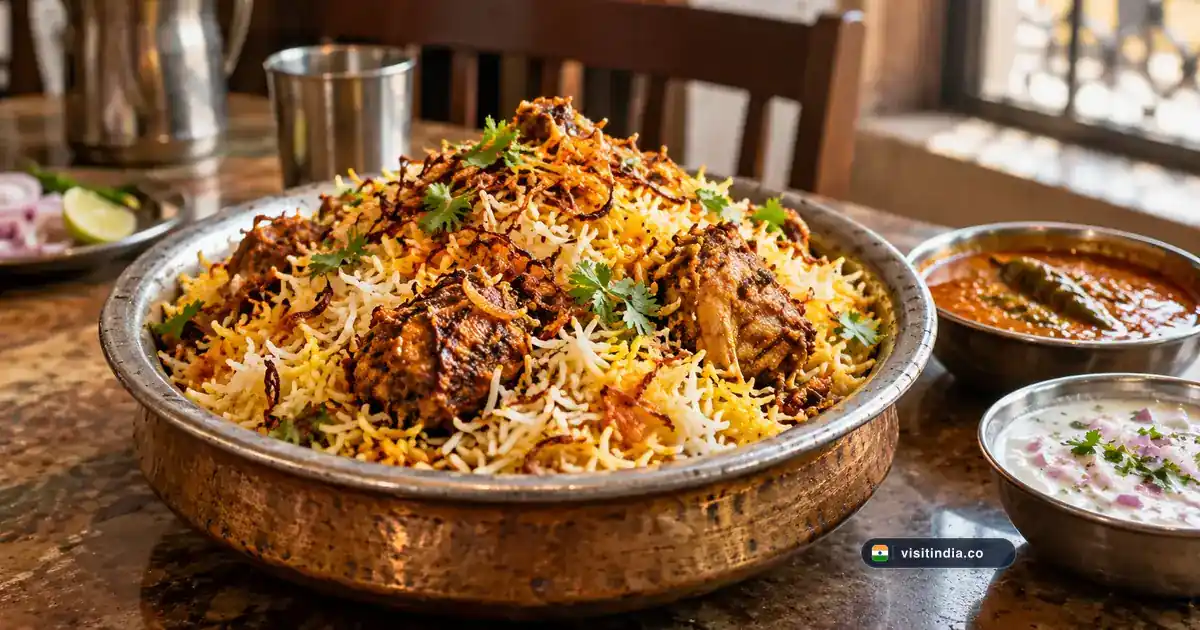
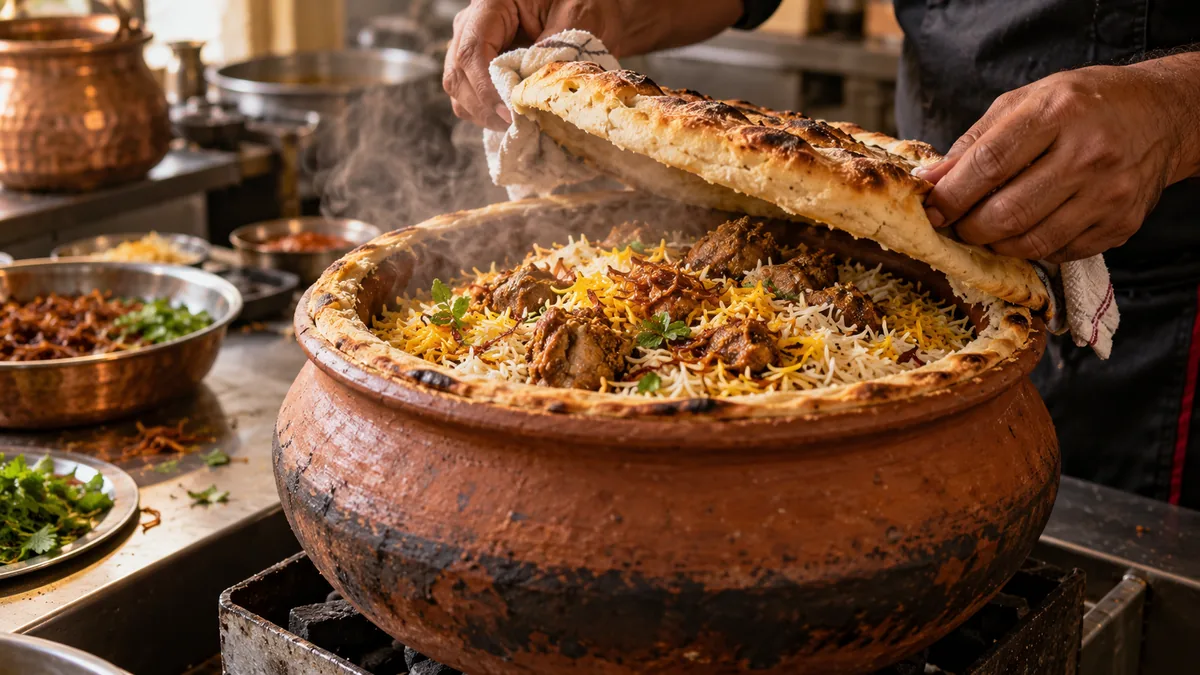
Hyderabadi Dum Biryani represents the pinnacle of Indian rice cookery, engineered to achieve maximum flavor penetration without scorching the delicate grains. Unlike other regional biryani variations across Lucknow or Kolkata that boil meat and rice separately before assembly, authentic Hyderabadi biryani utilizes the kachchi gosht (raw meat) technique. Complete urban sightseeing itineraries are covered in our places to visit in Hyderabad guide.
Kachchi Gosht vs Pakki Biryani
The distinguishing characteristic of Hyderabadi biryani is the raw meat layering process.
- Kachchi Biryani: Prime cuts of goat meat are marinated overnight in raw papaya paste, yogurt, ginger-garlic paste, red chili powder, and crushed spices. Partially parboiled aged basmati rice is layered directly over the raw marinated meat inside a heavy copper vessel (deg).
- Pakki Biryani: Meat is cooked completely as a rich gravy (yakhni) before being assembled with boiled rice. While widely served in commercial banquets, true purists consider kachchi biryani the authentic standard.
Sealed Dum Cooking and Potli Masala
The mouth of the heavy handi is sealed with a tight rope of kneaded wheat flour dough, locking in all moisture and aromatic vapors. The pot is placed over low charcoal embers, while burning coals are placed atop the copper lid to generate uniform radiant heat from both below and above.
Inside the sealed vessel, the natural steam (dum) vaporizes the marinade, cooking the meat in its own juices while seasoning the long basmati grains with cardamom, mace, shahi jeera, and saffron milk. The process requires precise heat timing to ensure the bottom layer of meat browns without scorching.
Accompaniments: Mirchi Ka Salan and Dahi Chutney
An authentic plate of Hyderabadi biryani is never served dry or with sweet gravies. It is strictly paired with two traditional accompaniments.
- Mirchi Ka Salan: A savory, nutty gravy made by roasting peanuts, white sesame seeds, dry coconut, cumin, and coriander, cooked with whole green Bhavnagri chilies and tangy tamarind pulp.
- Dahi Chutney (Raita): Fresh whipped curd seasoned with finely diced shallots, green chilies, mint, coriander, and black salt to temper the intense heat of the spices.
Iconic Biryani Institutions: Where to Eat in Hyderabad
While thousands of eateries across Hyderabad serve biryani, locals gravitate toward historic culinary institutions that have preserved continuous cooking standards over decades.
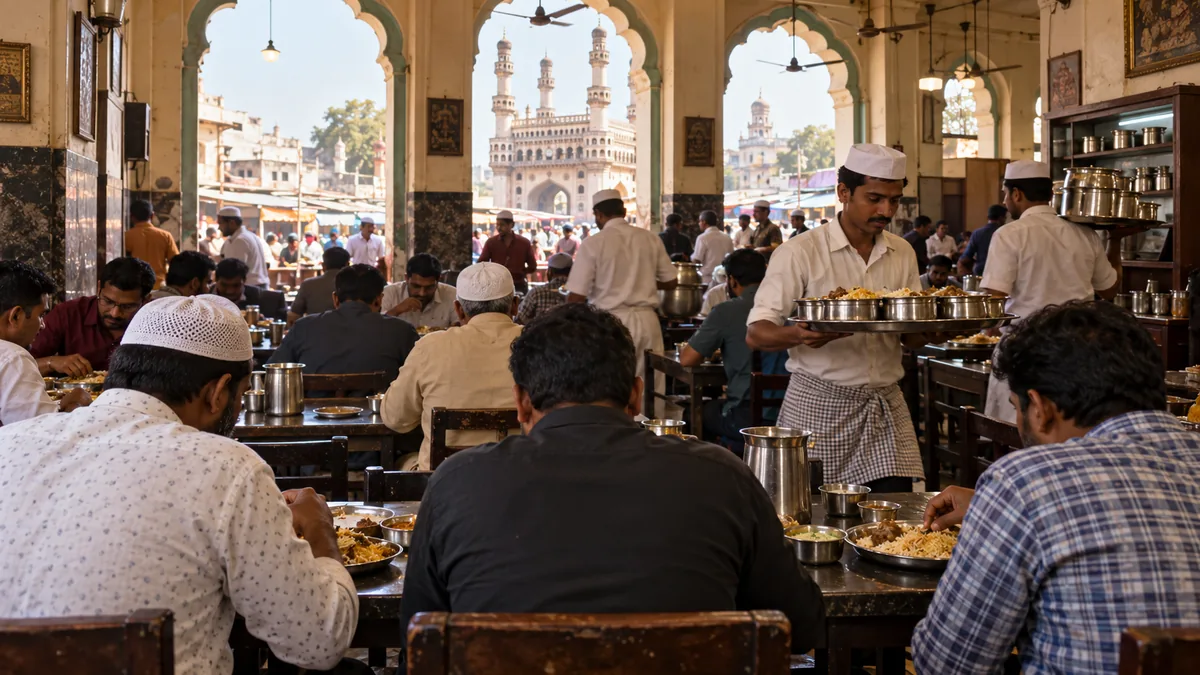
Hotel Shadab (Madina Circle, Old City)
Located near the historic Madina building just five hundred meters north of Charminar, Hotel Shadab has served as the anchor of Old City gastronomy since 1953. The ground floor functions as a fast-paced tea and snack hall, while air-conditioned family rooms occupy the upper levels.
Shadab’s mutton dum biryani features dark, deeply spiced masala coating long basmati grains, paired with exceptionally tender pieces of bone-in mutton. For breakfast, the kitchen prepares rich bowls of sheep trotter stew (paya nahari) paired with warm tandoori naan.
Cafe Bahar (Hyderguda)
Established in 1973 as a modest corner tea stall, Cafe Bahar in Basheerbagh has expanded into a sprawling multi-story culinary institution. The kitchen operates massive handis on the rooftop, serving thousands of plates of biryani daily.
Bahar is celebrated for its balanced aromatic rice, where every grain separates cleanly without greasiness. The restaurant also serves special double-masala portions for diners who prefer an extra layer of roasted spice gravy beneath their rice.
Bawarchi (RTC Crossroads) and Shah Ghouse
At the busy RTC Crossroads in central Hyderabad stands the original Bawarchi, famous for its signature chicken and mutton biryani served with generous portions of fried onions. Note that the original restaurant operates strictly from RTC Crossroads without branches.
In the western quarters of Tolichowki and Gachibowli, Shah Ghouse commands huge evening crowds. The kitchen uses traditional clay ovens and wood fires, serving fragrant biryani, tandoori rotis, and minced mutton kebabs late into the night.
Irani Chai and Osmania Biscuit Culture
The culture of Irani cafes arrived in Hyderabad during the early decades of the 20th century, brought by Zoroastrian Persian immigrants seeking commercial opportunities in the Nizam’s dominions. These establishments developed into democratic meeting spaces where poets, clerks, and merchants gathered over hot cups of tea. Combined Old City landmark passes are detailed in our Charminar, Golconda Fort, and Chowmahalla Palace tickets guide.
The Double-Boiled Brewing Process
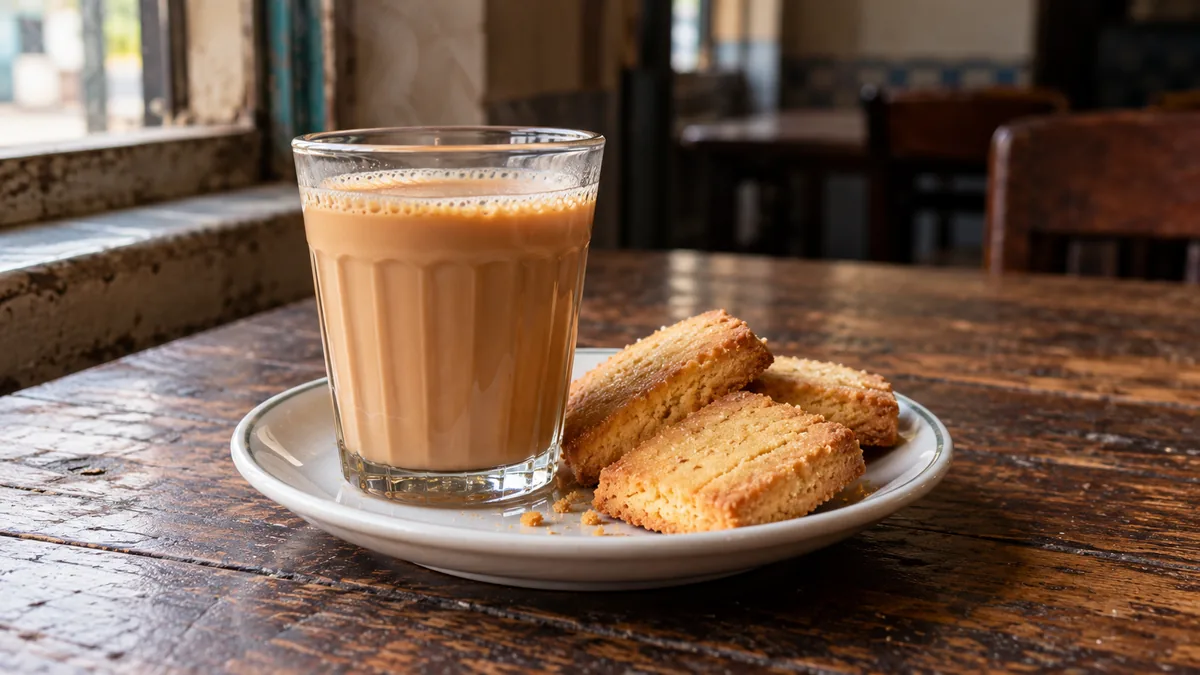
Hyderabadi Irani chai differs fundamentally from regular street milk tea.
- The Black Decoction: Assam tea leaves simmer continuously inside a sealed, heavy brass boiler, creating a thick, intensely concentrated black liquor.
- The Reduced Milk: Whole buffalo milk simmers in an open flat-bottomed pan for hours until it loses water content, transforming into a rich, creamy, sweetened liquid.
- Assembly: The server pours a measure of the hot black decoction into a glass tumbler, immediately topping it with boiling creamy milk to create a rich froth on top.
Nimrah Cafe and Niloufer Cafe
Positioned directly opposite the western arch of Charminar, Nimrah Cafe and Bakery provides an iconic tea-drinking setting. Devotees and tourists sit at open street tables, dipping fresh biscuits while watching morning light illuminate the monument.
In Lakdikapul, Niloufer Cafe represents the modern gold standard of Irani tea craftsmanship. Founded in 1978 by A. Babu Rao, the bakery produces thousands of handcrafted biscuits daily, served alongside velvety, aromatic tea brewed from proprietary leaf blends.
Osmania Biscuits and Bun Maska
The essential accompaniment to Irani chai is the Osmania biscuit, created in the royal kitchens of the Osmania General Hospital and named after the seventh Nizam, Mir Osman Ali Khan. The round, golden biscuit delivers a distinct sweet-and-salty balance made from refined flour, pure butter, custard powder, and a pinch of salt.
Other classic cafe staples include crusty Bun Maska (soft sweet buns slathered with salted table butter), Tie Biscuits (layered puff pastry shaped like bowties), and fruit-studded plum cakes.
The Royal Season of GI-Tagged Hyderabadi Haleem
Hyderabadi Haleem holds a special distinction in Indian culinary history, becoming the country’s first meat product to be granted Geographical Indication (GI) status in 2010. Originally brought to the Deccan by Arab mercenaries serving in the Nizam’s private army, the dish evolved into a seasonal delicacy prepared during the holy month of Ramzan. Eastern temple excursions can be paired with our Ramappa Temple and Warangal Fort guide.
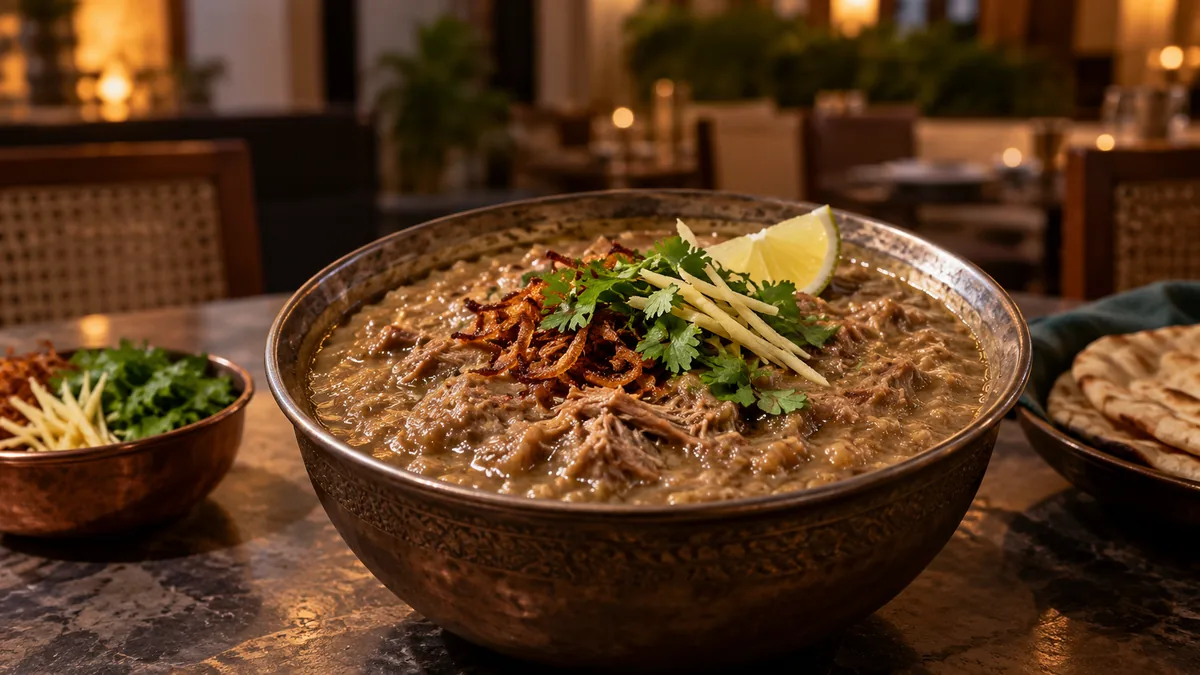
Wood-Fire Bhatti Cooking and Pounding
Haleem is prepared over outdoor brick kilns (bhattis) fueled by seasoned firewood.
- Base Ingredients: Lean goat meat, broken wheat (dalia), lentils (chana and urad dal), pure clarified butter (desi ghee), garlic, and a bouquet of aromatic spices simmer together in massive copper cauldrons for eight hours.
- The Wooden Ghotna: Pairs of cooks use heavy wooden pestles (ghotna) to pound the simmering mixture continuously for hours, mashing meat fibers and wheat into a rich, cohesive paste.
Serving Garnishes and Ramzan Night Bazaars
When ladled into bowls, authentic haleem displays a smooth, stretchable consistency that coats the spoon. Each portion is topped with a spoonful of hot ghee, crispy golden-brown fried onions (birista), chopped fresh mint, roasted cashew nuts, and a wedge of fresh lime.
During the thirty days of Ramzan, historic food corridors around Charminar, Madina Circle, and Towlichowki transform into midnight food festivals where hundreds of pop-up stalls serve hot haleem to late-night crowds until dawn.
Old City Street Snacks and Traditional Telangana Flavors
Beyond the royal court heritage of the Nizams, the street stalls of Hyderabad and the rural kitchens of Telangana offer bold, distinct flavors. Pilgrimage day trips outside the capital are detailed in our Yadagirigutta Lakshmi Narasimha Temple guide.
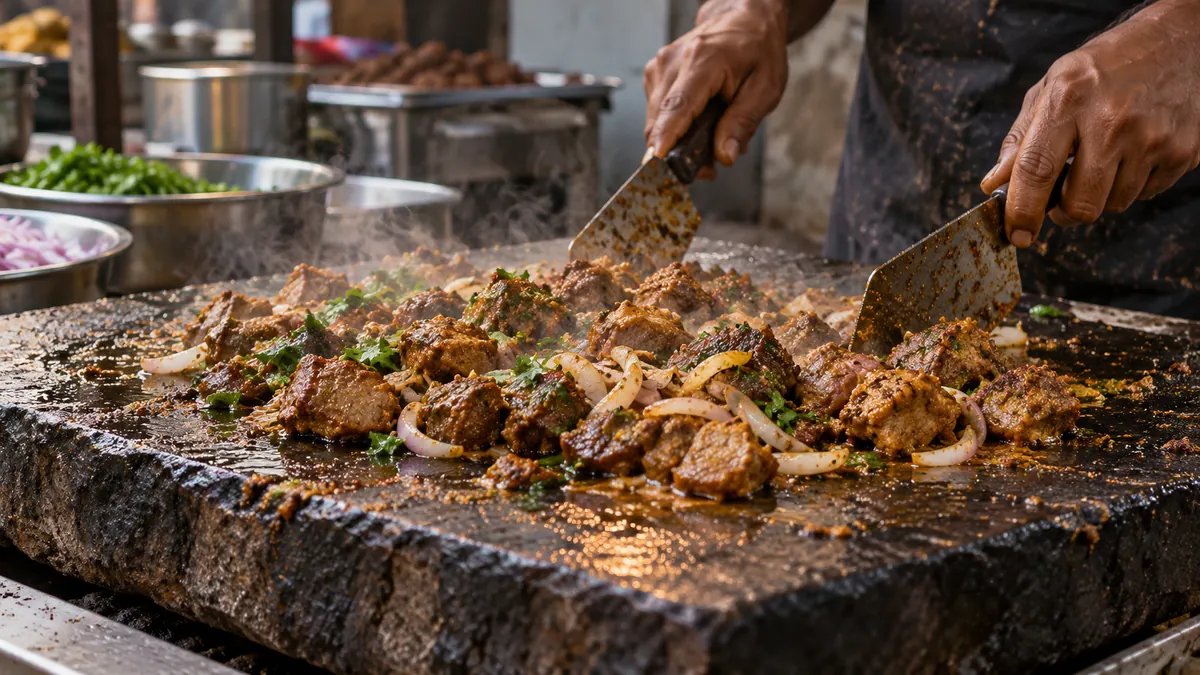
Patthar Ka Gosht and Marag Soup
- Patthar Ka Gosht: Mutton strips marinated in raw papaya, spices, and ghee are cooked directly upon a wide, flat granite stone heated from below by charcoal embers. The hot stone imparts a smoky, caramelized crust while keeping the interior juicy.
- Marag: A thin, spicy bone-marrow broth made from tender lamb ribs, cooked with cashews, almonds, black pepper, and whole spices, traditionally served as a warm starter at royal weddings.
Govind Dosa at Ghansi Bazaar
Operating from a small cart in the Old City’s Ghansi Bazaar, Govind Dosa has achieved cult status among night food lovers. The vendor spreads crisp rice-and-lentil crepes on a massive tawa, loading them with generous blocks of butter, spicy red chili chutney, mashed potatoes, and grated paneer, served hot until 2:00 AM.
Traditional Rural Telangana Delicacies
Native regional cuisine across Telangana emphasizes local grains, roasted lentils, and robust red chilies.
- Sarva Pindi: A circular, shallow-fried savory pancake crafted from rice flour, roasted peanuts, chana dal, green chilies, and sesame seeds, cooked with multiple holes in an earthen dish to ensure even crispness.
- Sakinalu: A festive dry snack prepared during the harvest festival of Sankranti, made by squeezing concentric spirals of rice flour and sesame paste directly into hot groundnut oil.
- Pachi Pulusu: A refreshing, uncooked rasam prepared from raw tamarind extract, sliced onions, green chilies, and tempered mustard seeds, served cold over hot rice. Civic food safety updates and restaurant guidelines are published on the Hyderabad District Places of Interest Directory, while regional tourism programs can be explored on the Telangana State Official Government Portal and the Archaeological Survey of India Telangana Monuments Register.
Frequently Asked Questions About Hyderabad Food
What is the most famous street food in Hyderabad?
Hyderabadi Dum Biryani is the undisputed culinary hallmark of the city, followed closely by Irani chai with Osmania biscuits, seasonal mutton Haleem, and Patthar Ka Gosht. In vegetarian street snacks, buttery Govind Dosas and Mirchi Bajji are perennial local favorites.
Where can I get the best Hyderabadi biryani in Hyderabad?
The most celebrated institutions for authentic mutton dum biryani include Hotel Shadab near Charminar, Cafe Bahar in Hyderguda, and Bawarchi at RTC Crossroads. For travelers in the IT corridor, Shah Ghouse in Gachibowli and Tolichowki serves exceptional late-night biryani.
What is special about Hyderabadi Irani chai?
Hyderabadi Irani chai is prepared using a distinct double-boiling technique where concentrated black tea decoction is brewed in a sealed copper container and poured over sweetened, reduced whole milk. It is traditionally paired with crumbly, sweet-and-salty Osmania biscuits.
When is Hyderabadi Haleem available in the city?
While select restaurants serve haleem year-round on weekends, the authentic wood-fire bhatti experience occurs exclusively during the holy month of Ramzan. Hundreds of pop-up stalls across Old City and Tolichowki serve freshly pounded haleem from late afternoon until midnight.
What is the difference between kachchi and pakki biryani?
Kachchi biryani marinates raw meat with spices and yogurt, layering it beneath partially parboiled basmati rice to cook together slowly in a sealed handi. Pakki biryani cooks the meat and rice separately before combining them for a brief steaming process.
What are traditional indigenous Telangana dishes to try?
Native regional Telangana dishes include Sarva Pindi, a crisp pancake made from rice flour, peanuts, and sesame seeds cooked in an earthen dish with multiple indentations. Other iconic regional staples include crunchy Sakinalu rings, tangy Pachi Pulusu tamarind rasam, and spicy Gongura Mutton.