Ramappa Temple & Warangal Guide: Floating Bricks & UNESCO History
Plan your visit to UNESCO Ramappa Temple and Thousand Pillar Temple in Warangal with verified timings, floating bricks history, and transport routes.
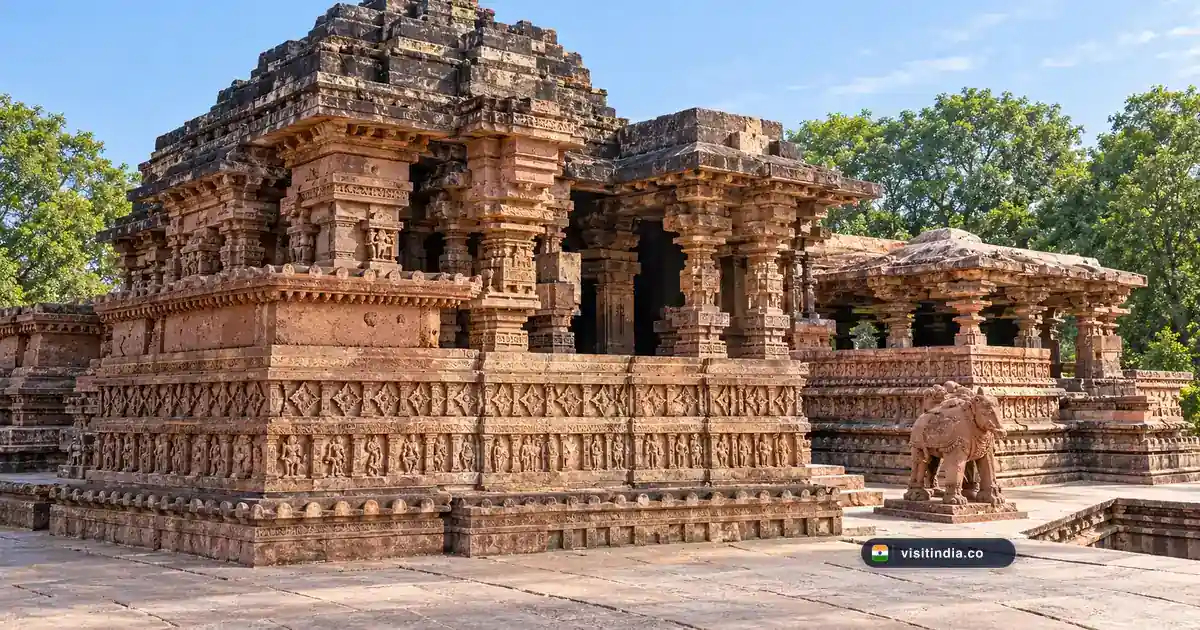
The medieval heartland of eastern Telangana preserves an extraordinary chapter of Indian temple architecture, pioneered by the Kakatiya dynasty between the 12th and 14th centuries. Rising from the rural agricultural forests of Mulugu district, the Kakatiya Rudreshwara Temple achieved international recognition when it was inscribed as a UNESCO World Heritage Site in July 2021.
Commonly known as Ramappa Temple, the complex represents an astonishing synthesis of artistic mastery and geotechnical engineering, celebrated for its porous floating clay bricks and seismic sandbox foundation design.
Paired with the nearby Thousand Pillar Temple in Hanamkonda and the monolithic stone gateways of Warangal Fort, the region forms the primary heritage triangle of the Deccan plateau. Travelers researching Ramappa temple Warangal timings, transport connectivity from Hyderabad, and architectural details discover a destination that rewards slow exploration. This guide delivers verified visiting hours, transport routes, and historical context for planning an independent journey.
Temple Visitor Essentials
- Kakatiya Rudreshwara (Ramappa) Temple was inscribed as a UNESCO World Heritage Site in July 2021.
- The 13th-century shrine features porous floating bricks that float on water, combined with earthquake-resistant sandbox foundations.
- The Warangal heritage triangle pairs Ramappa Temple at Palampet with Thousand Pillar Temple and Warangal Fort.
- Visiting hours run daily from 6:00 AM to 6:00 PM with free entry at both Ramappa and Thousand Pillar temples.
Kakatiya Heritage Triangle Master Timings and Site Directory
Visiting the Kakatiya monuments requires coordinating schedules between urban temple sanctums in Hanamkonda and the remote forest enclave of Palampet. While Thousand Pillar Temple and Warangal Fort sit within the contiguous tri-cities of Warangal, Hanamkonda, and Kazipet, Ramappa Temple lies sixty-five kilometers northeast along the Mulugu highway. Statewide routes and regional travel circuits can be explored in our master key details for Telangana.
The table below outlines the daily opening hours, ticketing tariffs, photography guidelines, and managing authorities across the three core heritage locations.
| Monument Name | Geographic Location | Daily Visiting Hours | Admission Fee (Indian / Foreigner) | Photography Policy | Managing Body |
|---|---|---|---|---|---|
| Ramappa Temple | Palampet Village, Mulugu | 6:00 AM to 6:00 PM | Free Public Admission | Free handheld mobile; no drones | Archaeological Survey of India |
| Thousand Pillar Temple | Hanamkonda City | 6:00 AM to 8:00 PM | Free Public Admission | Free in courtyard; restricted in sanctum | Archaeological Survey of India |
| Warangal Fort | Warangal (Kila Warangal) | 9:00 AM to 6:00 PM | ₹25 / ₹300 (Under 15 Free) | Free handheld; commercial fee applies | Archaeological Survey of India |
Ramappa Temple Architecture, Floating Bricks, and Sandbox Science
Constructed in 1213 CE under King Ganapati Deva by his general Recharla Rudra, Ramappa Temple is uniquely celebrated as the only temple in India named after its chief architect and sculptor, Ramappa. The shrine honors Lord Shiva in the manifestation of Ramalingeswara Swamy. Travelers planning a broader city tour can review our capital itinerary in the Hyderabad travel highlights.
The Engineering of Porous Floating Bricks
The pyramidical vimana (temple tower) rising above the central sanctum was constructed using an ingenious manufacturing technique that produced porous, ultra-lightweight clay bricks. Medieval Kakatiya artisans blended alluvial river clay with crushed sawdust, acacia gum, and husks before firing the mixture at precise kiln temperatures.
The resulting bricks display a spongy, cellular internal structure with a specific gravity of 0.8 to 0.9 grams per cubic centimeter, making them significantly lighter than water. This innovative material dramatically reduced the dead weight resting upon the sanctum walls, shielding the structural foundation from catastrophic collapse during ground settlement.
Earthquake-Resistant Sandbox Foundation Technology
To protect the temple against major seismic activity across the Deccan plateau, Kakatiya structural engineers devised a sophisticated sandbox foundation system. Builders excavated deep foundation pits down to the bedrock layer, backfilling the trenches with a specialized composite mixture of coarse river sand, pulverized granite, jaggery, and crushed bael fruit extract.
The massive stone temple was then erected atop this cushioning sand bed. When tremors or ground shifts occur, the sand bed absorbs and dissipates the seismic waves, preventing stress fractures from splitting the stone masonry. Official nomination dossiers and scientific analyses are preserved on the UNESCO World Heritage Centre Kakatiya Rudreshwara (Ramappa) Temple Inscription.
Madanika Bracket Sculptures and Carved Basalt
Surrounding the outer perimeter of the temple mandapa are twelve monumental bracket figures, known as madanikas or salabhanjikas, carved from jet-black dolerite basalt. These life-sized sculptures depict celestial dancers, musicians, and female warriors posed with remarkable anatomical fluidity and delicate ornamentation.
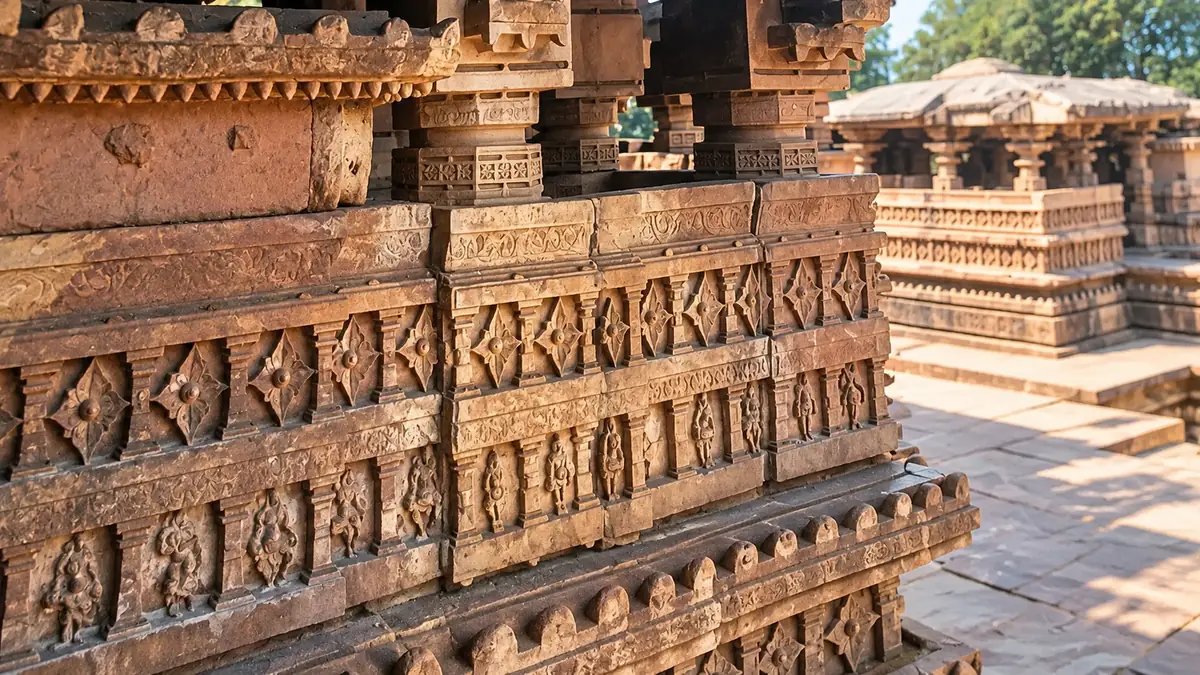
The black basalt has been polished to a mirror finish, with carved details showing flowing drapery, braided hairstyles, and beaded jewelry. The stone bracket dancers appear suspended beneath the red sandstone eaves, serving both as decorative flourishes and structural cantilevers.
Thousand Pillar Temple (Trikutalayam) in Hanamkonda
Located at the center of Hanamkonda, the Thousand Pillar Temple (Sri Rudreshwara Swamy Temple) stands as one of the oldest surviving stone monuments of the Kakatiya kingdom. King Rudra Deva commissioned the complex in 1163 CE as an imperial royal chapel and public ritual center.
Triple Sanctum Layout and Star-Shaped Platform
The temple exemplifies the Trikutalayam design, featuring three distinct sanctums arranged in a cross-axial formation around a central square dance hall. The shrines honor the holy trinity of Lord Shiva facing east, Lord Vishnu facing north, and Lord Surya facing south, ensuring morning sunlight penetrates into the sanctums.
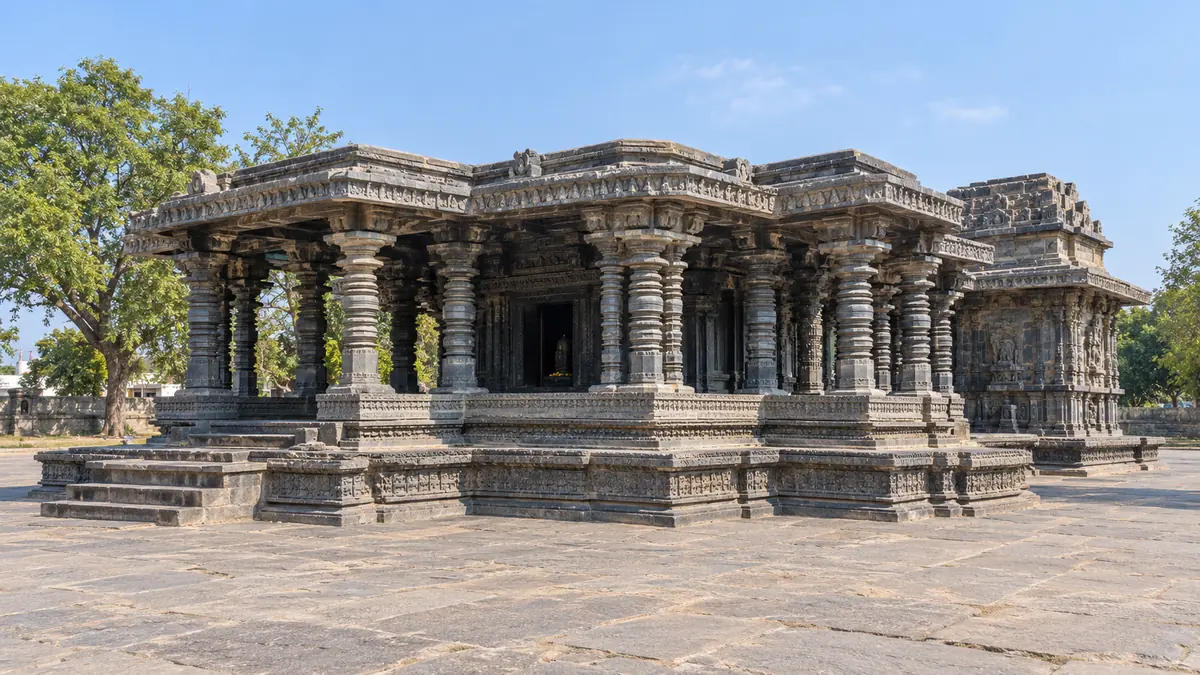
The complex rests upon a low star-shaped stone platform that raises the structure above street level. The interior hall is supported by closely spaced, lathe-turned black dolerite columns, each carved with microscopic bands of dancing maidens, floral scrolls, and miniature architectural shrines.
Monolithic Black Basalt Nandi Bull
In the open stone courtyard between the main temple and the southern gateway stands a monumental monolithic Nandi bull carved from a single block of dense black dolerite. Measuring roughly two meters in length, the sculpture depicts Lord Shiva’s mount in a seated posture with ears alert.
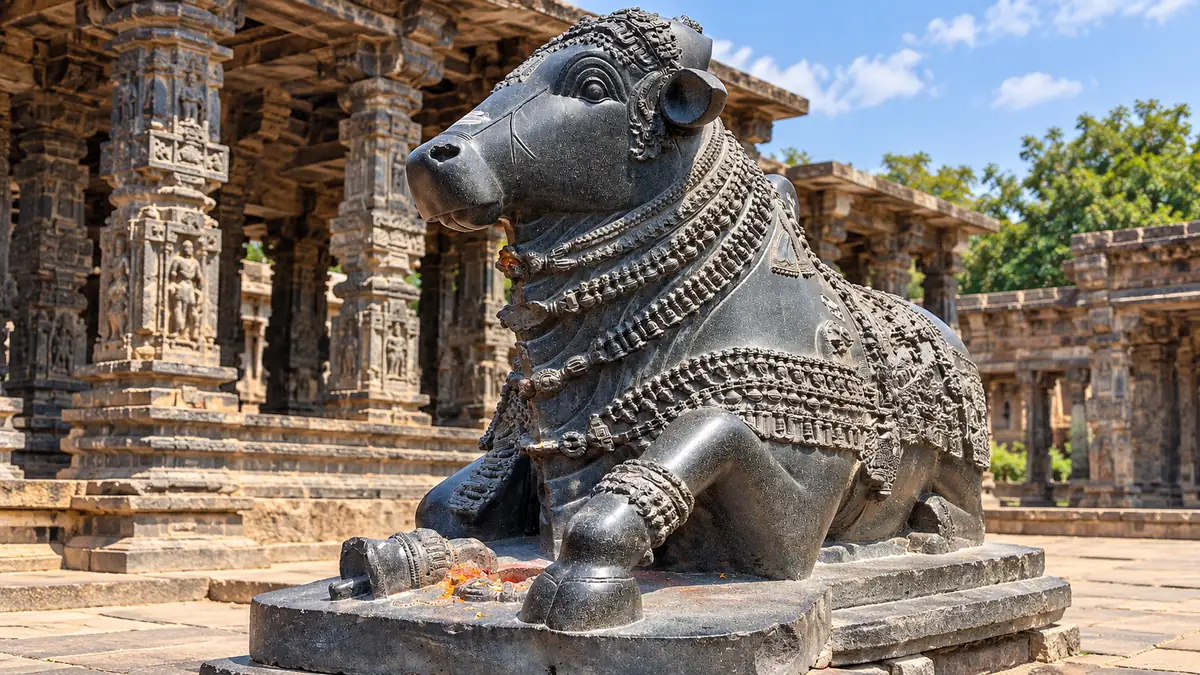
The carving exhibits extraordinary polish, featuring ornate bell necklaces, floral garlands, and delicate ear tassels that have remained unblemished by eight centuries of weather exposure. Devotees pause here to offer prayers and admire the stone reflection before entering the sanctum.
Reconstruction of the Natya Mandapam
Directly opposite the main shrine stands the historic Natya Mandapam (dance pavilion), supported by 132 intricately carved pillars. The structure had suffered severe foundation settling over centuries, leading to the collapse of its roof slabs.
The Archaeological Survey of India undertook a meticulous multi-year conservation project, dismantling every pillar and stone beam, repairing the subterranean foundation layer, and reassembling the entire mandapa stone by stone. Today, the restored open-air pavilion stands fully stabilized for public inspection.
Warangal Fort Ruins and the Monolithic Kakatiya Kala Thoranam
Warangal Fort served as the fortified capital of the Kakatiya dynasty, established under King Ganapati Deva and expanded by his successor, Queen Rani Rudrama Devi. The citadel was surrounded by three concentric defensive circuits designed to repel medieval cavalry and siege warfare. Travelers planning combined monument circuits can reference our Golconda Fort, Charminar & Chowmahalla highlights and timings.
Concentric Fortification Walls and Defense Gates
The outer defense wall consists of a massive mud rampart measuring twenty kilometers in circumference, originally surrounded by a wide defensive moat. Inside this perimeter sits a second fortification constructed from colossal blocks of dressed granite fitted together without mortar or binding cement.
The inner stone fortress enclosed the royal living quarters, military barracks, and the sacred Sambhuni Gudi temple complex. Although the central stone palaces were largely destroyed during 14th-century sieges by the Delhi Sultanate, the foundational earthworks and stone gateways remain remarkably intact.
The Four Stone Arches of Kakatiya Kala Thoranam
At the center of the fort ruins stand four freestanding monolithic stone archways known as the Kakatiya Kala Thoranam. These ornamental ceremonial gateways, each standing ten meters tall, originally marked the four cardinal entrances to the grand imperial temple of Lord Shiva.
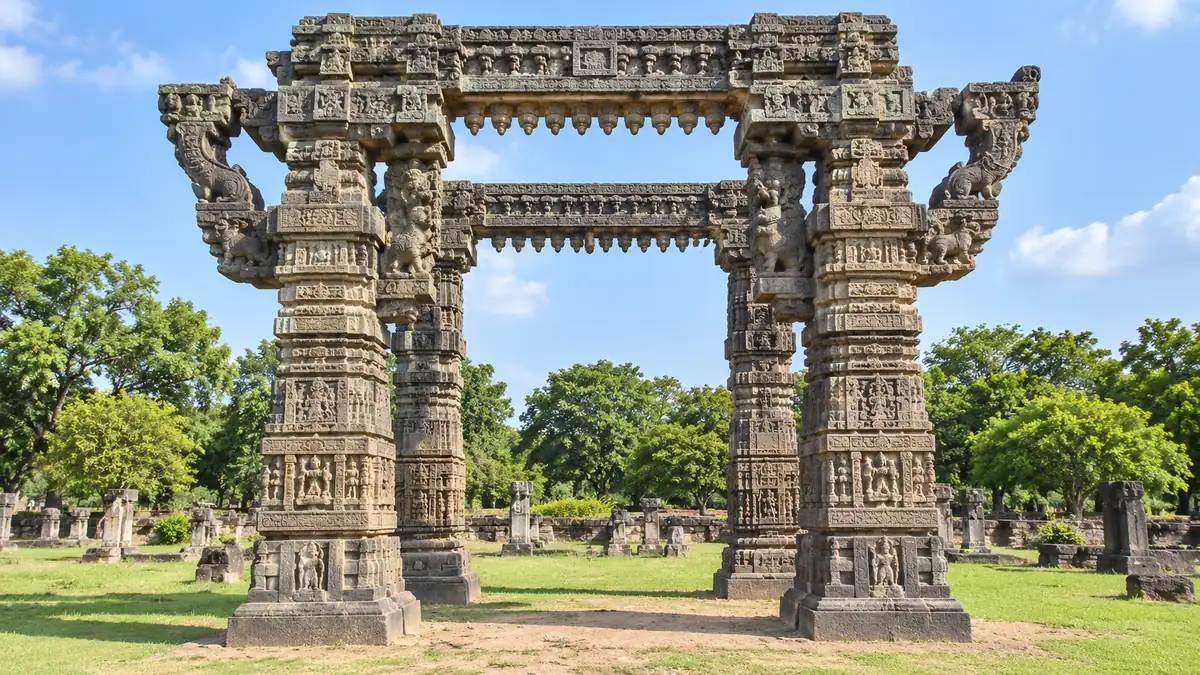
Each gateway features double stone pillars supporting a triple arch carved with mythical makara sea monsters, lotus blossoms, and paired geese (hamsa). The elegance and balance of this design inspired the modern state emblem of Telangana, symbolizing regional heritage and architectural ingenuity.
Ekashila Rock Hill and Open-Air Archaeological Museum
Near the southern edge of the fort grounds rises Ekashila, a solitary conical granite hill that gave Warangal its historic name (Orugallu, meaning “single stone”). Visitors can ascend stone steps carved into the rock flank to reach a small temple and enjoy panoramic views across the stone ramparts and surrounding rural fields.
At the foot of the hill lies an open-air archaeological lawn managed by the state archaeology department. The park displays hundreds of salvaged stone artifacts, including carved Nandi figures, inscribed royal hero stones, dancing Ganesha reliefs, and ornamental doorway jambs.
How to Reach Warangal and Ramappa Temple from Hyderabad
Warangal is positioned 150 kilometers northeast of Hyderabad along the four-lane National Highway 163, providing a smooth travel corridor for weekend excursions and day trips. Extended spiritual routes east of Hyderabad can be paired with our darshan rules and rituals at Yadagirigutta Temple.
| Mode of Travel | Route & Transit Hub | Travel Duration | Typical Fare (INR) | Operational Highlights |
|---|---|---|---|---|
| By Express Train | Secunderabad (SC) to Kazipet (KZJ) / Warangal (WL) | 2 to 2.5 Hours | ₹90 to ₹800 | Frequent daily express & superfast trains |
| By Road (Private Car) | Hyderabad to Warangal via NH163 corridor | 2.5 to 3 Hours | Tolls: ₹180 (One-way) | Four-lane divided highway through Jangaon |
| By Intercity Bus | MGBS / Uppal Bus Depot to Hanamkonda Bus Stand | 3 to 3.5 Hours | ₹180 to ₹350 | TSRTC Super Luxury & Rajdhani AC buses |
| Hired Taxi to Ramappa | Warangal / Hanamkonda to Palampet Village | 1.5 Hours (65 km) | ₹2,000 to ₹2,800 | Paved two-lane rural highway via Mulugu |
Train Connectivity via Kazipet and Warangal Junctions
Traveling by train represents the fastest and most reliable transit method between Hyderabad and the Kakatiya monuments. Major express trains depart Secunderabad Junction and Hyderabad Deccan Nampally every thirty to forty-five minutes, arriving at Kazipet Junction in just over two hours.
Kazipet Junction is situated only five kilometers from Thousand Pillar Temple in Hanamkonda, making it an ideal arrival point for day travelers. Auto-rickshaws and app-based taxis operate continuously from the station portico to local hotels and monuments.
Road Travel along National Highway 163
The road journey from eastern Hyderabad follows the well-maintained four-lane NH163 highway through Uppal, Bhongir, Aler, and Jangaon. The driving surface is smooth with dual carriageways, multiple roadside restaurants, and fuel plazas.
From Warangal, reaching Ramappa Temple requires continuing northeast along State Highway 3 through Mulugu to Palampet village. The final twenty kilometers pass through scenic countryside dotted with palmyra palms, irrigation tanks, and teak woods.
Adjacent Kakatiya Attractions: Laknavaram Lake and Bhadrakali Shrine
Travelers visiting Palampet should allocate time to explore the adjacent natural and religious attractions developed under Kakatiya rule. Authentic dining options in the region are featured in our classic street eats in Hyderabad Food Trail.
Laknavaram Lake and Suspension Bridge
Located twenty-five kilometers east of Ramappa Temple near Govindaraopet, Laknavaram Lake is a sprawling 10,000-acre reservoir created by the Kakatiyas by bridging natural gaps between surrounding hills. The reservoir features thirteen forested islands scattered across the water.
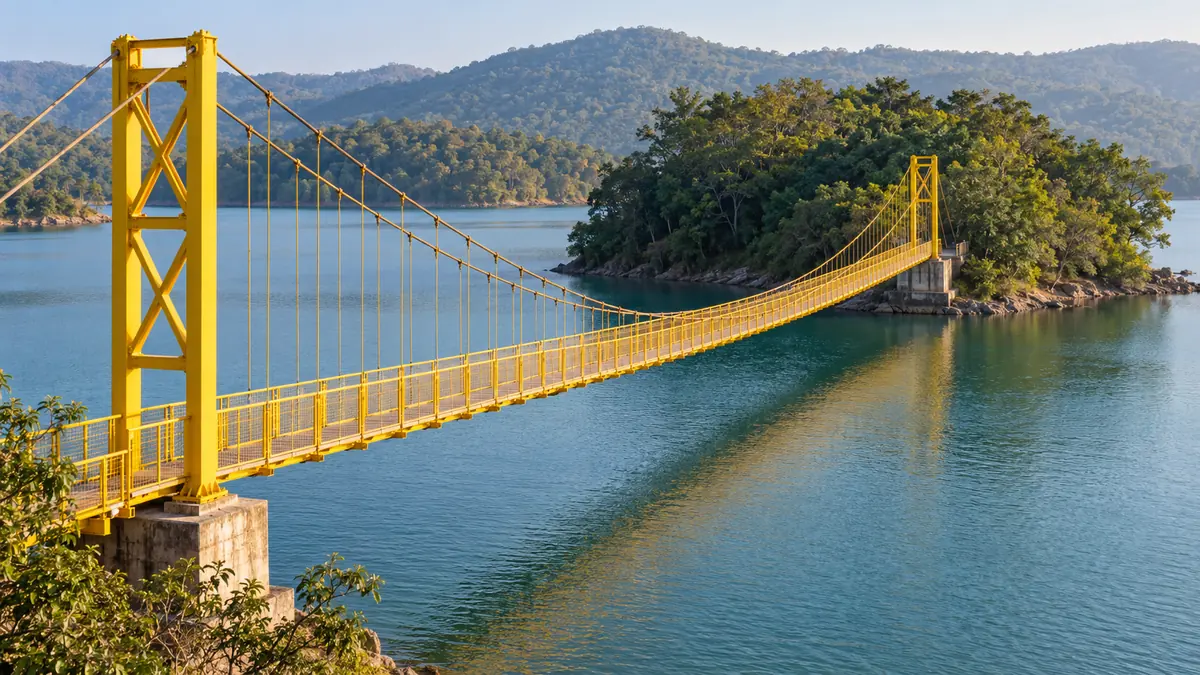
A 160-meter steel suspension bridge connects three of the main islands, allowing visitors to walk above the lake waters. The Telangana State Tourism Development Corporation operates motorized boat rides and maintains an eco-resort with lakeside cottages on the central island.
Bhadrakali Temple on Bhadrakali Lake
Situated on a rocky hillock between Warangal and Hanamkonda, the Bhadrakali Temple is an ancient Shakti shrine dating back to 625 CE during the Chalukya period. The Kakatiyas later adopted Goddess Bhadrakali as their family deity, expanding the temple sanctum and building the stone bund of Bhadrakali Lake.
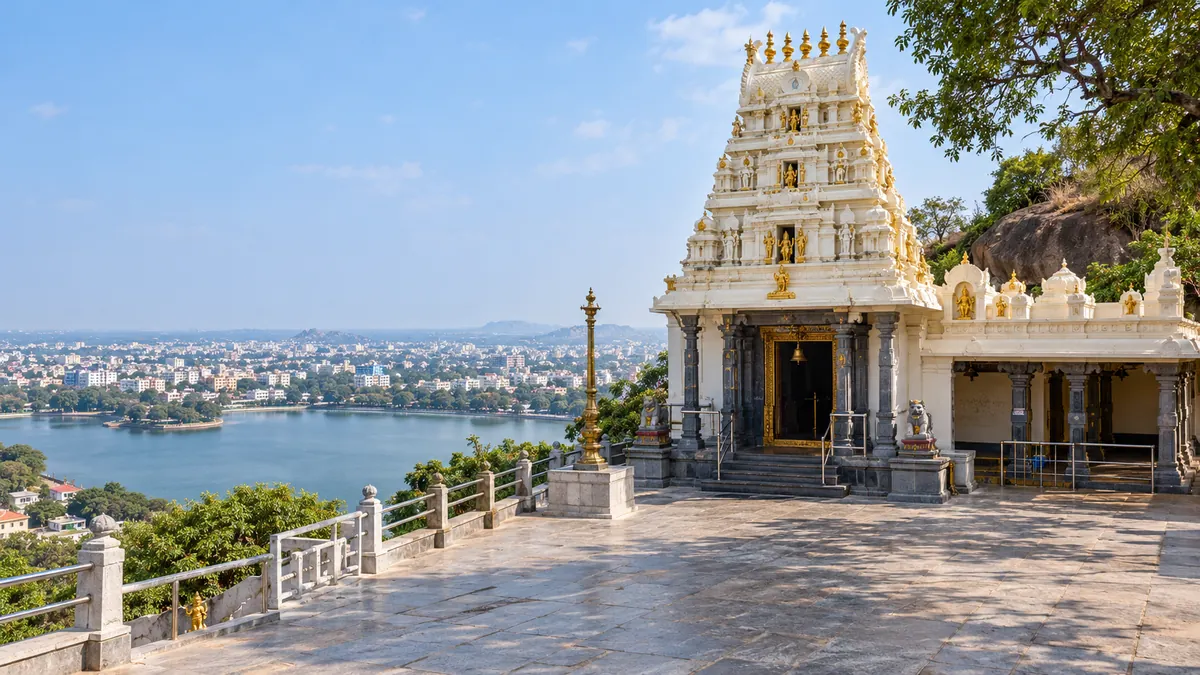
The inner sanctum enshrines a two-meter stone murti of Goddess Bhadrakali with eight arms holding traditional weapons. A scenic lakefront promenade features stone walking trails and evening musical fountain shows. Official district tourism updates are published on the Warangal District Tourist Places Directory, while monument conservation records are maintained on the Archaeological Survey of India Telangana Monuments Register.
Frequently Asked Questions About Ramappa and Warangal
What are the opening timings of Ramappa Temple?
Ramappa Temple is open daily to devotees and tourists from 6:00 AM to 6:00 PM without any midday closure. There is no admission ticket fee required to enter the temple complex.
Why is Ramappa Temple famous for floating bricks?
The bricks used to build the temple’s pyramidical spire were manufactured from porous clay mixed with organic material, making them lighter than water with a specific gravity between 0.8 and 0.9 g/cm³. This lightweight material reduced stress on the stone sanctum walls to prevent collapse during earthquakes.
How far is Ramappa Temple from Warangal and Hyderabad?
Ramappa Temple is located at Palampet in Mulugu district, approximately 65 kilometers northeast of Warangal and 210 kilometers northeast of Hyderabad. The drive takes around 1.5 hours from Warangal and 4.5 hours from Hyderabad via NH163.
What are the timings for Thousand Pillar Temple in Hanamkonda?
Thousand Pillar Temple opens daily from 6:00 AM to 8:00 PM with free public admission. The best time to visit is during the early morning hours or late afternoon to view the carved stone pillars in natural light.
Is there an entry fee to visit Warangal Fort?
Yes, Warangal Fort charges an entry ticket of ₹25 for Indian citizens and ₹300 for foreign visitors under Archaeological Survey of India regulations. The fort is open daily from 9:00 AM to 6:00 PM.
Can travelers visit Ramappa Temple and Warangal as a day trip from Hyderabad?
Yes, travelers can complete a day trip by departing Hyderabad early via morning train to Kazipet (2 hours) or driving along NH163 (3 hours). A hired taxi from Kazipet can cover Thousand Pillar Temple, Warangal Fort, and Ramappa Temple before returning by evening train.