Delhi Travel Guide: UNESCO Monuments, Metro Map & Itinerary
Plan your trip with our complete Delhi travel guide covering Red Fort, Qutub Minar, Humayun's Tomb, Delhi Metro transit, markets, and a 3-day plan.
Delhi Capital Essentials
- Territory Scale: The National Capital Territory of Delhi spans 1,483 square kilometers, housing three UNESCO World Heritage Sites: Qutub Minar, Humayun’s Tomb, and the Red Fort.
- Urban Transit: The Delhi Metro network connects all major monuments, markets, and transit terminals across 390 kilometers of track, making private taxis unnecessary for most city routes.
- Optimal Season: Peak sightseeing season runs from October through March, when mild winter temperatures range between 9°C and 23°C across the urban district.
- Airport Connectivity: Indira Gandhi International Airport connects directly to central New Delhi in 20 minutes via the high-speed Airport Express Metro line.
Delhi presents an extraordinary chronicle of urban civilizations layered across eight centuries. As India’s capital territory, the metropolis balances the grand colonial boulevards of New Delhi against the dense medieval alleyways of Shahjahanabad. Traveling through Delhi reveals ancient sultanate minarets, imperial Mughal palaces, British administrative circles, and modern technological corridors in rapid succession.
Modern infrastructure makes navigating the capital straightforward. The Delhi Metro ranks among the world’s most extensive transit systems, transporting travelers across eleven administrative districts in climate-controlled comfort. From historic architecture to regional North Indian cooking and artisan bazaars, Delhi serves as the natural gateway to the broader subcontinent.
Delhi Destinations Master Matrix
Delhi functions as an interconnected network of historical cities rather than a single uniform downtown. Understanding the geographic distribution of major landmarks helps visitors avoid unnecessary cross-city traffic.
The master matrix below details the primary zones, landmark attractions, nearest transit stations, and recommended visitor allocations.
| Region / Zone | Primary Attractions | Metro Station & Line | Ideal Time Allocation | Best Visiting Window |
|---|---|---|---|---|
| Old Delhi (Central North) | Red Fort, Jama Masjid, Chandni Chowk | Lal Qila / Chandni Chowk (Yellow/Violet) | Full Day (6 to 8 hours) | 8:30 AM to 5:00 PM |
| Lutyens’ Axis (Central) | India Gate, Rashtrapati Bhavan, National Museum | Central Secretariat (Yellow/Violet) | Half Day (3 to 4 hours) | 9:00 AM to 6:00 PM |
| South Delhi Heritage | Qutub Minar, Mehrauli Park, Hauz Khas | Qutab Minar (Yellow Line) | Half Day (4 hours) | 7:00 AM to 11:00 AM |
| Nizamuddin & Lodhi | Humayun’s Tomb, Sunder Nursery, Lodhi Garden | JLN Stadium (Violet Line) | Half Day (4 hours) | 7:00 AM to 10:30 AM |
| East Delhi Riverfront | Swaminarayan Akshardham Complex | Akshardham (Blue Line) | Half Day (4 to 5 hours) | 1:30 PM to 8:00 PM |
| South-Central Bazaars | Dilli Haat INA, Sarojini Nagar, Lodhi Art District | Dilli Haat INA (Yellow/Pink) | Evening (3 to 4 hours) | 3:00 PM to 9:00 PM |
The Three UNESCO Monuments: Red Fort, Qutub Minar, and Humayun’s Tomb
What makes Delhi’s three UNESCO World Heritage Sites globally significant? Delhi preserves three distinct architectural epochs on UNESCO’s World Heritage list: the 12th-century Qutub Minar complex, the 16th-century garden tomb of Emperor Humayun, and the 17th-century sandstone citadel of the Red Fort.
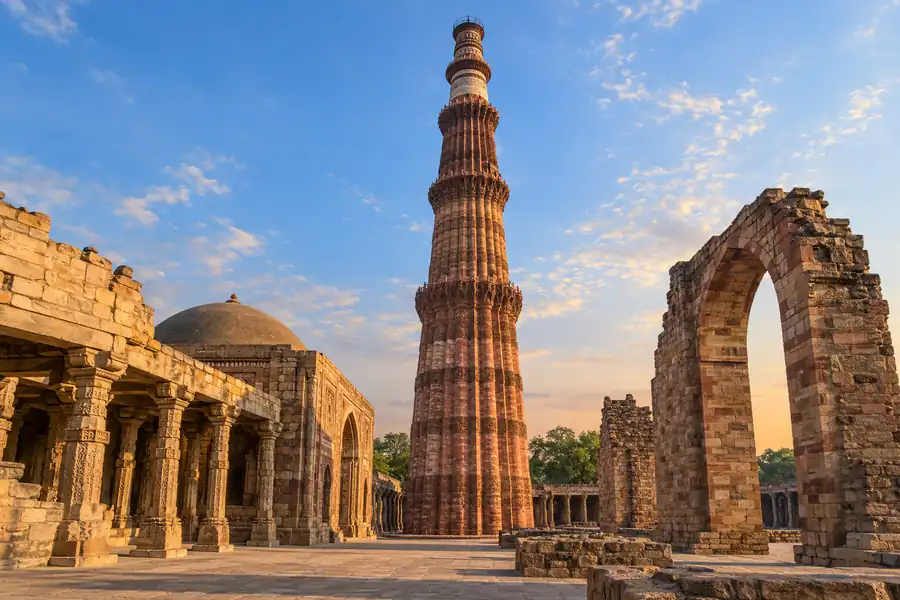
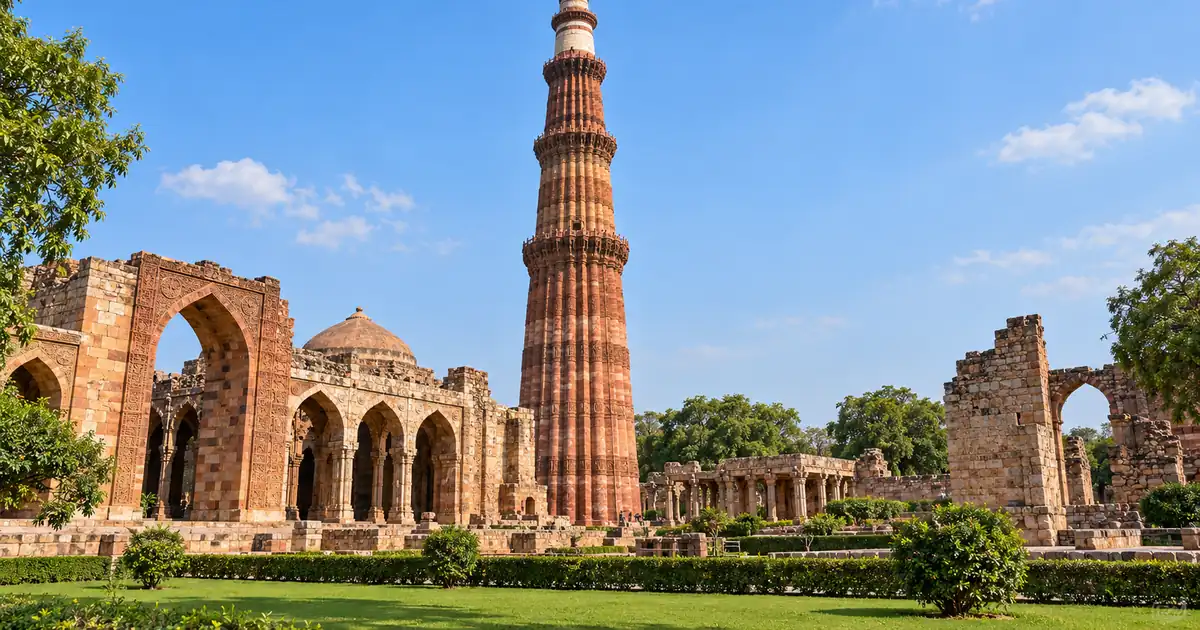
The Qutub Minar complex in Mehrauli anchors Delhi’s earliest Islamic architecture. Built by Qutb-ud-din Aibak and expanded by Shams-ud-din Iltutmish, the 72.5-meter fluted minaret rises over intricately carved stone courtyards. Within the adjoining Quwwat-ul-Islam mosque courtyard stands the famed 4th-century Gupta iron pillar. Travelers planning an in-depth architectural pilgrimage should consult our dedicated planning a visit to Delhi UNESCO Monuments for ticketing strategies and structural histories.
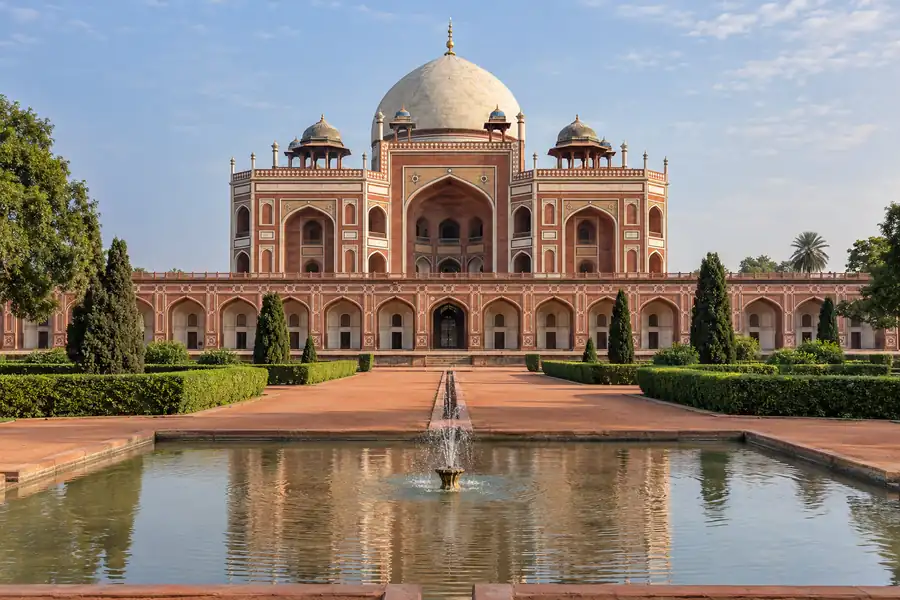
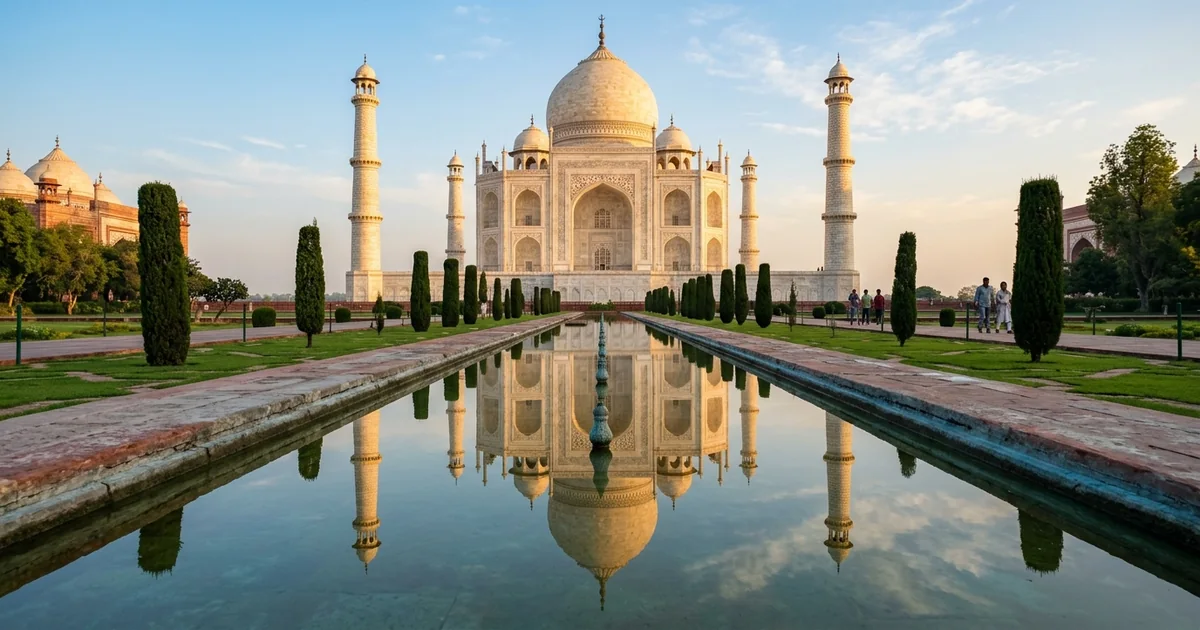
Humayun’s Tomb represents the earliest grand example of Mughal garden tomb architecture in South Asia. Commissioned by Empress Bega Begum and designed by Persian architect Mirak Mirza Ghiyas, the monument introduced the geometric charbagh quadrangular layout that later inspired the Taj Mahal. Surrounding the main red sandstone mausoleum, the restored water channels of Sunder Nursery create a tranquil 90-acre heritage ecological park.
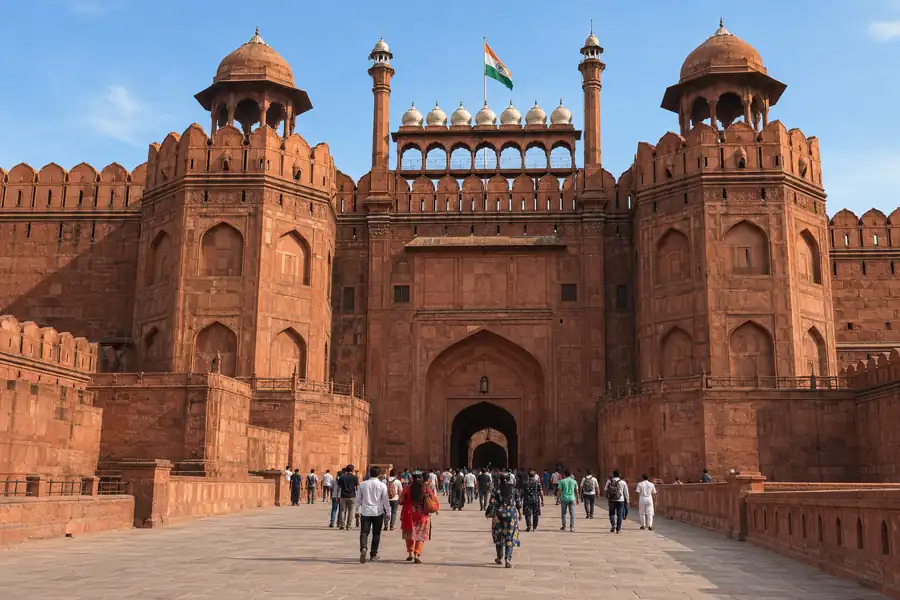
The Red Fort (Lal Qila) dominates Old Delhi with its two-kilometer perimeter of massive red sandstone bastions. Constructed by Emperor Shah Jahan when shifting the Mughal capital from Agra to Delhi, the fortress includes the Diwan-i-Aam public audience hall and the marble pavilions of the Diwan-i-Khas. Both entry tickets and sound-and-light show admissions can be reserved through the Archaeological Survey of India Delhi Circle official ticketing counter.
Old Delhi: Chandni Chowk, Jama Masjid, and Spices
How do travelers explore the historic quarter of Old Delhi comfortably? Travelers explore Old Delhi by arriving at Chandni Chowk Metro Station, boarding a battery-operated cycle rickshaw, and walking the pedestrianized central promenade between Digambar Jain Lal Mandir and the majestic stairs of Jama Masjid.
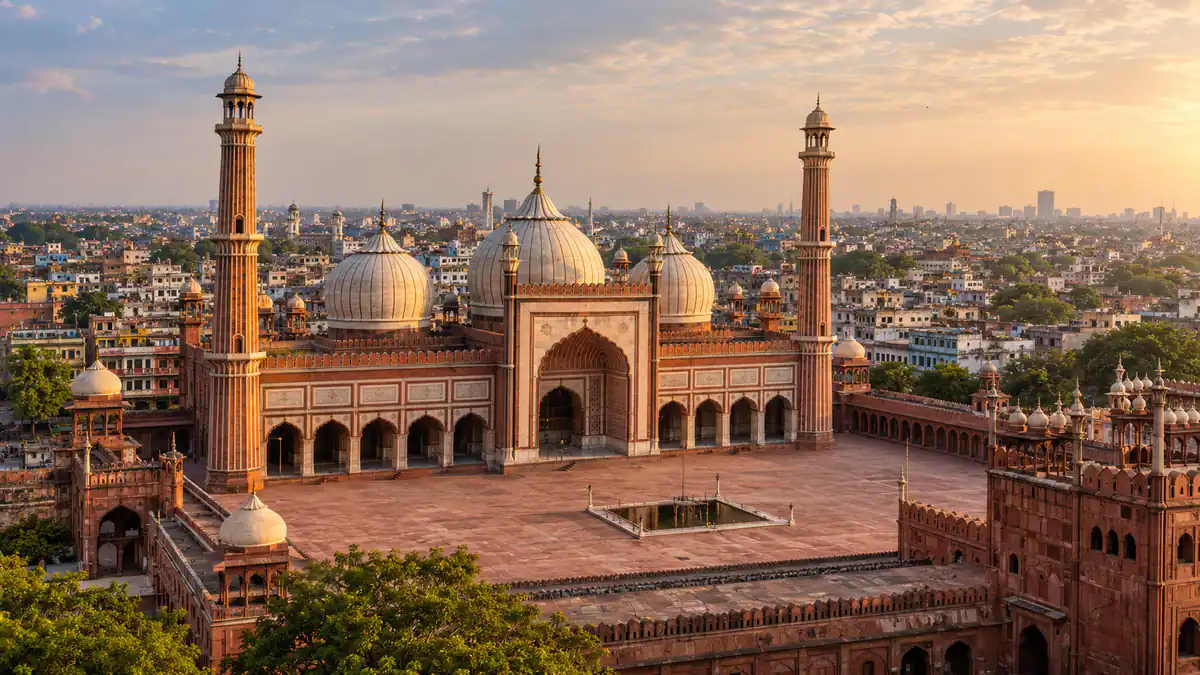
Old Delhi, historically designated as Shahjahanabad, was founded in 1639 as the fortified capital of the Mughal Empire. Today, the main thoroughfare of Chandni Chowk features dedicated pedestrian pathways paved in red sandstone. Walking along this avenue connects visitors to centuries-old wholesale markets, including Dariba Kalan for silver jewelry, Kinari Bazaar for textiles, and Khari Baoli, Asia’s largest spice trading market.
At the western terminus of the street stands Jama Masjid, India’s largest congregational mosque from the Mughal period. Commissioned by Shah Jahan, the mosque accommodates 25,000 worshippers across its expansive red sandstone courtyard. Visitors can ascend the southern minaret for panoramic vistas stretching across Old Delhi’s dense rooftop settlements toward modern Connaught Place.
After touring the monumental courtyard, food lovers can trace heritage culinary specialties using our Old Delhi Street Food culinary overview through nearby Matia Mahal and Gali Paranthe Wali. The neighborhood offers an unforgettable immersion into classic North Indian flavors.
New Delhi and Lutyens’ Imperial Axis: India Gate and Kartavya Path
How was the planned administrative heart of New Delhi designed? British architects Sir Edwin Lutyens and Sir Herbert Baker designed New Delhi in the early 20th century around wide radial avenues, hexagonal roundabouts, and monumental government institutions.
The primary monumental axis runs along Kartavya Path (formerly Rajpath), spanning three kilometers from Rashtrapati Bhavan to India Gate. Rashtrapati Bhavan, the official residence of the President of India, anchors the western ridge on Raisina Hill. Flanked by the North and South Blocks of the Central Secretariat, this regal complex blends classical European neoclassical columns with indigenous Buddhist railings, Mughal chhatris, and stone jali screens.
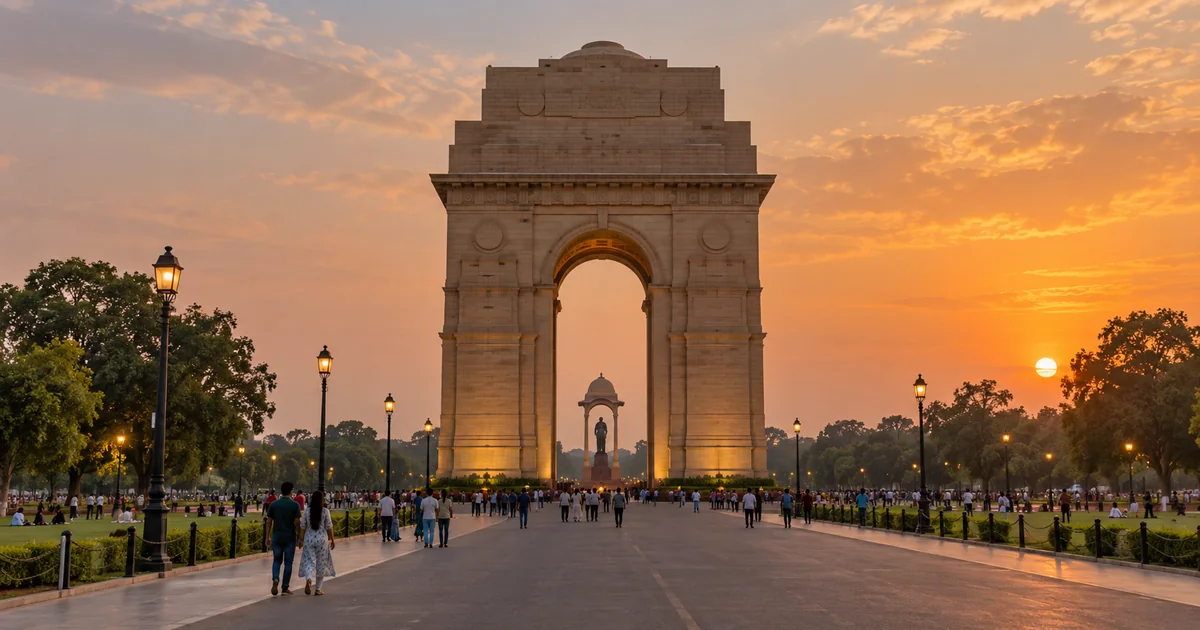
At the eastern terminus stands India Gate, a 42-meter triumphal arch memorializing 84,000 soldiers of the British Indian Army who died during World War I. The surrounding lawns and fountains serve as a popular evening gathering spot for Delhi families. Nearby, the National Museum houses extraordinary collections spanning 5,000 years, including Harappan artifacts and rare miniature paintings.
Spiritual Landmarks: Akshardham, Lotus Temple, and Nizamuddin
What spiritual traditions shape the monumental landscape of Delhi? Delhi honors diverse faith traditions through architectural landmarks representing Hinduism, the Bahai faith, Sufi Islam, and Sikhism across distinct quadrants of the capital.
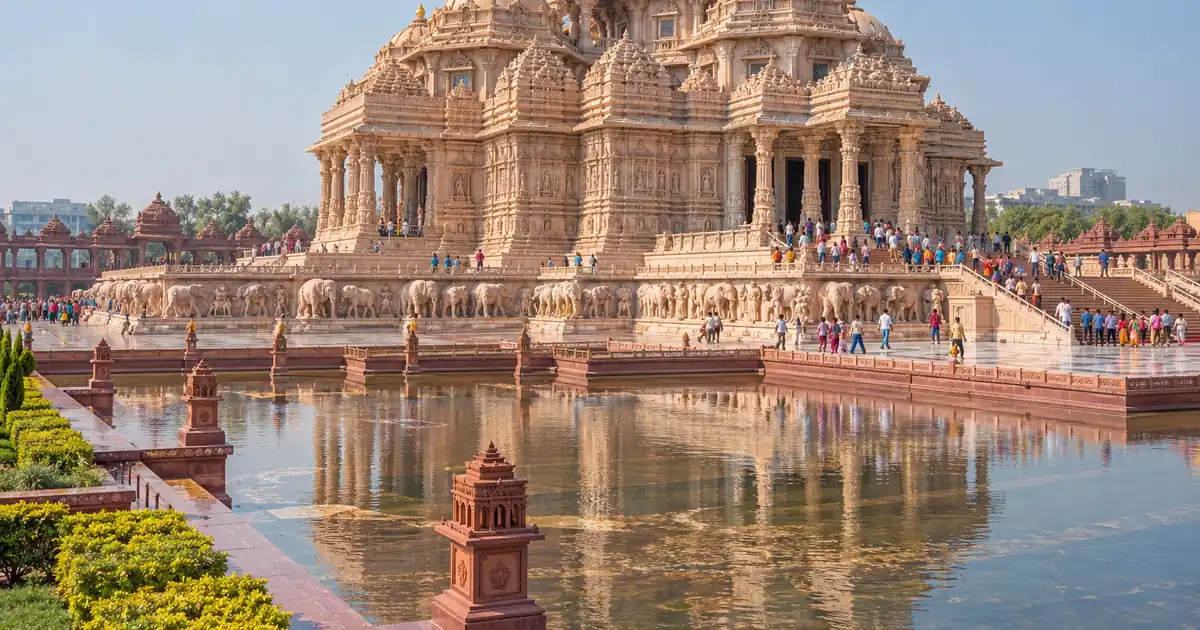
The Swaminarayan Akshardham complex stands on the eastern bank of the Yamuna River. Built from Rajasthani pink sandstone and Italian Carrara marble without structural steel, the monument features 234 carved pillars, nine domes, and 20,000 sculpted figures.
Evening visitors can watch the Sahaj Anand water show combining lasers, fire bursts, and fountain choreography. You can learn complete security protocols, photography rules, and transit access through our visiting Akshardham Temple Delhi.
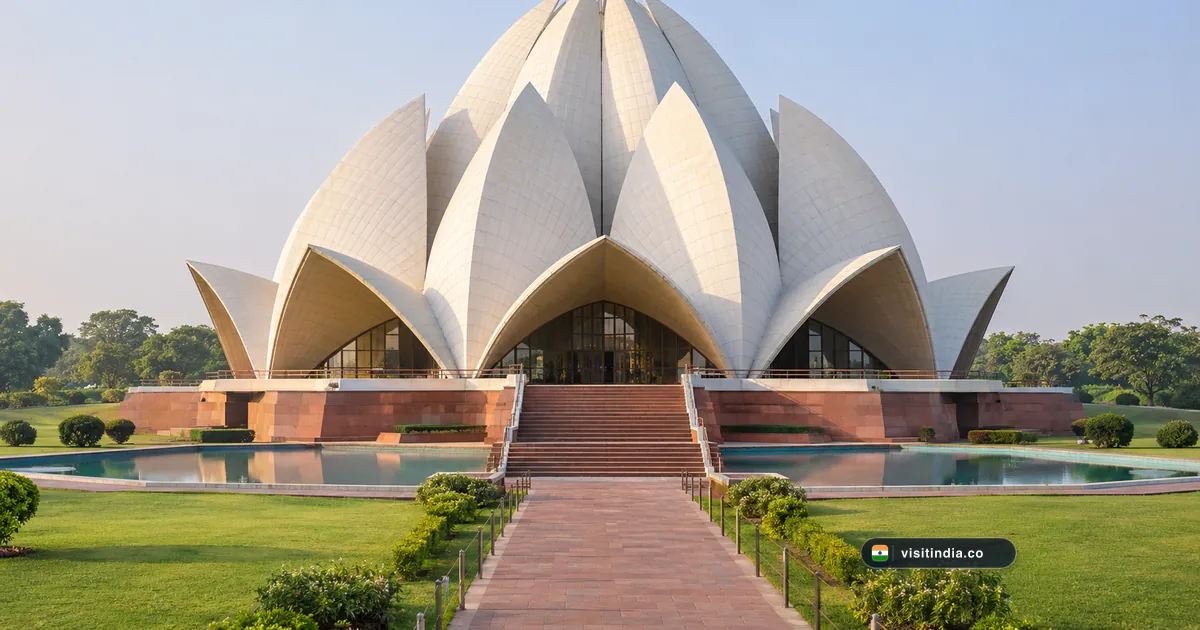
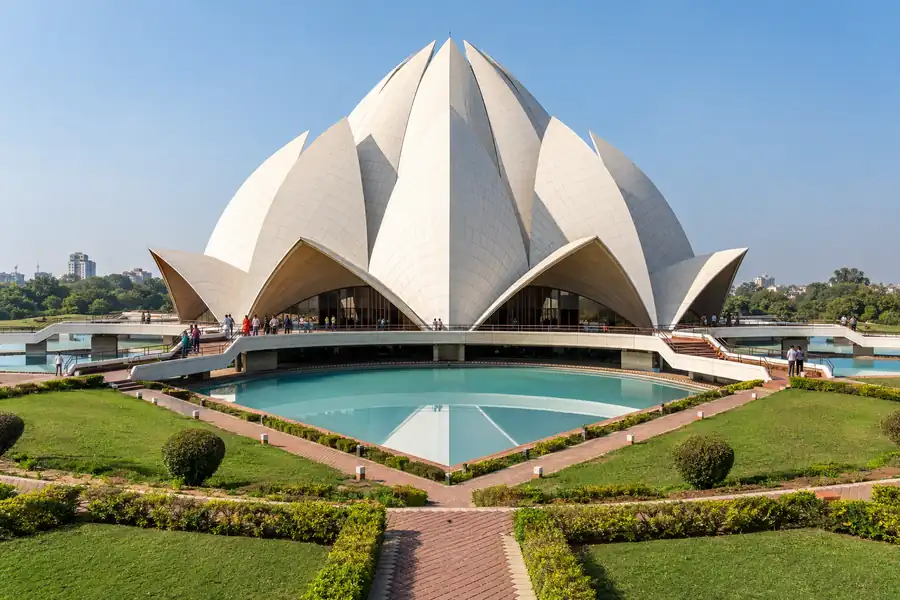
In South Delhi’s Kalkaji neighborhood, the Lotus Temple serves as the Bahai Mother Temple of the Indian subcontinent. Designed by Iranian architect Fariborz Sahba, the structure resembles a blooming white lotus flower formed by 27 free-standing petals clad in Greek Penteli marble. The silent prayer hall welcomes visitors of all religious backgrounds to sit in quiet meditation.
To experience living Sufi devotion, visit the dargah of Hazrat Nizamuddin Auliya in central Delhi on Thursday evenings. Devotees gather in the marble courtyard to hear traditional Qawwali singers perform hypnotic devotional poetry composed by Amir Khusrau. Nearby, Gurudwara Bangla Sahib offers a peaceful Sikh sanctuary, serving thousands of free vegetarian meals daily through its vast community kitchen.
South Delhi Heritage Parks: Lodhi Garden and Hauz Khas
Where can travelers enjoy historic monuments surrounded by urban greenery? South Delhi preserves ancient medieval ruins inside landscaped municipal gardens, notably Lodhi Garden and the 14th-century lakeside madrasa complex of Hauz Khas Village.
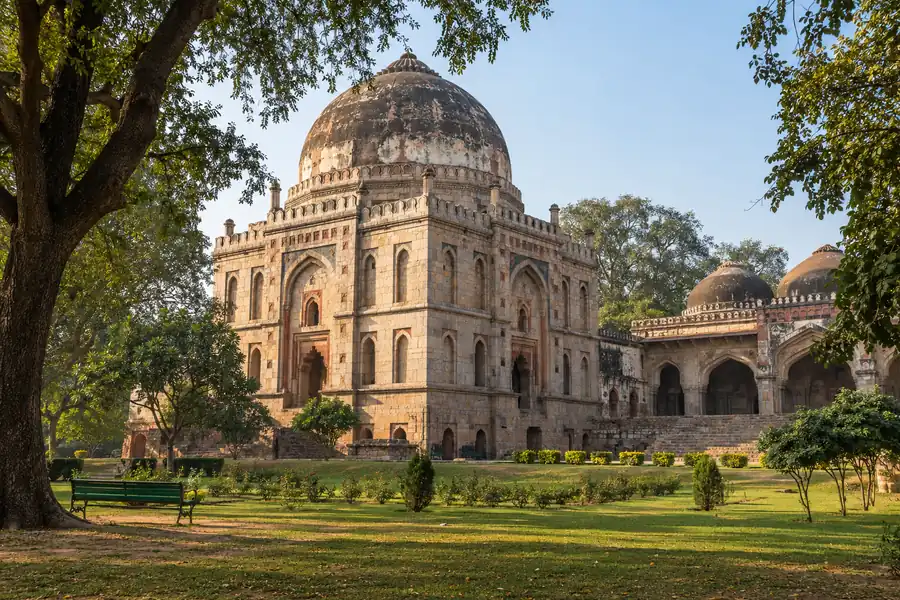
Lodhi Garden spans 90 acres between Khan Market and Safdarjung’s Tomb. The public park contains fifteenth-century tombs belonging to the Sayyid and Lodhi dynasties, including the octagonal mausoleum of Mohammed Shah and the impressive central domed Bara Gumbad. Morning joggers, diplomats, and birdwatchers frequent the shaded walking circuits beneath ancient neem and banyan trees.
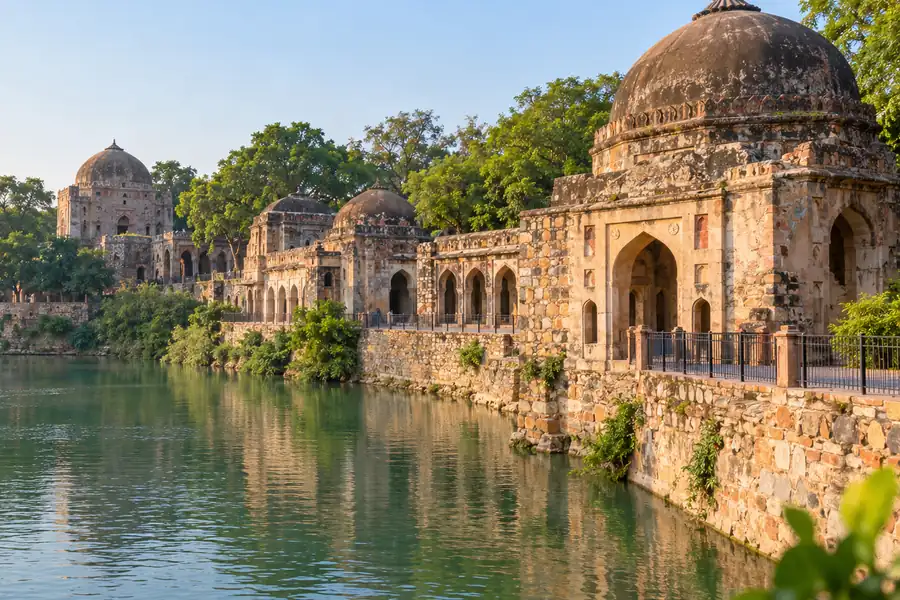
Further south, Hauz Khas Village combines a 14th-century Delhi Sultanate water reservoir with contemporary art galleries and boutique cafes. Built by Alauddin Khalji to supply water to the medieval city of Siri, the surrounding complex contains the madrasa and stone tomb of Sultan Firoz Shah Tughlaq. Walking along the stepped stone pavilions overlooking the lake provides a tranquil retreat from urban traffic.
Just east of Lodhi Garden across Mathura Road, travelers can extend their afternoon toward Kalkaji and Nizamuddin Basti using our Lotus Temple and Nizamuddin Dargah qawwali guide for silent prayer hall hours and Thursday evening music.
Markets, Handlooms, and Street Shopping Bazaars
What are the best shopping bazaars in Delhi for regional crafts and textiles? Delhi offers exceptional craft markets ranging from the state artisan stalls at Dilli Haat INA to the lively textile bargains of Janpath and Sarojini Nagar.
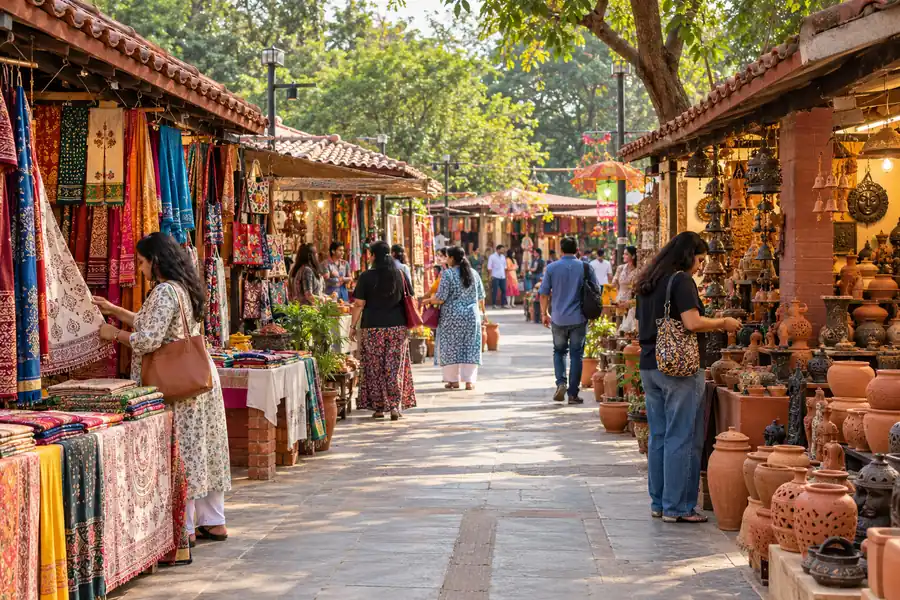
Dilli Haat, located directly opposite the INA Metro Station, functions as an open-air village crafts market operated by Delhi Tourism. Artisan families from across India rotate through sixty thatched stalls on a fortnightly schedule, selling Kashmiri pashmina shawls, Madhubani paintings, Odisha handlooms, and Saharanpur wood carvings. The food court serves regional culinary specialties, including Sikkimese momos, Rajasthani dal baati churma, and Bengali fish cutlets.
For upscale retail and book browsing, Khan Market features indie fashion boutiques and heritage bookshops like Bahrisons. Travelers hunting for export clothing bargains frequent Sarojini Nagar and Janpath markets for affordable garments.
When exploring Central Delhi, state emporiums along Baba Kharak Singh Marg offer regional handicrafts. Certified authenticity and fixed prices make these stalls reliable for silk sarees and brass metalwork.
Delhi Culinary Trail: Street Food to Fine Dining
What dishes define the historic and modern culinary identity of Delhi? Delhi’s cuisine reflects a confluence of medieval Mughal imperial banquets, Punjabi refugee innovations after 1947, and diverse street-vendor traditions from across the northern plains.
In Old Delhi, the historic Mughal food tradition centers on slow-cooked stews like mutton nihari simmered overnight with aromatic spices, succulent seekh kebabs grilled over charcoal coals, and fragrant shahi biryani. Along Gali Paranthe Wali, historic vendors shallow-fry stuffed unleavened flatbreads filled with spiced potatoes, crushed cauliflower, or dried fruits, served alongside sweet tamarind chutney and pumpkin mash.
In Central and South Delhi, Punjabi culinary culture shapes classic dining. Moti Mahal in Daryaganj pioneered modern butter chicken and tandoori poultry by roasting meats in clay ovens and coating them in tomato gravies.
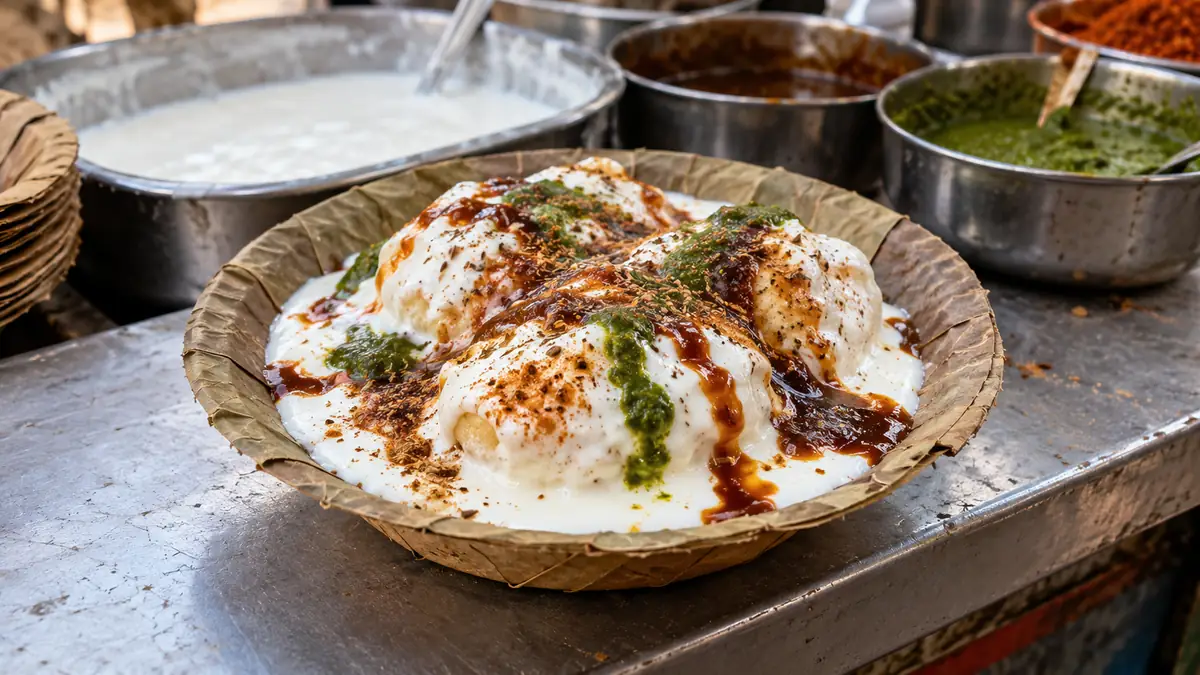
Street-corner vendors across Connaught Place, Lajpat Nagar, and Karol Bagh serve savory delights. Popular staples include steaming plates of chole bhature, crispy aloo tikki, and saffron kulfi falooda.
Recommended 3-Day Delhi Discovery Itinerary
How should a first-time visitor structure a three-day sightseeing itinerary in Delhi? A balanced three-day itinerary covers Old Delhi on day one, Lutyens’ administrative circles and Mughal monuments on day two, and spiritual landmarks with shopping bazaars on day three.
As the northern apex of the famous Golden Triangle India Itinerary route breakdown, Delhi sets the cultural context before travelers journey southwest toward Agra and Jaipur.
| Day & Focus | Morning (8:30 AM – 12:30 PM) | Afternoon (1:00 PM – 4:30 PM) | Evening (5:00 PM – 8:30 PM) |
|---|---|---|---|
| Day 1: Old Delhi & Mughal Splendor | Red Fort interior tour, Chandni Chowk cycle rickshaw ride | Jama Masjid minaret climb, lunch at Matia Mahal | Khari Baoli spice viewpoints, Connaught Place colonnade walk |
| Day 2: Gardens & Imperial Axis | Lodhi Garden walk, Humayun’s Tomb and Sunder Nursery | Lunch at Khan Market, National Museum galleries | Stroll along Kartavya Path to view India Gate and Rashtrapati Bhavan |
| Day 3: South Delhi & Crafts | Qutub Minar complex, Mehrauli Archaeological Park | Hauz Khas Village lakeside ruins, Lotus Temple | Artisan craft browsing and regional dining at Dilli Haat INA |
Practical Logistics: Metro Navigation, Airport Transit, and Best Season
When is the best season to plan a journey to Delhi? The ideal window to visit Delhi is from October through March, when autumn breeze and crisp winter weather create comfortable outdoor sightseeing conditions according to the Delhi Tourism Official Best Season Portal.
Mid-winter temperatures in December and January average between 8°C at night and 20°C in the afternoon, though morning fog can occasionally delay early train departures. The summer months from April to June bring intense heat with daytime temperatures frequently exceeding 42°C, making midday sightseeing taxing. The monsoon season from July through September brings heavy rainfall and high humidity.
| Transit Service | Key Route & Terminals | Fare / Pricing Structure | Useful Visitor Tip |
|---|---|---|---|
| Delhi Metro Network | 390 km system spanning 12 lines | ₹10 to ₹60 based on distance | Purchase a 1-day or 3-day Tourist Card at any customer counter |
| Airport Express Line | IGI Airport (T3) to New Delhi Railway Station | ₹60 single journey (19-minute travel time) | Direct check-in facilities available for select domestic flights |
| Auto-Rickshaws & Cabs | Citywide street coverage and app hailing | Metered CNG rates or app-based pricing | App cabs avoid fare negotiation in crowded transit hubs |
| National Rail Express | NDLS, Old Delhi, and Nizamuddin junctions | Variable based on class and destination | Connects onward to major national destinations and circuits |
Navigating Delhi is remarkably efficient on the metro. Visitors can plan direct routes using the Delhi Metro Rail Corporation Network Map to transfer between lines without exiting ticketing barriers. Purchasing an unlimited 1-day or 3-day Tourist Card at any customer care counter eliminates the need to buy individual tokens for each journey.
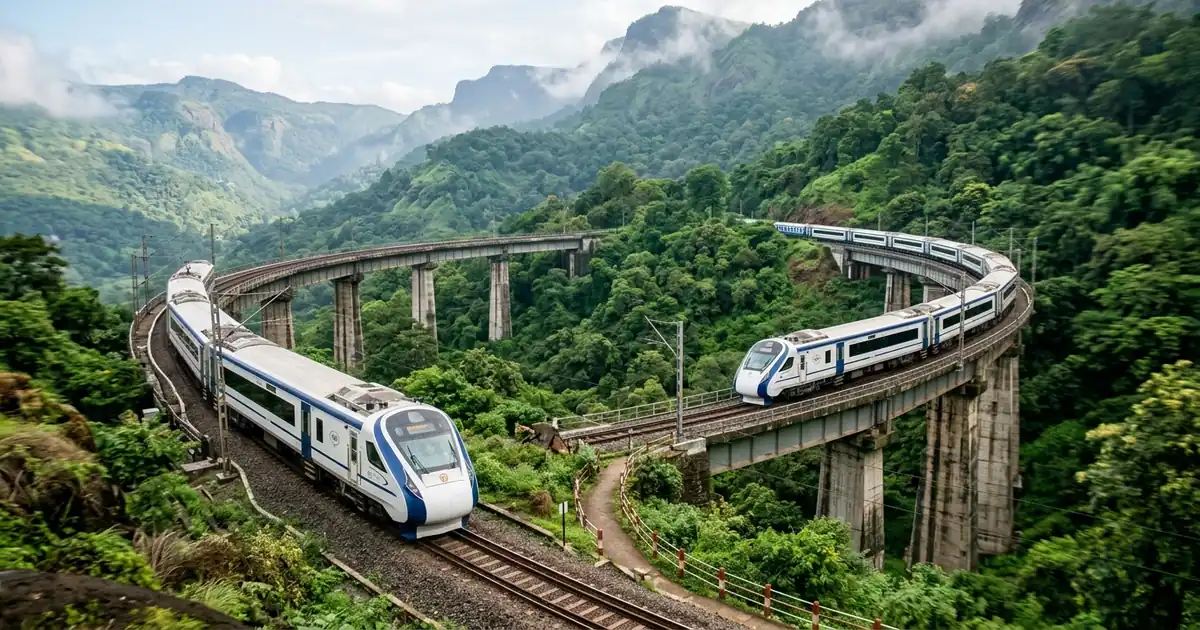
For travelers continuing their national exploration to other major destinations, Delhi’s railway terminals offer high-speed connectivity. Travelers can review operational schedules on Vande Bharat Express routes linking New Delhi to Varanasi, Katra, Dehradun, and Amritsar.
Frequently Asked Questions About Visiting Delhi
How many days are enough to tour Delhi thoroughly?
Three full days allow travelers to explore the primary UNESCO World Heritage monuments, walk through Old Delhi’s markets, and visit key cultural museums. Visitors with four to five days can easily incorporate day excursions to nearby heritage towns or explore south Delhi’s lesser-known medieval ruins.
Is the Delhi Metro convenient for international tourists?
The Delhi Metro is exceptionally clean, air-conditioned, reliable, and equipped with clear bilingual signage in English and Hindi at every station. Station staff at Airport Express and major junction stations assist travelers with purchasing rechargeable smart cards or tourist day passes.
Which three monuments in Delhi are UNESCO World Heritage Sites?
The three designated UNESCO World Heritage Sites in Delhi are Qutub Minar, Humayun’s Tomb, and the Red Fort complex. Each site represents a different architectural zenith spanning Sultanate and Mughal royal dynasties.
What is the most scenic area for evening walks in Delhi?
The open lawns surrounding India Gate and Kartavya Path provide brightly illuminated architectural views and refreshing evening breezes. Alternatively, the manicured pathways of Sunder Nursery and Lodhi Garden offer peaceful garden strolls among restored historical stone tombs.
What clothing is appropriate when visiting religious sites in Delhi?
Visitors should wear modest attire covering shoulders and knees when entering temples, mosques, gurdwaras, and churches across the city. Gurdwaras and mosques require visitors to cover their heads with a scarf or handkerchief and remove footwear before stepping into prayer compounds.