Akshardham Temple Delhi Guide: Timings, Water Show, Metro & Entry Rules
Plan your visit to Swaminarayan Akshardham Temple in Delhi. Guide to musical fountain timings, ticket prices, exhibitions, metro access, and locker rules.
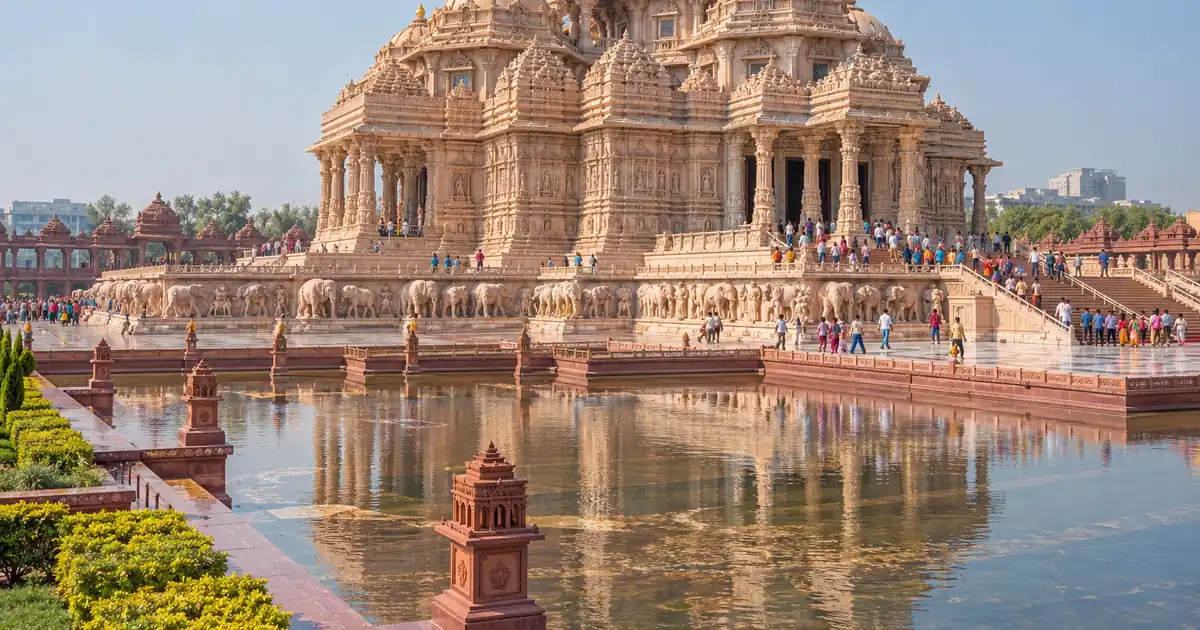
Swaminarayan Akshardham stands on the eastern banks of the Yamuna River in New Delhi, spanning an expansive 100-acre spiritual and cultural campus. Consecrated in November 2005 by Pramukh Swami Maharaj, the spiritual head of the Bochasanwasi Akshar Purushottam Swaminarayan Sanstha (BAPS), this magnificent Hindu sanctuary displays the timeless heritage, spiritual wisdom, and traditional architecture of ancient India.
Crafted entirely from pink Rajasthani sandstone and Italian Carrara marble without structural steel or iron support, the complex draws millions of domestic and international visitors each year. Beyond its intricately sculpted central monument featured in our planning a visit to Delhi, Akshardham features immersive thematic exhibitions, a 12-minute indoor heritage boat ride, vast thematic gardens, and the renowned Sahaj Anand musical water fountain show.
Akshardham Delhi Visitor Advisory
- Weekly Holiday: The complex is strictly closed on Mondays. Plan your visit Tuesday through Sunday.
- Entry Timings: Gates open at 9:30 AM; last entry to the complex is at 6:30 PM. Exhibitions close at 8:00 PM.
- Admission Charges: Entry to the main temple monument and gardens is free. Thematic exhibitions and the evening water show require separate tickets.
- Strict Security & Locker Policy: Mobile phones, cameras, smartwatches, power banks, USB drives, tobacco, and large bags are strictly prohibited inside. Free secure cloakrooms operate outside the security gate.
- Nearest Metro Station: Akshardham Metro Station on the Delhi Metro Blue Line sits just 350 meters from the entry plaza.
Architecture and Sculptural Highlights of the Mandir
The central Akshardham Mandir rises 141 feet high, spans 316 feet wide, and extends 356 feet in length. Designed in accordance with traditional Vastu Shastra and Pancharatra Shastra principles, the monument contains 234 ornate carved stone pillars, nine intricately sculpted domes, and 20 quadrangle spires (shikharas).
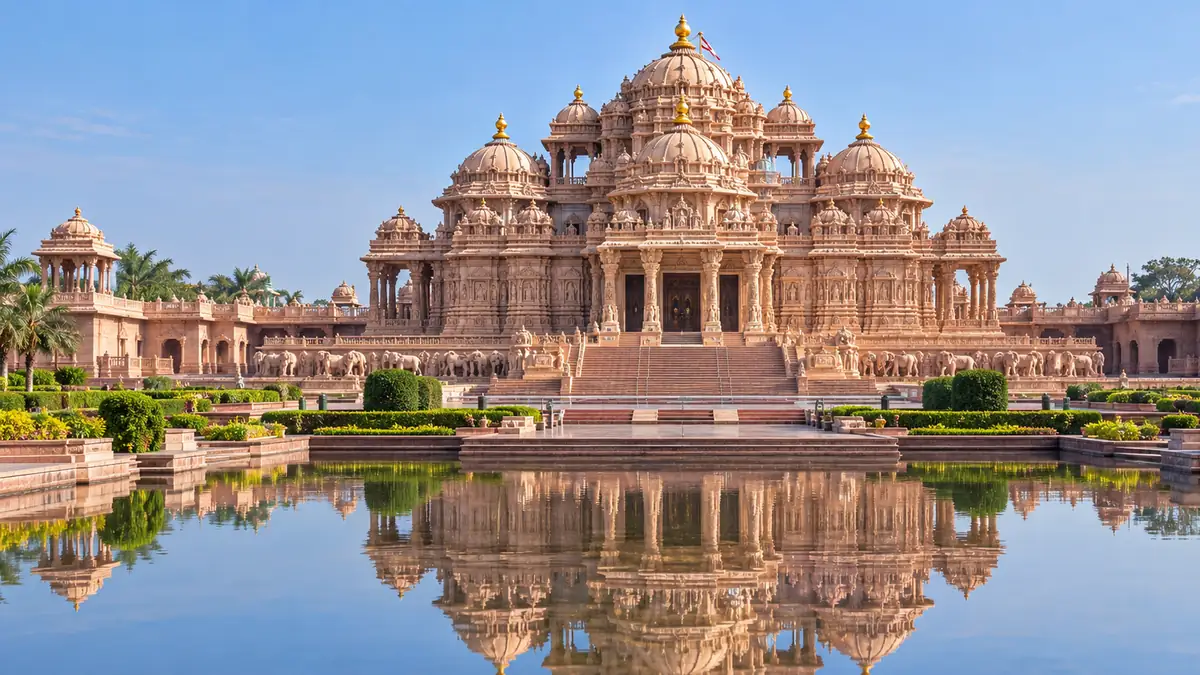
Over 7,000 master artisans and thousands of dedicated volunteers spent five years hand-carving the stone blocks in Rajasthan before assembling them on site. Travelers interested in classical Indian stone craftsmanship can compare these modern sandstone domes with the medieval riverbank architecture featured in our Dakshineswar Kali and Belur Math guide.
The Gajendra Pith (Elephant Plinth)
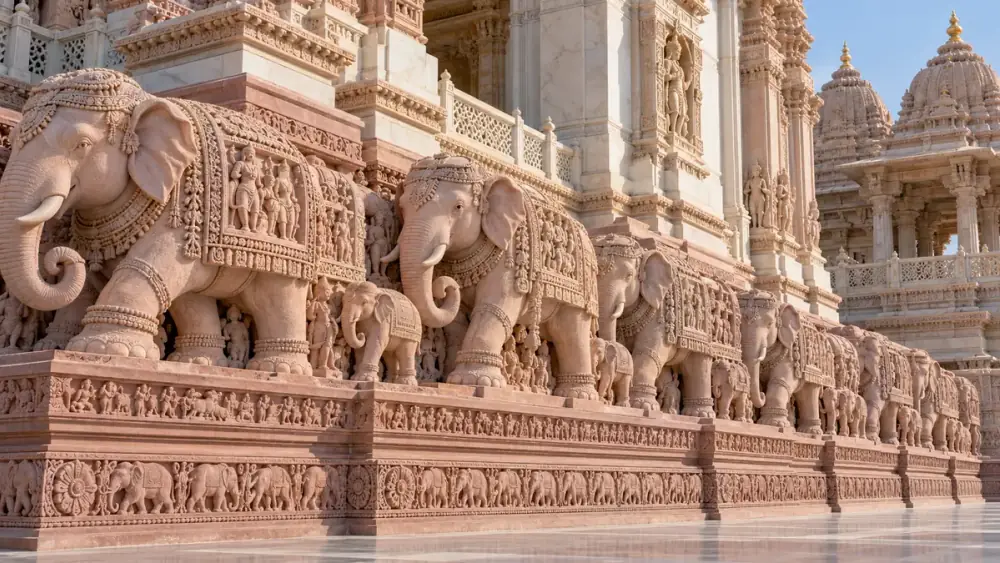
Encircling the outer base of the central monument is the monumental Gajendra Pith, a massive carved plinth paying homage to the elephant in Indian culture and spiritual folklore. The stone frieze measures 1,070 feet in length and features 148 life-sized elephant carvings weighing a combined 3,000 tons.
The detailed reliefs depict elephants coexisting harmoniously with humans, illustrating episodes from the Panchatantra, royal processions, and sacred forest legends.
The Inner Sanctum (Garbhagriha)
Inside the high-domed sanctum rests an 11-foot-tall gilded bronze statue of Bhagwan Swaminarayan (1781–1830 CE), seated beneath a grand carved canopy. The central murti is surrounded by figures of his monastic successors: Gunatitanand Swami, Bhagatji Maharaj, Shastriji Maharaj, Yogiji Maharaj, and Pramukh Swami Maharaj.
Radiating from the central hall are specialized shrines honoring prominent Hindu deities, including Sita-Rama, Radha-Krishna, Shiva-Parvati, and Lakshmi-Narayana, each adorned in finely chiseled Italian marble.
Thematic Exhibitions and Ticket Pricing
Akshardham houses three major indoor exhibitions that bring Vedic culture, moral values, and spiritual history alive through animatronics, immersive theater, and scenic boat travel.
| Exhibition Hall | Format & Technology | Thematic Focus | Experience Duration |
|---|---|---|---|
| Sahajanand Darshan (Hall of Values) | Audio-animatronics, robotic figures, and 3D dioramas | Universal human values: truth, compassion, family harmony, and non-violence | 50 minutes |
| Neelkanth Darshan | Large-format giant screen theater (IMAX style) | The epic seven-year barefoot pilgrimage of teenage yogi Neelkanth Varni across India | 45 minutes |
| Sanskruti Darshan | Indoor robotic boat ride through 10,000 years of heritage | Contributions of ancient Indian sages, universities of Takshashila, and surgical innovations | 15 minutes |
Exhibition and Water Show Ticket Prices
| Ticket Category | Adult (12 years and above) | Senior Citizen (60 years and above) | Child (4 to 11 years) | Infant (Below 4 years) |
|---|---|---|---|---|
| Exhibition Combo (All 3 Halls) | ₹250 | ₹200 | ₹150 | Free |
| Sahaj Anand Water Show | ₹100 | ₹100 | ₹70 | Free |
Tickets must be purchased at the exhibition ticket counters inside the campus before 6:00 PM. Online advance booking is not available for regular day tickets.
Sahaj Anand Water Show: Timings and Experience
The Sahaj Anand Water Show is a spectacular 24-minute open-air multimedia presentation conducted at the Yagnapurush Kund, a massive stepped stepwell (kund) containing 2,870 stone steps and 108 small shrines.
As dusk settles over Delhi, the kund transforms into an open amphitheater seating over 2,000 spectators. The show utilizes multicolored lasers, underwater water jets shooting up to 80 feet, flame projectors, video projections onto water mist screens, and surround sound to narrate an inspiring episode from the Kena Upanishad regarding the young sage Nachiketa and the nature of divine power.
- Show Timings: The first show commences immediately after sunset, typically between 7:00 PM and 7:45 PM depending on the season.
- Second Show: On high-traffic weekends and public holidays, a second show is scheduled at 8:15 PM.
- Seating Advice: Secure your seat on the stone steps at least 30 minutes before the show begins for optimal center-stage views.
Strict Security, Electronic Lockers & Prohibited Items
To protect the complex, the Delhi Police and BAPS administration maintain strict airport-grade security cordons. Similar to access protocols detailed in our Delhi UNESCO Monuments highlights and timings, every visitor must undergo personal metal detector scans and manual bag checks at the entrance gates.
Prohibited Items (Strictly Banned Beyond Security)
- Mobile phones, smartphones, and tablets
- Cameras, camcorders, and tripods
- Smartwatches with recording or calling capabilities
- USB flash drives, power banks, and electronic earphones
- Bags, backpacks, and large luggage
- Food items, chewing gum, and tobacco products
- Lighters, matchboxes, and pocket knives
Cloakroom and Locker Facilities
The temple provides a free, highly organized cloakroom counter directly outside the security checkposts:
- Visitors place prohibited items into numbered personal pouches.
- The attendant captures a digital photograph of the visitor and issues a barcoded plastic receipt card.
- Upon concluding your visit, present the token at the exit counter to retrieve your belongings. Allow 15 to 20 minutes for locker retrieval during peak evening departure rushes.
Dress Code and Campus Conduct
As a sacred place of worship, Akshardham enforces a modest, respectful dress code for all visitors regardless of nationality:
- Upper Body: Must cover shoulders, chest, upper arms, and midriff. Sleeveless tops, tank tops, and low-cut shirts are strictly not permitted.
- Lower Body: Pants, trousers, skirts, or dhotis must fall below knee length. Short skirts, shorts, and torn denim are prohibited.
- Sarong Service: Visitors whose attire falls short of the guidelines must rent a free cotton wrapper (sarong) at the entry checkpost against a refundable ₹100 security deposit.
- Footwear Policy: Shoes, sandals, and socks are permitted in the open stone plazas and garden pathways, but must be deposited at free footwear counters before stepping onto the raised marble mandir plinth.
Travelers comparing sanctuary protocols across the capital can review the silent prayer hall photography ban and head-covering etiquette in our Lotus Temple and Nizamuddin Dargah guide.
How to Reach Akshardham Temple Delhi
Located in East Delhi along National Highway 24 (Noida Link Road), Akshardham is exceptionally accessible from every part of the National Capital Region (NCR).
| Transport Mode | Station or Terminal | Travel Directions to Temple Gate |
|---|---|---|
| By Delhi Metro | Akshardham Metro Station (Blue Line) | Located 350 meters from Gate 1. Follow the covered pedestrian footbridge directly to the security plaza (5-minute walk). |
| From New Delhi Railway Station (NDLS) | Yellow Line to Rajiv Chowk, interchange to Blue Line | 30 minutes total journey time via Delhi Metro. Train bookings can be managed through the Indian Railways IRCTC portal. |
| From Old Delhi (Chandni Chowk) | Yellow Line to Rajiv Chowk, interchange to Blue Line | 35 minutes metro ride. Pair your morning street food explorations with an afternoon visit to Akshardham. |
| From Indira Gandhi International Airport (DEL) | Airport Express Line to New Delhi, interchange to Yellow Line then Blue Line | Approximately 60 to 75 minutes travel time. Pre-paid airport cabs take 45 minutes along NH48. |
Metro commuters can confirm train frequencies and line interchanges via the official Delhi Metro Rail Corporation portal.
Thematic Gardens and Cultural Grounds
The vast grounds surrounding the central monument offer peaceful walking avenues lined with brass sculptures, fountains, and educational pavilions:
Bharat Upavan (Garden of India)
This sprawling 60-acre landscaped lawn contains 67 bronze sculptures honoring prominent figures from Indian history, including national freedom fighters, warrior kings, philosophers, scientists, and classical poets such as Aryabhata, Sushruta, Swami Vivekananda, and Mahatma Gandhi.
Yogi Hriday Kamal (Lotus Garden)
Shaped like an eight-petaled lotus flower, this sunken garden features stone flagstones inscribed with philosophical reflections from world thinkers, religious leaders, and philosophers, inspiring universal goodwill and mutual respect.
Narayan Sarovar (Sacred Water Body)
Enclosing the central Mandir on three sides is the Narayan Sarovar lake, containing consecrated waters collected from 151 holy rivers and lakes across India, including the Ganga, Yamuna, Godavari, and Manasarovar.
Visitors interested in broader northern travel circuits can connect their Delhi itinerary with royal palace fortresses outlined in our guide to the best places to visit in Jaipur.
Premvati Food Court: Vegetarian Dining on Campus
The Premvati Food Court operates within the temple grounds, offering fresh, hygienic, and affordable vegetarian refreshments prepared according to pure Satvik guidelines without onions or garlic.
- Dining Options: The food court features multiple self-service counters serving North Indian thalis, dosas, samosas, chole bhature, pizzas, sandwiches, ice cream, and traditional Indian sweets.
- Hygiene & Standards: Stainless steel kitchen preparation with automated dishwashing systems ensures high food safety.
- Operating Hours: Open from 11:00 AM to 9:30 PM.
- Payment Method: Visitors purchase a rechargeable food card at the entrance counter, which is swiped at individual food stalls; unspent credit is refunded upon leaving.
Culinary enthusiasts planning an authentic street food itinerary in the capital can compare these temple sweets with historic vendors detailed in our essential local snacks and stalls in Old Delhi Street Food.
Best Season & Practical Touring Strategy
Delhi experiences significant seasonal temperature shifts throughout the year, making smart scheduling vital for a comfortable visit:
- Optimal Season: October through March provides clear, crisp days with temperatures between 12°C and 25°C, making the extensive outdoor stone plazas comfortable for walking.
- Summer Precautions: May and June bring intense daytime heat exceeding 40°C. If visiting during summer, arrive by 4:00 PM to explore the indoor air-conditioned exhibition halls first, moving outdoors after sunset.
- Suggested 5-Hour Itinerary:
- 2:30 PM – 3:00 PM: Arrive via metro, clear security, and deposit phones in cloakrooms.
- 3:00 PM – 4:00 PM: Explore the central Mandir, Gajendra Pith carvings, and inner sanctum.
- 4:00 PM – 6:15 PM: Experience the three thematic exhibition halls (Values, Giant Screen Film, and Boat Ride).
- 6:15 PM – 7:00 PM: Refreshments at Premvati Food Court and stroll through Bharat Upavan.
- 7:00 PM – 8:00 PM: Attend the Sahaj Anand water laser show at Yagnapurush Kund.
- 8:15 PM: Retrieve belongings from lockers and depart via Akshardham Metro Station.
Travelers exploring religious monuments across northern and western India can contrast this Swaminarayan sanctuary with coastal pilgrimage destinations described in our Dwarkadhish Temple and Bet Dwarka guide. Official heritage advisories and cultural event schedules can be reviewed via the Incredible India Delhi portal.
Frequently Asked Questions About Akshardham Temple Delhi
Is entry to Akshardham Temple in Delhi free?
Yes. Admission to the campus grounds, gardens, and the central Akshardham Mandir is completely free for all visitors. Separate tickets are required only for the three thematic exhibition halls (₹250 for adults) and the evening Sahaj Anand musical fountain show (₹100 for adults).
Can I carry my mobile phone or handbag inside Akshardham?
No. Mobile phones, electronic accessories, cameras, and bags of any size are strictly prohibited inside the complex. Visitors must deposit these items at the free cloakroom counter outside the entrance security checkpost before passing through metal detectors.
Is Akshardham Temple open on Mondays?
No. The temple complex remains completely closed to visitors every Monday for routine maintenance. The gates welcome visitors from Tuesday through Sunday throughout the year.
What is the nearest metro station to Akshardham Temple?
Akshardham Metro Station on the Delhi Metro Blue Line is located just 350 meters from the temple entrance gates. A paved, covered pedestrian pathway connects the metro exit directly to the visitor security plaza.
How much time is needed to explore Akshardham Delhi completely?
A comprehensive visit covering the central sanctum, the three exhibition halls, the indoor boat ride, and the evening musical water show requires approximately 4 to 5 hours, fitting naturally into broader national travel plans outlined in our guide to the best places to visit in India.