Lalbaugcha Raja Darshan Guide: Mumbai Ganesh Chaturthi
Plan your Lalbaugcha Raja darshan during Mumbai Ganesh Chaturthi. Discover Charan Sparsh vs Mukh darshan lines, timings, pandal route, and visarjan tips.
Every autumn during the Hindu month of Bhadrapada, the coastal metropolis of Mumbai pauses to celebrate its most beloved spiritual icon. Planning a pilgrimage requires mastering an authoritative lalbaugcha raja darshan guide ganesh chaturthi travelers can rely on, as millions of devotees navigate the narrow streets of Parel to seek the blessings of the sovereign wish-fulfiller.
The atmosphere in central Mumbai during Ganeshotsav is electric with faith, rhythmic dhol-tasha drumming, and the fragrance of fresh marigolds and camphor. While hundreds of neighborhood pandals decorate the metropolis, none commands the cultural stature or devotional intensity of the deity enthroned inside Lalbaug market.
Lalbaugcha Raja Darshan Essentials
- Operational Schedule: Operates twenty-four hours continuously from morning on Ganesh Chaturthi until morning on Anant Chaturdashi.
- Dual Queue Choice: Choose between Mukh Darshan (1 to 2 hours, viewing from twenty feet) or Navsachi Charan Sparsh (12 to 24 hours, touching the feet).
- Zero Commercial Passes: The mandal does not sell VIP tickets; beware of fraudulent online touts offering expedited entry passes.
- Best Darshan Window: Arrive between 2:00 AM and 5:00 AM on weekdays to avoid peak day queues and humid afternoon temperatures.
- Grand Immersion: Culminates on Anant Chaturdashi with a 24-hour street procession covering sixteen kilometers to Girgaon Chowpatty beach.
The King of Lalbaug: History, Faith, and the Kambli Sculptors
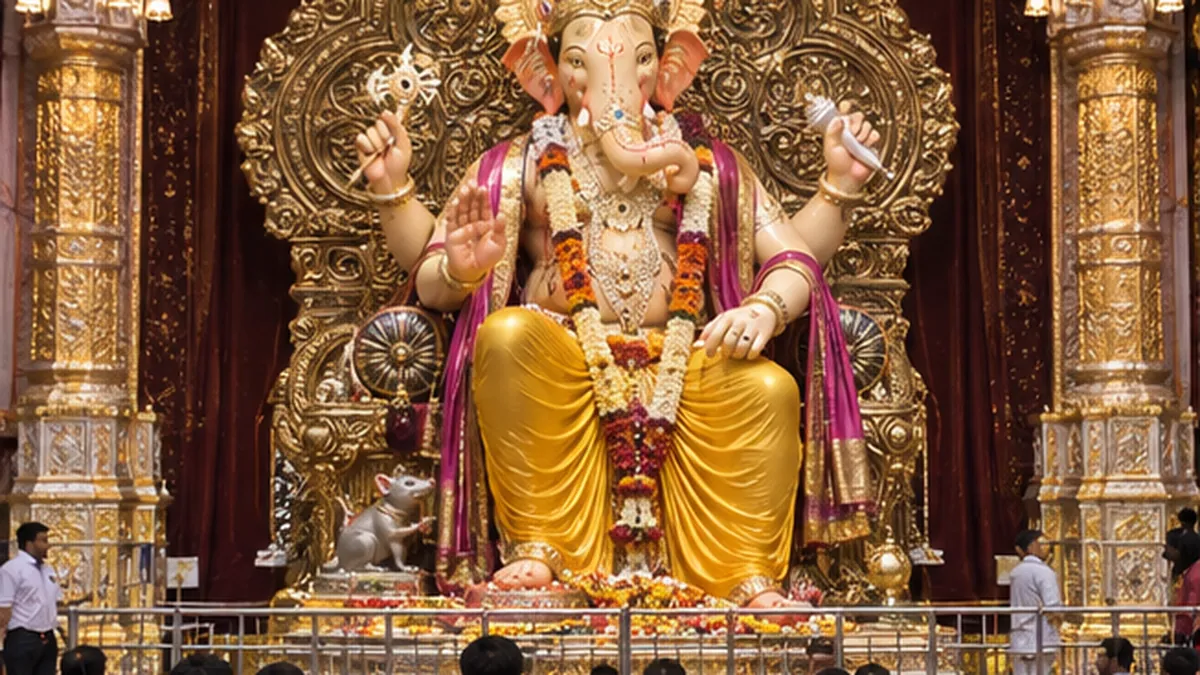
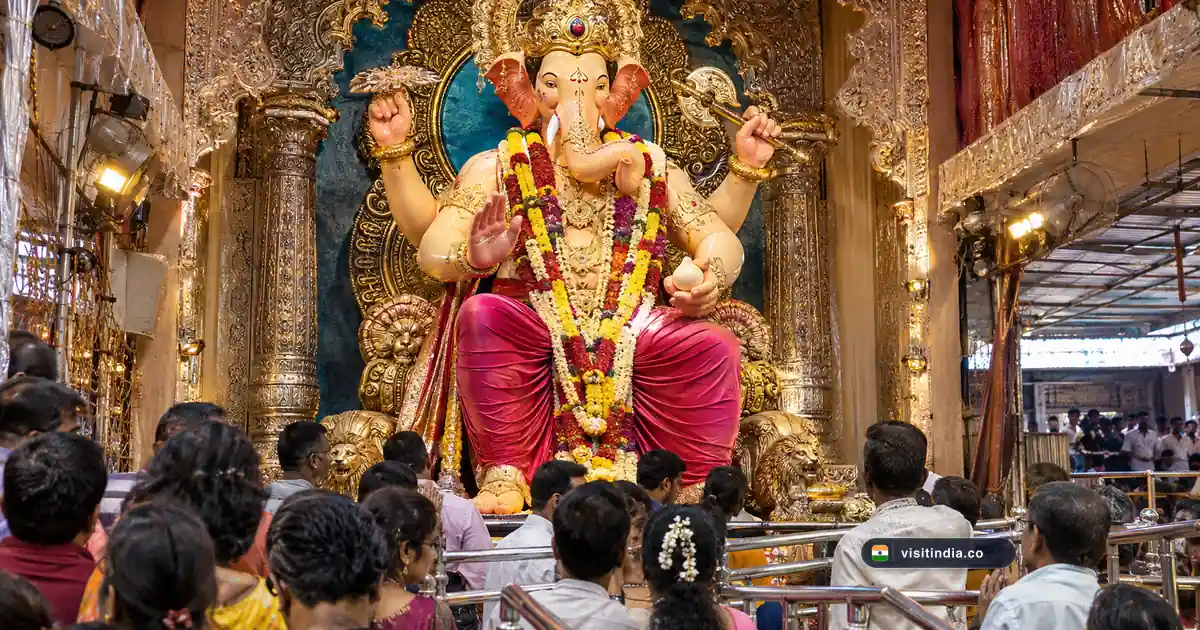
Lalbaugcha Raja is Mumbai’s most iconic community Ganesha idol, founded in 1934 by local millworkers and fishermen at Lalbaug Market. Revered as Navsachi Ganpati (the wish-fulfiller), the 14-foot clay idol has been sculpted exclusively by the Kambli family since 1935, maintaining an unbroken artistic lineage.
The tradition began during the height of the Indian independence movement, when public festivals served as vital platforms for community solidarity. Devotees believe that prayers made before this deity are answered without exception, drawing pilgrims from across the Maharashtra cultural calendar and worldwide diaspora.
The 1934 Market Pledge and Millworker Roots
In 1932, the British authorities shut down the Peru Chawl market. Local Koli fishermen and traders vowed to Lord Ganesha that if granted permanent market land, they would install an idol annually, establishing the festival in 1934.
With the intervention of local leaders, municipal authorities allocated permanent market plots in Lalbaug in 1934. Fulfilling their solemn vow, the market vendors installed their first Ganesh idol dressed in traditional fisherman attire.
The neighborhood was then the industrial heart of Mumbai textile mills, populated by hardworking textile laborers who adopted the deity as their guardian protector. State spiritual schedules are archived on the Shree Siddhivinayak Temple Trust Daily Portal.
The Kambli Arts Signature Aesthetic
Kambli Arts has sculpted the idol across four generations since 1935. The distinctive design features lifelike seated postures, benevolent almond eyes, and patent-protected proportions crafted from eco-friendly clay.
Ratnakar Kambli Senior sculpted the idol in 1935, establishing the iconic visual posture that remains virtually identical today. Unlike experimental modern pandals that change themes annually, Lalbaugcha Raja preserves its signature features: towering fourteen-foot height, a regal seated throne, and hands outstretched in reassuring Abhaya mudra. Today, Santosh Kambli continues the family legacy, crafting the idol inside their historic workshop in Chinchpokli.
| Idol Specification | Technical Detail | Cultural & Spiritual Significance |
|---|---|---|
| Sculpting Workshop | Kambli Arts, Chinchpokli | Continuous unbroken family custody since 1935 |
| Idol Height | Exactly 14 feet (4.26 meters) | Proportions designed for sightlines across vast halls |
| Primary Material | Shadu mati (natural clay) | Environmentally conscious dissolution during sea immersion |
| The Throne (Sinhasan) | Redesigned annually | Reflects ancient Indian royal palaces and classical architecture |
| Spiritual Title | Navsachi Ganpati | Popular belief in granting vows and fulfilling deep wishes |
Navsachi vs Mukh Darshan: Choosing the Right Queue
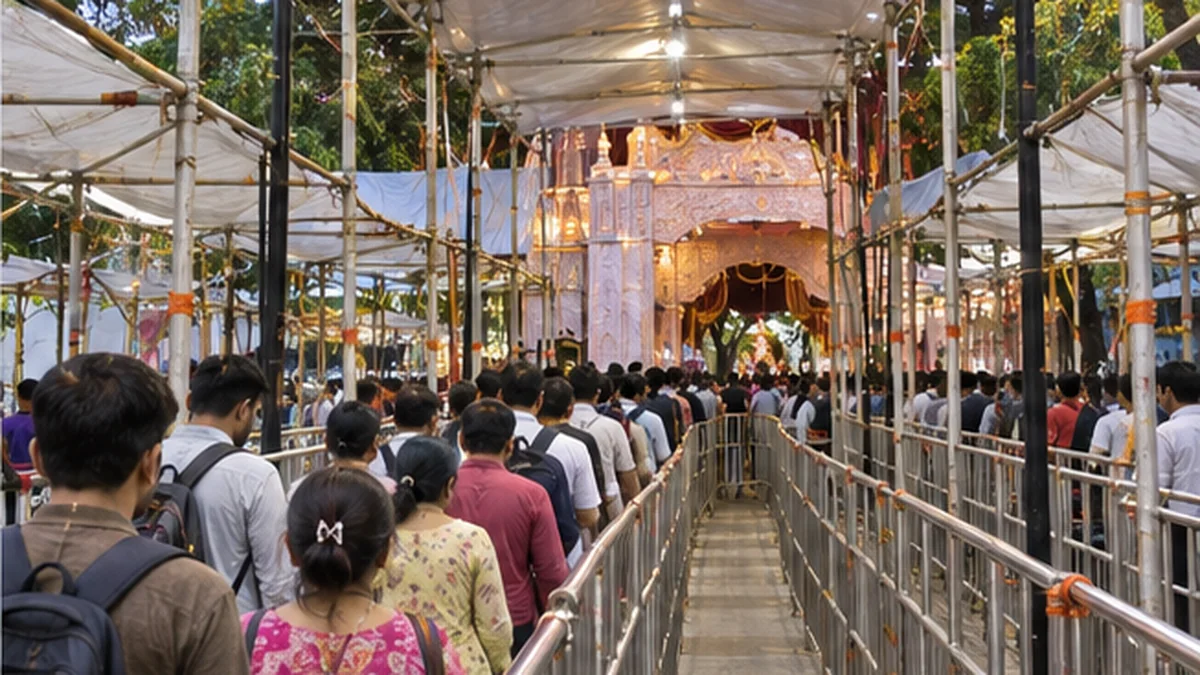
Lalbaugcha Raja features two strictly separated queues. The Navsachi line allows devotees to touch the idol’s feet (Charan Sparsh) but requires 12 to 24 hours of waiting. The Mukh Darshan line offers visual viewing from 20 feet away in just 1 to 2 hours.
Selecting your queue before arriving in Lalbaug is the most critical decision of your trip. The two lines enter from different points, follow separate barricaded paths, and cater to entirely different pilgrim needs.
The Navsachi (Charan Sparsh) Endurance Line
The Navsachi line is for pilgrims fulfilling solemn vows (navas). Devotees wind through miles of multi-tiered barricades and queue shelters, enduring 12 to 24 hours to climb the sanctum stage and place their forehead directly on Ganesha’s feet.
The physical demands of this line cannot be overstated. Pilgrims stand shoulder to shoulder through snaking metal pens that stretch through surrounding school grounds and covered streets. Volunteers maintain order, providing continuous water and snacks. When devotees finally climb the stage steps, mandal sevaks allow each person approximately two seconds to bow and touch the deity feet before guiding them onward to maintain queue flow.
The Mukh Darshan (General Viewing) Fast Route
The Mukh Darshan line bypasses the feet-touching stage, leading pilgrims through an elevated bridge structure directly opposite the idol. Spectators view the deity from twenty feet away, completing the walk in one to two hours.
This route is strongly recommended for first-time visitors, families with young children, senior citizens, and tourists on limited schedules. The line moves at a brisk walking pace across an elevated ramp directly facing the throne. Devotees receive an unobstructed view of the deity face, offer mental prayers, take photographs, and exit into the prasadam distribution pavilion without physical exhaustion.
| Queue Feature | Navsachi (Charan Sparsh) Line | Mukh Darshan (General) Line |
|---|---|---|
| Average Wait Time | 12 to 24 continuous hours | 1 to 2.5 hours on average |
| Physical Access | Touch forehead and hands to Ganesha feet | Visual sighting from elevated viewing bridge |
| Recommended For | Devotees fulfilling life vows or major pledges | First-time visitors, families, and senior citizens |
| Queue Path | Through complex covered pens and schoolyards | Direct barricaded lane along main highway |
| Stage Duration | Approximately 2 to 3 seconds at feet | Continuous walking flow past main facade |
Lalbaugcha Raja Timings, Daily Schedule, and 24-Hour Access
The Lalbaugcha Raja pandal operates 24 hours daily from 6:00 AM on Ganesh Chaturthi morning until 6:00 AM on Anant Chaturdashi. Morning aarti takes place at 12:30 PM and evening aarti at 8:30 PM. Public darshan is completely free with zero official commercial VIP tickets.
The continuous operation allows over one million pilgrims to cycle through the complex each day. Real-time updates and live streaming links are hosted on the Lalbaugcha Raja Mandal Official Portal.
Pro Tip
The quietest window for Mukh Darshan is between 2:30 AM and 5:00 AM on Monday through Thursday. Crowds thin significantly before the morning suburban train services resume, allowing you to complete the viewing in under an hour.
Round-the-Clock Darshan Schedule and Break Slots
Lines move continuously day and night except for brief 15-minute pauses during the 12:30 PM and 8:30 PM aartis. The best window for shorter queues is between 2:00 AM and 5:00 AM on weekdays.
During the afternoon and evening aartis, the queue gates pause temporarily to allow priests to perform camphor rituals, chant Sanskrit stotras, and offer the grand bhog. Devotees standing inside the hall during these moments witness traditional blowing of conch shells and cymbal clashing. Pilgrims coordinating spiritual tours across the city often combine this night viewing with a morning visit to the Siddhivinayak Temple Mumbai guide.
The VIP Pass Reality: Avoiding Online Ticket Scams
The Lalbaugcha Raja Mandal never sells VIP passes online or at physical counters. Special protocol badges are issued strictly to mandal volunteers, emergency personnel, and invited state dignitaries. Avoid touts selling fraudulent entry passes.
Every year, unauthorized websites and social media accounts claim to sell special VIP darshan wristbands for ₹2,000 to ₹5,000. Police and mandal organizers confirm that these tickets are counterfeit. Anyone presenting fraudulent passes is turned away by police barricades at the entrance. Public darshan remains completely free for every citizen, reflecting the egalitarian founding principles of the festival.
Reaching the Pandal: Railhead Exits, Walking Routes, and Transit
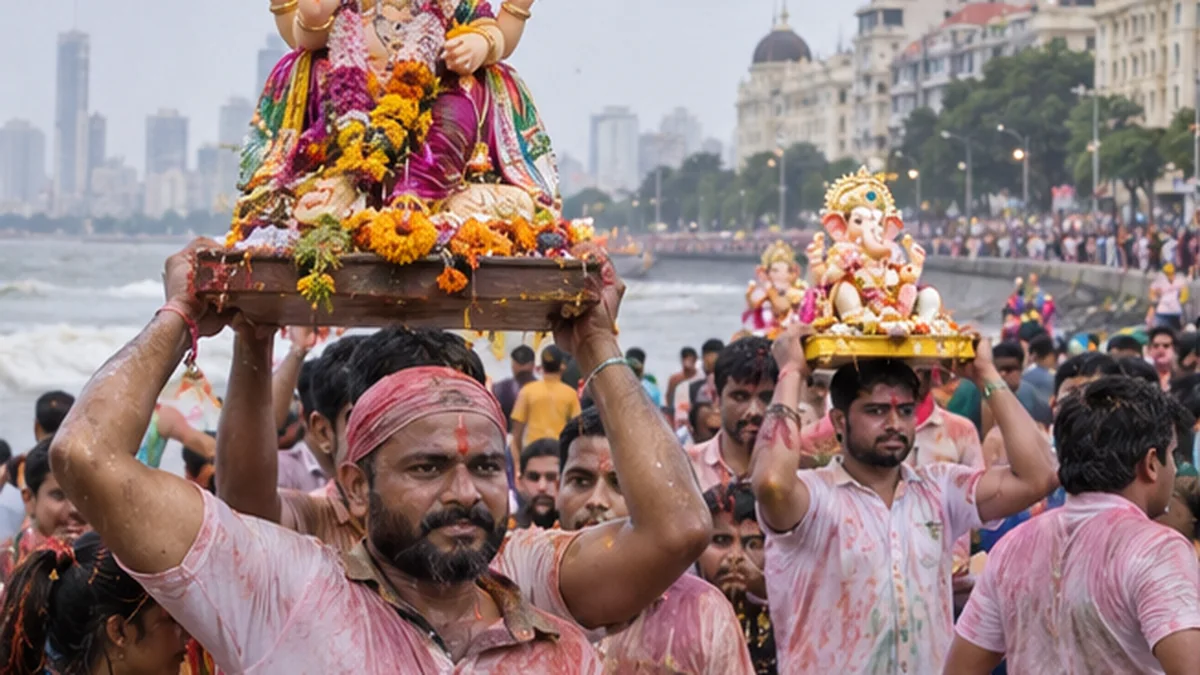
The nearest railway stations to Lalbaugcha Raja are Currey Road and Chinchpokli on the Central Line, both situated within a 1-kilometer walk. Western Line travelers should disembark at Lower Parel station, located 1.5 kilometers west.
Using Mumbai suburban rail network is the fastest and most practical way to reach Lalbaug. Road traffic in central Mumbai slows to a crawl during the festival, and finding car parking within three kilometers of the pandal is virtually impossible due to police traffic cordons.
Central Line Arrivals via Currey Road and Chinchpokli
From Currey Road station, exit east toward Dr. Babasaheb Ambedkar Road and follow the pedestrian barricades into Lalbaug market. Chinchpokli station offers direct access toward the tail end of the Mukh Darshan line.
Both stations feature dedicated police guidance booths during the festival. Simply follow the heavy crowd flow leaving the platforms. If you plan to join the Mukh Darshan line, exiting at Chinchpokli station positions you closer to the start of the general queue barricades along Dattaram Lad Marg. Visitors arriving from South Mumbai can combine this suburban trip with an early morning excursion from our Elephanta Caves ferry guide.
Western Line and Metro Connectivity
Arrive at Lower Parel station on the Western Line and take an east-bound foot overbridge toward Parel. Alternatively, take Mumbai Metro Line 3 to Worli or Acharya Atre Chowk station and take an auto-rickshaw to Lalbaug flyover.
From Lower Parel station, walking through the Currey Road bridge takes roughly fifteen minutes. Taxis and auto-rickshaws cannot enter the immediate market lanes, so drivers will drop you along the periphery of Dr. Babasaheb Ambedkar Road. From there, well-marked pedestrian corridors steer crowds safely into the appropriate lines.
| Suburban Station | Train Line | Walking Distance to Pandal | Best For |
|---|---|---|---|
| Currey Road | Central Line | 800 meters (10 min walk) | Direct access to Navsachi line entry gates |
| Chinchpokli | Central Line | 750 meters (10 min walk) | Direct access to Mukh Darshan queue tail |
| Lower Parel | Western Line | 1.5 kilometers (18 min walk) | Passengers traveling from Churchgate or Borivali |
| Dadar Junction | Central & Western | 2.5 kilometers (Taxi/Auto) | Long-distance intercity train passengers |
Surviving the Queue: Water, Security, Food, and Medical Stations
Surviving the long queue requires wearing slip-on footwear, staying hydrated via mandal water stations, keeping mobile phones securely zipped, and carrying small packets of dry fruits. Dedicated medical aid posts operate every 200 meters along the covered sheds.
Devotional stamina is central to the Lalbaug experience. Knowing what amenities exist inside the queue pens helps you pack smartly without carrying unnecessary weight.
Mandal Amenities: Filtered Water, Biscuits, and Fans
Volunteers distribute free drinking water packets, tea, and biscuits round the clock inside the queue holding areas. Large industrial fans and overhead misting nozzles maintain air circulation beneath the tin canopies.
The Lalbaugcha Raja Sarvajanik Ganeshotsav Mandal manages logistics with military precision. Dozens of volunteer squads restock drinking water and glucose drinks every fifteen minutes. In addition, mobile sanitation teams continually sweep the holding floors. If you feel dizzy or dehydrated, alert any yellow-badged volunteer to receive immediate medical triage at adjacent paramedic tents.
Banned Items, Cloakrooms, and Personal Safety
Heavy backpacks, power banks, and sharp objects are prohibited inside the sanctum area. Use the official shoe counters before entering the final hall, or carry your shoes inside a compact cloth tote bag.
Metal detectors and police baggage scanners inspect every devotee before entering the final prayer hall. Avoid carrying bulky bags or expensive jewelry into the crowd. After completing your darshan, you can re-energize with local Maharashtrian snacks detailed in our Mumbai street food guide, located outside the market perimeter.
Anant Chaturdashi Visarjan: The 16-Kilometer Route to Girgaon Chowpatty
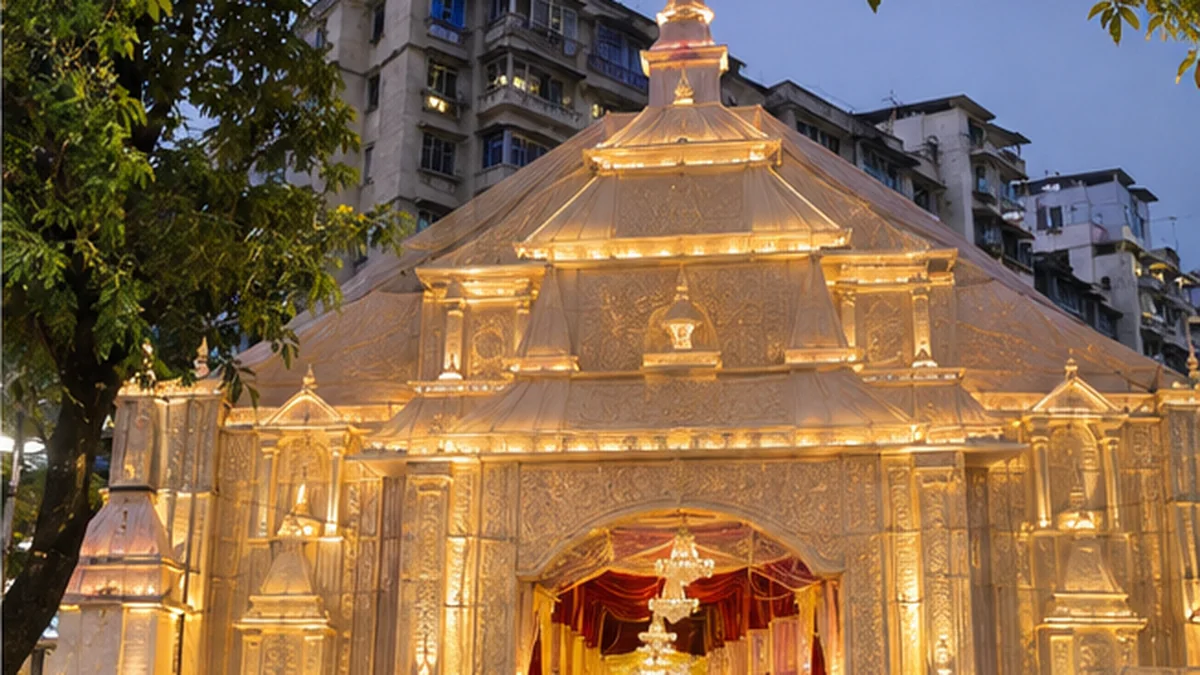
On Anant Chaturdashi, Lalbaugcha Raja departs the pandal at 10:00 AM on a decorated hydraulic chariot. The immersion procession covers 16 kilometers over 24 continuous hours through Byculla and Girgaon, culminating in deep-sea immersion at Girgaon Chowpatty.
The immersion of Lalbaugcha Raja is widely regarded as one of the largest single-day human gatherings in Asia. Millions of devotees dance, shower gulal (pink powder), and chant slogans bidding farewell to their king until next year.
Important
Road traffic across South Mumbai is completely suspended along Dr. Babasaheb Ambedkar Road and Sardar Vallabhbhai Patel Road on Anant Chaturdashi. Use the Central or Western suburban railway lines to travel between venues.
The 24-Hour Procession Through South Mumbai
The procession moves along Dr. Babasaheb Ambedkar Road, Byculla, Nagpada, Two Tanks, and Opera House amid showers of gulal. Devotees line every balcony and flyover to catch a final glimpse of the deity.
Mounted atop an open hydraulic cart pulled by hundreds of volunteers, the idol moves at a celebratory pace. Brass bands and dhol-tasha pathaks compete in energetic musical tributes. Local Muslim, Christian, and Parsi residents set up water and sherbet stalls along Byculla and Nagpada, exemplifying Mumbai unique interfaith communal harmony. Devotees traveling onwards to western Maharashtra temples can connect this tour with our 5 Jyotirlingas of Maharashtra circuit.
Deep-Sea Immersion at Girgaon Chowpatty
Arriving at Girgaon Chowpatty beach around dawn the following morning, the idol is transferred onto a specialized motorized raft. Lifeguards and police escort the raft into deep Arabian Sea waters for the ceremonial immersion.
As the sun rises over Marine Drive, the motorized raft carries Lalbaugcha Raja beyond the shallow surf line. Priests conduct the final aarti aboard the raft, broadcast across shore loudspeakers. As the idol slowly descends into the ocean depths, thousands of devotees cheer with folded hands. State tourism details and cultural guidelines are cataloged by the Ministry of Tourism Incredible India Portal.
Frequently Asked Questions About Lalbaugcha Raja
What is the difference between Mukh Darshan and Charan Sparsh at Lalbaugcha Raja?
Mukh Darshan allows devotees to view Lord Ganesha face from a distance of twenty feet with a wait time of one to two hours. Charan Sparsh involves ascending the sanctum stage to touch the deity feet, requiring twelve to twenty-four hours in line.
How many hours does it take for Lalbaugcha Raja darshan?
Mukh Darshan typically takes one to three hours depending on the day of the festival. In contrast, the Charan Sparsh Navsachi line requires between twelve and twenty-four hours of continuous queuing.
Is Lalbaugcha Raja open 24 hours during Ganesh Chaturthi?
Yes, the pandal remains open twenty-four hours daily from Ganesh Chaturthi morning until the morning of Anant Chaturdashi. The lines move continuously with short pauses during morning and evening aartis.
Which is the nearest railway station to Lalbaugcha Raja?
Currey Road and Chinchpokli stations on the Central Line are the closest suburban railheads, both located within one kilometer of the pandal. Lower Parel on the Western Line is approximately one and a half kilometers away.
Where does Lalbaugcha Raja visarjan take place?
The immersion takes place in the Arabian Sea at Girgaon Chowpatty in South Mumbai. The procession leaves Lalbaug on Anant Chaturdashi morning and reaches the beach the following morning after a twenty-four-hour journey.
Can you buy VIP passes for Lalbaugcha Raja online?
No, the Lalbaugcha Raja Mandal does not sell VIP passes online or at any physical ticketing counter. Any website claiming to sell VIP passes is fraudulent, as general darshan is completely free to all devotees.