Ambedkar Park Lucknow: Nearest Metro, Timings & Ticket Price
Visit Ambedkar Memorial Park in Gomti Nagar, Lucknow with verified 11 AM-9 PM timings, ₹20 entry ticket price, nearest Lucknow Metro station, and architecture guide.
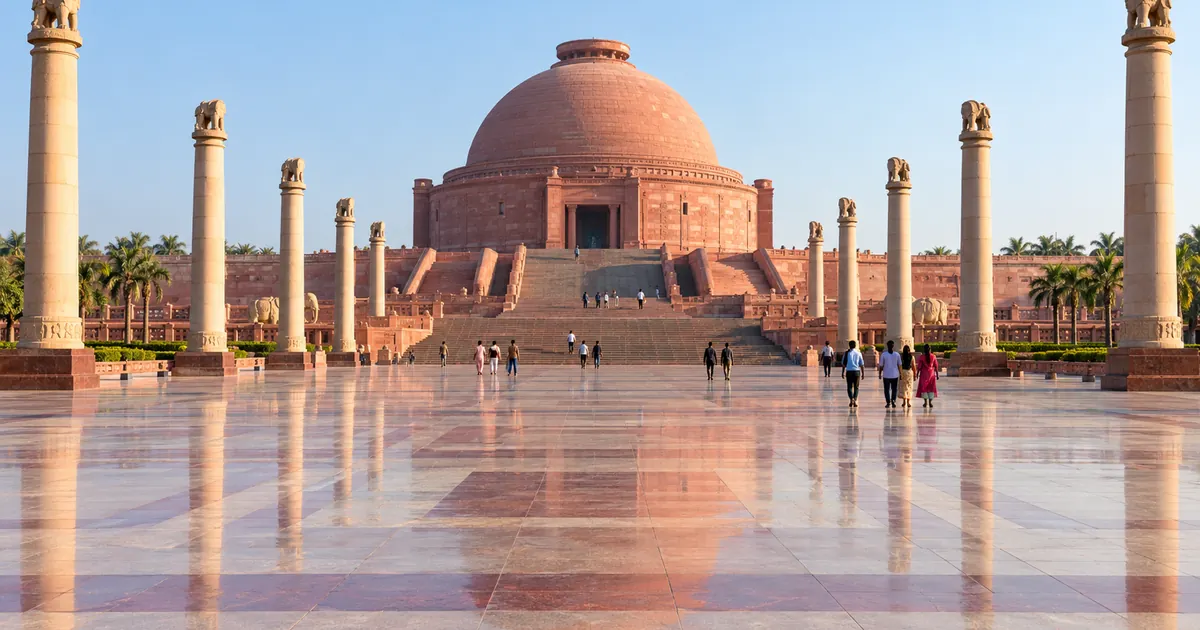
Ambedkar Memorial Park spans 107 acres along the banks of the Gomti River in Gomti Nagar, Lucknow. Constructed from pink-red Rajasthan and Chunar sandstone, this monumental civic complex honors Dr. Bhimrao Ramji Ambedkar alongside pioneers of Indian social reform through soaring colonnades, reflection pools, and an iconic 112-foot stupa.
Planning a smooth visit requires accurate knowledge of Lucknow Metro connectivity, daily gate and floodlight hours, entry ticket fees, and the sprawling layout of its ceremonial avenues. This visitor guide covers nearest metro stations, timings, ticket pricing, architectural monuments, and nearby Lucknow attractions.
Visitor Essentials
- Opening Hours: Open daily from 11:00 AM to 9:00 PM, with gate ticket counters closing between 8:30 PM and 8:45 PM.
- Entry Fee: Standard visitor admission is INR 20 to INR 25 per person; on-site parking costs INR 10 for bikes, INR 20 for cars, and INR 50 for buses.
- Nearest Metro: Lekhraj Market and Sachivalaya Metro Stations on the Lucknow Metro Red Line sit roughly 4 to 5 km away.
- Monument Scale: Features a 112-foot central stupa, 62 carved sandstone elephants, Pratibimb Sthal reflection canal, and Samajik Parivartan Sangrahalay museum.
- Best Hour to Visit: Enter around 4:45 PM to walk the sandstone esplanade at sunset and watch evening floodlights turn on after dark.
Nearest Metro Station to Ambedkar Park Lucknow and Transit Guide
Lekhraj Market Metro Station and Sachivalaya Metro Station on the Lucknow Metro Red Line are the closest operational stations to Ambedkar Memorial Park, each located roughly 4 to 5 km from the Gomti Nagar complex. From either exit, auto-rickshaws, shared e-rickshaws, and app cabs reach the park gates in 12 to 18 minutes.
Gomti Nagar currently sits east of the active North-South Red Line corridor, meaning metro riders transfer briefly by road along Lohia Path or Shaheed Path. Passengers arriving from Old Lucknow or central hotels can review route maps on the Uttar Pradesh Metro Rail Corporation Lucknow Metro portal before boarding, and pair evening walks with an authentic Lucknow Galouti kabab and Chowk food trail in Chowk or Hazratganj.
- From Charbagh Railway Station (via Red Line Metro): Board the northbound train toward Munshi Pulia, exit at Sachivalaya (4.5 km away) or Lekhraj Market (5 km away), and take a shared e-rickshaw (INR 20 to INR 30) or private auto (INR 80 to INR 120) to Vipul Khand.
- From Gomti Nagar Railway Station: The closest rail terminal stands just 2 km northeast of Ambedkar Park, roughly a five-minute auto ride via Viraj Khand and Lohia Path.
- From Chaudhary Charan Singh Airport (LKO): Located 20 km southwest via Shaheed Path expressway, taking 30 to 40 minutes by app-based cab or airport taxi.
- On-Site Gated Parking: Designated visitor parking lots near the main entrance charge INR 10 for two-wheelers, INR 20 for cars, and INR 50 for tourist buses.
Red Line Metro Stations, Distances, and Last-Mile E-Rickshaw Fares
Choosing between Sachivalaya and Lekhraj Market Metro Stations depends on your direction of travel along the Lucknow Metro Red Line. Travelers coming from Hazratganj, Hussainganj, or CCS Airport usually exit at Sachivalaya Metro Station and follow Lohia Path straight east across the Gomti River bridge toward Marine Drive.
Commuters arriving from Indira Nagar or Munshi Pulia exit at Lekhraj Market Metro Station and head south via Bhootnath Market toward Lohia Park intersection. Shared e-rickshaws wait outside both metro staircases throughout operational hours until 9:30 PM.
Arrival by Railway Station, Airport, and On-Site Parking
Visitors arriving on outstation trains at Charbagh Railway Station or Lucknow Junction can either ride the metro from Charbagh underground station or hire a direct cab covering the 9 km route in 20 to 25 minutes. Gomti Nagar Railway Station serves a growing number of northern express trains and sits almost walking distance from the park’s eastern flank.
Driving privately is straightforward along the wide six-lane Lohia Path boulevard bordering the riverfront. Parking receipts are issued at the guarded outer lot right next to the ticket counter plaza, keeping pedestrian entry clear of vehicular traffic.
Ambedkar Park Lucknow Timings, Closing Hours, and Entry Ticket Price
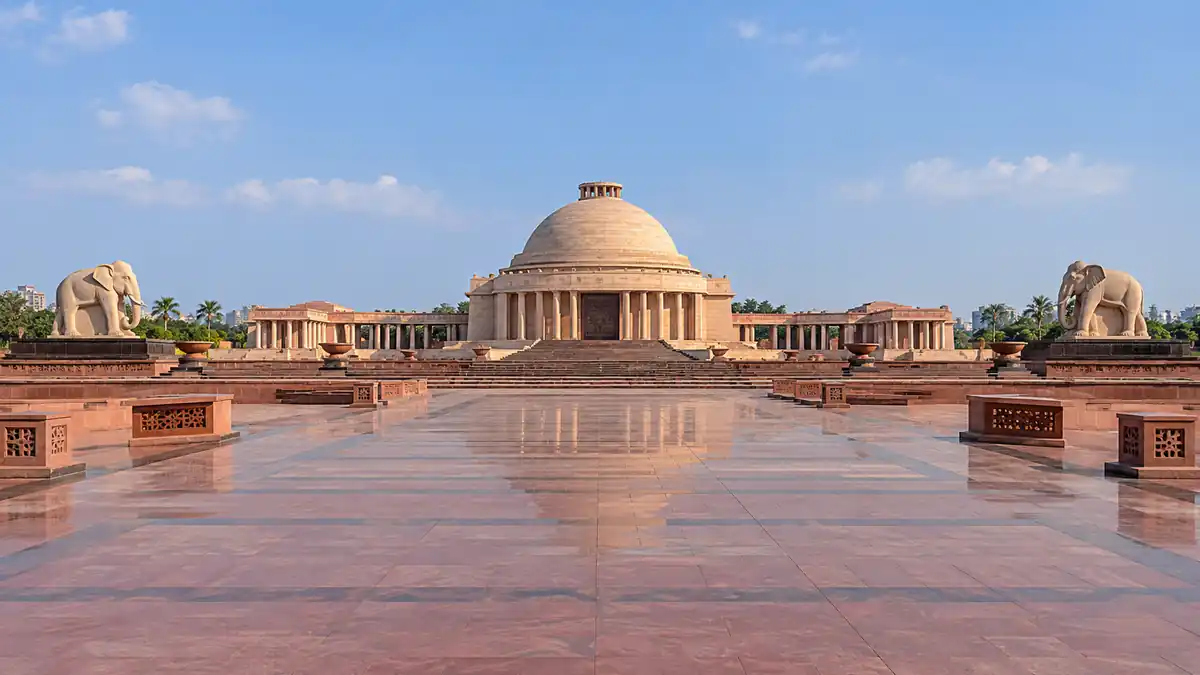
Ambedkar Memorial Park opens daily from 11:00 AM to 9:00 PM, including Sundays and most public holidays, with entry ticket counters closing between 8:30 PM and 8:45 PM. Standard admission costs INR 20 to INR 25 per visitor, making it one of Lucknow’s most accessible evening landmarks.
Because the 107-acre plaza sits completely open to the sky without heavy tree cover over the main sandstone terraces, timing your visit transforms the experience. Travelers exploring city celebrations featured in the Uttar Pradesh cultural festivals calendar or winter weekend itineraries find late afternoon through evening the most comfortable window.
- Daily Gate Schedule: 11:00 AM opening to 9:00 PM final exit whistle (counters stop issuing tickets around 8:30 PM).
- Admission Fee: INR 20 to INR 25 per adult visitor, purchased directly at physical gate booths with cash or UPI.
- Peak Illumination Hours: Decorative architectural floodlights switch on around dusk (5:45 PM to 6:30 PM depending on season) until closing at 9:00 PM.
- Prohibited Items: Outside food packets, polythene bags, drones, and commercial camera tripods are restricted at security bag checks.
Gate Counters, Evening Floodlights, and Best Visiting Hours
Entering around 4:45 PM allows roughly 45 minutes of warm golden-hour sunlight across the pink sandstone columns before evening illumination begins. As twilight settles over the Gomti riverfront, amber and warm-white floodlights highlight the central stupa arches, reflection canal fountains, and stone elephant rows.
Weekends and public holidays bring lively local families after 6:00 PM, while weekday mornings between 11:00 AM and 1:00 PM offer quiet architectural perspectives for photographers during cooler winter months.
Entry Rules, Footwear, and Photography Guidelines
Security personnel screen handbags at the main gate and prohibit outside eatables, tobacco, and single-use plastics to keep the pale sandstone clean. Carrying a sealed reusable water bottle is advised because shaded kiosks inside the 107-acre campus are widely spaced.
Handheld mobile phones and standard DSLR cameras are allowed freely across the outdoor esplanade, colonnades, and Pratibimb Sthal. Inside the inner bronze statue sanctuary of the Ambedkar Stupa, visitors must remove footwear and observe quiet decorum.
Pro Tip
Pack Sunglasses and Water: The expansive polished sandstone plaza reflects bright sunlight during daytime hours. Arrive after 4:30 PM for comfortable temperatures and golden-hour symmetry shots.
Architectural Highlights: 112-Foot Stupa, 62 Elephants, and Pratibimb Sthal
Covering 107 acres beside the Gomti River, Ambedkar Memorial Park is built almost exclusively from carved Rajasthan and Chunar pink-red sandstone, crowned by a 112-foot central stupa and an avenue of 62 colossal stone elephants. A symmetrical reflection canal at Pratibimb Sthal mirrors the main dome along the axial walkway.
Inspired by classical Buddhist stupa geometry and monumental Indian state plazas, the design relies on stone-on-stone interlocking masonry rather than exposed structural steel inside its primary dome. Visitors familiar with the red sandstone Mughal monuments in Agra will notice how Rajasthan sandstone quarries lend a warm rose-ochre glow under both midday sun and evening floodlights.
| Monument / Feature | Architectural Description | Key Highlight & Scale |
|---|---|---|
| Ambedkar Stupa | Central domed monument | 112 feet height with four monumental arches |
| Dr. Ambedkar Statue | Seated bronze sculpture | 18 feet tall inside the central stupa chamber |
| Elephant Gallery | Open ceremonial avenue | 62 colossal stone elephants carved from sandstone |
| Pratibimb Sthal | Symmetrical reflection canal | Mirrors the central stupa with fountains |
| Samajik Parivartan Sangrahalay | Memorial museum and library | Chronicles social justice movements in India |
| Prerna Sthal | Open-air colonnade memorial | Statues of Jyotirao Phule and Narayana Guru |
| Visitor Parking Facility | Guarded on-site vehicle lot | ₹20 for cars, ₹10 for bikes, ₹50 for buses |
Ambedkar Stupa and the 18-Foot Bronze Statue
Rising 112 feet above a raised square podium, the octagonal Ambedkar Stupa anchors the entire visual axis of the park. Four soaring vaulted gateways face the cardinal directions, leading visitors into a vast marble-floored inner rotunda lit softly from overhead dome apertures.
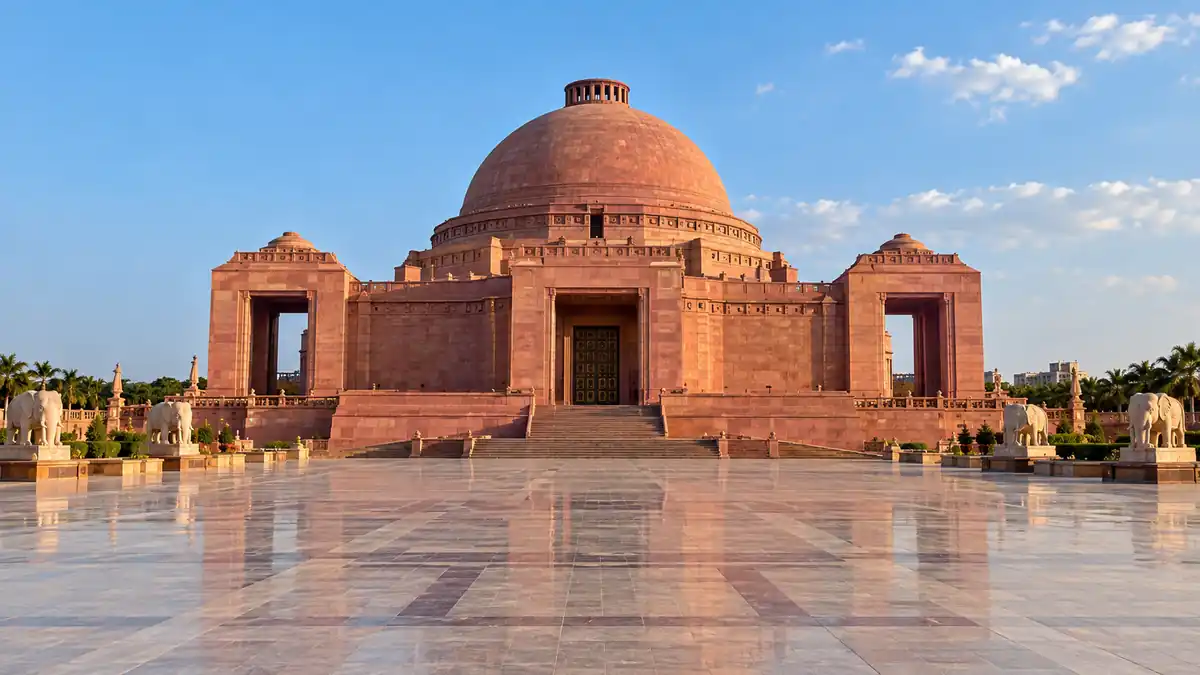
Inside the central chamber sits an 18-foot bronze statue of Dr. B.R. Ambedkar holding the Constitution of India, surrounded by relief panels depicting key milestones from his education, social struggle, and leadership of the Constituent Assembly.
Elephant Gallery, Pratibimb Sthal, and Prerna Sthal Colonnades
Flanking the grand axial esplanade stands the Elephant Gallery, lined by 62 monumental carved sandstone elephants facing inward in disciplined symmetry. Each sculpture stands atop a square stone plinth, creating one of the most photographed stone avenues in northern India.
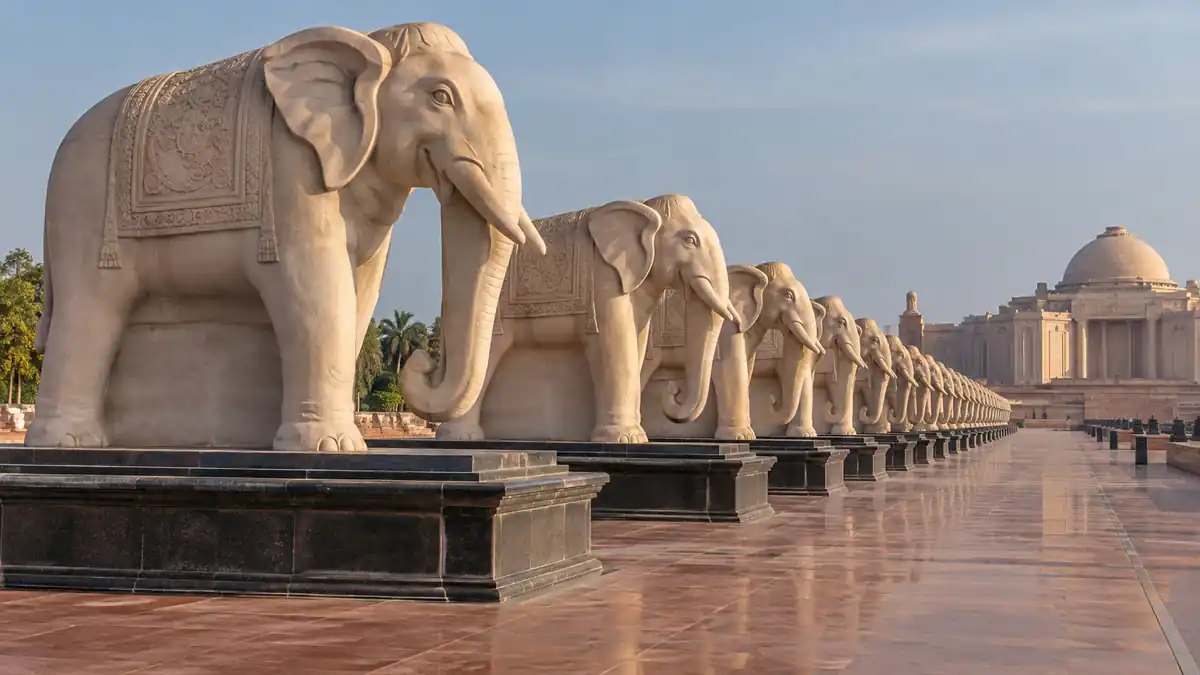
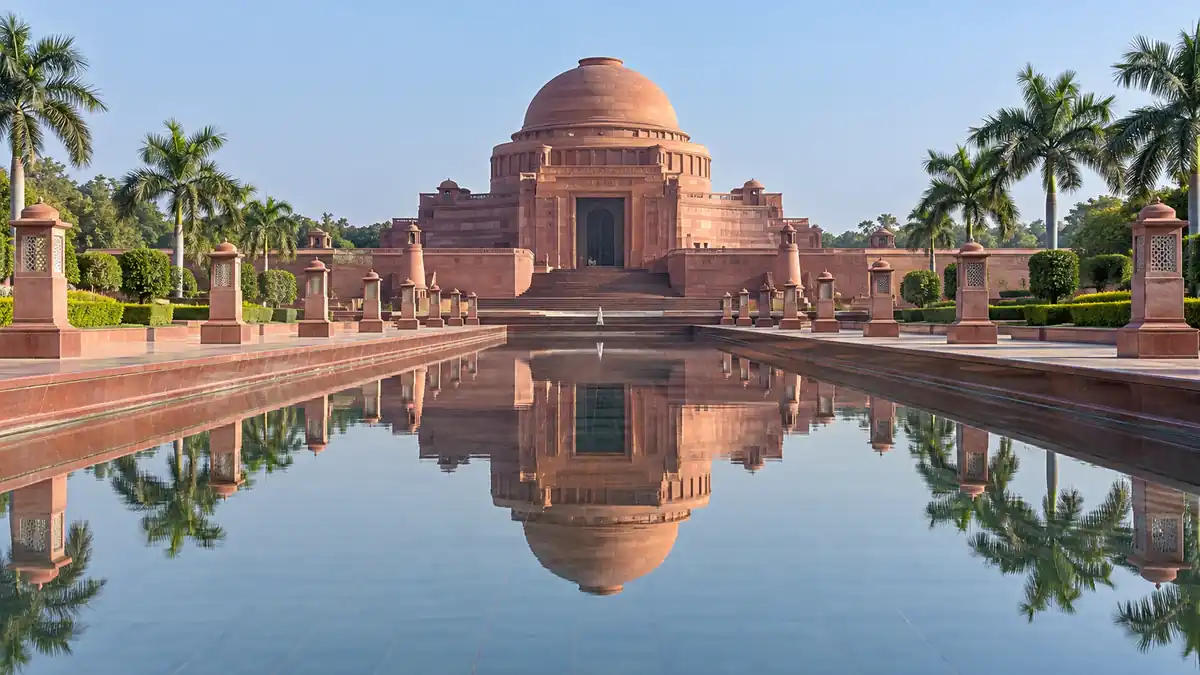
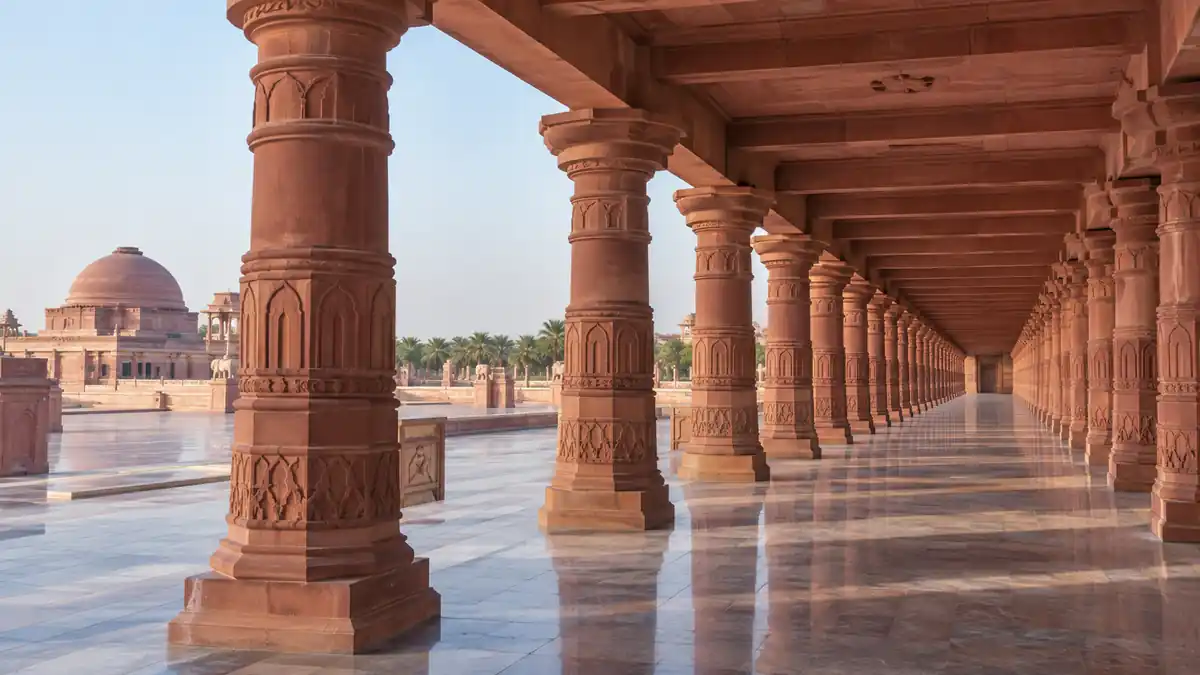
Beyond the elephant avenue, Pratibimb Sthal channels shallow water through stepped sandstone basins and fountains that cast mirrored reflections of the stupa dome. Parallel to the main axis, Prerna Sthal frames towering colonnaded halls honoring social thinkers including Mahatma Jyotirao Phule, Sree Narayana Guru, Birsa Munda, and Chhatrapati Shahuji Maharaj.
History, Construction Scale, and Samajik Parivartan Sangrahalay
Inaugurated in 2008 as part of the Dr. Bhimrao Ambedkar Samajik Parivartan Prateek Sthal project under the Uttar Pradesh government, the park commemorates Indian constitutionalism and anti-caste reform movements. Its twin-domed Samajik Parivartan Sangrahalay museum houses statues, historical murals, and a quiet study library.
Officially listed among modern civic landmarks on the Lucknow District Administration tourist places portal and the Uttar Pradesh Tourism Ambedkar Memorial Park guide, the campus evolved into one of Gomti Nagar’s defining urban spaces. Travelers planning broader city loops across the state’s historical and spiritual capitals can explore the Uttar Pradesh heritage and city travel guide for connecting itineraries.
Craftsmanship from Rajasthan Quarries and Chunar Stone
Thousands of stone artisans worked across several years cutting, dressing, and hand-carving pink-red sandstone transported from Bayana and Dholpur quarries in Rajasthan alongside buff stone from Chunar in Mirzapur. Thick load-bearing masonry walls keep the interior galleries naturally cooler than outdoor terraces even during spring afternoons.
Because the sprawling open geometry spans roughly one kilometer from entry gates to the far riverfront edge, wearing comfortable cushioned walking shoes makes exploring every wing effortless.
Samajik Parivartan Sangrahalay Museum Galleries
Inside the Samajik Parivartan Sangrahalay halls, marble-inlaid galleries display bronze statues and bilingual biographical plaques dedicated to Gautama Buddha, Sant Kabir Das, Sant Ravidas, Guru Ghasidas, and Dr. B.R. Ambedkar. Quiet reading rooms and archival displays provide historical context beyond the monumental outdoor sculptures.
Note
Museum Access Hours: The interior museum galleries and main stupa sanctum follow daytime and early evening staffing schedules, so enter before 7:30 PM if you want unhurried time inside both buildings.
Best Time to Visit and Combining Nearby Gomti Nagar & Old Lucknow Sights
October through March brings crisp 14 C to 26 C afternoons across Lucknow, making winter the ideal season for exploring the open 107-acre sandstone plaza. Visitors routinely combine an evening stop at Ambedkar Park with neighboring Gomti Riverfront Park, Janeshwar Mishra Park (4 km), or Old Lucknow Nawabi monuments in Chowk.
During peak summer from April to June, midday Lucknow temperatures frequently exceed 40 C and unshaded sandstone radiates intense heat. Scheduling Old Lucknow indoor heritage sites during morning hours and saving Ambedkar Park for after 5:30 PM balances comfort with optimal evening lighting.
Seasonal Heat Advisory for Unshaded Sandstone Plazas
Monsoon showers between July and September wash the pink sandstone to a rich terracotta hue and create dramatic cloud reflections across Pratibimb Sthal. Carry a compact umbrella during August afternoons, as open courtyards offer limited shelter between the entrance plaza and the central stupa.
Winter evenings in late December and January can drop near 8 C to 10 C along the open Gomti breeze corridor, so carry a light jacket when staying past 7:00 PM.
Half-Day Gomti Nagar and Lucknow Heritage Itinerary
Begin at 10:00 AM in Old Lucknow visiting Bara Imambara, Rumi Darwaza, and the Residency before enjoying lunch in Hazratganj or Chowk. Around 4:30 PM, drive or ride the Lucknow Metro east toward Gomti Nagar for sunset and evening floodlights at Ambedkar Memorial Park, concluding with a riverfront walk or dinner in nearby Gomti Nagar cafes.
Long-distance travelers heading southeast toward Prayagraj on the next leg of their state route can continue to Prayagraj riverside pilgrimage landmarks by express train or highway.
Frequently Asked Questions About Ambedkar Park Lucknow
Which is the nearest metro station to Ambedkar Park Lucknow?
Lekhraj Market Metro Station and Sachivalaya Metro Station on the Lucknow Metro Red Line are the closest stations to Ambedkar Memorial Park, each located 4 to 5 km away. Shared e-rickshaws and autos connect either station to Gomti Nagar in 12 to 18 minutes.
What are the opening and closing timings of Ambedkar Park Lucknow?
Ambedkar Memorial Park is open daily from 11:00 AM to 9:00 PM, including Sundays and most public holidays. Gate ticket counters usually close between 8:30 PM and 8:45 PM before evening clearance begins.
What is the entry ticket price for Ambedkar Park Lucknow?
The entry ticket price for Ambedkar Memorial Park is INR 20 to INR 25 per person at the main gate booths. On-site parking inside the complex costs INR 10 for two-wheelers, INR 20 for cars, and INR 50 for buses.
How many elephants are inside Ambedkar Park Lucknow?
The main Elephant Gallery avenue inside Ambedkar Memorial Park features 62 monumental carved sandstone elephants arranged symmetrically along the central promenade. Smaller decorative elephant motifs also appear across architectural brackets within the 107-acre complex.
What is the best time of day to visit Ambedkar Memorial Park?
The best time to enter Ambedkar Park is around 4:45 PM during winter months (October to March) or after 5:30 PM in summer. This timing avoids midday sandstone glare and captures both sunset light and the evening floodlight switch-on.
Is photography allowed inside Ambedkar Park Lucknow?
Handheld mobile and DSLR photography is permitted freely across the outdoor esplanade, Elephant Gallery, Pratibimb Sthal, and colonnades. Commercial camera tripods, drones, outside food, and plastic bags are restricted at security screening.