Lathmar Holi Barsana & Nandgaon: Dates, Traditions & Guide
Explore Lathmar Holi in Barsana and Nandgaon with official festival dates, rituals, Radha Rani Temple traditions, safety tips, and Braj Holi guide.
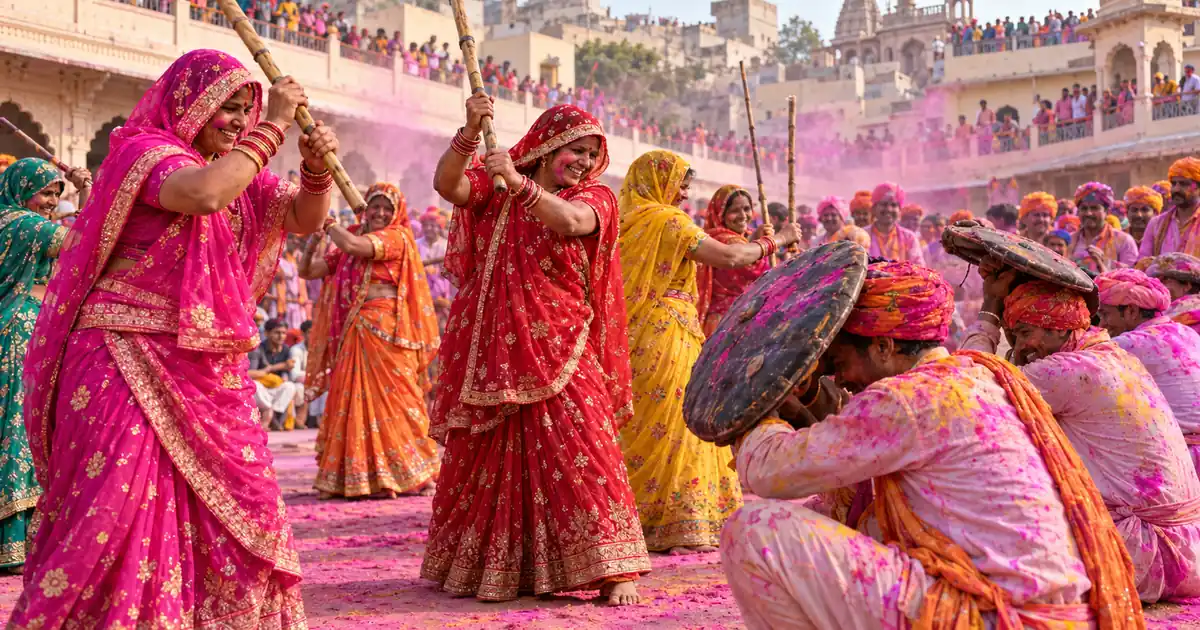
Lathmar Holi is a distinctive cultural tradition celebrated in the historic towns of Barsana and Nandgaon in the Mathura district of Uttar Pradesh. Rooted in legends of Radha and Krishna, the festival features women wielding wooden sticks against shields held by visiting men, creating an energetic communal celebration.
Festival & Event Essentials
- Lathmar Holi takes place annually in the twin heritage towns of Barsana and Nandgaon in Mathura district, Uttar Pradesh.
- The festivities unfold across two consecutive days in early spring on Phalgun Shukla Navami in Barsana and Dashami in Nandgaon, four to five days ahead of national Holi.
- The ritual reenacts Krishna’s playful teasing of Radha, where women wield oiled wooden lathis against shields held by visiting men.
- Barsana is situated 50 kilometers northwest of Mathura Junction railway station and 140 kilometers south of New Delhi.
Lathmar Holi Festival Schedule and Key Dates
The celebrations take place annually during the bright lunar fortnight of the Hindu month of Phalgun. In Barsana, the festival occurs on Phalgun Shukla Navami, followed the very next day by reciprocal rituals in Nandgaon on Dashami. Travelers comparing regional festive calendars across India can consult the festivals of Sikkim calendar for eastern Himalayan celebrations.
On the first festival day, men from Nandgaon travel 8 kilometers across the rural plains to Barsana, where women assemble on temple stairs to defend their village with polished bamboo sticks. The following afternoon, the men of Barsana make a return visit to Nandgaon, reenacting the ritual in the courtyards of Nand Bhavan.
The primary Rangwali Holi festival across the rest of northern India takes place four to five days later on the full moon day of Phalgun Purnima. Visitors planning to attend the celebrations must secure accommodations in Mathura or Vrindavan weeks in advance due to high pilgrim turnout.
Braj Holi Calendar and Village Locations Matrix
The following table provides the sequence of major celebrations across the Braj region during the seasonal Holi festivities:
| Event & Venue | Traditional Lunar Date | Core Ritual Focus | Key Location |
|---|---|---|---|
| Laddu Holi Barsana | Phalgun Shukla Ashtami | Sweet distribution & song | Shri Radha Rani Temple, Barsana |
| Lathmar Holi Barsana | Phalgun Shukla Navami | Women wield sticks vs shields | Rangeeli Gali, Barsana |
| Lathmar Holi Nandgaon | Phalgun Shukla Dashami | Reciprocal stick defenses | Nand Bhavan Courtyard, Nandgaon |
| Phoolon Wali Holi | Phalgun Shukla Ekadashi | Floral petal offerings | Banke Bihari Temple, Vrindavan |
| Chhahar Holi Gokul | Phalgun Shukla Dwadashi | Stick play with child Krishna | Raman Reti Grounds, Gokul |
| Holika Dahan | Phalgun Purnima Eve | Sacred bonfire oblations | Public squares across Mathura |
| Dhulandi / Rangwali Holi | Chaitra Krishna Pratipada | Colored powders & water play | Universal across Braj region |
| Huranga Dauji | Chaitra Krishna Dwitiya | Cloth-stripping & turmeric dyes | Dauji Temple, Baldeo |
Why is Lathmar Holi Celebrated?
Lathmar Holi celebrates the divine affection and mutual respect between Radha and Krishna as described in Vaishnava devotional poetry. According to local lore, young Krishna traveled from his childhood village in Nandgaon to Barsana to playfully smear colors on Radha’s face. Radha and her companions responded by defending themselves with long wooden lathis.
The mock combat honors the assertiveness and dignity of local women, who assume central ritual authority during the festival. Devotees comparing classical performance arts often contrast these lively street traditions with the Khajuraho Dance Festival celebrations held in neighboring Madhya Pradesh.
Beyond religious reverence, the festival marks the arrival of spring harvest across the agrarian villages of the Yamuna River plains. The celebration unites farming families and visiting pilgrims in shared feasts featuring traditional sweets such as gujiya, malpua, and thandai flavored with saffron.
How Is Lathmar Holi Celebrated?
The morning commences with devotional prayers at the sacred hill shrines of Barsana before the arrival of the visiting men from Nandgaon. As the procession enters the narrow stone alleys known as Rangeeli Gali, village singers chant classical Braj Bhasha folk songs called Hori. Travelers exploring northern heritage fairs often combine their journey with the Taj Mahotsav cultural fair in Agra located 60 kilometers to the southeast.
When the men kneel in circular formations holding leather or metal shields above their heads, the women strike the shields with oiled wooden sticks. The men do not retaliate, remaining defensive while singing playful couplets in good cheer.
Simultaneously, clouds of natural organic colors made from dried tesu flowers and herbs fill the air. Official safety guidelines, tourist shuttle routes, and police assistance posts are detailed on the District Administration Mathura Official Portal.
Holi At Vrindavan
The broader Holi season in Braj extends to the temple city of Vrindavan, located 45 kilometers east of Barsana. In Vrindavan, celebrations center around prominent medieval shrines including the Banke Bihari Temple, Radha Raman Temple, and ISKCON Krishna Balaram Mandir. Pilgrims comparing holy river cities often draw parallels with temple ceremonies in the Kashi Vishwanath temple city of Varanasi.
A famous variation is Phoolon Wali Holi, held at the Banke Bihari Temple, where temple priests shower gathered devotees with hundreds of kilograms of fresh flower petals instead of powdered dyes. The scent of marigolds, roses, and jasmine fills the temple hall during the ceremony.
Another meaningful observance in Vrindavan is the Widows’ Holi, where hundreds of elderly women living in local ashrams break centuries-old social taboos to celebrate with colors. Cultural heritage documentation and temple schedules are maintained on the Uttar Pradesh Tourism Braj Holi Circuit.
Places where Lathmar Holi is celebrated
Barsana serves as the heart of Lathmar Holi. The town is built around the historic Radha Rani Temple, situated atop Bhanugarh hill and approached by over 200 stone steps. Devotees gather across the staircases and terraces to view the courtyard mock battles below.
Nandgaon, situated 8 kilometers to the north, provides the reciprocal setting for the second day of stick play. The village centers on the fortified Nand Bhavan temple complex perched on a hillock overlooking the surrounding countryside.
Both towns preserve rural architectural character with historic havelis, stone archways, and community ponds known as kunds. The sacred landscape is recognized on the Incredible India Braj Bhumi Sacred Heritage register for its cultural value.
What is Unique about Lathmar Holi
What sets Lathmar Holi apart from conventional festival celebrations is its strict adherence to centuries-old community roles. Only women born or married into Barsana and Nandgaon households participate as stick-wielding huriyarins, maintaining family lineages across generations. Similar ancestral celebrations can be found in other famous cultural circuits of India.
The festival is also unique for its traditional herbal dyes. Local communities harvest bright orange tesu blossoms weeks in advance, boiling them in large iron cauldrons to create fragrant colored waters that are gentle on the skin.
Visitors should wear modest white cotton clothing, protect their eyes with sunglasses, and secure digital cameras in waterproof enclosures. Attending the festival offers an unforgettable encounter with the living folklore and devotional warmth of rural India.
Frequently Asked Questions About Lathmar Holi
Where is Lathmar Holi traditionally celebrated?
Lathmar Holi is celebrated exclusively in the twin towns of Barsana and Nandgaon in the Mathura district of Uttar Pradesh. The primary gatherings take place in the courtyards of the historic Radha Rani Temple and Nand Bhavan.
Why do women strike men with sticks during Lathmar Holi?
The ritual reenacts the mythological event where Lord Krishna journeyed from Nandgaon to tease Radha, prompting Barsana’s women to playfully chase him away with sticks. Today, men defend themselves with shields while singing traditional folk couplets.
On which lunar dates is Lathmar Holi celebrated each year?
The festival falls during the bright lunar fortnight of the Hindu month of Phalgun, occurring on Navami in Barsana and Dashami in Nandgaon. These dates typically coincide with late February or early March, roughly five days before full moon Holi.
How can travelers reach Barsana for Lathmar Holi?
Travelers can take trains to Mathura Junction, located 50 kilometers away, and continue by regional state buses or private taxis. During the festival week, local authorities establish dedicated shuttle lanes and peripheral parking lots outside Barsana village.
How does Lathmar Holi fit into the broader Braj festival calendar?
Lathmar Holi marks the opening phase of the grand 7-to-10-day Braj Ki Holi in Vrindavan and Mathura, which continues with Phoolon ki Holi at Banke Bihari, Widow Holi, Chhadimar Holi in Gokul, and Huranga celebrations across the sacred circuit.