Sarnath Buddhist Monuments Varanasi: Dhamek Stupa Guide
Plan your visit with verified sarnath varanasi timings dhamek stupa details, Ashoka Lion Capital museum hours, tickets, light show, and temple circuits.
Situated just ten kilometers northeast of the sacred ghats of Kashi, travelers researching verified sarnath varanasi timings dhamek stupa details uncover one of the four cardinal pilgrimage destinations in the Buddhist world. Known historically as Rishipatana or the Deer Park (Mrigadava), this historic sanctuary is where Gautama Buddha preached his first sermon after attaining enlightenment under the Bodhi tree in Bodh Gaya.
The ancient deer park preserves monumental stone stupas, monastic dormitories, and the original third-century BCE Ashokan Lion Capital that now serves as the National Emblem of India. Combining peaceful meditation gardens with ancient Mauryan and Gupta archaeological treasures, Sarnath provides an essential spiritual contrast to the intense riverfront rituals of eastern Uttar Pradesh.
Visitor & Architectural Essentials
- Spiritual Significance: Site of the First Sermon (Dhammacakkappavattana Sutta), marking the founding of the Buddhist monastic order (Sangha) in 528 BCE.
- Anchor Landmarks: Dhamek Stupa, Chaukhandi Stupa, Dharmarajika Stupa ruins, Mulagandha Kuti Vihara, and the Sarnath Archaeological Museum.
- Daily Operating Hours: Excavated archaeological ruins open daily from sunrise to sunset (6:00 AM to 6:00 PM); ASI Museum opens from 9:00 AM to 5:00 PM (strictly closed on Fridays).
- Admission Tariffs: Sarnath ruins entry costs ₹25 for Indian citizens and ₹300 for foreigners; the ASI Museum ticket costs ₹5 for adults (children under 15 free).
- Transit Connectivity: Located 10 km from Varanasi Cantt Railway Station; easily reached in 25 to 30 minutes via auto-rickshaw or taxi.
Sarnath: The Birthplace of the Buddhist Sangha
In the sixth century BCE, Prince Siddhartha Gautama walked over two hundred kilometers northwest from the Bodhi tree at Uruvela (Bodh Gaya) to reach the quiet deer park near Varanasi. Here, during the full moon of Ashadha, he met five former ascetic companions who had previously abandoned him: Kaundinya, Assaji, Bhaddiya, Vappa, and Mahanama.
According to district historical records maintained by the District Administration Varanasi Official Tourism Directory, Buddha delivered his profound First Discourse, setting into motion the Wheel of Law (Dharmachakra Pravartana). In this sermon, he expounded the Four Noble Truths (Arya Satya) and the Noble Eightfold Path (Ashtangika Marga), leading his disciples to enlightenment and establishing the world’s first Buddhist monastic community.
Ashokan Foundations and Mauryan Patronage
In the third century BCE, Emperor Ashoka visited Sarnath during his imperial pilgrimages, erecting monumental stupas, monasteries, and stone pillars to mark sacred spots across the park. Ashoka commissioned a polished Chunar sandstone pillar surmounted by an exquisite capital of four back-to-back Asiatic lions standing upon an abacus carved with animals and wheels; visitors interested in another major Ashokan column in Uttar Pradesh can check Allahabad Fort timings at Triveni Sangam.
Sarnath flourished as a major center of Buddhist learning for more than fifteen centuries, attracting pilgrims, scholars, and monks from China, Tibet, Sri Lanka, and Southeast Asia. Celebrated Chinese travel chroniclers Faxian in the fifth century and Xuanzang in the seventh century recorded thriving communities of over fifteen hundred monks residing in magnificent multi-story monasteries.
The Gupta Artistic Golden Age at Sarnath
During the classical Gupta Empire between the fourth and sixth centuries CE, Sarnath became the epicenter of an influential school of Buddhist sculpture. Gupta sculptors developed an idealized aesthetic characterized by smooth, clinging draperies, downcast meditative eyes, and intricate ornamental halos (prabhamandala).
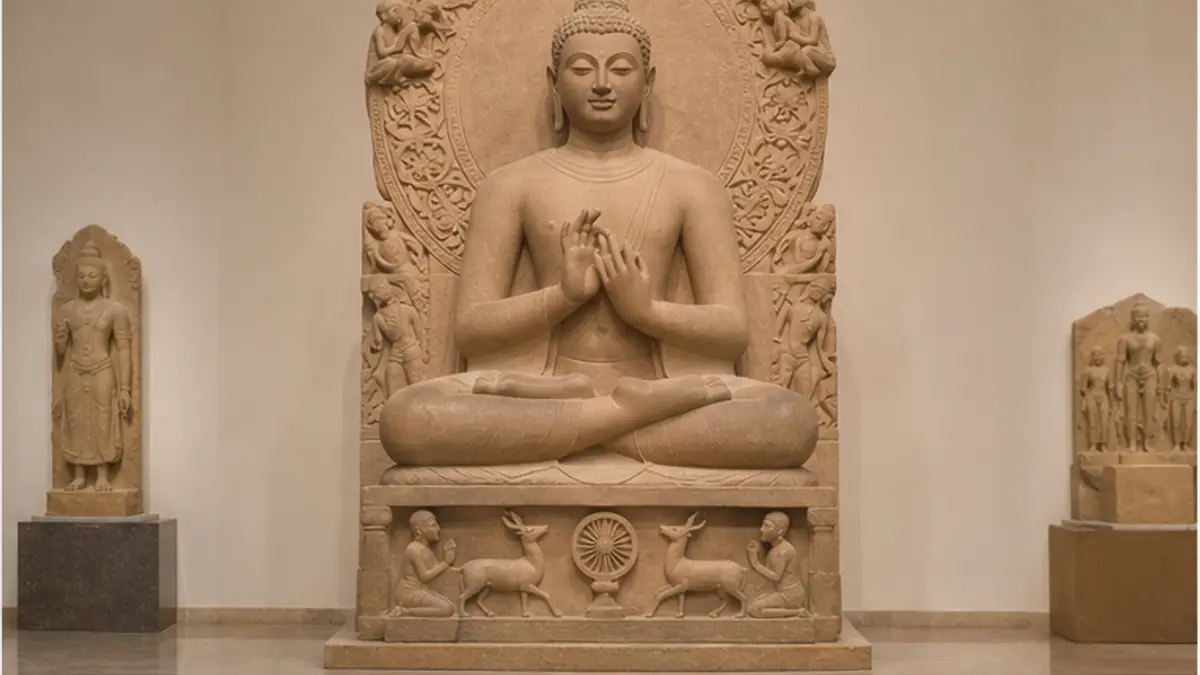
The most celebrated masterpiece produced by this school is the famous fifth-century Preaching Buddha statue, carved from fine Chunar sandstone and now preserved inside the Sarnath Museum. The statue depicts the Buddha seated in yogic padmasana, his delicate hands formed in the Dharmachakra Pravartana mudra as he turns the wheel of law before a relief panel showing his five disciples.
| Monument Name | Construction Era | Primary Material | Architectural Layout | Key Religious Significance |
|---|---|---|---|---|
| Dhamek Stupa | 500 CE (Gupta period) | Red Chunar stone and brick | Cylindrical tower (43.6 m tall) | Marks the exact spot of the First Sermon |
| Chaukhandi Stupa | 5th c. CE / 1588 CE (Mughal tower) | Terraced brick and sandstone | Octagonal tower on stepped mound | Site where Buddha met his 5 former disciples |
| Dharmarajika Stupa | 3rd c. BCE (Emperor Ashoka) | Terraced brick foundations | Circular plinth (relocated relics) | Built by Ashoka to enshrine Buddha bodily relics |
| Ashoka Pillar Base | 3rd c. BCE (Mauryan period) | Polished Chunar sandstone | Inscribed cylindrical column base | Preserves Ashoka schism edict to monks |
| Mulagandha Kuti Vihara | 1931 (Mahabodhi Society) | Modern stone temple | Multi-tiered pagoda style | Houses sacred relics & Japanese wall frescoes |
Dhamek Stupa: The Monumental Cylinder of the First Sermon
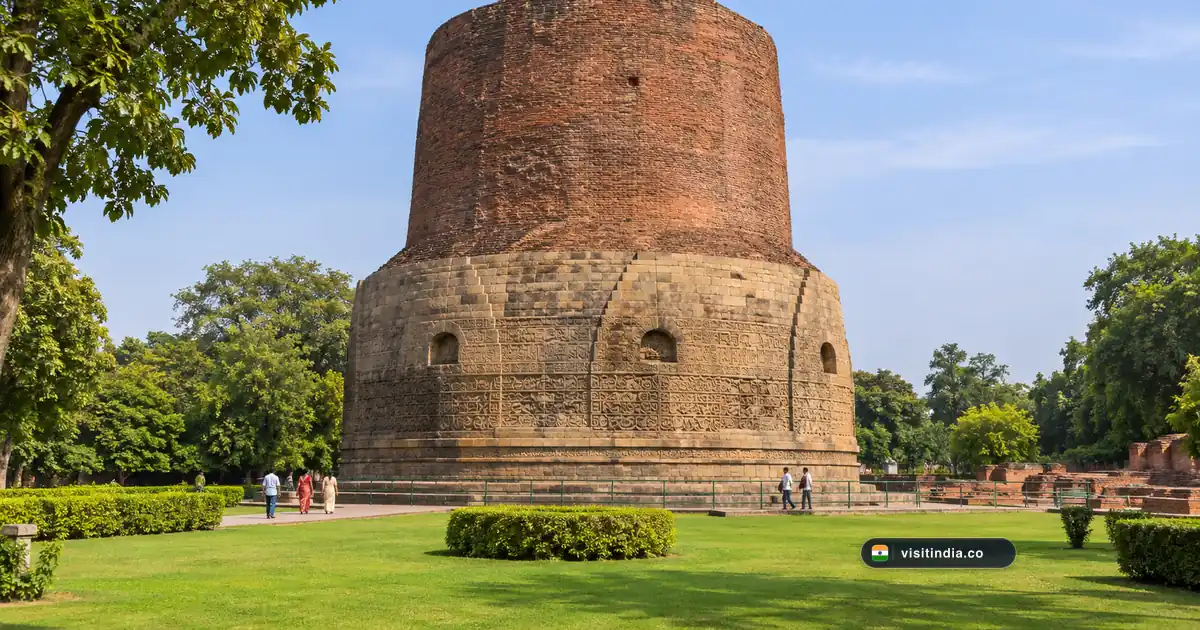
Rising majestically above the manicured lawns of the archaeological park, the Dhamek Stupa stands as the visual centerpiece of Sarnath. Built around 500 CE during the Gupta dynasty to replace an earlier Mauryan brick monument erected by Emperor Ashoka, the stupa marks the exact clearing where Buddha addressed his disciples.
The massive structure is a solid cylindrical tower constructed of large bricks set in mud mortar, encased around its lower half with finely chiseled Chunar sandstone masonry. The stupa rises to an impressive height of 43.6 meters with a base diameter of twenty-eight meters, visible across the surrounding rural landscape.
Stone Relief Carvings and Geometric Arabesques
The lower sandstone facade of Dhamek Stupa features eight projecting stone niches that originally held life-sized standing Buddha images. Encircling the midsection runs a broad horizontal frieze of relief carvings executed with exceptional artistic delicacy.
The frieze is covered in continuous swirling arabesques, flowering lotus vines, swastikas, chevrons, and geometric cross-hatchings. Sculptors chiseled playful birds, frolicking deer, and celestial beings into the stone foliage, demonstrating the mature naturalistic mastery of Gupta-era stone cutters.
Circumambulation Courtyard and Prayer Rituals
Surrounding the base of the stupa is a broad paved stone circumambulation path (pradakshinapatha). International Buddhist pilgrims from Sri Lanka, Thailand, Myanmar, Japan, and Ladakh travel here year-round to walk clockwise around the sacred monument, reciting Pali verses and spinning wooden prayer wheels.
Devotees frequently apply thin squares of gold leaf to the ancient stone blocks at the base of the stupa, leaving burning butter lamps and incense sticks on bronze offering trays. The peaceful outdoor atmosphere invites quiet seated meditation, providing a sanctuary for spiritual contemplation.
Pro Tip
Quiet Hours for Meditation: The best time for silent walking and seated meditation at Dhamek Stupa is between 6:30 AM and 8:30 AM. Morning mist often clings to the ancient brick foundations, creating a peaceful setting before school excursions and tourist buses arrive from Varanasi.
Sarnath Archaeological Museum: Home of the Ashokan Lion Capital
Located directly across the road from the archaeological park stands the Sarnath Archaeological Museum, established in 1910 as the oldest on-site museum maintained by the Archaeological Survey of India. The handsome sandstone building was designed in the form of a classical Buddhist vihara to house over six thousand antiquities recovered from Sarnath excavations.
National conservation guidelines formulated by the Archaeological Survey of India protect these world-famous sculptures in climate-controlled galleries. The museum is arranged chronologically into five main halls containing artifacts spanning from the third century BCE to the twelfth century CE.
The Original Lion Capital of Ashoka
The undisputed crown jewel of the museum is the original Ashokan Lion Capital, carved from a single block of polished Chunar sandstone around 250 BCE. The capital features four lifelike Asiatic lions standing back-to-back atop an ornamental circular drum, symbolizing royalty, courage, and the proclamation of the Dharma in all four directions.
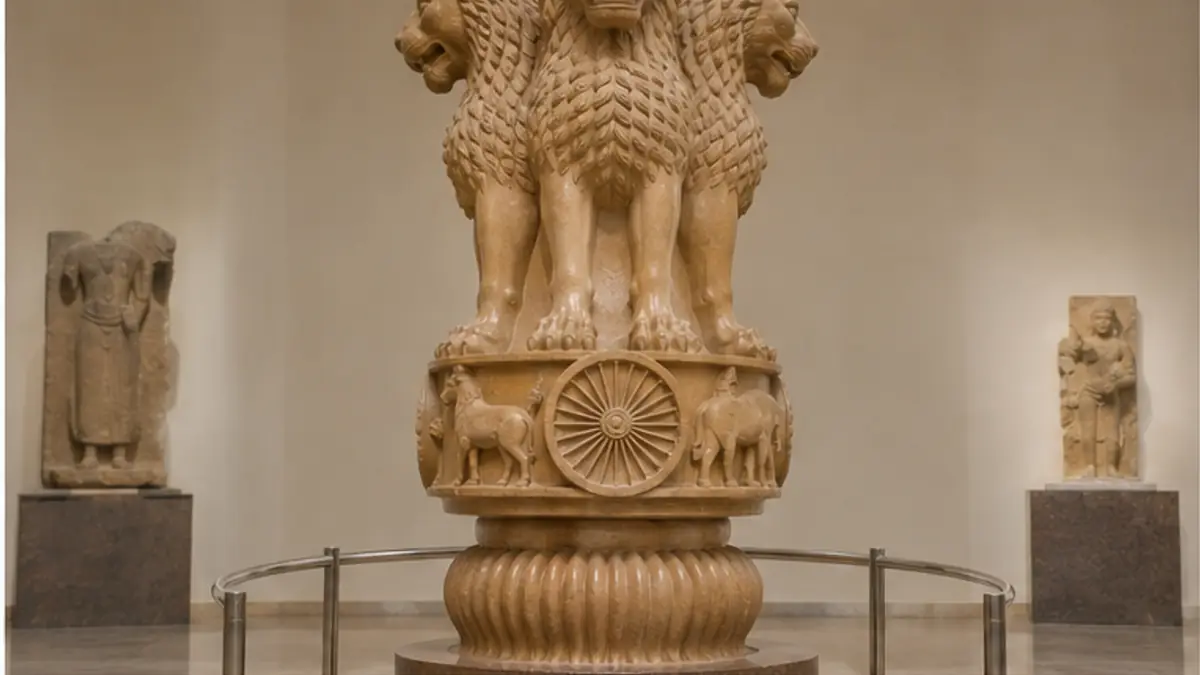
The abacus beneath the lions is carved with four sacred animals: an elephant (representing Buddha’s conception), a galloping horse (his departure from royal life), a bull (his birth zodiac), and a lion (supreme wisdom). These animals are separated by four wheels of law (dharmachakra) with twenty-four spokes.
Adopted on 26 January 1950, this polished sculpture serves as the official State Emblem of India. The 24-spoke wheel (Ashoka Chakra) adorns the center of the national flag.
The 5th-Century Preaching Buddha and Gupta Sculptures
In the adjacent central gallery rests the world-renowned fifth-century Preaching Buddha, universally praised as one of the finest religious sculptures ever carved. The master sculptor achieved a luminous spiritual radiance across the face, showing Buddha with calm downcast eyes and softly curved earlobes.
Surrounding galleries exhibit colossal stone umbrellas carved with auspicious Buddhist symbols, seated Bodhisattva statues, terracotta toys, bronze ritual bells, and stone door jambs adorned with river goddesses Ganga and Yamuna. Note that flash photography, camera bags, and mobile phone usage are strictly prohibited inside the museum galleries.
Other Attractions: Chaukhandi Stupa and International Monasteries
Beyond the central excavated park, Sarnath is surrounded by unique medieval monuments, sacred bodhi trees, and active international Buddhist temples constructed by global communities.
Visitors exploring eastern Uttar Pradesh frequently integrate this deer park excursion with the temples and historic ghats documented in our guide to Varanasi travel highlights.
Chaukhandi Stupa and the Humayun Octagonal Tower
Located one kilometer south of the main park along the approach road from Varanasi sits Chaukhandi Stupa. Constructed between the fourth and sixth centuries CE as a stepped brick mound, the monument marks the auspicious spot where Prince Siddhartha was greeted by his five former companions upon arriving at Sarnath.
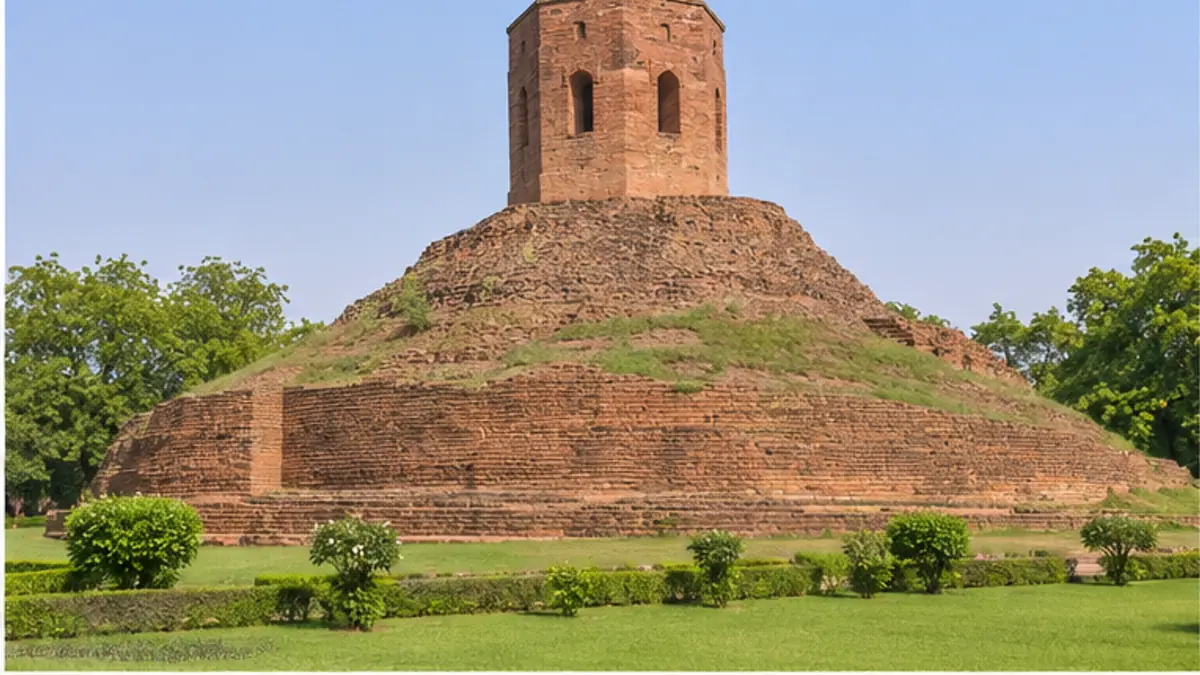
In 1588 CE, Raja Todar Mal’s son Govardhan modified the monument by constructing an octagonal red brick tower atop the ancient mound to commemorate the visit of Mughal Emperor Humayun, who had taken refuge at this site while fleeing Afghan forces. The resulting composite architecture offers an intriguing historical blending of Gupta Buddhist brickwork and Mughal octagonal masonry.
Mulagandha Kuti Vihara and the Sacred Bodhi Tree
Constructed in 1931 by the Mahabodhi Society of India under the visionary Sri Lankan Buddhist revivalist Anagarika Dharmapala, Mulagandha Kuti Vihara is an active pilgrimage temple rising 110 feet into the sky. The temple marks the traditional spot where Buddha spent his first rainy season retreat (Vassa). History enthusiasts extending this circuit can explore Ambedkar Park Lucknow visitor overview for monument timings, tickets, and route context.
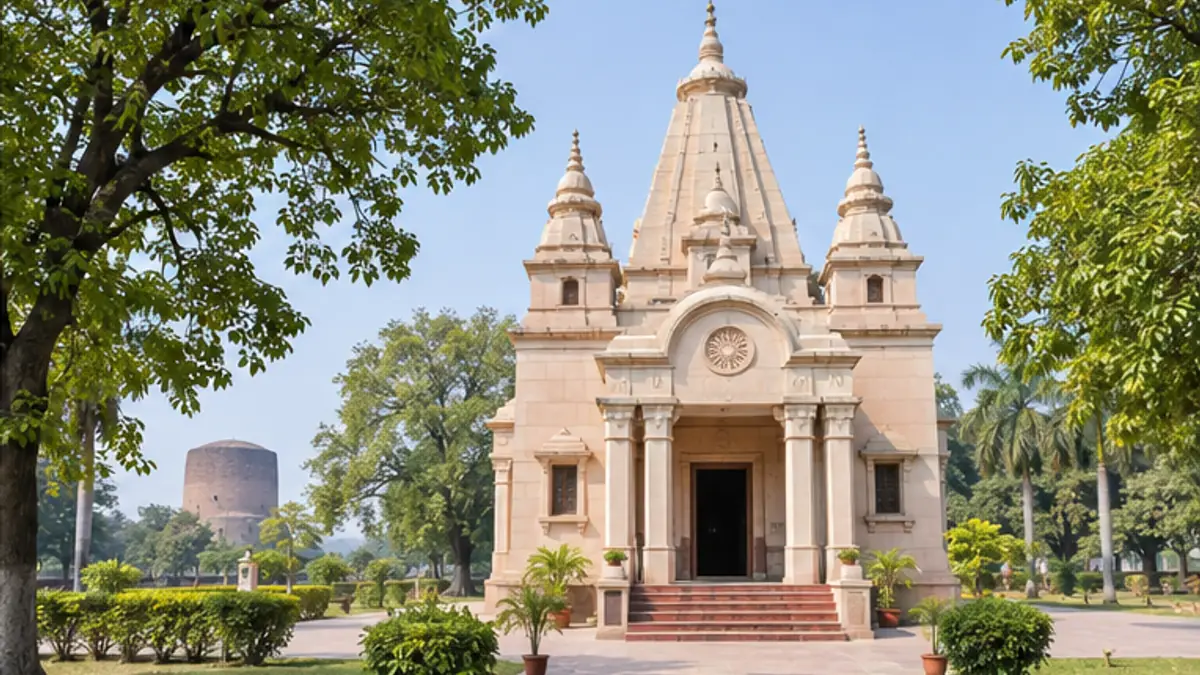
Inside the main sanctum, visitors admire colorful interior frescoes painted by the celebrated Japanese artist Kosetsu Nosu, depicting key milestones from the life of Buddha. Behind the temple stands an offshoot of the sacred Sri Maha Bodhi tree in Anuradhapura, Sri Lanka (which itself was grown from a cutting of the original Bodhi tree in Bodh Gaya brought by Ashoka’s daughter Sanghamitra).
International Monasteries: Thai, Tibetan, and Japanese Temples
Over the past century, Buddhist nations from around the world have established traditional monastic centers in Sarnath, each showcasing indigenous architectural styles:
- Thai Temple and Standing Buddha: Features a 80-foot stone statue of the standing Buddha, set amidst landscaped lotus ponds and gold-trimmed Thai prayer halls.
- Tibetan Monastery (Lhadhan Chotruk Jampa Ling): Built in classical Tibetan style with brightly painted prayer wheels, thangka murals, and a large golden statue of Maitreya, the future Buddha.
- Japanese Temple (Nichigai Suzan Myohoji): A peaceful wooden temple housing a reclining marble Buddha statue and an outdoor peace pagoda.
| Temple / Monastery | Affiliation / Origin | Key Cultural Feature | Visitor Access |
|---|---|---|---|
| Mulagandha Kuti Vihara | Mahabodhi Society / Sri Lanka | Sacred bone relics & Japanese frescoes | Open 6:00 AM to 6:00 PM (Free) |
| Thai Temple & Statue | Royal Thai Buddhist Order | 80-foot outdoor standing stone Buddha | Open daily 7:00 AM to 5:30 PM (Free) |
| Tibetan Monastery | Gelug Lineage (Tibetan Buddhism) | Brass prayer wheels and Maitreya idol | Open daily 7:00 AM to 6:00 PM (Free) |
| Chinese Temple | Chinese Buddhist Association | Traditional dragon tiles & marble garden | Open daily 8:00 AM to 5:00 PM (Free) |
| Japanese Temple | Nichiren Buddhism / Japan | White peace pagoda and peaceful lawns | Open daily 7:00 AM to 5:00 PM (Free) |
Sarnath Timings, Ticket Prices, and Light Show Schedule
Because Sarnath includes central government archaeological zones, state museums, and independently operated pilgrimage temples, operating hours vary slightly between destinations.
State tourism development guidelines and official calendar schedules are detailed on the Uttar Pradesh Tourism Official Varanasi Portal. Planning your arrival time ensures you avoid the Friday museum closure and make the most of evening cultural events.
Daily Visiting Hours Across the Monastic Complex
Visitors should schedule their travel around the following operating windows:
- Sarnath Excavated Ruins (Dhamek Stupa): Open daily from sunrise to sunset (approximately 6:00 AM to 6:00 PM) throughout the entire year, including Sundays and national holidays.
- Sarnath Archaeological Museum: Open daily from 9:00 AM to 5:00 PM. Note that the museum is strictly closed on Fridays.
- Chaukhandi Stupa: Open daily from 6:00 AM to 6:00 PM.
- Mulagandha Kuti Vihara & International Temples: Open daily from 6:00 AM to 11:30 AM and 1:30 PM to 6:00 PM (free public entry).
Sarnath Sound and Light Show (Son et Lumiere)
Every evening after sunset, the lawns surrounding Dhamek Stupa host an evocative 30-minute Sound and Light Show narrated by actor Amitabh Bachchan. The production uses automated floodlights, lasers, and surround-sound music to depict the life of Prince Siddhartha, his enlightenment, and the preaching of the First Sermon:
- Winter Timings (October to March): Hindi show begins at 6:30 PM; English show begins at 7:30 PM.
- Summer Timings (April to September): Shows shift thirty minutes later, beginning at 7:00 PM (Hindi) and 8:00 PM (English).
- Ticket Pricing: Tickets cost ₹100 per adult and ₹50 for children aged six to twelve years, available at the on-site counter starting at 5:30 PM.
| Attraction Site | Indian Citizens | Foreign Nationals | Operating Hours | Friday Closure Status |
|---|---|---|---|---|
| Excavated Ruins (Dhamek Stupa) | ₹25 | ₹300 | Sunrise to Sunset | Fully Open on Fridays |
| Sarnath ASI Museum | ₹5 (Under 15 Free) | ₹5 (Under 15 Free) | 9:00 AM to 5:00 PM | Strictly Closed on Fridays |
| Chaukhandi Stupa | ₹25 (Or combo pass) | ₹300 | Sunrise to Sunset | Fully Open on Fridays |
| Mulagandha Kuti Vihara | Free Admission | Free Admission | 6:00 AM to 6:00 PM | Fully Open daily |
| Sound & Light Show | ₹100 | ₹100 | 6:30 PM & 7:30 PM | Open daily (Weather permitting) |
Transit Logistics: Reaching Sarnath from Varanasi Cantt
Sarnath is located just ten kilometers northeast of Varanasi Junction (Varanasi Cantt) railway station, making it accessible as a half-day or full-day side excursion. Modern city express roads and four-lane bypasses provide comfortable road travel away from the narrow congestion of the old riverfront ghats.
Devotees planning a comprehensive pilgrimage can easily coordinate their morning temple darshan at Kashi Vishwanath Temple with an unhurried afternoon excursion to the peaceful lawns of Sarnath.
Auto-Rickshaws, Cabs, and Local Transit Options
Travelers have several convenient transport choices from central Varanasi:
- Auto-Rickshaws: Shared auto-rickshaws leave continuously from Varanasi Cantt station, costing ₹30 to ₹40 per seat. A private auto-rickshaw hire costs between ₹250 and ₹350 one-way, or ₹600 to ₹800 for a round-trip charter including wait time.
- App-Based Taxis: Ola and Uber cabs operate throughout the Varanasi metropolitan area, providing air-conditioned point-to-point transit from Godowlia or the Cantonment to Sarnath in thirty minutes for ₹300 to ₹500.
- Sarnath Railway Station (SRNT): Sarnath has its own local railway station located one kilometer from the stupa, with frequent passenger trains running from Varanasi Junction in fifteen minutes for under ₹20.
Curated 1-Day Sarnath Heritage and Spiritual Itinerary
To fully appreciate the historical monuments, museum artifacts, and international temple architecture, follow this optimized one-day chronological schedule:
Morning: Dhamek Stupa and Excavated Monastic Ruins
Depart Varanasi at 7:30 AM to arrive at Sarnath by 8:00 AM before heat and tour buses arrive. Purchase your admission ticket at the gate and spend two hours exploring the archaeological park.
Walk the stone circumambulation path around Dhamek Stupa, inspect the geometric Gupta friezes, view the foundations of Dharmarajika Stupa, and examine the inscribed base of the Ashoka Pillar. Sit beneath the shaded trees near the deer park to enjoy the peaceful atmosphere.
Midday: Sarnath Museum and Chaukhandi Stupa
At 10:30 AM, cross the road to the Sarnath Archaeological Museum (remember that the museum is closed on Fridays). Spend ninety minutes admiring the Lion Capital of Ashoka and the fifth-century Preaching Buddha.
At 12:30 PM, enjoy a vegetarian lunch at a local cafe in Sarnath market. After lunch, take a short drive to Chaukhandi Stupa to photograph the octagonal Mughal tower crowning the ancient brick mound.
Afternoon to Evening: International Temples and Ganga Aarti
Spend the afternoon from 2:00 PM to 4:30 PM visiting Mulagandha Kuti Vihara to admire the Japanese wall frescoes, followed by visits to the Thai Temple and its 80-foot standing Buddha statue.
Return to central Varanasi by 5:30 PM, heading straight to Dashashwamedh Ghat to secure front-row steps or a wooden river boat for the world-famous evening ceremony detailed in our Ganga Aarti Varanasi guide.
Frequently Asked Questions About Sarnath
What are the visiting hours for Sarnath and Dhamek Stupa?
The excavated archaeological park and Dhamek Stupa are open daily from sunrise to sunset, approximately 6:00 AM to 6:00 PM. The on-site Sarnath Archaeological Museum operates from 9:00 AM to 5:00 PM and is strictly closed to the public on Fridays.
Why is Sarnath sacred in Buddhism?
Sarnath is one of the four holiest pilgrimage sites in Buddhism because it is where Gautama Buddha delivered his First Sermon (Dhammacakkappavattana Sutta) in 528 BCE. In this discourse, Buddha revealed the Four Noble Truths and the Eightfold Path, establishing the Buddhist monastic community.
Where is the original Lion Capital of Ashoka located?
The original third-century BCE Ashokan Lion Capital is preserved inside the Sarnath Archaeological Museum, situated directly opposite the excavated ruins. Adopted in 1950, this polished sandstone sculpture of four back-to-back lions serves as the official State Emblem of India.
How much is the entry ticket for Sarnath monuments?
Entry to the main excavated archaeological park housing Dhamek Stupa costs ₹25 for Indian citizens and ₹300 for foreign visitors. Admission to the Sarnath Archaeological Museum costs an additional ₹5 per adult, with free entry for children under fifteen years.
How far is Sarnath from Varanasi city center?
Sarnath is located approximately ten kilometers northeast of Varanasi Junction railway station and twelve kilometers from Dashashwamedh Ghat. The drive takes between twenty-five and thirty-five minutes by taxi or auto-rickshaw depending on city traffic.
What is the evening light show schedule at Sarnath?
The Sarnath Sound and Light Show at Dhamek Stupa operates daily after sunset, running a Hindi show at 6:30 PM followed by an English show at 7:30 PM during winter months. Tickets cost ₹100 for adults and ₹50 for children, available at the entrance counter.