Discover the Top 20 Best Places to Visit in Sikkim
Explore the top 20 best places to visit in Sikkim, from Gangtok and Tsomgo Lake to Pelling, Nathula Pass, Yumthang Valley, and sacred Himalayan monasteries.
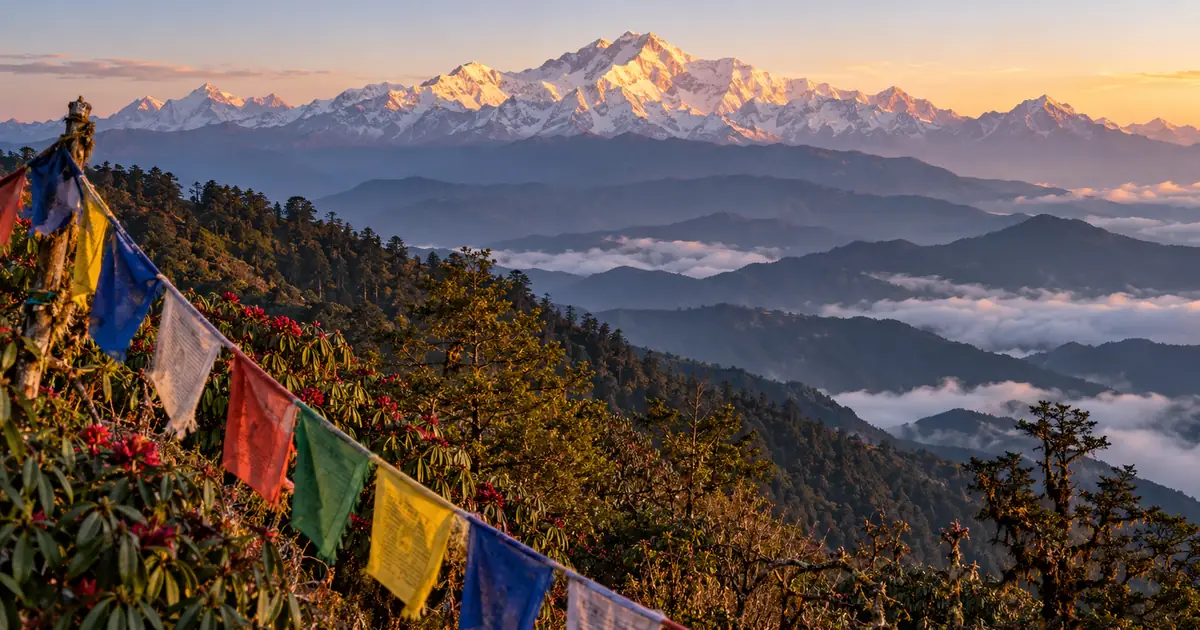
Sikkim covers 7,096 square kilometers in the eastern Himalayas, bordered by Nepal to the west, Bhutan to the east, and the Tibet Autonomous Region of China to the north. Spanning vertical relief from 280 meters in the southern foothills to 8,586 meters at Mount Kanchenjunga, the state represents one of India’s richest biodiversity hotspots and primary ecotourism corridors.
State Travel & Circuit Essentials
- Sikkim spans 7,096 square kilometers in the eastern Himalayas, bordered by Nepal, Bhutan, and the Tibet Autonomous Region of China.
- The primary transit hub is Pakyong Airport near Gangtok, with major broad-gauge rail connectivity through New Jalpaiguri in West Bengal (120 km).
- Travel divides into East Sikkim (Gangtok, Tsomgo Lake), West Sikkim (Pelling, Yuksom), North Sikkim (Lachung, Yumthang Valley), and South Sikkim (Namchi, Ravangla).
- High-altitude border regions including Nathula Pass and Gurudongmar Lake strictly require protected area permits arranged via registered tour operators.
The state operates under organic agricultural mandates and strictly preserves centuries of monastic traditions. Travelers planning trips during local festivals can review our complete guide to the festivals of Sikkim.
Sikkim Top 20 Destinations Master Matrix
The following matrix categorizes Sikkim’s top 20 destinations by geographic sector, recommended duration, and primary transit gateways:
| Destination | District / Zone | Ideal Duration | Signature Highlights | Nearest Airport / Rail Hub |
|---|---|---|---|---|
| Tsomgo Lake | East Sikkim | Half Day | Glacial Lake, Yak Rides, Ropeway | Pakyong Airport (65 km) |
| Nathula Pass | East Sikkim | Half Day | Indo-China Border, Historic Silk Route | Pakyong Airport (70 km) |
| Kanchenjunga Base Camp | West Sikkim | 10–12 Days | High Alpine Wilderness, Glaciers | Bagdogra Airport (160 km) |
| Yumthang Valley | North Sikkim | 1–2 Days | Valley of Flowers, Shingba Rhododendron | Pakyong Airport (145 km) |
| Gurudongmar Lake | North Sikkim | 1–2 Days | Sacred Lake at 5,430m, Cold Desert | Pakyong Airport (190 km) |
| Goechala | West Sikkim | 8–10 Days | Kanchenjunga Overlook Trek | Bagdogra Airport (150 km) |
| Singalila Ridge | West Sikkim Border | 6–8 Days | Border Trail, Everest & Kanchenjunga | Bagdogra Airport (130 km) |
| Lachung | North Sikkim | 2 Days | Apple Orchards, Lachung Monastery | Pakyong Airport (125 km) |
| Pelling | West Sikkim | 2 Days | Pemayangtse Monastery, Skywalk, Rabdentse | Pakyong Airport (130 km) |
| Thambi View Point | East Sikkim (Zuluk) | 1 Day | Old Silk Route Loops, Sunrise Vista | Pakyong Airport (85 km) |
| Ravangla | South Sikkim | 1–2 Days | Tathagata Tsal Buddha Park, Ralang | Pakyong Airport (70 km) |
| Rumtek Monastery | East Sikkim | Half Day | Dharma Chakra Centre, Golden Stupa | Pakyong Airport (35 km) |
| Yuksom | West Sikkim | 1–2 Days | Norbugang Coronation Throne, Dubdi | Bagdogra Airport (140 km) |
| Khangchendzonga Park | North / West Sikkim | 3–5 Days | UNESCO Mixed Site, Red Panda, Snow Leopard | Pakyong Airport (110 km) |
| Jawaharlal Nehru Garden | East Sikkim | 2 Hours | High-Altitude Flora, Orchidarium | Pakyong Airport (25 km) |
| Himalayan Zoological Park | East Sikkim (Bulbulay) | Half Day | Red Panda, Snow Leopard, Clouded Leopard | Pakyong Airport (38 km) |
| Singalila National Park | West Sikkim Border | 2–3 Days | Virgin Forest, Birdwatching, Treks | Bagdogra Airport (120 km) |
| Namgyal Tibetology | East Sikkim (Deorali) | 2–3 Hours | Mahayana Manuscripts, Bronze Idols | Pakyong Airport (28 km) |
| Baba Harbhajan Temple | East Sikkim | 1–2 Hours | Military Shrine, Kupup Road, Memorial | Pakyong Airport (68 km) |
| Banjhakri Falls | East Sikkim | 2 Hours | 100-Foot Waterfall, Shamanic Sculptures | Pakyong Airport (35 km) |
1. Tsomgo Lake: Sacred High-Altitude Glacial Lake
Tsomgo Lake, commonly known as Changu Lake, sits at an elevation of 3,753 meters (12,313 feet) along the historic Gangtok-Nathula highway, 40 kilometers east of the capital. Fed by melting mountain snows, the oval glacial lake stretches roughly one kilometer in length with depths reaching 15 meters.
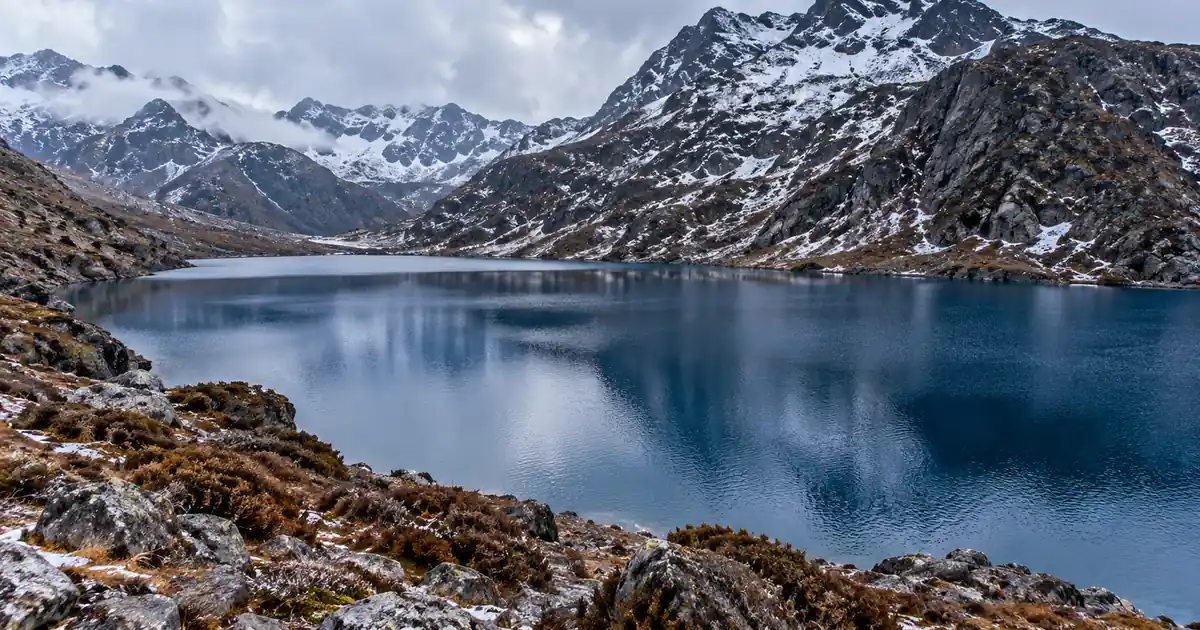
Local Buddhist tradition reveres the lake as holy, with historical lamas studying the shifting color of its water surface to forecast future state events. During winter from December to April, the lake surface freezes completely into solid sheet ice.
Visitors can ride decorated yaks along the lakeshore path or board the Tsomgo passenger ropeway to ascend toward high ridgeline viewpoints. Detailed transport logistics are outlined in our dedicated Tsomgo Lake guide.
2. Nathula Pass: Historic Silk Route Indo-China Border
Nathula Pass lies along the international border between India and the Tibet Autonomous Region of China, situated at an altitude of 4,310 meters (14,140 feet). The mountain pass functioned historically as an active spur of the ancient Old Silk Route before modern border regulations were established.
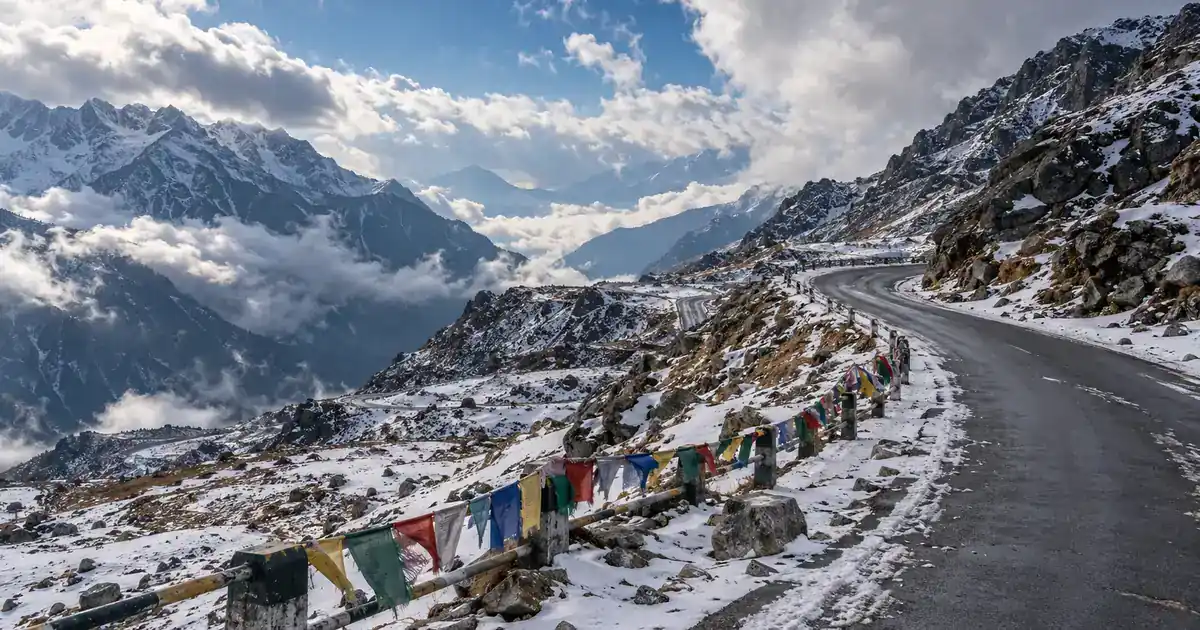
Indian tourists can visit the border outpost to view Chinese soldiers and cross-border trading infrastructure on designated days between Wednesday and Sunday. Visitors must secure permits in advance through registered tour operators in Gangtok, as explained in our Nathula Pass permit guide.
Due to reduced oxygen levels at 4,310 meters, travelers should ascend slowly and avoid strenuous running or climbing. The road to Nathula passes through dramatic military memorials and jagged glacial ridges.
3. Kanchenjunga Base Camp: High Himalayan Wilderness
The trek to Kanchenjunga Base Camp in West Sikkim leads hikers into the shadow of the world’s third-highest peak at 8,586 meters. The trail ascends from the historic settlement of Yuksom, passing through dense subtropical oak forests, moss-draped temperate ravines, and barren alpine moraines.
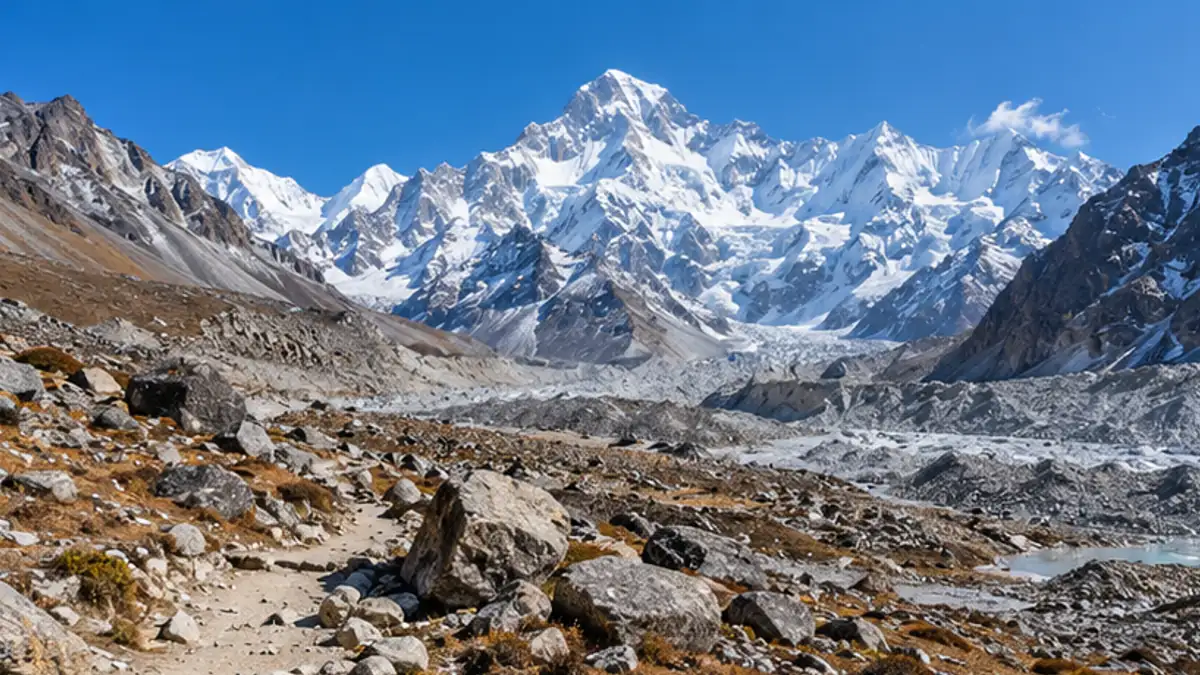
The expedition requires approximately ten to twelve days of self-sustained mountain trekking with pack animals and experienced local guides. Key campsites along the trail include Tsokha, Dzongri, and Thansing, offering views of Mount Pandim, Kabru, and Simvo.
Trekkers must register with the state forest department and secure mountain conservation permits before entering the national park. The ideal trekking windows are April to May for blooming flora and October to November for crystal clear mountain horizons.
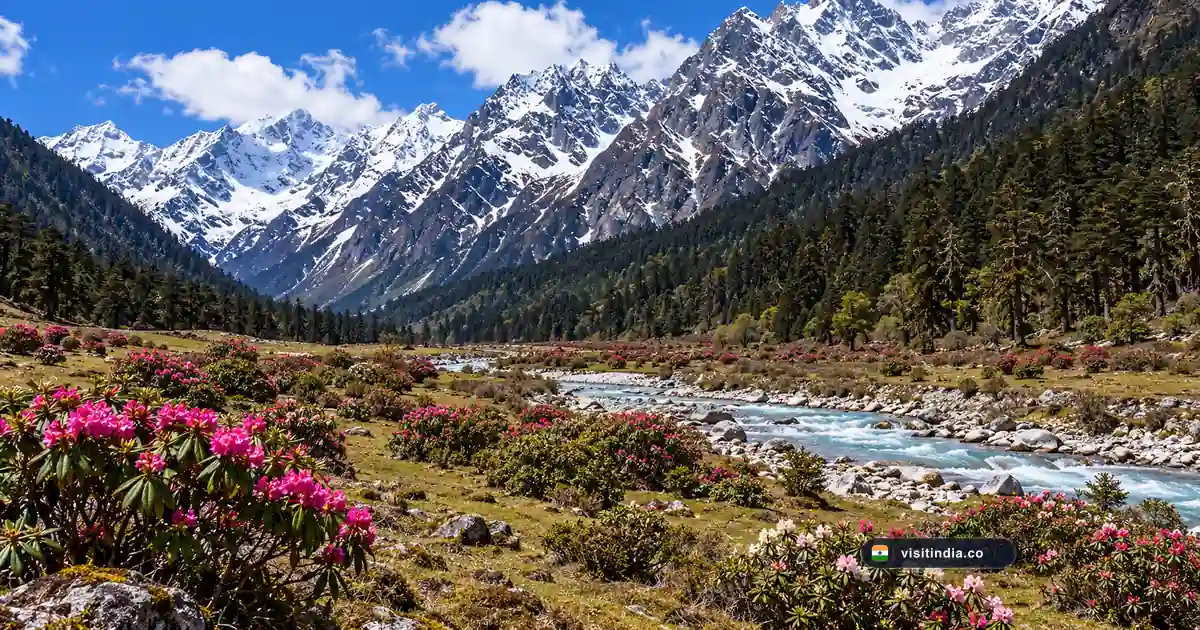
4. Yumthang Valley: Valley of Rhododendrons in North Sikkim
Yumthang Valley rests at an altitude of 3,564 meters, roughly 150 kilometers north of Gangtok in North Sikkim. Carved by the flowing waters of the Lachung Chu river, the valley is universally celebrated as the Valley of Flowers of the eastern Himalayas.
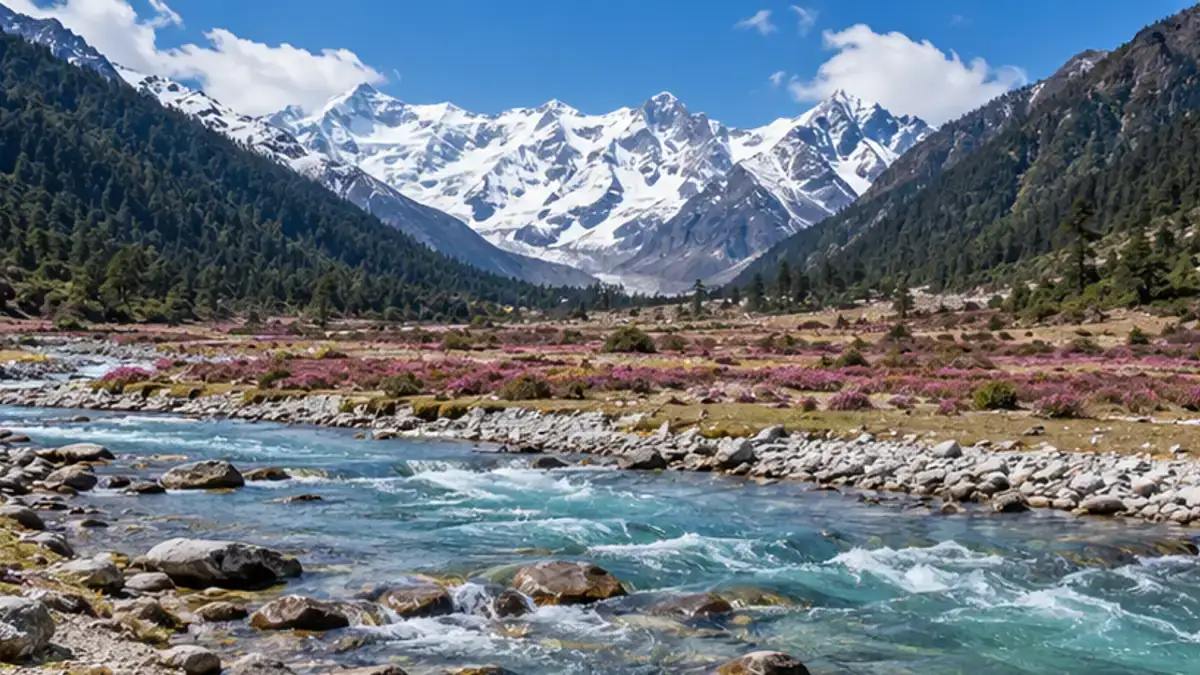
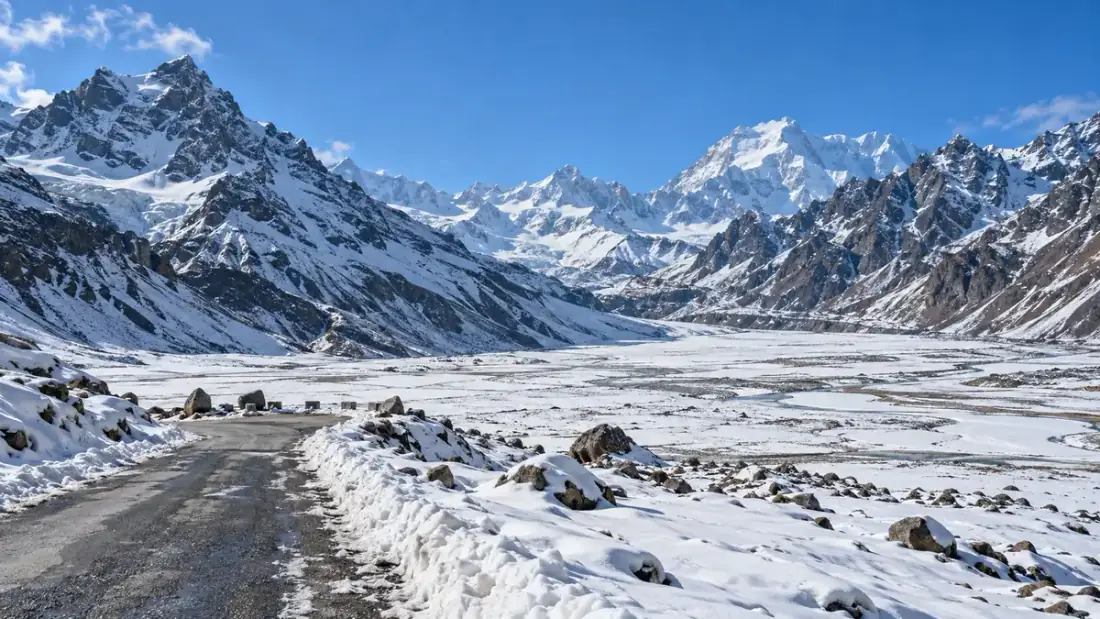
The adjoining Shingba Rhododendron Sanctuary preserves twenty-four distinct rhododendron species that bloom in dense crimson, yellow, and violet carpets between late March and mid-May. In winter, the entire valley floor transforms into a blanket of powdery snow.
Further up the valley road lies Zero Point (Yumesamdong) at 4,724 meters, where civilian roads terminate near alpine snowfields. Nearby natural sulfur hot springs provide warm therapeutic baths for cold-weather travelers.
5. Gurudongmar Lake: Sacred Glacial Lake at 17,800 Feet
Gurudongmar Lake sits at an altitude of 5,430 meters (17,800 feet) in the high plateau of North Sikkim, approximately five kilometers south of the Tibetan border. The lake is among the highest accessible bodies of water in the world, flanked on all sides by snow-capped Himalayan summits.
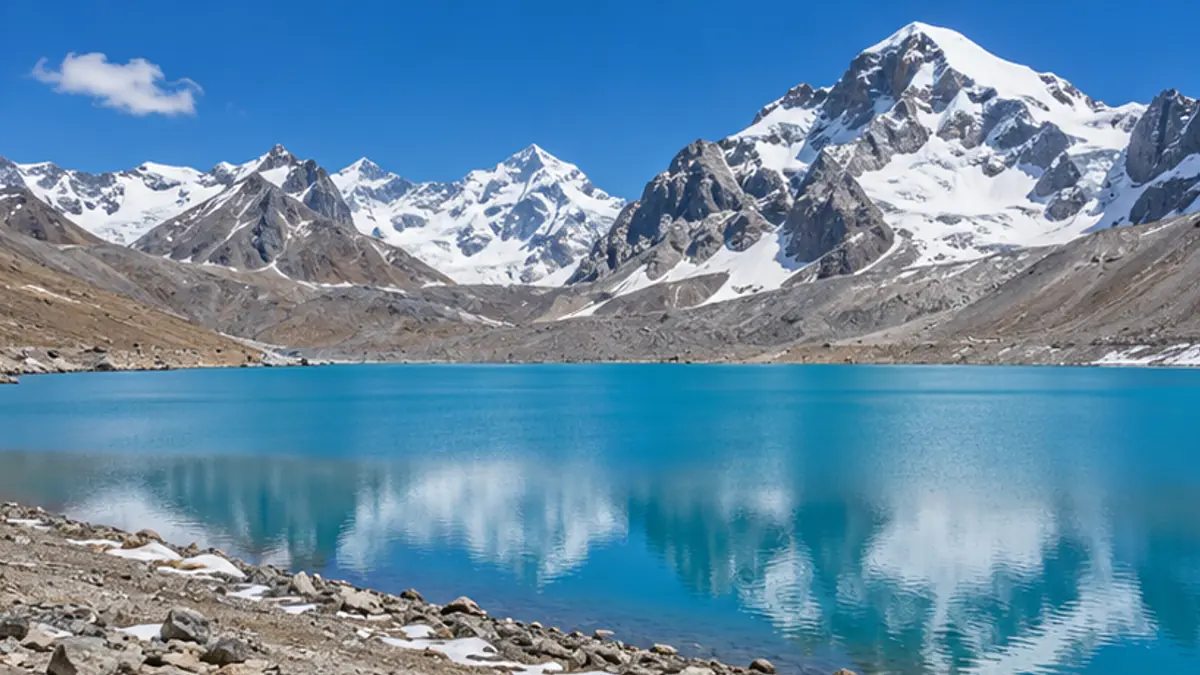
The lake holds deep spiritual reverence for both Buddhists and Sikhs, linked to historical blessings by Guru Padmasambhava and Guru Nanak Dev. Local tradition observes that a central section of the lake never freezes completely, even during harsh sub-zero winter temperatures.
Visitors stay overnight in Lachen village to acclimatize before making the early morning four-hour drive across the cold desert of the Tibetan Plateau. Due to the extreme altitude, visits are restricted to a maximum of 45 minutes to prevent acute mountain sickness. Travelers planning an expedition to the northern frontier can consult our complete guide to places to visit in Gangtok and North Sikkim for Protected Area Permit procedures, Lachen homestays, and Yumthang Valley rhododendron blooms.
6. Goechala: Classic Kanchenjunga Viewpoint Trek
Goechala is a high mountain pass situated at 4,940 meters in West Sikkim, providing the closest and most dramatic viewpoint of Mount Kanchenjunga’s southeastern face. The trail departs from Yuksom and weaves through rhododendron valleys before reaching the Dzongri ridge.
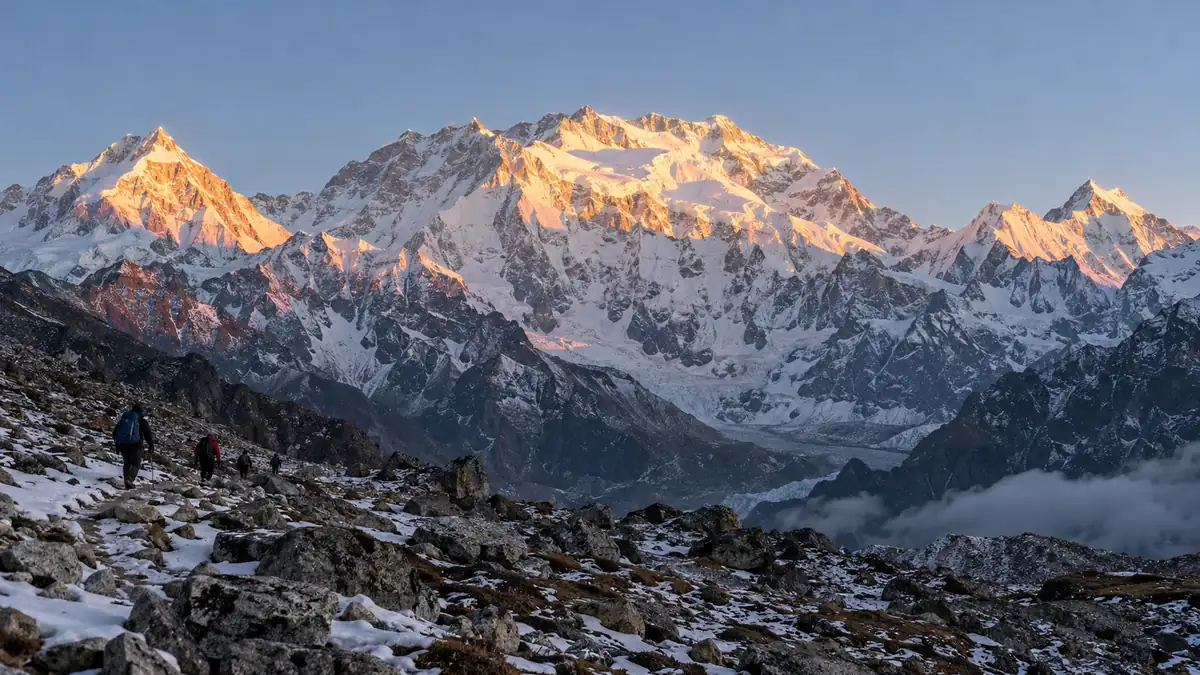
From Viewpoint 1 overlooking Samiti Lake, trekkers witness sunrise illuminating the sheer granite walls of Kanchenjunga and Mount Pandim in brilliant golden shades. Complete day-by-day itineraries and gear lists can be reviewed in our Goechala Trek guide.
The route is suited for fit trekkers with prior high-altitude hiking experience. The trail traverses through protected wildlife habitats documented by the Forest and Environment Department Government of Sikkim.
7. Singalila Ridge: Rhododendron Border Trail
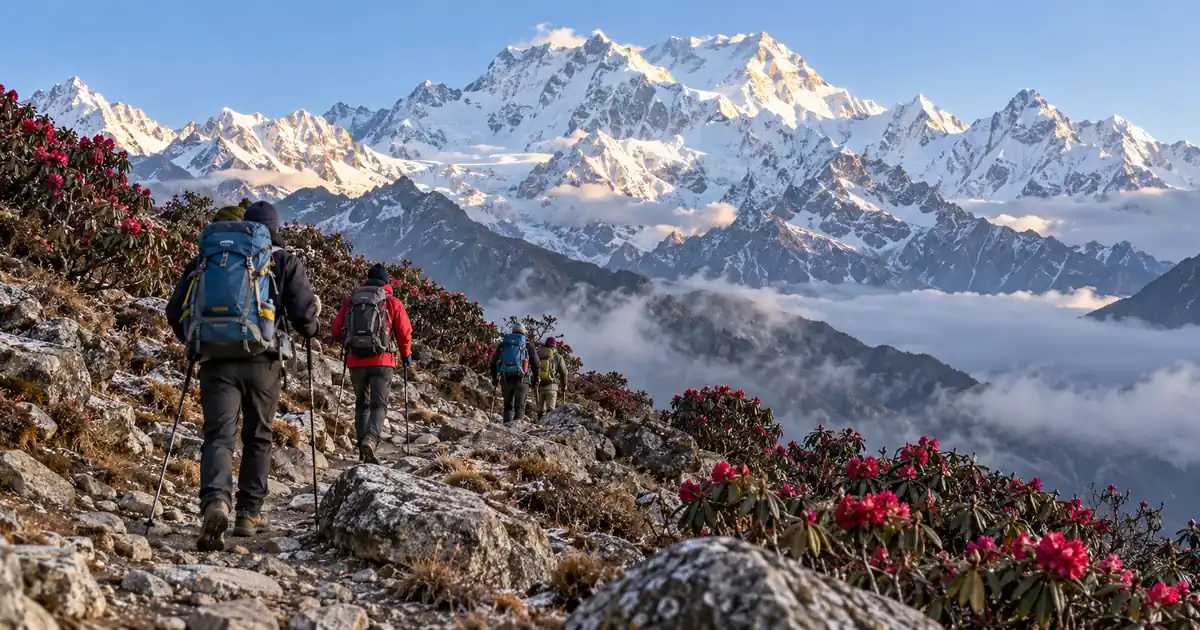
The Singalila Ridge trek follows the international border crest separating West Sikkim from eastern Nepal. The high ridge provides an unbroken vantage point where hikers can view four of the world’s five highest mountains simultaneously: Mount Everest, Kanchenjunga, Lhotse, and Makalu.
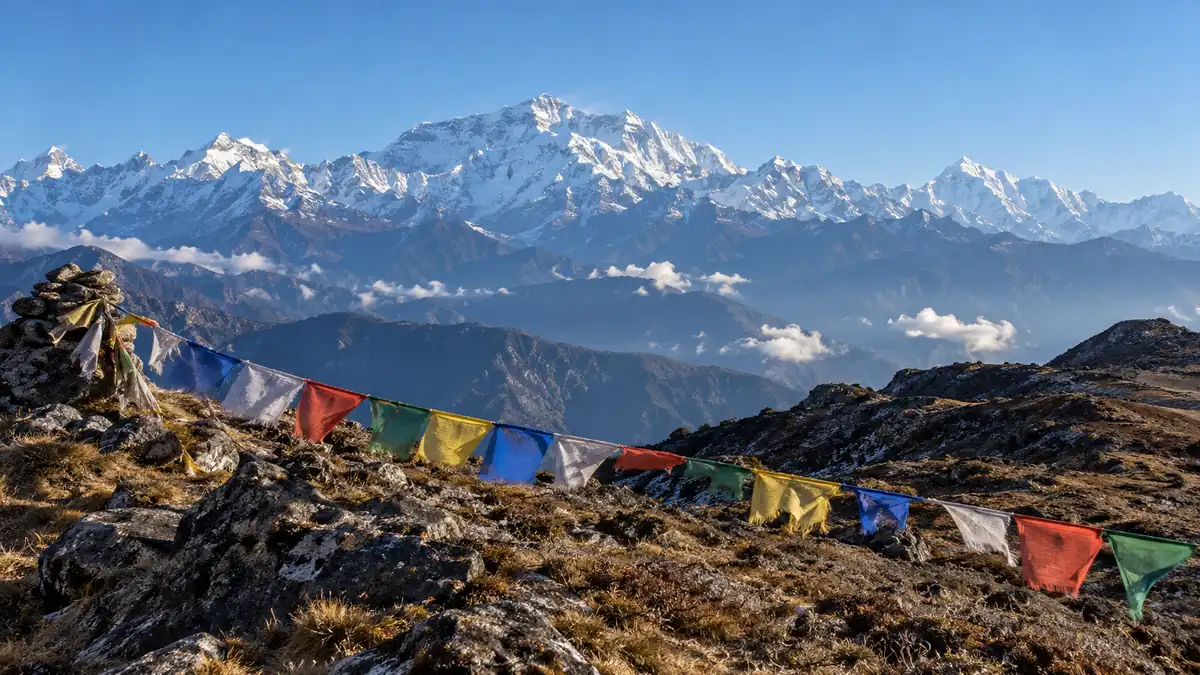
The trail passes through virgin bamboo thickets and moss-covered forests that shelter red pandas and rare satyr tragopans. Between April and May, blooming magnolia and rhododendron blossoms form colorful corridors along the mountain slopes.
Because the trail runs directly along an open international boundary, hikers must travel with licensed operators and carry official photo identification. The trek provides an exceptional wilderness journey away from conventional tourist roads.
8. Lachung: Alpine Hamlet on the Lachen River
Lachung is an authentic mountain village located at an altitude of 2,700 meters in North Sikkim, situated where the Lachen and Lachung rivers converge. The village functions as the primary overnight base for excursions to Yumthang Valley and Katao.
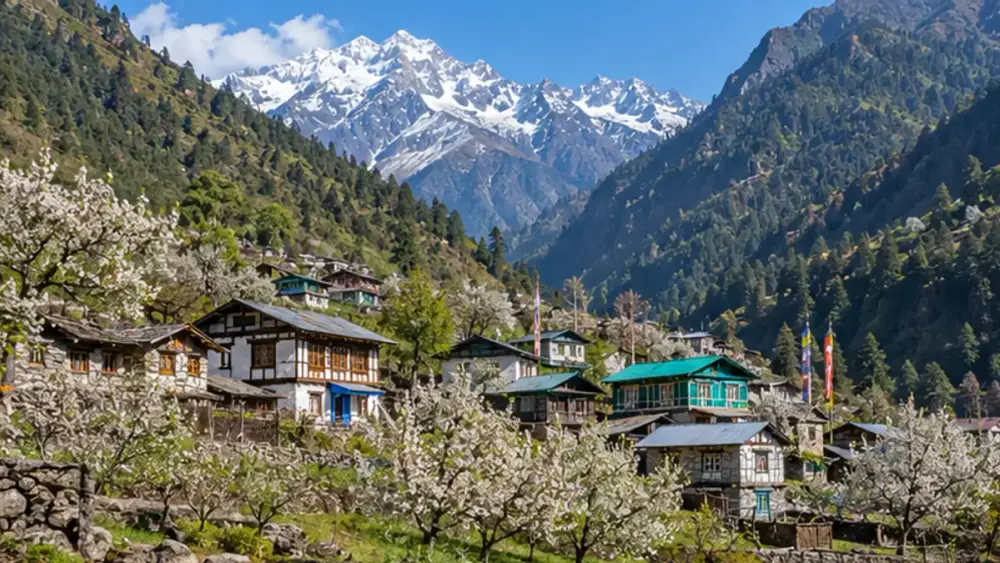
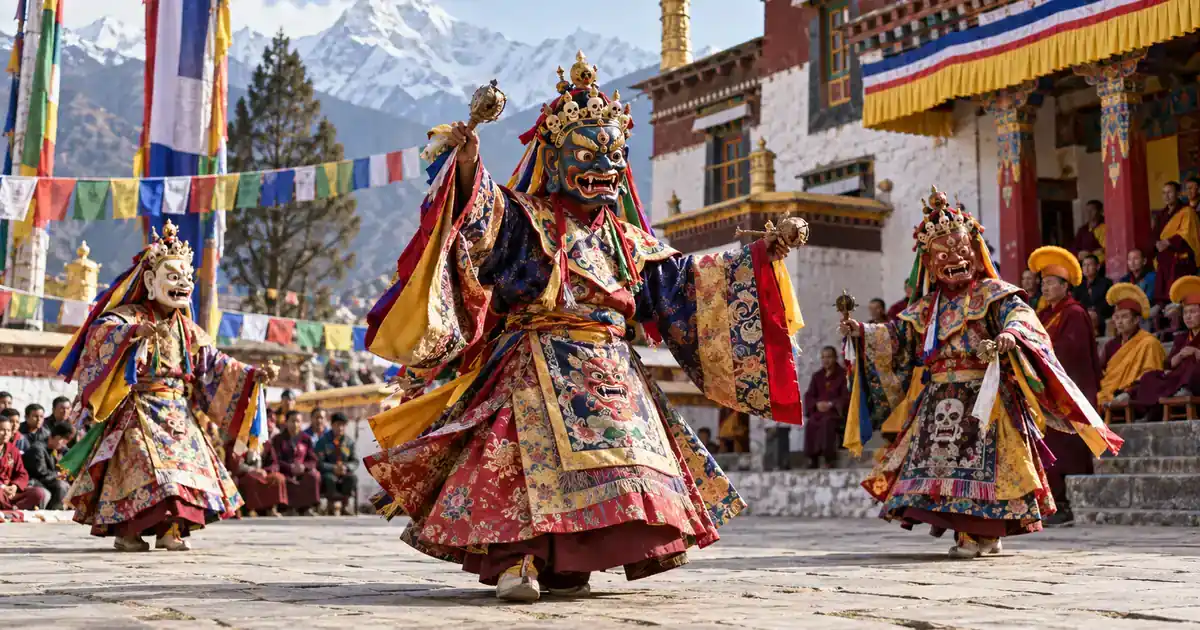
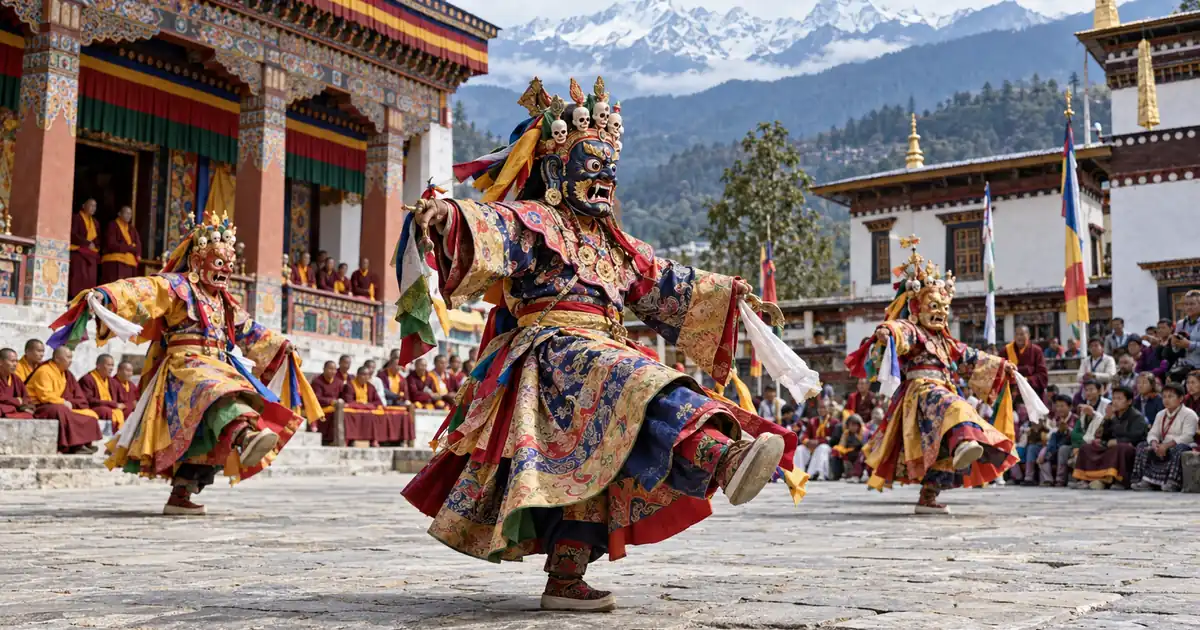
The settlement is governed by an ancient traditional self-governing administrative council known as the Dzumsa, which regulates community welfare, agricultural schedules, and local dispute settlements. The 19th-century Lachung Monastery stands atop a hillside, hosting sacred Chaam dances during Tibetan festival seasons.
In winter, snow blankets the pine cottages and surrounding apple orchards, creating a classic alpine retreat. Travelers should pack heavy woolen layers, as indoor heating in local homestays relies primarily on traditional wood-fired bukharis.
9. Pelling: Kanchenjunga Views and Sacred Ruins
Pelling rests at an altitude of 2,150 meters in West Sikkim, celebrated for its direct, unobstructed panoramic views of Mount Kanchenjunga. The town functions as the cultural heart of the state’s historical heritage, housing several of Sikkim’s oldest spiritual institutions.
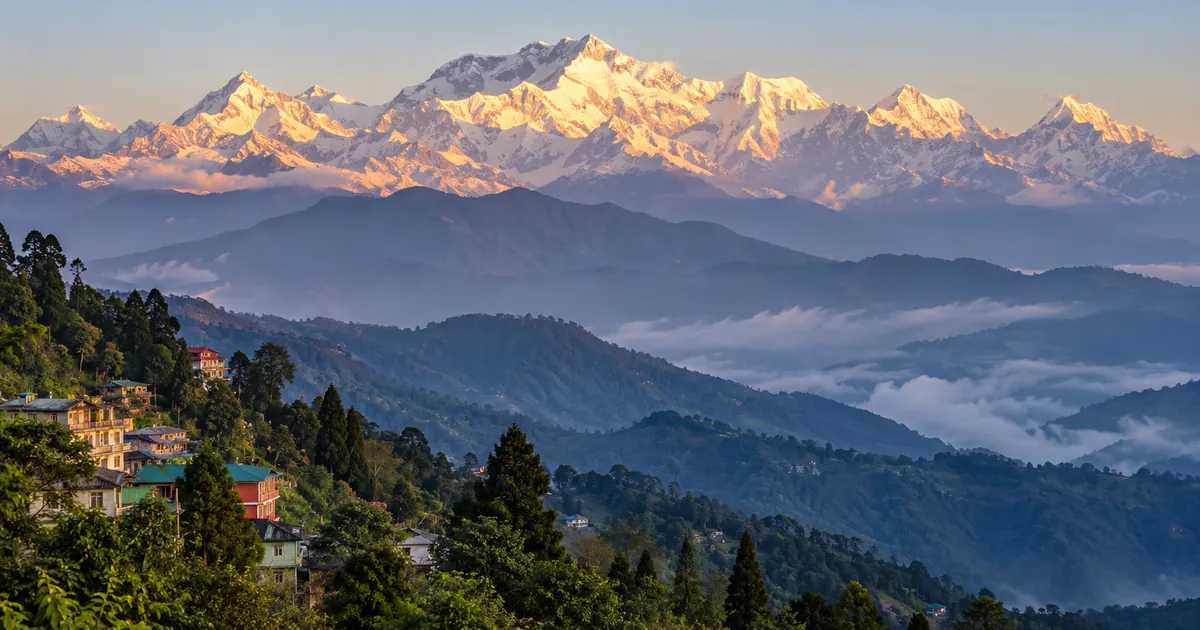
Major attractions include the 17th-century Pemayangtse Monastery, the Pelling Glass Skywalk facing the Chenrezig statue, and the stone palace ruins of Rabdentse, the second historic capital of the Kingdom of Sikkim. Detailed walking circuits can be explored in our places to visit in Pelling review.
The nearby Khecheopalri Lake is revered as a wish-fulfilling lake, where sacred myth dictates that birds pick away any leaves falling onto the clear water surface. Pelling is easily accessible from Gangtok via a four-hour scenic mountain drive.
10. Thambi View Point: Zuluk Silk Route Loops
Thambi View Point is located at an altitude of 3,400 meters in East Sikkim, positioned directly above the winding mountain hamlet of Zuluk. The viewpoint overlooks the legendary Old Silk Route, where three dozen zig-zag hairpin switchbacks snake down the steep mountainside.
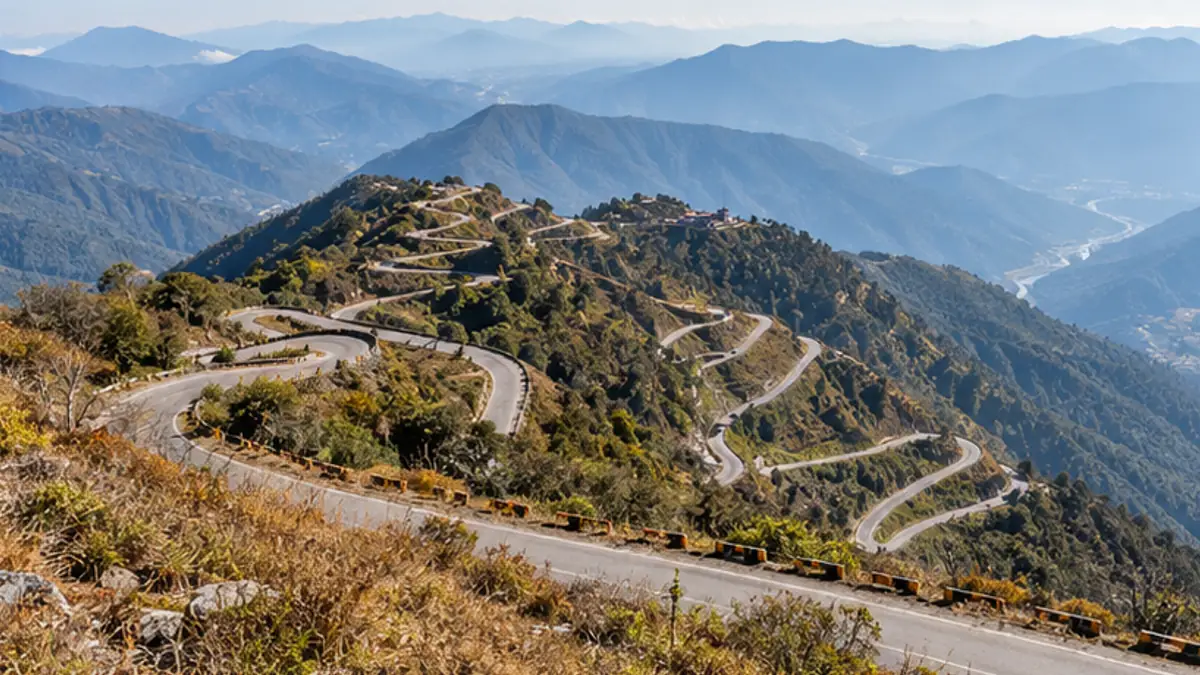
Early morning visitors are rewarded with spectacular sunrise vistas as morning sunlight illuminates the eastern face of Mount Kanchenjunga. During winter and early spring, the entire road system is blanketed in snow, requiring careful four-wheel-drive navigation.
The route passes through Kupup Lake, also known as Elephant Lake due to its distinctive shape, and the Tukla battleground memorial. Special Protected Area Permits are mandatory for civilian travel through the Zuluk sector.
11. Ravangla: Tathagata Tsal Buddha Park
Ravangla sits at an elevation of 2,100 meters in South Sikkim, positioned along the mountain saddle separating the Maenam and Tendong ridges. The town is famous for the Tathagata Tsal Buddha Park, constructed to commemorate the 2,550th birth anniversary of Gautama Buddha.
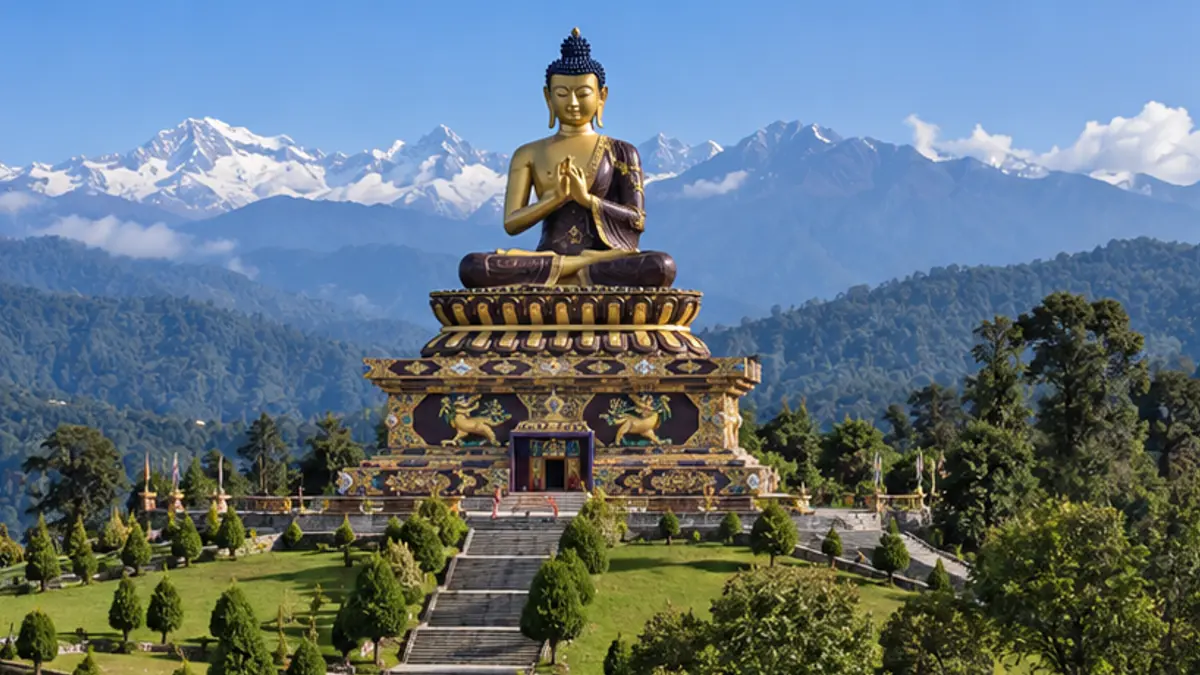
The park features a colossal 130-foot copper-and-gold statue of the Buddha, dedicated by the 14th Dalai Lama in 2013. The surrounding manicured gardens offer tranquil walkways framed by sweeping vistas of Mount Narsing, Kabru, and Pandim.
A short drive from the park leads to Old Ralang Monastery, one of the primary historical centers of the Karma Kagyu lineage in Sikkim. Cultural details and monastery schedules are registered with the Sikkim Tourism History and Culture Portal.
12. Rumtek Monastery: Seat of the Karma Kagyu Lineage
Rumtek Monastery, also known as the Dharma Chakra Centre, stands 24 kilometers southwest of Gangtok at an elevation of 1,500 meters. Established by the 16th Gyalwang Karmapa in 1966, the monastery serves as the main international seat of the Karma Kagyu lineage of Tibetan Buddhism outside Tibet.
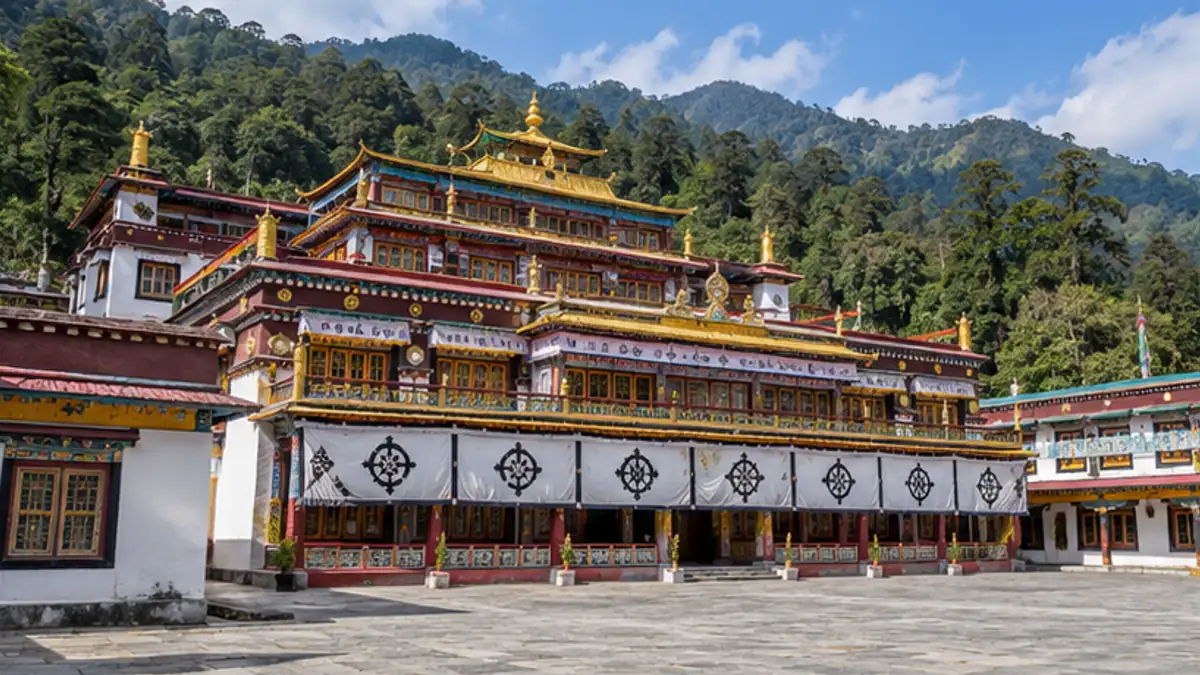
The main prayer hall is adorned with intricate traditional murals, silk thangkas, and ancient manuscripts. The rear building houses the sacred Golden Stupa, which enshrines the holy relics of the 16th Karmapa within an ornate gold-plated reliquary.
The monastery courtyard serves as the primary stage for annual sacred Cham dances performed prior to the Losar Festival in Sikkim. Visitors must show valid identification at the security checkpost before entering the monastery grounds.
13. Yuksom: Ancient Coronation Capital of Sikkim
Yuksom rests at an elevation of 1,780 meters in West Sikkim, holding immense historical importance as the birthplace of the Sikkimese kingdom. In 1642 CE, three venerated Tibetan lamas met here to consecrate Phuntsog Namgyal as the first Chogyal (religious king) of Sikkim.
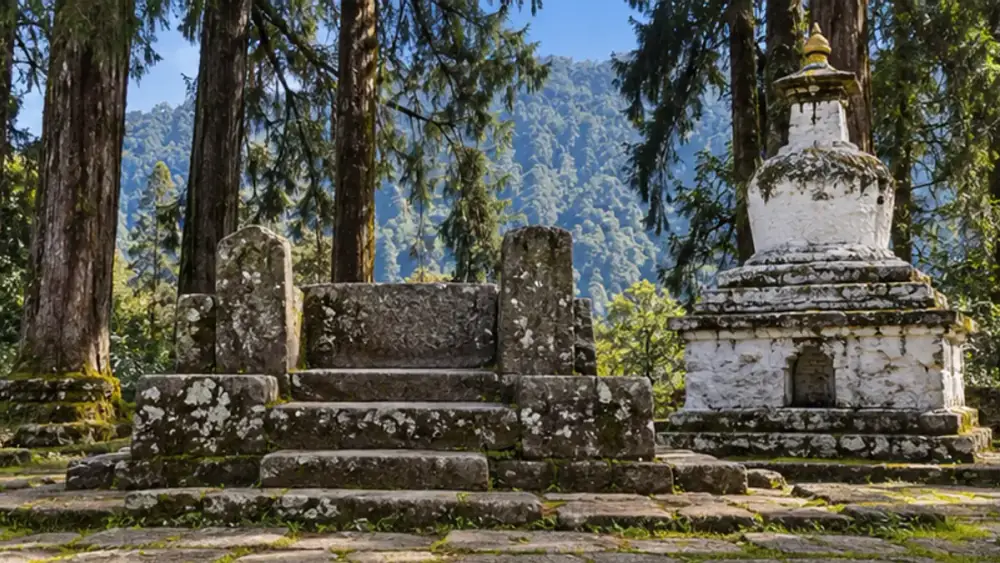
Visitors can visit the Norbugang Coronation Throne, an ancient stone seating platform sheltered beneath an immense pine tree, alongside a sacred footprint embedded in rock. A gentle uphill hike leads to Dubdi Monastery, established in 1701 as the oldest surviving monastery in Sikkim.
Today, Yuksom serves as the primary trailhead for major high-altitude mountaineering treks into Khangchendzonga National Park. The tranquil village preserves historic stone cottages, homestays, and prayer flag corridors.
14. Khangchendzonga National Park: UNESCO Mixed Heritage
Khangchendzonga National Park encompasses 1,784 square kilometers across North and West Sikkim, representing nearly 25% of the state’s total territory. In 2016, UNESCO inscribed the park as India’s first Mixed World Heritage Site, recognizing both its ecological biodiversity and its sacred cultural landscape.
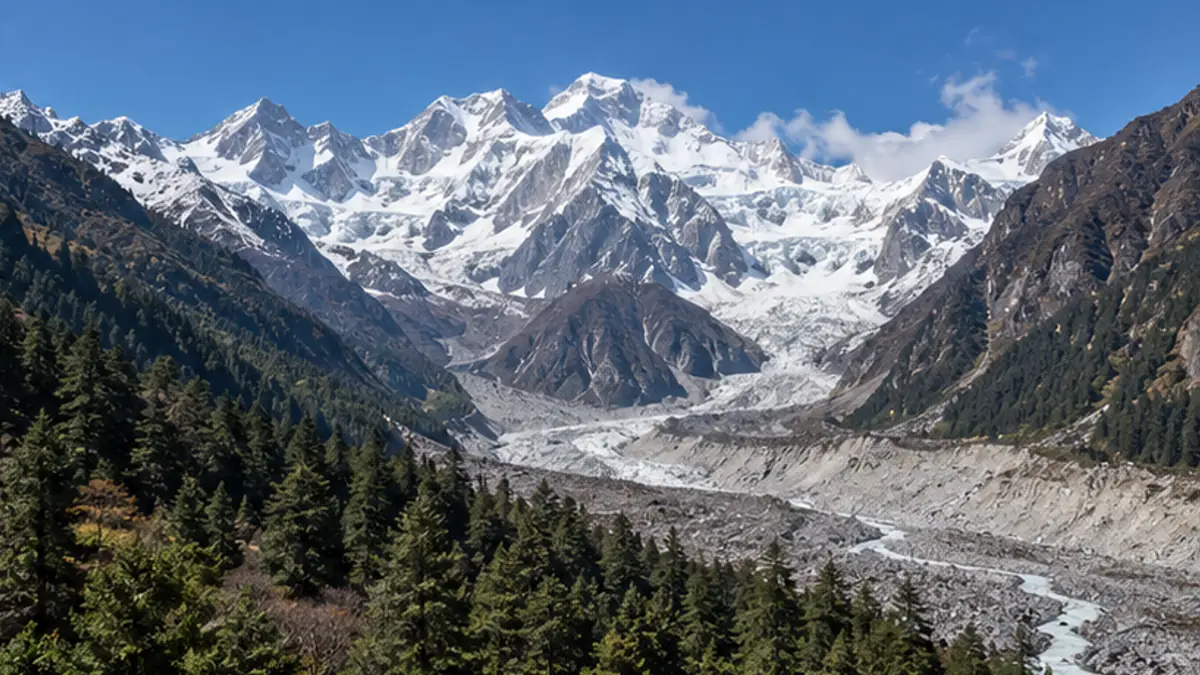
The park encompasses eighteen glaciers, including the massive 26-kilometer Zemu Glacier, and clear alpine lakes surrounded by snowfields. Wildlife populations include the elusive snow leopard, Himalayan black bear, red panda, Tibetan wolf, and musk deer.
Indigenous Lepcha traditions consider the entire park region a sacred sanctuary where guardian spirits dwell. Entry into the national park strictly requires conservation permits issued by state wildlife authorities.
15. Jawaharlal Nehru Botanical Garden: Flora Reserve
The Jawaharlal Nehru Botanical Garden is located near Rumtek Monastery, approximately 22 kilometers from Gangtok. Established in 1987, the botanical garden preserves a diverse collection of temperate and sub-alpine plant species native to the eastern Himalayas.
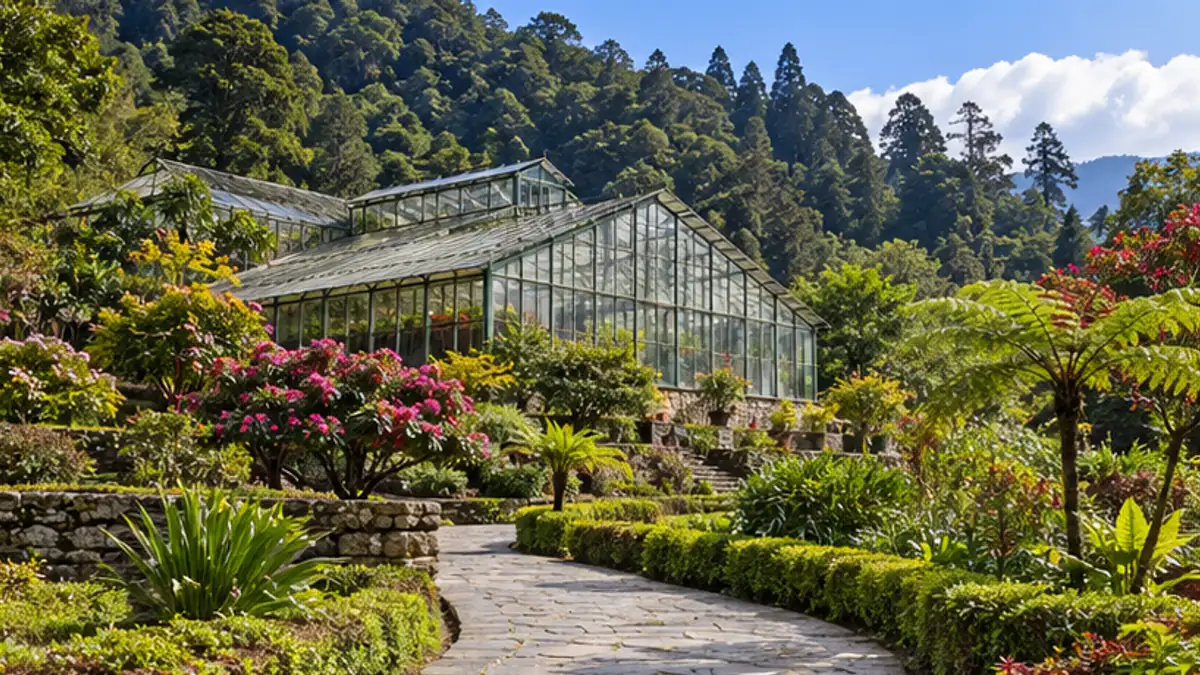
The garden features extensive greenhouses dedicated to exotic orchids, housing more than fifty rare indigenous species. Paved pedestrian paths wind through dense oak and pine groves, bordered by ornamental flower beds and peaceful picnic lawns.
A recreational lake allows for paddle boat rides against a backdrop of forested mountain slopes. The botanical park provides an educational stop for families touring the Rumtek monastery circuit.
16. Sikkim Himalayan Zoological Park: Red Panda Habitat
The Sikkim Himalayan Zoological Park covers 205 hectares of forested terrain in Bulbulay, situated three kilometers above central Gangtok at an altitude of 2,000 meters. Unlike conventional zoos, the facility provides spacious open-air enclosures simulating natural Himalayan wilderness habitats.
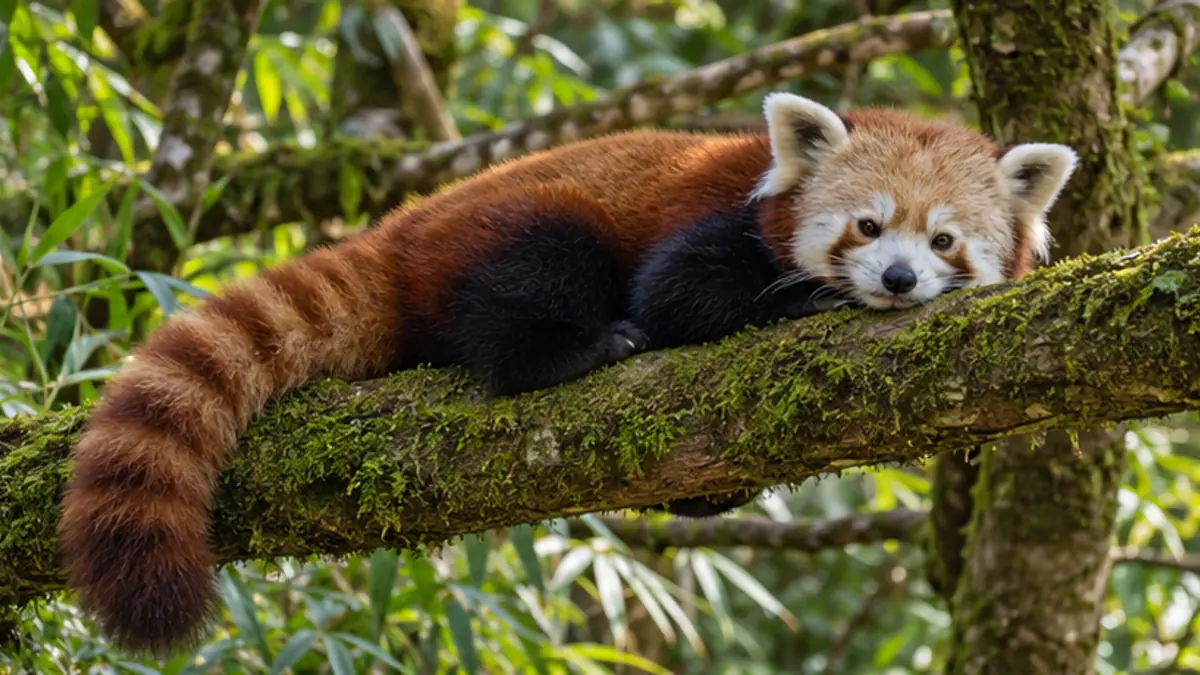
The park is celebrated for its successful conservation breeding programs for the endangered red panda, the official state animal of Sikkim. Visitors can also observe snow leopards, clouded leopards, Tibetan wolves, Himalayan black bears, and barking deer.
The park features paved walking trails through native oak and chestnut forests, with viewpoints offering glimpses of Mount Kanchenjunga on clear mornings. Electric safari carts are available for elderly visitors and families with young children.
17. Singalila National Park: Alpine Virgin Forests
Singalila National Park borders the southwestern perimeter of Sikkim along the Singalila Ridge, extending down into the Darjeeling district of West Bengal. The park covers high-altitude virgin forests of rhododendron, silver fir, and bamboo reaching elevations up to 3,636 meters at Sandakphu.
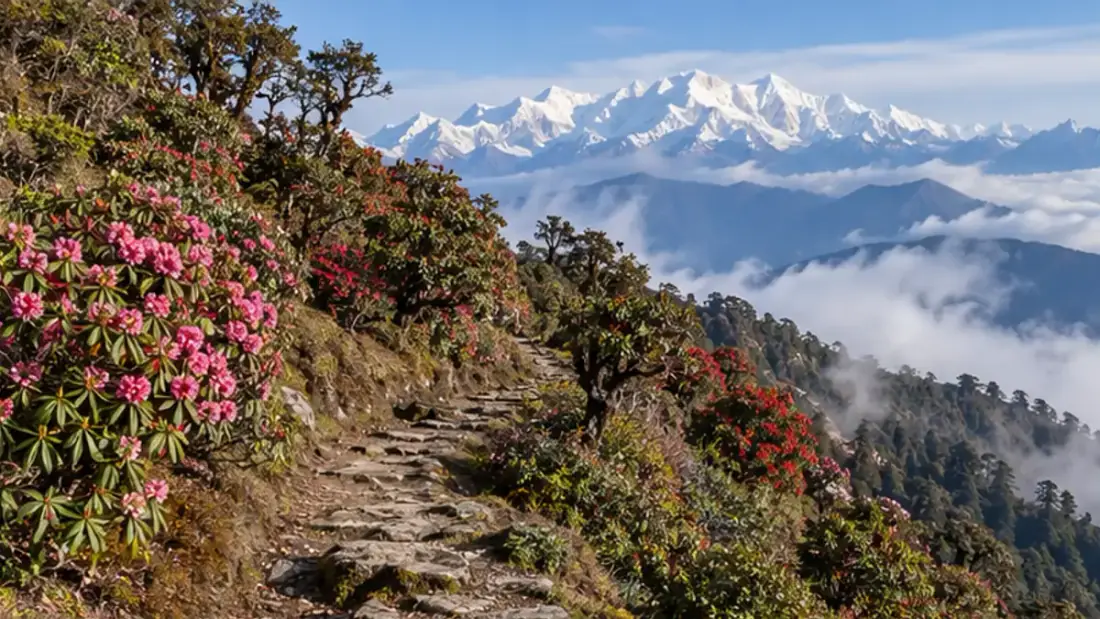
The sanctuary is recognized globally as an important bird area, hosting over 120 avian species including the blood pheasant, kalij pheasant, and red crossbill. The park also provides critical corridor habitats for small populations of red pandas and Himalayan salamanders.
Trekking routes through the park can be arranged from Uttarey in West Sikkim or Manebhanjan in neighboring West Bengal. Sturdy hiking boots and binoculars are recommended for wildlife tracking along the ridge.
18. Namgyal Institute of Tibetology: Mahayana Archives
The Namgyal Institute of Tibetology stands in Deorali, two kilometers south of central Gangtok. Established in 1958 by the 14th Chogyal of Sikkim, Sir Tashi Namgyal, the institute functions as an internationally acclaimed research center for the study of Mahayana Buddhism and Tibetan culture.
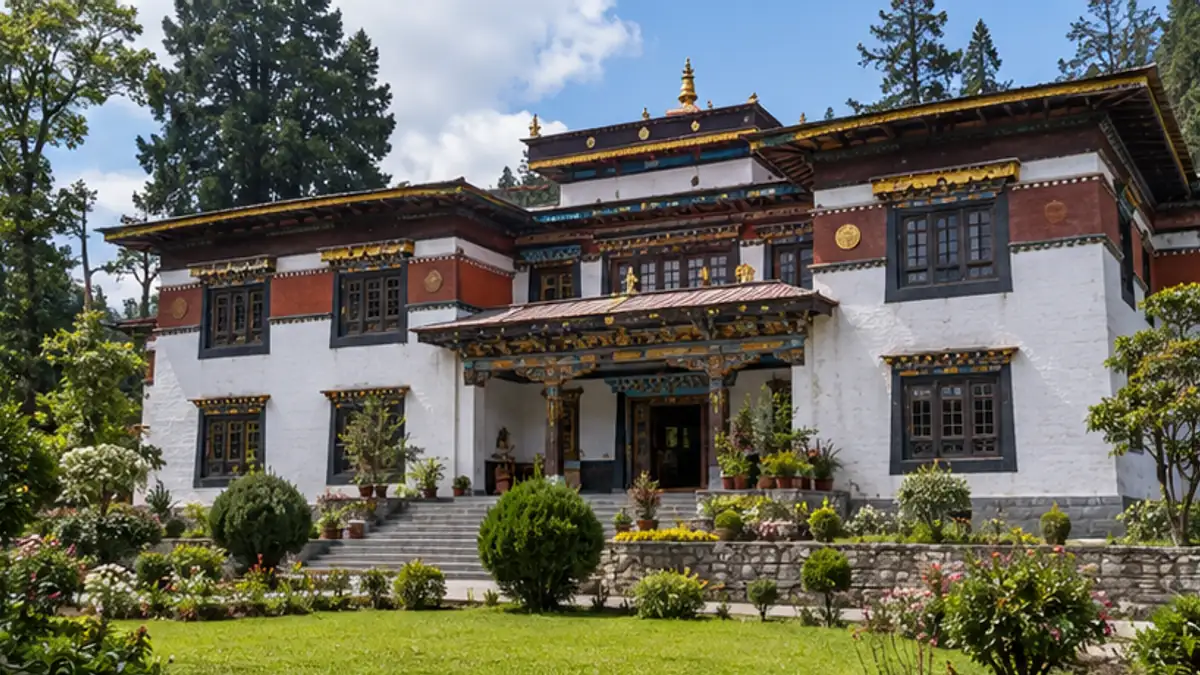
The building features authentic Tibetan architectural detailing, with carved wood pillars, gilded cornices, and fresco murals. The ground-floor museum displays rare 11th-century bronze statues, ritual conch shells, silver butter lamps, and ancient silk thangkas.
The library preserves one of the largest collections of Tibetan literature and manuscripts in the world, including rare treatises on Buddhist philosophy and medicine. A short walk leads to the adjoining Do-drul Chorten, a massive golden-topped stupa surrounded by 108 prayer wheels.
19. Baba Harbhajan Singh Temple: Border Shrine
Baba Harbhajan Singh Temple, known as Baba Mandir, is a legendary military shrine located along the high road between Tsomgo Lake and Kupup at an altitude of 3,962 meters. The shrine is dedicated to Sepoy Harbhajan Singh of the Punjab Regiment, who died in 1968 while leading a mule column through heavy snowfall.
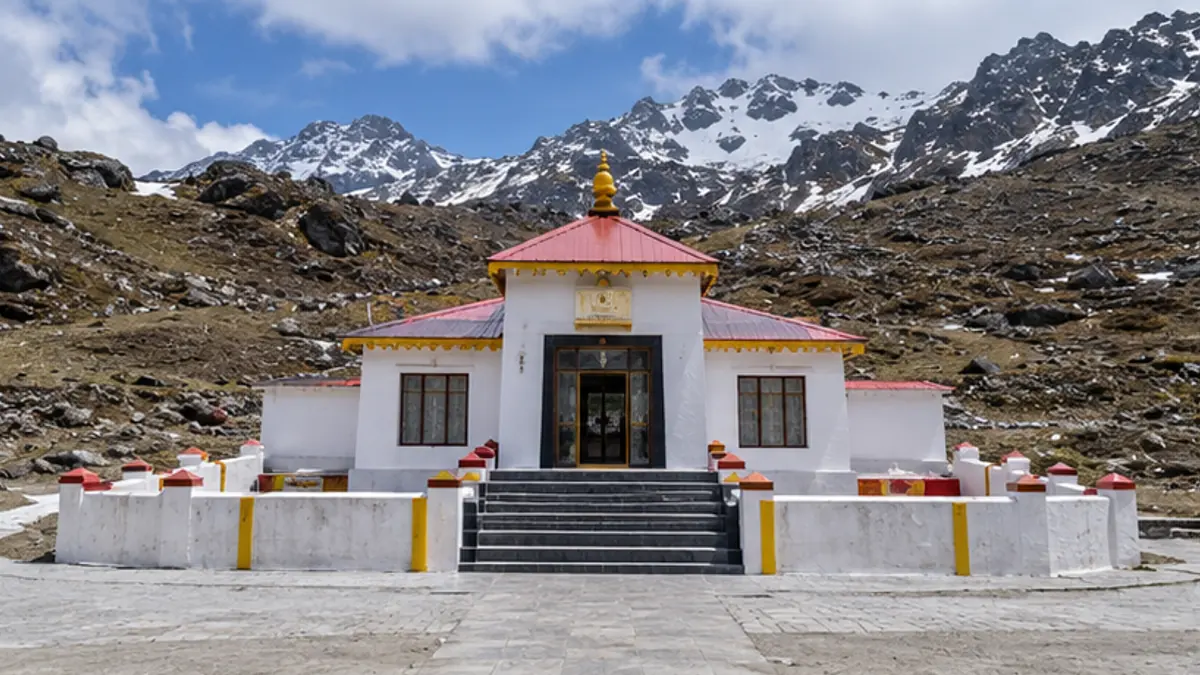
Indian Army personnel and local travelers revere Baba Harbhajan as the guardian spirit of the border who warns soldiers of impending weather hazards or military movements. The temple contains the soldier’s personal effects, including his ceremonial uniform and polished boots.
Devotees believe that leaving bottles of drinking water at the shrine blesses the water with healing properties. The site is a customary stop for travelers touring the high-altitude border circuit from Gangtok.
20. Banjhakri Falls and Energy Park: Folk Healing Cascades
Banjhakri Falls and Energy Park is situated in a forested glen seven kilometers west of Gangtok, near Swastik Camp. The site centers on a natural 100-foot waterfall cascading down rocky cliffs into a freshwater pool.
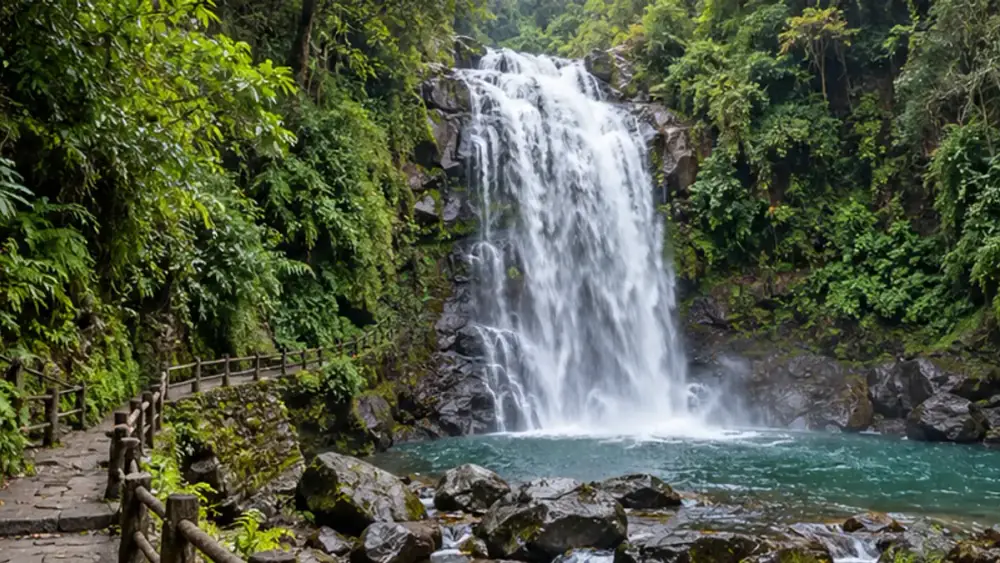
The park is dedicated to traditional Himalayan shamanic culture, featuring lifelike statues depicting the Banjhakri, a legendary forest-dwelling traditional healer in Nepali folklore. Sculptures illustrate rituals of traditional shamans (Jhakris) who heal illness and ward off evil mountain spirits.
The landscaped park features footbridges, paved stone paths, paddle boats, and solar-powered demonstration exhibits. The attraction is an easy, family-friendly half-day excursion from downtown Gangtok.
Curated 3-Day, 5-Day, and 7-Day Sikkim Itineraries
3-Day Itinerary: Gangtok and Alpine Lakes
- Day 1: Arrive via Pakyong or NJP, explore Gangtok MG Marg, and visit Namgyal Institute of Tibetology.
- Day 2: Day excursion to Tsomgo Lake, Baba Harbhajan Singh Temple, and Nathula Pass.
- Day 3: Tour Rumtek Monastery and Banjhakri Falls before afternoon departure.
5-Day Itinerary: Eastern Lakes to West Sikkim Heritage
- Days 1–2: Gangtok city highlights, Tsomgo Lake high pass excursion, and local market walks.
- Day 3: Drive to Pelling via Ravangla Buddha Park, admiring views of Mount Kanchenjunga.
- Days 4–5: Tour Pemayangtse Monastery, Rabdentse Palace ruins, and return via Khecheopalri Lake.
7-Day Itinerary: Grand North and West Sikkim Expedition
- Days 1–2: Gangtok arrival and acclimatization with day trips to Rumtek and Tsomgo Lake.
- Days 3–4: North Sikkim mountain journey to Lachung and the floral meadows of Yumthang Valley.
- Days 5–6: Drive south to Pelling; explore historical royal ruins and walk the Pelling Skywalk.
- Day 7: Yuksom coronation site and farewell transfer to Bagdogra or New Jalpaiguri.
Detailed government permits and registered travel transport agencies can be confirmed through the Incredible India Official Sikkim Portal.
Frequently Asked Questions About Visiting Sikkim
Which is the most visited place in Sikkim?
Gangtok serves as the most visited destination in Sikkim, operating as the state’s commercial capital and the main base for excursions to Tsomgo Lake, Nathula Pass, and Rumtek Monastery. Its pedestrian thoroughfare MG Marg offers hotels, travel agencies, and local restaurants.
How many days are enough for a Sikkim trip?
A 5 to 7-day trip provides adequate time to explore the highlights of Gangtok, make day trips to Tsomgo Lake, and take a multi-day excursion into North Sikkim or Pelling in the west. Trekkers aiming for high mountain passes like Goechala require a minimum of 10 to 12 days.
What is the best month to visit Sikkim?
The best travel seasons are spring from March to May when wild rhododendrons carpet alpine valleys and autumn from October to mid-December when clear mountain skies provide optimal Kanchenjunga views. Monsoon months between July and August bring frequent landslides along steep highway corridors.
Is permit required for all places in Sikkim?
Indian tourists can freely visit central towns like Gangtok, Pelling, and Ravangla, but strictly require Protected Area Permits for border regions such as Nathula Pass, Gurudongmar Lake, and Tsomgo Lake. Foreign nationals require Inner Line Permits to enter Sikkim and special restricted area permits for designated trekking circuits.
Can a trip to Sikkim be combined with other Northeast festivals?
Yes, many travelers exploring Northeast India in late autumn pair a scenic tour of Sikkim with the world-famous Hornbill Festival in Nagaland, celebrated annually from December 1 to 10 in Kisama near Kohima.