Tsomgo Lake Sikkim: Altitude, Permits, Cable Car & Guide
Plan your visit to Tsomgo Lake (Changu Lake) in Sikkim with altitude facts, Protected Area Permit rules, passenger cable car timings, and taxi fares.
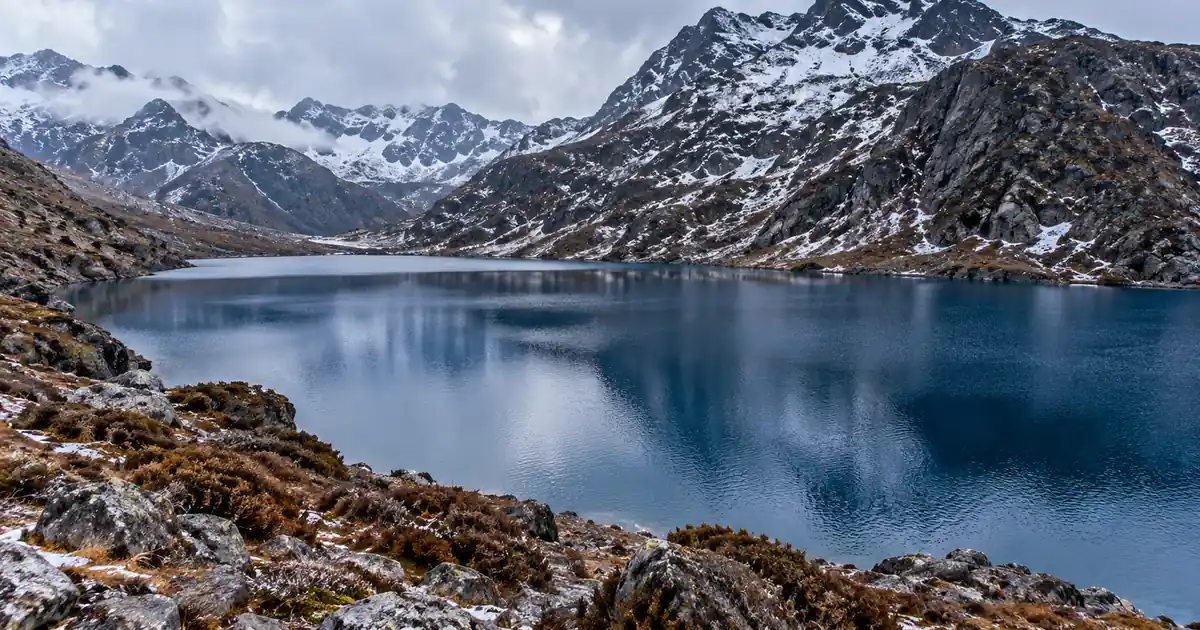
Tsomgo Lake, commonly known as Changu Lake, is an alpine glacial water body situated at an elevation of 3,753 meters (12,313 feet) in the East Sikkim district. Located 40 kilometers northeast of Gangtok along Jawaharlal Nehru Road, the lake serves as a centerpiece of the eastern mountain corridor leading toward the Tibetan plateau.
Travelers consider Tsomgo Lake an essential high-altitude excursion when planning routes from our Sikkim state travel guide. Official conservation notices and visitor rules are maintained on the Sikkim Tourism Official Portal Tsomgo Lake Directory.
High-Altitude & Permit Essentials
- Tsomgo Lake (Changu Lake) is situated at an altitude of 3,753 meters (12,313 feet) in East Sikkim, 40 kilometers northeast of Gangtok along Jawaharlal Nehru Road.
- A government-issued Protected Area Permit (PAP) is mandatory for all visitors, processed one day in advance via registered Sikkim travel agencies.
- The lake freezes solid from January through March, while late spring brings blooming alpine rhododendrons along the shore.
- The Tsomgo Passenger Ropeway transports riders from the lakeshore to an elevated 14,500-foot ridge vantage point for ₹450 per person.
Tsomgo Lake Travel Logistics & Fee Matrix
The following matrix outlines access details, transit options, and standard expenses for visiting Tsomgo Lake and its surrounding mountain facilities.
| Item / Activity | Specification | Standard Fee | Timings / Operational Hours | Key Requirement |
|---|---|---|---|---|
| Protected Area Permit (PAP) | Police Tourism Cell | ₹200 – ₹300 agent processing | Issued 10:00 AM – 3:00 PM (Prior Day) | Indian ID / Passport copy + 2 photos |
| Shared Taxi Seat (Gangtok return) | Mahindra Bolero / Scorpio | ₹700 – ₹1,000 per seat | Departures 7:30 AM – 9:00 AM | Reserved via Vajra Stand Gangtok |
| Private Vehicle Hire | Dedicated 4WD SUV | ₹4,500 – ₹6,500 per vehicle | Full day return trip | Covers Tsomgo & Baba Mandir |
| Tsomgo Passenger Ropeway | Cable car to 14,500 ft | ₹450 per person | 9:00 AM – 3:30 PM | Weather permitting |
| Yak Ride along Lakeside | Guided traditional ride | ₹300 – ₹500 per ride | Daylight hours | Negotiated at lakeside counter |
| Snow Boots & Coat Rental | Roadside rental stalls | ₹100 – ₹250 per item | 7:00 AM – 4:00 PM | Available at 15th Mile checkpoint |
Sacred Origins and Cultural Significance of Changu Lake
In the Bhutia language, Tsomgo translates directly to Source of the Lake (Tso meaning lake and Mgo meaning head). The lake spans roughly one kilometer in length with an oval shape and an average depth of 15 meters, fed by glacial runoff from surrounding mountain peaks.
Local communities hold the lake in deep spiritual reverence, associating its pure waters with protective regional deities. According to local historical accounts cataloged by the District Administration East Sikkim Tsomgo Lake Portal, Buddhist monks formerly studied the subtle color changes of the water surface to forecast weather trends and political changes across the kingdom.
During the sacred festival of Guru Purnima, faith healers known as Jhakris gather from across Sikkim to offer prayers and bathe in the cold mountain waters, linking the shrine to the broader cultural celebrations and festivals of Sikkim.
Protected Area Permit Requirements and Application Process
How do Indian and international travelers obtain the mandatory permit to visit Tsomgo Lake? Because the lake lies within an active military border zone close to the Indo-China frontier, all travelers must carry an authorized Protected Area Permit (PAP). Official procedural guidelines are outlined by the Sikkim Tourism Protected Area Permit Official Guidelines.
Travelers must arrange permits through a registered Sikkim tour operator or authorized hotel desk in Gangtok one day prior to departure:
- Documentation for Indian Citizens: A valid government photo identity card (Voter ID card or Indian Passport; Aadhaar cards are accepted conditionally by checkposts) plus two passport-sized photographs per traveler.
- Rules for Foreign Nationals: International tourists can obtain permits to Tsomgo Lake provided they travel in groups of at least two persons organized by a registered local agency. Foreign passport holders cannot proceed beyond Tsomgo Lake toward Nathula Pass.
- Checkpost Scans: Vehicles undergo verification at the 3rd Mile and 15th Mile military checkposts before ascending to the lake rim. Keep physical permit copies readily available inside the vehicle. Similar military and police verification procedures apply for travelers planning overland tours across the high valleys featured in our places to visit in Gangtok and North Sikkim guide.
Tsomgo Lake Ropeway Cable Car and Lakeside Yak Rides
The Tsomgo Passenger Ropeway is one of the highest commercial cable cars in Asia, carrying passengers from the lakeshore station (12,400 feet) to an upper mountain ridge at 14,500 feet. The journey spans roughly 800 meters across open mountain slopes in under ten minutes.
The upper vantage platform offers views extending across deep valley gorges into the snow-capped borders of Bhutan and the Tibetan plateau. Tickets cost approximately ₹450 per passenger, and the ropeway operates daily between 9:00 AM and 3:30 PM, subject to high-altitude wind safety clearances.
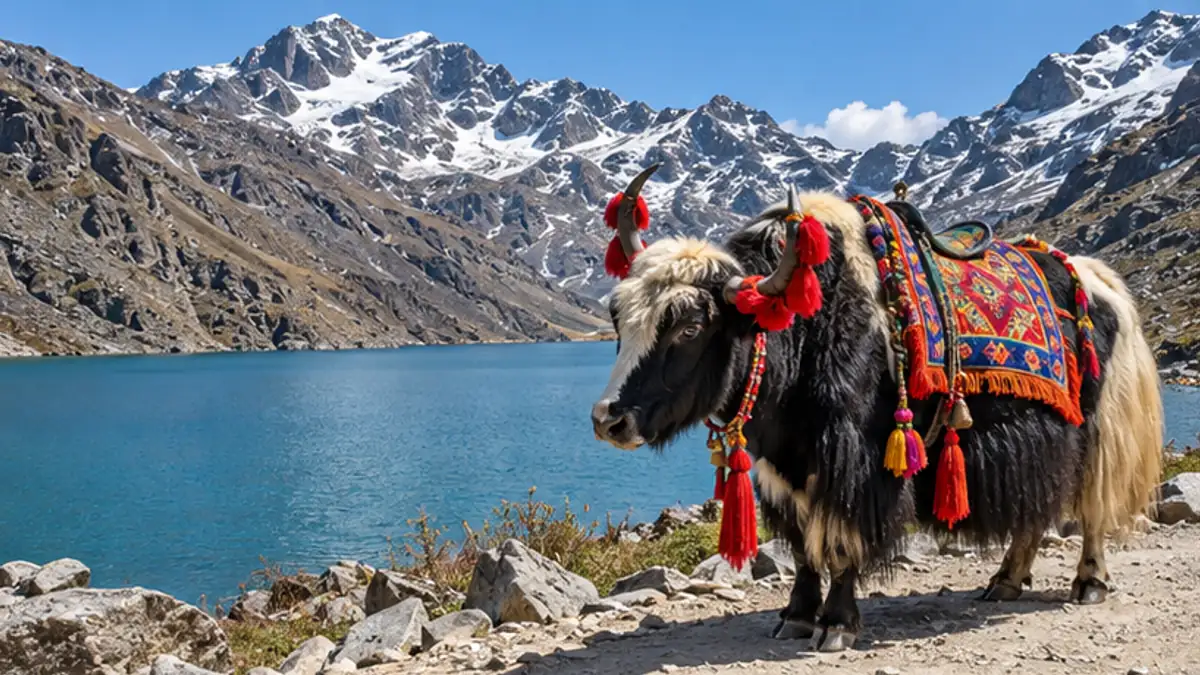
Along the lakeside trail, local villagers offer rides on colorfully draped Tibetan yaks adorned with traditional woven wool and brass bells. A short photo ride costs around ₹300 to ₹500 per person.
Nearby High-Altitude Circuit Attractions: Baba Mandir & Nathula
Travelers visiting Tsomgo Lake generally combine their journey with additional destinations positioned along the upper Jawaharlal Nehru Road corridor:
- Baba Harbhajan Singh Mandir (Old & New): Located 16 kilometers beyond Tsomgo Lake at an altitude of 4,000 meters, this sacred shrine commemorates Baba Harbhajan Singh, an Indian Army soldier who died in 1968. Soldiers and civilians revere his spirit as a guardian protecting troops patrolling the harsh border ranges.
- Nathula Pass: Situated 16 kilometers past the lake at an altitude of 4,310 meters (14,140 feet), Nathula serves as an open border crossing between India and the Tibet Autonomous Region of China. Visits require an additional permit supplement and special vehicle authorization, detailed in our Indo-China border at Nathula Pass guide.
- Kupup Lake (Elephant Lake): Located further east along the Old Silk Route, Kupup is shaped like an elephant and features an adjacent high-altitude golf course.
Best Time to Visit Tsomgo Lake for Snow and Clear Weather
What are the best months to experience snow cover or clear mountain skies at Tsomgo Lake? The optimal travel seasons divide into distinct winter and spring windows:
- Winter Snow Season (December to March): The lake begins freezing over in December and remains a sheet of solid ice through March. Heavy snowfall blankets the road corridor; travelers should check highway clearance status in Gangtok each morning before departure.
- Spring Rhododendron Bloom (April to May): Melting ice reveals deep green water surfaces bordered by blooming yellow and red rhododendrons, primulas, and blue poppies. Daytime temperatures range from 8°C to 16°C.
- Monsoon Caution (June to September): Heavy summer rains regularly cause landslides along the Teesta and JN Road sectors, often causing temporary road closures.
- Autumn Clear Skies (October to November): Atmospheric clarity peaks following the monsoon rains, offering reliable mountain photography conditions comparable to western valleys like Pelling.
How to Reach Tsomgo Lake from Gangtok by Shared and Private Taxi
How do visitors travel from Gangtok to Tsomgo Lake by road? The 40-kilometer mountain drive along Jawaharlal Nehru Road takes roughly two to two and a half hours each way, winding through Kyongnosla Alpine Sanctuary.
- Shared Taxis: Budget travelers can book individual seats in shared Mahindra Bolero or Tata Sumo cabs departing from the Vajra Taxi Stand in upper Gangtok between 7:30 AM and 8:30 AM. Fares average ₹700 to ₹1,000 per seat inclusive of basic permit processing.
- Private Vehicle Hire: Private four-wheel-drive SUVs cost between ₹4,500 and ₹6,500 for a full-day return trip covering Tsomgo Lake and Baba Mandir. Reserving private transit gives travelers flexibility to stop for photos and adjust departure times.
- Winter Road Equipment: During heavy snowfall, local drivers fit tire chains to negotiate slippery mountain passes. Travelers should rely on licensed local drivers experienced with high-altitude ice conditions, just as border expeditions require dedicated local 4x4 vehicles across the high-altitude road across Sela Pass, Sela Tunnel, and Bum La Pass.
High-Altitude Health and Acclimatization Tips
Ascending from Gangtok at 1,650 meters to Tsomgo Lake at 3,753 meters in just two hours represents a rapid gain in vertical altitude. Travelers should take sensible precautions to avoid acute mountain sickness (AMS):
- Hydration: Drink plenty of warm water and fluids prior to leaving Gangtok. Dehydration accelerates the onset of altitude headaches and dizziness.
- Pacing: Avoid running or walking rapidly along the lake perimeter. Move deliberately, especially when climbing the stone steps toward the ropeway station.
- Medication & Oxygen: Travelers with a history of altitude distress can consult a physician about acetazolamide (Diamox). Small portable oxygen canisters are sold at medical shops in Gangtok for ₹400 to ₹600. Similar acclimatization pacing is advised for high-altitude trekking routes like the Goechala trek.
- Warm Clothing: Wind chill can lower perceived temperatures significantly. Wear thermal innerwear, a windproof down jacket, woolen gloves, and ear protection even during bright sunny days.
Frequently Asked Questions About Tsomgo Lake Sikkim
What is the altitude of Tsomgo Lake in Sikkim?
Tsomgo Lake sits at an altitude of 3,753 meters (12,313 feet) in East Sikkim, approximately 40 kilometers northeast of Gangtok. Due to the rapid elevation gain from Gangtok, visitors should pace their movement to prevent acute mountain sickness.
Is a special permit required to visit Tsomgo Lake?
All Indian and international visitors must obtain a Protected Area Permit (PAP) issued by the Sikkim Police Tourism Cell. Applications must be submitted through an authorized travel agency in Gangtok alongside government photo identification and two passport-sized photographs.
Which months does Tsomgo Lake remain frozen with snow?
The lake surface typically freezes completely from January through March, with heavy snow blanketing the surrounding mountain slopes until late April. Temperatures during winter hover between -5°C and 5°C, requiring heavy thermal clothing.
Are foreign passport holders allowed to visit Tsomgo Lake?
Foreign tourists are permitted to travel up to Tsomgo Lake provided they travel in groups of at least two persons booked through a registered Sikkim tour agency. However, foreign nationals are not permitted to travel onward to the international border at Nathula Pass.