15 Best Places to Visit in Shimla: Summer & Winter Guide
Explore top places to visit in Shimla in summer and winter, including The Ridge, Mall Road, Jakhoo ropeway, Kalka toy train timings, and Kufri snow tips.
Shimla rests along a crescent-shaped mountain ridge at an altitude of 2,276 meters in Himachal Pradesh. Declared the official summer capital of British India in 1864, the town retains its colonial-era architecture, mountain railways, and forested Himalayan footpaths.
Travelers frequently combine Shimla with alpine circuits across northern Himachal, detailed in our guide to the places to visit in Kullu Manali. The hill station functions as a year-round destination, drawing summer travelers seeking cool mountain weather and winter tourists chasing seasonal snowfall.
Visitor & Hill Station Essentials
- Shimla is situated at an elevation of 2,276 meters (7,467 feet) in Himachal Pradesh, 113 kilometers northeast of Chandigarh via National Highway 5.
- The historic core spanning The Ridge and Mall Road is completely pedestrianized, prohibiting vehicular traffic between Scandal Point and Chotta Shimla.
- The UNESCO-listed Kalka-Shimla toy train operates daily across 96 kilometers, requiring advance IRCTC ticketing due to limited seat quotas.
- Summer travel from March to June brings comfortable temperatures of 15°C to 28°C, while snowfall seekers should plan visits between late December and early February.
Shimla Sightseeing Matrix: Timings, Fees & Elevation
The following matrix outlines entry costs, operating hours, and elevations for primary landmarks across the Shimla district.
| Landmark | Elevation | Distance from Central Ridge | Entry Fee | Standard Timings |
|---|---|---|---|---|
| The Ridge & Scandal Point | 2,205 m | 0 km | Free | 24 Hours (Open) |
| Mall Road Promenade | 2,190 m | 0.2 km | Free | 9:00 AM – 10:00 PM |
| Jakhoo Temple & Statue | 2,455 m | 2.5 km | Free (Ropeway ₹550) | 6:00 AM – 8:00 PM |
| Christ Church | 2,210 m | 0.1 km | Free | 8:00 AM – 6:00 PM |
| Kalka-Shimla Railway Terminus | 2,075 m | 1.8 km | Train Fare (₹65 – ₹500) | Timetable Based |
| Kufri Snow Slopes | 2,720 m | 16 km | Free (Activity Charges) | 8:00 AM – 6:00 PM |
| Viceregal Lodge (IIAS) | 2,135 m | 4.5 km | ₹40 Indians / ₹85 Foreign | 9:30 AM – 5:30 PM |
| Chadwick Falls | 1,586 m | 7 km | Free | Sunrise to Sunset |
1. The Ridge and Scandal Point Cultural Promenade
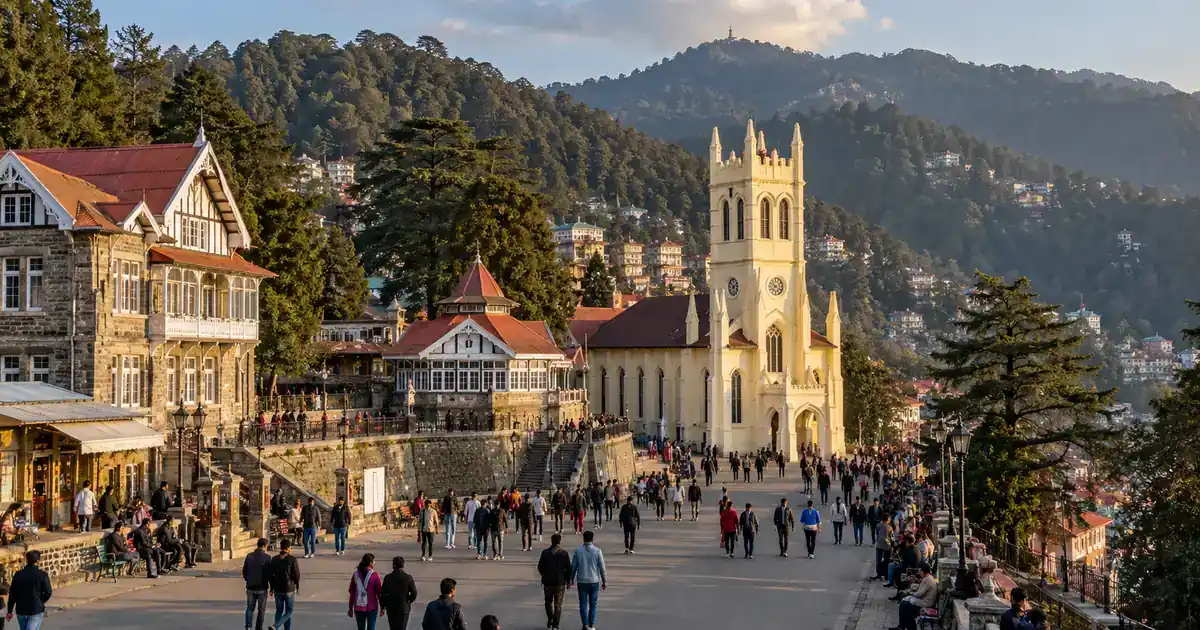
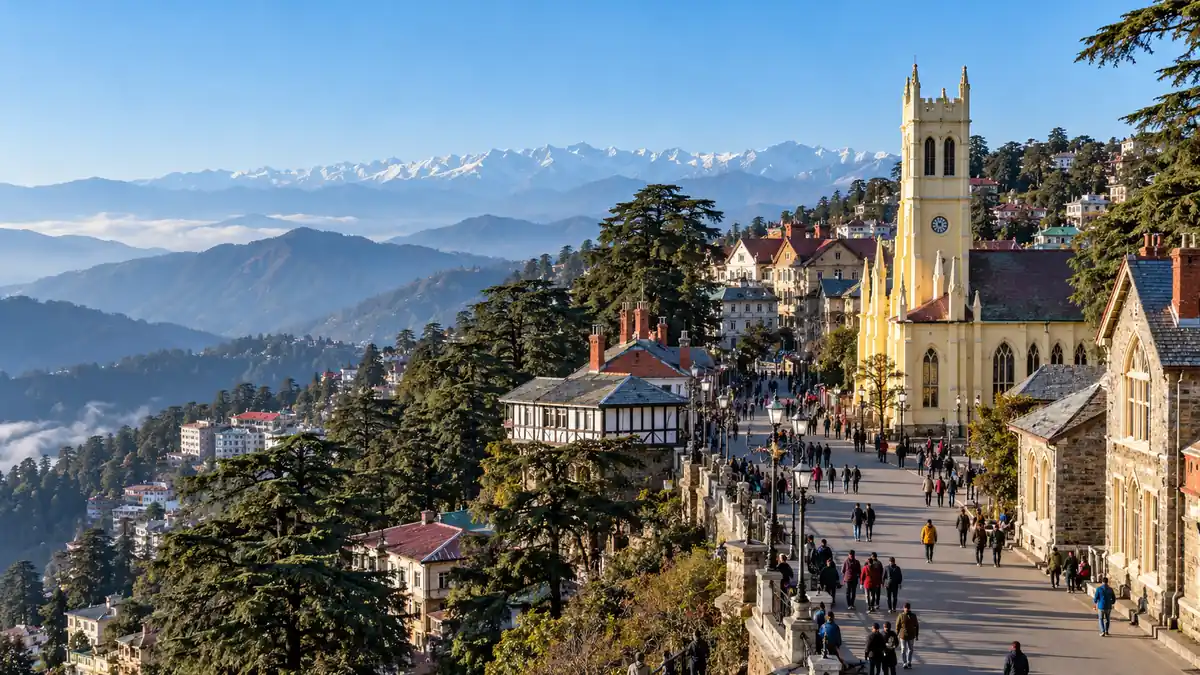
The Ridge is a wide open pedestrian esplanade running along the crest of Shimla, functioning as the cultural center of the town. Built directly above massive municipal water reservoirs constructed in the 1880s, the terrace provides sweeping views of the northern Pir Panjal mountain range.
Alongside alpine destinations featured in our guide to the best places to visit in India, The Ridge stands as one of the country’s most photographed mountain esplanades. Official civic guidelines and seasonal event schedules are maintained by the District Administration Shimla Tourism Directory.
Vehicular access is strictly prohibited on The Ridge, giving visitors an undisturbed walking environment. The esplanade connects directly to Lakkar Bazaar to the east and Mall Road to the west via Scandal Point.
During the annual Summer Festival in May and December carnival weeks, The Ridge hosts open-air folk music performances, craft exhibitions, and state culinary displays.
2. Mall Road and Lakkar Bazaar Shopping Promenade
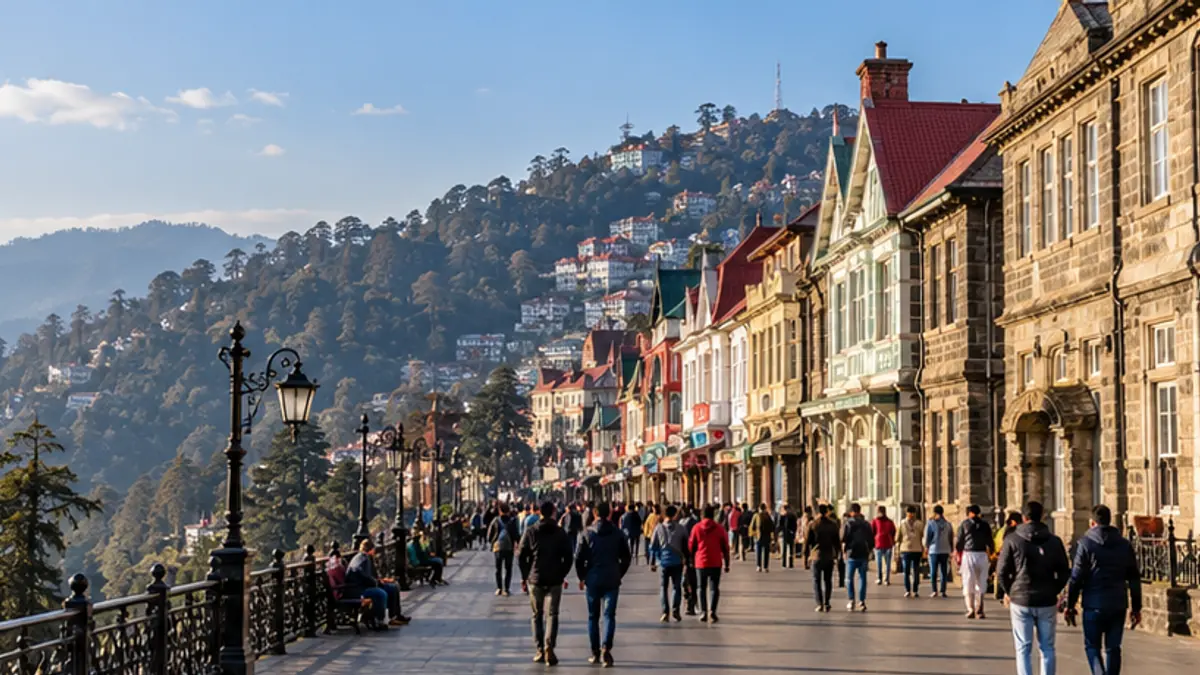
Mall Road runs one level below The Ridge, serving as the commercial spine of Shimla. Lined with colonial timber-fronted shops, heritage cafes, government handicraft emporiums, and bookshops, the street remains active from morning until late evening.
At the eastern junction near The Ridge, Lakkar Bazaar specializes in decorative items, wooden walking sticks, toys, and dry fruit carved from local deodar and walnut timber. Strolling here offers an authentic look at traditional Himachali woodworking craftsmanship.
Municipal lifts operate from the lower Cart Road parking complexes to Mall Road, allowing visitors to bypass the steep walking inclines for a nominal fee of ₹20 per trip. As detailed in our comprehensive Himachal Pradesh travel guide, exploring Shimla’s pedestrian markets provides an ideal introduction to the state’s mountain craftsmanship before venturing into northern apple valleys.
3. Jakhoo Hill, Hanuman Temple, and Ropeway
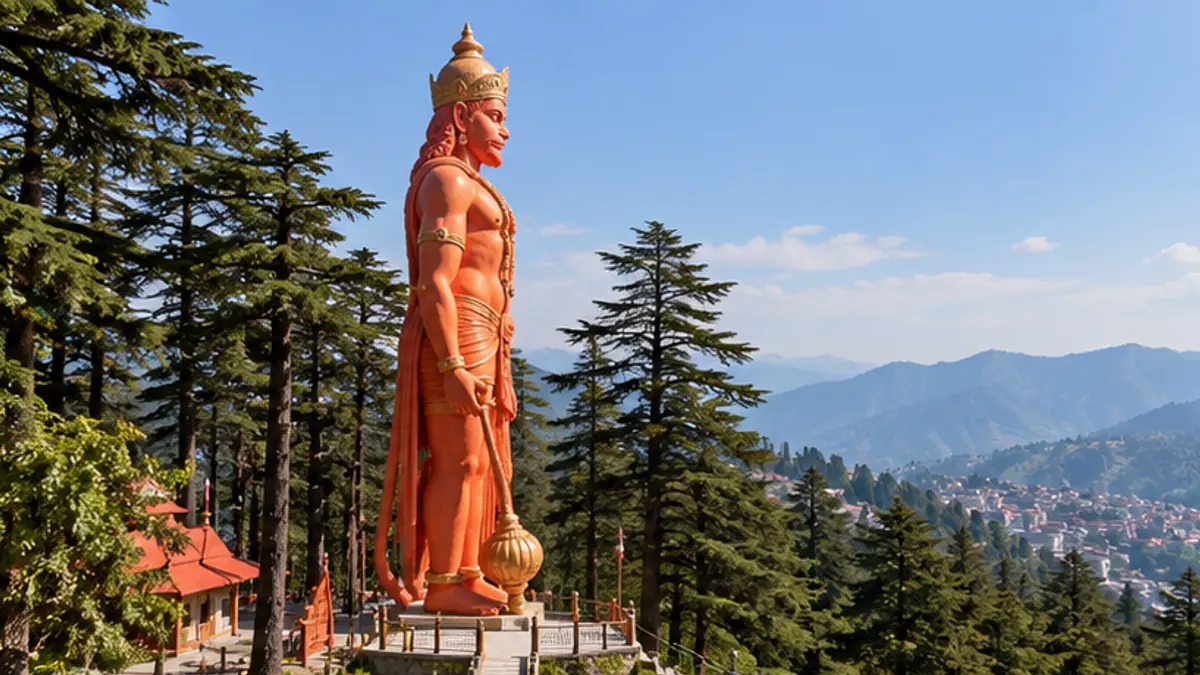
Jakhoo Hill is the highest point in Shimla town, reaching a summit elevation of 2,455 meters. The summit is crowned by the ancient Jakhoo Temple dedicated to Lord Hanuman, featuring an imposing 108-foot orange statue visible across the surrounding valleys. Historical records and temple access routes are cataloged in the District Administration Shimla History Archive.
Devotees can reach the hilltop by taking a steep 2.5-kilometer uphill foot trail starting from The Ridge through deodar forests. Alternatively, the Jakhoo Ropeway transports passengers from the base terminal near The Ridge to the temple in approximately six minutes, charging around ₹550 for a round-trip ticket.
Visitors should secure eyeglasses, food packets, and loose accessories, as numerous wild rhesus macaques inhabit the temple courtyard.
4. Christ Church Shimla and Neo-Gothic Heritage
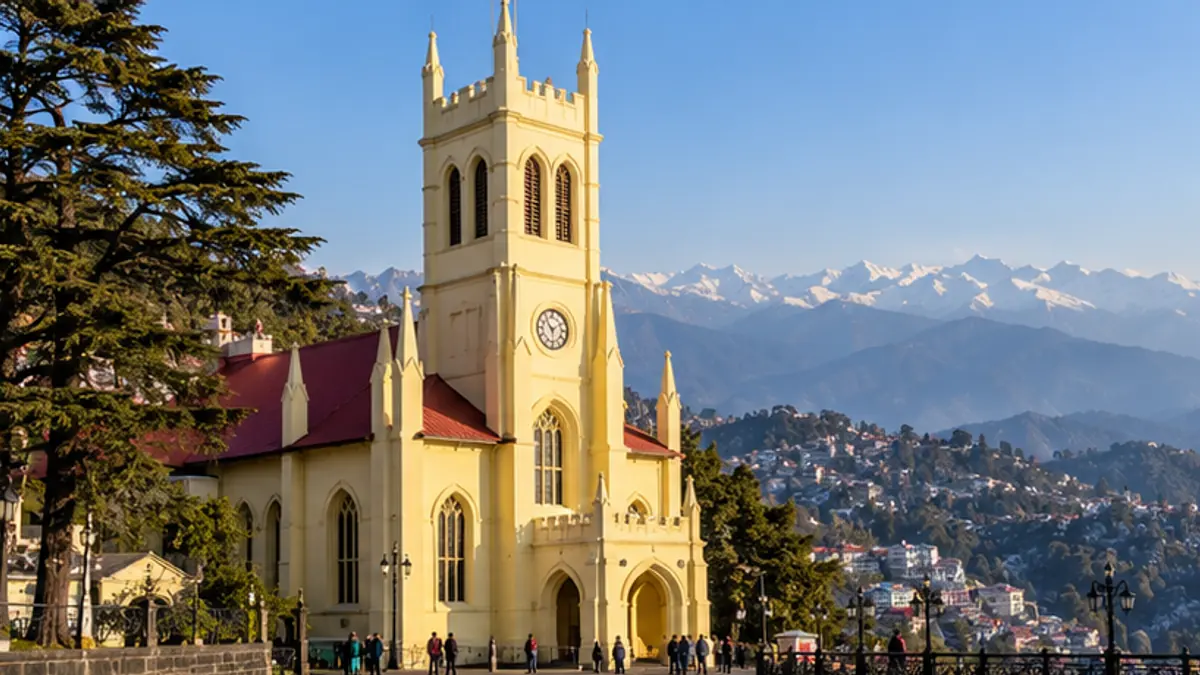
Christ Church stands on the eastern end of The Ridge, consecrated in 1857 as the second oldest Anglican church in North India. Designed in the Neo-Gothic architectural style by Colonel J. T. Boileau, the pale yellow stone building serves as an iconic visual symbol of the hill station.
The church features five distinct stained-glass windows representing the Christian virtues of Faith, Hope, Charity, Fortitude, Patience, and Humility. An antique pipe organ installed in 1899 remains preserved within the nave, offering a northern hill station counterpart to the ecclesiastical heritage of Se Cathedral in Goa.
The church holds regular Sunday services in English and Hindi. Visitors can step inside free of charge during weekday daylight hours to inspect the wooden pews and brass memorial tablets.
5. Kalka-Shimla Toy Train Mountain Route
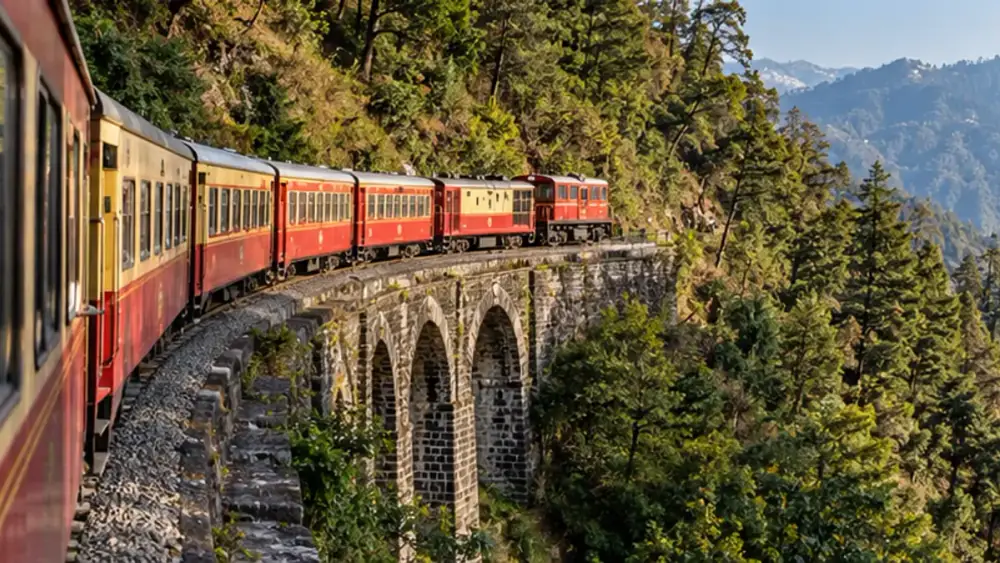
The Kalka-Shimla Railway is a 96-kilometer narrow-gauge mountain railway built in 1903, inscribed as a UNESCO World Heritage Site under the Mountain Railways of India. The train ascends from Kalka at an elevation of 656 meters to Shimla at 2,075 meters, crossing 103 tunnels, 864 bridges, and 919 mountain curves. Train reservations and timetable tracking are managed directly through the Indian Railways IRCTC Mountain Railways Portal.
The journey takes approximately five to six hours, offering travelers slow-paced views of terraced farms, deep oak valleys, and historic wooden station shacks. Barog Tunnel (Tunnel 33), measuring 1,143 meters in length, is the longest tunnel along the route.
Popular daily express trains include the Shivalik Deluxe Express, the Himalayan Queen, and special coaches fitted with panoramic glass roofs (Vistadome). Seats sell out weeks in advance during summer vacation and winter holiday peaks.
6. Kufri Adventure Slopes and Mahasu Peak
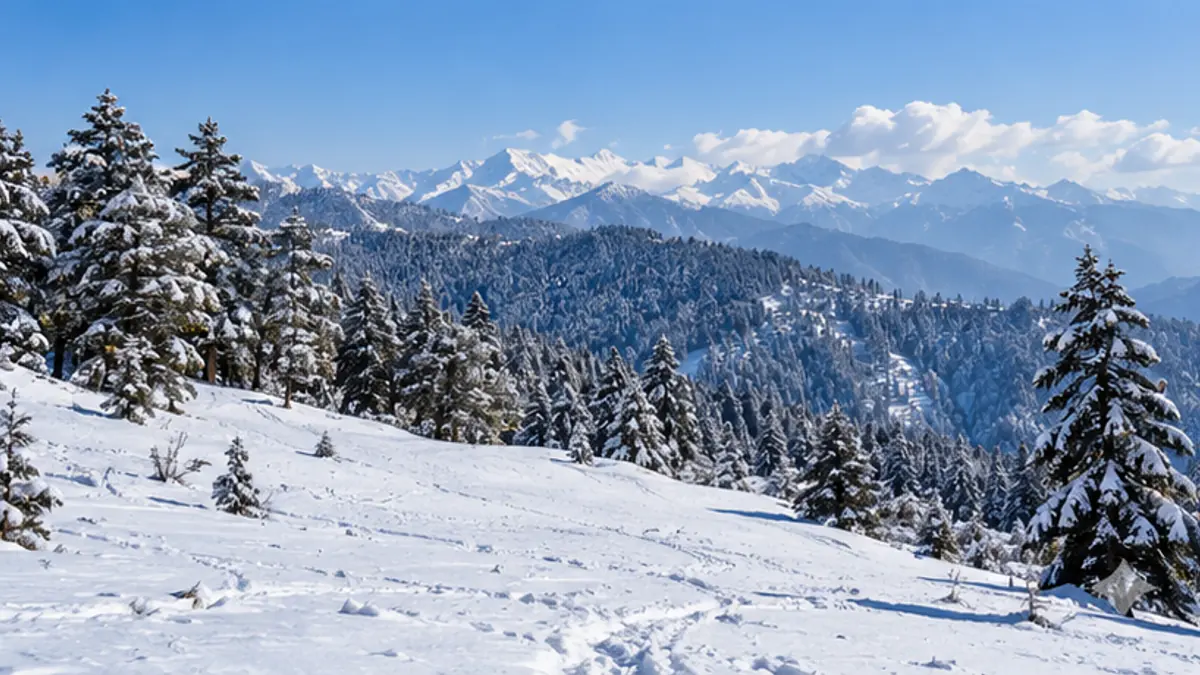
Kufri is located 16 kilometers northeast of Shimla at an altitude of 2,720 meters, serving as the primary winter snow sports center for the region. The high altitude ensures heavy winter snow accumulations that contrast with the lower-lying valleys of Shimla.
During winter from December through February, local instructors operate beginner ski runs and toboggan slides along the slopes. Like the seasonal snow zones of Solang Valley adventure slopes, Kufri draws large weekend crowds seeking winter recreation.
In summer, travelers visit the Himalayan Nature Park in Kufri to observe regional fauna including musk deer, monal pheasants, and Himalayan black bears in spacious forest enclosures. Mahasu Peak, the highest vantage point in Kufri, is reached via horse ride or a muddy 45-minute uphill hike.
7. Viceregal Lodge and Indian Institute of Advanced Study
The Viceregal Lodge sits on Observatory Hill, 4.5 kilometers west of central Shimla. Completed in 1888 during the tenure of Viceroy Lord Dufferin, the Scottish baronial stone mansion served as the residence of British viceroys during the summer months.
The building witnessed crucial historical conferences leading up to Indian independence, including the Shimla Conference of 1945 and partition negotiations in 1947. In 1965, President S. Radhakrishnan transferred the estate to host the Indian Institute of Advanced Study.
Guided tours allow visitors to inspect teak-paneled halls, historical galleries, and antique library rooms. Travelers exploring British viceregal history in the Himalayas can also visit Lord Elgin’s deodar forest memorial, highlighted in our guide to top attractions in McLeod Ganj.
8. Green Valley Pine Corridor
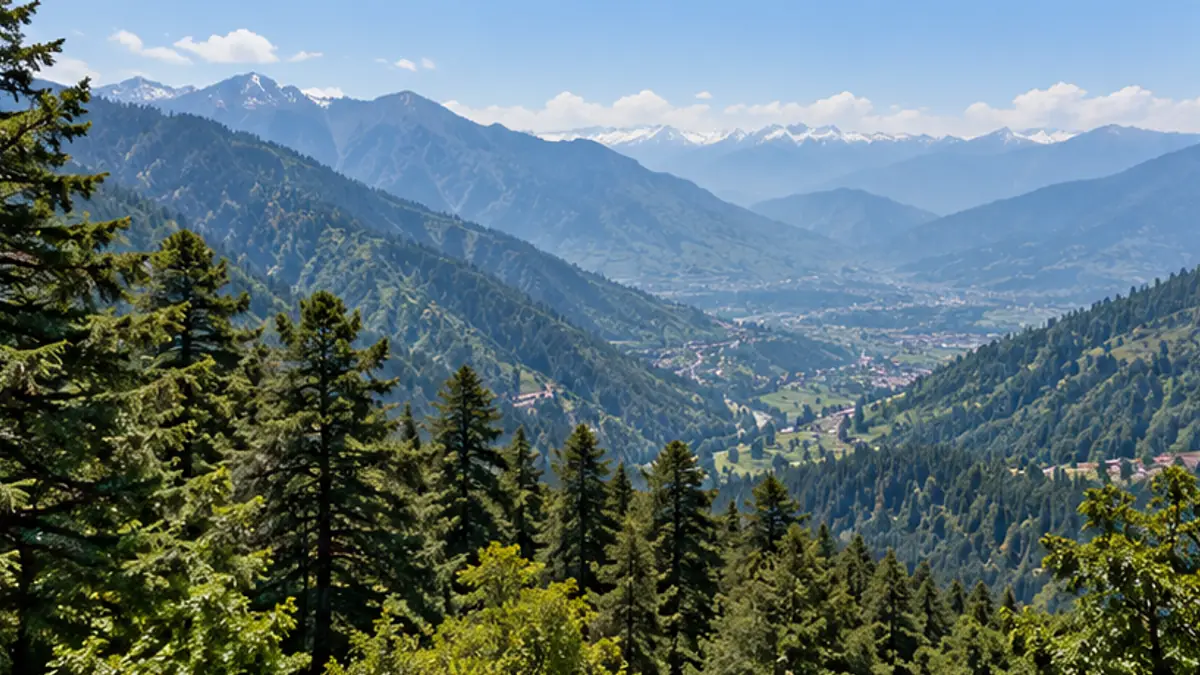
Green Valley is a mountain clearing located along National Highway 22 between Shimla and Kufri, surrounded by dense deodar and pine woodlands. The viewpoint offers an unobstructed panorama of forest canopies extending across rolling mountain folds.
The site is a standard stop for passing tourist vehicles and photographers. Entry is completely free, and roadside vendors sell hot tea, roasted sweet corn, and regional apple juice.
Travelers visiting in early morning will often see clouds resting within the forest gullies beneath the viewing railing. Beyond Kufri, the highway continues deeper into the Himalayas toward Narkanda and the Kinnaur Gateway, forming the scenic entry corridor of the Spiti Valley road trip circuit.
9. Chadwick Falls Forest Glen
Chadwick Falls plunges roughly 86 meters down a steep gorge within the Glen forest sanctuary, 7 kilometers from the central Ridge. Surrounded by thick stands of deodar, oak, and pine, the waterfall is fed by seasonal mountain streams.
The waterfall is at its most active during the monsoon months from July to September when water volume peaks. Reaching the base involves descending a steep stone footpath through the forest from Summer Hill.
The natural setting offers a quiet retreat away from town crowds. Visitors should wear walking shoes with reliable grip, as forest trails become slippery after rain.
10. Tara Devi Temple and Hilltop Sanctum
Tara Devi Temple rests atop Tara Parvat at an altitude of 2,100 meters, 11 kilometers south of central Shimla. Dedicated to Goddess Tara, an incarnation of Durga, the 250-year-old wooden-and-stone temple underwent careful wood restoration in recent years.
The hilltop temple offers a complete 360-degree panorama of Shimla town on one side and green Shivalik foothill ridges on the other. A newly constructed ropeway connects the highway terminal at Shoghi directly to the temple peak.
Free community langar meals are served to pilgrims every Sunday and during festive Navratri periods. The temple complex is surrounded by quiet pine groves ideal for respectful walks.
Summer vs Winter in Shimla: Seasonal Highlights and Snow Timing
When should travelers visit Shimla for summer relief or winter snowfall? Summer from March to June provides pleasant daytime weather between 15°C and 28°C, while winter from December to February brings cold conditions with daytime temperatures between -2°C and 8°C.
- Summer (March to June): Clear skies and comfortable mountain breezes make this the most popular season for families, heritage walks, and outdoor sightseeing.
- Monsoon (July to September): Heavy rain can trigger mudslides along connecting highways; traveler traffic drops significantly, though waterfalls flow with full strength.
- Autumn (October to November): Crisp, dry weather and clear views of the distant snowy ranges make this a great window for photography and peaceful stays.
- Winter (December to February): Temperatures frequently drop below freezing at night. Travelers hoping for snow should look toward Kufri and Narkanda or consider skiing destinations like Gulmarg for deep alpine snowpack. For extended mountain journeys across the state, summer travelers often connect to high-altitude passes like Rohtang Pass.
How to Reach Shimla from Delhi and Chandigarh
How do visitors travel to Shimla by road, flight, and railway? Shimla is reached primarily by road from Chandigarh (113 km, 3.5 hours) or New Delhi (350 km, 7 to 8 hours) along National Highway 5.
- By Road: The Himalayan Expressway provides four-lane driving up to Parwanoo, followed by a well-paved mountain highway through Solan to Shimla. Volvo luxury buses run regularly from Kashmiri Gate ISBT in Delhi and Sector 43 ISBT in Chandigarh.
- By Air: Shimla Airport at Jubbarhatti (SLV) is located 22 kilometers from the town center, receiving regional turboprop flights from Delhi and Chandigarh. Travelers comparing hill gateways like the top attractions in Pahalgam will find Chandigarh Airport (IXC) the most reliable major air hub for Shimla.
- By Train: Broad-gauge trains connect Delhi to Kalka Junction (KLK), where passengers transfer directly to the narrow-gauge toy train ascending into Shimla.
Frequently Asked Questions About Visiting Shimla
How many days are recommended to visit Shimla?
A three-day itinerary covers The Ridge, Mall Road, Jakhoo Temple, Viceregal Lodge, and allows a full day trip to Kufri and Mashobra. Travelers planning to experience the full five-hour Kalka-Shimla toy train ride should allocate a fourth day to their trip.
Which months provide the best chances of snowfall in Shimla?
The highest probability of snowfall occurs between late December and early February, with daytime temperatures hovering between -2°C and 8°C. Nearby higher elevations like Kufri at 2,720 meters and Narkanda receive heavier and more enduring snow cover than central Shimla town.
Are vehicles allowed on The Ridge and Mall Road in Shimla?
Vehicular traffic is completely prohibited on The Ridge and Mall Road to preserve pedestrian heritage and historic architecture. Visitors arrive by taking municipal elevators from the Cart Road parking terminals or by walking up pedestrian access ramps.
How do travelers book tickets for the Kalka-Shimla toy train?
Toy train tickets must be booked online through the official IRCTC portal up to 120 days in advance, as seat allocations are strictly limited. Popular train services include the Shivalik Deluxe Express, Himalayan Queen, and the Vistadome coach attached to select morning departures.