Se Cathedral Goa Timings, History, Architecture & Visitor Guide
Explore Se Cathedral in Old Goa, the largest church in Asia. Discover its Tuscan-Manueline architecture, Golden Bell, mass timings, and visitor tips.
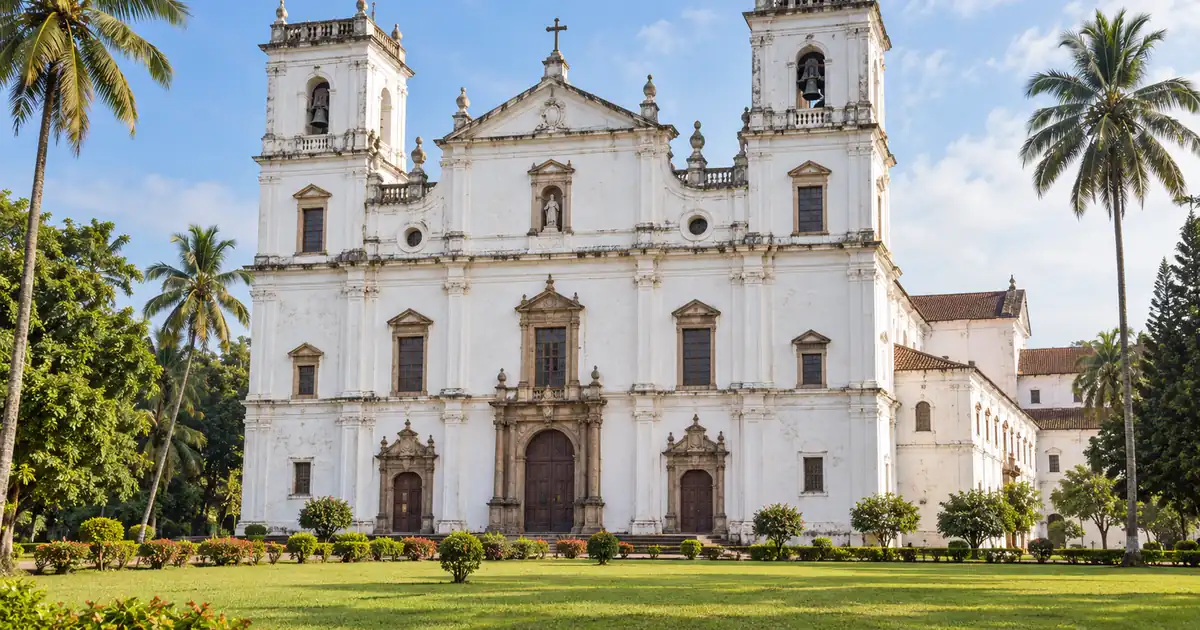
The Se Cathedral of Santa Catarina stands as an architectural centerpiece in Old Goa. Renowned as the seat of the Archdiocese of Goa and Daman, this 16th-century monument ranks among the largest cathedral churches in Asia. Its whitewashed walls, classical exterior columns, and vast vaulted interior reflect centuries of Portuguese maritime history.
Constructed over nearly six decades, the cathedral honors Saint Catherine of Alexandria. The landmark forms an essential component of the UNESCO World Heritage cluster known as the Churches and Convents of Goa. Travelers and architecture scholars visit daily to inspect its grand gilded altars and historic bell tower.
Key Cathedral Facts
- Location: Old Goa (Velha Goa), approximately 10 kilometers east of the state capital, Panaji.
- Architectural Dimensions: Measures 76 meters in length, 55 meters in width, with a nave height of 35 meters.
- Founding Dedication: Saint Catherine of Alexandria, commemorating Afonso de Albuquerque’s conquest on November 25, 1510.
- Main Bell Weight: Approximately 2,250 kilograms, famously known as the Golden Bell (Sino de Ouro).
- Conservation Status: Protected by the Archaeological Survey of India Se Cathedral Monument Dossier.
- Global Recognition: Enlisted under the UNESCO World Heritage Churches and Convents of Goa Listing.
Historical Origins: The 1510 Victory and Portuguese Patronage
The origins of Se Cathedral date back to the Portuguese conquest of Goa in 1510. Afonso de Albuquerque defeated the Adil Shahi Sultanate army on November 25, the feast day of Saint Catherine of Alexandria. In thanksgiving for the victory, Albuquerque commissioned a modest mud-and-thatch chapel on the battlefield.
As the Portuguese colony developed into a global trade capital, colonial administrators sought a grand ecclesiastical seat. King Dom Sebastião ordered the construction of a permanent stone cathedral in 1562. Architects Júlio Simão and Inácio Aranha drafted plans for an expansive complex designed to surpass European contemporaries in scale.
Construction progressed steadily despite financial constraints and regional maritime conflicts. The main structure reached completion in 1619, and the cathedral was formally consecrated in 1640. It became an enduring spiritual center for Catholic communities exploring heritage places to visit in Goa.
Tuscan-Manueline Architecture and Interior Layout
The exterior architecture follows a stately Tuscan order, characterized by simple classical lines, pilasters, and symmetrical pediments. Laterite stone blocks form the core masonry, coated with lime plaster to withstand humid coastal monsoon rains. The facade presents an understated dignity compared to the decorative Baroque style of neighboring shrines.
Inside, the interior shifts into an elaborate Corinthian order. The spacious central nave features a barrel-vaulted ceiling resting on massive fluted pillars. Sunlight streams through clerestory windows, illuminating stone floor flags that mark burial crypts of Portuguese viceroys and archbishops.
Fourteen vaulted side chapels line the aisles, eight of which house gilded carved retables. The high altar at the sanctuary terminus honors Saint Catherine through six intricate wooden narrative panels depicting her martyrdom and scholarly defense of the Christian faith.
| Architectural Element | Specification | Design Feature |
|---|---|---|
| Total Length | 76 meters (250 feet) | Expansive central nave with wide flanking side aisles |
| Transverse Width | 55 meters (181 feet) | Symmetrical cruciform transept layout |
| Exterior Order | Tuscan classical | Clean rectangular lintels, rusticated pilasters, and lime stucco |
| Interior Order | Corinthian classical | Intricate acanthus leaf capitals and gilded wall woodwork |
| Side Altars | 14 decorated chapels | Dedicated to Saint Anthony, Our Lady of Three Necessities, and Saint Bernard |
The Legendary Golden Bell and Tower History
Se Cathedral originally featured two symmetrical bell towers framing the west facade. The southern bell tower suffered severe structural collapse during a tropical thunderstorm in 1776 and was never rebuilt. The asymmetrical surviving northern tower houses the cathedral’s five heavy bronze bells.
The most famous of these instruments is the Golden Bell, or Sino de Ouro. Cast locally in a Portuguese foundry near the Mandovi River, this bell weighs approximately 2,250 kilograms. It earned its title from the musical richness of its chime, which carried across several leagues of the Goan countryside.
Historical chronicles note that the bell announced Sunday liturgies, public assemblies, and solemn auto-da-fé judicial declarations during the Portuguese Inquisition. Today, its deep ringing continues to mark festive services and official cathedral solemnities.
The Chapel of the Cross of Miracles and Sacred Relics
One of the most revered sanctuaries within the cathedral is the Chapel of the Cross of Miracles. A simple wooden cross originally stood on a nearby hill in Boa Vista, where local faithful witnessed an apparition of Christ in 1619. Historical accounts report that the cross grew in size following the vision.
Church authorities transferred the miraculous cross to Se Cathedral in 1845 to safeguard it from tropical weathering. The relic now rests enclosed behind glass within a dedicated transept chapel. Pilgrims offer quiet prayers before the altar throughout the week, often coinciding with seasonal celebrations such as Goa Carnival festivities.
Near the entrance stands a carved granite baptismal font dating back to 1532. Saint Francis Xavier, the patron saint of Goan missions, personally used this basin to baptize thousands of new converts during his missionary work across the Konkan coast.
Visiting Logistics: Timings, Mass Schedule, and Dress Code
Se Cathedral remains open to tourists and worshippers daily throughout the year. There is no admission fee to enter the cathedral, making it an accessible stop for travelers arriving from coastal hotel belts such as the Calangute Beach resort hub.
Visitors must follow strict guidelines regarding decorum and attire inside the active place of worship. Shoulders and knees must remain covered, and sleeveless shirts, short skirts, and beachwear are not permitted. Photography is prohibited during active religious services.
| Detail | Information | Visitor Guidelines |
|---|---|---|
| Visiting Hours | 7:30 AM to 6:00 PM (Daily) | Enter before 5:30 PM to allow sufficient viewing time |
| Weekday Mass Timings | 7:30 AM (English) | Silent observation expected during liturgies |
| Sunday Mass Timings | 7:15 AM (Konkani), 10:00 AM (English) | Seating prioritized for attending church parishioners |
| Admission Charge | Free entry | Commercial tripod filming requires ASI permission |
| Dress Code | Modest covering required | Scarves available for rent near the entrance gate |
Nearby Heritage Monuments in Old Goa
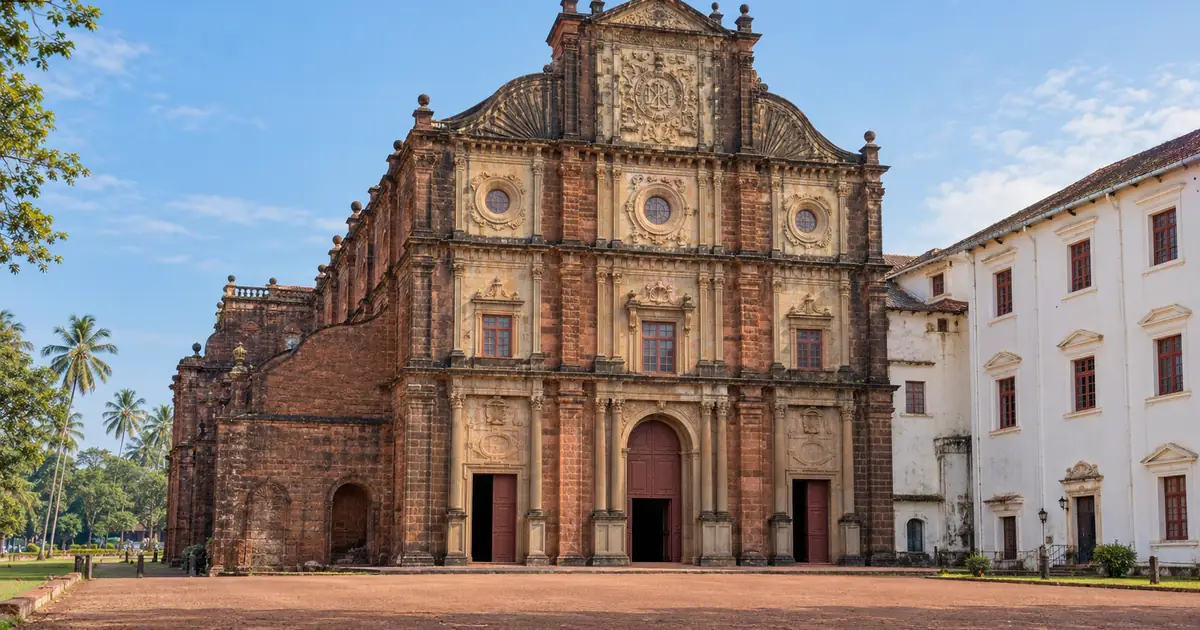
A visit to Se Cathedral places travelers within a short walk of several other significant colonial structures. The open garden square opposite the entrance connects directly to the world-famous Basilica of Bom Jesus. Exploring these monuments provides a rich cultural contrast to retail afternoons at the Anjuna Flea Market shopping grounds.
Adjoining the northern wall of Se Cathedral is the Church of Saint Francis of Assisi, constructed in 1661 with ornate Manueline portal doorways. The adjacent convent building now houses the Archaeological Museum of Old Goa, where portrait galleries of Portuguese viceroys and antique sculpture fragments remain on public display.
To the west lies the Church of Our Lady of the Rosary and the Chapel of Saint Catherine, marking the precise site where Albuquerque’s forces breached the city walls. Travelers can tour all four heritage sites comfortably on foot within three hours.
How to Reach Se Cathedral and Travel Connections
Se Cathedral is situated in Velha Goa along National Highway 748. The monument connects smoothly to major transit points across Goa via state highway networks and municipal bus routes. Tourists staying near the Vagator Beach cliffs can reach the cathedral by taxi in under 45 minutes.
Kadamba Transport Corporation operates frequent air-conditioned shuttle buses between the Panaji Central Bus Stand and Old Goa. Taxis and auto-rickshaws are readily available outside the cathedral grounds for return trips.
| Transport Mode | Departure Point | Distance | Approximate Travel Time |
|---|---|---|---|
| Local Taxi or Cab | Panaji City Center | 10 kilometers | 20 to 25 minutes |
| Intercity Bus | Panaji Bus Terminus | 10 kilometers | 30 minutes (KTC bus) |
| Airport Taxi | Dabolim Airport (GOI) | 27 kilometers | 45 minutes |
| Airport Taxi | Manohar Airport Mopa (GOX) | 48 kilometers | 65 minutes |
| Train Transit | Karmali Railway Station (KRMI) | 3 kilometers | 8 to 10 minutes |
Combining Heritage with Coastal Travel
Touring Old Goa allows travelers to appreciate the historical depth behind modern coastal tourism. While holiday itineraries often emphasize sandy shores and Baga Beach nightlife, exploring the stone monuments of Velha Goa reveals the cultural crossroads that shaped the state’s customs, cuisine, and languages.
Visitors can plan their itinerary with authoritative insights from the Goa Tourism Development Corporation Heritage Guide. Pairing a morning heritage walk through Se Cathedral with an afternoon at the riverfront or spice plantations creates a balanced travel experience.
Frequently Asked Questions
What is Se Cathedral in Old Goa famous for?
Se Cathedral is renowned as the largest church in Asia and the principal cathedral of the Archdiocese of Goa and Daman. The monument is internationally famous for its Tuscan-Manueline architecture and its 2,250-kilogram Golden Bell.
Is there an entry fee to visit Se Cathedral?
Entry to Se Cathedral is free for all Indian citizens and international visitors. The adjacent Archaeological Museum managed by the Archaeological Survey of India charges a modest nominal fee for adults.
Why does Se Cathedral have only one bell tower?
The cathedral was originally built with two symmetrical western bell towers to house its liturgical bells. The southern bell tower collapsed during a severe storm in 1776 and was never rebuilt, leaving the distinctive asymmetrical facade seen today.
What are the Sunday mass timings at Se Cathedral?
Sunday liturgical masses are celebrated at 7:15 AM in Konkani and 10:00 AM in English. Visitors attending mass are requested to arrive early and observe prayerful silence inside the nave.
How far is Se Cathedral from the Basilica of Bom Jesus?
Se Cathedral is located directly across an open landscaped public square approximately 150 meters from the Basilica of Bom Jesus. Visitors can easily walk between both monuments in less than three minutes.