Anjuna Flea Market Goa: Timings, Days, Prices & Guide
Plan your visit to Anjuna Flea Market in North Goa with Wednesday timings, artisan price benchmarks, bargaining tips, parking, and transit routes.
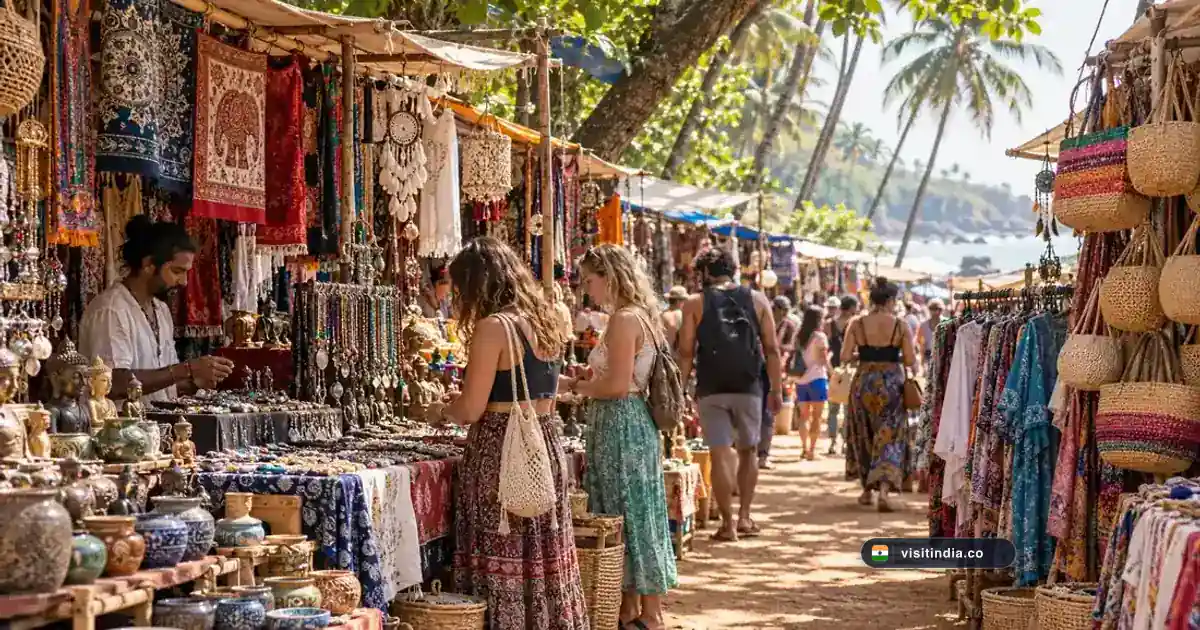
Anjuna Flea Market Goa is the state’s most famous open-air coastal bazaar, operating every Wednesday during the dry tourist season along the southern stretch of Anjuna Beach. Set under coconut palms at Monteiro Vaddo, the sprawling weekly market convenes over 500 independent artisans, spice merchants, and regional traders from across India.
Travelers exploring North Goa schedule their coastal itineraries around this Wednesday ritual, frequently pairing it with wider excursions documented in our comprehensive Goa state travel guide. Official seasonal transport advisories and regional transit routes are cataloged on the Goa Tourism Development Corporation transportation directory.
Market & Visitor Essentials
- Anjuna Flea Market operates strictly on Wednesdays between late October and mid-April at Monteiro Vaddo in North Goa.
- Shopping hours run from 8:00 AM until sunset around 6:30 PM, with free public admission for all visitors.
- Over 500 open-air stalls sell handwoven textiles, sterling silver jewelry, brass singing bowls, leather sandals, and coastal spices.
- Morning visits between 8:30 AM and 10:30 AM offer cooler temperatures and manageable crowd levels before peak afternoon heat.
- Opening vendor prices are routinely marked up 30 to 50 percent, making courteous counter-bidding standard practice.
Historical Origins of Anjuna Flea Market
The Anjuna Flea Market originated in the mid-1970s as an informal swap meet organized by American expatriate Yertward Mazamanian, widely remembered as Eight Finger Eddie. International backpackers along the hippie trail gathered on Anjuna Beach every Wednesday to barter cameras, watches, cassette tapes, and clothing to fund their ongoing travels across India.
Understanding this counterculture heritage helps contextualize how North Goa developed its distinctive bohemian identity compared to southern coastal talukas, an evolution detailed in our North Goa vs South Goa travel guide.
Eight Finger Eddie and the 1970s Hippie Trail
Yertward Mazamanian arrived in Goa in 1966 and made Anjuna his adopted coastal home. Faced with strict foreign currency exchange regulations and limited international banking access, visiting drifters frequently ran out of spending money midway through their winter stays. Mazamanian encouraged travelers to spread woven cotton blankets on the sand to sell or exchange their surplus camping gear, musical instruments, and western fashion items.
The weekly gathering rapidly gained legendary status among overland backpackers journeying between London, Kathmandu, and Goa. Local Goan families joined the barter circles to purchase imported electronics and sunglasses, while sharing traditional baked breads, fresh coconuts, and home-brewed beverages.
Why the Market Operates Strictly on Wednesdays
Wednesday emerged as the designated trading day during the early 1970s because it matched the mid-week dispatch schedule at the local village post office. Backpackers congregated in Anjuna on Wednesdays to collect aerograms and international money orders delivered through general post office distribution.
Selecting Wednesday also prevented commercial friction with existing Goan civic events. Sunday was reserved for parish masses in local churches, and Friday hosted the large regional produce market in nearby Mapusa. Wednesday provided a dedicated mid-week space where foreign travelers and local vendors could conduct commerce without competing against established municipal markets.
Evolution from Beachside Barter to Pan-Indian Bazaar
During the late 1980s and 1990s, charter flights brought mainstream international tourists to North Goa, transforming the informal hippie exchange into a structured commercial bazaar. Artisans from Rajasthan, Gujarat, Kashmir, Himachal Pradesh, and Karnataka began traveling seasonally to Anjuna to sell specialized regional crafts directly to global travelers.
Today the market is administered under seasonal licenses issued by the local village panchayat. The trading grounds have shifted from open beach sands into an organized grid of thatched palm canopy stalls behind the shoreline, establishing a stable venue for hundreds of registered small business owners.
Key Phases in the Market’s Evolution
- 1970s (Open sand barter circle): Western backpackers and local Goan villagers exchanged cameras, denim jeans, acoustic guitars, and imported wristwatches along the waterline.
- 1980s (Informal beach stalls): European expatriates and Tibetan refugee traders introduced handmade sterling silver rings, antique coins, and block-printed shoulder bags.
- 1990s (Panchayat licensed bazaar): Kashmiri shawl merchants and Rajasthani craft cooperatives established seasonal winter residencies, expanding inventory into pashmina and carved woodwork.
- Present (Structured artisan collective): Over 500 licensed vendors operate under municipal guidelines, offering certified handloom fashion, acoustic singing bowls, and organic spices.
Anjuna Flea Market Timings, Seasonality, and Operating Schedule
Anjuna Flea Market operates strictly on Wednesdays between late October and mid-April, opening by 8:00 AM and closing around 6:30 PM at sunset. The market remains completely closed during the monsoon months from May through September due to rough Arabian Sea winds, seasonal tidal surges, and heavy regional rainfall.
Checking the calendar before traveling is essential, as the market operates on zero other weekdays. For broader seasonal holiday timing across the coast, consult our curated guide to the best beaches in Goa. Up-to-date state safety directives are also cataloged on the Incredible India official Goa portal.
Operating Months and Monsoon Shutdown Window
The operational season spans approximately 26 to 28 Wednesdays per calendar year. Activity commences in late October when seasonal charter flights resume and daytime coastal rainfall subsides. The market reaches maximum capacity between December and February, when comfortable daytime temperatures average 28°C and humidity levels remain moderate.
By early May, rising pre-monsoon humidity and sudden squalls signal the end of the trading calendar. Local authorities require all temporary bamboo frames and palm thatch roofs to be dismantled before the southwest monsoon makes landfall in early June. Stalls remain shuttered throughout the summer and monsoon seasons until October post-monsoon clearing.
Daily Schedule and Recommended Arrival Times
The market gates welcome early shoppers starting at 8:00 AM. Arriving between 8:30 AM and 10:30 AM offers the most comfortable conditions of the day, as tree canopies cast gentle morning shade and walkways remain easy to navigate. Morning shoppers enjoy unhurried interactions with artisans who are keen to secure their auspicious first sale of the morning, traditionally termed the bohni.
Between 11:30 AM and 3:00 PM, midday sunshine drives temperatures above 32°C. Shaded rest areas fill quickly, and sandy paths absorb substantial surface heat. Visitors exploring during midday should wear wide-brim hats, apply UV sunscreen, and stay well hydrated with fresh coconut water.
Peak Crowd Patterns and Sunset Beach Atmosphere
Foot traffic peaks sharply between 3:30 PM and 6:00 PM as tour coaches and scooter riders arrive from Calangute, Candolim, and Panaji. The bazaar fills with acoustic musicians, food stall aromas, and evening shopping energy. As 6:00 PM approaches, visitors gradually move toward the beachfront rock ledges to watch the sun descend into the Arabian Sea before concluding their shopping rounds.
Visiting Windows & Atmospheric Conditions
- Morning (8:00 AM to 10:30 AM): Ambient 25°C to 27°C with cool morning shade, low pedestrian density, and prime conditions for focused jewelry and craft bargaining.
- Midday (10:30 AM to 1:00 PM): Direct overhead sunlight and rising coastal heat; best suited for browsing sheltered textile rows and indoor spice stalls.
- Afternoon (1:00 PM to 3:30 PM): Peak daily heat between 31°C and 33°C; ideal for resting under shaded open-air food courts and sampling chilled fruit beverages.
- Late Afternoon (3:30 PM to 6:30 PM): Golden hour sea breezes at 28°C with high visitor volume; optimal for casual souvenir browsing followed by seaside sunset views.
Note
Afternoon temperatures on the unpaved market lanes frequently feel three to four degrees warmer than the open beach. Plan to schedule intensive walking tours before 11:00 AM or after 3:30 PM to avoid peak solar exposure.
What to Buy: Artisan Crafts, Souvenirs, and Price Benchmarks
Anjuna Flea Market features over 500 open-air vendor stalls selling cotton resort apparel, handwoven Rajasthani bedspreads, sterling silver jewelry, singing bowls, Tibetan thangkas, and regional spices. Prices range from ₹300 for block-print cotton shirts to ₹3,500 or more for intricate silver ornaments and embroidered silk tapestries.
Shoppers seeking extensive coastal shopping corridors can compare selections with the street bazaars profiled in our Calangute Beach shopping markets overview.
| Merchandise Category | Typical Price Range | Common Vendor Origin | Recommended Bargaining Approach |
|---|---|---|---|
| Cotton Beachwear & Kaftans | ₹300 - ₹800 | Local Goan & Rajasthani stalls | Offer 40 percent below opening quote |
| Sterling Silver & Stone Rings | ₹600 - ₹2,500 | Kashmiri & Tibetan traders | Inspect silver hallmark before negotiating |
| Embroidered Bedspreads | ₹1,200 - ₹3,500 | Gujarat & Rajasthan cooperatives | Bundle multiple pieces for discounts |
| Spices, Vanilla & Tea Blends | ₹200 - ₹600 per pack | Kerala & Coorg spice merchants | Fixed pricing common; ask for sample weight |
| Handmade Leather Footwear | ₹500 - ₹1,200 | North Indian artisan workshops | Check stitching quality before buying |
| Brass Singing Bowls & Crafts | ₹800 - ₹4,000 | Tibetan & Nepalese merchants | Test resonance tone; moderate discount |
Textiles, Bohemian Garments, and Beachwear
Textile stalls line the central pathways of the market, displaying colorful racks of breathable cotton resort fashion. Shoppers will find block-print shirts from Sanganer, hand-dyed bandhani scarves from Gujarat, flowing rayon dresses, wrap-around skirts, and comfortable harem trousers.
Quality cotton kaftans and embroidered tunics typically settle between ₹400 and ₹700 after polite negotiation. Inspect stitching around sleeve hems and pocket seams before completing purchases, as lightweight resort garments vary widely in production durability.
Tibetan Silver, Semi-Precious Stones, and Handicrafts
Himalayan artisans bring an impressive collection of metalwork and ornamental jewelry to the southern section of the grounds. Stalls display turquoise, lapis lazuli, garnet, and moonstone pendants set in filigree silver mounts. Authentic handmade 92.5 sterling silver items sell based on weight and design intricacy, generally ranging from ₹600 for simple earrings to ₹2,500 for statement necklaces.
Vendors also demonstrate handmade brass singing bowls crafted through traditional hammering methods in Nepal. High-grade bowls produce sustained harmonic resonance when rubbed with a wooden striker; expect to pay ₹1,000 to ₹3,500 depending on diameter and metal density.
Regional Spices, Cashew Nuts, and Goan Specialties
Aromatic spice counters present freshly cured vanilla beans, Malabar black peppercorns, green cardamom pods, star anise, and whole cinnamon bark sourced from hill plantations across South India. Most spice packets carry fixed pricing between ₹200 and ₹500 per 100-gram sealed package, with vendors offering modest savings when purchasing five or more packs.
Traditional Goan coastal specialties include roasted cashew nuts, local feni distillations in glass flasks, homemade mango chutneys, and coconut jaggery blocks. Vacuum-sealed cashews packaged with chili or salt seasoning make reliable edible gifts for homebound travelers.
Master Bargaining Guide and Local Purchasing Etiquette
Bargaining at Anjuna Flea Market is an expected commercial tradition where vendors routinely set opening price quotes 30 to 50 percent above fair retail value. Negotiate with a polite, smiling demeanor, quote a sensible counteroffer 40 percent below the opening rate, and bundle multiple purchases together to secure favorable bundle discounts.
After a productive morning of negotiations, visitors often relax over coastal refreshments at the best cafes in Goa, located within walking distance of the market boundary.
Understanding the 40 Percent Rule for Opening Quotes
Vendors anticipate bargaining from almost every retail customer and calculate initial quotes accordingly. An artisan who intends to sell a cotton kaftan for ₹500 will frequently begin with an opening quote of ₹900. Countering politely at ₹450 or ₹500 establishes a realistic negotiation baseline.
Maintain good humor throughout the exchange, treating the conversation as a shared cultural dialogue rather than an aggressive contest. Walking away calmly often prompts the vendor to offer their true final settlement price.
Cash Versus UPI Payments and Network Reliability
While many prominent stalls now display QR codes for digital UPI payments through PhonePe, Paytm, or Google Pay, cellular network coverage near the beach can become congested during peak afternoon hours. Weak mobile reception frequently causes payment transactions to time out or freeze.
Carrying ₹2,000 to ₹5,000 in physical cash ensures uninterrupted purchasing. Bring smaller paper currency denominations, particularly ₹100 and ₹200 notes, because stallholders often lack sufficient small change early in the morning.
Spotting Authentic Handicrafts Versus Factory Replicas
Distinguishing authentic handloom goods from factory machine replicas requires careful tactile inspection. Genuine pashmina shawls exhibit minor natural irregularities in their weave and feel warm and feather-light to the touch. Synthetic acrylic replicas feel unnaturally slick and generate static electricity when rubbed vigorously.
For silver jewelry, examine the inner band or clasp for a stamped 925 purity hallmark. Reputable Tibetan and Kashmiri merchants readily test silver items with a jeweler magnet or density check upon customer request.
Pro Tip
Practical Market Shopping Checklist
- Carry small cash bills: Keep a wallet of ₹100 and ₹200 notes for quick transactions without waiting for vendor change.
- Bring reusable cloth tote bags: Avoid accumulating dozens of single-use thin plastic bags while browsing crowded rows.
- Inspect hems and zippers: Check closures, seams, and gemstone settings before handing over payment.
- Negotiate with respect: A friendly smile and respectful conversation always yield better discounts than confrontational demands.
Location, Entry Fees, and Facilities at Monteiro Vaddo
Anjuna Flea Market is situated at Monteiro Vaddo along the southern headland of Anjuna Beach in North Goa, offering completely free public admission with no entry tickets. On-site facilities include designated paid scooter and car parking lots, public portable washrooms, beachside refreshment stands, and shaded coconut groves.
Visitors touring regional monuments often coordinate their market stop with a morning visit to the historic Aguada Fort, situated 15 kilometers south. Administrative beach regulations and safety notices are maintained by the North Goa District Administration tourist places directory.
Free Public Admission and Ticket Regulations
General admission to the market is entirely free of charge for Indian nationals and overseas guests. There are no ticket booths, online entry registrations, or gate passes required to enter the grounds.
If individuals along the village access lanes claim an admission fee is mandatory, politely decline and continue walking. Legitimate fees apply only to vehicle parking lots operated on private ground near the market approach roads.
Two-Wheeler and Four-Wheeler Parking Zones
Multiple open-air parking grounds operate along the access roads leading down to Monteiro Vaddo. Parking marshals issue paper claim tickets upon arrival, charging standardized flat fees for daytime vehicle storage.
Scooters and motorcycles pay ₹30 to ₹50 for the day, while passenger cars pay ₹100 to ₹150. Narrow coastal lanes leading to the parking lots experience severe vehicle bottlenecks between 3:00 PM and 6:00 PM. Arriving before 10:30 AM guarantees an easy parking spot within 200 meters of the primary market entrance.
Restrooms, Food Stalls, and Beachfront Shacks
Basic pay-and-use mobile toilet cabins operate near the main parking area, charging ₹10 per visit. Alternatively, purchasing a fresh lime soda or snack at an adjacent beachfront restaurant provides access to clean private customer washrooms.
Internal market food alleys serve fresh Goan poi bread sandwiches, seafood snacks, Tibetan steamed momos, freshly baked thin-crust pizzas, and chilled tender coconut water. Seaside shacks situated right on the sandy market perimeter offer relaxed sit-down dining overlooking the surf.
Visitor Amenities & Service Tariffs
- Public Admission: Open entry across all perimeter paths with zero ticket fees (₹0); disregard unauthorized touts demanding gate payments.
- Two-Wheeler Parking: Dedicated open plots along Monteiro Vaddo lane charge ₹30 to ₹50 flat; keep paper receipt safe for exit inspection.
- Four-Wheeler Parking: Designated field lots 250 meters before the beach charge ₹100 to ₹150 flat; arrive before 11:00 AM to avoid gridlock.
- Sanitation Facilities: Mobile pay-per-use toilet cabins near the main entrance charge ₹10; carrying personal tissue packs is recommended.
- Food & Beverage Stalls: Central food alleys and beach shacks serve hot meals and cold beverages priced between ₹150 and ₹500 per serving.
How to Reach Anjuna Flea Market from Major Goa Transit Hubs
Anjuna Flea Market is located 29 kilometers south of Manohar International Airport (Mopa GOX) and 19 kilometers west of Thivim Railway Station (THVM). Visitors can reach the market by pre-booking GoaMiles app taxis, boarding Kadamba Transport Corporation (KTC) buses via Mapusa, or riding rental scooters from nearby coastal bases.
Travelers staying in party hubs can review transport options connecting through the Baga Beach travel guide, which sits just 6 kilometers south across the Arpora hill ridge.
Transit from Manohar International Airport (Mopa) and Dabolim
Manohar International Airport at Mopa (GOX) serves as the primary northern aviation gateway. Taxis traveling south along National Highway 66 reach Anjuna in 45 to 55 minutes, with standard fares ranging from ₹1,200 to ₹1,600.
Travelers arriving via Dabolim Airport (GOI) in central Goa cover 45 kilometers across the Zuari and Mandovi river bridges. Expect a transit time of 75 to 90 minutes, with prepaid airport counter taxis charging approximately ₹1,800 to ₹2,200.
Rail Connections via Thivim and Karmali Stations
Thivim Railway Station (THVM) is the closest railhead on the Konkan Railway network, located 19 kilometers east of Anjuna. Pre-paid counter taxis at Thivim charge ₹700 to ₹900 for the 35 to 45-minute drive via Mapusa.
Karmali Railway Station (KRMI) sits 29 kilometers southeast near Old Goa, requiring roughly 50 to 60 minutes by cab. Express trains terminating at Madgaon Junction (MAO) in South Goa require a 50-kilometer road transfer taking approximately 90 minutes.
Scooter Rentals, KTC Buses, and Taxi Fares from Panaji and Calangute
Rental gearless scooters (such as Honda Activa) cost ₹350 to ₹600 per day and represent the most flexible mode for exploring North Goa’s narrow village roads. Always wear a helmet and carry a valid driving license, as Goa Traffic Police frequently operate sobriety and helmet checkpoints along the Calangute-Anjuna corridor.
Budget travelers can board government KTC buses from Panaji or Calangute to Mapusa Bus Stand (fares ₹20 to ₹40). From Mapusa, local private minibuses depart for Anjuna Beach every 20 minutes for a nominal ₹20 fare.
Transit Hub Distances & Estimated Fares
- Manohar Airport Mopa (GOX): 29 km via NH 66; 45 to 55-minute commute costing ₹1,200 to ₹1,600 via app or prepaid taxi.
- Dabolim Airport (GOI): 45 km via NH 66; 75 to 90-minute commute costing ₹1,800 to ₹2,200 by prepaid airport taxi.
- Thivim Railway Station (THVM): 19 km via Mapusa; 35 to 45-minute drive costing ₹700 to ₹900 by station taxi or auto-rickshaw.
- Panaji KTC Terminal: 19 km north; 40 to 55 minutes costing ₹40 by public bus via Mapusa or ₹800 by direct taxi.
- Calangute and Baga Coast: 6 to 8 km north; 15 to 25 minutes costing ₹350 per day for rental scooters or ₹300 for auto-rickshaws.
Coastal Attractions and Walking Circuits Near Anjuna Beach
Anjuna Flea Market pairs naturally with a broader North Goa coastal excursion encompassing Vagator Beach, Chapora Fort, and the Baga-Calangute strip. Exploring scenic laterite sea cliffs, historic Portuguese battlements, and seaside cafe circuits within 5 to 10 kilometers transforms a Wednesday shopping trip into an enriching coastal day itinerary.
Combining several destinations creates a balanced day trip that captures both the historic shopping culture and natural beauty of the northern coastline.
Connecting to South Anjuna Beach and Rocky Promontories
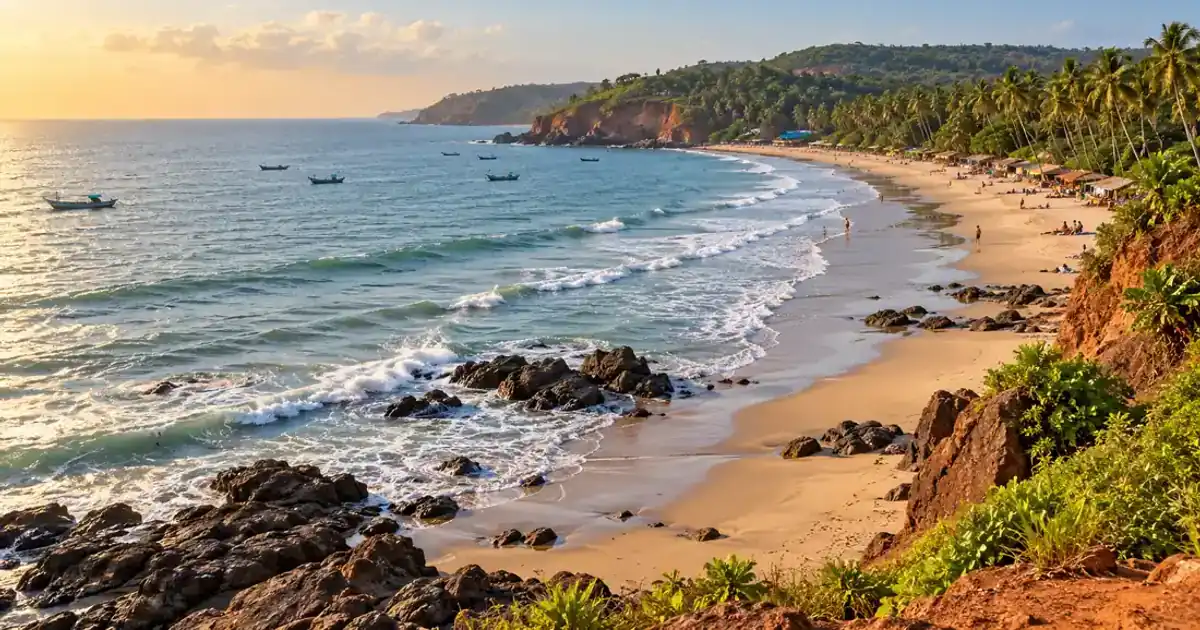
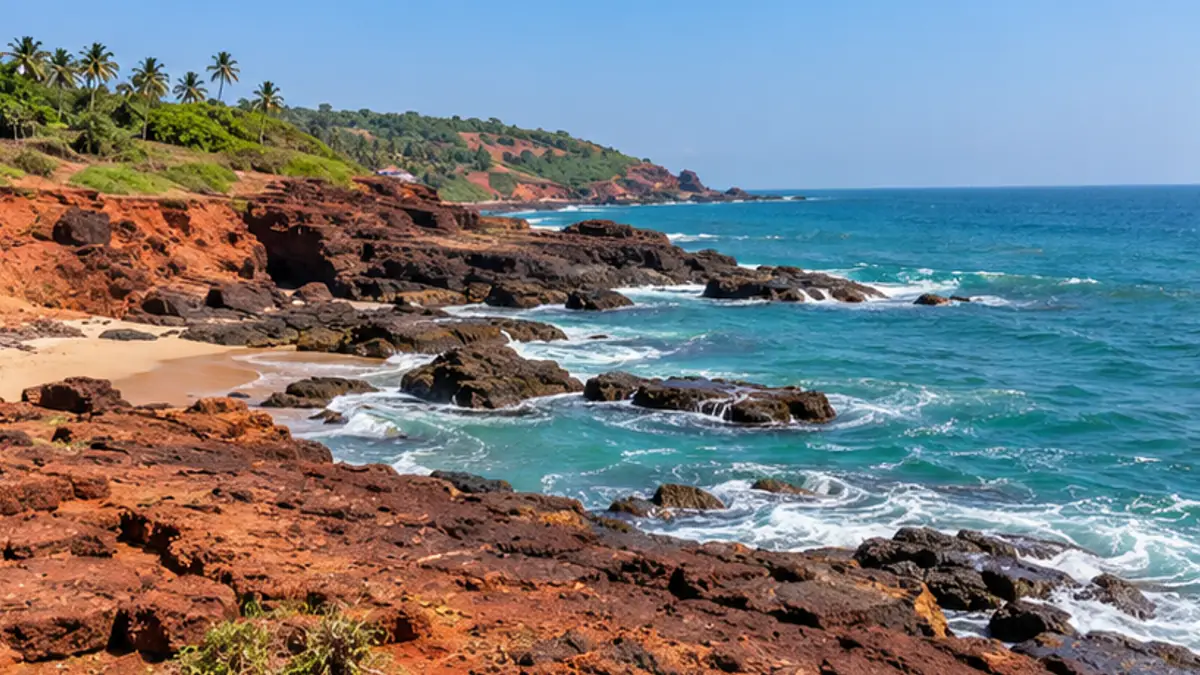
The market boundary directly adjoins South Anjuna Beach, where soft golden sand gives way to weathered black volcanic rock promontories. Walking south past the stalls brings visitors toward iconic seaside institutions like Curlies and Shiva Valley, where daytime ambient music sets a lively Goan beach atmosphere.
The shoreline provides opportunities to take panoramic ocean photos, watch local artisanal fishermen casting net lines, or relax on beach sun loungers between shopping sessions.
Chapora Fort and Vagator Clifftops to the North
Chapora Fort stands 5 kilometers north of Anjuna on a prominent red laterite hill overlooking the Chapora River estuary. Built by the Portuguese in 1717 over an earlier Adil Shahi fortification, the fortress walls offer spectacular sunset panoramas over Ozran Beach and Big Vagator.
Visitors can explore the fort ramparts and red cliff viewpoints before continuing down to the beaches highlighted in our Vagator Beach guide.
Baga Beach and Calangute Coastal Corridor to the South
Positioned 6 kilometers south across the Arpora hill ridge, Baga Beach offers active water sports, parasailing, and waterfront seafood dining. Travelers can transition from the afternoon artisan market at Anjuna to an evening of beach dining or live music along Tito’s Lane in Baga.
This geographic proximity makes it easy to experience quiet morning shopping and lively coastal nightlife within a single Wednesday itinerary.
Curated Wednesday Coastal Day Plan
- 8:30 AM to 11:30 AM (Anjuna Flea Market): Focus on handicraft, textile, and silver shopping while morning temperatures remain comfortable.
- 11:30 AM to 1:30 PM (South Anjuna Beachfront): Enjoy seaside lunch and fresh coconut water at a shaded beachfront shack overlooking the surf.
- 2:00 PM to 4:00 PM (Assagao & Anjuna Villages): Ride rental scooters through shaded village lanes to discover heritage Portuguese villas and boutique cafes.
- 4:30 PM to 6:30 PM (Chapora Fort Ramparts): Climb the laterite pathway for panoramic sunset views across the Chapora River and Vagator coves.
- 7:30 PM to 10:00 PM (Baga & Calangute Strip): Conclude the Wednesday excursion with coastal seafood dinners and live entertainment along the beachfront.
Frequently Asked Questions About Anjuna Flea Market
Which day is the Anjuna Flea Market open in Goa?
Anjuna Flea Market is held strictly every Wednesday during the dry tourist season from late October through mid-April. It does not open on any other weekday or during the monsoon months from May through September.
Is there an entry fee to visit Anjuna Flea Market?
Admission to Anjuna Flea Market is completely free with no entry tickets or passes required. Visitors only pay for private parking if arriving by vehicle and for the goods or food they choose to buy.
What are the exact operating timings of the Wednesday market?
The market operates from 8:00 AM until sunset around 6:30 PM every Wednesday. Morning hours between 8:30 AM and 10:30 AM provide the most comfortable shopping temperatures before peak midday heat and afternoon crowds arrive.
What is the nearest railway station to Anjuna Flea Market?
Thivim Railway Station (THVM) is the nearest railway hub, situated 19 kilometers east of Anjuna with a road commute time of approximately 35 to 45 minutes. Karmali Railway Station is located 29 kilometers away, while Madgaon Junction sits 50 kilometers south.
Which airport is closest to Anjuna Flea Market?
Manohar International Airport at Mopa (GOX) is the closest airport, positioned 29 kilometers northeast with a drive time of 45 to 55 minutes via National Highway 66. Dabolim Airport (GOI) in central Goa is located 45 kilometers south and requires a 75 to 90-minute drive.
Can I use digital payments like UPI or credit cards at the market?
Many established handicraft vendors accept UPI digital payments via QR codes, but mobile internet reception can be intermittent near the beach. Carrying ₹2,000 to ₹5,000 in paper cash ensures smooth transactions and gives buyers stronger leverage during price negotiations.