Vagator Beach Goa: Cliffs, Chapora Fort, Shacks & Guide
Plan your trip to Vagator Beach Goa with Big and Little Vagator cove guides, Chapora Fort sunset tips, Ozran Shiva rock carving, and clifftop dining.
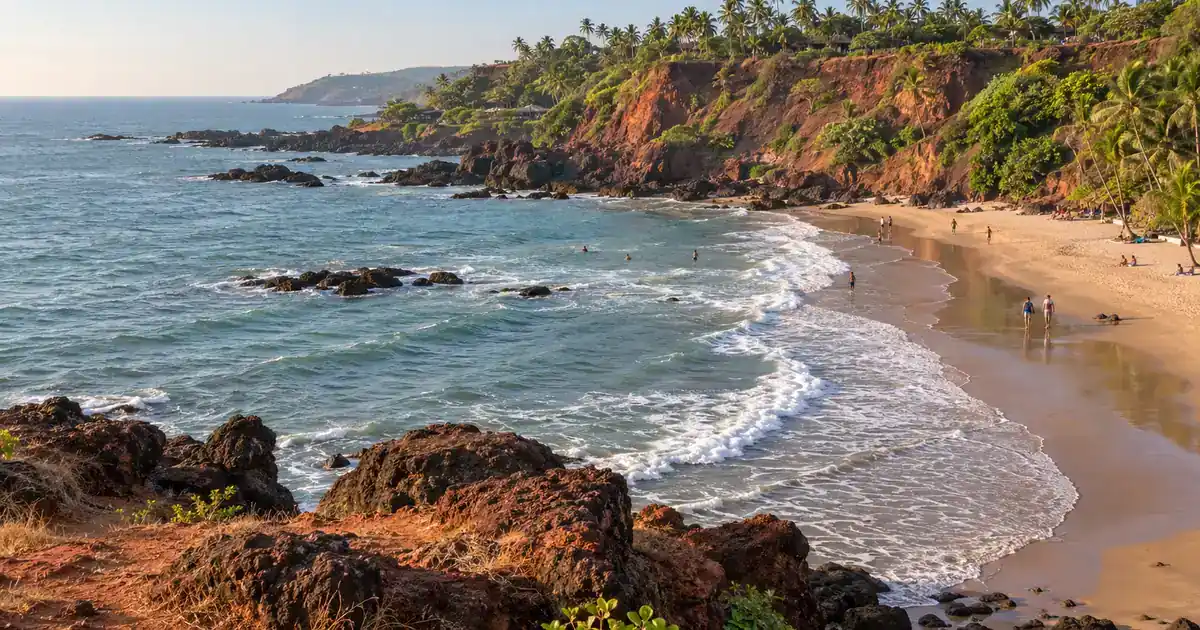
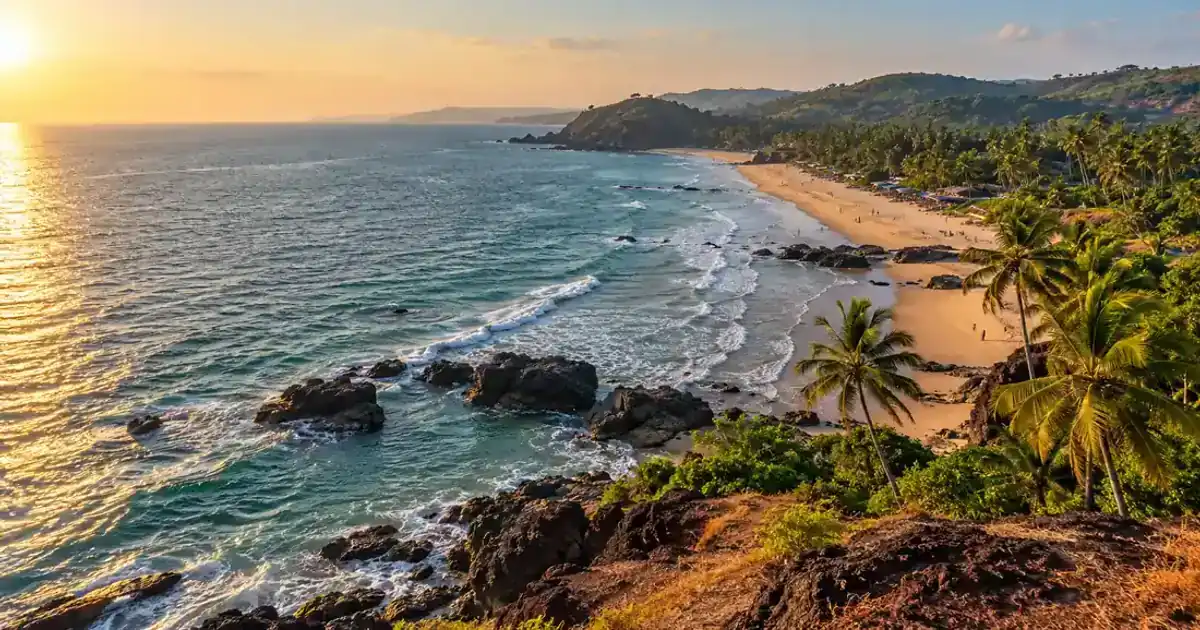
Vagator Beach sits along the northern coastline of Bardez taluka in Goa, 21 kilometers north of the state capital Panaji. Framed by steep red laterite cliffs and overlooked by the ramparts of 17th-century Chapora Fort, the beach offers a distinct volcanic topography that sets it apart from the flat sands found further south.
Travelers consider Vagator an essential stop when planning coastal routes through our Goa state travel guide. Official destination circulars and safety standards are cataloged on the Goa Tourism Development Corporation Official Vagator Directory.
Beach & Cliff Essentials
- Vagator Beach is situated in North Goa along the Arabian Sea, 21 kilometers north of Panaji and 9 kilometers north of Calangute.
- The coastline naturally divides into two distinct coves: Big Vagator below the northern bluffs and Little Vagator (Ozran Beach) to the south.
- Chapora Fort crowns the northern cliff, offering open panoramic views of the Chapora River estuary and the Arabian Sea without entry fees.
- The prime visiting window runs from November through February when sea waters are calm and clifftop sunset venues operate fully.
Vagator Beach Cove Comparison & Activity Matrix
The following matrix compares the topography, accessibility, and primary attractions across the two distinct bays comprising Vagator Beach.
| Sector | Local Name | Access Mode | Key Highlights | Atmosphere |
|---|---|---|---|---|
| North Cove | Big Vagator | Paved ramp from car park | Chapora Fort views, water sports | Wide open sand, family-friendly |
| South Cove | Little Vagator (Ozran) | Steep cliff staircase | Rock-carved Shiva face, beach shacks | Secluded, sunset lounges |
| Northern Bluff | Chapora Fort Hill | 15-minute uphill walking path | 1617 Portuguese walls, river estuary | Panoramic photography, sunset |
| Clifftop Strip | Small Vagator Ridge | Roadside parking | Thalassa, Antares, Olive Bar | Casual dining, electronic music |
Travelers comparing northern beaches with high-traffic watersport hubs of Calangute Beach will find Vagator much more rugged, characterized by rocky promontories and elevated sunset lookouts.
Big Vagator Beach and the Northern Laterite Shoreline
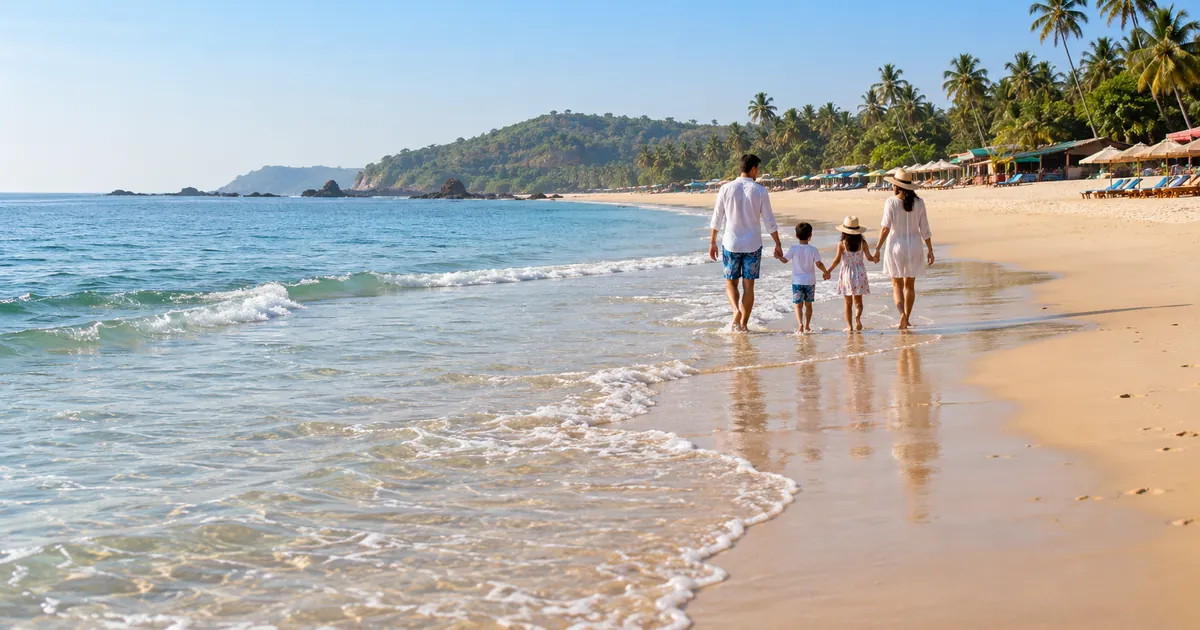
Big Vagator, also known as North Vagator, stretches directly below the western foot of Chapora Fort hill. The beach features a wide expanse of pale sand interspersed with black volcanic boulders that create calm tide pools during low tide.
The main parking area provides direct vehicular access without requiring steep climbs, making Big Vagator the preferred choice for families with senior citizens. Beachfront shacks line the upper high-tide mark, renting sun loungers with parasols for ₹200 to ₹400 per day.
Local fruit sellers offer fresh pineapples, tender coconuts, and cold lime sodas along the sand. In the evenings, travelers browse local stalls before heading inland toward Anjuna flea market shopping.
Little Vagator (Ozran Beach) and the Rock-Carved Shiva Face
Little Vagator, officially called Ozran Beach, occupies a crescent-shaped bay situated just south of the central headland. Reaching the sand requires descending a series of stone steps built into the cliff face, which keeps vehicular noise away from the water.
The most famous landmark at Little Vagator is a bas-relief face of Lord Shiva sculpted directly into a seaside granite boulder, flanked by smaller carvings of a cobra and sun symbols. Created in the early 1990s by a traveling artist, the sculpture is bathed by incoming waves during high tide.
Ozran Beach also features freshwater springs that seep through the red laterite rock face, creating natural rinse pools along the northern edge of the cove.
Chapora Fort Ramparts, History, and Sunset Vistas
Chapora Fort stands on a commanding promontory overlooking the mouth of the Chapora River and the northern curve of Vagator Beach. Built by the Portuguese in 1617 over the foundations of an earlier fort constructed by the Adil Shahi rulers of Bijapur, the fortress served as a northern frontier defense outpost. Regional archaeological preservation details are maintained on the North Goa District Administration Chapora Circuit Portal.
Although interior barracks and military structures lie largely in ruins, the perimeter laterite ramparts, cannon embrasures, and gate tunnels remain intact. The site gained widespread contemporary fame as the filming location for the 2001 Hindi movie Dil Chahta Hai.
Visitors can walk along the outer defensive walls free of charge between 9:00 AM and 5:30 PM daily. The westward orientation provides unobstructed views of the sunset over the Arabian Sea.
Pro Tip
Wear shoes with good grip when hiking up to Chapora Fort from the Vagator parking area. The red laterite gravel path is steep and slippery, especially on the descent after sunset when natural light fades quickly.
Clifftop Dining, Sunset Lounges, and Music Culture
The cliffs overlooking Ozran Beach and Big Vagator host some of Goa’s most celebrated open-air restaurants and sunset lounges. Dining establishments like Thalassa, Antares, and Titlie feature tiered wooden decks where patrons can watch the sun sink into the sea while enjoying Mediterranean and contemporary Goan seafood.
Vagator also holds a historic position in Goa’s electronic music history. Venues such as HillTop, located on the forested plateau between Vagator and Anjuna, have hosted weekly Sunday sunset gatherings and international music festivals since the late 1970s.
Unlike the densely crowded commercial club strip along the active party stretch at Baga Beach, Vagator emphasizes open-air cliff venues, ambient sunset sessions, and relaxed dining.
Water Sports Options, Equipment Safety, and Costs
What water sports can travelers experience at Vagator Beach, and what do they cost? Commercial water sports operators function primarily from Big Vagator between October and May under safety protocols established by the Goa Tourism Department Water Sports Safety & Tariff Guidelines.
- Parasailing: Operators launch speedboats directly from the beach, taking flyers up for a 2 to 3-minute flight offering views of Chapora Fort and the coastline for ₹800 to ₹1,000.
- Jet Ski: Guided rides around the bay cost approximately ₹400 to ₹600 per round, with instructors accompanying inexperienced riders.
- Banana and Bumper Rides: Group rides on inflatable tubes cost ₹300 to ₹400 per person and require wearing life jackets at all times.
- 5-in-1 Combo Packages: Booking a bundle of five water sports activities costs between ₹1,500 and ₹2,200 per person at licensed booking desks on the sand.
Because rocky reefs extend into the water at various points, water sports operators operate exclusively in designated clearance channels marked by floating buoys.
Best Time to Visit Vagator for Clear Seas and Sunset Views
When should travelers visit Vagator Beach for optimal beach weather? The prime travel window runs from November through February, when daytime temperatures hover between 21°C and 31°C with clear skies and calm waters.
- Winter (November to February): The peak tourism season. Shacks are fully operational, sea breezes keep evenings pleasant, and cliff parties operate on regular weekly schedules.
- Summer (March to May): Warm and humid conditions with daytime temperatures reaching 34°C. The beach is quiet, and budget travelers can find discounts on cliffside resorts.
- Monsoon (June to September): High surf and strong rip currents crash against the laterite cliffs. Water sports are halted, and shacks are dismantled per government mandates. However, the cliffs turn lush green, attracting travelers interested in monsoon photography and coastal road trips extending north toward the bohemian coast of Arambol Beach.
How to Reach Vagator Beach from Mopa, Dabolim, and Thivim
How do travelers commute to Vagator Beach from regional airports and railway junctions? The beach is accessible by road via Mapusa along National Highway 66:
- From Manohar International Airport Mopa (GOX): Located 27 kilometers northeast, taking approximately 45 minutes by taxi along the newly opened highway connector. Prepaid cabs charge roughly ₹1,100 to ₹1,400.
- From Dabolim Airport (GOI): Situated 44 kilometers south, requiring about one hour and twenty minutes by road via Panaji. Prepaid airport taxis charge between ₹1,500 and ₹1,900.
- From Thivim Railway Station (THVM): The closest railway hub is 18 kilometers to the east, reachable in roughly 30 to 35 minutes by taxi or local bus via Mapusa.
- Local Scooter and Car Hire: Rental scooters (Honda Activa) cost ₹350 to ₹500 per day, while self-drive cars (Mahindra Thar or Maruti Swift) range from ₹1,200 to ₹2,500 per day, requiring a valid driver’s license.
Frequently Asked Questions About Vagator Beach Goa
What is the difference between Big Vagator and Little Vagator?
Big Vagator is the wider, easily accessible main sandy bay situated directly beneath the western cliffs of Chapora Fort. Little Vagator (Ozran Beach) lies to the south, requiring a descent down a steep cliff staircase to reach a more secluded cove featuring the rock-carved Shiva sculpture.
How far is Chapora Fort from Vagator Beach?
Chapora Fort sits on the hill overlooking Big Vagator, located approximately 1.5 kilometers by road or a 15-minute uphill walking trail from the beach car park. Entry to the fort ramparts is completely free and open daily from sunrise to sunset.
Is swimming safe at Vagator Beach?
Swimming is safe in designated sandy areas monitored by Drishti Marine lifeguards during the fair-weather season between November and April. Swimmers should exercise caution near the submerged volcanic rocks and avoid entering the water during the monsoon when high waves prevail.
Which airport in Goa is closest to Vagator Beach?
Manohar International Airport at Mopa (GOX) is the closest airport, situated 27 kilometers northeast of Vagator and reachable in about 45 minutes by taxi. Dabolim Airport (GOI) in South Goa is located 44 kilometers away, requiring approximately an hour and twenty minutes by road.
Does Vagator host major music festivals?
Yes, Vagator regularly hosts massive winter music festivals, including the multi-day electronic dance music gathering Sunburn Festival Goa, which brings international DJs, immersive stage productions, and global music lovers to the clifftops in late December.