Goa Carnival: Dates, Float Parade Routes & Travel Guide
Plan your trip to the Goa Carnival with dates, Panaji and Margao parade routes, King Momo traditions, Red and Black dance tickets, and travel tips.
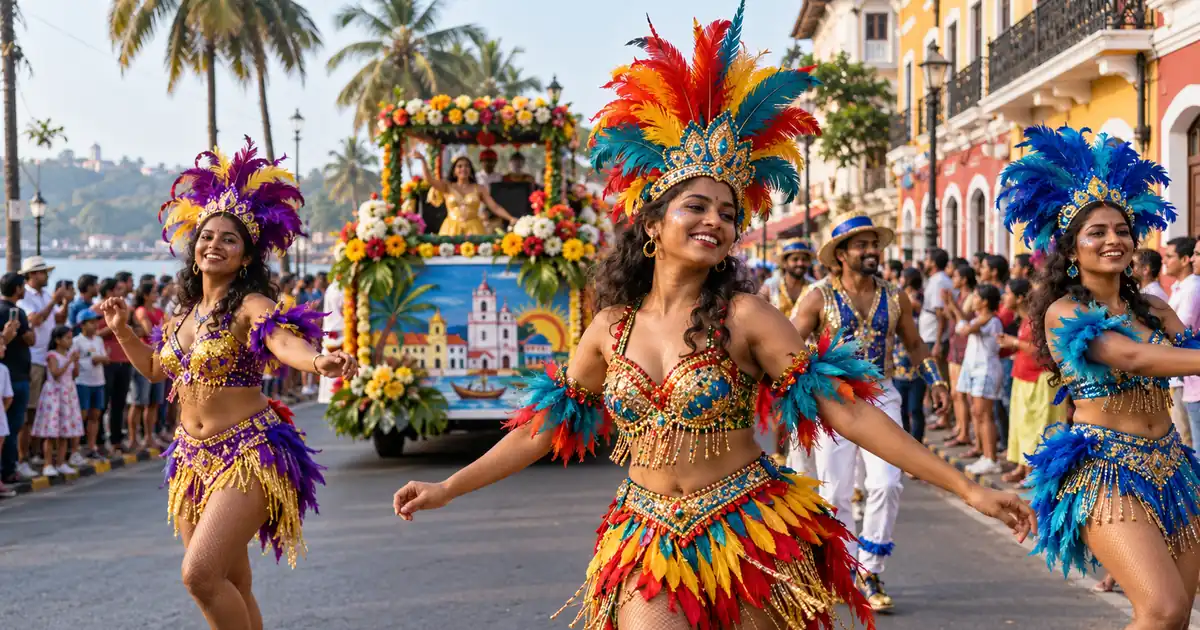
The Goa Carnival stands as one of the most distinctive cultural festivals in peninsular India, bringing four days of communal celebrations to the coastal state every year. Introduced during the Portuguese colonial era in the sixteenth century, this pre-Lenten carnival brings together Konkani folklore, brass band music, satirical street theater, and massive costumed float parades across both North and South Goa.
Carnival Essentials
- The Goa Carnival takes place annually over four consecutive days, concluding on Fat Tuesday immediately prior to Ash Wednesday.
- Grand civic float parades rotate sequentially through four host cities: Panaji on Saturday, Margao on Sunday, Vasco da Gama on Monday, and Mapusa on Tuesday.
- Watching the public street parades along municipal avenues is completely free of charge for all spectators.
- The traditional Red and Black Dance ball held on the final night in Panaji requires a modest entry pass ranging from ₹100 to ₹200 per attendee.
Spectators travel from across the country to witness the festival as part of their holiday exploring the top places to visit in Goa. The celebration transforms capital avenues into open-air stages for musicians and neighborhood dance troupes.
Goa Carnival Dates, Schedule, and Parade Routes
The Goa Carnival follows the liturgical Christian calendar, taking place over the four days preceding the solemn forty-day period of Lent. Festivities open on Saturday afternoon and culminate on the following Tuesday night with formal ball dances and fireworks displays.
Each day of the festival centers on a different major town, allowing spectators and parade performers to move across the state. While February brings the communal pageantry of Carnival parades to central city promenades, travelers planning winter coastal trips can also experience late December music events such as Sunburn Festival Goa along the northern coastline. The table below outlines the traditional rotation, parade staging zones, and start times coordinated by the Department of Tourism Government of Goa Carnival Guide.
| Carnival Day | Host City | Primary Venue / Route | Kick-Off Time | Special Highlight |
|---|---|---|---|---|
| Day 1 (Saturday) | Panaji (Capital) | D.B. Bandodkar Marg along Mandovi River | 3:30 PM | King Momo proclamation and official flag-off |
| Day 2 (Sunday) | Margao (South Goa) | Municipal Council Square to Borda Road | 4:00 PM | Traditional South Goa folk dance floats |
| Day 3 (Monday) | Vasco da Gama | Swatantra Path commercial avenue | 4:30 PM | Maritime port community floats and brass bands |
| Day 4 (Tuesday) | Mapusa (North Goa) | Municipal Market to Morod Junction | 4:30 PM | Agricultural satire and closing festivities |
| Day 4 Night | Panaji | Clube Nacional / Samba Square | 8:00 PM | Red and Black Dance costume ball |
Historical Origins and Cultural Evolution of Carnival in Goa
The roots of Carnival in Goa date back over five hundred years to 1510, when Portuguese colonial settlers introduced the European festival of Entrudo. Originally observed as a pre-Lenten feasting period for Catholic families, early celebrations centered on mock battles with flour and perfumed water, lavish household banquets, and street masquerades before the fasting of Lent, closely intertwined with the religious life around historic Se Cathedral in Old Goa.
Over subsequent centuries, the festival adopted distinctly local expressions. Goan communities incorporated Konkani satirical songs called khells, traditional percussion instruments like the ghumot, and expressive folk dances including the Dekhnni and Corridinho.
In 1965, prominent Goan musician Timoteo Fernandes reorganized the carnival into an organized civic festival inspired by international street carnivals. He created structured civic float competitions and introduced the mythic figure of King Momo to lead the processions, transforming the event into a secular cultural celebration embraced by citizens of all faiths across Goa.
King Momo Proclamation, Floats, and Iconic Traditions
The figure of King Momo serves as the undisputed ceremonial monarch of the Goa Carnival. Chosen annually by a state tourism panel from prominent local personalities, King Momo leads the inaugural Panaji float parade atop an ornate chariot, wearing a golden crown and crimson velvet robes.
During the flag-off ceremony, King Momo reads his traditional royal decree in English and Konkani: Kha, piye aani majja kar, commanding his subjects to eat, drink, and make merry for four continuous days. Behind his royal chariot follow dozens of thematic floats built by village clubs, environmental groups, and artisan cooperatives from coastal communities near the Calangute Beach coastal strip.
Floats frequently tackle contemporary social issues with sharp satire, addressing regional environmental protection, marine ecology, and Goan history alongside depictions of mythical sea creatures and regional village life. Neighborhood musical bands march between floats, playing trumpets and accordions while costumed youth perform choreographed routines.
The Red and Black Dance marks the official conclusion of the festival on Tuesday evening. Hosted at the historic Clube Nacional on the Panaji riverfront, participants dress strictly in red tops and black trousers or skirts, dancing to live salsa and Konkani pop bands into the late hours.
Goan Food, Pop-Up Cafes, and Street Culture During Carnival
Street food forms an essential dimension of the Goa Carnival experience. Along the parade avenues, mobile food stalls and village women set up counters serving authentic coastal delicacies that draw beachgoers from the best beaches in Goa.
Spectators can sample warm poi bread stuffed with spicy Goan pork sausages (chourico), crispy fish cutlets, prawn croquettes, and vegetable patties. Sweet stalls offer multi-layered bebinca, coconut-and-jaggery dodol, and traditional sugar-glazed fried ribbons known as kormolas.
Pop-up bars and heritage taverns along the Latin Quarter of Fontainhas serve refreshing cashew and coconut feni cocktails mixed with lemonade. Outdoor dining tables spill into stone courtyards as acoustic musicians play Portuguese fados and Konkani mandos for evening diners.
Traveler Tips for Watching the Parades and Navigating Crowds
Experiencing the Goa Carnival comfortably requires strategic planning, particularly in managing road closures and heavy pedestrian traffic, matching logistical preparation needed for the Jaisalmer Desert Festival.
- Arrive Early for Viewing Spots: Prime standing areas along Panaji’s D.B. Bandodkar Marg fill up by 2:30 PM. Arrive at least two hours before the parade start to secure shaded space near the river promenade railing.
- Traffic and Parking Restrictions: Major avenues along the parade routes close to vehicular traffic from 1:00 PM until late evening. Park your vehicle in designated satellite parking lots near the Patto Plaza bus terminal in Panaji and walk across the footbridge.
- Comfortable Footwear and Sun Protection: Spectators remain standing on concrete sidewalks for three to four hours. Wear comfortable walking shoes, carry drinking water, and bring hats or sunglasses for late afternoon sun exposure.
- Advance Hotel Reservations: Hotel occupancy across central Panaji and coastal beach resorts reaches full capacity during carnival week. Reserve accommodations well in advance through the Goa Tourism Development Corporation Official Portal.
How to Reach Goa Carnival Venues by Air, Train, and Bus
Goa is well connected by air, rail, and highway networks, making it simple to coordinate carnival itineraries alongside plans for the best places to visit in India.
Air travelers can land at Manohar International Airport (GOX) at Mopa in North Goa or Dabolim International Airport (GOI) in South Goa. Both airports operate prepaid taxi counters and electric feeder buses connecting directly to Panaji, Margao, and coastal beach belts.
By rail, Madgaon Junction (MAO) in South Goa and Thivim Railway Station (THVM) in North Goa handle daily express trains from Mumbai, Bengaluru, Delhi, and Kerala. State transport buses run continuously between Panaji and Margao, while intercity luxury sleeper buses arrive daily from Pune, Mumbai, and Hyderabad, as highlighted in the Incredible India Goa Cultural Festivals Portal.
Frequently Asked Questions About Goa Carnival
When is the Goa Carnival celebrated each year?
The Goa Carnival takes place over four days in February or March, immediately preceding the beginning of the Christian fasting season of Lent. Festivities commence on Saturday afternoon and conclude on Fat Tuesday with the traditional Red and Black Dance.
Do visitors need tickets to watch the Goa Carnival parades?
Spectators do not need tickets to watch the main civic carnival float parades along public avenues in Panaji, Margao, Vasco, or Mapusa. Only specialized private gatherings, such as the Red and Black Dance ball at Clube Nacional, charge a modest entry fee of ₹100 to ₹200.
Where is the best place to watch the Goa Carnival parade?
Dayanand Bandodkar Marg along the Mandovi River in Panaji provides the largest and most elaborate float parade on the opening Saturday. The spacious riverside promenade offers excellent viewing angles and convenient access to nearby restaurants and heritage streets.
Who is King Momo in the Goa Carnival?
King Momo is the mythic sovereign of the carnival, chosen annually from respected local Goan personalities to lead the opening procession. He officially inaugurates the festival by proclaiming his decree for all citizens and visitors to enjoy four days of music, feasting, and celebration.