Daman, Diu & Silvassa Travel Guide: Forts, Beaches & Routes
Explore Daman, Diu, and Silvassa with our complete travel guide covering Portuguese coastal forts, Naida Caves, Nagoa Beach, and Dudhni Lake.
The Union Territory of Dadra and Nagar Haveli and Daman and Diu unites three distinct historical districts along the western coast of India, spanning sun-washed Arabian Sea islands, fortified colonial harbors, and verdant forested valleys. Formerly administered under Portuguese colonial rule for over four centuries until liberation in December 1961, these territories preserve monumental stone battlements, whitewashed baroque basilicas, and quiet shorelines.
Travelers organizing a journey through the daman and diu travel guide will encounter the formidable ocean ramparts of Diu Fort, the carved limestone labyrinths of Naida Caves, the twin fortresses flanking the Daman Ganga river, and the tranquil reservoir waters of Dudhni Lake. This master travel guide outlines enclave circuits, heritage itineraries, transport connections, and seasonal conditions across all three districts.
Union Territory Overview & Travel Highlights
- Tripartite Geography: Comprises the island district of Diu off the southern coast of Saurashtra, the coastal trading twin towns of Daman on the Gulf of Khambhat, and the inland tribal district of Dadra and Nagar Haveli.
- Colonial Stone Fortifications: Imposing 16th-century Portuguese fortresses at Diu Fort and Moti Daman preserve massive ocean bastions, historical bronze artillery, and governor palaces.
- Distinctive Coastal Landscapes: Nagoa Beach features rare branching African Hoka palms (Hyphaene thebaica), while Jampore Beach offers expansive dark-sand tidal flats shaded by casuarina groves.
- Inland Tribal Sanctuaries: Silvassa serves as a forested retreat, offering boating across Dudhni Lake on the Madhuban reservoir and Asiatic lion safaris at Vasona.
- Unified Administration: Operates under a unified Union Territory framework, with Daman functioning as administrative headquarters for public services.
Top Places to Visit Across the Merged Union Territory
The primary destinations across the Union Territory include the ocean bastions of Diu Fort, the sunlit rock chasms of Naida Caves, the horseshoe bay of Nagoa Beach, the historic quarter of Moti Daman, and the water sports hub of Dudhni Lake in Silvassa.
Because the three districts are geographically separated along the western seaboard, visitors typically approach them in two distinct journeys. Diu pairs naturally with Saurashtra coastal circuits alongside Gir and Somnath. In contrast, Daman and Dadra and Nagar Haveli sit just thirty kilometers apart along National Highway 48, making them an ideal joint weekend destination from Mumbai or Surat.
Diu Island: Forts, Churches, and Horseshoe Bays
Diu occupies a small island measuring thirty-eight square kilometers, connected to the southern mainland of Gujarat by two road bridges.
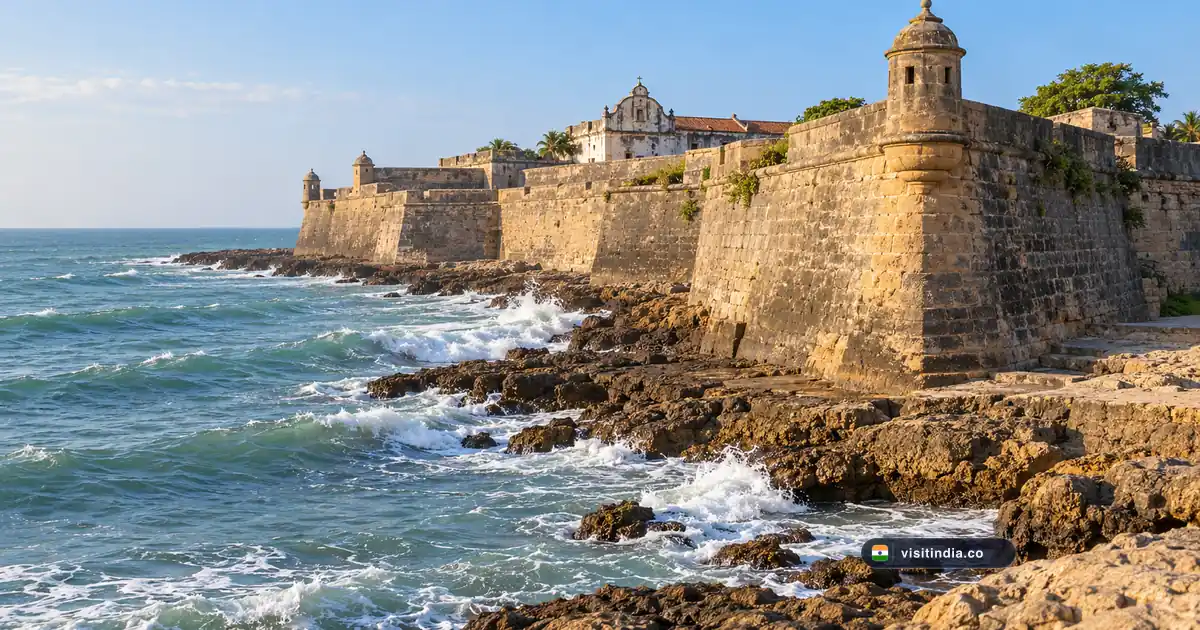
The island’s eastern point is anchored by Diu Fort, a massive citadel erected between 1535 and 1541. Surrounded by ocean waters on three sides and a deep sea moat on the landward approach, the fort displays ancient cannons pointing toward the Gulf of Khambhat.
Within walking distance stands the 17th-century St. Paul’s Church, renowned for its elaborate white baroque facade and carved teakwood interior paneling. Detailed island routes are covered in our places to visit in Diu guide.
On the island’s southern coast, Nagoa Beach curves in a sheltered semicircle. The beach is fringed by exotic Hoka palm trees, introduced centuries ago by merchant sailors arriving from East Africa. The gentle surf makes Nagoa ideal for swimming, parasailing, and speedboating.
Naida Caves: The Sunlit Limestone Labyrinth
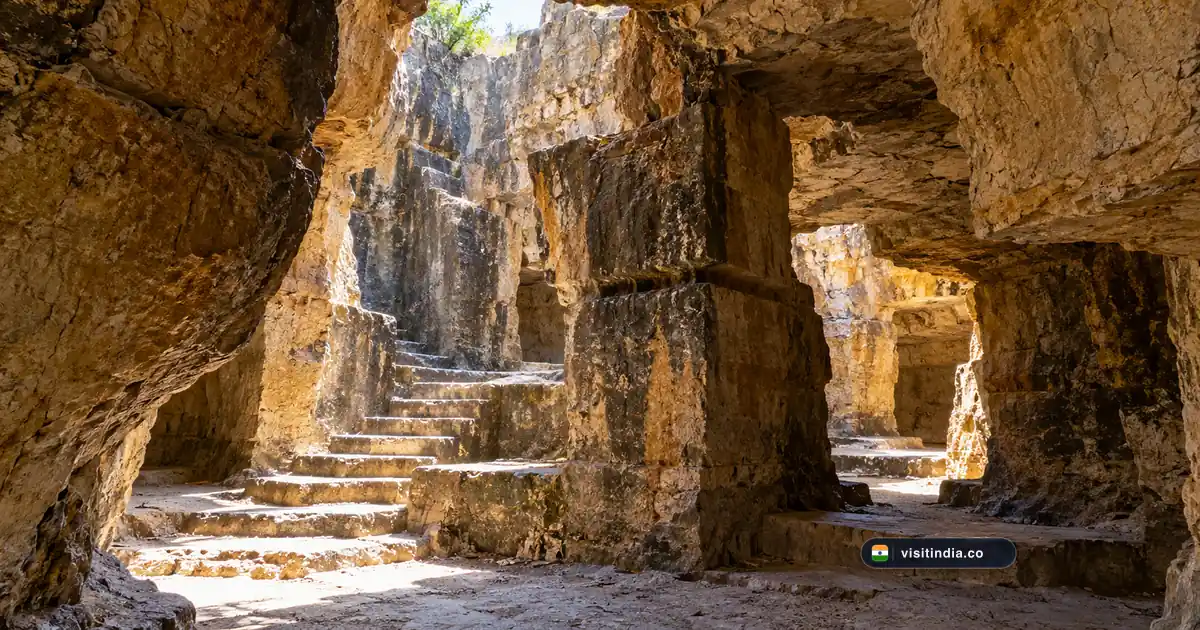
Located just outside the landward walls of Diu Fort, Naida Caves form an extraordinary underground network of carved stone galleries and natural light shafts.
Historically quarried by Portuguese engineers for building material to construct fort bastions, the excavations broke into ancient geological caverns. Today, gigantic stone pillars, natural arches, and exposed banyan tree roots frame open roof crevices where sunlight pours onto the sandy cavern floor. The site offers photographers dramatic chiaroscuro lighting conditions throughout the midday hours.
Daman Enclave: Moti Daman and Nani Daman
Daman sits along the mouth of the Daman Ganga river, split into Moti Daman (Big Daman) on the southern bank and Nani Daman (Small Daman) on the northern bank.
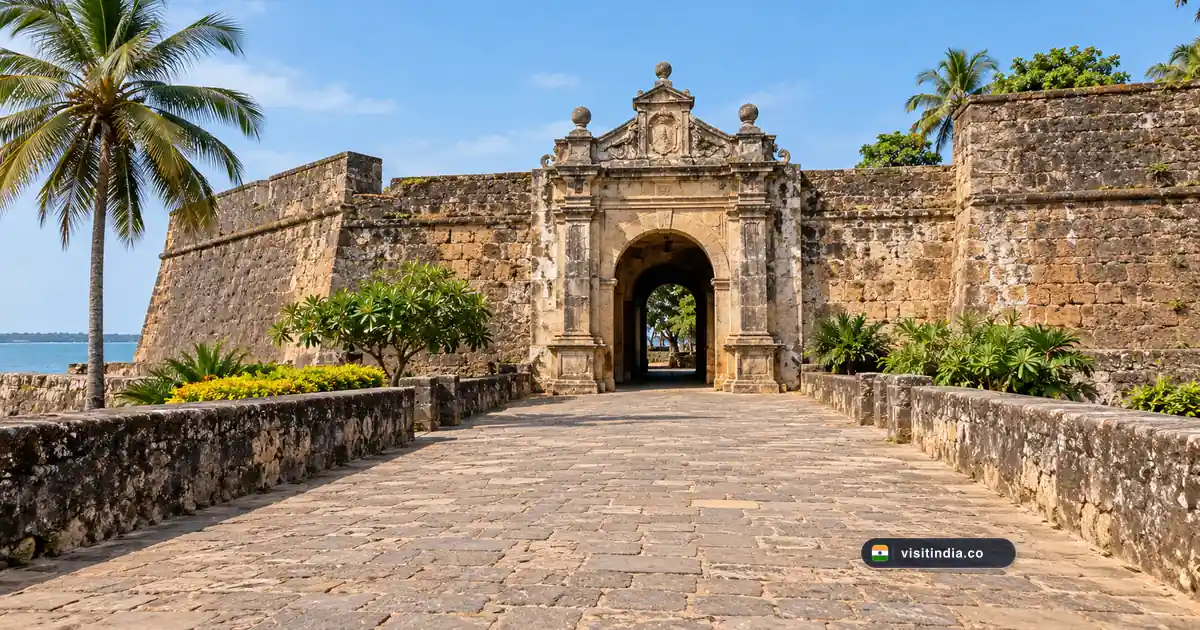
Moti Daman is encircled by a massive polygonal stone rampart built in 1559, containing ten bastions, historic barracks, and the Church of Bom Jesus with its intricately carved, gilded wooden altarpiece.
Across the river bridge, Nani Daman features the smaller Fort of St. Jerome, guarding the harbor entrance with stone statues of St. Jerome and Our Lady of the Sea. Along the southern coastline, Jampore Beach offers a wide expanse of dark sand where the Arabian Sea recedes during low tide, creating shallow waters for family swimming.
Silvassa and Dadra & Nagar Haveli: Forest Retreats and Lakes
Located thirty kilometers inland from Daman, Silvassa acts as the leafy capital of Dadra and Nagar Haveli, characterized by rolling Sahyadri foothills and indigenous Warli tribal traditions.
Wildlife enthusiasts can visit the Vasona Lion Safari, a twenty-hectare fenced reserve where open safari vehicles transport visitors to view Asiatic lions roaming through teak forests.
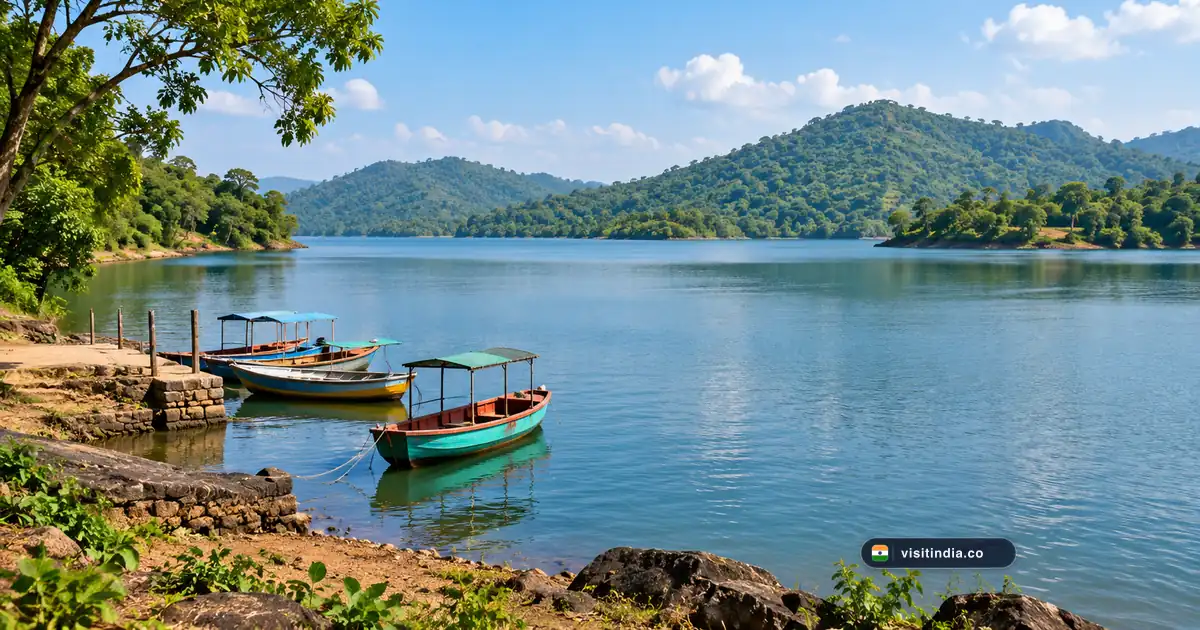
Forty kilometers further south near the Maharashtra border, Dudhni Lake opens across the expansive reservoir of Madhuban Dam. Visitors can enjoy scenic shikara boat cruises, ride jet skis, or stay in rustic waterfront cottages.
| District | Geographic Character | Key Landmark | Recommended Stay |
|---|---|---|---|
| Diu Island | Coastal island, limestone cliffs | Diu Fort, Naida Caves, Nagoa Beach | 2 to 3 Days |
| Daman | Coastal port, river estuary | Moti Daman Fort, Bom Jesus Church | 1 to 2 Days |
| Silvassa (DNH) | Inland forest, Sahyadri foothills | Vasona Lion Safari, Dudhni Lake | 1 to 2 Days |
Portuguese Colonial Architecture and Military Heritage
The military architecture of Daman and Diu represents one of the most formidable fortification networks established during the Age of Discovery along the Indian Ocean maritime trade lanes.
Constructed from dense coastal sandstone and coral rag mortar, these defensive citadels withstand ocean spray and monsoon storms while incorporating classical Renaissance and Baroque design elements. Detailed town tours are available in our Moti Daman and beaches guide.
The Citadels of Diu: Fortress and Panikotha
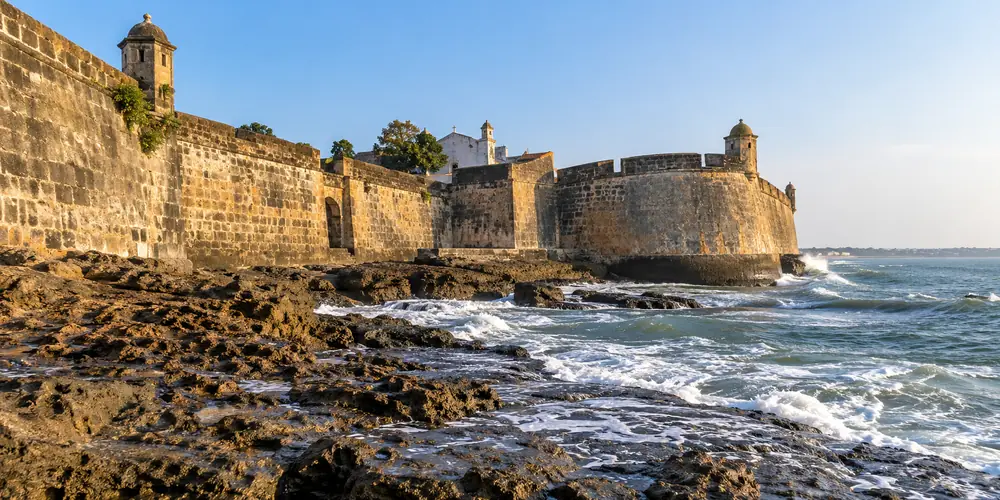
Diu Fort stands as a masterwork of military engineering, developed after the Treaty of Diu was signed in 1535 between Sultan Bahadur Shah of Gujarat and the Portuguese crown.
The fortress incorporates three massive landward bastions (St. George, St. James, and St. Thomas) flanked by double moats carved into solid limestone rock. A towering Venetian-style lighthouse guides maritime traffic, while interior courtyards preserve historical bronze artillery.
Just one nautical mile offshore in the entrance channel stands Fortim do Mar, or Panikotha, a fortified sea castle complete with a stone chapel and lighthouse reachable by motor launch, officially maintained on the District Administration Diu Forts Archive.
Sacred Architecture: The Churches of Daman and Diu
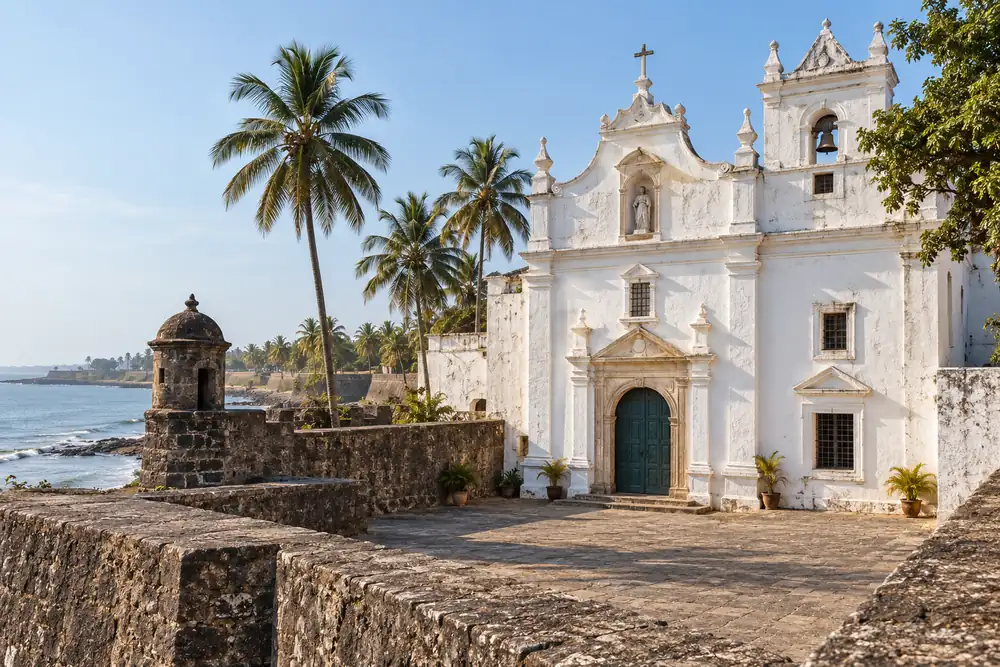
Colonial religious structures in both enclaves display rich Mannerist and Baroque stone carving, reflecting Jesuit, Franciscan, and Augustinian influence:
- Church of Bom Jesus (Moti Daman): Consecrated in 1603, this cathedral features an extraordinary gilded retable crafted by local woodcarvers under Portuguese supervision, depicting scenes of early Christian martyrdom.
- St. Paul’s Church (Diu): Completed in 1601 and dedicated to the Immaculate Conception, this active parish church features intricate volutes and shell motifs reminiscent of the Basilica of Bom Jesus in Goa.
- Church of St. Francis of Assisi (Diu): Built in 1593 overlooking the sea, now adapted into a cultural hospital and regional archaeological museum housing stone inscriptions and carved statues.
Natural Escapes: Coastal Beaches and Inland Reservoirs
Beyond military fortresses, the Union Territory encompasses varied coastal and aquatic ecosystems, from coral-fringed beaches to inland freshwater lakes.
Each shoreline offers distinctive geographical features influenced by ocean currents, tidal ranges, and native vegetation. Complete park details are covered in our Silvassa and Dudhni Lake guide.
Beach Circuits: Nagoa, Ghoghla, Jampore, and Devka
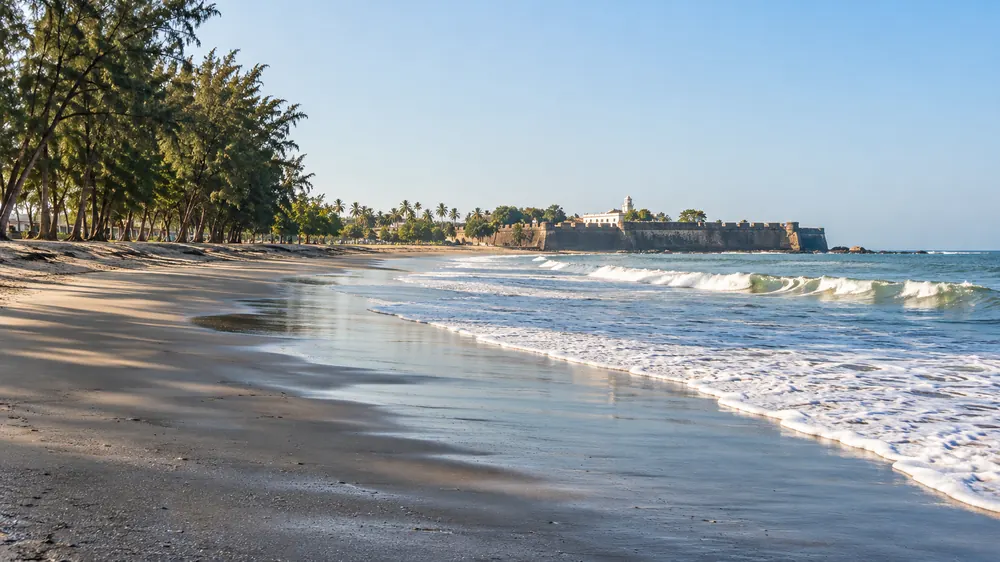
Coastal travelers can choose from energetic water sports bays or quiet walking beaches across the two seaside enclaves:
- Nagoa Beach (Diu): Famous for its crescent-shaped bay protected from rough open swells, allowing calm year-round sea bathing under the shade of branching Hoka palms.
- Ghoghla Beach (Diu): Located on the mainland side of the district, this long golden-sand beach holds the prestigious international Blue Flag certification for clean water and eco-friendly tourist infrastructure.
- Jampore Beach (Daman): Shaded by tall casuarina trees five kilometers south of Moti Daman, known for gentle gradients and water sports like parasailing and banana boat rides.
- Devka Beach (Daman): Situated north of Nani Daman, featuring rocky shoreline ledges where evening visitors gather along landscaped promenades with musical fountains.
Inland Reservoirs and Tribal Country: Dudhni and Khanvel
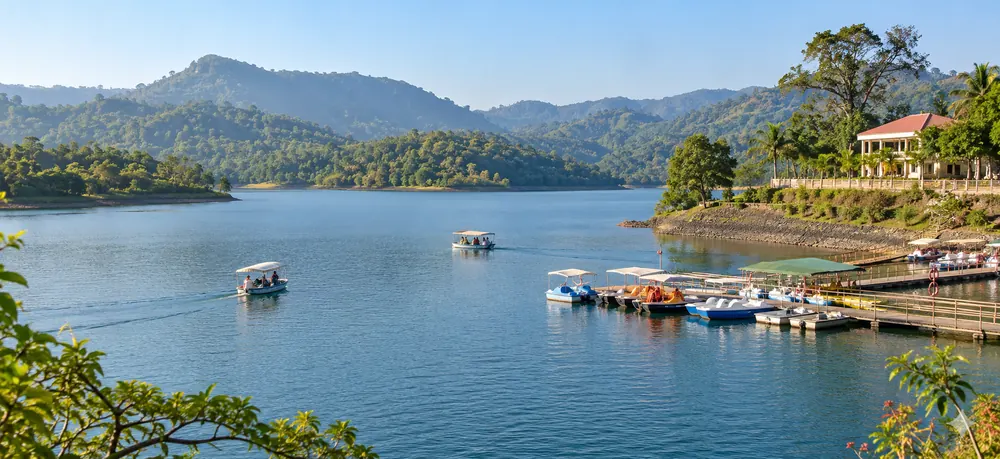
Heading east into Dadra and Nagar Haveli reveals interior landscapes shaped by the Daman Ganga river basin and the Western Ghats.
Dudhni Lake spreads across the catchment of the Madhuban Dam, offering sixty-five square kilometers of calm freshwater surrounded by green hills. Tribal villages across Khanvel and Dudhni preserve indigenous Warli art, where mud-plastered walls are decorated with white rice-paste murals illustrating agricultural harvests, folk dances, and sacred celestial diagrams. District administration records are maintained on the official District Administration DNH Profile.
Itinerary Planning: Regional Circuits and Travel Routes
Planning an efficient journey across Dadra and Nagar Haveli and Daman and Diu requires recognizing the geographical separation between the coastal island and the southern enclaves.
Because over six hundred kilometers of highway separate Diu from Daman, travelers should treat them as separate adventures or connect them as part of a grand Western India coastal road trip.
3-Day Diu Coastal Heritage Circuit
Diu is best explored over three leisurely days, allowing ample time for fort walking, beach relaxation, and coastal photography.
- Day 1: Arrive in Diu, check in near Nagoa or Bunder Road. Spend the morning exploring Diu Fort and Panikotha view, followed by an afternoon tour of St. Paul’s Church and St. Thomas Museum. Enjoy sunset along the cliffs at INS Khukri Memorial.
- Day 2: Start early at Naida Caves to capture golden morning light beams through stone arches. Spend the afternoon swimming and enjoying water sports at Nagoa Beach. In the evening, visit the five seaside Shiva lingas at Gangeshwar Mahadev Temple.
- Day 3: Walk the certified sands of Ghoghla Beach, sample fresh seafood at local port cafes, and visit the historical town gate and market squares.
Travelers exploring Saurashtra can easily combine this itinerary with pilgrimage darshan at Somnath Temple, located only eighty-five kilometers northwest along National Highway 51.
3-Day Daman & Silvassa Weekend Escape
Combining Daman with Silvassa offers a balanced mix of colonial coastal defense and tranquil inland nature, conveniently located two hours north of Mumbai.
- Day 1: Arrive in Daman via Vapi railway station. Spend the morning walking the ramparts and historic church halls of Moti Daman Fort. Cross the bridge to explore Nani Daman Fort and the fishing harbor, concluding the day with seaside snacks at Devka Beach.
- Day 2: Relax along the casuarina-lined sands of Jampore Beach with morning water sports. After lunch, drive thirty kilometers inland to Silvassa. Visit the Tribal Cultural Museum to learn about Warli heritage and stroll through the manicured pathways of Vanganga Lake Garden.
- Day 3: Take an early morning safari at Vasona Lion Safari Park, followed by a scenic drive to Dudhni Lake for shikara boating and waterside relaxation before departing via Vapi.
Transportation, Gateways, and Practical Travel Advice
Traveling across the Union Territory is straightforward, with well-paved coastal highways, nearby broad-gauge railway junctions, and regional air connectivity.
Understanding transport hubs helps travelers minimize road transfer times and coordinate reliable vehicle rentals across neighboring Gujarat.
Reaching Diu: Air, Rail, and Highway Corridors
Diu features direct air connectivity alongside regional highway routes connecting Saurashtra:
- By Air: Diu Airport (DIU) operates scheduled regional passenger flights connecting directly to Mumbai and Ahmedabad.
- By Rail: The nearest major railhead is Veraval Junction (VRL), located 90 kilometers northwest, which connects with express trains from Ahmedabad, Mumbai, and Delhi. The smaller station of Delvada lies just eight kilometers from Diu.
- By Road: National Highway 51 connects Diu to Bhavnagar, Somnath, and Porbandar. State transport buses and private luxury coaches operate daily services from Ahmedabad (360 km) and Rajkot (230 km).
Reaching Daman and Silvassa: Rail and Road Corridors
Daman and Silvassa benefit from immediate proximity to India’s active Western Railway mainline and the Mumbai-Delhi expressway:
- By Rail: Vapi Railway Station (VAPI) serves as the primary railhead for both Daman (12 km west) and Silvassa (17 km east). Express and superfast trains along the Mumbai-Surat corridor halt at Vapi.
- By Road: National Highway 48 runs directly past Vapi, providing smooth four-lane highway connectivity from Mumbai (170 km, 3.5 hours drive) and Surat (115 km, 2 hours drive).
- By Air: The nearest commercial airport for Daman and Silvassa is Surat International Airport (STV), located approximately 120 kilometers north.
Travelers can easily combine journeys with coastal routes continuing south into Maharashtra. Official municipal archives are recorded on the Silvassa Municipal Council Portal.
Frequently Asked Questions About Daman, Diu & Silvassa Travel
Are Daman and Diu located close to each other?
No, Daman and Diu are located approximately 650 kilometers apart by road across opposite sides of the Gulf of Khambhat. Diu is an island situated off the southern coast of Saurashtra, whereas Daman sits along the southern Gujarat coastline adjacent to Dadra and Nagar Haveli.
What is the best time of year to visit Daman, Diu, and Silvassa?
The best time to visit all three districts is from October to March when the winter climate brings pleasant daytime temperatures between 18°C and 28°C and calm coastal waters. Summers can be hot and humid, while monsoon months from June to September bring heavy coastal rains.
Do tourists need a special permit to visit Daman, Diu, or Silvassa?
No, domestic Indian tourists do not require an Inner Line Permit or any special travel pass to visit Daman, Diu, or Dadra and Nagar Haveli. Foreign nationals should carry valid Indian tourist visas and passports for hotel registration.
What are the main attractions in Diu?
The primary attractions in Diu include the 16th-century Diu Fort, the natural limestone formations of Naida Caves, the crescent-shaped Nagoa Beach with Hoka palms, the Baroque St. Paul’s Church, and the tidal Gangeshwar Mahadev Temple.
How can I travel between Mumbai and Daman or Silvassa?
You can take a train from Mumbai Central or Bandra Terminus to Vapi Railway Station, which takes approximately two hours on express trains. From Vapi, local auto-rickshaws and taxis reach Daman in twenty minutes and Silvassa in twenty-five minutes.
What is unique about the trees at Nagoa Beach in Diu?
Nagoa Beach is renowned for its branching African Hoka palm trees (Hyphaene thebaica), which are not native to India. Portuguese sailors originally transported and planted these distinctive branching palms here centuries ago from the East African coast.
Can you do water sports at Jampore Beach and Dudhni Lake?
Yes, Jampore Beach in Daman offers parasailing, jet skiing, speedboating, and quad biking, while Dudhni Lake in Dadra and Nagar Haveli provides jet skiing, speedboats, and tranquil Kashmiri-style shikara boat cruises.