Jejuri Khandoba Temple: Timings, History & Travel Guide
Discover Jejuri Khandoba Temple: explore its rich history, stunning architecture, timings, and tips on how to reach this sacred site. Visit now!
Jejuri · Pune District
Jejuri Khandoba Temple
Jejuri Khandoba Temple Essentials
- Temple Timings: 5:00 AM to 9:30 PM daily, beginning with early Kakad Aarti and ending with night Shejaarti.
- Hilltop Location: Jayadri Hill, Jejuri town, Purandar Taluka, Pune District, Maharashtra 412303.
- Turmeric Offering: Sacred Bhandara ritual where pilgrims fling golden turmeric powder amid chants of ‘Yelkot Yelkot Jai Malhar’.
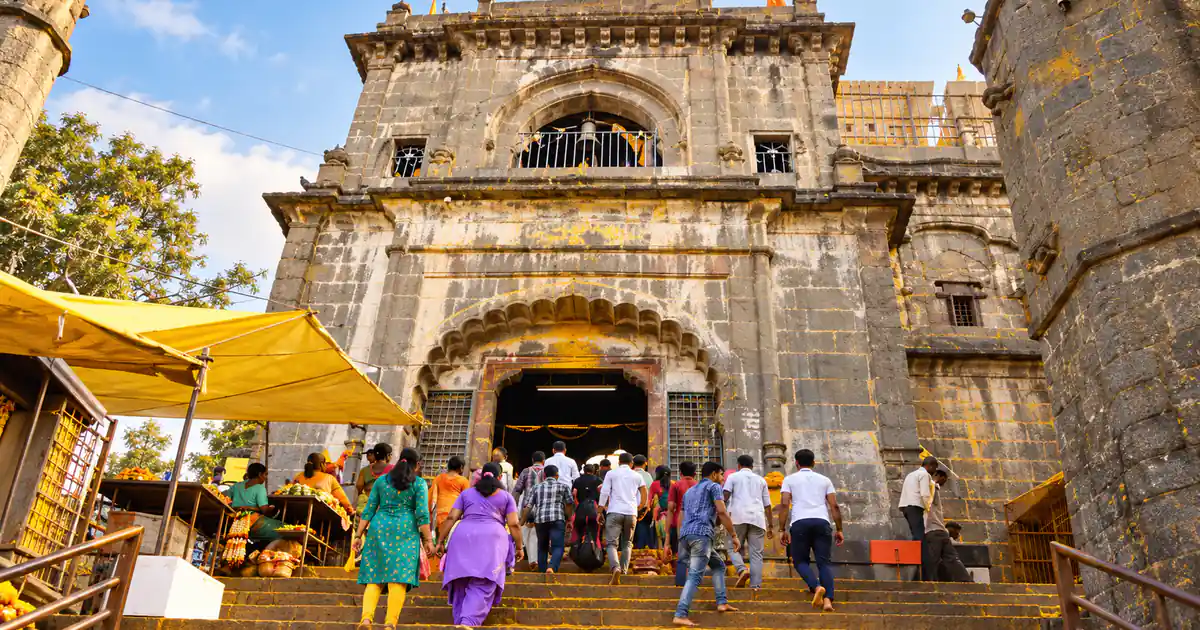
- Stairway Climb: Approximately 200 stone steps flanked by monumental Maratha deepastambhas (carved stone lamp pillars).
- Transit Distance: 50 kilometers southeast of Pune Junction via the Saswad Highway, reachable in 90 minutes.
Jejuri Khandoba Temple crowns the rugged Jayadri Hill in western Maharashtra, standing as the supreme spiritual seat of Lord Khandoba. Revered across the Deccan as an avatar of Lord Shiva, Khandoba unites diverse pastoral, agricultural, and martial communities under a shared tradition of devotion. The temple complex is celebrated worldwide for its golden atmosphere, where clouds of yellow turmeric powder, known locally as Bhandara, color the sky during sacred gatherings.
Every season brings thousands of pilgrims up the fortified stone steps to offer prayers, fulfill vows, and participate in centuries-old rituals. The hill shrine commands wide views of the surrounding Purandar valley, combining medieval Maratha defense architecture with sacred Shaivite iconography.
Opening Times, Aarti Timings and Best Time to Visit Jejuri Khandoba Temple
Jejuri Khandoba Temple opens daily from 5:00 AM to 9:30 PM, holding major aartis at 6:00 AM, 12:00 PM, and 8:30 PM. Early morning hours offer comfortable temperatures for climbing the 200 stone steps.
The daily ritual cycle starts with the morning Kakad Aarti at dawn, followed by Panchamrit Abhishek of the sacred lingam. Devotees line up throughout the day for Mukh Darshan and Charan Sparsh, while the midday ritual presents formal Naivedya. Evening prayers culminate in the Shejaarti before the inner sanctum doors close for the night.
| Ritual / Event | Scheduled Time | Significance | Visitor Advisory |
|---|---|---|---|
| Kakad Aarti | 5:30 AM – 6:00 AM | Dawn awakening hymns and sacred conch blowing | Ideal time for quiet darshan before crowds gather |
| Panchamrit Abhishek | 7:00 AM – 8:30 AM | Ceremonial bathing of the Shiva lingam | Requires advance trust counter registration |
| Madhyana Aarti | 12:00 PM – 12:30 PM | Midday royal offering of bhog and naivedya | Main sanctum queue briefly paused during bhog |
| Dhoop Aarti | 7:00 PM – 7:30 PM | Evening incense offering and lamp lighting | Deepastambha lanterns illuminate temple courtyards |
| Shejaarti | 8:30 PM – 9:00 PM | Night lullaby hymns and sanctum closure | Final darshan window before gates close at 9:30 PM |
| Somvati Amavasya | Dawn to Midnight | Massive turmeric shower and palanquin procession | Expect heavy crowds; secure footwear and eye protection |
Winter months from October to February provide the most comfortable weather for exploring the open stone courtyards. During summer months, afternoon temperatures on the exposed rock hill can rise sharply, making sunrise visits strongly recommended. Devotees mapping out larger Deccan pilgrimage circuits often combine this hilltop stop with the sacred pilgrimage complex of Pandharpur Vitthal Temple.
Location and How to Reach Jejuri Khandoba Temple
Jejuri Khandoba Temple stands on Jayadri Hill in Purandar taluka, located 50 kilometers southeast of Pune Junction and 60 kilometers from Pune International Airport along State Highway 61.
Travelers departing from Pune can drive along the Pune-Saswad-Jejuri corridor, a well-paved four-lane route that takes approximately 90 minutes. State transport buses run regular departures from Pune Swargate bus station every thirty minutes throughout the day, providing an economical and dependable public option. For current route advisories and administrative pilgrim guidelines, travelers can consult the Pune District Administration Jejuri Portal.
Railway passengers can take regional passenger trains from Pune Junction directly to Jejuri railway station, situated just 3 kilometers from the base of the hill. Auto-rickshaws and shared jeeps connect the railway station to the temple foothill within ten minutes. Visitors arriving via state transport buses can review real-time coach schedules through the MSRTC Bus Timetable and Route Portal.
Air travelers should fly into Pune International Airport at Lohegaon, which provides regular flight connectivity to major Indian metro cities. Prepaid airport taxis reach Jejuri in under two hours via the Hadapsar bypass and Saswad road. The final ascent requires ascending approximately 200 stone steps from the foothill bazaar, supported by paved rest landings and railing supports.
Architecture, History and Cultural Importance of Jejuri Khandoba Temple
Constructed in the seventeenth and eighteenth centuries with fortified Maratha battlements and towering stone deepastambhas, Jejuri Khandoba Temple enshrines an ancient svayambhu Shiva lingam revered across western Maharashtra.
The architectural layout resembles a hill fortress rather than a conventional temple compound. High stone ramparts, bastions, and arched defensive gateways protect the perimeter, reflecting the turbulent military eras of the Deccan sultanates and Maratha expansion. Chhatrapati Shivaji Maharaj and later Peshwa administrators contributed endowments to reinforce the fortress walls, while the Holkar dynasty rulers of Indore added magnificent stone carvings and arched sabhamandapas.
Monumental deepastambhas, or stone lamp towers, flank the main staircase and inner courtyards. These monolithic pillars feature projecting stone brackets designed to hold thousands of small oil lamps during festive nights. Travelers interested in historical architecture can learn more through the Maharashtra Tourism Pune Heritage Circuit.
The inner sanctum houses svayambhu stone representations of Lord Khandoba alongside his consort Mhalsa Devi. Devotees honor Khandoba as Martanda Bhairava, the solar aspect of Shiva who descended to earth to slay the demons Mani and Malla. Families across Maharashtra, northern Karnataka, and Andhra Pradesh revere Khandoba as their Kuldevata (family deity). Many pilgrims pair their family vows here with prayers at the Bhavani Temple at Tuljapur.
Festivals and Events at Jejuri Khandoba Temple
Somvati Amavasya, Champa Shashthi, and the annual Chaitra Jatra transform Jejuri into a golden spectacle as thousands of devotees toss turmeric powder into the sky amid sacred drums.
The signature festival of Jejuri is Somvati Amavasya, a no-moon day falling on a Monday. On this auspicious day, the temple palanquin carrying the silver deities of Khandoba and Mhalsa travels in procession to the Karha River for a ritual holy bath.
As the sacred palanquin moves through the courtyards, crowds fling quintals of yellow turmeric powder into the sky. The ritual covers stone walls, steps, and worshippers in a glowing golden mantle.
Champa Shashthi, celebrated across six days in the month of Margashirsha (November or December), marks Khandoba’s victory over the demon forces. Devotees observe strict fasting and offer bael leaves, onions, garlic, and multi-grain flatbreads known as rodga to the deity. Pilgrims often synchronize these winter festival dates with sacred tours to the Mahalaxmi Temple in Kolhapur.
During the Chaitra Jatra in April, pastoral communities from across western India gather with traditional flags and ceremonial staffs. Folk singers perform Jagran Gondhal ballads that recount Khandoba’s divine legends through rhythmic dholki and tuntune instruments. The sacred chant of “Yelkot Yelkot Jai Malhar” sounds throughout the hills during these holy days.
Accommodation and Facilities Near Jejuri Khandoba Temple
Pilgrim accommodation around Jejuri consists of clean dharamshalas, trust-managed guest houses, and budget lodges along the foothill bazaar road, supported by luggage lockers and footwear counters.
The Martand Dev Sansthan trust maintains economical rooms and dormitory facilities for visiting families within walking distance of the main staircase. These guest houses provide basic amenities including clean bedding, purified drinking water, and hot water facilities during morning hours. Booking is managed through on-site trust counters on a first-come basis, with advance inquiries recommended during Somvati Amavasya.
Private lodges and family hotels line the Jejuri-Saswad main road, offering air-conditioned rooms and secured private parking. Travelers seeking luxury hotel amenities generally stay in Pune and visit Jejuri as a comfortable day excursion. The town contains numerous vegetarian dining halls serving hot Maharashtrian thalis, pithla bhakri, and sheera breakfast items.
Cloakroom counters near the temple base allow visitors to deposit luggage, bags, and electronic equipment before starting the climb. Footwear stands operate near the bottom flight of steps, allowing pilgrims to walk bare-footed on clean stone paths. Shaded rest shelters with drinking water stations are installed along the stairway at regular intervals.
Dos and Don’ts for Visiting Jejuri Khandoba Temple
Devotees should wear washable cotton clothing due to abundant turmeric powder, carry drinking water for the stair climb, and maintain silent decorum inside the inner stone sanctum.
Understanding temple etiquette ensures a respectful and hassle-free pilgrimage for first-time visitors and families:
- Wear washable garments: Turmeric stains deeply; opt for yellow, cream, or easily washable cotton clothing.
- Protect your eyes and electronics: Keep mobile phones and camera lenses shielded with protective covers during turmeric showers.
- Pace your climb: Ascend the 200 stone steps slowly, making use of shaded landings and handrail supports.
- Respect queue protocols: Follow designated barricades for general darshan and special pooja lines established by temple marshals.
- Avoid leather items: Remove leather belts, wallets, and accessories before stepping into the inner sanctum.
- Do not litter on the hill: Dispose of empty water bottles and pooja packets in designated recycling bins along the steps.
Devotees touring regional sacred sites often pair these practices with mountain shrine etiquette observed at the Bhimashankar Jyotirlinga sanctuary.
Places to Visit near Jejuri Khandoba Temple
Top excursions near Jejuri include Purandar Fort, Malhargad, Saswad temple circuit, and regional pilgrimage routes toward the Western Ghats and Deccan plateau.
Purandar Fort rises majestically just 25 kilometers west of Jejuri, offering trekking paths, military bastions, and the birthplace memorial of Chhatrapati Sambhaji Maharaj. The twin fort of Vajragad provides wide vistas across the Sahyadri mountains and historic battlegrounds. Nature lovers and history enthusiasts can explore historic granaries and water cisterns carved into the cliffside.
Malhargad, situated near Saswad, stands as the last hill fort built by the Marathas in 1775. The circular ramparts and stone gateways offer an easy morning hike with uncrowded views of the Dive Ghat valley. Down in Saswad town, visitors can pay homage at the ancient Sangameshwar and Changavateshwar temples, which feature exquisite Yadava-era stone carvings.
For extended regional itineraries, travelers can drive south toward Satara to explore the ancient sanctum of Mahabaleshwar Temple. This circuit connects the spiritual heritage of Khandoba with the historic sources of the Krishna River high in the Sahyadri hills.
FAQs About Visiting Jejuri Khandoba Temple
What are the daily opening and darshan timings of Jejuri Khandoba Temple?
The temple gates open daily from 5:00 AM to 9:30 PM for general darshan and ritual offerings. Morning Kakad Aarti begins at 6:00 AM, and the night Shejaarti concludes all worship at 8:30 PM.
Why do devotees shower turmeric powder at Jejuri Temple?
Turmeric or Bhandara represents purity, healing, and prosperity associated with Lord Martanda Bhairava. Devotees toss the golden powder into the air while chanting praises to invoke divine blessings.
How many steps must pilgrims climb to reach Jejuri hill temple?
Visitors climb approximately 200 wide stone steps flanked by monumental deepastambha lamp towers. Handrails and shaded rest platforms support elderly pilgrims during the 20 to 30 minute ascent.
Is there an entry fee or online pass required for Jejuri Temple?
General darshan at Jejuri Khandoba Temple is free for all devotees throughout the week. Special pooja receipts and expedited queue tokens can be obtained at official trust donation counters.
What is the best season to plan a trip to Jejuri?
The winter months from October to February offer cool temperatures for climbing the exposed hill stairs. Devotees wishing to witness the famous turmeric festivals should plan visits around Somvati Amavasya or Champa Shashthi.
What clothing is recommended when visiting Jejuri?
Pilgrims should wear comfortable, washable cotton clothing because turmeric powder settles across all garments during worship. Modest attire covering shoulders and knees is mandatory inside the temple sanctum.