Places to Visit in Lakshadweep: Entry Permits, Cruises & Atolls
Explore the top places to visit in Lakshadweep with our guide covering e-permits, Agatti flights, Bangaram resorts, and the Samudram cruise circuit.
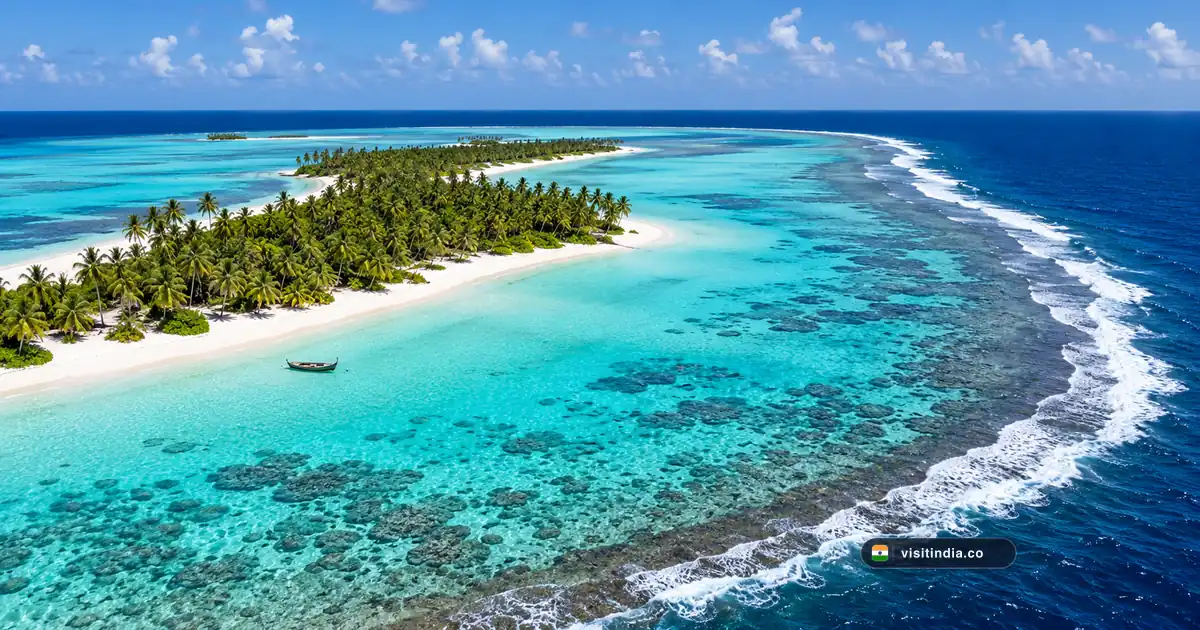
Lying scattered across the emerald waters of the Arabian Sea, the places to visit in Lakshadweep form India’s smallest union territory and only true coral atoll chain. Spanning 36 islands that occupy barely 32 square kilometers of land, the archipelago is surrounded by over 4,000 square kilometers of calm lagoons and living barrier reefs.
Visiting Lakshadweep feels fundamentally different from conventional coastal holidays. Because the territory is protected by strict entry permit rules and sustainable tourism quotas, the atolls remain uncrowded, secluded, and deeply authentic. Travelers discover calm turquoise waters, sea turtles grazing in shallow seagrass beds, and a distinctive matrilineal island culture.
Lakshadweep Atoll Travel Essentials
- Mandatory Entry Permit: All non-native visitors, including Indian citizens, must obtain an official Entry Permit processed through the Lakshadweep e-Permit portal.
- Kochi Transit Gateway: The entire archipelago is accessed from Kochi (Kerala), either via 90-minute daily flights to Agatti (AGX) or 14-to-18-hour passenger cruise ships.
- SPORTS Packages: The Society for Promotion of Nature Tourism and Sports organizes island resort stays and the flagship 5-day Samudram Cruise on M.V. Kavaratti.
- Coral Conservation: Strict environmental laws prohibit touching living coral reefs, collecting seashells, or carrying single-use plastics onto the atolls.
Lakshadweep Archipelago Geography and Coral Atoll Formation
Lakshadweep comprises 36 islands across 12 atolls along the submarine Chagos-Laccadive Ridge. Enclosing over 4,000 square kilometers of calm lagoons, only 10 islands are inhabited, supported by artisanal coconut farming and sustainable pole-and-line tuna fishing.
Geologically, the Lakshadweep archipelago represents the northernmost segment of the Chagos-Laccadive submarine ridge. This massive undersea volcanic mountain range extends southward across the central Indian Ocean toward the Maldives and the Chagos Archipelago. Millions of years ago, volcanic peaks erupted from the ocean floor before slowly subsiding beneath the waves under their own weight.
As the volcanic foundations sank, colonies of hermatypic reef-building corals established themselves along the shallow sunlit fringes of the underwater caldera. Over hundreds of thousands of years, the coral colonies grew vertically at roughly the same rate as the seafloor subsided. This gradual process created classic coral atolls: circular or oval rings of live coral enclosing shallow lagoons, with low sand cays forming along the protected eastern rim.
The entire Union Territory encompasses 12 coral atolls, 3 open-ocean submerged reef banks, and 5 submerged sandbanks. The total land area across all 36 islands measures barely 32.6 square kilometers, making Lakshadweep India’s smallest administrative territory by land mass. In striking contrast to this modest land area, the surrounding lagoons encompass more than 4,200 square kilometers of sheltered marine waters, backed by an Exclusive Economic Zone covering 400,000 square kilometers.
Human habitation is restricted to only ten islands: Agatti, Amini, Andrott, Bitra, Chetlat, Kadmat, Kalpeni, Kavaratti, Kiltan, and Minicoy. Bitra is the smallest inhabited island with barely 300 residents, while Andrott is the largest in land area at 4.9 square kilometers. Kavaratti functions as the territory’s administrative headquarters, housing government secretariats, courts, and central medical facilities.
Living on low-lying coral atolls requires careful ecological equilibrium. None of the islands rise more than a few meters above mean sea level. Freshwater exists exclusively as a thin lens of sweet groundwater floating atop dense subterranean seawater, replenished solely by seasonal monsoon rainfall. Local communities rely on rainwater harvesting, solar-powered reverse osmosis desalinization plants, and strict resource management to maintain their fragile supplies.
Travelers comparing India’s two great island territories can cross-reference our planning a visit to Andaman to understand the structural differences between volcanic continental islands and fragile coral atolls. Official tourism initiatives can also be accessed on the Lakshadweep Administration official tourist places directory.
Top Places to Visit in Lakshadweep: Islands Destinations Matrix
Lakshadweep’s top destinations divide into resort atolls like Bangaram and Thinnakara, flight gateways like Agatti, and cultural centers like Kavaratti, Kadmat, and Minicoy. Access varies between domestic travelers and foreign nationals.
Travel to Lakshadweep is fundamentally divided into two travel styles: land-based resort stays accessed via flights into Agatti, and multi-island sea voyages operated under the government’s official cruise programs. For historical context and island comparisons, consult our foundational Lakshadweep Tourism highlights and timings.
Because each atoll features specific administrative and security classifications, understanding island permissions is crucial when designing an itinerary. The matrix below outlines the primary visitor-accessible atolls, transit connections, permit categories, and signature experiences.
| Island / Atoll | Transit Route from Kochi | Permit & Tourist Access | Primary Activities | Best Visiting Window |
|---|---|---|---|---|
| Agatti Island | 90-min flight from Kochi (COK) | Domestic & Foreigners allowed | Gateway airstrip, lagoon kayaking, glass-bottom boats | October through May |
| Bangaram Island | 45-min boat/speedboat from Agatti | Domestic & Foreigners allowed | Luxury lagoon resort, coral scuba diving, deep-sea fishing | October through May |
| Thinnakara Island | 20-min boat ride from Bangaram | Domestic & Foreigners allowed | Uninhabited sandbank, turtle spotting, beach camping | October through April |
| Kavaratti Island | 14-hr ship from Kochi / SPORTS cruise | Domestic tourists & Samudram | Administrative capital, marine aquarium, glass boats | October through mid-May |
| Kadmat Island | 2.5-hr speedboat from Agatti / ship | Domestic & Foreigners allowed | Long sandy sandspit, certified water sports institute | October through April |
| Kalpeni Island | 14-hr ship from Kochi / SPORTS cruise | Domestic tourists & Samudram | Huge coral debris banks, tip-point reef walk, kayaking | October through mid-May |
| Minicoy Island | 18-hr ship from Kochi / SPORTS cruise | Domestic tourists & Samudram | 1885 British lighthouse, Mahl village culture, tuna cannery | October through April |
Travelers seeking relaxation, luxury cottage accommodation, and open scuba diving typically select a 4-to-6-night stay at Bangaram Island or Kadmat Island. These destinations provide dedicated diving centers, calm lagoon beaches, and direct boat transfers from the Agatti airstrip.
In contrast, travelers eager to explore the cultural heritage, village life, and historical architecture of the islands generally choose the 5-day SPORTS Samudram cruise. This ship-based itinerary enables travelers to visit Kavaratti, Kalpeni, and Minicoy without navigating complicated inter-island ferry connections.
Entry Permits and Verification: The Step-by-Step e-Permit Process
Every non-native traveler requires an approved Entry Permit to enter Lakshadweep. Applications are submitted online through the Lakshadweep e-Permit portal with identity documents, police clearance, and confirmed hotel vouchers at least 15 days in advance.
Under the Laccadive, Minicoy and Amindivi Islands (Protection of Scheduled Tribes) Regulation of 1967, no person who is not a native of the islands may enter or reside without an official permit issued by the competent authority. This regulation protects the indigenous tribal communities, safeguards land rights, and prevents overtourism from draining groundwater tables.
Similar to specialized border documentation detailed in our Arunachal Pradesh ILP highlights and timings, this requirement applies equally to Indian citizens from other states and international visitors. Passengers cannot board flights at Cochin International Airport or passenger vessels at Kochi port without presenting physical copies of an approved entry permit.
e-Permit Application Sequence
- Secure confirmed flight tickets to Agatti (AGX) or an official SPORTS ship package.
- Book government-authorized accommodations at a licensed island resort or homestay.
- Submit your online application via the official Lakshadweep e-Permit portal with identity proofs.
- Receive your digitally signed Entry Permit certificate via email within 5 to 7 working days.
- Present printed copies of your permit upon arrival at Agatti Airport or Kochi passenger wharf.
Authorized Tour Package Permits vs. Independent Homestays
For travelers booking authorized holiday packages through the Society for Promotion of Nature Tourism and Sports (SPORTS) or licensed travel operators, the agency manages the entire permit clearance on behalf of guests. Travelers submit their photo identification, and the operator secures the official permit documents prior to arrival in Kochi.
Independent travelers booking private homestays on Agatti Island must file their applications directly through the Lakshadweep Administration e-Permit portal. The application requires submitting:
- A valid police clearance certificate (PCC) issued by the local police station in the applicant’s home district within the past six months.
- Scanned copies of government-issued photo identity cards (Aadhaar Card, Voter ID, or Passport).
- Passport-sized digital photographs against a plain white background.
- Confirmed booking vouchers from an authorized homestay or guest house registered with the tourism department.
- A non-refundable processing fee of ₹50 per applicant along with a heritage fee of ₹100 per person.
Applications must be submitted at least 15 to 20 working days before the scheduled date of travel to allow administrative processing and local station verification. Once approved, the system generates a downloadable PDF permit with a verified QR code that travelers must print out.
Agatti & Bangaram: Flight Arrival, Coral Lagoons, and Beach Stays
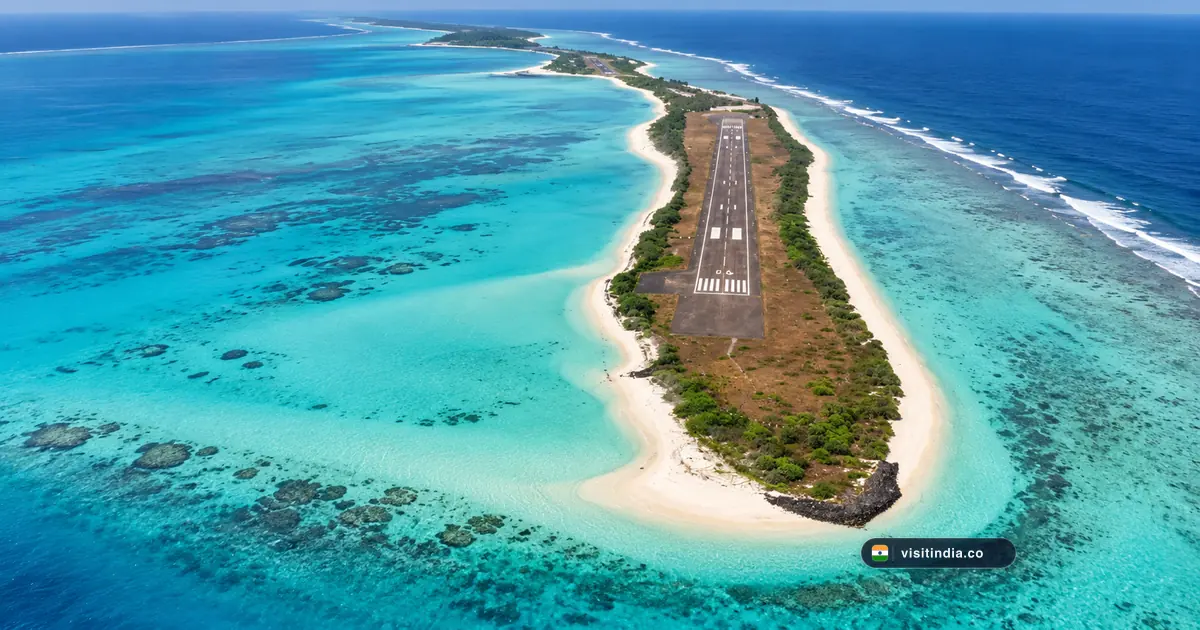
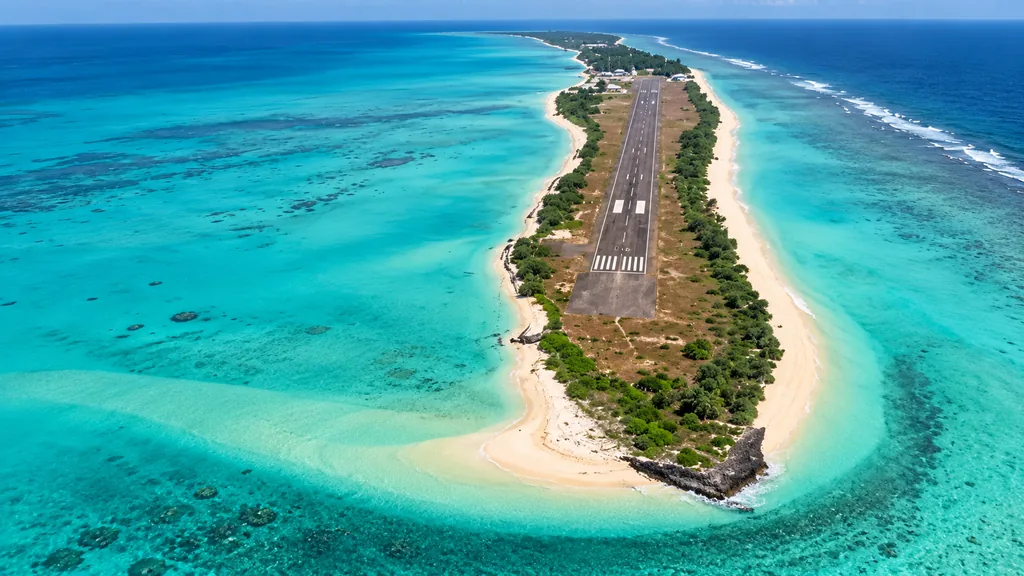
Agatti is the aviation gateway, featuring an iconic runway surrounded by turquoise sea. Bangaram, a 45-minute speedboat ride north, offers an uninhabited resort atoll with over 80 square kilometers of clear lagoon waters and dive sites.
The flight from Kochi to Agatti Island offers one of the most dramatic aviation descents in the world. As the turboprop descends through tropical clouds, the dark blue Arabian Sea shifts into shades of turquoise and aquamarine.
The narrow asphalt runway spans nearly the entire length of the slender coral island. The airstrip terminates just meters from the breaking surf on both ends.
Agatti functions as the central transportation interchange for visitors arriving by air. The island is barely one kilometer wide at its broadest point, with coconut palm groves shading rows of white-painted coral stone houses. The eastern shore faces open ocean surf, while the western coastline frames a tranquil, sheltered lagoon where sea turtles graze on underwater seagrass meadows.
Bangaram Atoll: The Flagship Island Resort
Located approximately 12 kilometers north of Agatti across an open ocean passage, Bangaram Island is a teardrop-shaped uninhabited coral atoll. The island covers barely 0.6 square kilometers of dry land, but sits enclosed within a vast coral lagoon spanning over 80 square kilometers.
Passenger speedboats transfer arriving flight passengers from Agatti harbor to Bangaram in approximately 45 minutes during calm weather. Because Bangaram has no permanent local village, the entire atoll is operated as an exclusive eco-resort managed under administrative supervision. Accommodations consist of air-conditioned wooden cottages set among palm trees, offering direct access to the soft coral sand beach.
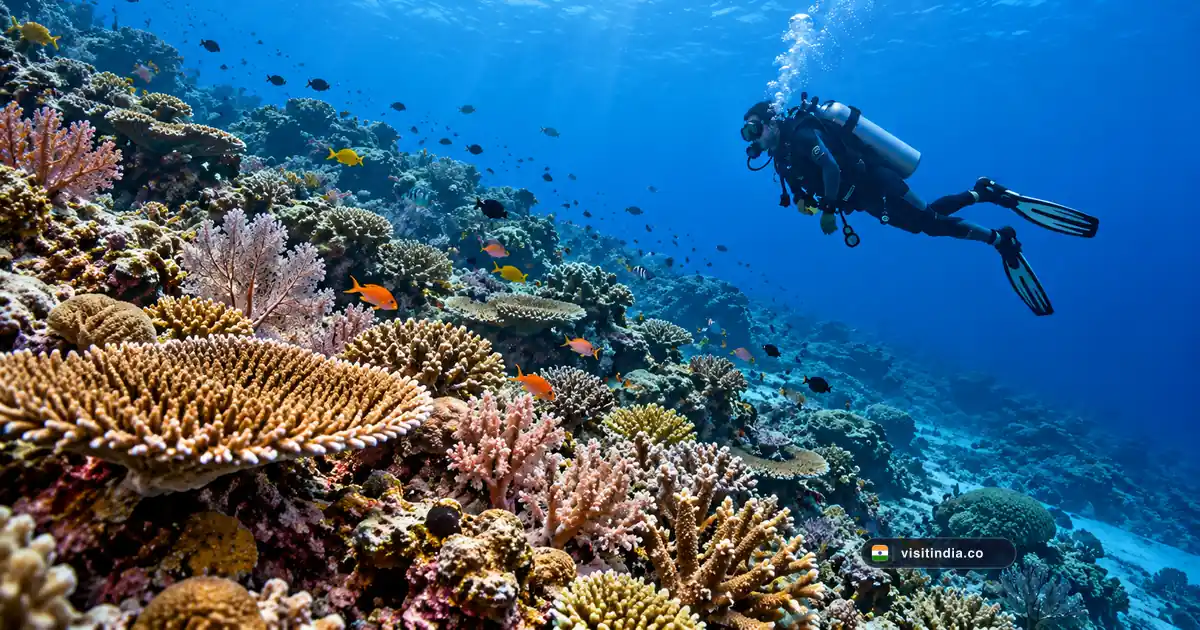
The lagoon waters surrounding Bangaram are exceptionally clear, with visibility regularly reaching 25 to 30 meters between October and April. Black-tip reef sharks, eagle rays, green sea turtles, and schools of yellowfin tuna swim through the shallow reef passes, allowing snorkelers to observe marine life directly from the beach.
Pro Tip
Take a half-day excursion from Bangaram to the nearby uninhabited islets of Thinnakara and Parali. Walking along the narrow sandspits at low tide lets you spot dozens of green sea turtles feeding peacefully in the waist-deep shallows.
Because Bangaram is an uninhabited resort island, it operates under distinct administrative regulations. Notably, it is the only island in Lakshadweep where alcohol service is permitted for tourists, as all inhabited islands observe strict local prohibition laws. For detailed itinerary suggestions, consult our specialized Agatti and Bangaram island travel guide. Regional heritage data is also accessible on the Incredible India Lakshadweep directory.
Thinnakara and Parali Day Excursions
Just across the eastern channel of the Bangaram lagoon lie the uninhabited islets of Thinnakara, Parali I, and Parali II. These tiny cays consist of soft coral sand spits surrounded by dense coconut groves and shallow tidal flats.
Day excursion boats carry guests from Bangaram to Thinnakara in about twenty minutes. Visitors can walk the entire perimeter of the island on foot in less than an hour, observing hermit crabs, ghost crabs, and nesting terns along the shore. The shallow channel between Parali and Thinnakara is famous for green sea turtles that gather in large numbers to feed on flowering seagrass beds.
The Samudram Cruise Circuit: Kavaratti, Kalpeni, and Minicoy
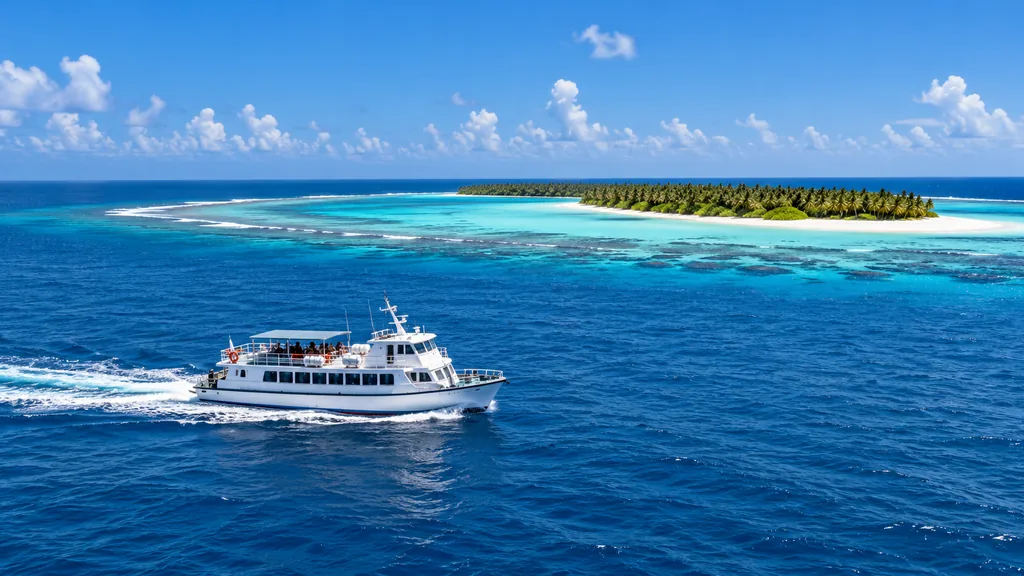
The 5-day SPORTS Samudram Cruise aboard M.V. Kavaratti departs Kochi to explore three atolls. Passengers sleep in ship cabins at night and spend daylight hours snorkeling, kayaking, and touring cultural sites on Kavaratti, Kalpeni, and Minicoy.
For travelers who prefer a comprehensive oceanic journey without the logistical challenges of domestic flights and speedboats, the official Samudram package represents the territory’s signature travel experience. Operated directly by SPORTS, this five-day, four-night cruise utilizes large all-weather passenger vessels such as the M.V. Kavaratti and M.V. Corals.
The cruise embarks from the passenger terminal at Willingdon Island in Kochi. The ship sails westward into the Arabian Sea in the late afternoon, cruising overnight to drop anchor off a different coral atoll each morning.
Life Onboard and Daily Cruise Structure
The Samudram voyage combines ocean cruising with daylight island excursions:
- Cabin Comfort: Passengers sleep in air-conditioned First Class (two-berth) or Diamond Class (four-berth) staterooms equipped with attached bathrooms and fresh linens.
- Morning Lagoon Transfers: After breakfast onboard the mother ship, specialized motorized shore tenders ferry passengers through natural breaks in the barrier reef to the island jetties.
- Daylong Island Activities: Guests spend the entire day on the atoll, enjoying swimming, kayaking, glass-bottom coral viewing, and guided walking tours through traditional villages.
- Island Dining: Sumptuous buffet lunches featuring authentic Malabar-influenced island curries, fresh skipjack tuna, and spiced coconut dishes are served at beachside community pavilions.
- Evening Departure: Passengers return to the ship before sunset for hot tea, evening cultural presentations, and dinner as the vessel sets sail toward the next island destination.
Island Highlights Along the Samudram Route
Each atoll visited during the Samudram cruise reveals a distinctive facet of Lakshadweep’s geography and history:
1. Kavaratti: The Administrative Capital
Kavaratti serves as the political and economic heart of the Union Territory. The island features an exceptional Marine Aquarium displaying live specimens of sea cucumbers, clownfish, moray eels, and rare living corals.
Visitors can tour the historic Ujra Mosque, constructed in the 17th century by Sheikh Mohammad Kasim. The mosque is celebrated for its ornate ceiling carved entirely from single blocks of driftwood, showcasing intricate floral motifs created by indigenous island artisans. The island’s calm lagoon provides ideal conditions for kayaking, windsurfing, and glass-bottom boat excursions.
2. Kalpeni: Storm Debris and Scenic Coral Reefs
Kalpeni is geographically famous for its massive coral debris bank along its eastern and southeastern shorelines. In 1847, a violent cyclonic storm washed millions of tons of massive coral boulders onto the reef edge, creating an unusual elevated storm barrier known as the storm beach.
The lagoon of Kalpeni is unusually shallow and broad, encompassing three satellite islets: Tilakkam, Pitti, and the uninhabited bird sanctuary island of Cheriyam. Visitors can take guided reef walks at low tide, wading through warm knee-deep water to inspect living sea anemones, blue sea stars, and delicate sea lilies.
3. Minicoy: The Southern Culture of Maliku
Minicoy, known locally as Maliku, lies isolated nearly 200 kilometers south of the northern atolls, separated by the deep Nine Degree Channel. The island is culturally and linguistically distinct from the rest of Lakshadweep. While the northern islands speak a dialect of Malayalam, the people of Minicoy speak Mahl, an ancient Indo-Aryan tongue closely related to the Divehi language spoken in the neighboring Republic of Maldives.
Minicoy society is organized into ten traditional village wards termed athiris, governed by elected female village elders under a matrilineal social system. Women direct village affairs, inherit ancestral family homes, and manage community finances while the men spend months at sea working on international merchant vessels or practicing traditional tuna fishing.
A major architectural highlight of Minicoy is the historic 1885 British cast-iron lighthouse. Rising 49 meters above the southern tip of the island, the structure was manufactured in Birmingham and shipped in prefabricated sections.
Visitors can climb the internal spiral staircase of 216 steps to the open lantern gallery. The summit provides panoramic 360-degree views across the entire 10-kilometer length of the island, the coral lagoon, and the open ocean.
For complete diving center profiles and island descriptions, check our dedicated Kavaratti and Minicoy scuba diving guide. Landmark listings are maintained by the Lakshadweep Administration official tourist places directory.
Island Logistics: Flights from Kochi, Seasonal Weather, and Eco-Rules
All journeys depart Kochi via 90-minute ATR-72 flights to Agatti or 14-to-18-hour passenger ferries. The ideal dry season spans October to mid-May, while strict environmental laws prohibit single-use plastics and coral collection.
Because Lakshadweep has no direct road or railway links to mainland India, all passenger traffic funnels through the coastal city of Kochi in Kerala.
Transport Routes from the Mainland
Travelers have two primary avenues for reaching the islands:
- By Air (Kochi to Agatti): Air India and Alliance Air operate daily ATR-72 turboprop flights from Cochin International Airport (COK) to Agatti (AGX). Flight duration is approximately 1 hour and 30 minutes. Booking flights several months in advance is essential because seat capacity is limited to roughly 70 passengers per flight, with strict check-in luggage allowances of 15 kilograms per passenger.
- By Sea (Kochi Passenger Wharf): Passenger ships operated by the Lakshadweep Administration (such as M.V. Kavaratti, M.V. Arabian Sea, and M.V. Corals) take 14 to 18 hours to reach the northern atolls, departing from the passenger terminal at Willingdon Island.
Climate and Optimal Travel Season
The archipelago experiences a tropical maritime climate governed by seasonal trade winds:
- Dry Season (October to mid-May): Characterized by sunny skies, calm seas, and light ocean breezes. Daytime temperatures range from 28°C to 32°C, and underwater visibility reaches up to 30 meters. This is the optimal window for diving, boat excursions, and cruise departures.
- Monsoon Season (June to September): The southwest monsoon brings intense oceanic gales, heavy torrential rainfall, and violent sea swells. Inter-island boat transfers and tourism cruise packages are completely suspended during these months due to navigational hazards.
Environmental Laws and Cultural Sensitivity
Lakshadweep’s coral ecosystems are legally protected under the Indian Wildlife Protection Act and Coastal Regulation Zone statutes. Travelers must adhere to strict environmental rules during their visit:
- Touching, walking on, or breaking live coral heads while swimming or snorkeling is strictly prohibited.
- Collecting coral stones, dead shells, or marine specimens from the beaches or reefs is a serious legal offense subject to heavy fines and confiscation at airport baggage security.
- Single-use plastics are completely banned across all islands; travelers should carry refillable stainless steel water bottles.
- Modest attire is required when walking through local villages on inhabited islands, respecting Islamic cultural norms.
Marine tourism standards and conservation initiatives are documented by the Ministry of Tourism marine tourism directory.
Frequently Asked Questions About Lakshadweep Travel
Do Indian citizens need an entry permit to visit Lakshadweep?
Yes, every non-native visitor, including Indian citizens, must secure an official Entry Permit from the Lakshadweep Administration before traveling. The permit is processed digitally through authorized tour packages or the official e-Permit portal.
What is the best way to travel to Lakshadweep from mainland India?
Flying on an ATR turboprop flight from Kochi Airport (COK) to Agatti Island (AGX) provides the fastest transit, taking approximately 90 minutes. Alternatively, travelers can board the 5-day SPORTS Samudram luxury cruise from Kochi port.
Which islands in Lakshadweep are open to tourists?
Domestic tourists can visit Agatti, Bangaram, Thinnakara, Kavaratti, Kadmat, Kalpeni, and Minicoy through authorized permits and government tour packages. Foreign nationals are currently restricted to Agatti, Bangaram, and Kadmat islands.
What is included in the SPORTS Samudram cruise package?
The 5-day cruise on M.V. Kavaratti covers ship cabin lodging, all meals, daytime island transfers, snorkeling, kayaking, and local sightseeing in Kavaratti, Kalpeni, and Minicoy. Passengers sleep onboard the vessel each night.
What are the best months of the year to visit Lakshadweep?
The peak travel season runs from October through mid-May, when the Arabian Sea is calm, rainfall is minimal, and underwater visibility is optimal. The monsoon period from June to September brings rough seas and disrupts ship transport.
Can tourists consume alcohol in Lakshadweep?
Consumption of alcohol is strictly prohibited across all inhabited islands of Lakshadweep under local prohibition laws. The uninhabited resort island of Bangaram is the sole exception where alcohol service is legally permitted for tourists.