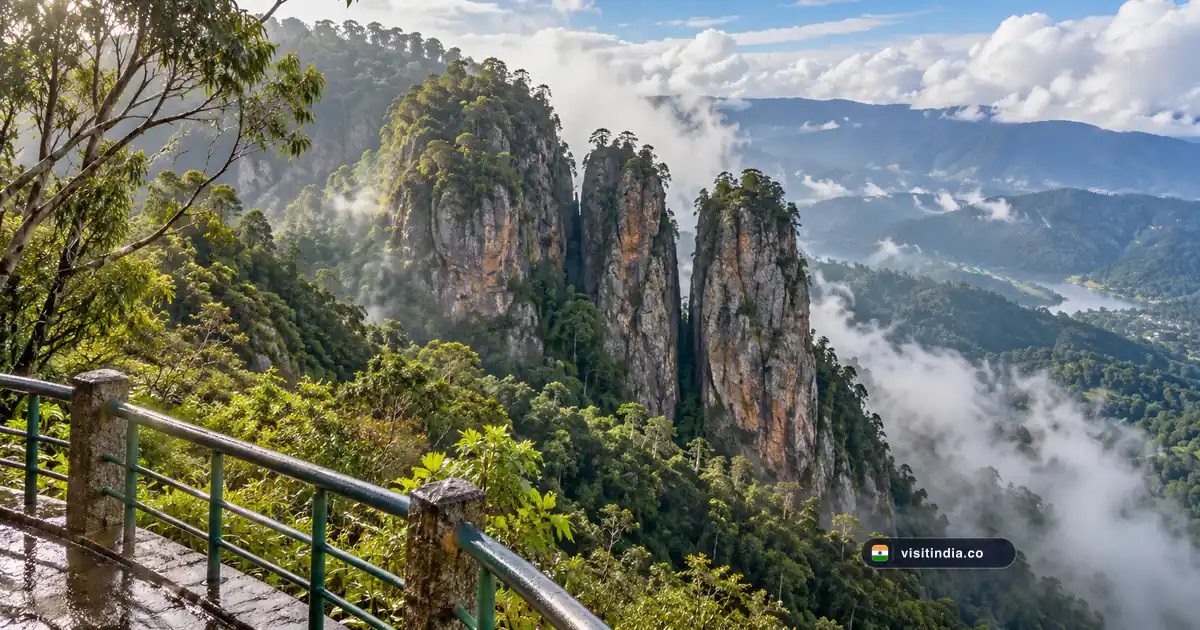
Places to Visit in Darjeeling: 3-Day Itinerary Guide
Plan your 3-day Darjeeling and Kalimpong trip with Tiger Hill sunrise tokens, toy train bookings, Padmaja Naidu Zoo, and Deolo Hill paragliding.
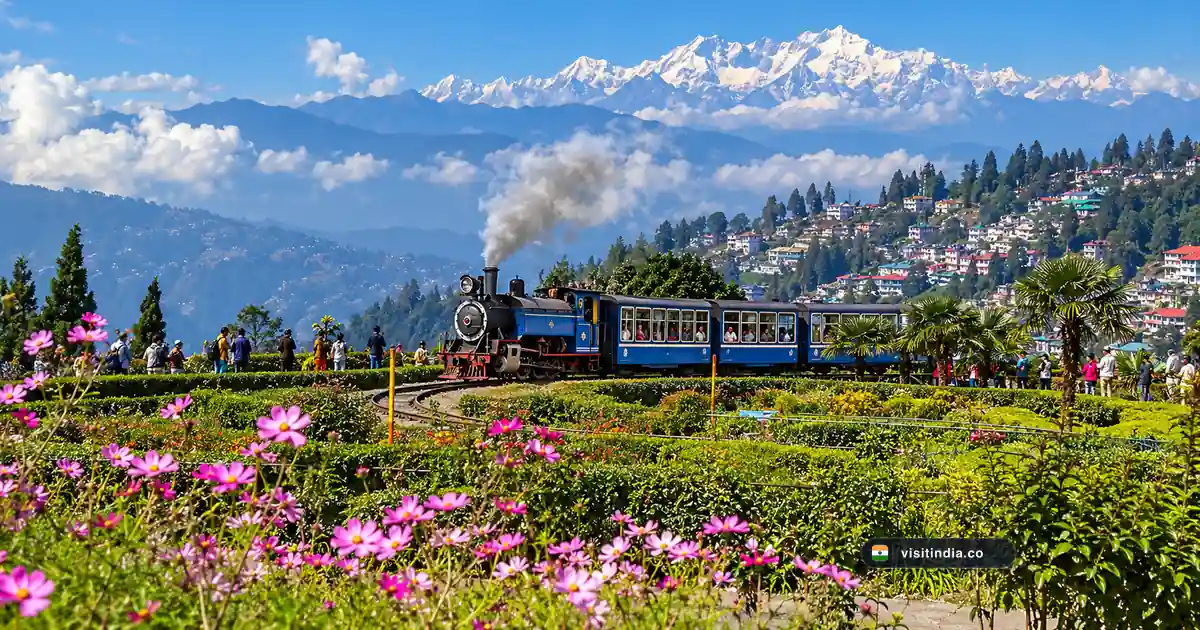
Perched high along the northern mountain ridges of West Bengal facing the jagged crest of the Eastern Himalayas, Darjeeling stands at an elevation of 2,042 meters. Renowned worldwide for producing single-estate teas, colonial heritage architecture, and sweeping mountain panoramas, the hill town looks out directly across the snow wall of Mount Kanchenjunga.
Just 50 kilometers across the Teesta River valley lies Kalimpong, resting at 1,250 meters amidst orchid nurseries, traditional monasteries, and peaceful forest viewpoints. Planning an effective places to visit in Darjeeling 3 day itinerary allows travelers to combine both historic towns into a single mountain holiday.
Travel & Hill Station Essentials
- Core Mountain Hubs: Darjeeling (2,042 meters) and Kalimpong (1,250 meters), separated by 50 kilometers of winding river valley road.
- Sunrise Logistics: Tiger Hill (2,590 meters) requires an advance police vehicle token arranged through local drivers the afternoon before.
- Wildlife Conservation: Padmaja Naidu Himalayan Zoological Park is India’s highest zoo, home to Red Pandas and Snow Leopards (closed Thursdays).
- Heritage Railway: Darjeeling Himalayan Railway operates daily steam and diesel joyrides between Darjeeling and Ghoom across Batasia Loop.
- Ideal Duration: 3 full days to experience tea garden walks, mountain sunrises, colonial monasteries, and Kalimpong viewpoint hills.
Why Combine Darjeeling and Kalimpong in One Eastern Himalayan Tour
Combining Darjeeling and Kalimpong unites the high-altitude colonial tea ridge of Darjeeling at 2,042 meters with the quieter monastic valleys and flower nurseries of Kalimpong at 1,250 meters. The two towns sit 50 kilometers apart along the scenic Teesta River valley, forming a balanced mountain circuit.
While Darjeeling centers around lively pedestrian promenades, historic schools, and vintage steam trains, Kalimpong presents a slower cultural pace surrounded by citrus orchards and river terraces. Pairing both centers ensures travelers encounter the full diversity of hill life in northern West Bengal.
| Travel Factor | Darjeeling | Kalimpong |
|---|---|---|
| Elevation | 2,042 meters (6,700 feet) | 1,250 meters (4,100 feet) |
| Primary Panorama | Direct northern wall of Mount Kanchenjunga | Sweeping Teesta River gorges and rolling hills |
| Signature Experience | DHR Toy Train Joyride and Tiger Hill sunrise | Deolo Hill paragliding and orchid nursery tours |
| Key Attractions | Padmaja Naidu Zoo, Batasia Loop, Happy Valley Tea | Durpin Monastery, Morgan House, Pine View Nursery |
| Transit Access | Hill Cart Road from Siliguri (70 km) | Teesta Valley Road from Siliguri (65 km) |
Geographic Contrast: Colonial Ridge Capital vs Quiet Valley Enclave
Darjeeling perches along a steep northern ridge facing the colossal snow wall of Mount Kanchenjunga, characterized by historic churches, tea gardens, and crowded promenades. The crisp mountain atmosphere and dramatic elevation produce fast-moving clouds and sweeping vistas from almost every corner of town.
Kalimpong occupies a lower, warmer plateau with traditional Tibetan monasteries, British mansions, and commercial orchid nurseries. Its gentle hillsides remain lush throughout the winter, providing a peaceful escape for travelers seeking tranquil gardens and mountain photography.
The 50-Kilometer Peshok Road Transit Corridor Along the Teesta River
Traveling between Darjeeling and Kalimpong takes approximately 2.5 hours by taxi via the Peshok tea estate road. The highway descends past emerald tea slopes to the confluence of the Teesta and Rangeet rivers before climbing toward Kalimpong’s lush ridges.
The scenic road passes through Lover’s Meet View Point, where the dark blue waters of the Rangeet River merge into the turquoise currents of the Teesta. Taxis for this cross-valley route charge between ₹2,500 and ₹3,500 depending on the vehicle size.
Top Attractions in Darjeeling: Summits, Monasteries, and Himalayan Wildlife
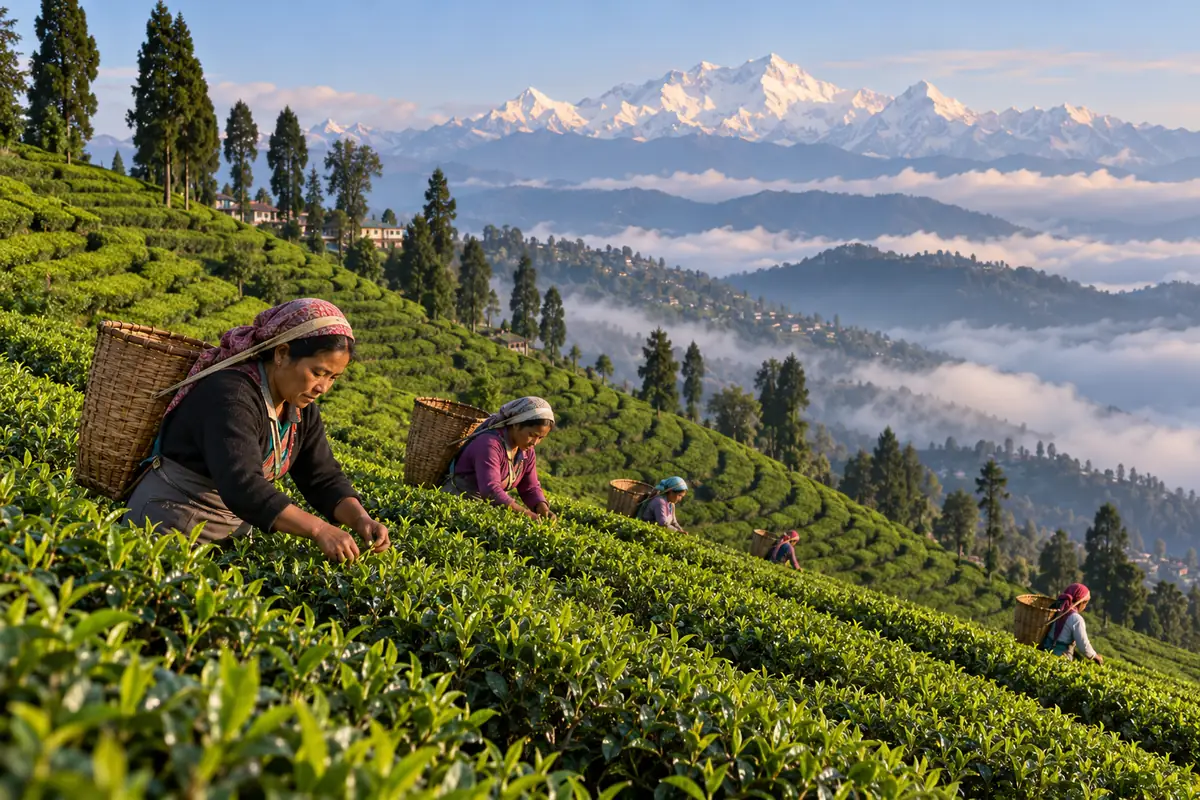
The top attractions in Darjeeling include sunrise over Mount Kanchenjunga at Tiger Hill, the railway engineering marvel of Batasia Loop, historic Yiga Choeling Monastery at Ghoom, and the high-altitude wildlife enclosures of Padmaja Naidu Himalayan Zoological Park.
Careful scheduling helps travelers avoid road bottlenecks and ensures arrival at major sites during their quietest hours. An early morning start is essential to catch the sunrise before morning cloud banks roll across the peaks.
| Attraction | Opening Hours | Admission Cost | Recommended Window |
|---|---|---|---|
| Tiger Hill Summit | 4:00 AM – 6:30 AM (Sunrise) | Entry ₹50 per person | Dawn departure (3:30 AM from town) |
| Batasia Loop | 5:00 AM – 6:30 PM | Entry ₹20 per person | Morning after Tiger Hill sunrise |
| Ghoom Monastery | 6:00 AM – 6:00 PM | Free Entry (Donations accepted) | Morning (7:30 AM – 9:00 AM) |
| Padmaja Naidu Zoo & HMI | 8:30 AM – 4:30 PM (Closed Thu) | ₹110 Adults (Indians), ₹400 Foreigners | Morning (9:30 AM – 12:00 PM) |
| Happy Valley Tea Estate | 8:00 AM – 4:00 PM | Entry ₹100 (Guided factory tour) | Early afternoon (1:00 PM – 3:00 PM) |
Tiger Hill Sunrise and the Mandatory Vehicle Token System
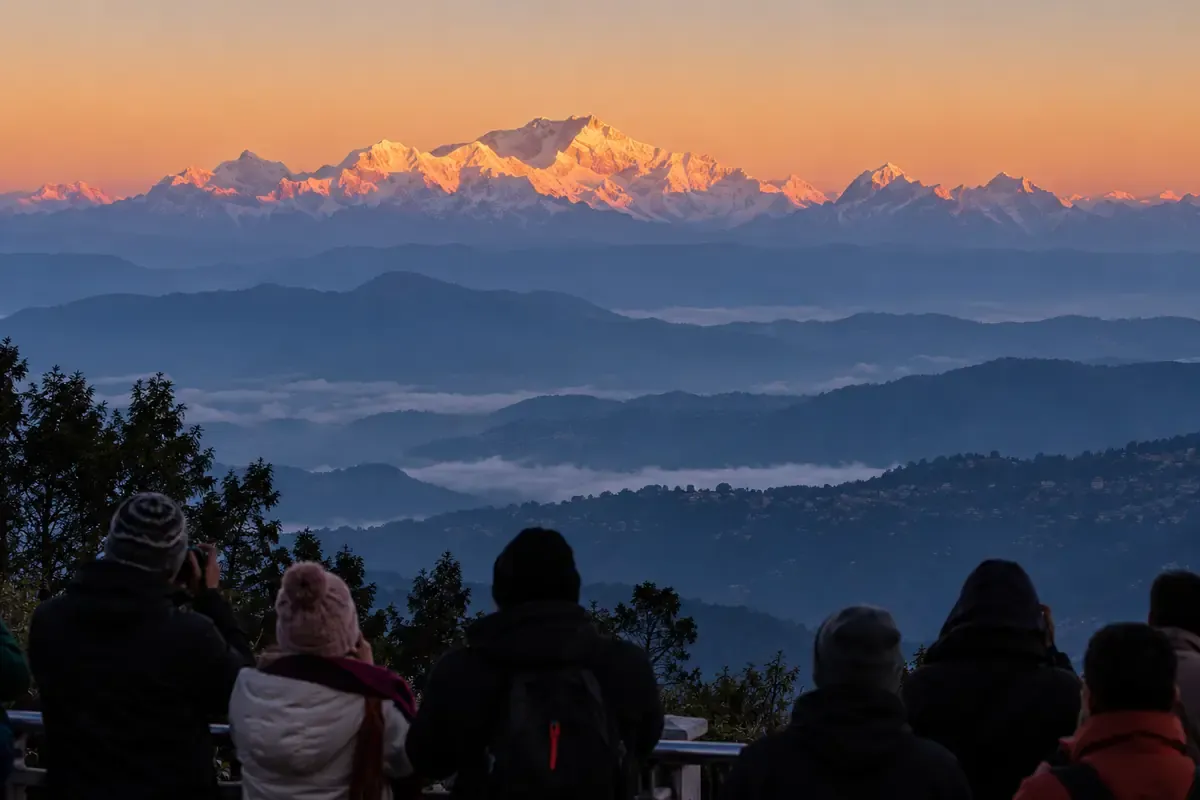
Rising to 2,590 meters, Tiger Hill provides a sweeping sunrise panorama across Mount Kanchenjunga and Mount Everest. To prevent road chaos, the local administration operates a daily vehicle token system where drivers must collect an entry coupon from the police traffic counter the afternoon before.
On clear mornings, the rising sun illuminates the snow-capped summits of the Kanchenjunga massif in shades of pink, amber, and dazzling white. Hikers seeking even higher, unobstructed views of the full Sleeping Buddha and Everest can undertake the multi-day wilderness route documented in our Sandakphu trek and Land Rover safari guide. Vehicles depart Darjeeling at 3:30 AM to reach the three-tiered observatory pavilion before dawn. Details on viewing deck passes are maintained by the Darjeeling District Administration.
Batasia Loop and Ghoom Yiga Choeling Monastery
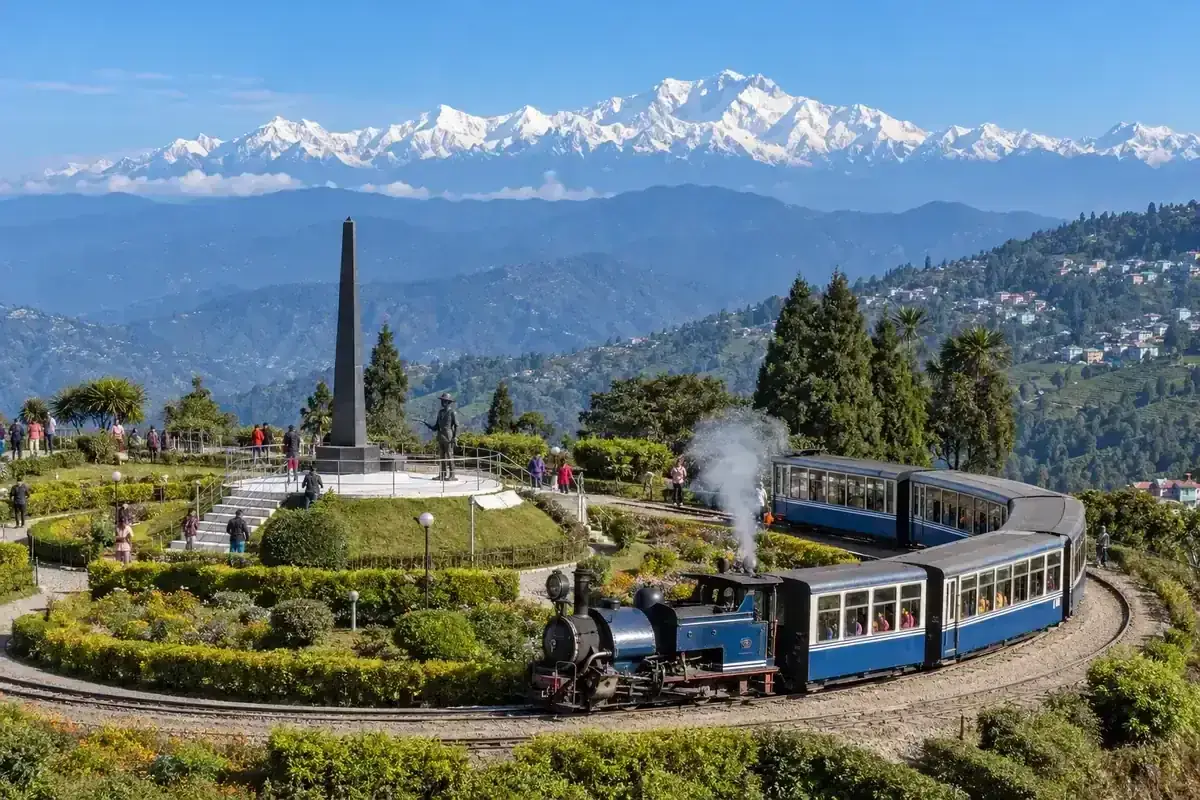
Located five kilometers outside town, Batasia Loop is a spiral railway track where toy trains complete a 360-degree loop around a manicured war memorial garden. The site offers open sightlines over Darjeeling town set against the snow-clad Himalayas.
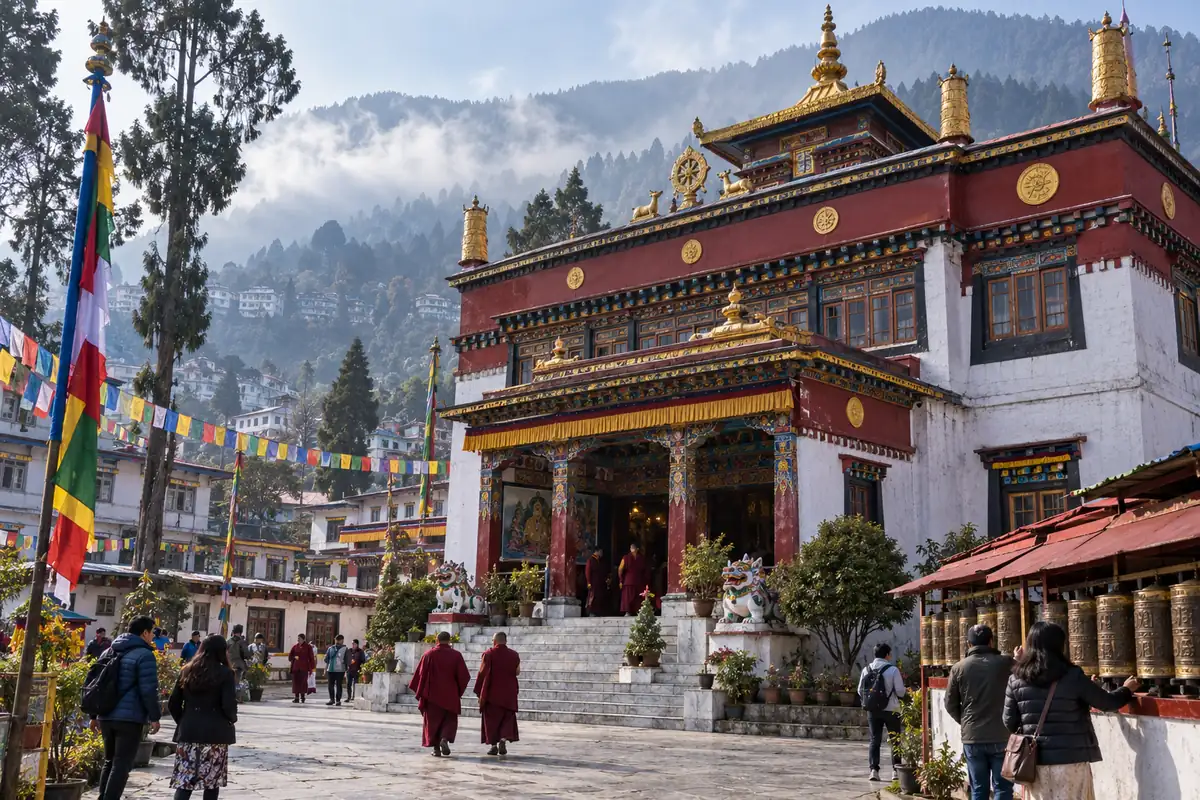
Two kilometers past the loop stands Ghoom Monastery (Yiga Choeling), built in 1850 by a Mongolian monk named Lama Sherab Gyatso. The prayer hall enshrines a 15-foot clay statue of the Maitreya Buddha adorned with gold leaf and traditional silk thangkas.
Padmaja Naidu Himalayan Zoo and Mountaineering Institute
Situated on Birch Hill, this world-renowned high-altitude zoo specializes in breeding endangered Eastern Himalayan fauna like the Red Panda and Snow Leopard. The park features open, forested enclosures that replicate the native alpine habitat of the animals.

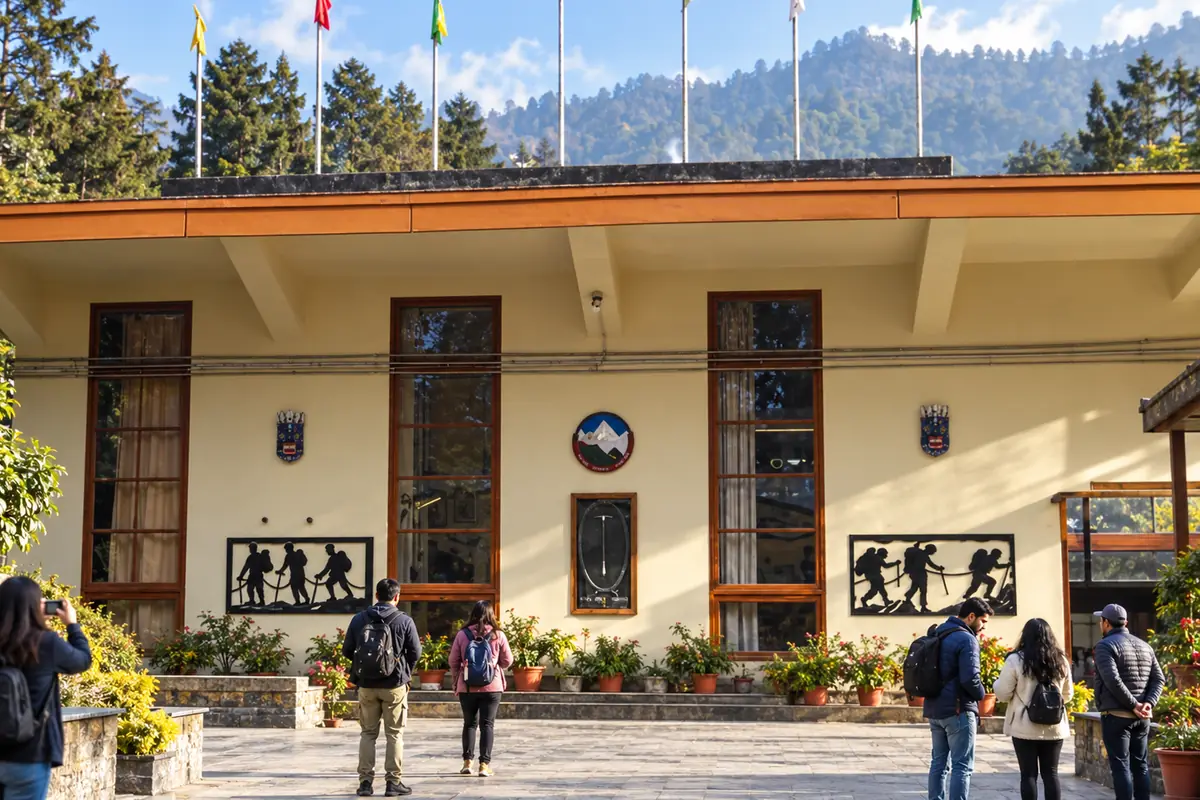
Within the same compound sits the Himalayan Mountaineering Institute, established following Tenzing Norgay’s historic 1953 Everest ascent. The museum exhibits vintage climbing equipment, scale topographic maps, and historic expedition artifacts. Both facilities remain closed every Thursday for weekly maintenance.
Top Attractions in Kalimpong: Panoramic Vistas, Monasteries, and Nurseries
Kalimpong is celebrated for panoramic valley vistas at Deolo Hill, rare Buddhist scriptures at Durpin Monastery, historic British architecture at Morgan House, and commercial cactus greenhouses at Pine View Nursery. These sites provide a calm, cultural mountain experience.
Perched along a mountain ridge overlooking the Teesta River, Kalimpong maintains a mild climate ideal for growing temperate flowers. Sightseeing here is relaxed, centered around heritage architecture, viewpoints, and tranquil monasteries.
| Kalimpong Site | Elevation & Setting | Entry Charge | Main Feature |
|---|---|---|---|
| Deolo Hill | 1,704 meters (Highest town summit) | Entry ₹20 per adult | Landscaped gardens, 360-degree views & paragliding |
| Durpin Monastery | 1,372 meters (Durpin Hill peak) | Free Admission | Rare Kangyur scriptures & prayer halls |
| Pine View Nursery | Mid-town hill terrace | Entry ₹20 per adult | Over 1,500 exotic desert cacti varieties |
| Morgan House | British colonial stone estate | Free Exterior Access | Historic 1930s architecture and manicured lawns |
Deolo Hill: 360-Degree Valley Vistas and Paragliding
At 1,704 meters, Deolo Hill is the highest elevation in Kalimpong, featuring landscaped municipal gardens, viewing decks, and tandem paragliding launches. Visitors enjoy sweeping vistas overlooking the winding Teesta River and the distant snow-covered peaks of western Sikkim.
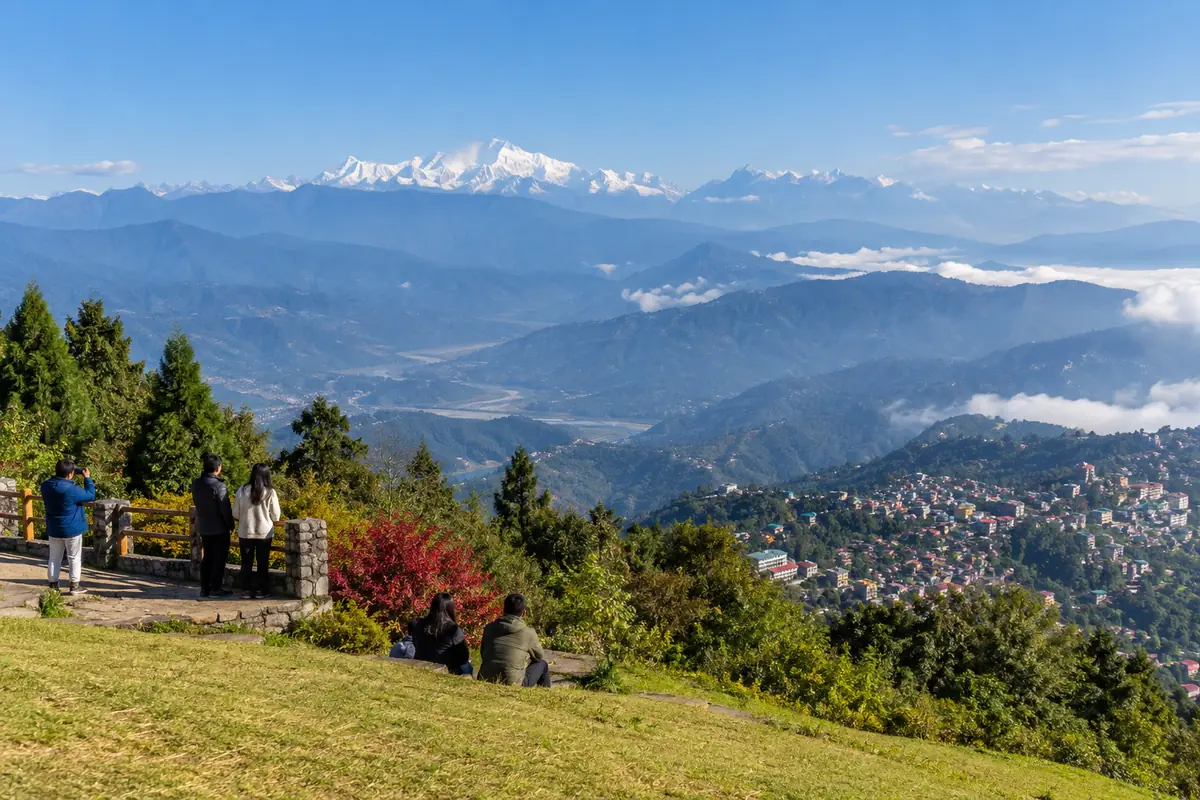
Licensed adventure operators offer 15-minute tandem paragliding flights from Deolo Hill down toward the river valley for ₹3,000 to ₹3,500 per flight. The summit park also features pony rides and outdoor coffee stalls for families.
Durpin Monastery (Zong Dog Palri Fo Brang) and Morgan House
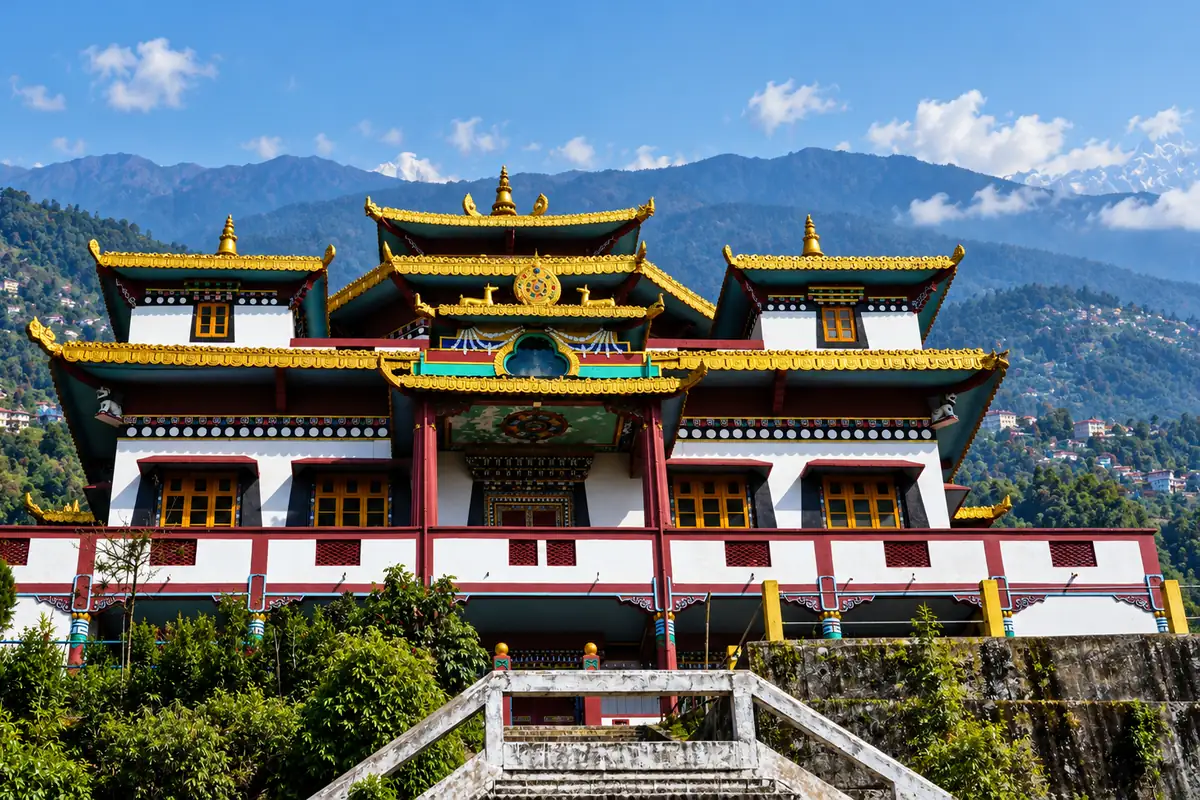
Consecrated by the Dalai Lama in 1976, Durpin Monastery sits atop Durpin Hill and houses rare 108-volume Kangyur texts. The main prayer hall displays intricate Tibetan wall murals, oversized ceremonial horns, and silver prayer wheels.
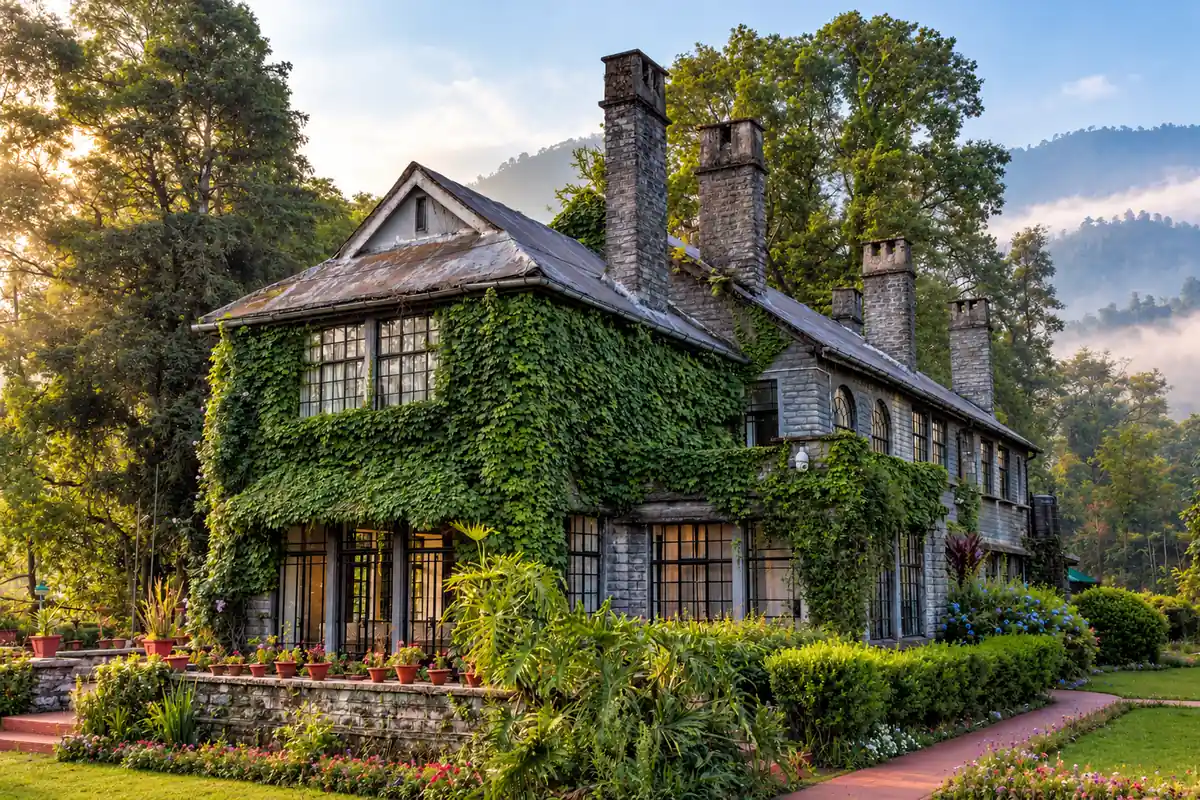
A short drive away stands Morgan House, a well-preserved 1930s stone mansion now operated as a heritage tourist lodge by West Bengal Tourism. Its gabled roofs, stone fireplaces, and cedar-lined lawns recall the early twentieth-century planter lifestyle. Additional district landmarks are published through the Kalimpong District Administration.
Exotic Cactus and Orchid Nurseries of Kalimpong
Kalimpong produces a major share of India’s commercial gladioli, orchids, and cacti. Nurseries like Pine View Nursery house over a thousand varieties of desert cacti and succulents imported from around the globe, blooming under glasshouses on hill terraces.
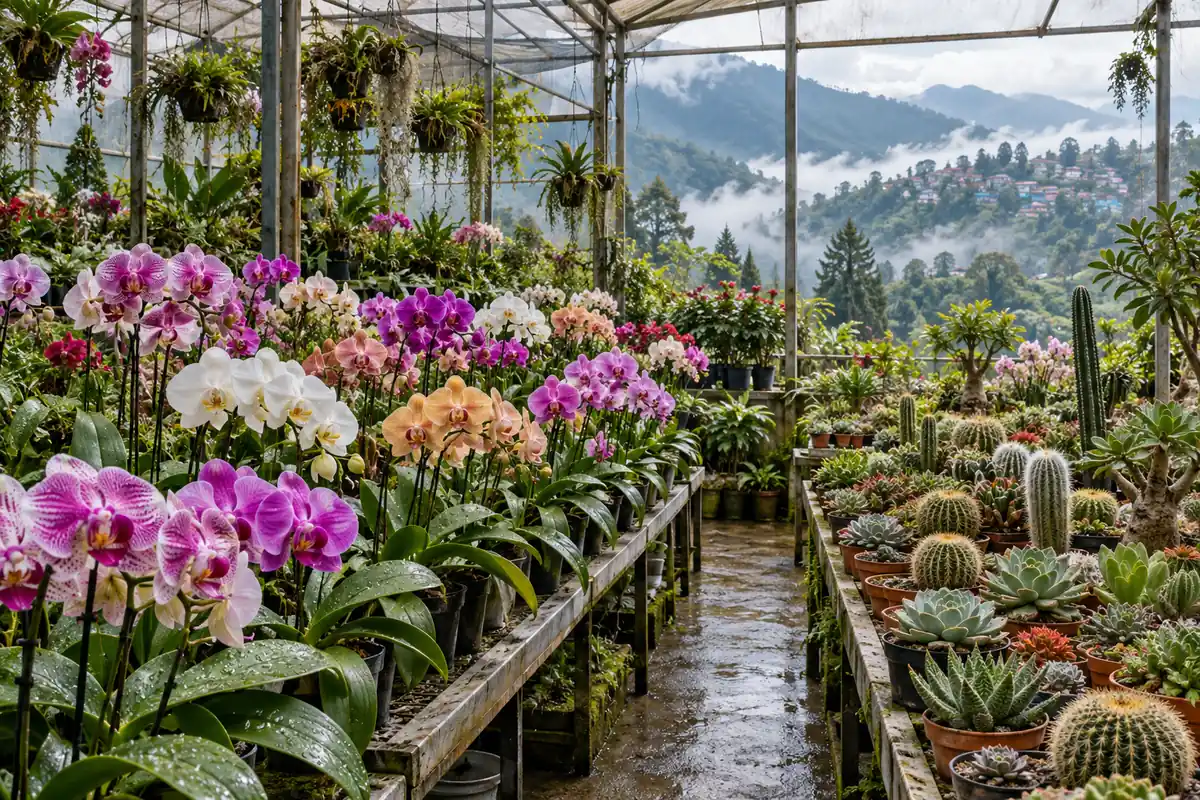
Staff provide informative tours explaining how arid succulent species are grafted and cultivated in high-altitude mountain soil. Visitors can purchase potted dwarf cacti, blooming orchids, and flower bulbs to carry home.
The Darjeeling Himalayan Railway Toy Train Experience
The Darjeeling Himalayan Railway, a UNESCO World Heritage site completed in 1881, operates popular two-hour round-trip Joy Rides between Darjeeling and Ghoom stations. Booking steam or diesel hauled carriages in advance via the IRCTC portal guarantees window seats over mountain valleys.
This historic narrow-gauge railway operates on a 2-foot (610 mm) track, climbing sharp mountain gradients through sharp curves and street-level markets. Taking the toy train provides an authentic connection to nineteenth-century railway history.
| Service Category | Route & Duration | Locomotive Type | Typical Ticket Price |
|---|---|---|---|
| Steam Heritage Joyride | Darjeeling to Ghoom & Return (2 hours) | Vintage B-Class Coal Fired Steam | ₹1,500 per passenger |
| Diesel Regular Joyride | Darjeeling to Ghoom & Return (2 hours) | Modern Mountain Diesel Engine | ₹1,000 per passenger |
| Full Line Passenger | New Jalpaiguri to Darjeeling (7 hours) | Diesel Haulage (Selected Days) | ₹300 to ₹800 depending on class |
Steam Joyrides Between Darjeeling and Ghoom Stations
The iconic joyride covers 14 kilometers round-trip, stopping for 10 minutes at Batasia Loop and 30 minutes at Ghoom Railway Museum. Vintage British-built B-Class coal-fired steam engines puff alongside the Hill Cart Road, offering unmatched heritage photography.
Inside the Ghoom Railway Museum, passengers can inspect the Baby Sivok, the oldest surviving locomotive on the DHR line, alongside historic brass lanterns and original surveyor logbooks. To explore the broader national network of narrow-gauge tracks, review our complete guide on the Mountain Railways of India.
IRCTC Toy Train Booking, Schedules, and Ticket Tariffs
Tickets open up to 120 days in advance on the official railway ticketing platform at IRCTC under station codes DJ (Darjeeling) and GHM (Ghoom). Steam joyrides depart multiple times throughout the morning and early afternoon.
Because joyride coaches carry limited seating capacity of approximately 30 passengers per carriage, advance booking is essential during the autumn festival season and summer holidays. Unreserved counter tickets are rarely available on the day of travel. If you have extra days on this regional circuit, Mussoorie & Landour sightseeing guide outlines key sights, timings, and local transport.
Complete 3-Day Itinerary for Darjeeling and Kalimpong
A 3-day itinerary allocates Day 1 to Darjeeling’s Chowrasta Mall, tea estates, and the Padmaja Naidu Himalayan Zoo; Day 2 to early morning Tiger Hill sunrise, Batasia Loop, and the scenic transfer to Kalimpong; and Day 3 to Deolo Hill, Durpin Monastery, and departure toward the plains.
This sequence ensures travelers beat morning cloud cover at scenic viewpoints while allowing adequate time to transition across the river valley without rushing.
| Day & Route | Morning Schedule | Afternoon Schedule | Evening Activities |
|---|---|---|---|
| Day 1: Darjeeling Ridge | Arrive via Bagdogra/NJP & check into town hotel | Padmaja Naidu Zoo & Himalayan Mountaineering Institute | Chowrasta Mall tea tasting & bakery dining |
| Day 2: Sunrise to Kalimpong | Tiger Hill 3:30 AM sunrise & Batasia Loop railway | Morning DHR steam joyride to Ghoom station | 2.5-hour drive via Peshok to Kalimpong hotel |
| Day 3: Kalimpong Sights | Deolo Hill panoramic lookout & paragliding | Durpin Monastery visit & Pine View Nursery | Downward drive to NJP or onward into Sikkim |
Day 1: Arrival, Chowrasta Mall, and Padmaja Naidu Himalayan Zoo
Arrive in Darjeeling by late morning from Bagdogra or NJP. After checking in, visit the Padmaja Naidu Zoo and Himalayan Mountaineering Institute to admire rare Himalayan wildlife and historic Everest artifacts.
In the late afternoon, tour Happy Valley Tea Estate to watch fresh leaves sorted in the drying factory. Spend the evening walking around Chowrasta Mall, sipping first-flush tea at historic tea lounges, and browsing bookstores for regional literature.
Day 2: Tiger Hill Sunrise, Batasia Loop, and Scenic Drive to Kalimpong
Depart at 3:30 AM with your pre-arranged vehicle token for the Tiger Hill sunrise over Mount Kanchenjunga. Visit Batasia Loop and Ghoom Monastery on the return drive, enjoying a hot Tibetan breakfast of momos and thukpa in town.
Board a morning steam toy train joyride before checking out of your hotel. Start the 2.5-hour drive along the Peshok road, stopping at the Teesta river viewpoint before checking into your Kalimpong hillside homestay by late afternoon.
Day 3: Deolo Hill, Durpin Monastery, Flower Nurseries, and Departure
Spend the morning admiring panoramic mountain vistas from Deolo Hill and touring Durpin Monastery. Walk through the greenhouses of Pine View Nursery to inspect rare flowering cacti and local orchids.
After an authentic lunch of local Gundruk and steamed dumplings, start your downward highway journey back to New Jalpaiguri or Bagdogra. Travelers extending their journey northward across the Teesta border can explore the alpine monasteries of Sikkim.
Travel Logistics: How to Reach, Local Transit, and Best Weather Windows
Darjeeling and Kalimpong are reached via Bagdogra International Airport (70 km) or New Jalpaiguri Railway Junction (72 km) through shared or private mountain taxis. The best visiting months span October to December for clear Himalayan skies and March to May for blooming flora.
Road conditions on the primary hill corridors are well-paved, though monsoon landslides can cause temporary diversions along alternative routes via Rohini or Mirik.
Reaching the Hills: Bagdogra Airport and New Jalpaiguri Railhead
Bagdogra Airport (code: IXB) connects major Indian metropolitan centers with scheduled domestic flights. New Jalpaiguri (NJP) is the primary rail gateway handling express trains. Pre-paid mountain cabs take roughly 3 to 3.5 hours up the Hill Cart Road to reach Darjeeling town.
Shared mountain taxis depart regularly from Siliguri Court More and NJP station for ₹250 to ₹350 per seat. Private taxis charge between ₹2,500 and ₹3,500 for direct transfers to Darjeeling or Kalimpong. Travelers extending their circuit into the high Himalayas can explore our comprehensive guide to places to visit in Gangtok and North Sikkim for border permit guidelines and high-altitude itineraries.
Best Seasons, Kanchenjunga Clarity, and Packing Guidelines
Autumn from October to December offers the clearest weather with unhindered views of Kanchenjunga and crisp daytime temperatures of 10°C to 15°C. Winter temperatures in January often drop below freezing at night, requiring heavy woolens and down jackets.
Spring from March to May brings blooming rhododendrons and mild breezes, making it popular for family holidays. The monsoon from July to September brings heavy rains and thick mountain fog, calling for caution on steep ghat roads.
Frequently Asked Questions About Darjeeling and Kalimpong
How can travelers plan a 3-day trip to Darjeeling and Kalimpong?
A practical 3-day plan spends the first two days exploring Darjeeling’s tea estates, Tiger Hill sunrise, and the Himalayan zoo before transferring across the Teesta valley to Kalimpong on the afternoon of Day 2. Day 3 covers Kalimpong’s Deolo Hill, Durpin Monastery, and cactus nurseries before heading back down to the plains.
How does the Tiger Hill vehicle token system work?
To prevent extreme road gridlock before dawn, the Darjeeling police administration limits vehicles by issuing numbered coupons the day before the visit. Travelers must have their hotel front desk or local taxi driver collect a token the prior afternoon to be allowed past checkposts at 3:30 AM.
Is the Padmaja Naidu Himalayan Zoo closed on any day?
Yes, both the Padmaja Naidu Himalayan Zoological Park and the adjoining Himalayan Mountaineering Institute are strictly closed to visitors every Thursday for animal wellness and maintenance. Travelers should organize their itinerary so their Darjeeling zoo visit falls between Friday and Wednesday.
What is the driving distance between Darjeeling and Kalimpong?
The road distance between Darjeeling and Kalimpong is approximately 50 kilometers along the scenic Peshok tea garden route. Driving between the two towns takes between 2 and 2.5 hours by taxi, passing through deep river valleys and terraced tea estates.
What is the best time of year to see Mount Kanchenjunga clearly?
The clearest visibility for Mount Kanchenjunga occurs from October through December when post-monsoon skies remain cloudless and crisp. March and April also offer good morning views, although afternoon haze can occasionally obscure distant mountain summits.
How do visitors book tickets for the Darjeeling Toy Train?
Tickets for the popular Darjeeling to Ghoom Joy Ride can be reserved in advance through the official IRCTC portal using station code DJ for Darjeeling. Steam-hauled heritage runs cost approximately ₹1,500 per passenger, while diesel engine joyrides cost around ₹1,000.