Places to Visit in Ooty and Coonoor: Nilgiri Travel Guide
Explore top places to visit in Ooty and Coonoor with Nilgiri Mountain Railway booking, Doddabetta Peak, tea estates, Pykara Lake, and TN e-Pass rules.

Rising above the plains of western Tamil Nadu in the Nilgiri Biosphere Reserve, the hill towns of Ooty and Coonoor form southern India’s primary mountain corridor. Ooty sits at an elevation of 2,240 meters, surrounded by expansive eucalyptus groves, terraced botanical reserves, and high-altitude lakes.
Just 19 kilometers down the mountain spine, Coonoor rests at 1,850 meters amidst emerald tea plantations and deep river gorges. Finding the most rewarding places to visit in Ooty and Coonoor requires understanding how these two sister destinations complement each other across a single holiday itinerary.
Travel & Hill Station Essentials
- Core Destinations: Ooty (Udhagamandalam, 2,240 meters) and Coonoor (1,850 meters), connected by 19 kilometers of mountain highway.
- Heritage Rail Transit: Nilgiri Mountain Railway operates daily meter-gauge services connecting Mettupalayam, Coonoor, and Ooty.
- Mandatory Vehicle Permit: All visiting four-wheelers must register on the official Tamil Nadu e-Pass portal prior to district checkposts.
- Primary Attractions: Doddabetta Peak, Government Botanical Garden, Pykara Boathouse, Sim’s Park, Dolphin’s Nose, and working tea factories.
- Ideal Trip Length: 3 days to explore botanical collections, ride the toy train, and tour working tea estates without fatigue.
Why Pair Ooty and Coonoor in One Nilgiri Circuit
Pairing Ooty and Coonoor combines high-altitude pine forests and mountain lakes at 2,240 meters with quieter hillside tea estates at 1,850 meters. The two towns sit only 19 kilometers apart along National Highway 181, allowing visitors to base themselves centrally while touring both colonial centers.
Travelers who stay strictly in Ooty often miss the tranquil walking trails and intimate tea factories of the lower valleys. Conversely, staying only in Coonoor leaves out the dramatic summits and extensive botanical collections of the district headquarters. Combining both towns creates a balanced journey through diverse mountain landscapes.
| Travel Factor | Ooty (Udhagamandalam) | Coonoor |
|---|---|---|
| Elevation | 2,240 meters (7,350 feet) | 1,850 meters (6,070 feet) |
| Atmosphere | Popular hill station with markets and lakes | Peaceful plantation town with colonial bungalows |
| Primary Scenery | Pine forests, rolling grasslands, high peaks | Terraced tea gardens, deep ravines, waterfalls |
| Signature Transit | Upper toy train terminus (UAM Station) | Mid-station with steam engine changeover (ONR) |
| Key Highlights | Doddabetta Peak, Pykara Lake, Botanical Garden | Sim’s Park, Dolphin’s Nose, High Field Tea Factory |
Geographic Contrast: Highland Lake Capital vs Quiet Tea Enclave
Ooty serves as the administrative center of the Nilgiris district, developed around a historic lake and expansive public gardens. The higher altitude produces cooler temperatures, crisp mountain air, and dramatic evening fog rolling across the ridgelines.
Coonoor provides a noticeably gentler climate with fewer commercial crowds and compact walking trails. The hillsides here feature dense tea plantations divided by eucalyptus windbreaks and colonial stone cottages, offering visitors a peaceful retreat into rural Nilgiri life.
The 19-Kilometer Hill Highway Transit Corridor
Traveling between Ooty and Coonoor takes roughly 45 minutes by road along National Highway 181. Local state transport buses run every fifteen minutes from both municipal bus stands for an affordable fare of ₹20 to ₹30 per passenger.
Private taxis operate regular transfers between the two towns for ₹900 to ₹1,400 per drop. Alternatively, travelers can board the historic toy train for a memorable 75-minute rail journey winding along the mountainsides. Exploring regional travel connections across Tamil Nadu provides deeper context on how the Nilgiri corridor links with nearby lowland districts.
Top Places to Visit in Ooty: Heritage Gardens, Summits, and Lakes
The top attractions in Ooty include the Government Botanical Garden, the panoramic summit of Doddabetta Peak, the active Ooty Lake Boathouse, and the clear waters of Pykara Lake. These sites highlight the region’s diverse botanical heritage, British-era hill architecture, and dramatic Nilgiri viewpoints.
Visiting these landmarks in a logical geographic sequence prevents unnecessary travel back and forth across busy town intersections. Early morning departures are especially valuable for mountain peaks to beat midday clouds and afternoon tourist surges.
| Attraction | Operating Hours | Entry Ticket Price | Best Window |
|---|---|---|---|
| Government Botanical Garden | 7:00 AM – 6:30 PM | ₹40 Adults, ₹20 Children | Early morning (7:30 AM – 9:30 AM) |
| Government Rose Garden | 8:30 AM – 6:00 PM | ₹40 Adults, ₹20 Children | Morning or late afternoon |
| Doddabetta Peak | 7:00 AM – 6:00 PM | ₹10 per person | Clear morning before 10:00 AM |
| Ooty Lake Boathouse | 9:00 AM – 6:00 PM | ₹13 Entry (Boats ₹250 to ₹600) | Late afternoon for sunset |
| Pykara Lake Boathouse | 9:30 AM – 5:30 PM | Free Entry (Motorboats ₹800 to ₹1,200) | Mid-morning (10:00 AM – 1:00 PM) |
Government Botanical Garden and Rose Garden
Established in 1848, the 55-acre Government Botanical Garden displays over a thousand plant varieties, a 20-million-year-old fossilized tree trunk, and tiered Italianate lawns. The garden slopes upward across six distinct sections, including an extensive fern house, an arboretum of exotic temperate trees, and formal medicinal flowerbeds.
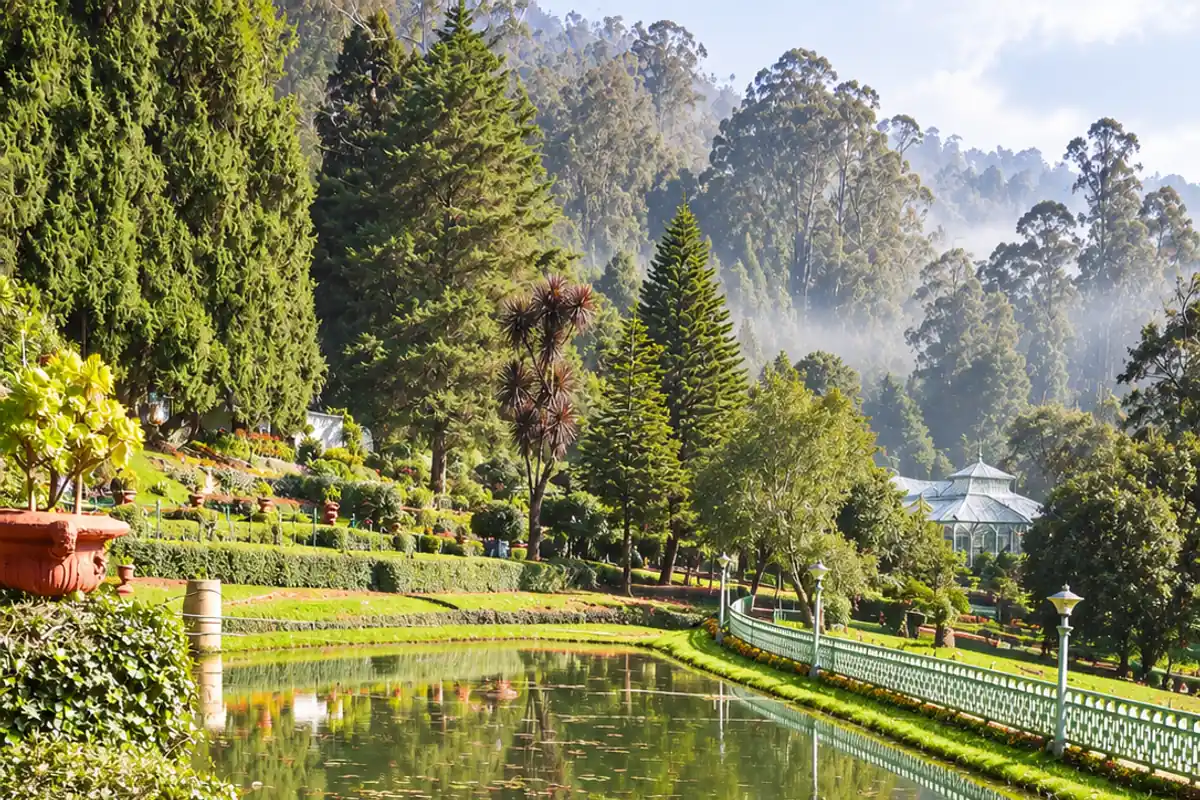
A short drive away, the Government Rose Garden occupies four hectares on the slopes of Elk Hill. The terrace layout contains more than twenty thousand rose bushes representing thousands of distinct cultivars. Official event schedules and floral exhibitions are cataloged by the Nilgiris District Administration.

Doddabetta Peak and Ketti Valley Telescope House
Rising to 2,637 meters as the highest peak in the Nilgiri mountains, Doddabetta Peak features an octagonal Telescope House maintained by Tamil Nadu Tourism. Visitors enjoy panoramic vistas across the terraced fields of the Ketti Valley and distant Western Ghats ridges.
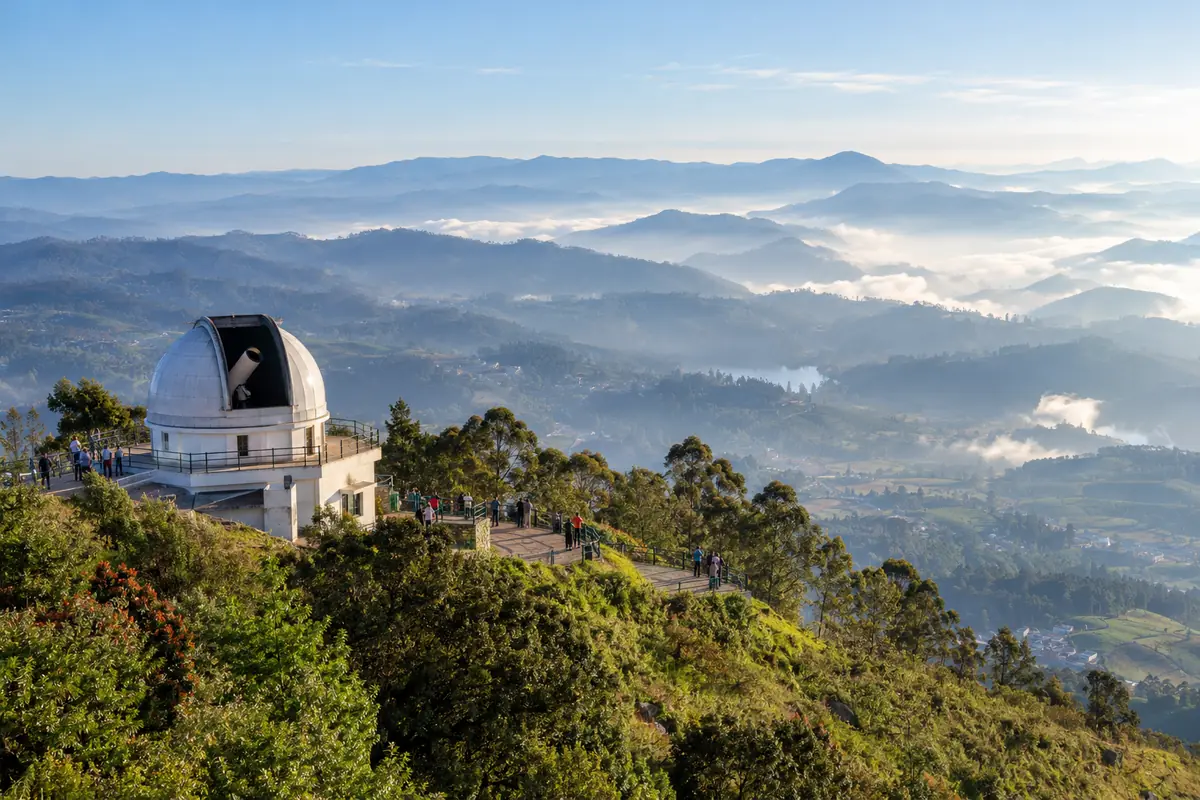
The summit is located nine kilometers east of Ooty town along the Kotagiri road. On clear mornings, the viewing platform offers sightlines extending toward the plains of Coimbatore and the forested slopes of Mukurthi National Park. A nominal parking charge applies for private four-wheelers.
Pykara Lake, Boathouse, and Cascading Falls
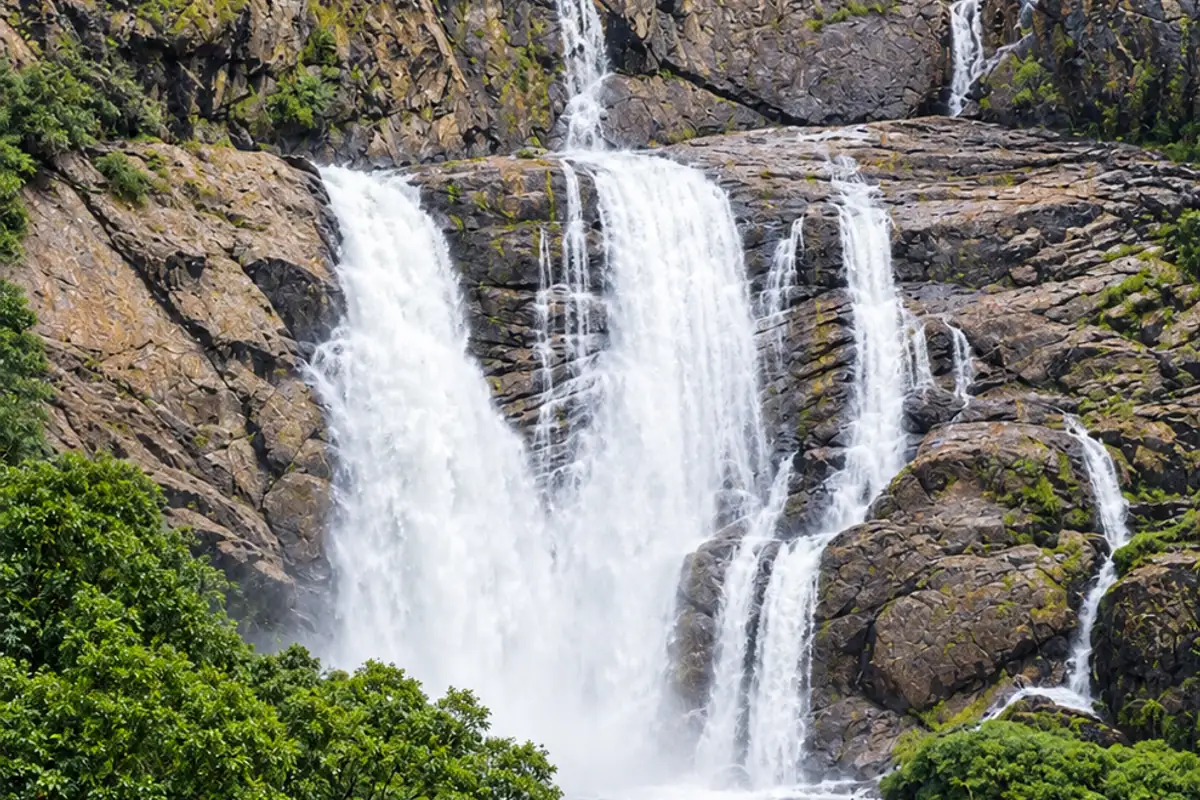
Pykara Lake, located 21 kilometers northwest of Ooty along the Gudalur highway, serves as a sacred water body for the indigenous Toda tribe. The Tamil Nadu Tourism Development Corporation operates speedboats and motorboats across the lake, paired with viewing decks overlooking the rushing Pykara Falls.
The journey to Pykara passes through rolling grasslands and pine woods, offering a quiet escape from town traffic. Speedboat rides take passengers across calm bays bordered by protected shola reserves.

Walking trails lead safely down to the lower tiers of Pykara Falls. Travelers planning a broader mountain holiday across southern Tamil Nadu can pair the Nilgiri hills with the quiet lake and pine trails covered in our guide to places to visit in Kodaikanal.
Top Places to Visit in Coonoor: Viewpoints and Tea Plantations
Coonoor features scenic vistas at Dolphin’s Nose and Lamb’s Rock, century-old exotic trees at Sim’s Park, and working tea processing tours at High Field Tea Factory. These sites reveal the tranquil, plantation-dominated side of the Nilgiris away from heavy urban vehicle congestion.
Coonoor is split into Lower Coonoor, which houses the railway junction and municipal market, and Upper Coonoor, where heritage colonial estates, gardens, and viewpoints perch along the ridge. Exploring the upper ridges provides unmatched visual immersion into South India’s tea culture.
Sim’s Park and Rare Temperate Botanical Species
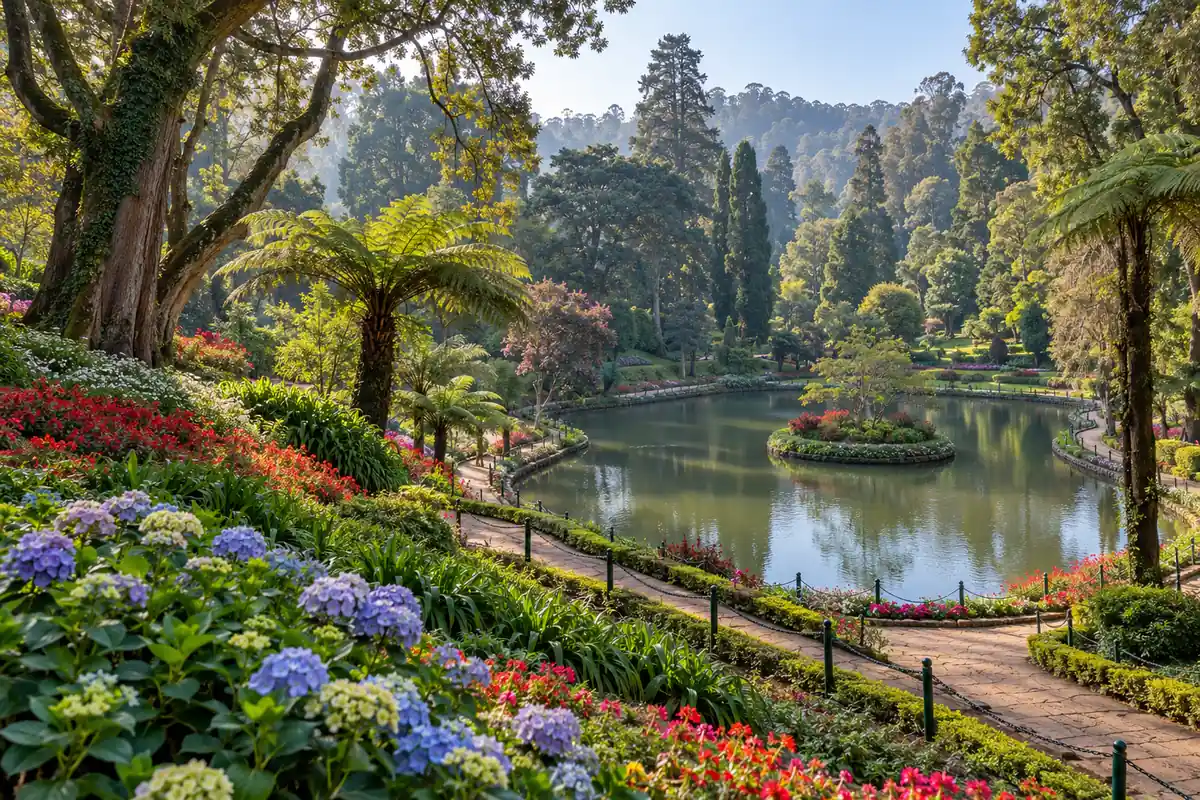
Sim’s Park is a 12-hectare botanical sanctuary established in 1874, combining natural landscape slopes with terraced beds of rare temperate trees such as Queensland Karry pine and Rudraksha trees. It hosts the Nilgiris annual Fruit Show every May.
The park features walking paths meandering around an artificial lake where visitors can rent paddle boats. Its lower terraces house rare magnolias, tree ferns, and colorful annual flowering beds that bloom brilliantly from October through early summer.
Dolphin’s Nose and Catherine Falls Ravine Panorama
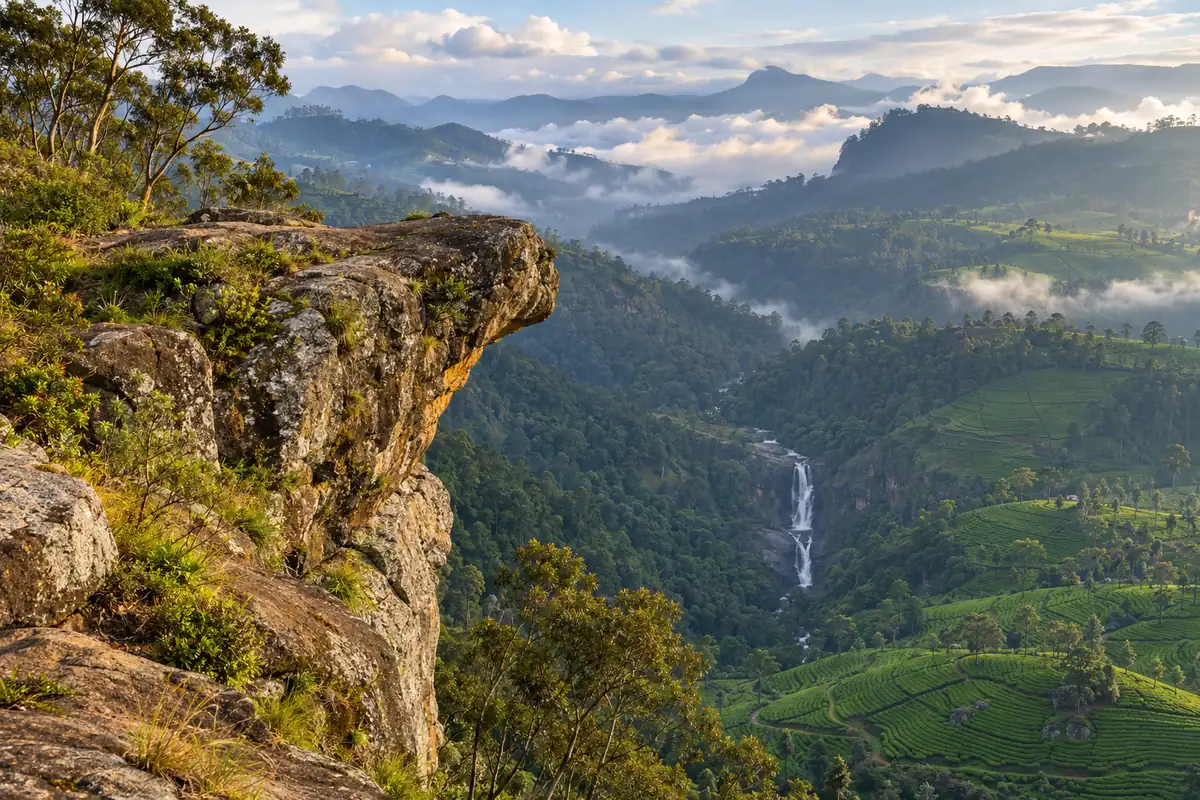
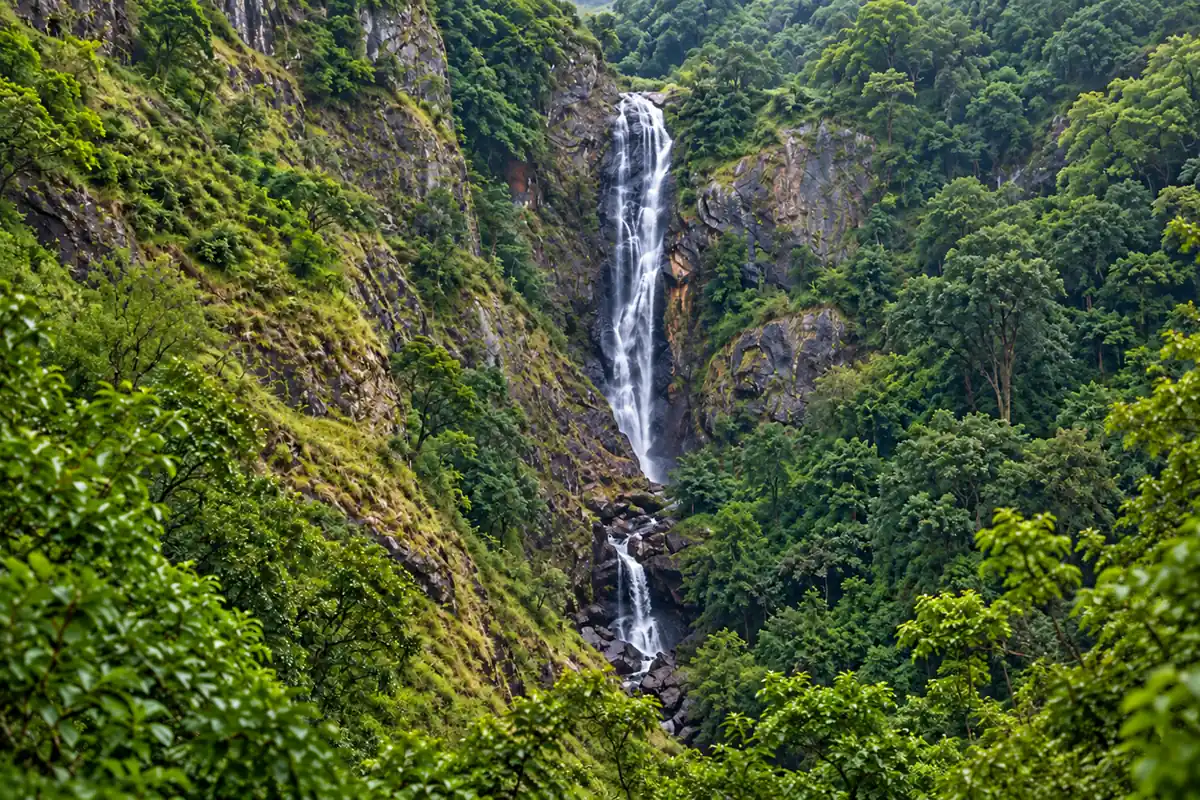
Perched 12 kilometers outside Coonoor town, Dolphin’s Nose is a prominent rock formation projecting above deep gorges. From its summit observation deck, visitors can view Catherine Falls cascading in two tiers into the valley below.
The road from Coonoor to Dolphin’s Nose winds through the Tiger Hill tea estate, presenting sweeping views across plantation slopes. Stalls near the entrance sell hot spiced tea and locally made chocolates. The entrance fee is ₹15 per person with nominal camera charges.
Lamb’s Rock and Droog Fort Vista
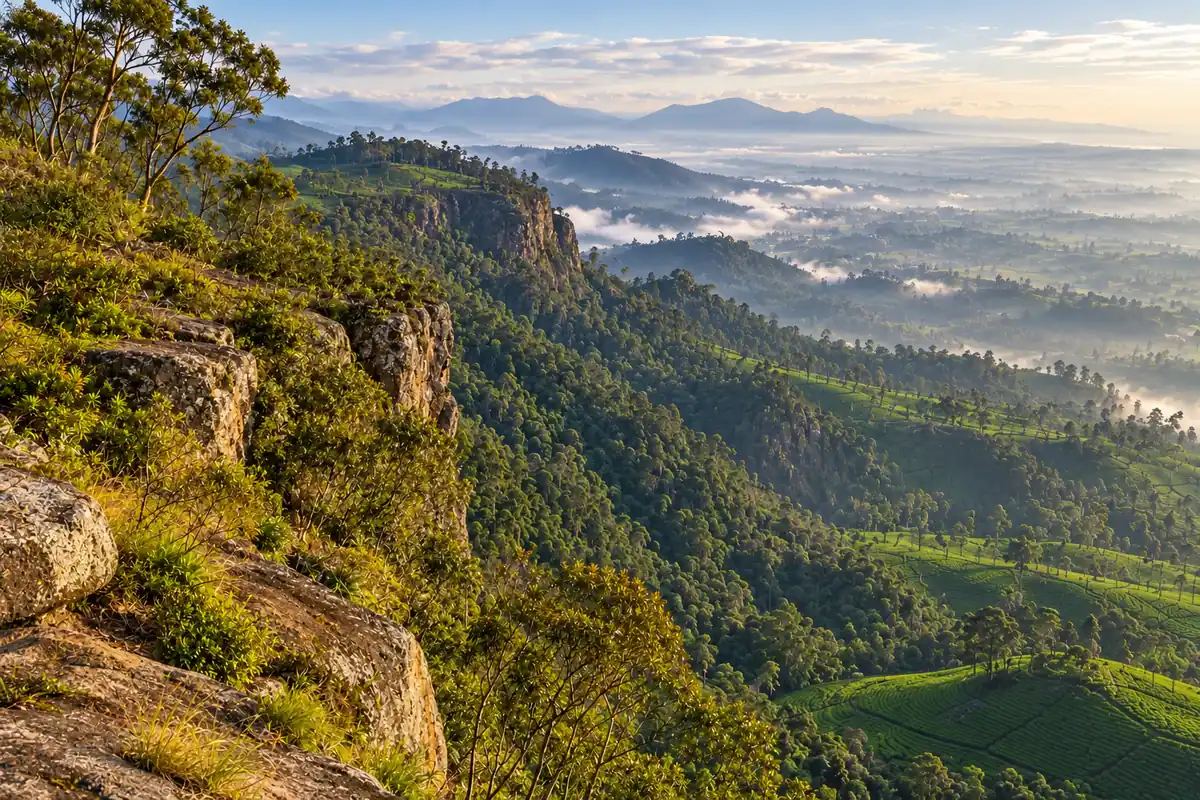
Lamb’s Rock sits on a sheer cliff eight kilometers from Coonoor, providing sweeping views across the Coimbatore plains and nearby tea estates. Nearby trails lead toward the ruins of Droog Fort, a 16th-century military outpost used by Tipu Sultan.
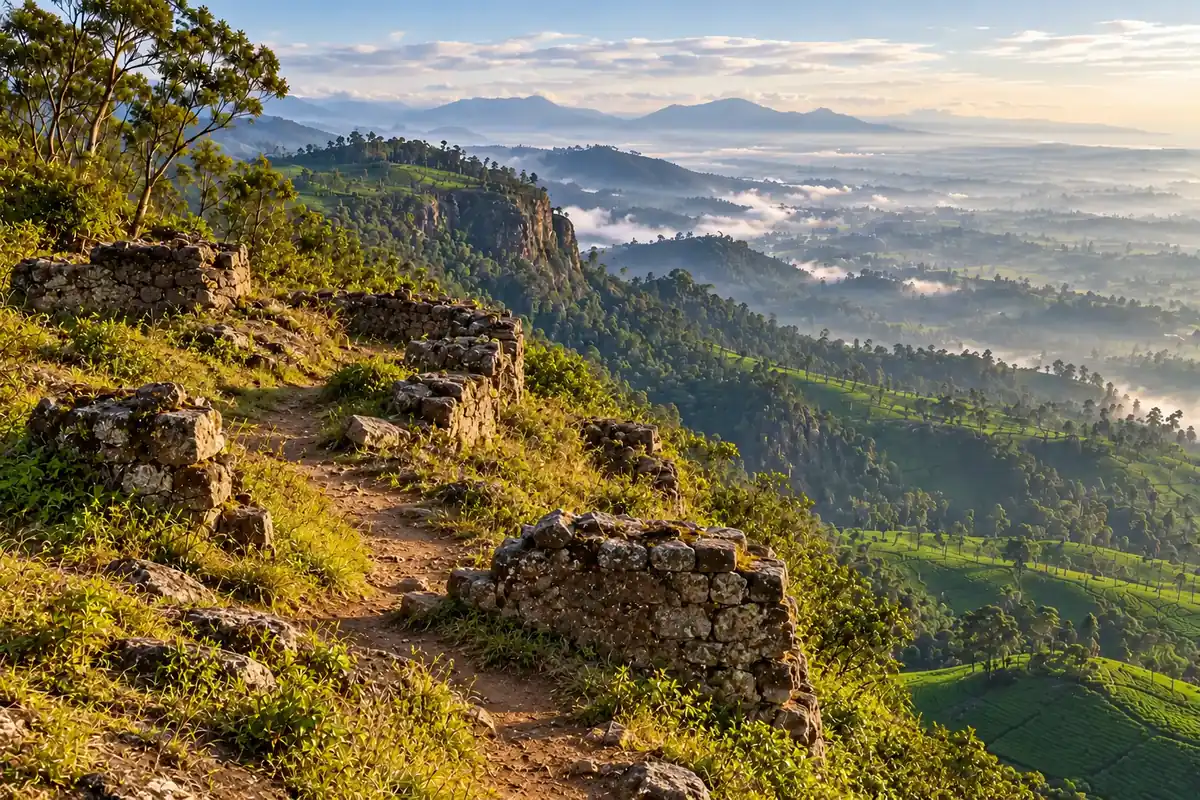
The viewpoint is named after Captain Lamb, who mapped the area in the nineteenth century. The precipitous drop reveals tea garden valleys directly below, making it an excellent stop for landscape photographers during morning hours when visibility remains high.
High Field Tea Factory and Processing Demonstration
High Field Tea Factory offers guided walkthroughs explaining the traditional CTC (Crush, Tear, Curl) and orthodox processing methods of Nilgiri black and green tea. Guests watch sorting machines in operation and taste freshly brewed single-estate teas.
During the 30-minute factory tour, knowledgeable staff walk visitors past the withering troughs, rolling cylinders, and drying ovens. An adjacent sales counter stocks loose-leaf teas, eucalyptus oil, and homemade fudge at direct estate prices.

Nilgiri Mountain Railway Toy Train Experience Between Coonoor and Ooty
The Nilgiri Mountain Railway, a UNESCO World Heritage site, connects Mettupalayam, Coonoor, and Ooty on a historic meter-gauge line. Booking seats in First Class or Second Sitting via the IRCTC portal well in advance guarantees window access across viaducts, tunnels, and deep forested slopes.
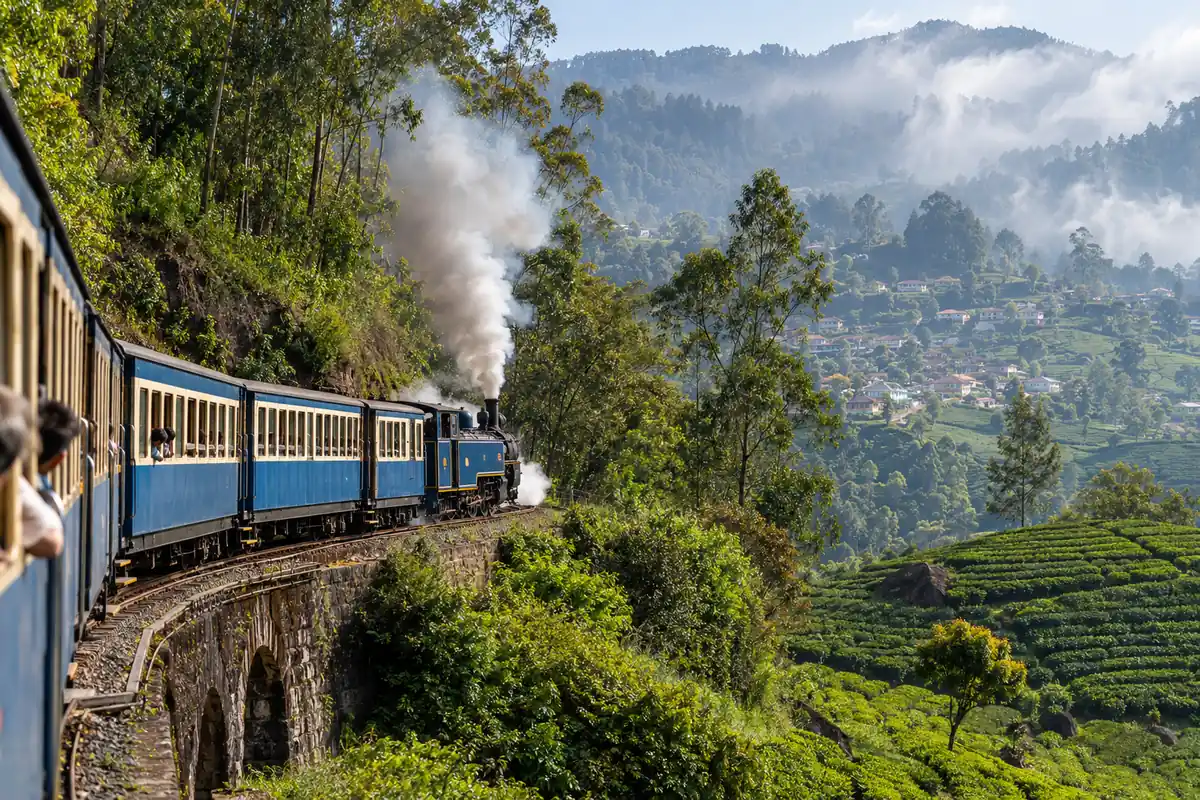
The railway was constructed between 1891 and 1908 and remains an extraordinary feat of mountain engineering. Taking the train between Coonoor and Ooty provides a practical travel experience that avoids highway traffic while preserving historic rail heritage.
| Train Leg | Distance & Time | Traction Type | First Class Fare | Second Class Fare |
|---|---|---|---|---|
| Mettupalayam to Coonoor | 27 km (3 hr 20 min) | Steam Locomotive (Abt Rack System) | ₹600 | ₹205 |
| Coonoor to Ooty | 19 km (1 hr 15 min) | Diesel Locomotive (Adhesion Track) | ₹400 | ₹140 |
| Full Run: Mettupalayam to Ooty | 46 km (4 hr 45 min) | Steam & Diesel Combined | ₹800 | ₹295 |
Route Dynamics: Steam Rack Section vs Upper Mountain Line
The lower leg from Mettupalayam to Coonoor uses an authentic Swiss Abt rack-and-pinion steam system to climb steep gradients. The locomotive pushes the wooden carriages from the rear as the track ascends past thick teak forests, 16 tunnels, and 250 bridges.
At Coonoor railway station, the train undergoes a technical halt where the vintage steam engine is decoupled and replaced by a diesel locomotive. The upper section to Ooty glides smoothly past eucalyptus forests and stations like Wellington, Aruvankadu, Ketti, and Lovedale. Travelers fascinated by historic tracks can read our detailed guide on the Mountain Railways of India.
Booking Classes, IRCTC Reservation Windows, and Ticket Counters
Toy train tickets open on the official Indian Railways ticketing system up to 60 days in advance under station codes MTP (Mettupalayam), ONR (Coonoor), and UAM (Udagamandalam/Ooty). Reserving seats through IRCTC is essential during summer vacation months and holiday long weekends.
Travelers without advance reservations can join the general unreserved queue at Coonoor or Ooty stations one hour prior to scheduled departure. Counter tokens are issued on a first-come basis for available standing and unreserved seating capacity.
Complete 3-Day Itinerary for Ooty and Coonoor
A 3-day itinerary allocates Day 1 to classic Ooty landmarks like Doddabetta Peak, the Botanical Gardens, and Ooty Lake; Day 2 to Coonoor via the toy train, covering Sim’s Park, Dolphin’s Nose, and tea tasting; and Day 3 to the clear waters of Pykara and scenic Nilgiri countryside.
This flow balances structured sightseeing with relaxed tea garden strolls, minimizing time spent stuck in peak-hour traffic inside Ooty town.
| Day & Focus | Morning Route | Afternoon Schedule | Evening Highlights |
|---|---|---|---|
| Day 1: Ooty Classics | Doddabetta Peak sunrise views & telescope observation | Government Botanical Garden lawns and arboretum walk | Ooty Lake boat cruise and Commercial Road chocolate shops |
| Day 2: Coonoor Ridge | Morning Nilgiri toy train ride from Ooty to Coonoor | Sim’s Park floral terraces and Dolphin’s Nose canyon view | High Field Tea Factory walkthrough and estate tea tasting |
| Day 3: Pykara Waters | Drive northwest along Gudalur road to Pykara Lake | TTDC Pykara speedboat tour and cascading waterfall walk | Wenlock Downs shooting meadows and Pine Forest walk |
Day 1: Classic Ooty Gardens, Boat House, and Doddabetta
Start the morning at Doddabetta Peak before mist obscures the horizon. After descending the mountain road, visit the Government Botanical Garden to admire century-old trees and manicured lawns.
Enjoy an authentic South Indian thali in town before browsing bakeries on Commercial Road for fresh fudge and spices. Spend the late afternoon at the Ooty Lake Boathouse, renting a pedal boat as the sun sets over surrounding eucalyptus groves.
Day 2: Tea Trails, Sim’s Park, and Coonoor Scenic Viewpoints
Board the morning toy train from Ooty to Coonoor, watching the lush Ketti Valley roll past carriage windows. Upon arriving in Coonoor, hire a local cab to visit Sim’s Park and admire century-old flowering shrubs.
Drive out to Dolphin’s Nose for cliffside views of Catherine Falls, stopping on the return journey at Lamb’s Rock. Conclude the afternoon with a tea-making demonstration and tasting session at High Field Tea Factory before returning by road or evening train.
Day 3: Pykara Falls, Avalanche Valley, and Nilgiri Countryside
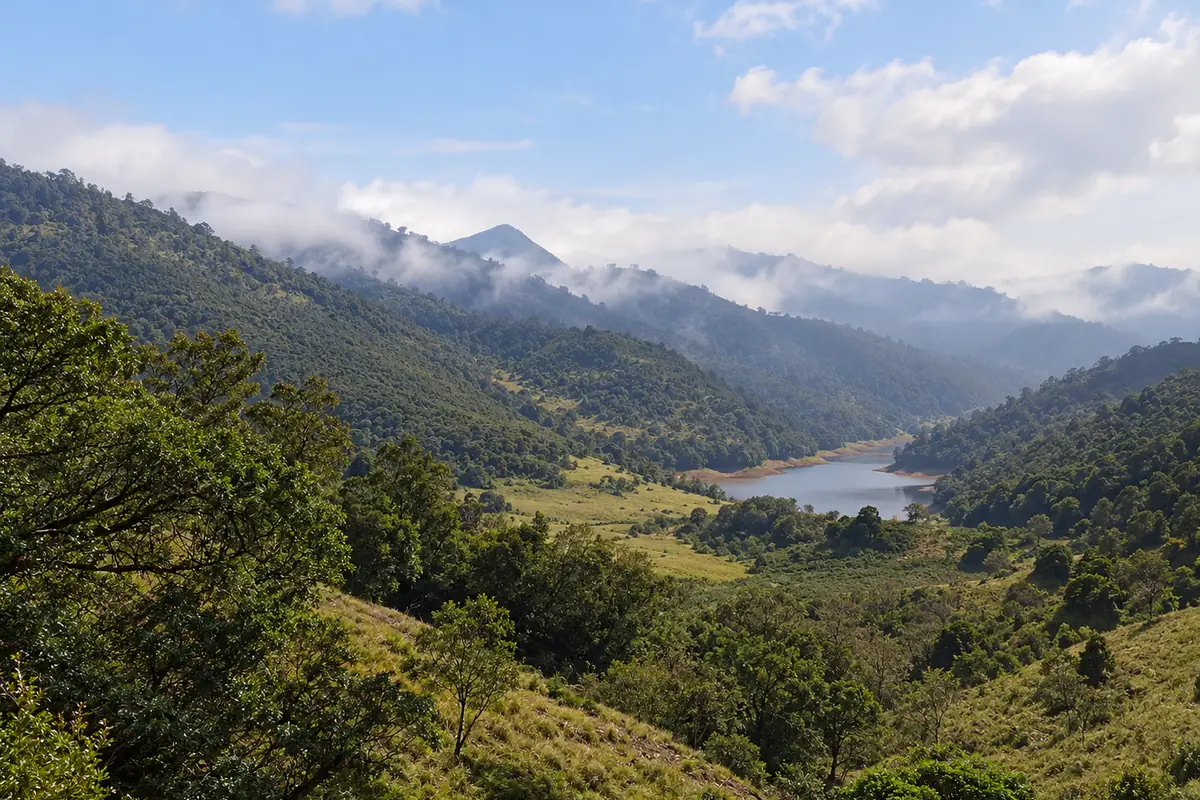
Head northwest out of Ooty along the scenic Gudalur highway toward Pykara Lake. Book an early motorboat ride with TTDC across the quiet waters before walking the paved footpath to the waterfalls.
On the return drive, stop at the Wenlock Downs shooting point and the historic Pine Forest. Travelers with an extra day can apply for forest department permits to explore the protected wilderness of Avalanche Lake. Those extending their southern journey toward Kerala can explore our guide to places to visit in Munnar.
Mandatory Tamil Nadu E-Pass and Travel Logistics
All non-commercial and commercial vehicles entering the Nilgiris must secure a free vehicle e-Pass through epass.tnega.org as mandated by the Madras High Court. The region is reached via Coimbatore International Airport (88 km) or Mettupalayam Junction (52 km) along well-paved mountain ghat roads.
The e-Pass requirement was implemented to regulate vehicular density and reduce environmental pollution across the sensitive Nilgiri hills. Completing registration before starting your journey ensures smooth passage through district borders.
Important
The Tamil Nadu vehicle e-Pass is completely free to generate online. Never pay unauthorized touts or third-party agencies for issuing this pass. Present the digital QR code on your phone at entry checkposts for verification.
High Court Vehicle E-Pass Registration on epass.tnega.org
To obtain the mandatory pass, drivers visit the state government portal at Tamil Nadu e-Pass System. The registration form requires vehicle details, registration plate numbers, fuel category, passenger names, and planned dates of entry and exit.
Upon submission, the portal generates a downloadable PDF containing a unique QR code. Transport officials scan this code at border checkposts, including Burliar (on the Mettupalayam road) and Kakkanallah (on the Bandipur-Mudumalai road). Travelers seeking step-by-step instructions can refer to our dedicated Ooty and Kodaikanal TN e-Pass guide.
Reaching the Nilgiris: Airports, Railheads, and Mountain Ghats
The closest airport is Coimbatore International Airport (code: CJB), located 88 kilometers from Coonoor and 98 kilometers from Ooty. The airport handles daily direct flights from Bengaluru, Chennai, Mumbai, Hyderabad, and Delhi.
From Coimbatore, private taxis take approximately 2.5 to 3.5 hours to climb the Nilgiri Ghats. The route ascends through Mettupalayam via the Kallar Ghat road, navigating 14 well-engineered hairpin bends. Travelers arriving from Karnataka enter through Mysore and the Mudumalai tiger reserve along the 36-hairpin Kalhatty Ghat. Visitors heading toward Coimbatore can also visit spiritual centers like the Isha Yoga Center in Coimbatore.
Best Seasons, Weather Patterns, and Packing Guidelines
The most pleasant season to visit Ooty and Coonoor spans October through March. Daytime temperatures remain pleasant between 15°C and 20°C, while night temperatures can drop to 5°C in December and January, requiring woolens and thermal layers.
Summer from April to May brings sunny days and the popular annual flower shows, though towns experience heavy tourist crowds and slower mountain traffic. The southwest monsoon from June to September delivers heavy rains across the Nilgiris, creating fresh green waterfalls but occasional landslide warnings on ghat roads. Complete state travel advisories are accessible via the Tamil Nadu Tourism Development Corporation.
Frequently Asked Questions About Ooty and Coonoor
How many days are required to visit Ooty and Coonoor?
A minimum of three full days is recommended to comfortably tour both Ooty and Coonoor without rushing. This schedule allows two days for Ooty landmarks and one dedicated day for Coonoor tea gardens and viewpoints.
Can travelers cover Ooty and Coonoor in one day?
While technically possible to see one or two major spots in each town within a single day, it creates a rushed and tiring experience. A day trip forces visitors to spend hours driving in mountain traffic rather than enjoying scenic gardens and walking trails.
Is an e-Pass mandatory for visiting Ooty and Coonoor?
Yes, an official vehicle e-Pass generated through the Tamil Nadu government portal at epass.tnega.org is mandatory for all private and commercial vehicles entering the Nilgiris. The pass is free of charge and provides a QR code scanned by transport officials at district checkposts.
What is the best time of year to visit Ooty and Coonoor?
The most pleasant months to visit are October through March when skies remain clear and daytime temperatures average 15°C to 20°C. April and May are also popular for summer flower shows, though towns experience peak seasonal crowds.
How can visitors book the Nilgiri Mountain Railway toy train?
Toy train tickets can be booked online in advance through the official IRCTC portal using station codes MTP for Mettupalayam, ONR for Coonoor, and UAM for Ooty. Physical unreserved tickets can also be bought at station counters approximately one hour before departure.
What is the road distance between Ooty and Coonoor?
The road distance between Ooty and Coonoor is approximately 19 kilometers along National Highway 181. Driving between the two towns takes about 45 minutes by taxi or local bus depending on hill traffic.