Tripura Travel Guide: Agartala Palaces & Unakoti Carvings
Explore the best places to visit in Tripura with our travel guide covering Ujjayanta Palace, Neermahal, Unakoti rock carvings, and Matabari Temple.
Tripura rests across the southern frontier of Northeast India, bordered on three sides by Bangladesh and connected eastward to the lush hill tracts of Assam and Mizoram. Governed continuously by the Manikya royal dynasty for more than five hundred years, this green state preserves an extraordinary blend of Bengali cultural traditions, indigenous Tipra folkways, and royal architectural monuments that distinguish it from every neighboring province.
Travelers looking for authentic, unhurried cultural adventures will discover that the diverse places to visit in tripura offer rare treasures. From the white Italianate facades of Ujjayanta Palace in the capital to the colossal Shaivite rock sculptures carved into forested cliff faces at Unakoti, Tripura delivers monumental heritage without commercial crowding.
State Overview & Travel Highlights
- Geographic Character: Landlocked northeastern state covering 10,491 square kilometers, dominated by five parallel north-south hill ranges and fertile alluvial river valleys.
- Royal Heritage: Over five centuries of Manikya royal rule culminating in the magnificent neoclassical Ujjayanta Palace and the floating summer palace of Neermahal on Rudrasagar Lake.
- Spiritual Landmarks: The revered 500-year-old Tripura Sundari Temple in Udaipur, celebrated among the 51 sacred Shakti Peethas of the subcontinent.
- Archaeological Wonders: 7th to 9th-century rock-cut Shaivite bas-reliefs at Unakoti and ancient Buddhist brick monastic ruins at Pilak and Boxanagar.
- Visitor Access: Maharaja Bir Bikram Airport in Agartala and broad-gauge express rail links connect travelers without requiring an Inner Line Permit.
Top Places to Visit in Tripura: Master Travel Blueprint
The primary places to visit in Tripura span the royal neoclassical Ujjayanta Palace in Agartala, the colossal 7th-century rock-cut Shaivite sculptures at Unakoti, the floating Neermahal water palace on Rudrasagar Lake, and the revered Maa Tripura Sundari Shaktipeeth in Udaipur.
Planning a journey across Tripura requires understanding its two primary geographical axes. The southern circuit centers on Agartala, Sepahijala, Melaghar, and Udaipur, featuring grand palaces, royal temples, and wildlife sanctuaries reachable within short driving distances. The northern circuit stretches toward Kailashahar, Unakoti, and the misty elevations of Jampui Hills, rewarding overland travelers with dramatic rock-cut art and cool montane orchards.
Agartala Royal Corridor: Ujjayanta Palace and Heritage Park
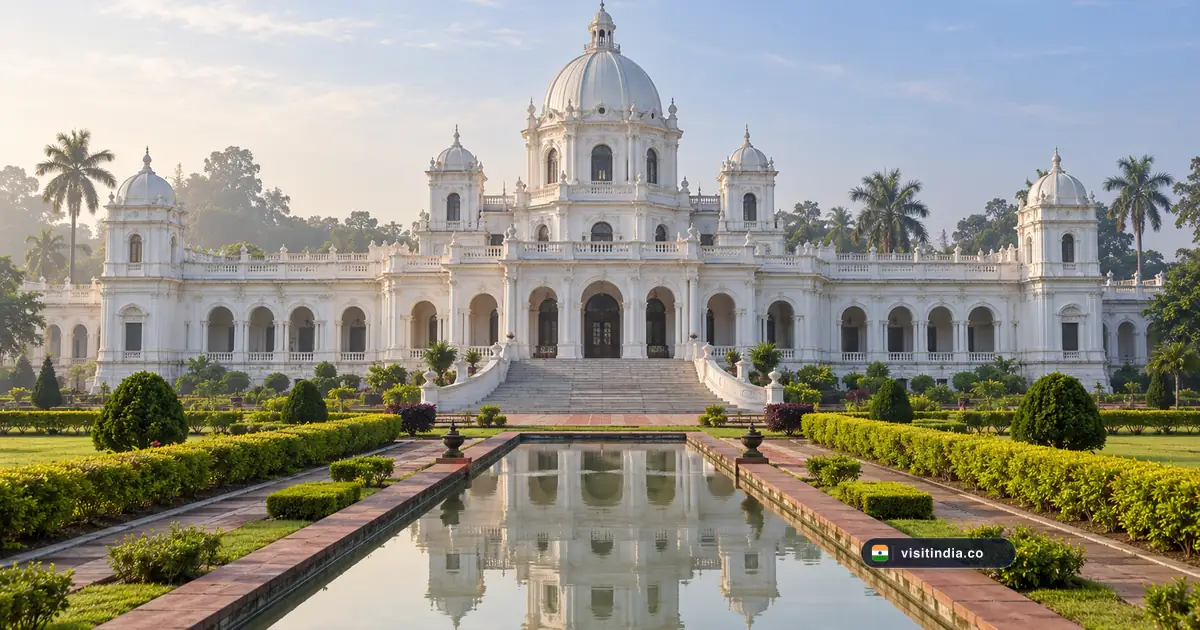
Agartala serves as Tripura’s administrative capital, anchored by the grand white neoclassical Ujjayanta Palace that now houses the state museum, alongside the landscaped gardens of Heritage Park and the tranquil borders of Kamalasagar.
The city balances administrative efficiency with royal garden layouts. Ujjayanta Palace dominates the central district, constructed between 1899 and 1901 by Maharaja Radha Kishore Manikya under British architectural guidance. Visitors can explore twenty distinct exhibition galleries inside the palace, examining tribal textiles, royal bronze coins, and 8th-century stone icons excavated from across the region.
Just two kilometers northeast, the landscaped grounds of Heritage Park display scaled miniature replicas of Tripura’s historical monuments. The park features landscaped walkways flanked by indigenous medicinal plants, pine groves, and tribal bamboo installations. Evening cultural programs at the open-air theater present traditional folk dances like Hojagiri, performed by Reang tribal troupes balancing brass plates and earthen oil lamps.
Unakoti Rock-Cut Reliefs: The Shaivite Sculptures of Kailashahar
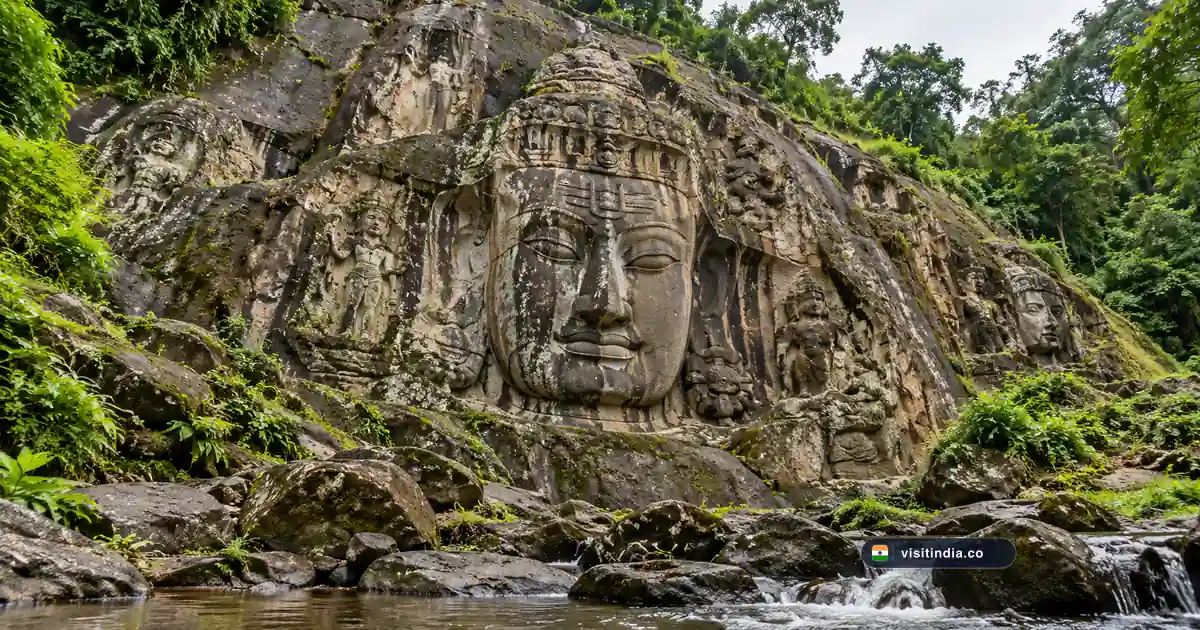
Unakoti preserves an ancient open-air pilgrimage sanctuary deep in North Tripura, where sculptors carved hundreds of colossal rock-cut bas-reliefs of Lord Shiva and Ganesha directly into vertical sandstone cliff faces along mountain streams.
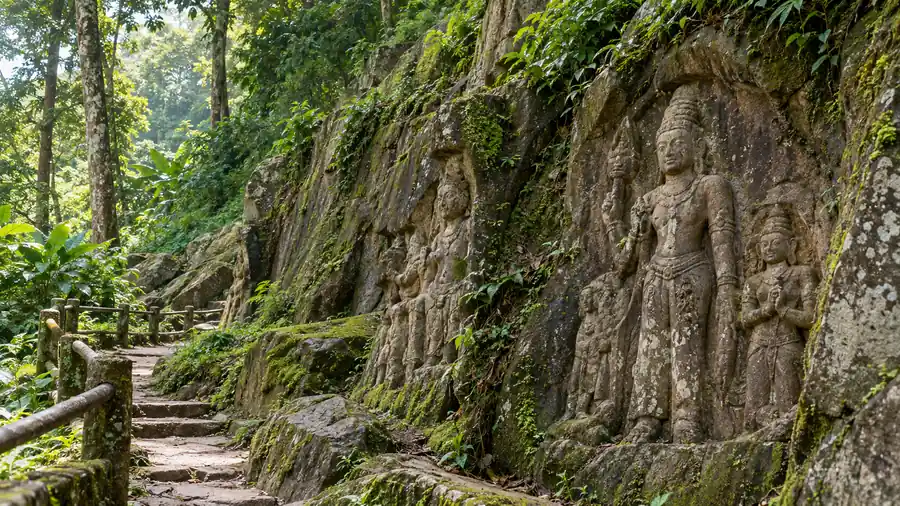
Located 178 kilometers northeast of Agartala in the Raghunandan hill range, Unakoti represents one of the most enigmatic archaeological treasures in eastern India. The name translates locally to “one less than a crore,” referring to ancient folklore stating that 99,99,999 deities paused here while traveling with Lord Shiva toward Kashi. Travelers can study complete transit schedules and preservation history in our dedicated Unakoti rock-cut sculptures guide.
The central masterpiece is the 30-foot-tall central carving of Unakotiswara Kal Bhairava, flanked by two female attendants and a three-eyed warrior form of Lord Shiva. Natural stream waters cascade down the rock face over carved stone steps, creating an atmospheric sanctum surrounded by towering wild bamboo groves. The site hosts the annual Ashokastami Mela every April, drawing thousands of pilgrims into the forested ravine.
Neermahal Water Palace: Floating Citadel on Rudrasagar Lake
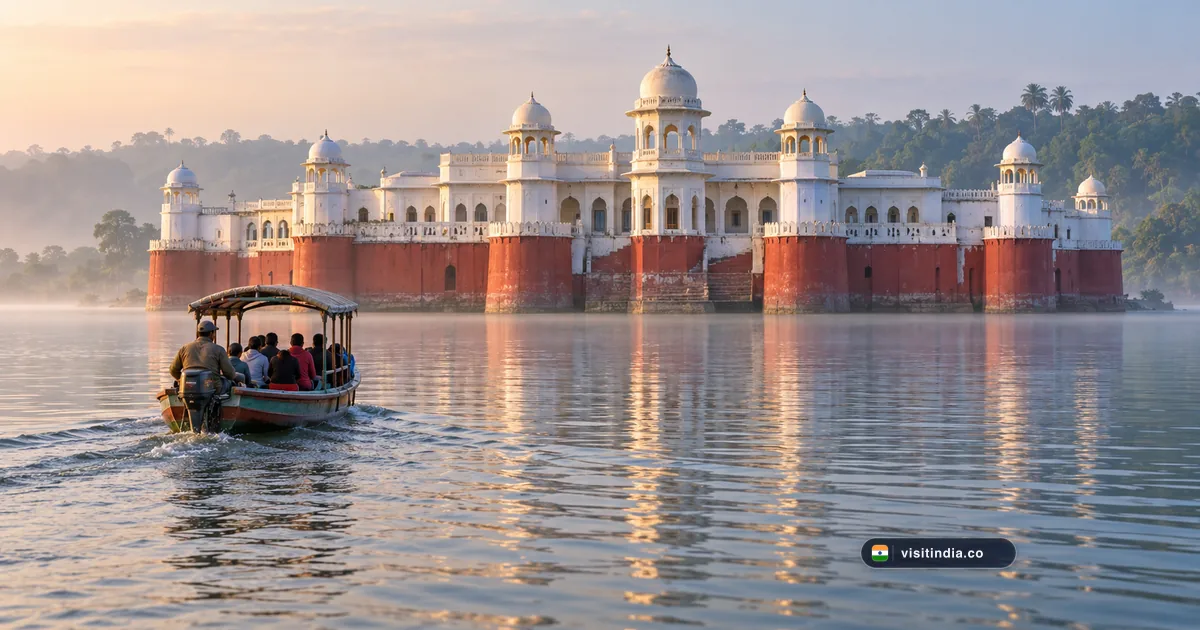
Neermahal stands as eastern India’s sole water palace, erected between 1930 and 1938 inside the expansive waters of Rudrasagar Lake, combining red-brick Hindu architectural terraces with ornate Mughal Islamic arched domes.
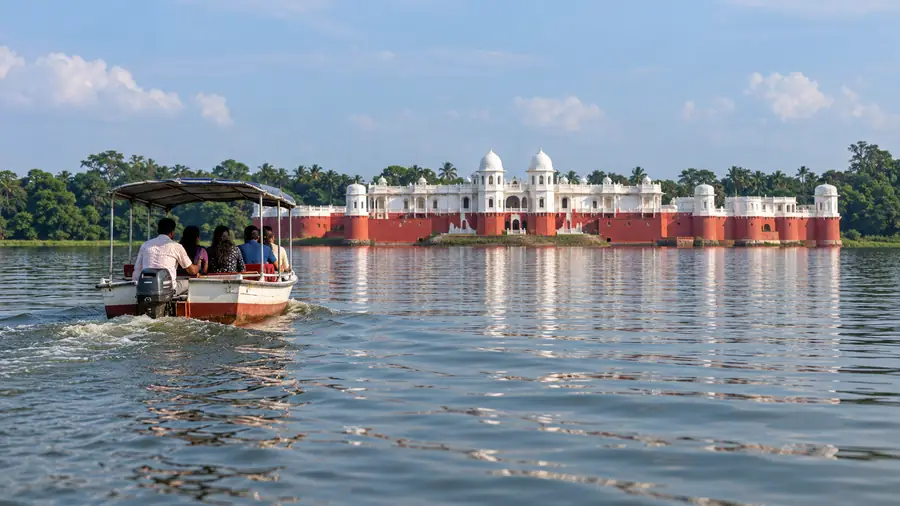
Built as a summer retreat for Maharaja Bir Bikram Kishore Manikya, Neermahal sits squarely in the center of the 5.3-square-kilometer Rudrasagar wetland. The palace complex measures over 400 meters in length, divided into an open-air western wing designed for musical performances and a private eastern residential fortress complete with fortified stone bastions and royal boat docking docks.
Travelers access the floating palace via country rowboats and motorized ferry crafts operated by local boatmen associations from Rajghat jetty. During the late afternoon, the setting sun casts amber reflections across the lake surface, illuminating the palace’s curved domes and terracotta terraces against the backdrop of flying migratory teals and herons.
Udaipur Temple Hub: Tripura Sundari and Sacred Kalyan Sagar
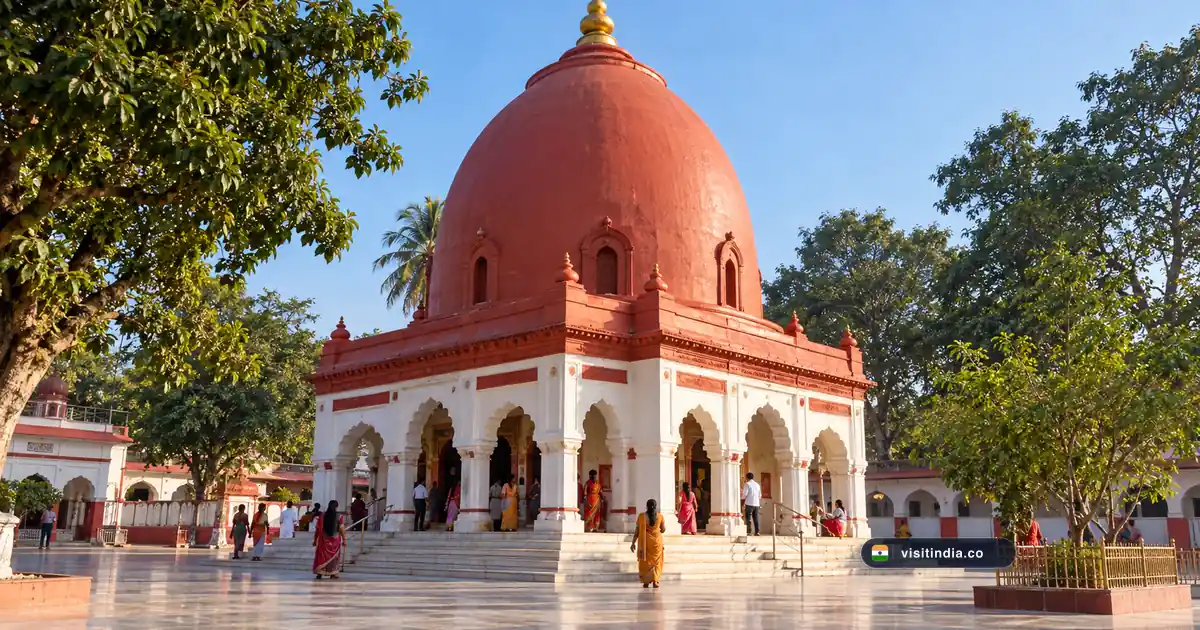
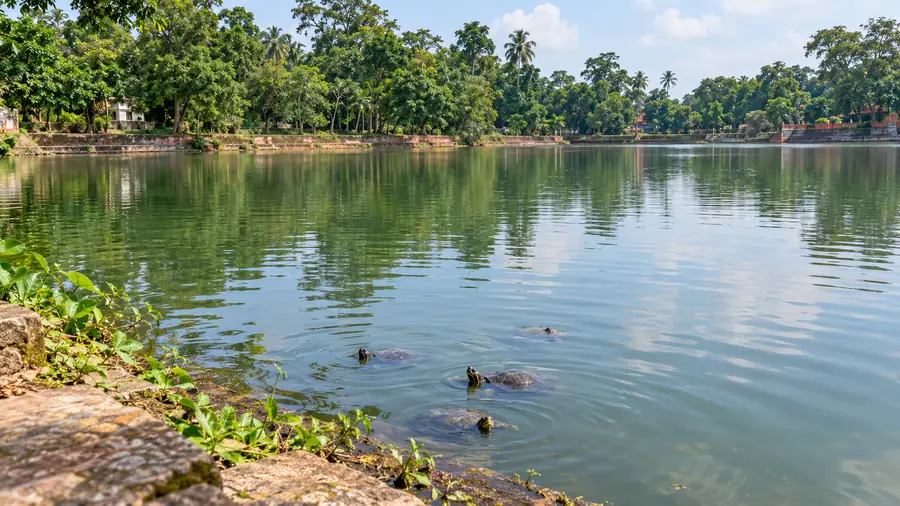
Udaipur operates as the historical temple town of Tripura, sheltering the 500-year-old terracotta Char-Chala style Tripura Sundari Temple, where pilgrims feed sacred black softshell turtles residing in the adjacent Kalyan Sagar tank.
Known historically as Rangamati when it served as the royal capital of the Manikya kings, Udaipur contains more than a dozen medieval brick shrines. The spiritual heart remains the Matabari temple, constructed by Maharaja Dhanya Manikya in 1501 CE. The sanctum features a distinctive tortoise-shaped earthen foundation, earning the shrine its classical Shakta title of Kurma Peetha.
Directly behind the temple, the three-acre Kalyan Sagar lake serves as a sacred aquatic sanctuary for endangered Bostami softshell turtles (Nilssonia nigricans). Local priests and visiting pilgrims stand on the masonry ghats to offer puffed rice and peda sweets to the large freshwater turtles, which swim up to the stone steps in total harmony with human visitors.
| Major Destination | Distance from Agartala | Primary Attraction | Recommended Time |
|---|---|---|---|
| Ujjayanta Palace | 0 km (City Center) | Neoclassical Royal Palace & State Museum | 2 to 3 Hours |
| Neermahal Palace | 53 km South | Floating Summer Palace on Rudrasagar Lake | Half Day |
| Tripura Sundari (Udaipur) | 55 km South | 51 Shaktipeeth Temple & Kalyan Sagar Lake | Half Day |
| Unakoti Heritage Site | 178 km Northeast | Colossal 8th-Century Rock-Cut Shaivite Bas-Reliefs | Full Day |
| Sepahijala Wildlife Sanctuary | 25 km South | Clouded Leopard Breeding Reserve & Sal Forest | Half Day |
| Jampui Hills | 220 km Northeast | Montane Ridge, Orange Orchards & Betlingchhip Peak | 1 to 2 Days |
| Chabimura Gorges | 82 km South | Riverboat Canyon & Sandstone Cliff Relics | Full Day |
Architectural Legacy of the Manikya Dynasty
The Manikya dynasty governed Tripura for over five centuries, leaving an architectural legacy exemplified by the neoclassical white Ujjayanta Palace, the floating pavilions of Neermahal, and ancient terracotta brick ruins at Boxanagar and Pilak.
The architectural identity of Tripura reflects an uncommon synthesis of regional eastern Indian traditions. Because the royal house maintained matrimonial and diplomatic ties with Bengal, Assam, and imperial Delhi, royal monuments incorporated European neoclassical colonnades, Islamic domes, and indigenous Bengali curved bamboo-roof profiles. Visitors can examine complete room galleries and ferry details in our comprehensive Neermahal and Ujjayanta Palace guide.
Ujjayanta Palace Architecture and State Museum Galleries
Constructed between 1899 and 1901 by Maharaja Radha Kishore Manikya, Ujjayanta Palace spans 800 acres of manicured Mughal-style gardens and fountains, with twenty distinct galleries preserving northeast India’s tribal crafts and royal artifacts.
Designed by Sir Alexander Martin of the British engineering firm Martin and Burn, the palace features a prominent central dome rising 86 feet above ground level, flanked by tiled floors, carved wooden ceilings, and grand imperial staircases. Rabindranath Tagore, a frequent royal guest and close personal friend of the Manikya monarchs, gave the palace its name during one of his lengthy creative residencies in Agartala.
The palace grounds incorporate two large ornamental water tanks situated on either side of the central paved approach avenue. Since its transition into the Tripura State Museum in 2013, the interior halls display thousands of historic artifacts, including 9th-century Buddhist sculptures from Pilak, royal copper plate charters inscribed in ancient Sanskrit, and ceremonial coronation robes. Regional museum exhibits are documented by the West Tripura District Administration.
Neermahal Summer Citadel and Melaghar Motorboat Crossings
Maharaja Bir Bikram Kishore Manikya commissioned British engineering firm Martin and Burn to build Neermahal as a lakeside summer retreat, accessible today via scenic motorized ferry boats departing Rajghat jetty across Rudrasagar Lake.
The construction of Neermahal spanned nearly nine years, concluding in 1938. The palace is divided into two distinct functional wings: the Andar Mahal on the east, which provided private quarters for the royal family, and an open theater court on the west used for seasonal musical performances, recitals, and dances.
The floating palace was designed to naturally cool the interior rooms using circulating lake breezes during humid summer months. The boat crossing from Rajghat jetty takes approximately fifteen minutes across calm freshwater channels. In winter, Rudrasagar Lake attracts large flocks of migratory waterfowl, including ferruginous pochards and spot-billed ducks, recorded on the official Sepahijala District Neermahal Portal.
Archaeological Treasures of Pilak and Boxanagar Buddhist Stupa
Pilak in South Tripura and Boxanagar in Sepahijala unearth ancient brick stupas, terracotta sealings, and bronze Mahayana Buddhist statues that demonstrate centuries of peaceful coexistence between Hindu and Buddhist monastic traditions.
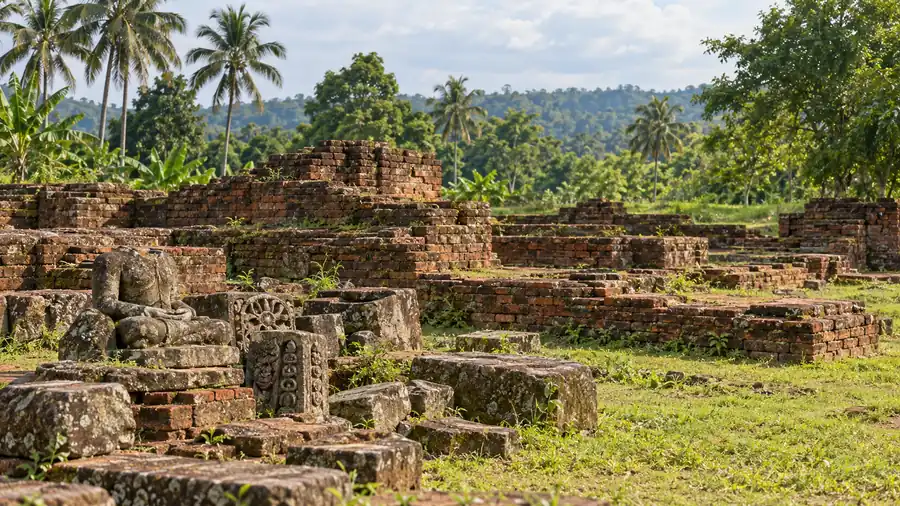
Excavated by the Archaeological Survey of India, Pilak covers an expansive archaeological zone near Belonia dating from the 8th to 12th centuries CE. Terracotta plaques embedded in the brick plinths depict Buddhist deities like Avalokiteshvara alongside Hindu figures including Surya, Ganesha, and Mahishasuramardini. The stone sculptures demonstrate stylistic links to the contemporary Pala-Sena art of ancient Bengal.
At Boxanagar, positioned near the international border 40 kilometers from Agartala, excavations revealed an extensive burnt-brick monastic complex centered on an ancient Buddhist stupa and chaitya hall. The exposed fired-brick walls, drainage conduits, and decorative terracotta lotus carvings indicate a flourishing monastic community that served trade caravans traveling along ancient river routes between the Bay of Bengal and mainland Southeast Asia.
Spiritual Shrines and Sacred Pilgrimage Circuits
Tripura’s spiritual circuit is anchored by the 51 Shaktipeeth shrine of Maa Tripura Sundari at Udaipur, the fourteen-deity sanctum of Chaturdasha Devata near Old Agartala, and the hilltop border shrine of Kasba Kalibari overlooking Kamalasagar lake.
Spiritual life in Tripura displays a rare synthesis of Vedic Brahmanical rites, Shakta devotion, and indigenous tribal animist worship. While Hindu pilgrims travel from across India to seek blessings at the sacred Shaktipeeth, local royal ceremonies continue to engage traditional tribal priests known as Chantais, who conduct rites alongside Bengali priests in ancestral sanctums.
Maa Tripura Sundari Temple and Peda Prasad Offerings
Founded in 1501 CE on a tortoise-shaped knoll in Udaipur, the Matabari temple represents Sati’s right foot, drawing millions of Shakta pilgrims annually who seek darshan of the black stone goddess and receive signature milk peda prasad.
The temple sanctum enshrines two sacred stone murtis: a five-foot idol of Maa Tripura Sundari (also worshipped as Soroshi) and a smaller two-foot murti known affectionately as Chhoti Maa, which accompanied the Manikya kings into battle. Pilgrims can study historical rituals and morning aarti schedules in our comprehensive visiting Tripura Sundari Temple Udaipur.
Devotees purchase sweet offerings from the long row of confectionery stalls lining the temple approach road. Udaipur’s signature temple peda is prepared from concentrated cow milk and sugar, boiled down for hours over wood fires to achieve a distinct caramel hue and dense fudge texture that remains fresh for weeks without refrigeration, with temple traditions recorded by the Gomati District Administration.
Chaturdasha Devata Temple and the Living Kharchi Festival
Located at Puran Agartala, the Chaturdasha Devata Temple enshrines the fourteen ancestral royal deities, worshipped jointly by royal Meitei, Bengali, and tribal priests during the landmark seven-day Kharchi Puja in July.
Constructed by Maharaja Krishna Manikya after relocating the royal capital from Udaipur to Old Agartala in 1760, the temple preserves the fourteen metallic head sculptures representing Shiva, Durga, Vishnu, Lakshmi, Saraswati, Kartikeya, Ganesha, Brahma, Prithvi, Samudra, Ganga, Agni, Kama, and Himadri. The architecture exhibits typical Bengali do-chala and char-chala curved eave design rendered in lime plaster.
During the annual Kharchi festival, the fourteen deities are ceremonially carried to the sacred Saidra River for a holy cleansing ritual. The festival draws tens of thousands of tribal and non-tribal devotees who gather across the temple grounds to offer animal sacrifices, feast together, and witness ritual tribal dances that symbolize the spiritual purification of the earth.
Kasba Kalibari Overlooking the Bangladesh Frontier
Kasba Kalibari sits atop a defensive hillock in Kamalasagar, housing a 15th-century Mahishasuramardini Kali idol with the broad waters of Kamalasagar lake extending directly to the international border of Bangladesh.
Situated 27 kilometers from Agartala in Sepahijala district, the temple was founded by Maharaja Dhanya Manikya in the late 15th century. The presiding deity is a carved sandstone image of the ten-armed goddess slaying the buffalo demon Mahishasura, originally salvaged from historical ruins in Comilla. A small Shiva lingam sanctum rests at the base of the image.
The temple hillock overlooks Kamalasagar lake, an artificial reservoir excavated by the Manikya monarchs to supply water to military outposts along the frontier. Today, the peaceful lakeside path borders the international fencing with Bangladesh. On designated market days, the nearby border haat allows authorized traders from both nations to exchange local agricultural goods, handloom textiles, and fresh river fish under joint security supervision.
Eco-Tourism, Wildlife Sanctuaries, and Hill Ranges
Tripura’s natural reserves span the Clouded Leopard National Park at Sepahijala, the high-altitude orange valleys of Jampui Hills, and the dramatic river canyon of Chabimura where massive rock reliefs rise above the Gomati River.
Over seventy percent of Tripura remains under forest cover, encompassing tropical evergreen tracts, sal forests, and extensive bamboo groves. These varied landscapes harbor rare wildlife species, including the endangered Hoolock gibbon, capped langur, and slow loris, while offering travelers quiet river canyons and misty hill station retreats. Pilgrims tracing holy mother goddess shrines across the country can study related sanctuaries in our 51 Shakti Peethas in India directory.
Sepahijala Sanctuary and Clouded Leopard Breeding Reserve
Sepahijala Wildlife Sanctuary covers over 18 square kilometers of moist deciduous sal forests 25 kilometers from Agartala, famous for housing India’s foremost captive breeding center for the clouded leopard and rare Phayre’s leaf monkey.
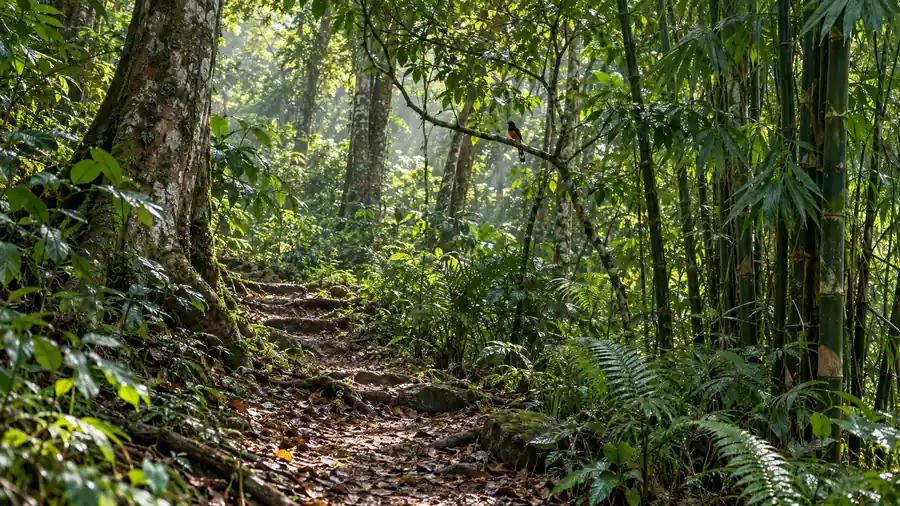
The sanctuary features an extensive zoological park, botanical gardens, and two natural lakes known as Abasarika and Amrit Sagar. The Clouded Leopard National Park, situated inside the sanctuary core, has achieved notable international acclaim for successfully breeding the elusive spotted feline in natural enclosure habitats.
Visitors can walk along shaded forest trails to observe troops of Phayre’s langur (Trachypithecus phayrei), notable for their striking white eye-rings and long silver-grey tails. The sanctuary also operates paddleboat rentals on Abasarika Lake, where travelers drift quietly past floating lotus pads and forested shores frequented by kingfishers, openbill storks, and emerald doves.
Jampui Hills: Orange Orchards, Betlingchhip Peak, and Mizo Culture
Bordering Mizoram at an altitude of 930 meters, Jampui Hills features refreshing montane breezes, orchid valleys, lush orange plantations, and the highest point in Tripura at Betlingchhip peak.
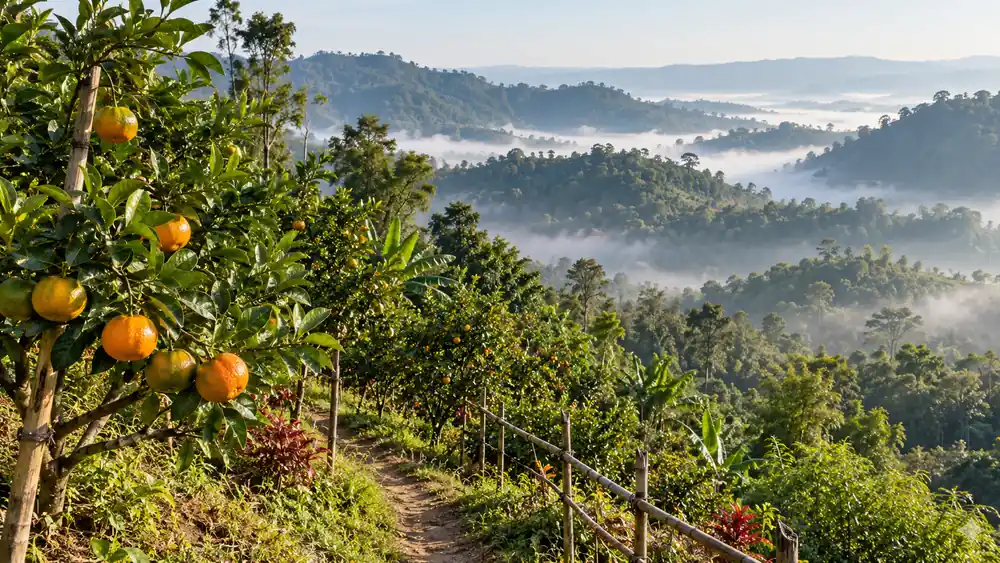
Known as the “Seat of Permanent Spring,” the Jampui range stretches along the eastern rim of Tripura, roughly 220 kilometers from Agartala. Inhabited primarily by indigenous Mizo communities, the ridge villages like Vanghmun, Kanchanpur, and Phuldungsei feature neat wooden stilt cottages surrounded by flowering bougainvillea and orange orchards.
Betlingchhip peak offers panoramic 360-degree vistas stretching across the Chittagong Hill Tracts of Bangladesh on the west and the blue ridges of Mizoram on the east. The best season to visit is November during the Orange Festival, when orchards are heavy with ripe citrus fruit and community dance troupes perform the Cheraw bamboo dance in village clearings.
Chabimura Riverboat Safaris: Cliff Carvings of the Gomati Gorge
Chabimura reveals vertical sandstone cliffs draped in tropical rainforest along the Gomati River, where medieval stone carvers carved giant panels of Goddess Durga, Shiva, and Kartikeya reachable only by country motorboats.
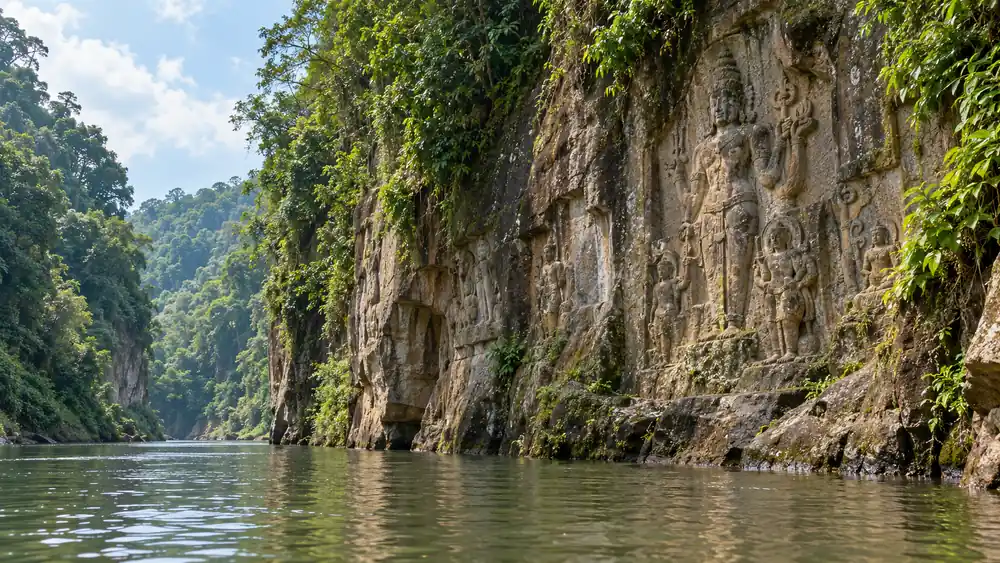
Located in Amarpur subdivision approximately 82 kilometers south of Agartala, Chabimura (also called Debtamura) consists of vertical rock faces rising over 100 feet straight out of the Gomati River. Between the 15th and 16th centuries, indigenous artisans scaled these river cliffs to carve colossal relief panels directly into the rock face.
The most famous carving depicts Mahishasuramardini, known locally as “Chakrak-ma,” showing the goddess slaying the buffalo demon with ten outstretched arms carved in relief. Visitors board motorized wooden longboats at the forest department jetty to cruise through the river gorge, passing hidden caves and natural waterfalls pouring from the jungle canopy directly into the jade-green river waters.
Pro Tip
Chabimura Boat Safari Recommendation Hire a local motorboat early in the morning between 7:30 AM and 9:00 AM at the Amarpur forest jetty. Early departures guarantee calm river conditions, optimal natural lighting on the east-facing cliff carvings, and the best opportunities to spot river kingfishers and wild jungle fowl along the shorelines.
Ideal 5-Day Tripura Travel Itinerary
An optimal 5-day Tripura itinerary allocates two days in Agartala and Melaghar for royal palaces, one day in Udaipur and Chabimura for temples and boat canyons, and two days exploring Unakoti and the scenic Jampui Hills.
Travelers coordinating multi-state journeys across the India’s top regional travel stops will find that Tripura provides a smooth, uncrowded circuit. This structured route balances travel times along National Highway 8 while allowing deep immersion in each region.
Day 1: Agartala Royal Heritage and Indo-Bangla Border Ceremony
Arrive at Maharaja Bir Bikram Airport and check into your hotel in central Agartala. Spend the morning touring the grand exhibition galleries and manicured gardens of Ujjayanta Palace, taking time to study the tribal textile collections and Pala-era stone sculptures.
In the afternoon, visit Heritage Park to examine miniature replicas of Tripura’s historical monuments, followed by an evening trip to the Akhaura Integrated Check Post (4 km from the city) to witness the coordinated retreat ceremony between India’s Border Security Force and the Border Guards Bangladesh. Conclude the day dining on traditional Mui Borok tribal dishes at local restaurants.
Day 2: Sepahijala Wildlife and Sunset at Neermahal Lake
Depart Agartala at 8:00 AM driving south along NH8 to Sepahijala Wildlife Sanctuary (25 km, 45 minutes). Spend three hours observing the clouded leopard breeding enclosures, visiting the botanical garden, and spotting Phayre’s leaf monkeys along shaded forest paths.
Continue 30 kilometers south to Melaghar and arrive at Rajghat jetty by 2:30 PM. Board a motorboat across Rudrasagar Lake to explore the royal halls, open theater court, and fortified bastions of Neermahal. Watch the sunset illuminate the palace domes from the eastern terrace before returning to Agartala or staying overnight at the lakeside tourist lodge.
Day 3: Udaipur Temple Darshan and Chabimura Canyon Cruise
Drive 55 kilometers south from Agartala to the historical temple town of Udaipur. Arrive at Maa Tripura Sundari Temple by 7:30 AM to witness morning aarti ceremonies and feed the sacred Bostami softshell turtles in Kalyan Sagar lake. Visit the nearby ruins of Bhubaneshwari Temple on the Gomati riverbank, immortalized in Tagore’s plays Rajarshi and Visarjan.
By midday, proceed 30 kilometers eastward to Amarpur and set out on a thrilling two-hour motorboat safari through the forested sandstone canyon of Chabimura to photograph the monumental cliffside carvings of Goddess Durga. Return to Udaipur or Agartala for an overnight rest.
Day 4: Overland Expedition to Unakoti Shaivite Sculptures
Begin an early morning drive northeast along NH8 toward Kailashahar in North Tripura (178 km, approximately 4.5 to 5 hours). Alternatively, board the morning Jan Shatabdi express train from Agartala to Kumarghat railway station and hire a local taxi for the remaining 25-kilometer drive to Unakoti.
Spend the afternoon hiking through the forested valley of Unakoti. Descend the stone pathways to stand before the 30-foot head of Unakotiswara Kal Bhairava, photograph the elephant carvings of Ganesha, and walk along the natural spring stream that winds between the carved rock faces. Detailed rock-relief history is cataloged on the official Unakoti District Heritage Portal.
Day 5: Jampui Hills Montane Views and Return Transit
Drive up the winding mountain roads into Jampui Hills, ascending to the village of Vanghmun at 800 meters elevation. Walk through local orange orchards and orchid gardens, taking in panoramic views of the distant Chittagong hill ranges across the international border.
Hike up to Betlingchhip peak to stand at Tripura’s highest point before beginning the return drive along NH8 toward Agartala. Arrive in the capital by evening for last-minute purchases of cane handicrafts and bamboo furniture at Purbasha state emporium before your departure flight.
Practical Travel Logistics: Transit, Weather, and Local Guidelines
Tripura is accessed via regular flights into Maharaja Bir Bikram Airport (IXA) in Agartala and broad-gauge express trains connecting Agartala Railway Station (AGTL) directly to Guwahati, Kolkata, and New Delhi without requiring an Inner Line Permit.
The state’s transport infrastructure has advanced dramatically in recent years. High-speed broad-gauge railway lines, modern four-lane highway bypasses, and an international-standard airport terminal ensure that transit between prime tourist centers is straightforward, comfortable, and reliable.
Flight, Rail, and Highway Connectivity Across Tripura
Maharaja Bir Bikram Airport (IXA), situated 12 kilometers northwest of central Agartala, is the second busiest airport in Northeast India. Modern terminal facilities handle daily nonstop connections to Kolkata, Guwahati, Delhi, and Bangalore operated by major domestic carriers.
The broad-gauge railway network connects Agartala Railway Station (AGTL) directly to the rest of India via the Lumding-Badarpur hill section. Daily express trains, including the Agartala-Anand Vihar Tejas Rajdhani Express and the Agartala-Kolkata Express, make rail travel practical and scenic. Travelers exploring broader regional circuits can link rail transit with destinations covered in our Assam highlights and timings.
On the road network, National Highway 8 (NH8) forms the vital transportation spine of Tripura, connecting Agartala southward to Udaipur, Melaghar, and Sabroom, and northward through Teliamura, Ambassa, and Dharmanagar into Assam. State transport buses and private shared jeeps operate frequent daily services along all major highway corridors.
Best Weather Windows and Seasonal Packing Recommendations
The optimal window to explore Tripura is from October to March during the mild winter season. Daytime temperatures hover comfortably between 18°C and 28°C, while night temperatures in the hills drop to a crisp 12°C to 15°C.
Monsoon rains arrive early in Tripura, with heavy downpours extending from late May through September. While the lush forests and swollen rivers create striking green landscapes, heavy rain can occasionally disrupt boat crossings at Neermahal and make stone hiking trails at Unakoti slippery.
For winter travel, pack light cotton clothing for daytime sightseeing alongside a light fleece or wool sweater for chilly evenings in Jampui Hills or morning boat rides on Rudrasagar Lake. Sturdy walking shoes with reliable rubber tread are essential for exploring the uneven stone steps at Unakoti and Chabimura.
Visitor Regulations, Permits, and Cultural Etiquette
Neither Indian citizens nor foreign tourists require an Inner Line Permit (ILP) or Protected Area Permit (PAP) to enter and travel within Tripura. Foreign nationals need only a valid Indian visa and passport.
When visiting border outposts such as Kamalasagar or the Akhaura checkpoint, carry a government-issued photo identity card (Aadhaar, Passport, or Voter ID) for standard security verifications. At religious shrines like Tripura Sundari Temple, visitors must remove footwear at the entrance courtyard and dress modestly in attire covering knees and shoulders. Leather accessories like belts and wallets must be deposited at cloakrooms before entering the inner sanctum.
Frequently Asked Questions About Tripura Travel
What are the top tourist places to visit in Tripura?
Tripura’s top tourist attractions include Ujjayanta Palace in Agartala, the floating Neermahal water palace on Rudrasagar Lake, the 500-year-old Tripura Sundari Temple in Udaipur, and the ancient rock-cut Shaivite carvings of Unakoti. Visitors also enjoy wildlife viewing at Sepahijala Sanctuary and montane hill vistas across Jampui Hills.
Do Indian or foreign tourists need an Inner Line Permit to visit Tripura?
No Inner Line Permit is required for Indian citizens or foreign nationals traveling within Tripura. Foreign tourists only need a valid Indian visa and passport, though visiting border areas near Bangladesh requires carrying standard government-issued photo identification.
How many days are recommended for a complete Tripura tour?
A duration of 4 to 5 days is recommended to comfortably cover Agartala palaces, Neermahal lake, Udaipur temples, and the ancient northern rock sculptures of Unakoti. Travelers wishing to include the scenic ridges of Jampui Hills should plan an itinerary of 6 to 7 days.
What is the best time of year to visit Tripura?
The best season to explore Tripura is between October and March during the mild winter months. Temperatures hover pleasantly between 15°C and 28°C with minimal rainfall, ideal for sightseeing, outdoor temple visits, and river boat safaris.
How do you reach Unakoti from Agartala?
Unakoti is situated approximately 178 kilometers northeast of Agartala near Kailashahar. Travelers can take an express train from Agartala to Kumarghat or Dharmanagar railway station and hire a local taxi for the remaining 20-kilometer drive to the site.
Why is Neermahal Water Palace architecturally unique?
Neermahal is the only water palace in eastern India and one of just two in the entire country alongside Jal Mahal in Jaipur. Built entirely inside Rudrasagar Lake, it harmonizes Hindu terracotta pavilions and Mughal arched domes across its 400-meter island complex.
What signature sweets or cuisine should travelers try in Tripura?
Visitors to Tripura should savor the famous condensed milk peda prasad from Udaipur’s Matabari temple alongside traditional tribal dishes such as Mui Borok made with fermented fish, bamboo shoots, and fragrant local rice. Fresh seasonal pineapples and sweet oranges from Jampui Hills are also widely celebrated.