Hemis Festival Ladakh Cham Masked Dance: Dates, Tickets & Guide
Plan your Hemis Festival Ladakh Cham Masked Dance trip with Tibetan calendar dates, cham dance schedules, courtyard tickets, and Leh transport.
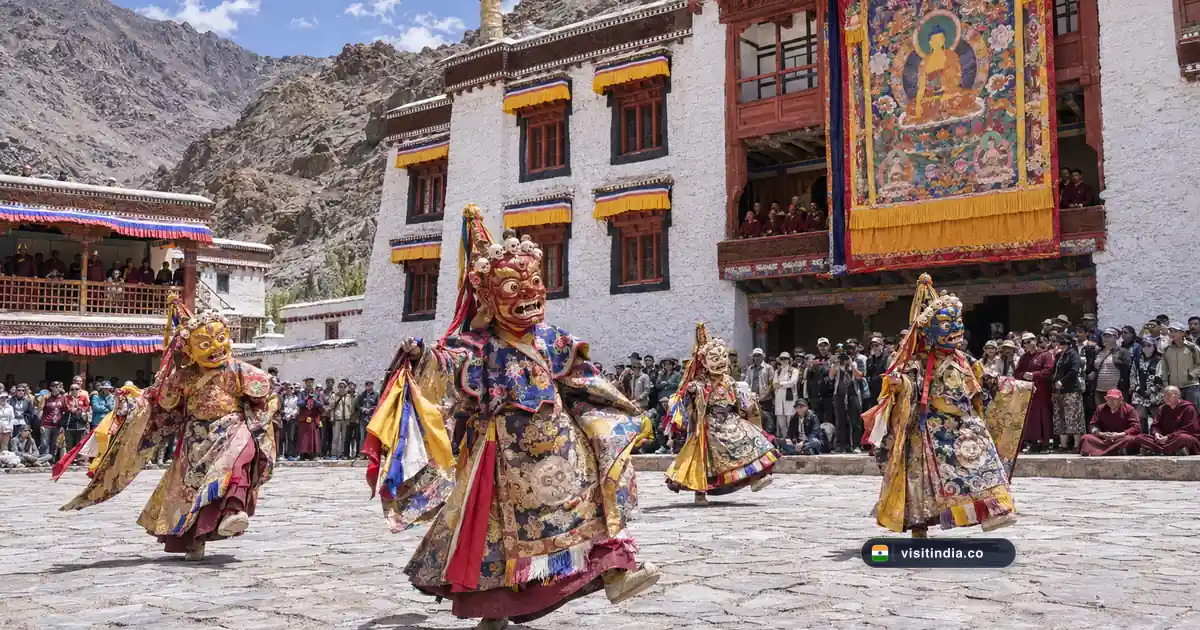
Hemis Gompa rises dramatically within a rocky gorge 45 kilometers southeast of Leh, sheltering Ladakh’s wealthiest Drukpa Kagyu monastery. Every summer, thousands of pilgrims, mountain residents, and international travelers gather inside its high-walled courtyard for the Hemis Festival Ladakh Cham Masked Dance, celebrating the birth anniversary of Guru Padmasambhava.
Understanding the complex monastic schedule, road transport from Leh, and seating rules is essential for every visitor. With altitude reaching 3,500 meters and daytime sun reflecting off white stone facades, advance preparation guarantees a comfortable cultural journey.
Key Festival Highlights at a Glance
- Monastic Venue: Hemis Gompa, situated at an altitude of 3,500 meters in Leh District, Ladakh.
- Festival Timings: Courtyard gates open at 7:00 AM; Cham dances begin at 9:00 AM and end by 4:00 PM.
- Entry Fees: General monastery admission costs ₹100, while tiered courtyard gallery passes range from ₹500 to ₹1,200.
- Sacred Spectacle: Two full days of ritual masked dances commemorating Guru Padmasambhava (Guru Rinpoche).
- Transit Hub: Leh town taxi stand (45 km return route) and JKSRTC festival bus shuttles.
What to Expect at the Hemis Festival Ladakh Cham Masked Dance
The Hemis Festival Ladakh Cham Masked Dance is Ladakh’s largest Buddhist Tsechu, celebrated at Hemis Gompa to honor Guru Padmasambhava. Monks perform sacred Cham masked dances in the central courtyard, reenacting the triumph of Buddhist dharma over negative demonic forces before thousands of gathered pilgrims.
The festival converts the peaceful mountain monastery into a spiritual gathering place. The central stone courtyard fills with local Ladakhi families wearing traditional wool gonchas alongside Buddhist monks dressed in radiant Chinese silk brocades. Long brass horns echo against the barren granite mountains, announcing each monastic sequence.
Visitors witness intricate choreography that has been preserved unchanged since the seventeenth century. Rather than simple entertainment, every movement represents an authentic tantric ritual designed to bestow spiritual blessings upon all spectators.
Historical Origins and Guru Padmasambhava Tsechu Heritage
Dating to the 17th century under King Sengge Namgyal and Stagsang Raspa, the festival marks the tenth day (Tsechu) of the fifth Tibetan lunar month, commemorating Guru Rinpoche’s miraculous birth and spiritual conquest across the Himalayas.
Guru Padmasambhava, reverently called Guru Rinpoche, introduced tantric Buddhism to Tibet and Ladakh during the eighth century. He subdued hostile indigenous mountain spirits and converted them into spiritual guardians of the dharma.
The annual celebration functions as an outward renewal of this ancient spiritual covenant. Each monastic year, the lamas re-establish balance across the high Himalayan plateaus through ritual dance and prayers. For comprehensive historical context on neighboring mountain gompas, consult our Ladakh high-altitude desert travel overview.
Architectural Layout of Hemis Gompa Courtyard
Hemis Gompa features a wide rectangular stone courtyard enclosed by two-tiered timber viewing galleries, a central raised flagpole (Dharchen), and direct access to the main assembly hall (Dukhang) and museum galleries.
The courtyard measures roughly fifty meters in length and thirty meters in width. A tall wooden flagpole draped with sacred prayer flags stands firmly in the center, acting as the axis around which the masked lamas revolve during dances.
The northern wing holds the main assembly temple (Dukhang Chenmo) and the temple of Guru Padmasambhava. Stone staircases lead to elevated timber verandahs where monastery elders and visiting dignitaries observe the rites.
Hemis Festival Dates, Daily Schedule, and Cham Dance Rituals
Hemis Festival spans two consecutive days in June or July, corresponding to the 9th and 10th lunar days of the Tibetan fifth month. Courtyard festivities begin at 9:00 AM with monastic horn blasts and conclude by 4:00 PM following afternoon mask sequences.
Because the celebration follows the Tibetan lunar calendar, the solar dates change annually. The festival generally falls between late June and mid-July, coinciding with warm summer weather and open mountain passes across Ladakh.
Planning around exact monastic session times helps travelers avoid long standing waits under the intense alpine sun. Both mornings feature dense liturgical rituals, while afternoons present dramatic narrative dances.
| Monastic Session | Hours | Primary Ritual or Performance | Viewing Recommendation |
|---|---|---|---|
| Morning Dawn Call | 6:30 AM – 7:30 AM | Monastic roof horns (Dungchen) & courtyard incense lighting | Quietest atmosphere for courtyard photography |
| Monastery Procession | 9:00 AM – 9:45 AM | Head Lama arrival & portrait installation of Guru Rinpoche | Stand near central flagpole for procession view |
| Day 1 Cham Dances | 10:00 AM – 1:00 PM | Thirteen Black Hat Dancers (Shanak) & Eight Manifestations | Front-row floor seating or lower balcony |
| Lunch Recess | 1:00 PM – 2:00 PM | Monastic pause & butter tea distribution | Visit subterranean monastery museum collection |
| Afternoon Cham Dances | 2:00 PM – 4:00 PM | Wrathful Protector Deities (Dharmapalas) & Skeleton Dancers | Upper wooden verandah for wide panoramic views |
| Day 2 Grand Finale | 10:00 AM – 3:30 PM | Clown interludes (Hashang & Aryalo) and Torma dough sacrifice | Arrive early to secure shaded eastern terrace |
Day 1 Morning Rituals and Cham Dance Sequences
Day one opens at 9:00 AM with portrait offerings to Guru Padmasambhava, followed by the Thirteen Black Hat dancers (Shanak) purifying the ground and the appearance of fierce protector deities accompanied by cymbals.
The ceremony begins when senior monks ascend the monastery roof to blow six-foot-long brass horns called dungchen. Their deep resonant notes reverberate across the mountain gorge, signaling the formal start of the sacred rites.
Soon after, the Black Hat dancers step slowly into the arena. Wearing broad black hats topped with peacock feathers and skulls, they trace geometric sacred circles across the cobblestones. Their measured movements pacify negative ground spirits and consecrate the courtyard.
Day 2 Masked Performances and Padmasambhava Blessings
Day two features humorous yet didactic interludes by monastic jesters (Aryalo and Hashang), culminating in the dramatic ritual destruction of dough effigies (torma) symbolizing the eradication of ignorance and personal ego.
The second morning welcomes the eight manifestations of Guru Padmasambhava, each displaying distinctive masks and symbolic accoutrements. The performance illustrates how the master assumed diverse forms to teach sentient beings.
In the afternoon, monastic jesters dressed in comic masks interact playfully with the audience. Behind their humor lies deep philosophical instruction regarding impermanence and worldly illusion. The day ends with the ritual cutting of the sculpted barley dough demon, freeing positive spiritual energy.
To ensure your dates align with regional monastic celebrations, review verified festival dates on the Leh District Administration Tourism Directory before booking flights.
The Sacred Cham Mask Dances: Ritual Symbolism and Costumes
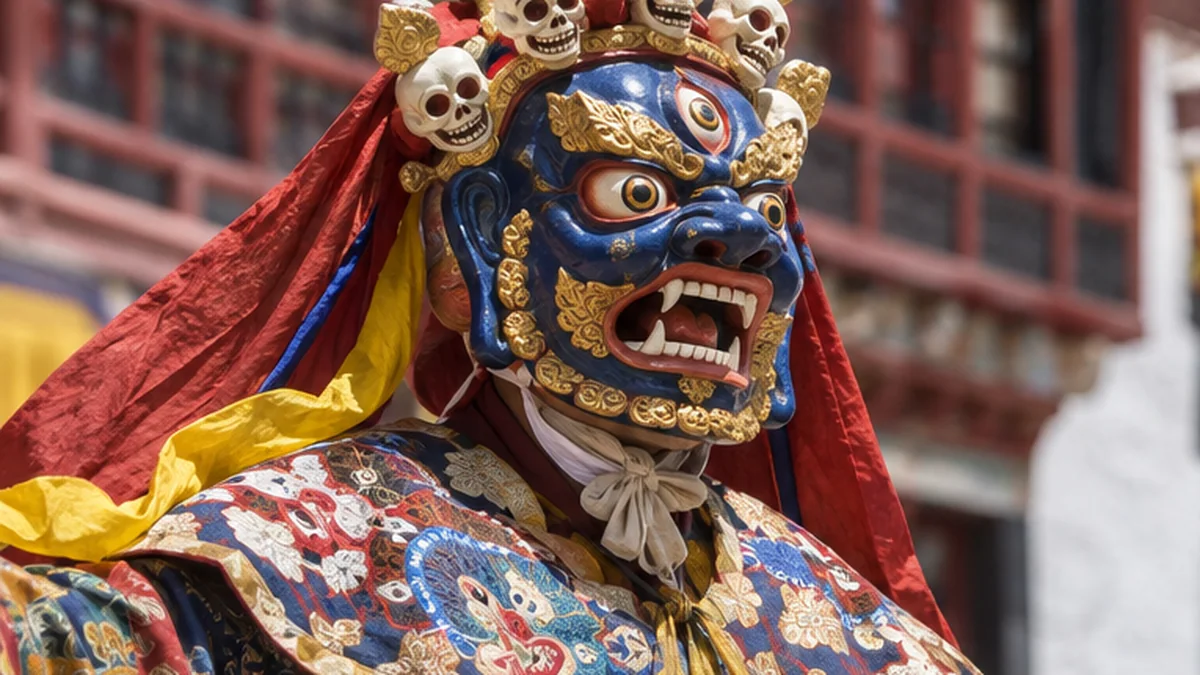
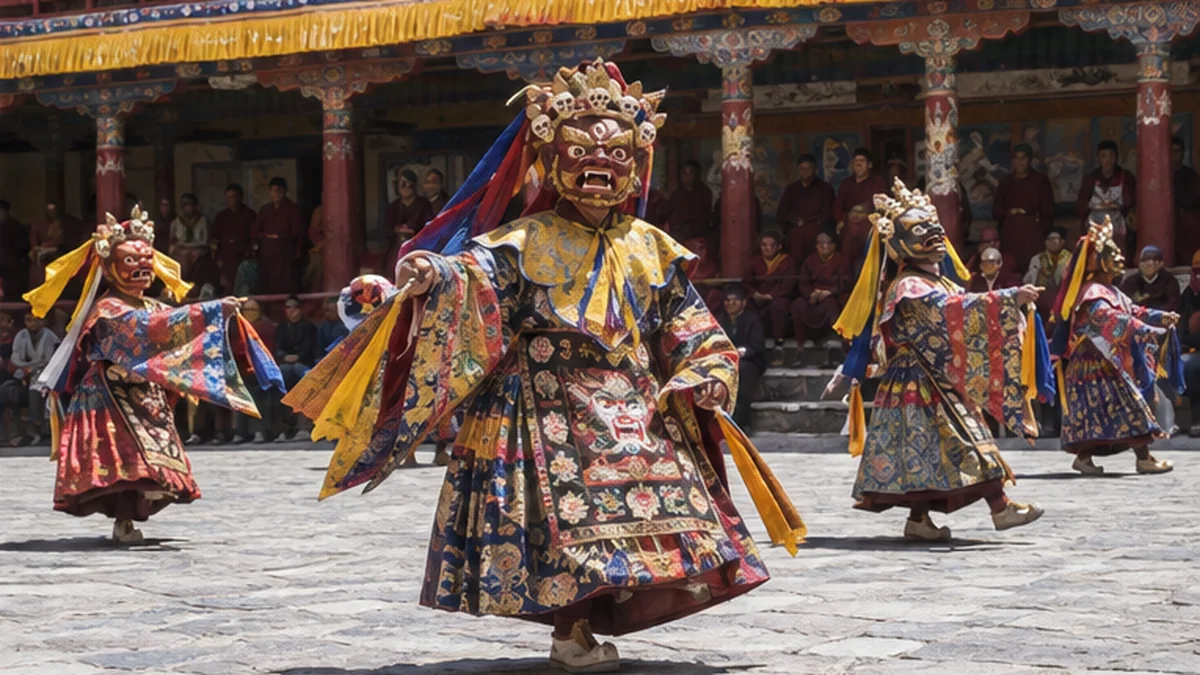
Cham dances are active meditative yogas rather than theatrical folk performances. Monks wear painted papier-mache and wood masks portraying fierce wrathful deities (Dharmapalas) and peaceful enlightened masters, channeling deity presence through formal ritual mudras to purify onlookers.
Monks spend months meditating in mountain retreat cells before putting on the ceremonial dance masks. Through intensive mental visualization, the dancer surrenders individual personal identity, serving as a clean earthly vessel for the divine archetype.
The deliberate, rhythmic movements establish a sacred mandala in physical space. Every hand gesture (mudra) and foot placement channels compassionate energy designed to dispel physical obstacles and mental suffering.
Note
Monks view the cham masked dance ladakh as high tantric meditation. Spectators should watch the proceedings with quiet decorum and avoid loud chatter or crossing into marked monastic dance boundaries.
Sacred Masks, Silk Brocades, and Musical Instruments
Monks wear hand-carved wood or molded cloth masks weighing up to four kilograms alongside layered Chinese silk brocade robes. Music is driven by long brass horns (dungchen), double-sided drums (nga), and copper cymbals (rolmo).
The heavy masks require tremendous physical strength and mental endurance to wear. Made from layered cloth, clay, and wood, they are finished with mineral pigments and lacquered to withstand bright outdoor sunlight.
The accompanying monastic orchestra sits in a shaded gallery along the northern wall. The chant master leads the percussion using flat bronze cymbals, establishing complex rhythmic cycles that dictate every change in dance tempo. For more details on monastery architecture across the region, explore our Ladakh monasteries circuit guide.
Spiritual Meaning of Subduing Evil Forces
The choreography depicts the historical pacification of hostile demonic spirits in 8th-century Tibet. Each foot stomp, spinning turn, and sword slash symbolically binds inner poisons of greed, anger, and delusion into spiritual liberation.
A central highlight is the appearance of the Dharmapala Mahakala, the fierce protector of the Drukpa Kagyu lineage. His terrifying countenance, crowned with five human skulls representing transformed mental poisons, commands immediate awe.
The final cutting of the torma effigy demonstrates that Buddhist compassion requires fierce energy to dismantle deep-seated ignorance. When the dough figure is severed, pieces are scattered to the four directions, signifying that harmful thoughts have been neutralized.
The 12-Year Giant Guru Rinpoche Thangka Unfurling
The four-storey embroidered silk thangka of Guru Padmasambhava is unfurled publicly only once every 12 years during the Tibetan Year of the Monkey. The colossal masterpiece covers the monastery facade, granting immense spiritual merit to pilgrims viewing its silk embroidery.
This extraordinary thangka measures over two storeys in height and spans the entire front wall of the monastery courtyard. Embellished with pearls, semi-precious gems, and gold thread, it ranks among the most valuable religious treasures in Central Asia.
Pilgrims from remote valleys across Ladakh, Zanskar, and Spiti travel for days to behold the sacred textile. According to local belief, merely seeing the giant image cleanses lifetimes of negative karma.
The Next Monkey Year Display Schedule
Having been displayed in 2004 and 2016, the next unfurling of the giant Padmasambhava thangka is scheduled for 2028. Smaller sacred silk appliqués and thangkas of Drukpa lineage masters are unfurled during intervening annual festivals.
During standard annual festivals, a smaller two-storey thangka portraying Gyalwang Drukpa or Guru Rinpoche is hung from the courtyard balustrade on the first morning. While less massive than the 12-year relic, its artistic beauty remains spectacular.
Travelers hoping to witness the 12-year unfurling must plan logistics twelve to eighteen months in advance. Hotel accommodations in Leh and taxi bookings become scarce during the Monkey Year celebration. If combining your trip with eastern lake crossings, plan routes using our Pangong Lake and Tso Moriri circuit reference.
Thangka Preservation and Public Darshan Protocols
Kept in airtight wooden chests inside the upper temple sanctum, the thangka is handled exclusively by senior lamas. Pilgrims pass beneath the lower silk edge to offer white silk katas and receive head blessings.
The textile requires delicate preservation due to extreme ultraviolet radiation and arid mountain air. Monks inspect the silk weave annually for signs of stress or fabric decay before re-wrapping it in protective cotton wrappers.
When the thangka descends down the facade, a hush falls across the thousands of onlookers. Devotees line up patiently along the stone steps, bowing forward to let the edge of the sacred fabric touch their forehead.
Planning Your Visit: Reaching Hemis Gompa from Leh
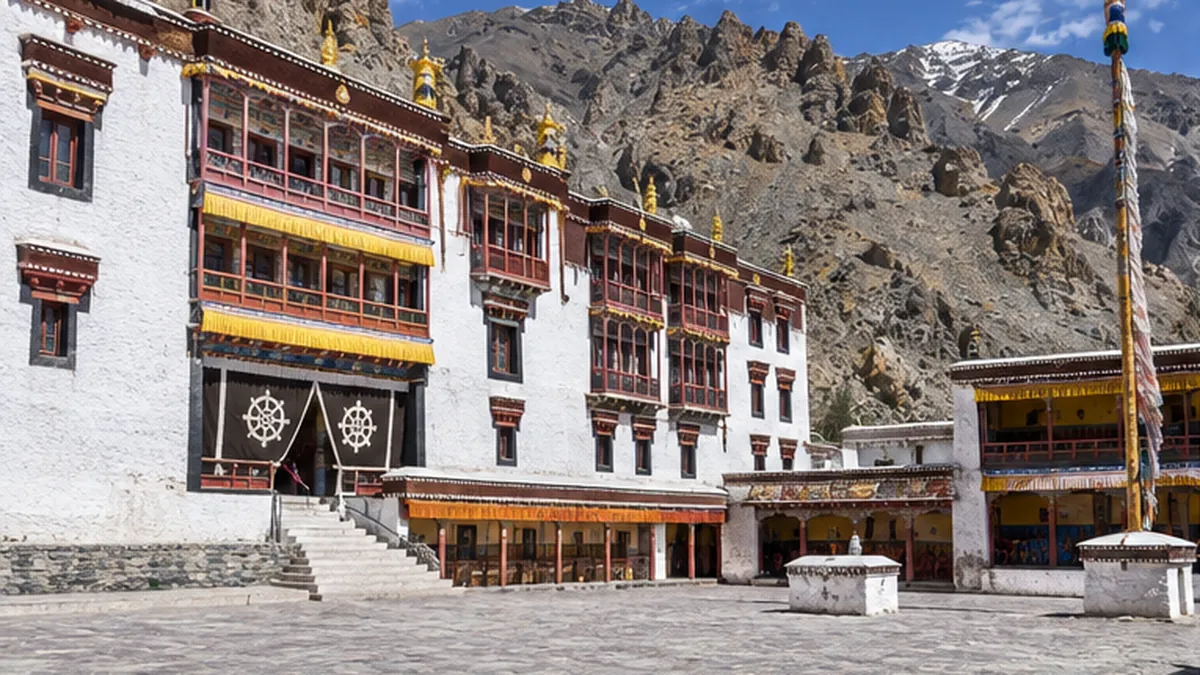
Hemis Monastery lies 45 km southeast of Leh town off the Leh-Manali Highway (NH-3). Private taxis from the Leh taxi stand take 75 minutes and charge fixed union rates of ₹2,200 to ₹2,800 for return festival trips.
The journey winds along the southern bank of the Indus River, passing traditional desert oasis villages and historic royal palaces. Roads are paved throughout and suitable for small sedans, sport utility vehicles, and motorbikes.
Because festival traffic swells during morning hours, departures before 7:00 AM are strongly advised. Late travelers frequently encounter bottlenecks near the Indus River bridge crossing at Karu.
| Transport Mode | Boarding Point in Leh | Approximate Tariff | Frequency & Timings |
|---|---|---|---|
| Private Union Taxi | Leh Taxi Union Stand (Fort Road) | ₹2,200 – ₹2,800 round trip | On-demand (Pre-book previous day) |
| Shared Taxi (Maxx/Cruiser) | Polo Ground / Bus Stand | ₹200 – ₹250 per passenger | 6:30 AM to 8:30 AM during festival |
| JKSRTC Festival Bus | Leh New Bus Stand | ₹80 per passenger each way | Hourly from 6:30 AM to 8:00 AM |
| Rented Royal Enfield Bike | Leh Motorbike Rental Shops | ₹1,200 – ₹1,800 daily rental | Self-ride along NH-3 highway |
Road Route, Taxi Fares, and Karu Transit
Follow NH-3 south past Choglamsar, Shey, and Stakna until reaching the Karu bridge junction. Cross the Indus River bridge and ascend seven kilometers along a winding mountain canyon road leading directly into Hemis gorge.
The road between Leh and Karu is flat and well-maintained by the Border Roads Organisation. At Karu, you will notice army transit facilities, basic tea stalls, and local fuel filling stations.
Turning off the main highway, the ascent into the Hemis gorge becomes narrow and steep. Vehicles proceed in single file during peak morning rush, with traffic police managing flow near the lower monastery parking terrace. For seasonal travelers planning around cultural events, Mysuru Dasara Jumbo Savari dates and rituals details schedules and practical logistics. For seasonal travelers planning around cultural events, Tirumala Brahmotsavam dates and rituals details schedules and practical logistics.
Shared Taxis and JKSRTC Festival Special Buses
During festival mornings, JKSRTC operates special buses departing Leh New Bus Stand between 6:30 AM and 8:00 AM for ₹80 per passenger. Shared taxis depart Polo Ground Leh charging approximately ₹200 per seat each way.
These budget transport options are dependable but fill up rapidly. Backpackers and solo travelers should arrive at the departure points by 6:00 AM to secure boarding tokens.
Return buses and shared cabs wait at the lower Hemis parking lot starting at 3:30 PM. Ensure you confirm the departure location with your driver before heading up the stone steps into the monastery. To plan additional town walks around Leh, review our places to visit in Leh town guide.
Hemis Gompa Festival Tickets, Entry Fees, and Courtyard Seating
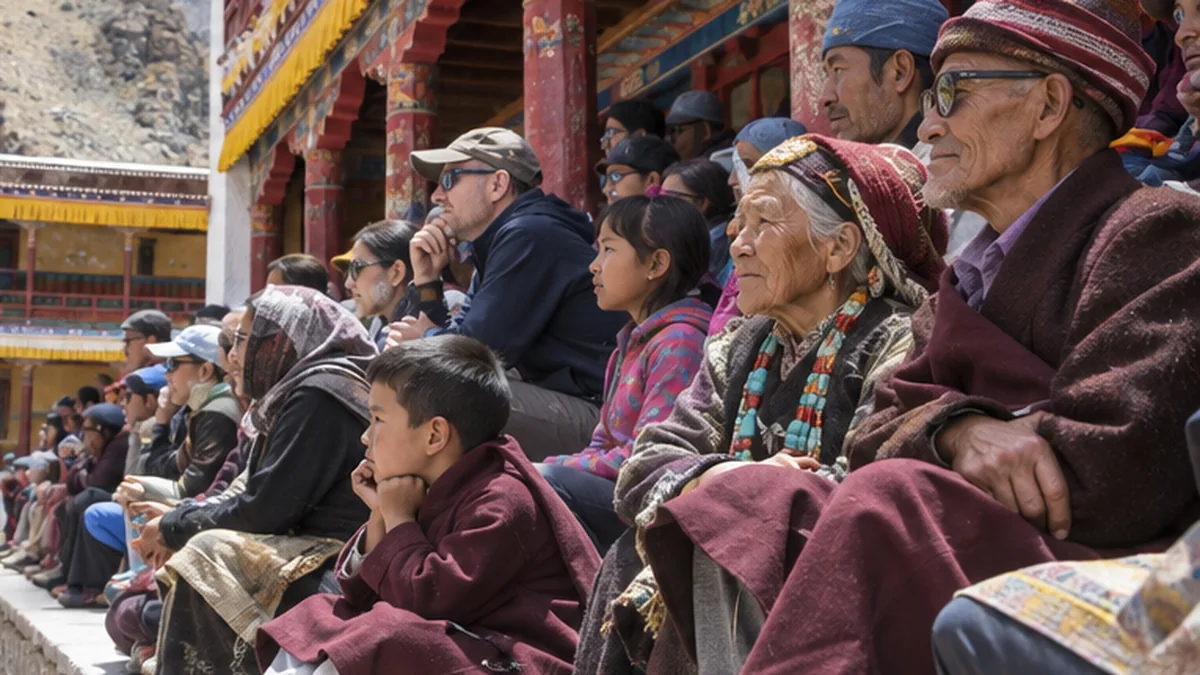
General admission to Hemis Monastery costs ₹100 per adult for the on-site museum and premises. Elevated courtyard wooden benches and VIP gallery seating require special festival donor tickets costing between ₹500 and ₹1,200 per day.
The standard monastery ticket grants entry into the complex grounds, outer walkways, and the underground museum holding ancient statues and weapons. However, it does not guarantee a seated view of the dance arena.
Due to limited courtyard space, seating fills on a first-come, first-served basis. Securing comfortable spots requires early arrival and choosing the correct ticket tier for your travel style.
| Ticket & Seating Category | Price per Person | Seating Location | Privileges & Access |
|---|---|---|---|
| General Monastery Entry | ₹100 | Courtyard stone floor & standing areas | Entry to grounds, museum & outer perimeter |
| Balcony Gallery Pass | ₹500 | Raised wooden bench in side galleries | Shaded bench seat with clear line of sight |
| VIP Reserved Enclosure | ₹1,000 – ₹1,200 | Front-row chairs near monastery elders | Cushioned chair, tea service & optimal photo angle |
Entry Fee vs Courtyard Seating Passes
Ground-level stone perimeter standing and floor seating is free after paying the general ₹100 monastery ticket. Raised shaded bench seats are limited to pass holders and must be purchased upon arrival at the counter.
Visitors sitting on the stone ground should bring a small foam cushion or folded wool shawl. The stone paving remains cold during early morning hours and radiates intense heat by afternoon.
Balcony gallery passes are sold at a dedicated desk adjacent to the main gate. Funds collected through festival passes support monastery maintenance, monastic school education, and community healthcare initiatives across the valley.
Gate Timings and Arrival Strategy for Prime Seating
Monastery gates open at 7:00 AM, two hours before performances start. Arriving by 7:30 AM is essential to secure front-row courtyard positions or shaded balcony spots before tourist buses arrive from Leh.
By 8:30 AM, the perimeter of the courtyard becomes densely packed with spectators. If you arrive after 9:00 AM, you will likely be relegated to standing rows behind several layers of attendees.
The best viewing positions for photography are situated on the eastern verandah, where the morning sun illuminates the dancers’ masks without blinding the lens. For official statewide tourist alerts, check the Incredible India Ladakh State Portal.
Practical Visitor Logistics: Acclimatization, Photography & Rules
Hemis stands at 3,500 meters altitude, requiring at least 48 hours of rest in Leh before attending. Visitors must dress modestly with covered shoulders and knees, carry sun protection, drink three liters of water daily, and respect inner sanctum photo bans.
The high-altitude desert climate of Ladakh can be deceptive. While the air temperature may hover around 20°C, direct solar radiation is severe due to thin atmospheric filtration.
Dehydration occurs swiftly at high elevations without causing obvious sweating. Carrying a reusable water bottle and maintaining electrolyte balance prevents dizziness and headaches during long outdoor events.
Pro Tip
Do not attempt to attend the Hemis Festival on your first or second day in Ladakh. Acclimatize completely in Leh town before enduring several hours under the sun at 3,500 meters.
Altitude Sickness Prevention and High-Desert Hydration
Do not travel directly from Leh airport to Hemis on days one or two. High-altitude dehydration accelerates in intense courtyard sunlight, so carry electrolyte packets, refillable water flasks, and broad-brimmed hats.
Acute Mountain Sickness (AMS) is a real concern for visitors arriving quickly by air. Symptoms include throbbing headaches, nausea, loss of appetite, and disturbed sleep.
Allow two full rest days in Leh before undertaking festival excursions. Drink plenty of warm water, avoid alcoholic beverages, and consider consulting a doctor regarding Diamox before arrival. If planning remote high-altitude extensions toward the Chinese border, consult our Hanle Dark Sky Reserve guide.
Photography Etiquette and Sacred Grove Courtyard Rules
Courtyard photography of masked dances is permitted from designated perimeter areas without blocking monk dance paths. Photography and videography inside dark assembly prayer halls (Lhakhang) are strictly prohibited.
Photographers should use telephoto lenses (such as 70-200mm) to capture expressive mask details without invading the ceremonial performance space. Avoid using flash photography, which distracts the meditating lamas.
Monastery authorities request visitors to dress respectfully in conservative attire. Shorts, sleeveless shirts, and revealing outfits are strictly prohibited on sacred premises. For localized directory details on cultural centers, consult the Incredible India Leh Directory.
Frequently Asked Questions About Hemis Festival Ladakh
Direct answers to common questions regarding Hemis Festival dates, entry costs, transport connections, and cultural etiquette.
What are the dates for the Hemis Festival in Ladakh?
The Hemis Festival takes place annually across two days in June or July, matching the tenth day of the fifth month in the Tibetan lunar calendar. Travelers should verify exact solar dates with the local administration each spring before finalizing flights.
Where does the Hemis Festival take place?
The festival is celebrated exclusively in the central cobblestone courtyard of Hemis Gompa, situated 45 kilometers southeast of Leh in Ladakh. The monastery is accessible via an easy 75-minute drive from Leh along the paved Manali-Leh Highway.
Do I need a ticket to watch the Cham masked dance?
General entry to Hemis Monastery and its museum requires a standard ticket of ₹100 at the main counter. Dedicated wooden balcony seating and VIP enclosure passes require special event contributions ranging from ₹500 to ₹1,200 per day.
How do I travel from Leh to Hemis Gompa for the festival?
Travelers can hire private taxis from the Leh Taxi Stand for ₹2,200 to ₹2,800 return, or board early-morning JKSRTC festival buses for ₹80 each way. Shared passenger jeeps also operate from Polo Ground in Leh between 6:30 AM and 8:30 AM.
What is the spiritual significance of the Cham dance?
The Cham dance is a tantric ritual meditation performed by ordained monks to clear negative karmic obstacles and subdue harmful spirits. Each masked sequence channels divine protector deities to bring peace, spiritual protection, and prosperity to the community.
Can tourists photograph the festival performances?
Yes, tourists may freely photograph the courtyard Cham dances from designated seating and standing perimeters without flash. However, taking photographs or recording video inside the indoor prayer halls and temple sanctums remains strictly prohibited.