Tawang Monastery Guide: Timings, History & Festivals Info
Plan your visit to Tawang Monastery (Galden Namgey Lhatse) with opening hours, 8-meter gilded Buddha, prayer rituals, museum treasures, and festival dates.
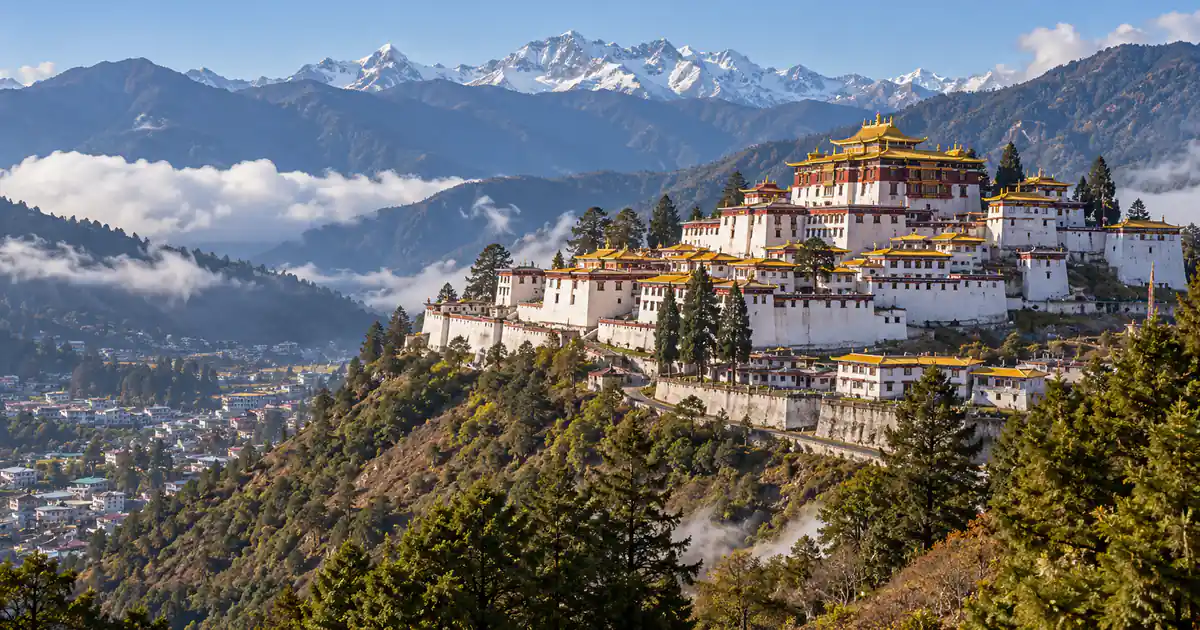
Perched at an elevation of 3,048 meters in northwestern Arunachal Pradesh, Tawang Monastery stands as the largest Buddhist monastery in India. Known traditionally as Galden Namgey Lhatse, meaning celestial paradise in a clear night, this fortress monastery overlooks the Tawang Chu valley near the borders of Bhutan and Tibet.
The monastery belongs to the Gelugpa order of Mahayana Buddhism and houses roughly 450 resident monks. With high defensive walls, white residential dormitories, and a massive golden-roofed prayer hall, the complex serves as the spiritual heart of the Monpa community.
Monastery Highlights & Visiting Essentials
- Native Name: Galden Namgey Lhatse (Gelugpa order of Mahayana Buddhism).
- Foundation Date: Established in 1680–1681 by Merag Lama Lodre Gyatso following the guidance of the 5th Dalai Lama.
- Daily Visiting Timings: Open daily from 07:00 AM to 07:00 PM; morning assembly prayers begin at 05:30 AM.
- Entry Fee: Free entry for all domestic and international visitors; museum admission ticket costs ₹20 per person.
- Mandatory Entry Permit: Valid Inner Line Permit (ILP) required for Indian citizens; Protected Area Permit (PAP) for foreign nationals.
- Altitude & Climate: 3,048 meters elevation; warm woolen layers and sturdy walking shoes are necessary throughout the year.
Travelers exploring northern Buddhist sanctuaries frequently combine Tawang with broader cultural journeys detailed across our planning a visit to Arunachal Pradesh.
What to Expect Inside the Tawang Monastery Complex
Tawang Monastery resembles a fortified medieval village constructed along the crest of a narrow mountain ridge. Entering through the grand southern gatehouse known as Kakaling, visitors encounter a cobblestone central courtyard surrounded by 65 residential quarters, an ancient library, and the monumental main prayer hall.
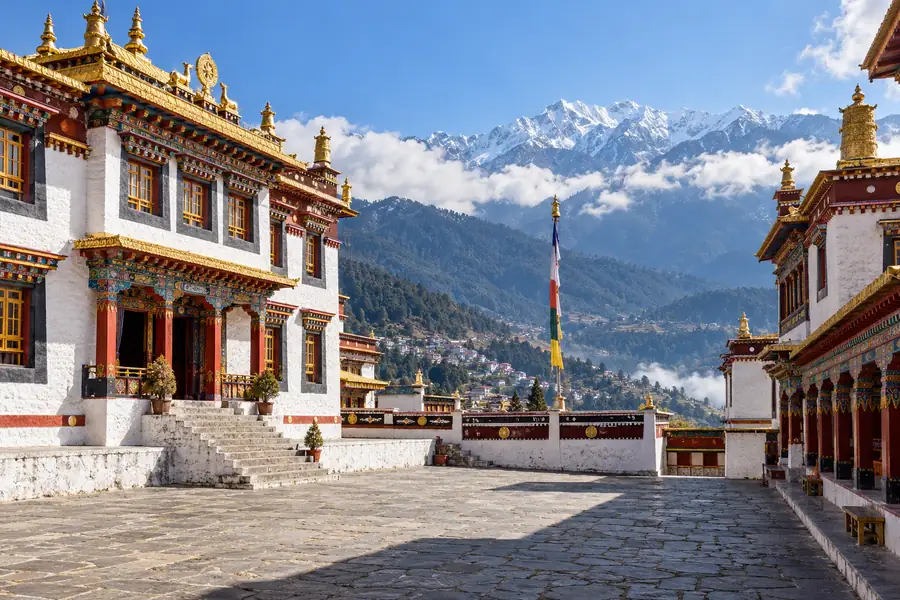
The three-story assembly hall, known as the Dukhang, dominates the central plaza. Its interior features carved wooden pillars painted in traditional mineral pigments depicting protective deities, celestial dragons, and lotus flowers. The northern sanctuary of the hall enshrines a colossal 8-meter gilded bronze statue of Shakyamuni Buddha, seated peacefully upon a lotus throne decorated with traditional Tibetan brocade draperies.
Adjacent to the prayer hall, the monastery museum preserves religious artifacts accumulated over four centuries. These include silver butter lamps, ancient bronze statues from Tibet, ceremonial horns, and sacred hand-written scriptures penned in gold ink on traditional handmade Daphne paper. Official exhibits and visiting guidelines are maintained by the Tawang District Administration.
| Monastery Feature | Architectural Style | Cultural Purpose | Visitor Access Guidelines |
|---|---|---|---|
| Kakaling Gatehouse | Stone portal with mandala ceiling | Traditional ceremonial entrance | Pedestrians walk clockwise through gate |
| Dukhang Assembly Hall | Three-story Tibetan hall | Daily prayers and monastic gatherings | Shoes removed at outer threshold |
| Colossal Buddha Statue | 8-meter gilded bronze casting | Principal sanctuary icon | Circumambulate clockwise around altar |
| Monastery Library | Secured wooden storage archives | Houses Kangyur and Tengyur scriptures | Rare manuscript viewing by permission |
| Monastic Museum | Restored heritage gallery | Artifacts, robes, and historic statues | Ticket ₹20; photography restricted inside |
| Residential Quarters | Multi-tiered white stone dormitories | Living spaces for 450 lamas and monks | Private living areas; quiet requested |
Following monastic etiquette, always rotate prayer wheels in a clockwise direction and maintain quiet decorum while monks perform their daily recitations.
Timings, Prayer Ceremonies, and Visitor Guidelines
Tawang Monastery welcomes respectful travelers throughout the year without requiring prior reservations. Visiting during morning chanting hours offers an unforgettable introduction to Tibetan Buddhist liturgy.
The assembly hall opens for dawn prayer rituals around 05:30 AM, when young novice monks and senior lamas gather to recite sacred scriptures accompanied by deep horn blasts, cymbals, and rolling drums. Visitors may sit quietly near the back benches to observe the service. General public exploration of the halls and outer courtyard continues until 07:00 PM.
Entry to the main monastery complex and prayer halls is free. The on-site cultural museum charges a nominal maintenance fee of ₹20 per visitor. While photography is permitted throughout outdoor courtyards, taking photographs or recording video inside the inner sanctum and museum galleries is strictly prohibited.
Historical Origins and the Legacy of the 5th Dalai Lama
The founding of Tawang Monastery in 1680–1681 answered the spiritual directive of Ngawang Lobsang Gyatso, the 5th Dalai Lama. Seeking to consolidate the Gelugpa school across the southern Himalayan borderlands, the Dalai Lama commissioned an esteemed local Monpa monk named Merag Lama Lodre Gyatso to establish a permanent spiritual seat in the region.
Monastic history records that Merag Lama struggled to determine the exact location for the foundation. While in deep meditation inside a cave, his horse wandered onto the high ridges. Upon searching, he discovered the animal grazing peacefully on a scenic spur overlooking the valley, interpreting the sight as a divine blessing.
The monastery was named Tawang, derived from Ta meaning horse and Wang meaning blessed. Tawang also holds historical significance as the spiritual cradle of the 6th Dalai Lama, Tsangyang Gyatso, who was born nearby at Urgelling Monastery in 1683. Historical records of regional monastic foundations are archived through the Tawang District Historical Records.
Major Monastic Festivals: Torgya and Losar
Visiting Tawang during monastic festivals provides an exceptional opportunity to witness sacred ritual dances and traditional community gatherings.
The Sacred Torgya Festival
Held annually during the eleventh month of the Tibetan lunar calendar (falling typically in late January), the three-day Torgya festival is celebrated to drive away negative forces and illness. Monks dress in rich silk robes and wear carved wooden masks to perform sacred Cham dances in the central stone courtyard.
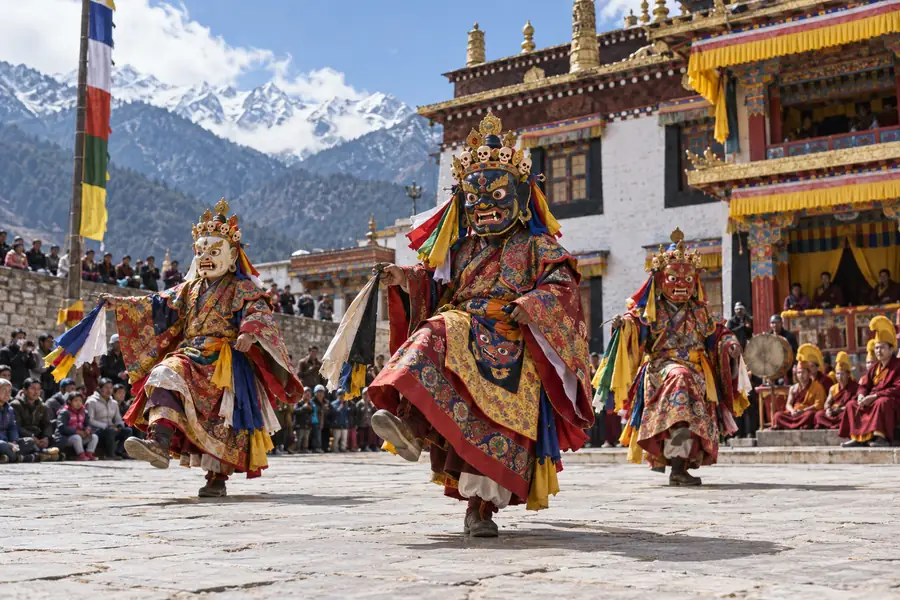
The rituals culminate in the ceremonial casting of the Torma, a tall sculptured pyramid made of barley flour and butter, into a roaring bonfire to symbolize the destruction of obstacles. The festival draws thousands of Monpa villagers from remote mountain settlements dressed in warm maroon woolen attire.
Losar (Tibetan New Year)
Celebrated in February or early March, Losar marks the beginning of the new monastic and agrarian year. Festivities span fifteen days, featuring special blessing prayers, the display of sacred thangka tapestries, community feasts, and butter tea offerings.
How to Reach Tawang Monastery
Reaching Tawang requires driving across steep Himalayan mountain roads that reward travelers with alpine views. Because of the substantial distances and high elevations, journeys are typically split over two days from the Assam plains.
The standard overland route departs from Guwahati or Tezpur in Assam, ascending through Bhalukpong and Bomdila along National Highway 13. Travelers cross the dramatic heights of wildlife spotting at Sela Pass, Sela Tunnel & Bum La Pass, where the newly opened dual-tube tunnel ensures reliable year-round transit.
| Transit Mode | Gateway Hub | Distance to Tawang | Route Details and Transit Notes |
|---|---|---|---|
| By Air | Tezpur Airport (TEZ) | 330 km | Regional flights from Kolkata; 12-hour overland mountain drive |
| By Air (Major) | Guwahati Airport (GAU) | 450 km | Best nationwide connectivity; requires 2-day overland drive |
| By Rail | Tezpur / Rangapara North (RPAN) | 315 km | Regular trains from Guwahati; taxi and shared Sumo services available |
| By Road | Bomdila / Dirang Roadhead | 170 km | 6 to 7 hours driving via Sela Tunnel along NH 13 |
For state-wide transport connections and seasonal tourist bus schedules, consult the official Arunachal Pradesh Tourism Department.
Mandatory Entry Permits and Checkpost Rules
Every domestic Indian visitor must carry an approved state permit before arriving at the western checkposts of Bhalukpong or Hollongi. The online application process takes only a few minutes when completed in advance.
Detailed application steps, document upload criteria, and Tatkal fee tables are explained in our key details for Arunachal Pradesh ILP. Carry multiple printed copies of your approved permit, as physical verification is performed at multiple district checkpoints along the mountain highway.
Urgelling Monastery and Sacred Heritage Sites
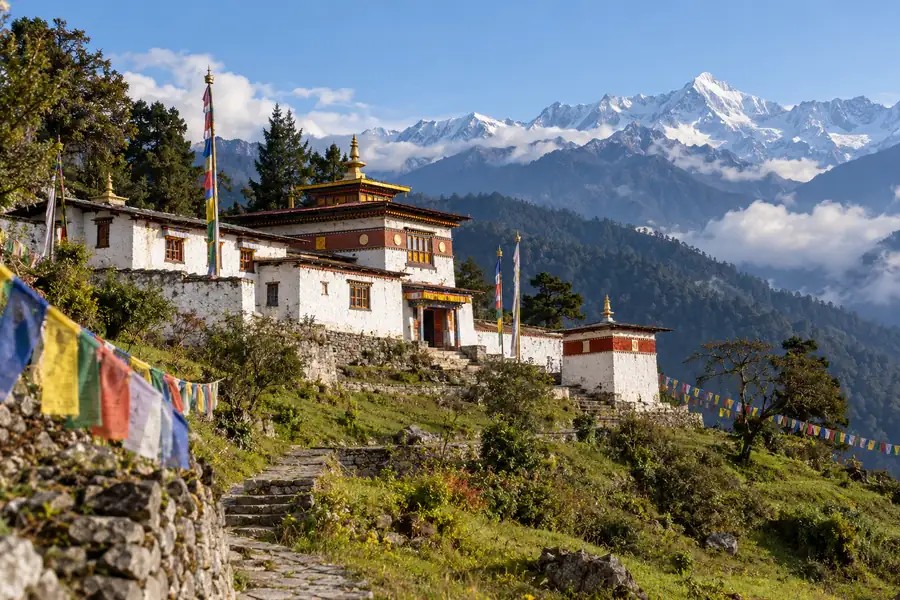
While based in Tawang, take time to visit Urgelling Monastery, located five kilometers south of town. Urgelling marks the quiet birthplace of the 6th Dalai Lama and contains sacred trees planted during his childhood.
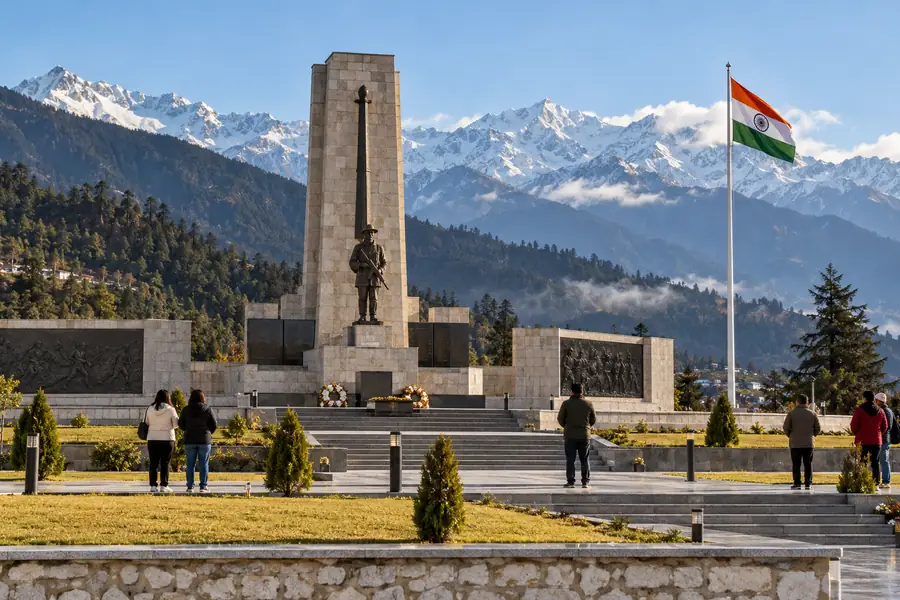
In the town center, the Tawang War Memorial honors Indian soldiers who gave their lives defending the frontier during the 1962 Sino-Indian War. The memorial hosts a daily evening light and sound show narrating the courage of Himalayan defenders.
Planning Assam Overland Gateways
Travelers beginning their mountain journey in Assam frequently combine their road trip with a visit to Kamakhya Temple Guwahati, the ancient hilltop Shakti Peetha overlooking the Brahmaputra River. This pilgrimage stop provides a meaningful cultural starting point before ascending into the Buddhist heights of West Kameng.
National Itineraries and Himalayan Connections
For travelers coordinating extended multi-state journeys across India, our comprehensive guide to the best places to visit in India highlights regional connections and seasonal tips.
Frequently Asked Questions About Tawang Monastery
What are the opening hours of Tawang Monastery?
Tawang Monastery is open daily from 07:00 AM to 07:00 PM. Visitors wishing to witness the morning chanting and liturgical prayers can arrive at the main assembly hall around 05:30 AM.
Is photography allowed inside the monastery prayer halls?
Photography is permitted throughout the open exterior courtyards and monastery grounds. However, taking photographs and recording video inside the main assembly hall (Dukhang), the inner sanctum, and the museum galleries is strictly forbidden.
How much time is needed to visit Tawang Monastery?
Plan to spend at least two to three hours exploring the main prayer hall, walking the perimeter stone walkways, inspecting the rare artifacts in the museum, and admiring the valley viewpoints.
Do Indian citizens need special permits to visit Tawang?
Yes, all Indian citizens residing outside Arunachal Pradesh must obtain an Inner Line Permit (ILP) before entering the state. The permit can be obtained through the official online e-ILP portal or at designated interstate facilitation counters.