Jallianwala Bagh & Partition Museum Amritsar: Timings & Route
Visit Jallianwala Bagh and Partition Museum at Town Hall in Amritsar with Monday rules, laser show timings, INR 10 tickets, and Golden Temple walk.
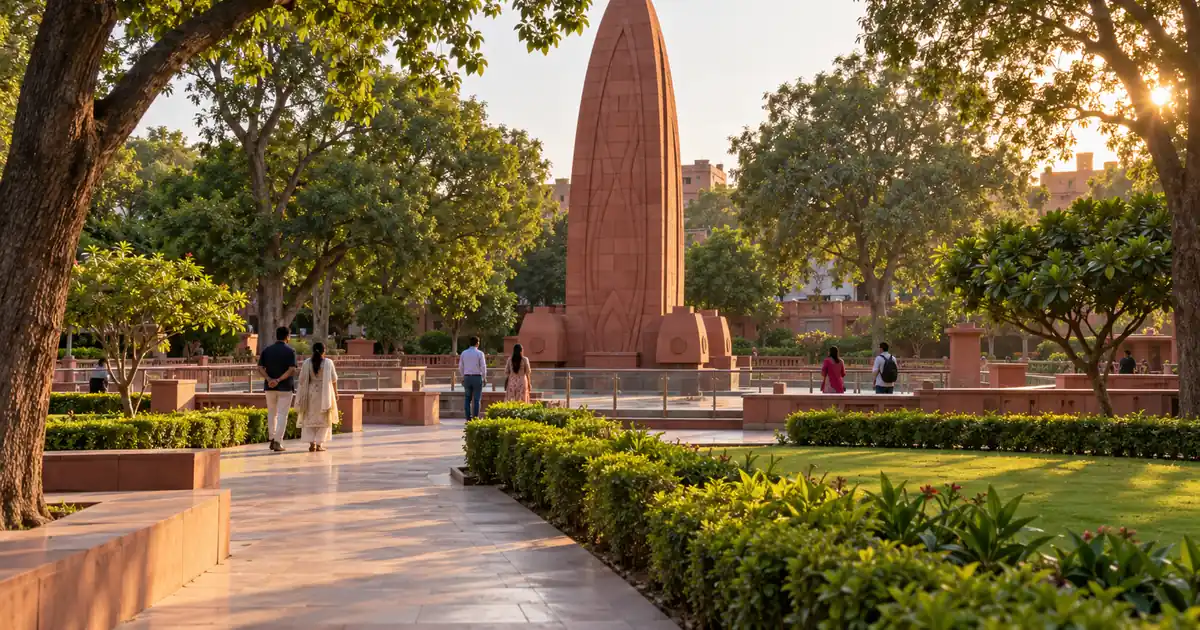
Linked cleanly by old Amritsar’s pedestrian stone Heritage Street, Jallianwala Bagh and the Partition Museum inside historic Town Hall preserve two defining twentieth-century chapters of modern Indian freedom and loss within a ten-minute walk of the Golden Temple. Because both stand along one traffic-free plaza, most visitors tour them seamlessly back-to-back during the morning hours before breaking for lunch or Attari border drives.
One crucial scheduling trap catches Monday travelers off guard: while Jallianwala Bagh opens every single day of the week, the Partition Museum closes strictly every Monday.
Amritsar Heritage Walk Essentials: Match weekday schedules before planning your Town Hall and Jallianwala sequence.
- Jallianwala Bagh Hours: Open 7 days including Mondays from 6:30 AM to 7:30 PM (summer) / ~7:00 AM to 6:00 PM (winter); INR 0 free admission.
- Partition Museum Hours: 10:00 AM to 6:00 PM Tuesday-Sunday, closed Mondays and national holidays; INR 10 Indian / INR 250 Foreign.
- Walking Distance: 350 meters (5 minutes) between Golden Temple and Jallianwala Bagh, and 500 meters onward down Heritage Street to Partition Museum.
- Evening Light Show: Daily Punjabi and Hindi sound-and-light projections recounting April 13, 1919 after dusk inside Jallianwala Bagh.
Inside Jallianwala Bagh: Narrow Entry Lane, Bullet Marks, and Martyrs’ Well
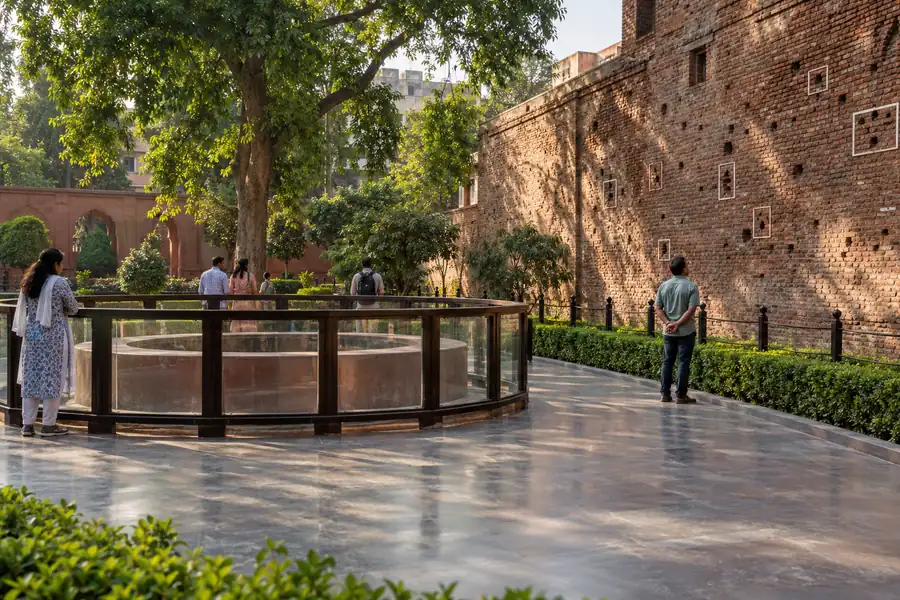
Entering Jallianwala Bagh through the tight single brick alleyway off Golden Temple plaza forces visitors to trace the exact bottleneck sealed by Brigadier-General Reginald Dyer’s armed troops on Baisakhi Day, April 13, 1919. Across the open six-and-a-half-acre courtyard stand white-circled bullet scars preserved directly along original brick garden facades, silent testimony to ten minutes of non-stop rifle fire against unarmed families gathered peacefully.
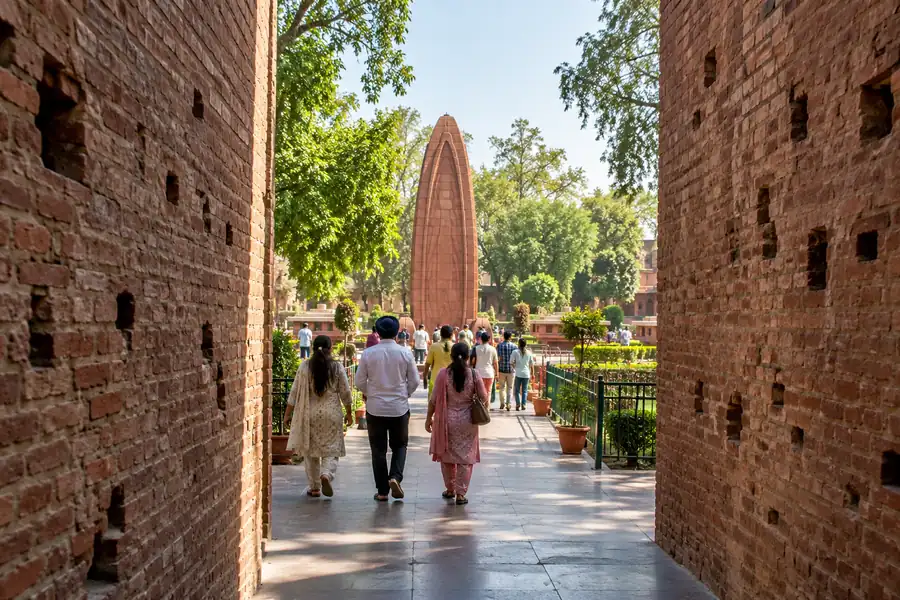
At the eastern edge of the lawn sits the glass-and-grille enclosure covering the Martyrs’ Well (Shaheedi Kuwan), where scores of panicked citizens leaped to escape gunfire, alongside the sandstone Flame of Liberty spire and modernized indoor Martyrs’ Gallery renovated during recent national memorial upgrades.
Most pilgrims step directly out of the eastern gate of Golden Temple into Jallianwala Bagh’s shaded entry passage in under five minutes on foot. Civic heritage schedules appear on the Amritsar District Tourist Places Portal.
Partition Museum at Town Hall: Galleries, Ticket Fees & Monday Rule
Five hundred meters west up Heritage Street stands the red-brick Indo-Saracenic Town Hall building (1870), transformed cleanly in 2017 into the world’s first dedicated museum documenting the 1947 Partition of India. Fourteen intimate, air-conditioned rooms trace pre-1947 coexistence, midnight boundary lines, refugee trains, handwritten letters, family heirlooms, and the Gallery of Hope wall filled with survivor messages.
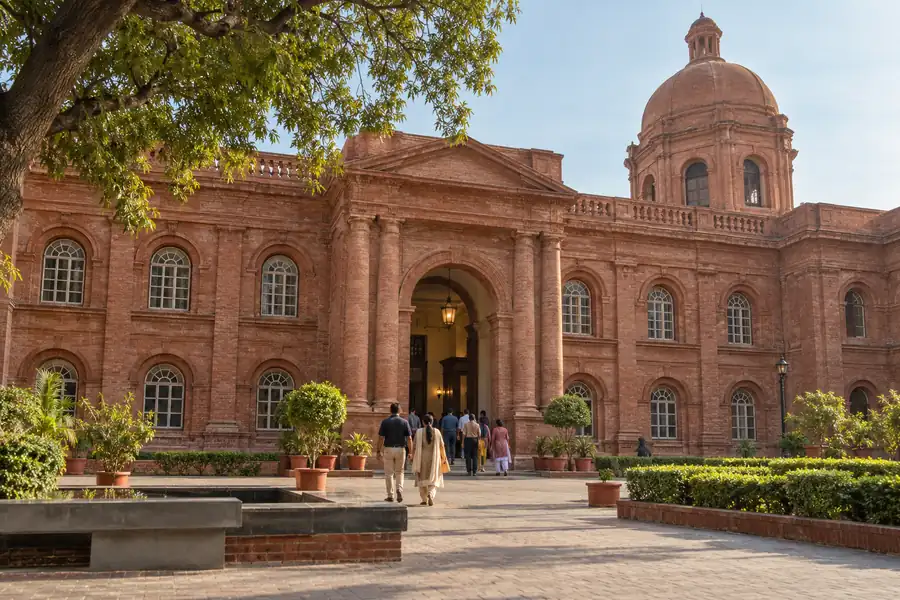
Verify official museum closure dates (every Monday, plus January 26, August 15, and October 2) on the Partition Museum Official Website before locking train dates. Plan ninety quiet minutes inside the audio-visual oral-history galleries before afternoon Attari border departures covered in our Attari-Wagah Border ceremony guide.
Timings, Tickets, Distance, and Sound-and-Light Show Schedule
Separating outdoor garden hours, indoor museum shifts, and evening projections keeps your Old Amritsar walking loop smooth without waiting outside locked Town Hall doors. Use the matrix below to organize morning vs. late-afternoon sequences cleanly.
| Landmark / Experience | Open Days | Standard Daily Hours | Entry Fee (INR) | Practical Planning Tip |
|---|---|---|---|---|
| Jallianwala Bagh Memorial | Open all 7 days (incl. Mon) | 6:30 AM - 7:30 PM summer / 7 AM - 6 PM winter | Free (INR 0) | Visit 8:30 AM before sun warms lawns |
| Evening Laser & Sound Show | Open all 7 evenings | Dusk shifts (~5:30-6 PM winter / 7-7:45 PM summer) | Free admission | Punjabi slot first, followed by Hindi slot |
| Partition Museum (Town Hall) | Tue - Sun (Closed Mon) | 10:00 AM - 6:00 PM | INR 10 Indian / INR 250 Foreign | Children <=5 & Partition survivors free |
| Heritage Street Walk Loop | Open 24 hours pedestrian | All day & illuminated night | Free promenade | 350-500 m easy paved stretch between sites |
Jallianwala Bagh Evening Light and Sound Show Details
Following recent multimedia restoration upgrades, Jallianwala Bagh hosts a twenty-eight-minute Sound and Light Show against preserved brick walls after sunset, presented in sequential evening shifts covering both Punjabi and Hindi narration. Exact dusk start slots shift seasonally by roughly forty-five minutes between December fog and peak June daylight, so confirm that evening’s board schedule right at the garden kiosk at noon.
Free access puts Jallianwala Bagh alongside fellow iconic freedom-struggle landmarks like Chandrashekhar Azad Park in Prayagraj on cross-country educational rail itineraries.
Dress Code, Silence, and Bag Etiquette
Neither Jallianwala Bagh nor the Partition Museum enforces mandatory head coverings like the Golden Temple inner parikrama, though respectful casual clothing covering shoulders and knees fits the somber memorial setting. Flash photography inside Partition Museum audio-history galleries is restricted to protect fragile paper manuscripts, while quiet outdoor garden snapshots are permitted respectfully away from the central Martyrs’ Well railing.
Combining Heritage Street, Amritsar Food, and India Freedom Circuits
Because Heritage Street sits immediately off Fountain Chowk and Hall Bazaar, finishing the Partition Museum at noon leaves you steps away from classic Kulcha ovens, Amritsari lassi stalls, and papad-wari markets mapped in our Amritsar street food trail.
Pedestrian bollards block auto traffic along the entire polished pink-stone corridor linking Golden Temple, Jallianwala Bagh, and Town Hall, creating one clean shaded heritage loop suitable for strollers and senior travelers. Free drinking water kiosks, shaded stone benches, and clean civic washrooms operate behind the Town Hall courtyard gates between 8:00 AM and 8:00 PM daily.
Visitors staying an extra afternoon inside old Amritsar frequently add a quick cab ride two kilometers north to Company Bagh (Maharaja Ranjit Singh Panorama) or stop downtown at Gobindgarh Fort before dusk. Additional regional destination guides appear on the Incredible India Amritsar Destination Portal.
How to Reach from Amritsar Junction and Best Months to Visit
Old Amritsar’s central pedestrian plaza sits only 2.5 kilometers from Amritsar Junction Railway Station and 13 kilometers southeast of Sri Guru Ram Dass Jee International Airport (ATQ). Motorized cars stop cleanly at Hall Gate or multi-level parking near Town Hall, leaving the final promenade pleasantly calm and traffic-free. Travelers continuing east across Punjab rail lines frequently extend Amritsar heritage itineraries onward toward Anandpur Sahib heritage around Rupnagar.
- Amritsar Junction Railway Station (ASR - ~2.5 km): Board an e-rickshaw or auto straight to Hall Gate / Town Hall drop point (10 to 15 minutes; INR 50 to INR 80).
- Sri Guru Ram Dass Jee International Airport (ATQ - ~13 km): Prepaid airport cabs and app-based taxis reach Town Hall parking in 25 to 35 minutes (INR 350 to INR 500).
- Best Months to Visit (October to March): Pleasant daytime weather (12°C to 24°C) makes open courtyard walking at Jallianwala Bagh effortless at any hour; during hot May-June afternoons, visit Jallianwala Bagh before 9:30 AM and retreat indoors to the air-conditioned Partition Museum from 10:00 AM to noon.
Frequently Asked Questions About Jallianwala Bagh and Partition Museum
Is Jallianwala Bagh open on Monday, and what about the Partition Museum?
Jallianwala Bagh is open all 7 days a week, including Mondays. By contrast, the Partition Museum inside Town Hall is strictly closed every Monday as well as on January 26, August 15, and October 2.
What is the walking distance between Jallianwala Bagh, Partition Museum, and Golden Temple?
Jallianwala Bagh stands roughly 350 meters (5 minutes on foot) from the Golden Temple, and the Partition Museum lies just 500 meters further along pedestrian Heritage Street. All three sit comfortably within a 10-minute flat walking corridor.
What is the entry ticket price for Jallianwala Bagh and Partition Museum?
Entry into Jallianwala Bagh and its evening sound-and-light show is completely free for all visitors. The Partition Museum charges INR 10 for Indian nationals and INR 250 for foreign nationals, while children 5 years and under and Partition survivors enter free.
What time is the Jallianwala Bagh laser light and sound show?
The evening sound-and-light show begins right after dusk in Punjabi and Hindi shifts, typically running between 5:30 PM and 7:45 PM depending on winter vs. summer sunset hours. Check that day’s kiosk notice board upon morning arrival.
How much time should I budget for Jallianwala Bagh and Partition Museum together?
Allow 45 to 60 minutes for Jallianwala Bagh’s open lawn, Martyrs’ Well, and interior museum gallery, plus 1.5 hours to walk comfortably through all fourteen rooms of the Partition Museum.