Attari-Wagah Border Ceremony Amritsar: Timings, Rules & Route
Plan Attari-Wagah Border Beating Retreat near Amritsar with winter and summer timings, free entry rules, BSF registration, bag bans, and cab transit.
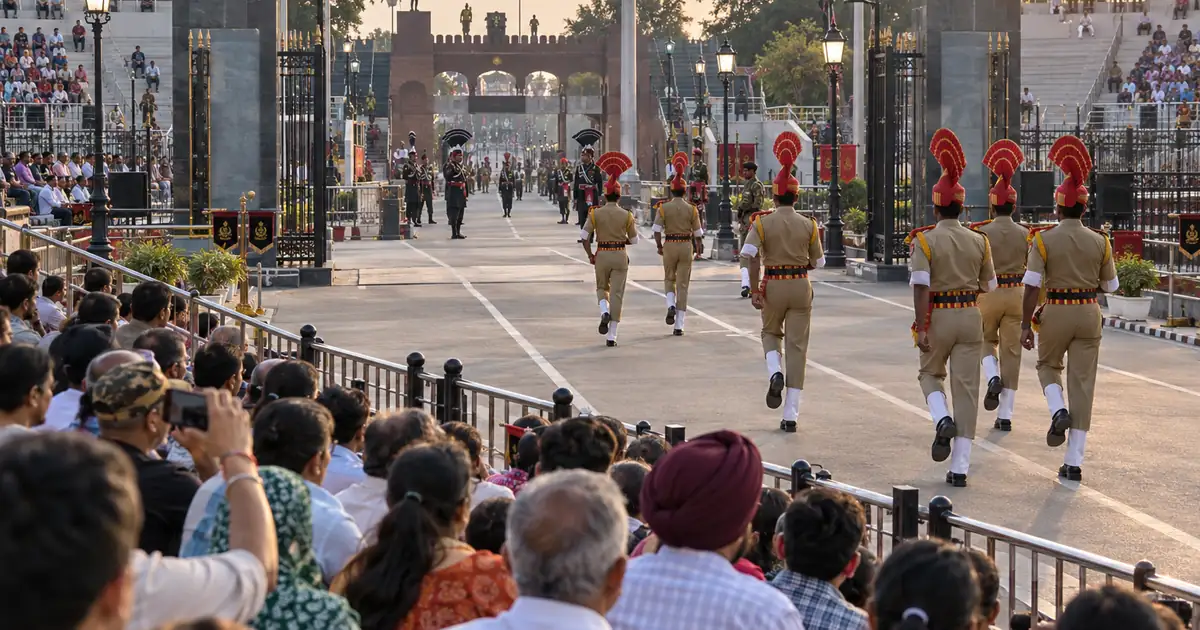
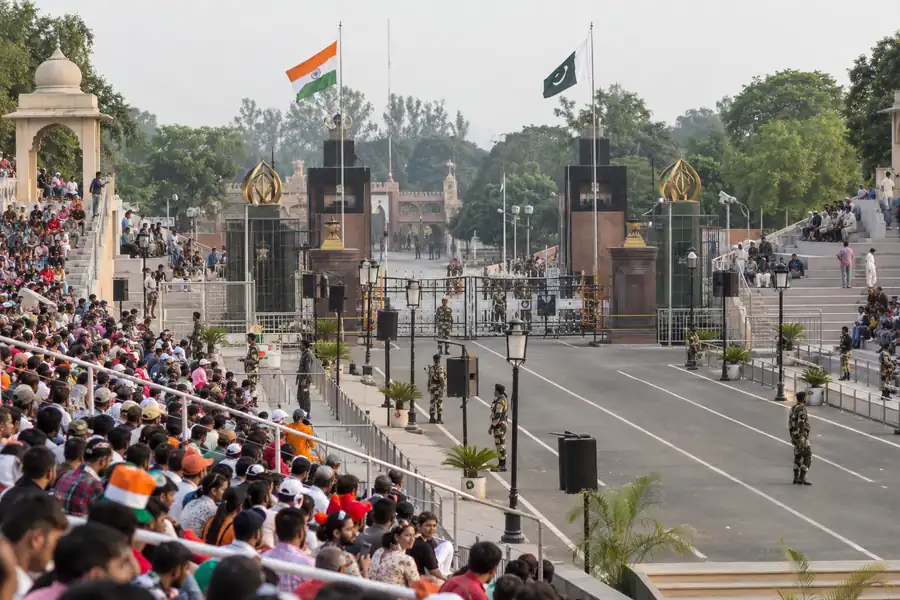
Twenty-nine kilometers west of Amritsar down the historic Grand Trunk Road, tiered concrete stands flank the iron border gates between Attari on the Indian side and Wagah in Pakistan. Every late afternoon since 1959, guards from India’s Border Security Force (BSF) and the Pakistan Rangers perform a synchronized forty-five-minute Beating Retreat ceremony before lowering both national flags strictly at sunset.
Although seating inside the huge stadium complex costs zero rupees, unprepared visitors frequently miss seating or lose hours at parking lockers due to seasonal sunset schedule shifts and strict bag bans.
Attari-Wagah Ceremony Visitor Essentials: Plan arrival at least ninety minutes before sunset drill begins.
- Ceremony Start Time: Starts around 4:30 PM in winter (Oct-Mar) and 5:30 PM in summer (Apr-Sep) daily.
- Morning Ceremonies: Note that no public parade happens in the morning; the sole public Beating Retreat runs at dusk.
- Entry Fee: Zero rupees for all citizens and tourists; avoid touts selling unofficial paid “VIP pass” packages.
- Prohibited Gear: Backpacks, handbags, camera bags, and food are banned inside stands; deposit bags in outer parking lockers.
Winter and Summer Ceremony Timings at Attari-Wagah Border
The Attari-Wagah Beating Retreat shifts gradually year-round so the final simultaneous flag-lowering finishes squarely at sunset without darkness over the tarmac parade lane. Because morning guard inspections inside the international freight yard are not public spectator shows, afternoon arrival remains the single schedule to plan around.
| Season Window | Recommended Gate Arrival | Ceremony Begins | Sunset Conclusion | Weather Reality |
|---|---|---|---|---|
| Winter (Oct - Mar) | 2:30 PM - 3:00 PM | ~4:30 PM - 5:00 PM | ~5:15 PM - 5:45 PM | Mild 15°C - 26°C sun; chilly dusk breeze |
| Summer (Apr - Sep) | 3:30 PM - 4:00 PM | ~5:30 PM - 6:00 PM | ~6:15 PM - 6:45 PM | Intense 35°C - 44°C glare on unshaded steps |
Public holiday crowds on January 26, August 15, and long weekends fill upper tiers two full hours early. Most city travelers pair a peaceful dawn visit to the Golden Temple in Amritsar with a 2:15 PM afternoon departure westward toward Attari. Civic tourism notices and local holiday crowd alerts are maintained on the Amritsar District Tourist Places Portal.
Free Entry Rules, BSF Registration, and Touts to Avoid
Entering the BSF Attari Border gallery requires zero admission fee for both Indian residents and international travelers, with separate entry gates designated smoothly by security personnel along the main pedestrian corridor. Online crowd-management seating reservations offered intermittently by the BSF do not replace standard first-come, first-served queue entry when carrying valid government ID.
- Valid Original Photo ID Required: Indian visitors carry an Aadhaar card, Passport, Voter ID, or Driving License; foreign travelers carry original physical passports with valid visas (photocopies on phones are frequently rejected at outer barricades).
- Zero Official Paid Tickets: Ignore drivers, parking attendants, or booking portals quoting INR 500 to INR 2,500 for guaranteed VIP seats; BSF never sells paid seats.
- Early Seating Advantage: Foreign passport holders and senior families receive guided gallery seating when arriving before 3:15 PM in winter, while late arrivals climb upper rows facing sun glare.
Travelers interested in modern Indian history beyond Punjab often explore fellow freedom-era sites such as Chandrashekhar Azad Park Prayagraj when mapping multi-state heritage rail trips.
Prohibited Items, Cloakrooms, and Security Screening Rules
Airport-grade perimeter screening operates along the 700-meter walk between the tourist parking plaza and the stadium security archway. Leaving backpacks inside locked taxis or paid highway parking cloakrooms saves stressful back-tracking right before gate closure.
- Strictly Banned Inside Galleries: Backpacks, ladies handbags, laptop sleeves, padded DSLR camera bags, large power banks, water bottles larger than small pocket size, snacks, lighters, matchboxes, and sharp metal accessories.
- Permitted Handheld Items: Smartphones, small slim wallets, car keys, sunglasses, and handheld mirrorless/DSLR cameras carried loose by strap without bags.
- Security Conduct Advisory: Cooperate promptly with BSF personnel directing crowds along concrete lanes, avoid leaning over lower security rails toward No Man’s Land, and carry small cash notes for chilled drinking water kiosks operating inside stadium corridors.
Regional circuit information and border excursion advisories across northern districts appear on the Incredible India Amritsar Destination Hub and within our broader Punjab travel hub guide. Paid cloakroom stalls beside the tourist coach bay issue numbered metal tokens (typically INR 50 to INR 100 per backpack) for locked baggage storage until evening exit.
Arriving with zero bags lets families skip lengthy manual tray searches and move straight past outer turnstiles into covered spectator blocks twenty minutes earlier than tour-bus groups. Keep lightweight cotton caps and clear pocket bottles handy between April and September while sitting under late-afternoon sun on open upper risers.
Inside the Stadium: Parade Sequence, Seating, and Atmosphere
Gates swing open around ninety minutes prior to march-past, letting families climb stone bleachers overlooking the crisp white Swarna Jayanti Dwar archway. Before uniformed soldiers appear, public warm-up singing, women and children dancing along the central parade strip, and patriotic anthems charge the open amphitheater with loud stadium acoustics.
When whistles sound sharp attention, towering BSF troopers execute high-kicking footwork drills, bugle calls, and dramatic gate openings facing their Pakistani counterparts meters away across the zero line. After both national flags lower neatly in unison and iron gates slam shut at dusk, exiting thousands move slowly out toward parking lanes for thirty minutes.
Before returning to hotel lanes near Hall Gate, visitors routinely stop downtown for crisp evening platters highlighted in our Amritsar street food guide.
How to Reach Attari-Wagah from Amritsar and Nearby Landmarks
Attari Checkpost sits straight west of Amritsar city along National Highway 3 (NH-3), making return cab transport easy without confusing city turns. Plan three to four total hours round trip from central Amritsar including outbound drive, ceremony seating, and exiting parking traffic after sunset.
- Private Round-Trip Cab (Most Practical): Sedan taxis wait around Amritsar Junction and Heritage Street for roughly INR 1,200 to INR 1,600 round trip including two hours of ceremony waiting time.
- Shared Auto & Shuttle Vans: Hop-on shared tempo vans leave near Amritsar Railway Station and Hall Gate toward Attari for INR 100 to INR 150 per seat, dropping passengers at the parking plaza before returning post-ceremony.
- From Sri Guru Ram Dass Jee International Airport (ATQ): Roughly 38 km west via outer ring highway bypass (~50 to 60 minutes straight if timing afternoon flight arrivals directly).
- Combining Morning City Landmarks: Schedule morning walks cleanly around Jallianwala Bagh and Partition Museum inside old Amritsar, break for lunch, and drive out to Attari by 2:30 PM.
- Return Traffic Window: Expect thirty to forty minutes of slow bumper-to-bumper egress out of the Attari parking lanes immediately after dusk cheering finishes; sipping hot chai at nearby dhaba stops for twenty minutes lets outbound highway queues clear cleanly.
Additional state festival itineraries and route maps are published on the Incredible India Official Punjab Portal.
Frequently Asked Questions About Attari-Wagah Border Ceremony
What time does the Wagah Border ceremony start every day?
The Beating Retreat ceremony starts right before dusk: around 4:30 PM to 5:00 PM in winter (October to March) and 5:30 PM to 6:00 PM in summer (April to September). Plan to reach the checkpost 1.5 to 2 hours early to pass security.
Does the Wagah Border ceremony happen every day, including weekends?
Yes, the Attari-Wagah Beating Retreat takes place 365 days a year regardless of weekends or holidays, unless extraordinary security alerts require suspension.
Is there any morning ceremony or ticket fee at Wagah Border?
No public morning parade takes place for visitors; the sole ceremonial event runs daily before sunset. Admission to general spectator stands is 100% free with zero official tickets sold at the gate.
Are bags, phones, and cameras allowed inside Wagah Border stands?
Phones, handheld cameras without cases, and small wallets are permitted inside, while backpacks, handbags, camera bags, food, and large power banks are barred and must stay in cars or parking cloakrooms.
How far is Attari-Wagah Border from central Amritsar and Golden Temple?
The border checkpost lies 28 to 30 km west of central Amritsar and Golden Temple along NH-3. Road transit takes 45 to 60 minutes each way depending on highway traffic.