Kanyakumari Glass Bridge & Vivekananda Rock: Complete Guide
Plan your trip to Kanyakumari glass bridge linking Vivekananda Rock Memorial and Thiruvalluvar Statue with ferry timings, ticket prices, and sunrise tips.
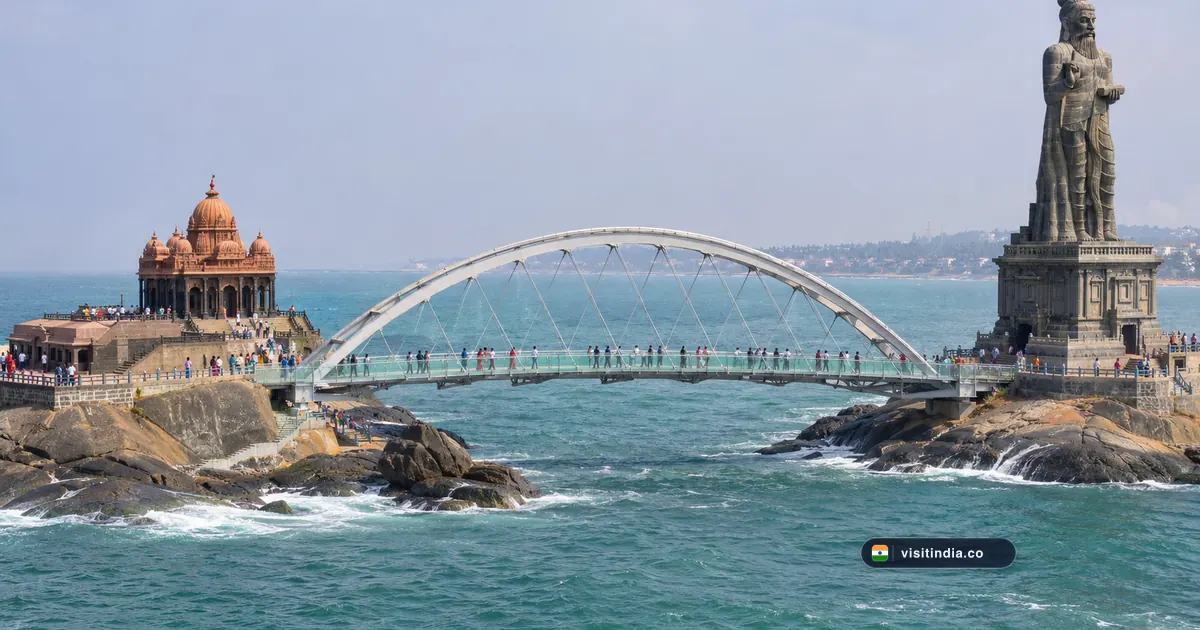
Perched at the southernmost tip of the Indian subcontinent where the Indian Ocean, the Arabian Sea, and the Bay of Bengal unite, the kanyakumari glass bridge vivekananda rock crossing represents a landmark engineering addition to peninsular India. Spanning across open oceanic waters, this transparent pedestrian walkway links two legendary offshore monuments that previously required separate, tide-dependent boat transfers.
Visitors boarding government passenger ferries from the mainland jetty at Vavathurai can now walk directly between the sacred meditation halls of Swami Vivekananda and the colossal granite pedestal of poet-saint Thiruvalluvar. Understanding ferry queue strategies, tide schedules, sunrise vantage points, and island walking circuits ensures an inspiring coastal pilgrimage.
Kanyakumari Glass Bridge & Vivekananda Rock Essentials
- Location: Offshore islets off Vavathurai, Kanniyakumari, Tamil Nadu.
- Key Highlights: 77-metre sea glass pedestrian walkway, Vivekananda Rock Memorial, and the 133-foot Thiruvalluvar Statue.
- Ferry Operating Hours: Daily from 8:00 AM to 4:00 PM, operated by Poompuhar Shipping Corporation (subject to sea conditions).
- Ferry Ticket Rates: Normal Entry costs approximately ₹75 to ₹100; Special VIP priority queue costs ₹300.
- Transit Hubs: Kanyakumari Railway Station (CAPE) is 1.5 km away; Trivandrum International Airport (TRV) is 95 km northwest.
What to Expect at the Kanyakumari Sea Glass Bridge
The Kanyakumari sea glass bridge is a 77-metre bowstring arch pedestrian bridge connecting Vivekananda Rock Memorial to the 133-foot Thiruvalluvar Statue. Spanning across open oceanic waters where three seas converge, the walkway features transparent glass panels offering direct views of churning waves beneath your feet.
As outlined in our comprehensive Tamil Nadu state travel guide, the southern coastline has long drawn pilgrims and travelers to its dramatic granite headlands. The glass bridge allows visitors to stroll securely between the two rocky islets while watching the relentless surf crash against monolithic stone pillars below.
Connecting Vivekananda Rock and Thiruvalluvar Statue
Historically, tourists visiting Vivekananda Rock could rarely access the adjacent Thiruvalluvar Statue during high swells because boats struggled to dock. The 77-metre bridge permanently unites both iconic rocky islands into a single walking experience.
Before the construction of the bridge, Poompuhar ferries frequently had to cancel docking at the Thiruvalluvar outcrop whenever waves exceeded two metres. By linking the stable leeward dock of the Vivekananda Memorial directly to the statue pedestal, visitors enjoy guaranteed access to both monuments year-round.
Architecture and 77-Metre Bowstring Arch Design
Engineered by the Tamil Nadu Highways Department, the bridge features corrosion-resistant structural steel arches anchored into monolithic marine granite rocks, lined with multi-layered laminated safety glass panels designed to withstand severe cyclone surges.
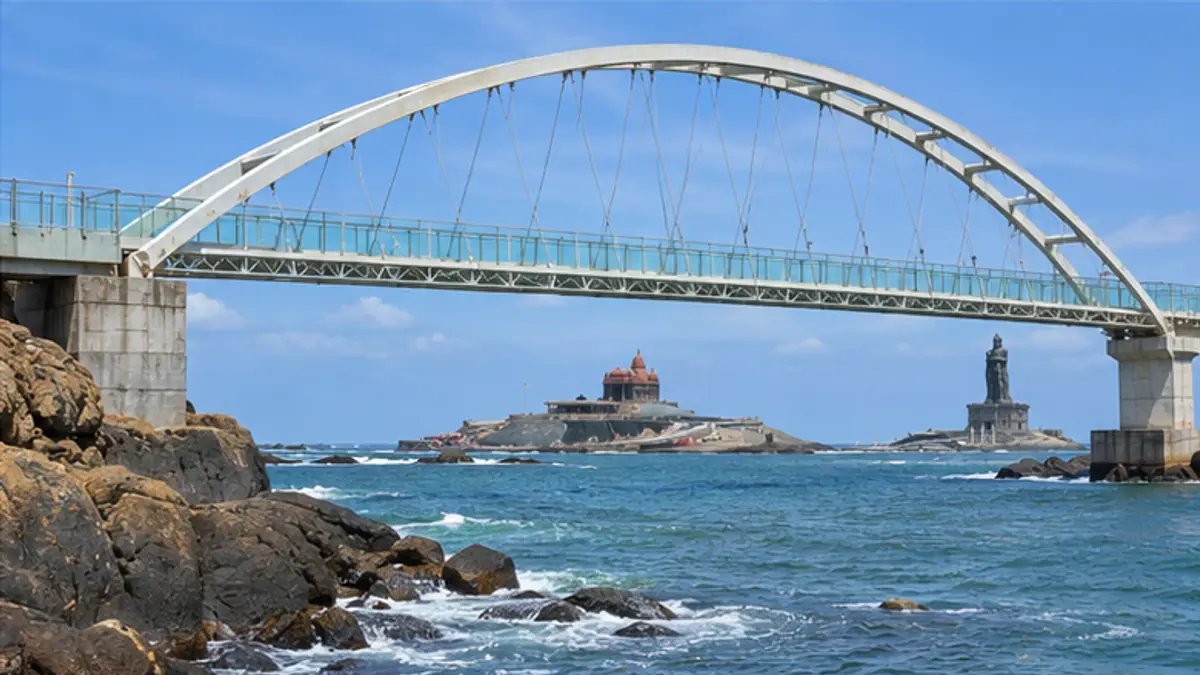
The structure incorporates an aerodynamic bowstring design that minimizes wind drag during coastal squalls. The central pedestrian walking lane features specialized anti-slip textured glass that remains transparent while providing stable footing even when moistened by ocean sea spray.
| Structural Feature | Specification Metric | Engineering Function |
|---|---|---|
| Total Bridge Length | 77 Metres (252 Feet) | Spans the oceanic channel between both rocky islands |
| Deck Width | 10 Metres | Allows two-way visitor flow with central viewing areas |
| Walking Surface | 3-Metre Laminated Toughened Glass | Offers transparent vistas of surging ocean currents |
| Foundation Type | Marine Granite Anchors | Drilled into submarine rock to resist tidal drag |
| Wind Resistance | Up to 180 km/h Gale Velocity | Protects structural integrity during severe cyclones |
Poompuhar Ferry Service: Timings, Ticket Prices, and Queues
Access to the glass bridge and offshore monuments requires boarding the Poompuhar Shipping Corporation ferry at Vavathurai jetty. Boats operate daily from 8:00 AM to 4:00 PM, with round-trip tickets costing ₹75 to ₹100 for normal entry and ₹300 for special VIP queue access.
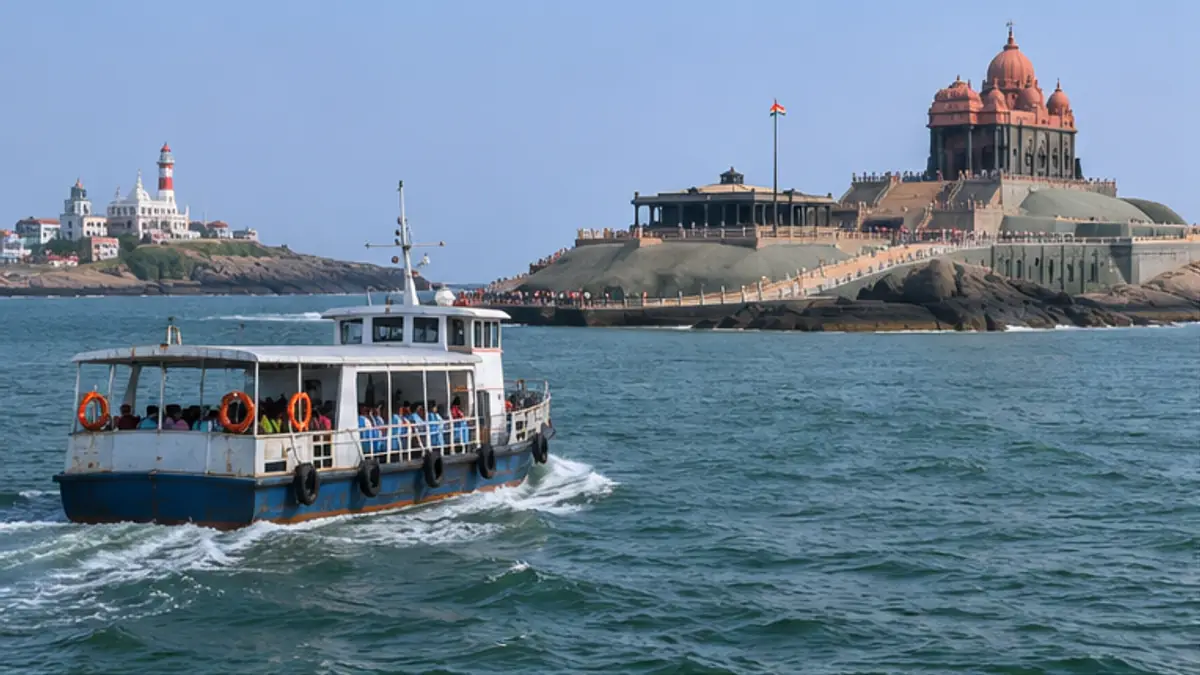
Travelers planning extended coastal journeys toward sacred pilgrimage hubs like Rameshwaram Jyotirlinga pilgrimage guide should note that boat queues in Kanyakumari can grow substantial by mid-morning. Arriving at the jetty before 8:00 AM ensures boarding on the earliest launches of the day.
Normal Queue vs Special Entry VIP Pass Strategy
The normal ticket queue can stretch up to two hours during peak holiday weekends and school vacations. Opting for the ₹300 Special Entry ticket provides priority boarding from an air-conditioned waiting hall, cutting wait times to under twenty minutes.
The nominal price difference between general admission and the special ticket is well worth the investment during high season from November to January. Special ticket holders enter through a separate turnstile corridor and board ferries immediately ahead of general seating lines.
Online Booking on psckfs.tn.gov.in vs Jetty Counters
While counter tickets are sold at the Vavathurai jetty starting at 7:45 AM, travelers can book ferry slots online through the official portal psckfs.tn.gov.in to guarantee morning access during festival seasons.
The Poompuhar Shipping official ferry booking portal allows visitors to choose their travel date and reserve digital ferry passes in advance. Passengers present their booking confirmation on a mobile screen at the automated barcode scanners at the terminal gate.
Weather Delays, High Tides, and Ferry Suspensions
Ferry operations depend strictly on sea conditions. Heavy oceanic swells, low tide recessions around the rocky shelf, or severe gale winds exceeding 40 km/h can trigger temporary suspensions until water conditions stabilize.
The maritime authorities prioritize passenger safety above all else. During monsoon transitions or cyclonic weather in the Indian Ocean, boats remain berthed at the harbor until port officials declare the navigational channel clear of hazardous swell surges.
Pro Tip
If high winds temporarily halt morning ferry services, visit the onshore Bhagavathi Amman Temple and Gandhi Memorial Mandapam first, as ferry services often resume by midday once tides normalize.
Exploring Vivekananda Rock Memorial: Meditation and History
Inaugurated in 1970, Vivekananda Rock Memorial marks the sacred spot where Swami Vivekananda meditated on December 23-25, 1892, before traveling to the Parliament of Religions in Chicago. The island complex houses the Vivekananda Mandapam and the sacred Shripada Mandapam.
The island architecture echoes sacred traditions seen throughout the south, including historic pilgrimage centers such as Padmanabhaswamy Temple in Trivandrum. Built using red and grey granite quarried from regional Tamil Nadu hills, the memorial gracefully blends Ajanta cave architraves with classic Chola pillared porticos.
The Dhyana Mandapam: Silent Meditation in the Ocean
The Dhyana Mandapam is an atmospheric, sound-muffled meditation hall featuring an illuminated Om symbol and dim lighting. Visitors sit in quiet contemplation while listening to the resonant sound of ocean waves echoing outside the stone walls.
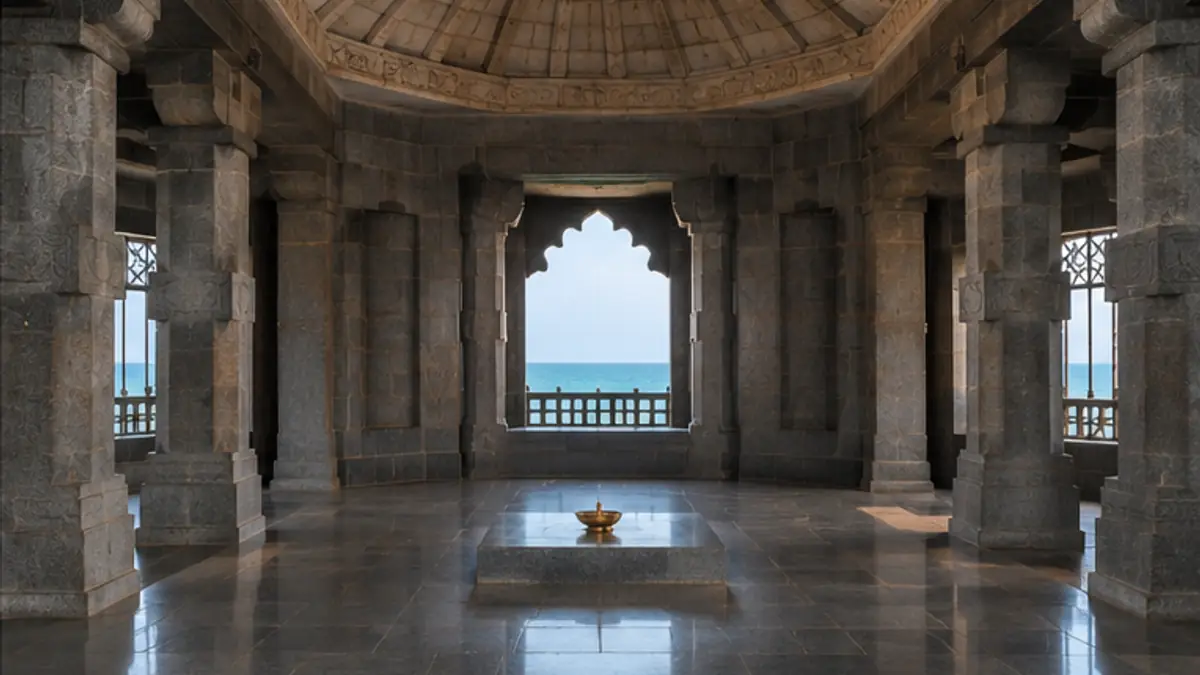
The hall enforces strict silence, offering a quiet sanctuary away from coastal crowds. The acoustic design absorbs outside wind noises while channeling the low frequency roar of breaking waves into a calming meditative background hum.
Shripada Mandapam and Ancient Devi Footprint
Surrounding a distinct rock projection believed to be the divine footprint of Goddess Kanya Kumari, this square granite shrine displays classic Dravidian temple architectural motifs, including intricate pillars and tiered stone roofs.
Pilgrims circumambulate the sanctum to pay homage to the sacred footprint (Shripada Parai). Legend holds that Goddess Parvati performed rigorous tapas on this solitary rock while seeking the hand of Lord Shiva, consecrating the island long before modern times.
Consult the Vivekananda Rock Memorial architectural and historical records for archival details regarding the nationwide stone collection and civil society efforts that built the monument between 1963 and 1970.
The 133-Foot Thiruvalluvar Statue: Symbolism and Structure
Standing 133 feet tall to symbolize the 133 chapters of the ancient Tamil ethical treatise Tirukkural, the stone colossus of philosopher-poet Thiruvalluvar was sculpted by Dr. V. Ganapati Sthapati using over 7,000 tonnes of granite, unveiled in January 2000.
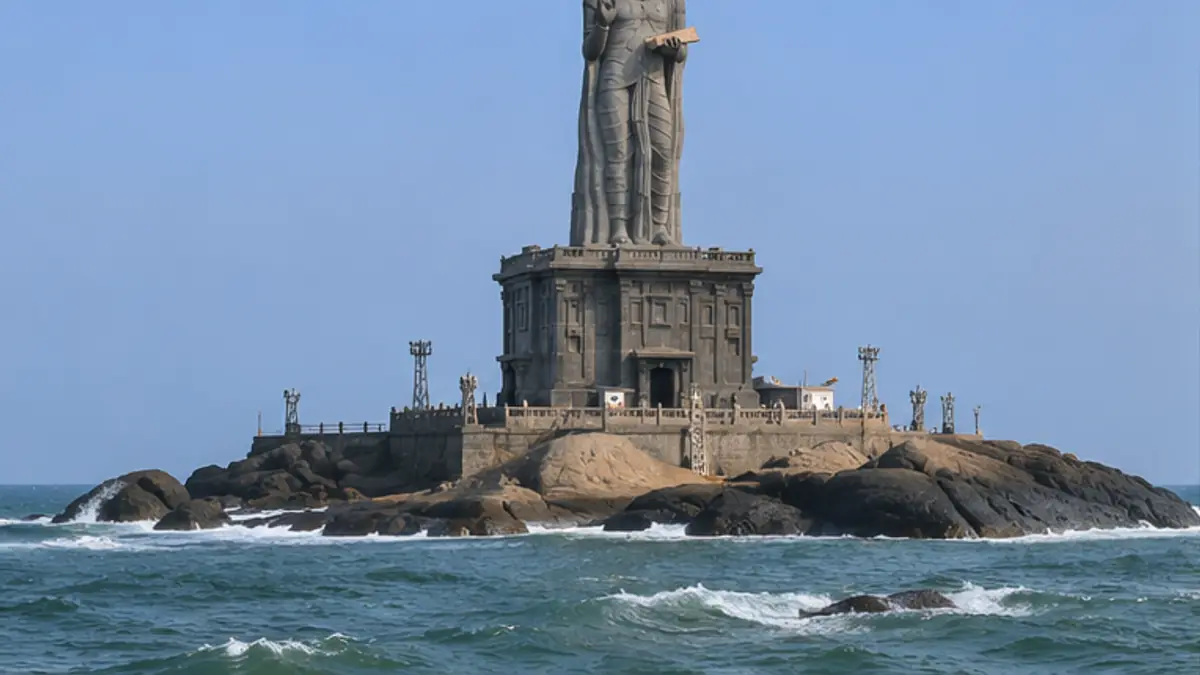
The monument stands on a separate rock adjacent to the Vivekananda Memorial. Walking across the newly completed glass bridge allows visitors to examine the massive interlocking stone blocks that withstand corrosive saltwater and oceanic gales without internal mortar degradation.
Architectural Geometry: Pedestal of Virtue and Body of Wealth
The 38-foot pedestal represents the 38 chapters of Virtue (Aram), while the 95-foot statue represents Wealth (Porul) and Love (Inbam). The statue’s slightly bent waist reflects the classic Indian tribhanga sculptural stance.
Sculpted according to strict Shilpa Shastra proportions, the statue’s right hand raises three fingers upward, symbolizing the three fundamental human pursuits of righteousness, wealth, and love. The hollow interior incorporates structural stone staircases ascending into the upper torso.
Inside the Hollow Pedestal and Verse Galleries
Visitors walking across the glass bridge can enter the spacious stone pedestal hall, lined with 140 carved stone pillars inscribed with classical Tirukkural couplets in Tamil and English, offering panoramic sea views.
The surrounding open-air gallery provides vantage points where travelers can observe fishing catamarans riding oceanic swells far offshore. For deeper sculptural metrics, examine the Thiruvalluvar Statue sculptural and engineering specifications.
Witnessing the Triveni Sangam Sunrise and Sunset
Kanyakumari is one of the rare places on earth where you can witness both sunrise and sunset over the ocean from the same coastal point. Triveni Sangam marks the geographic confluence of the Indian Ocean, the Arabian Sea, and the Bay of Bengal.
Just as cultural tourists explore classical Dravidian architectural wonders at Brihadisvara Temple in Thanjavur, travelers at Kanyakumari gather along the rocky shorelines at dawn to witness the sky change color over open water.
Sunrise from Sunrise View Point and Triveni Ghat
Between 06:00 AM and 06:30 AM, thousands gather along the stone steps of Triveni Ghat to watch the sun emerge directly behind the silhouettes of Vivekananda Rock Memorial and the Thiruvalluvar Statue.
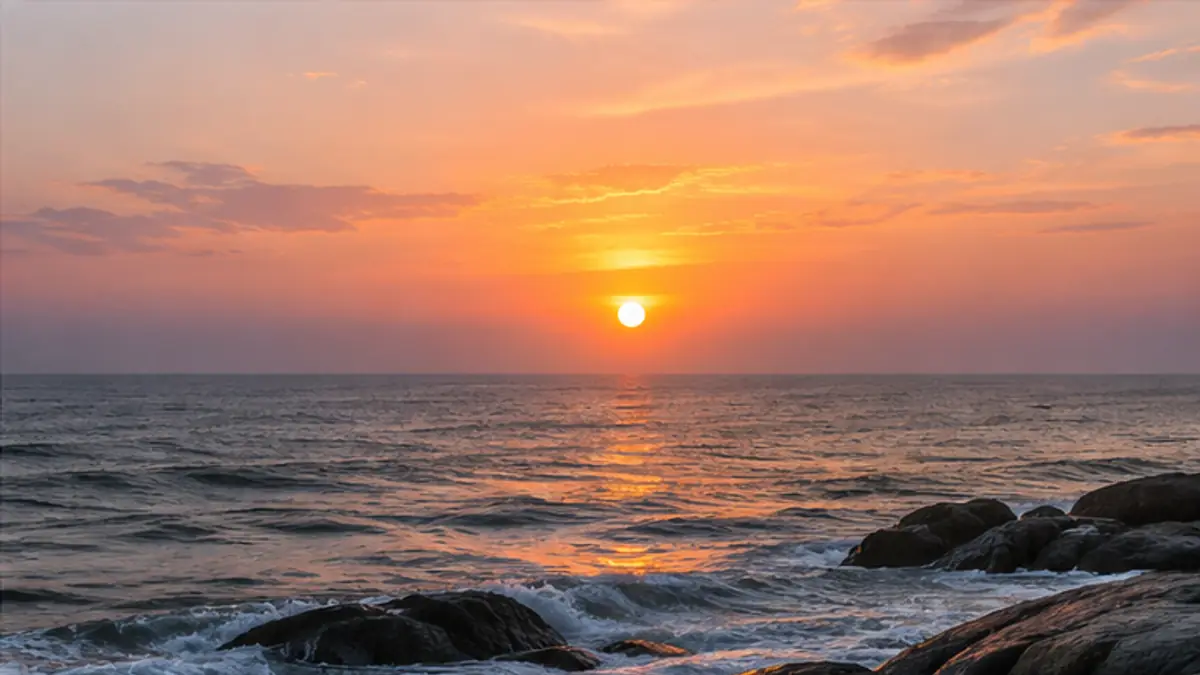
The morning light paints the sky in shades of saffron and deep crimson, reflecting across the surging surf. Because the sunrise occurs directly behind the offshore monuments, it creates dramatic photographic opportunities with the statues cast in sharp black relief against the glowing horizon.
Sunset at Sunset Point and Chithra Pournami Miracle
During the full moon of Chithra Pournami in April-May, visitors can witness the rare simultaneous phenomenon of the sun setting on the western horizon while the full moon rises over the eastern waters.
Even during ordinary winter evenings, the setting sun dips into the Arabian Sea near the circular Sunset View Point west of the town center. The confluence of oceanic currents often creates distinct colored water zones where deeper blue ocean waters meet coastal sea shallows.
Note
Detailed coastal guidelines and district tourism advisories are published on the District Administration Kanniyakumari Tourism Directory.
Nearby Kanyakumari Attractions and Coastal Itinerary
A complete visit to Kanyakumari pairs the offshore monuments with the 3,000-year-old Bhagavathi Amman Temple, the modernist pink stone Gandhi Memorial Mandapam, the historic Padmanabhapuram Wooden Palace, and circular coastal road trips along the southern tip of the peninsula.
Travelers admiring Dravidian craftsmanship like that found at Meenakshi Amman Temple architectural wonders will appreciate the rich cultural heritage clustered within walking distance of Kanyakumari beach.
Bhagavathi Amman Temple and Gandhi Memorial Mandapam
Located a short walk from the ferry jetty, the seashore temple honors Goddess Kanya Kumari, famous for her diamond nose-ring. Nearby, the Gandhi Memorial features an architectural aperture designed to let sunbeams strike the Mahatma’s ashes on October 2.
The temple follows traditional South Indian customs, requiring male visitors to remove their shirts before entering the inner prakaram. The sea-facing eastern gate remains permanently closed, legend holds, because the dazzling reflection of the deity’s diamond nose jewel once caused passing ships to mistake it for a lighthouse and shipwreck on the offshore reefs.
Padmanabhapuram Palace Day Excursion
Situated 37 kilometres inland toward Trivandrum, Padmanabhapuram Palace represents the zenith of traditional Kerala wooden architecture, showcasing 16th-century carved rosewood ceilings and polished black mica floors.
The palace served as the ancestral seat of the Travancore kings before they shifted their royal capital to Trivandrum in 1795. Touring the four-storey King’s Council Chamber and the traditional Southern Kalaripayattu martial arena provides a fascinating cultural contrast to Kanyakumari’s maritime monuments.
State-wide tourism circuits and accommodation details are available through the Tamil Nadu Tourism official portal.
Frequently Asked Questions About the Kanyakumari Glass Bridge
Is the sea glass bridge in Kanyakumari open to visitors?
Yes, the 77-metre sea glass bridge connecting Vivekananda Rock Memorial to the Thiruvalluvar Statue is open to visitors holding valid ferry tickets. It provides an elevated pedestrian crossing directly over the ocean waves.
How do you reach the glass bridge in Kanyakumari?
The glass bridge can only be accessed by boarding the official Poompuhar Shipping ferry from the mainland jetty at Vavathurai. There is no pedestrian path or bridge connecting the mainland directly to the offshore rocky islands.
What are the operating hours for the Kanyakumari ferry service?
Ferry services generally operate daily between 8:00 AM and 4:00 PM, with the last boat returning from the rocks around 5:00 PM. Ferry operations are subject to favorable sea tides, swell heights, and weather conditions.
How much does the ferry ticket cost in Kanyakumari?
A standard round-trip ferry ticket costs approximately ₹75 to ₹100 per person for normal entry. A Special Entry VIP ticket costs ₹300, granting fast-track access through an air-conditioned lounge to bypass the general queue.
Can you book Kanyakumari ferry tickets online in advance?
Yes, tickets can be booked online through the official Tamil Nadu government Poompuhar ferry portal psckfs.tn.gov.in. Booking ahead is highly recommended during winter peak season and holiday weekends.
How tall is the Thiruvalluvar Statue in Kanyakumari?
The stone statue of saint-poet Thiruvalluvar stands 133 feet tall, commemorating the 133 chapters of his masterpiece, the Tirukkural. It comprises a 38-foot pedestal representing Virtue and a 95-foot sculpted figure representing Wealth and Love.
What is the best time of year to visit Kanyakumari?
The best season to visit Kanyakumari is from October to March when coastal temperatures range comfortably between 22°C and 30°C. Ocean swells are calmer during winter months, ensuring dependable daily ferry sailings.