Kedarnath Jyotirlinga Temple: Timings, Trek & Guide
Plan your visit to Kedarnath Jyotirlinga Temple with daily darshan timings, aarti schedules, 16 km trek route from Gaurikund, and yatra registration.
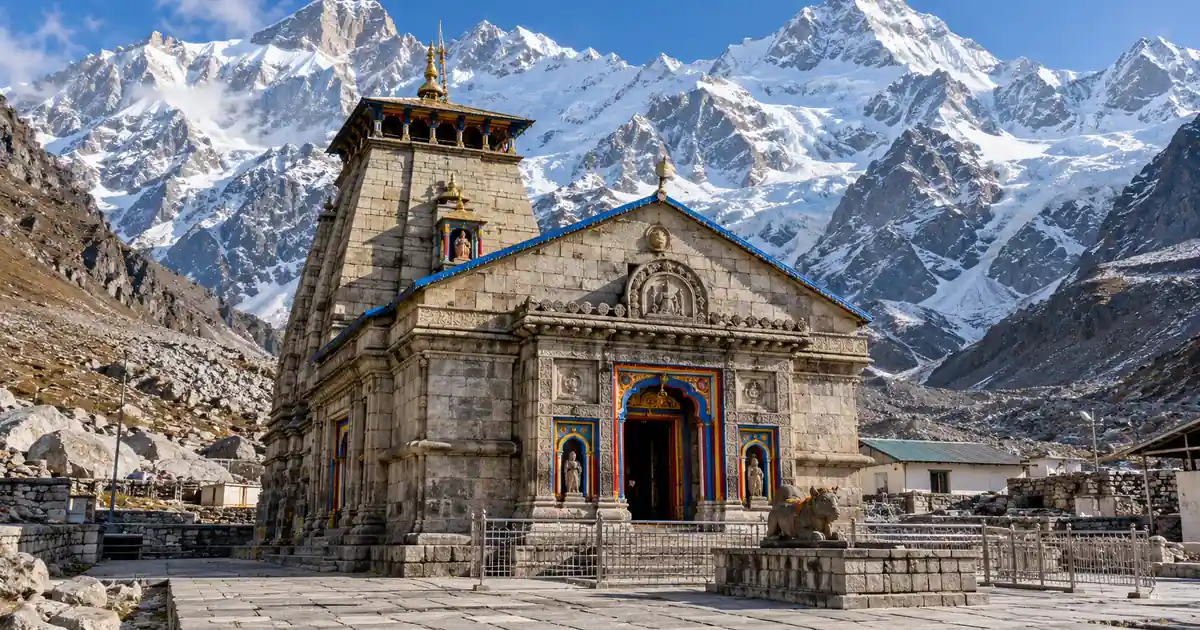
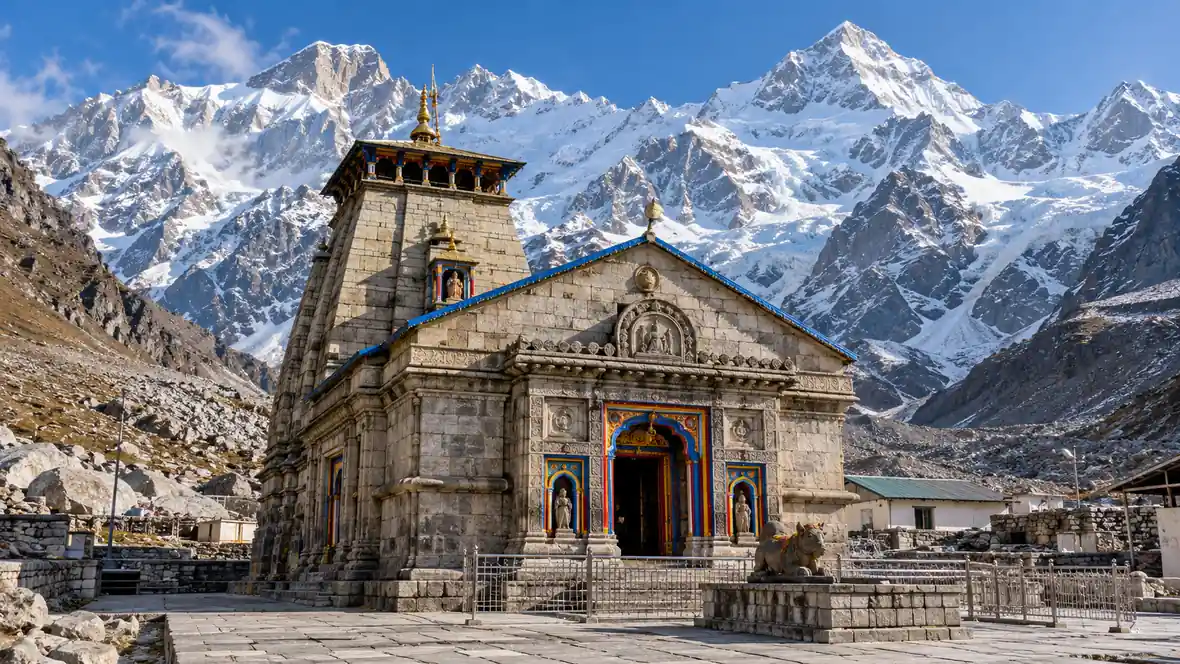
Kedarnath Jyotirlinga Temple stands at an altitude of 3,584 meters near the head of the Mandakini River in the Rudraprayag district of Uttarakhand. Revering Lord Shiva as the Lord of Kedar Khand, it is the highest of the twelve Jyotirlingas and the most prominent shrine along the high Himalayan pilgrimage circuits.
The temple forms the spiritual centerpiece of the annual Char Dham Yatra pilgrimage route, drawing pilgrims between May and November before severe winter snow isolates the mountain valley. Pilgrims undertake a demanding 16-kilometer uphill trek from the roadhead at Gaurikund to reach the stone sanctum.
Yatra & Darshan Essentials
- Kedarnath Jyotirlinga is situated at an elevation of 3,584 meters (11,759 feet) in the Rudraprayag district of Uttarakhand near the Mandakini River.
- The temple remains open seasonally for six months, commencing on Akshaya Tritiya (late April or early May) and closing on Bhai Dooj following Diwali.
- The uphill trek from Gaurikund base camp covers 16 kilometers with an elevation gain of 1,600 meters, taking 6 to 8 hours on foot or 4 hours on horseback.
- Mandatory biometric registration must be completed through the Uttarakhand Government tourism portal before entering the mountain transit corridor.
Kedarnath Darshan, Aarti & Puja Schedule
What are the daily temple operating hours and ritual timings at Kedarnath? General public darshan opens daily at 4:00 AM for early morning prayers and pauses between 3:00 PM and 5:00 PM for cleaning, concluding at 9:00 PM after evening Sandhya Aarti. All official religious rites and token reservations are coordinated in partnership with the Uttarakhand Tourism Kedarnath Destination Guide.
The daily liturgical timetable follows a structured sequence:
| Ritual / Puja | Time Slot | Pilgrim Guidelines |
|---|---|---|
| Maha Abhishek & Rudrabhishek | 4:00 AM – 7:00 AM | Pre-booked special puja tokens |
| Morning General Darshan | 7:00 AM – 3:00 PM | Free queue; touch darshan permitted |
| Mandir Vishram (Sanctum Closed) | 3:00 PM – 5:00 PM | Doors closed for cleaning & rest |
| Evening Shringar Darshan | 5:00 PM – 7:00 PM | Darshan from sabha mandap barrier |
| Sandhya Aarti | 7:00 PM – 8:30 PM | Open evening viewing from courtyard |
| Shayan Aarti & Temple Closing | 8:30 PM – 9:00 PM | Night prayer and final sanctum closure |
Before 3:00 PM, pilgrims inside the inner sanctum are permitted to offer ghee and touch the triangular natural rock lingam directly. During evening hours, the deity is adorned in regal silken attire and viewable only from the sabha mandap.
Kedarnath is venerated as the eleventh shrine among the sacred 12 Jyotirlingas of Lord Shiva, drawing devotees from all over the world. Advance bookings for specialized abhishek ceremonies can be secured online through the official temple committee portal.
Gaurikund to Kedarnath Trek Route, Distance, and Stops
How long is the trek to Kedarnath, and where can travelers rest along the mountain trail? The trek from Gaurikund to Kedarnath spans 16 kilometers along a paved stone mountain path, ascending 1,600 vertical meters through the Mandakini gorge.
The alignment was rebuilt following the 2013 flash floods, providing wider stone paths, concrete railings, and medical shelters. Trek trail profiles and shelter waypoints are published by the Uttarakhand Tourism Development Board Kedarnath Destination Directory.
Key staging camps along the route include:
- Gaurikund (1,982 m): The motorable roadhead, featuring natural thermal hot springs where pilgrims bathe before beginning the ascent.
- Jungle Chatti (4 km from Gaurikund): The initial resting plateau with tea stalls, bio-toilets, and drinking water dispensing points.
- Bheembali (7 km from Gaurikund): A mid-way waypoint providing GMVN tented accommodation, health posts, and refreshment canteens.
- Lincholi (11 km from Gaurikund): The primary high-altitude base camp, offering overnight dormitory tents, warm bedding, and food stalls.
- Kedarnath Base Camp (15 km from Gaurikund): The final plateau located one kilometer before the temple, hosting pre-fabricated GMVN cottages and medical stations.
Hikers should begin their ascent from Gaurikund before 6:00 AM to reach the temple plateau before afternoon fog and cold mountain rains set in.
Helicopter Services and IRCTC Heli-Yatra Booking
Helicopter services provide a rapid transit alternative for senior citizens, families with young children, and pilgrims unable to hike the steep mountain trail. Flights take off from three operational helipad sectors in the valley: Guptkashi, Phata, and Sersi.
All helicopter tickets are sold exclusively through the official IRCTC Heli-Yatra portal to prevent black-market ticket fraud. Round-trip helicopter fares range between ₹5,500 and ₹8,500 per passenger depending on the departure helipad sector.
Helicopter flights land at the Kedarnath helipad, located roughly 700 meters from the temple entrance. Passengers booking same-day return flights receive an expedited darshan slip providing priority entry into the temple queue for a two-hour window. Devotees planning broader Jyotirlinga circuits like the Grishneshwar Jyotirlinga in Maharashtra will find the helicopter logistics unique to Kedarnath due to its high-altitude setting.
Sacred Origins, Pandava Lore, and Adi Shankaracharya Samadhi
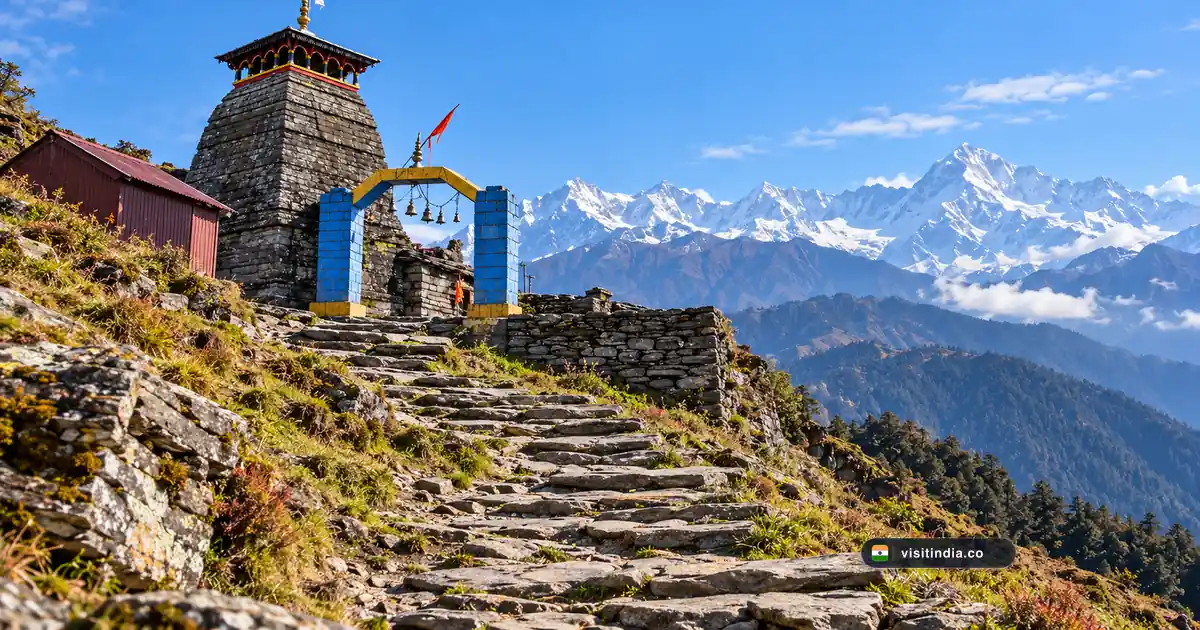
According to the Mahabharata, the Pandava brothers sought forgiveness from Lord Shiva to cleanse the sins of fratricide following the Kurukshetra war. Shiva assumed the form of a bull to evade them, diving into the earth at Kedarnath. The triangular hump remained above ground here, while other parts of his divine form manifested across the remaining Panch Kedar shrines (Tungnath, Rudranath, Madhyamaheshwar, and Kalpeshwar).
The temple structure itself was revived in the 8th century CE by Adi Shankaracharya, the revered philosopher who unified Hindu monastic orders. Adi Shankaracharya took mahasamadhi behind the Kedarnath temple at the age of thirty-two.
A large memorial shrine dedicated to Adi Shankaracharya, housing a twelve-foot black chlorite stone statue, stands directly behind the temple complex. When severe snow shuts down the shrine for winter, the deity’s silver palanquin is escorted down the mountainside to its winter seat at Omkareshwar Temple in Ukhimath.
Mandatory Char Dham Yatra Registration and Medical Guidelines
What official procedures and health clearances are required before visiting Kedarnath? Every traveler must complete advance registration through the Uttarakhand Tourism Spiritual Pilgrimage Guidelines, with regional transit updates published on the Rudraprayag District Administration portal.
Registration generates a unique Yatra Registration Number (YRN) and a QR code, which are verified at police checkpoints along the highway corridor:
- Biometric Verification: Pilgrims receive a physical RFID wristband or mobile pass upon showing valid government photo identification at verification kiosks in Haridwar, Rishikesh, or Sonprayag.
- Health Advisory for Altitude: Due to the altitude of 3,584 meters, air pressure is lower and oxygen levels drop noticeably. Pilgrims with cardiovascular conditions or chronic respiratory ailments must carry physician clearance and portable oxygen cans.
- Acclimatization Rest: Taking an overnight rest at Guptkashi, Sonprayag, or Lincholi allows travelers to acclimatize naturally before climbing past the 3,000-meter threshold.
- Appropriate Gear: Temperatures at Kedarnath drop below freezing even during summer nights. Layered woolen clothing, waterproof trekking jackets, sturdy hiking boots, and trekking poles are essential gear items. Devotees accustomed to urban shrines like Kashi Vishwanath Temple in Varanasi should take extra precautions for the extreme alpine climate.
How to Reach Gaurikund Base Camp from Rishikesh and Haridwar
How do travelers travel to the Gaurikund roadhead from major transport centers? The journey begins from the railheads at Rishikesh (216 km) or Haridwar (240 km), connecting through the scenic valleys of Rudraprayag along National Highway 107.
- By Road from Rishikesh: Regular state transport buses and shared utility sumos depart from Rishikesh ISBT between 4:00 AM and 7:00 AM daily, traveling via Devprayag, Srinagar, and Rudraprayag to reach Sonprayag in 8 to 10 hours.
- Sonprayag to Gaurikund Shuttle: Private vehicles and inter-district taxis are stopped at Sonprayag. From Sonprayag, government-authorized local jeep shuttles transport passengers across the final 5 kilometers to Gaurikund for ₹50 per passenger.
- By Air: Jolly Grant Airport in Dehradun (238 km) is the nearest airport, connected to major metro cities by scheduled flights. Taxis from Dehradun airport to Sonprayag charge approximately ₹6,000 to ₹8,000 one-way.
- By Train: Rishikesh and Haridwar serve as the principal railheads, with direct express services arriving from Delhi, Mumbai, and Kolkata.
Pilgrims completing their sacred Himalayan circuit can continue 215 kilometers eastward across Chopta and Chamoli to complete their Vaishnavite darshan in our Badrinath Temple pilgrimage guide.
Frequently Asked Questions About Kedarnath Jyotirlinga
What are the daily darshan timings at Kedarnath Temple?
General darshan opens at 4:00 AM with the morning Maha Abhishek and continues until 3:00 PM, when sanctum doors close for cleaning. The temple reopens for evening darshan and the sacred Sandhya Aarti from 5:00 PM until closing at 9:00 PM.
How long does the trek from Gaurikund to Kedarnath take?
The 16-kilometer uphill trek from Gaurikund typically requires six to eight hours for hikers on foot, depending on fitness and rest intervals. Pilgrims hiring ponies or mules complete the climb in approximately four to five hours.
When does Kedarnath Temple open and close for pilgrims each year?
The temple opens annually on Akshaya Tritiya in late April or early May, determined by priests at the Ukhimath Omkareshwar temple. It closes for winter on Bhai Dooj in late October or early November, after which the deity’s idol relocates to Ukhimath.
Is advance registration mandatory for visiting Kedarnath?
All pilgrims must register in advance through the official Uttarakhand Government Char Dham Yatra web portal or mobile application. Registration wristbands and QR verification tokens are checked at checkpoints along the highway starting from Haridwar and Rishikesh.