Maratha Military Landscapes: UNESCO Forts of Maharashtra Guide
Explore the 12 UNESCO Maratha Military Landscapes across Maharashtra and Gingee. Plan with Raigad Ropeway timings, trekking routes, ticket fees, and maps.
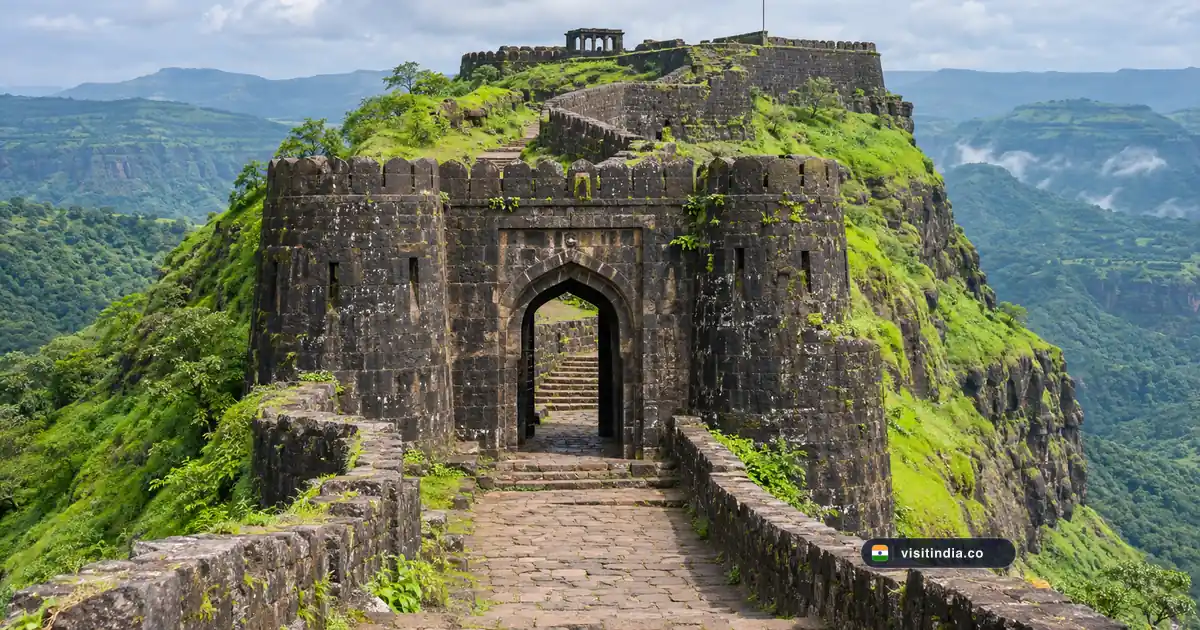
Rising along the rugged ridges of the Western Ghats and projecting outward into the Arabian Sea, the maratha military landscapes unesco forts represent a sophisticated regional defense network. Developed between the seventeenth and nineteenth centuries under the leadership of Chhatrapati Shivaji Maharaj and his successors, this ensemble includes twelve anchor fortifications designed to harness volcanic cliffs, jungle passes, and rocky maritime islands.
Unlike conventional bastions that relied solely on masonry walls, the Maratha fortifications merged human architecture with untamed topography to counter larger armies. Exploring these historic bastions offers travelers a journey through living Maratha history, scenic Sahyadri mountain trekking trails, and dramatic coastal sea fort expeditions across Maharashtra.
Visitor & Architectural Essentials
- Nomination Scope: Twelve component forts across Maharashtra and Tamil Nadu recognized on the UNESCO World Heritage list for extraordinary military landscape engineering.
- Anchor Fortresses: Raigad (Imperial Capital), Shivneri (Birthplace of Shivaji), Rajgad (Longtime Capital), Pratapgad, Sindhudurg, and Vijaydurg.
- Transit Bases: Pune serves as the best hub for inland hill forts, while Mumbai and Ratnagiri provide road connectivity to coastal citadels.
- Operational Hours: Hill fort gates remain open daily from 6:00 AM to 6:00 PM; Raigad Ropeway operates daily from 8:00 AM to 5:00 PM.
- Admission Tariffs: ASI protected forts charge ₹25 for Indian citizens and ₹300 for foreigners; state-protected hill forts offer free admission.
Understanding the UNESCO Maratha Military Landscapes Serial Property
The Maratha Military Landscapes represent a serial UNESCO World Heritage property comprising twelve distinct fortifications that demonstrate a revolutionary military concept developed under Chhatrapati Shivaji Maharaj. The network incorporates hill forts, sea forts, plateau citadels, and forest redoubts spanning over six hundred kilometers of rugged Indian terrain.
According to official nomination records published by the Press Information Bureau, the property was inscribed under cultural criteria (iv) and (vi) for its exceptional architectural ensemble illustrating an innovative defense philosophy. Instead of altering the natural landscape, Maratha engineers integrated volcanic basalt scarps, sheer cliff faces, and ocean shoals directly into their outer ramparts.
Geographic Diversity Across Sahyadris and Konkan Coast
The serial nomination spans eight physiographic regions across Maharashtra, along with Gingee Fort situated in Tamil Nadu. The inland fortifications crown razor-sharp basalt ridges of the Sahyadri mountain range, where natural drops of hundreds of meters minimized the need for artificial stone walls.
Along the Konkan coastline, marine fortresses were constructed directly on sunken coral reefs and offshore rocky islands. These maritime bases controlled river estuaries and sea lanes against European naval powers and the Siddis of Janjira, creating a comprehensive multi-layered defensive cordon.
Chhatrapati Shivaji Maharaj and the 17th-Century Guerrilla Doctrine
Central to the architecture was the Maratha military doctrine of Ganimi Kawa, an asymmetrical guerrilla warfare strategy based on mobility, surprise, and terrain dominance. The forts were never intended as isolated garrisons; they functioned as interconnected command centers capable of rapid mutual signaling and troop support.
Each fort was equipped with sustainable rainwater harvesting reservoirs, grain storage cellars, and hidden escape sally ports (chor darwaja). When imperial armies besieged one stronghold, Maratha cavalry retreated into the rugged hinterlands, leaving the besiegers vulnerable to supply line interdiction and sudden counterstrikes.
| Fort Name | District / State | Fortification Type | Elevation / Setting | Key Strategic Role |
|---|---|---|---|---|
| Raigad Fort | Raigad, Maharashtra | Hill Fort | 820 meters | Imperial Maratha Capital & 1674 Coronation Site |
| Rajgad Fort | Pune, Maharashtra | Hill Fort | 1,376 meters | Strategic capital for 26 years; triple machi layout |
| Shivneri Fort | Pune, Maharashtra | Hill Fort | 1,065 meters | Birthplace of Chhatrapati Shivaji Maharaj; 7 defensive gates |
| Pratapgad Fort | Satara, Maharashtra | Hill-Forest Fort | 1,080 meters | Jawali forest pass guardian; site of 1659 Afzal Khan battle |
| Sindhudurg Fort | Sindhudurg, Maharashtra | Island Sea Fort | Coastal Arabian Sea | Offshore naval shipyard with 42 bastions |
| Vijaydurg Fort | Sindhudurg, Maharashtra | Coastal Fort | Estuarine promontory | Triple-walled naval citadel on Vaghotan River |
| Panhala Fort | Kolhapur, Maharashtra | Hill-Plateau Fort | 845 meters | Strategic southern pass guardian on trade routes |
| Salher Fort | Nashik, Maharashtra | High-Altitude Hill Fort | 1,567 meters | Highest fort in Maharashtra; 1672 battle site |
| Lohagad Fort | Pune, Maharashtra | Hill Fort | 1,033 meters | Vinchukata scorpions-tail spur guarding Bor Ghat |
| Suvarnadurg | Ratnagiri, Maharashtra | Island Sea Fort | Coastal Arabian Sea | Golden Fortress protecting Harnai port anchorage |
| Khanderi Fort | Raigad, Maharashtra | Island Sea Fort | Mumbai Harbour entrance | Maritime outpost commanding northern Konkan waters |
| Gingee Fort | Villupuram, Tamil Nadu | Hill Fort Complex | 250 meters | Southern outpost termed Troy of the East by the British |
Key Anchor Fortresses: Raigad, Shivneri, Rajgad, and Pratapgad
The heart of the Maratha Military Landscapes lies in four primary inland citadels that shaped the trajectory of Swarajya: Raigad, Shivneri, Rajgad, and Pratapgad. Each fort preserves distinct architectural features, from imperial assembly halls and coronation thrones to heavily fortified gatehouses designed to withstand elephant rams.
Visitors exploring these strongholds encounter authentic stone masonry that has endured over three centuries of monsoon downpours and historical conflicts. Combining visits to these sites provides an intimate look at seventeenth-century governance, military logistics, and religious devotion across the Deccan.
Raigad Fort: The Imperial Capital and Coronation Throne
Raigad Fort served as the official capital of the Maratha Empire under Chhatrapati Shivaji Maharaj, who celebrated his grand royal coronation (Rajyabhisheka) here on 6 June 1674. Perched on a solitary table mountain in the Sahyadris, the fort was selected by Shivaji for its near-impregnable natural cliffs that plunge hundreds of meters on all sides.
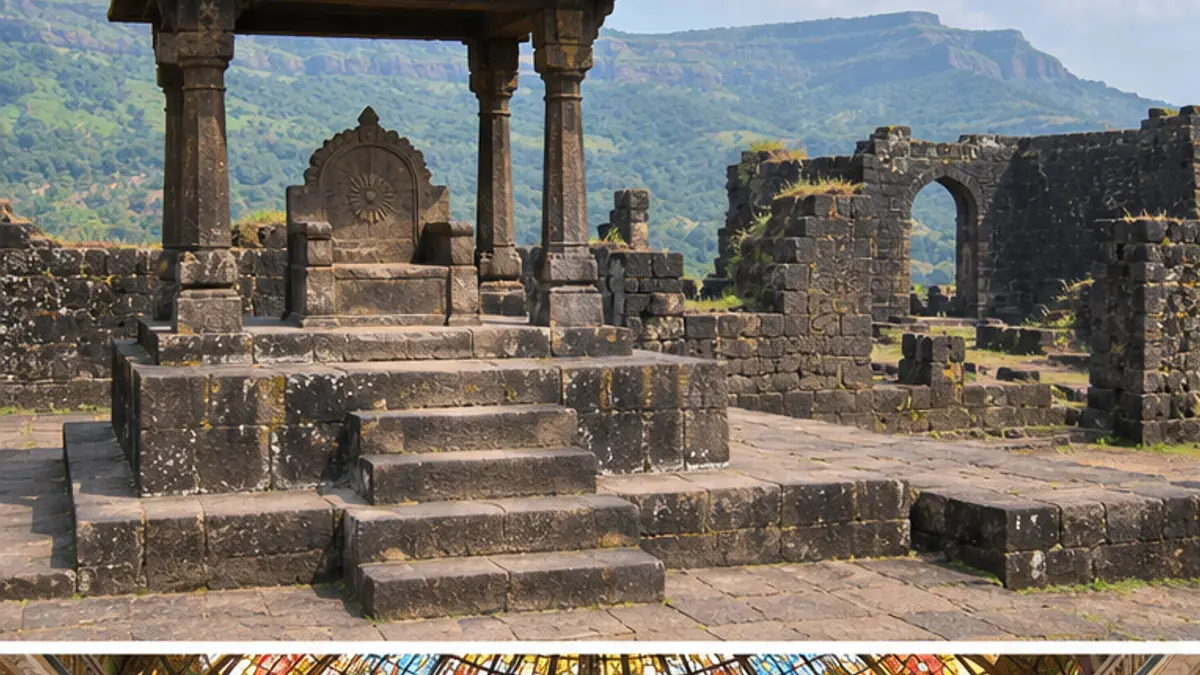
Within the citadel, travelers can walk through the Maha Darwaja, explore the ruins of the royal palace, and stand before the open-air Throne Enclosure (Raj Sabha), renowned for its extraordinary acoustic properties that carried whispers across the courtyard. At the western edge extends Takmak Tok, a sheer execution cliff, while the northern spur holds Hirkani Buruj, named after a brave milkmaid whose legendary climb inspired a massive stone bastion.
Shivneri Fort: Birthplace of Shivaji Maharaj in Junnar
Situated near the historic caravan town of Junnar, Shivneri Fort is revered as the birthplace of Chhatrapati Shivaji Maharaj on 19 February 1630. The fort rises through a series of seven heavily fortified gateway arches, including the Maha Darwaja, Pir Darwaja, and Hathi Darwaja, each constructed with bent entrances to prevent battering rams from gaining momentum.
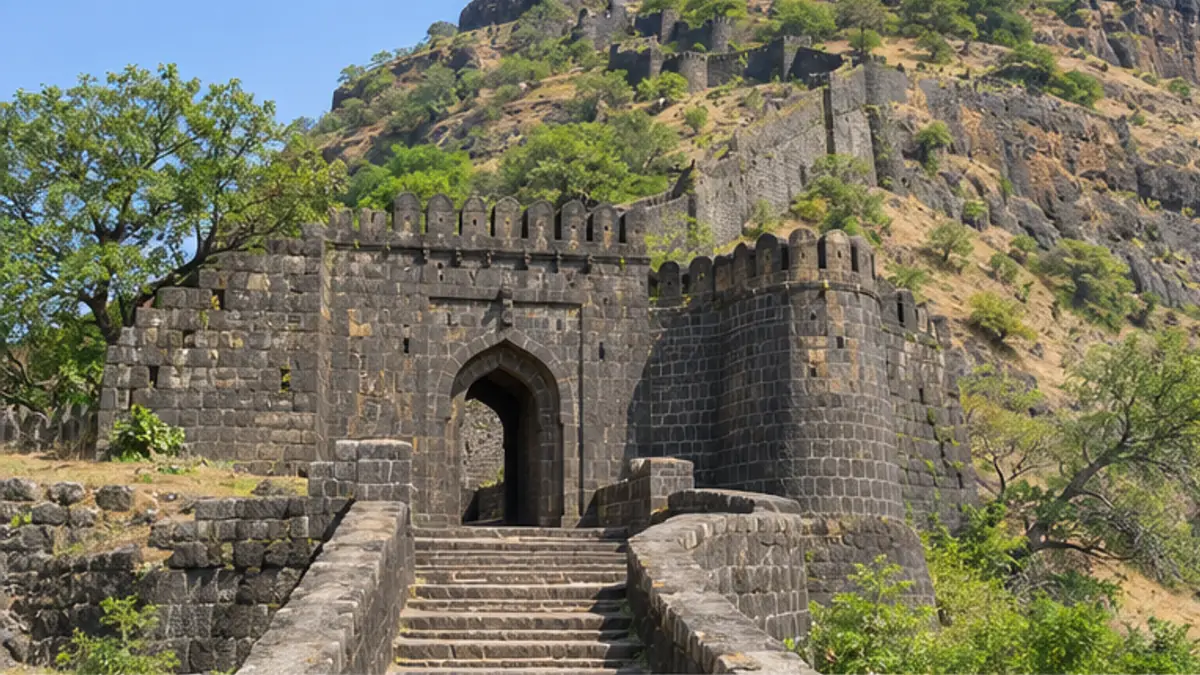
At the summit sits the restored two-story palace where Shivaji spent his early childhood under the tutelage of his mother, Rajmata Jijabai. Nearby stands the sacred Shivai Devi Temple, the rock-cut spring waters of Ganga and Jamuna cisterns, and the massive stone Ambarkhana, a grain storage warehouse capable of feeding thousands during protracted military blockades.
Rajgad and Pratapgad: Mountain Strongholds and Battlegrounds
Rajgad Fort served as Shivaji Maharaj’s operational capital for over twenty-six years before the court transferred to Raigad. The fortress features a unique triangular layout consisting of three expansive spurs (machi): the Padmavati Machi, Sanjeevani Machi, and Suvela Machi, all crowned by the central Balekilla citadel rising at 1,376 meters.
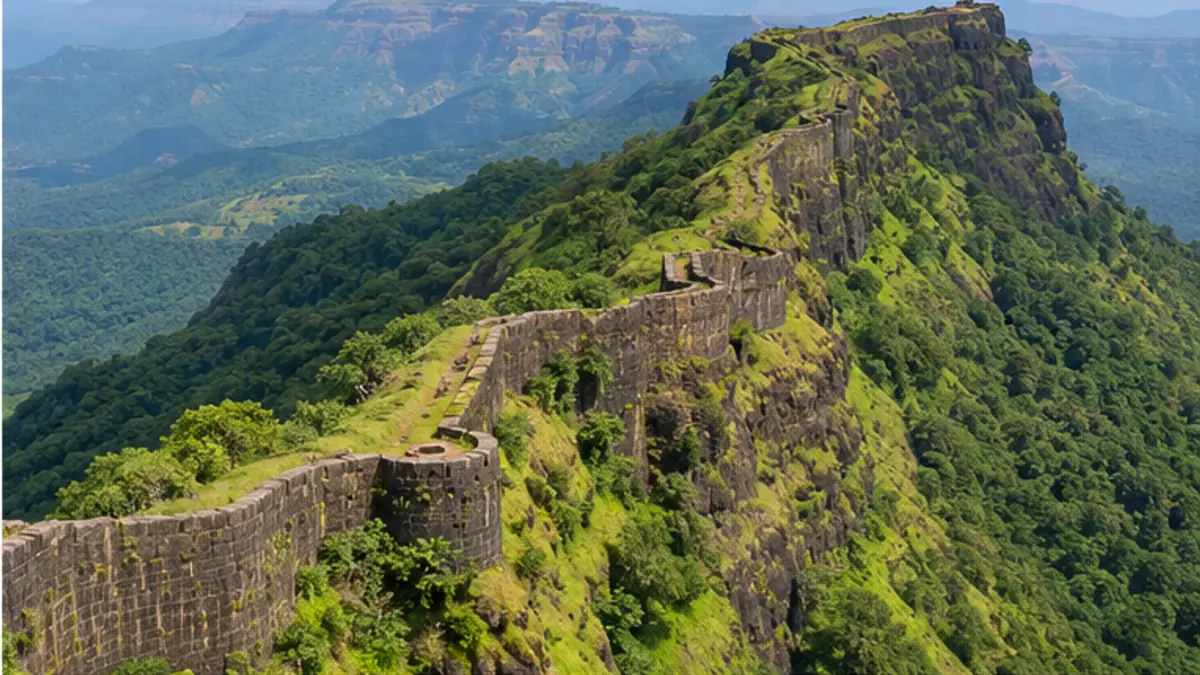
Further south in Satara district, travelers can explore Pratapgad Fort, which stands above the dense Jawali forests. Pratapgad is famed as the site of the historic 1659 duel where Shivaji Maharaj defeated the Bijapur general Afzal Khan, safeguarding the fledgling Maratha state. Within its walls, the historic Bhavani Mata Temple continues to attract thousands of pilgrims who come to honor the royal patron deity.
Pro Tip
Trekking vs. Ropeway at Raigad: Climbing Raigad on foot involves 1,450 steep stone steps that require two to three hours of vigorous hiking. Travelers with children, senior citizens, or limited time should utilize the Raigad Ropeway, which whisks passengers to the upper citadel in less than five minutes.
Naval Bastions and Island Fortresses: Sindhudurg and Vijaydurg
Chhatrapati Shivaji Maharaj was among the earliest Indian rulers to recognize the critical importance of naval power, creating the Maratha Navy (Armar) to protect coastal trade and counter European expansionism. The maritime components of the UNESCO serial nomination, led by Sindhudurg and Vijaydurg, demonstrate astonishing marine engineering along the Konkan shoreline.
Constructing massive stone fortresses in open ocean waters required innovative engineering methods that confounded contemporary European observers. Today, these coastal citadels remain among the best-preserved maritime fortifications on the Indian subcontinent, offering fascinating day-trip excursions from coastal resort hubs.
Sindhudurg Island Fortress: Foundations of Molten Lead
Constructed between 1664 and 1667 off the coast of Malvan, Sindhudurg Fort sits on the rocky Kurte Island, surrounded by the crashing waves of the Arabian Sea. The fortress was designed by Hiroji Indulkar and features over three kilometers of outer ramparts reinforced with forty-two semicircular stone bastions.
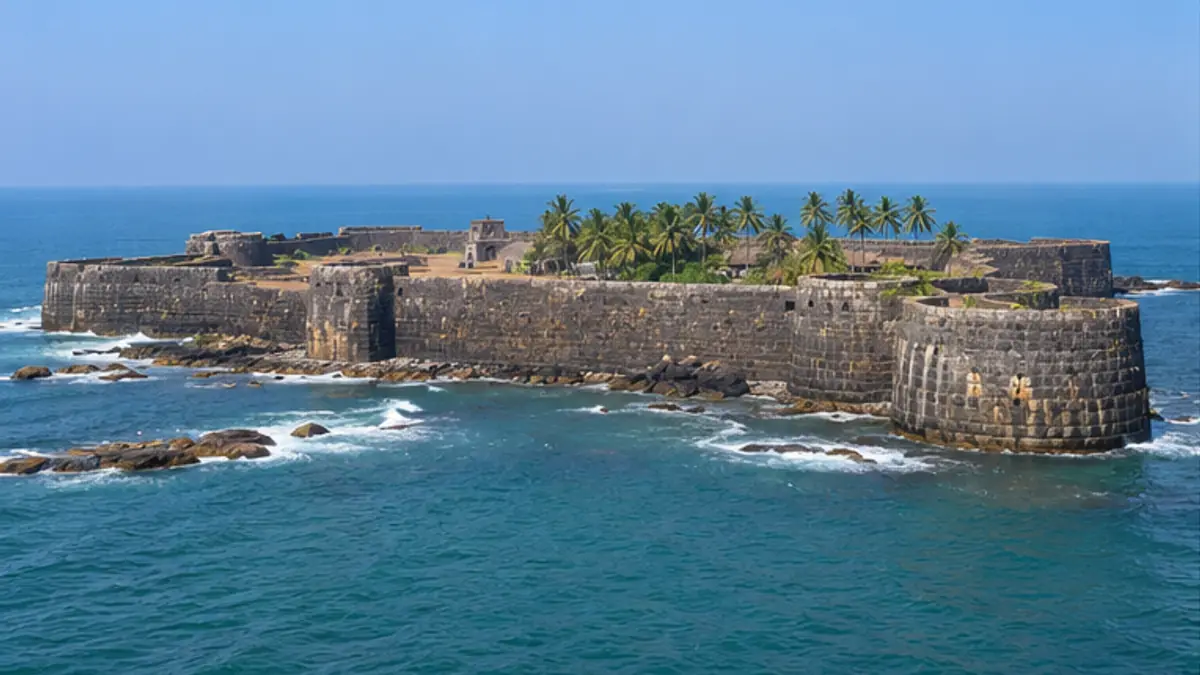
To establish stable foundations amidst treacherous ocean currents, Maratha engineers poured over seventy thousand kilograms of molten lead into underwater foundation trenches. Visitors can inspect the only known temple dedicated to Chhatrapati Shivaji Maharaj (Shri Shivarajeshwar Temple), as well as a sacred stone slab preserving the king’s palm and footprint impressions.
Vijaydurg: The Unconquered Eastern Gibraltar on Vaghotan River
Positioned on a narrow rocky promontory where the Vaghotan River empties into the Arabian Sea, Vijaydurg is the oldest fort along the Sindhudurg coast. Enhanced by Shivaji Maharaj with a triple line of defensive walls and twenty-seven bastions, the fort withstood repeated assaults by the British Navy, the Portuguese, and the Dutch, earning the moniker the Eastern Gibraltar.
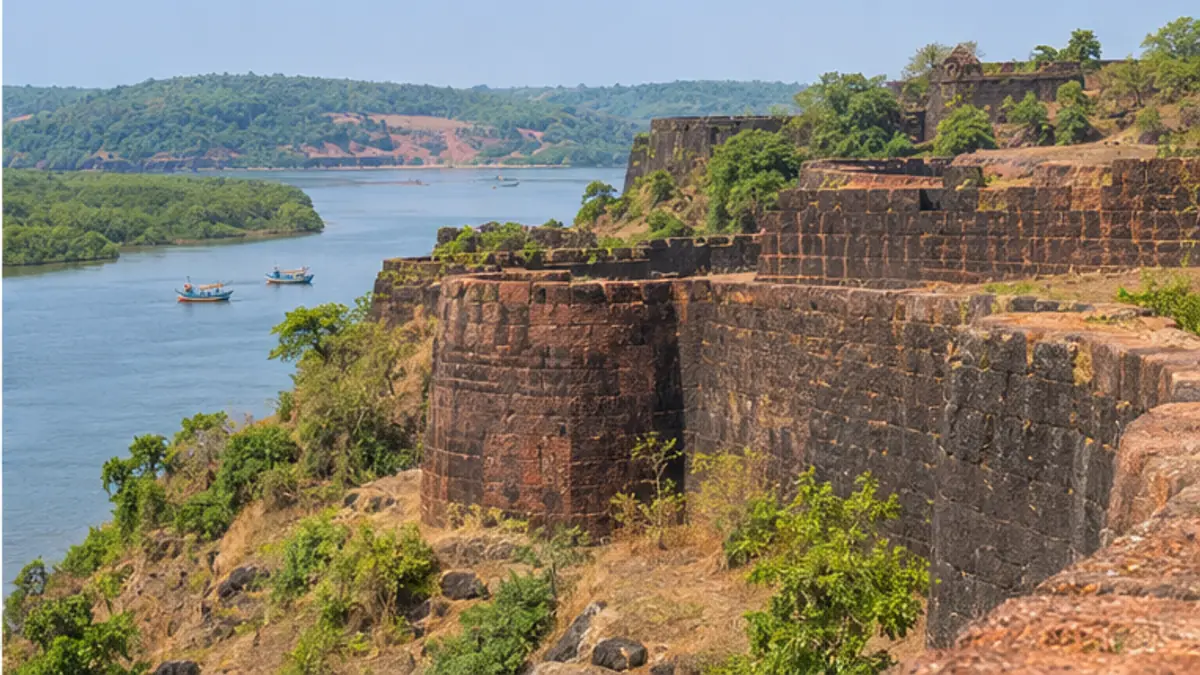
Marine archaeological surveys have revealed a submerged stone wall constructed three hundred meters offshore, designed to breach the hulls of enemy galleons attempting to approach the shallow estuary. The citadel also retains historic escape tunnels, freshwater storage tanks, and cannonball depots that reflect sophisticated seventeenth-century naval planning.
| Maritime Fortress | Departure Point / Jetty | Ferry Schedule | Return Ferry Fare | Key Architectural Highlight |
|---|---|---|---|---|
| Sindhudurg Fort | Malvan Dandi Beach Jetty | 8:00 AM to 5:00 PM (Hourly) | ₹110 per passenger | 42 ocean bastions and molten lead stone foundations |
| Vijaydurg Fort | Drive-in mainland promontory | 8:00 AM to 5:30 PM (Daily) | Free road access (₹25 ASI entry) | Submerged naval defense wall and triple rampart ring |
| Suvarnadurg Fort | Harnai Beach Port | 8:30 AM to 4:00 PM (Tide-dependent) | ₹150 to ₹200 (Private boat) | Outer sea gate carved directly into basalt sea crag |
| Khanderi Fort | Thal / Alibaug Beach | 9:00 AM to 3:00 PM (Permit required) | ₹300 to ₹500 (Charters) | Octagonal lighthouse and maritime battery bastions |
Visiting Hours, Trekking Routes, and Raigad Ropeway Timings
Timing your visits to the Maratha hill forts is crucial for avoiding extreme midday sun and ensuring reliable public transit connections. Inland hill forts typically permit pedestrian entry from dawn until dusk, while maritime ferries cease operations during rough tides and severe weather.
Because these fortifications are situated across high ridges and rural valleys, travelers should verify operating hours and transit frequencies beforehand. Planning realistic ascent times ensures you reach the summits with ample daylight to tour the palaces, temples, and viewpoints safely.
Raigad Ropeway Schedule and Operating Guidelines
For visitors heading to the Maratha capital, the official Raigad Ropeway provides an effortless cable car ascent from the base station at Gachad village to the upper plateau. Operating continuously between 8:00 AM and 5:00 PM daily, the ropeway covers an elevation gain of four hundred meters in approximately four minutes.
The return ticket fare costs approximately ₹400 for adults, which includes entry to the on-site historical museum and documentary screening. During weekends, festivals, and Shiv Jayanti celebrations, ticket queues can stretch to two hours, so arriving at the base terminal before 8:30 AM is strongly recommended.
Stone Staircase Trekking Durations and Trail Safety
For trekking enthusiasts, ascending the Maratha forts on foot offers an authentic appreciation of seventeenth-century hill warfare. Most routes feature well-defined stone staircases chiseled into the mountainside, though fitness levels and pacing determine overall hiking times:
- Raigad Fort: 1,450 stone steps from Pachad village base; takes 2 to 2.5 hours ascending and 1.5 hours descending.
- Shivneri Fort: Approximately 450 stone steps passing seven fortified gates; takes 1 to 1.5 hours of moderate walking.
- Rajgad Fort: Demanding trek via Gunjavane village route; requires 3 to 4 hours of steep climbing to reach Padmavati Machi.
- Pratapgad Fort: Roughly 450 stone steps from the parking lot to the upper citadel; takes 45 to 60 minutes at a leisurely pace.
Important
Trail Hydration and Monkeys: Carry at least two liters of drinking water per person on all hill fort climbs, as summit stalls frequently run out during dry winter afternoons. Be cautious with exposed food packets around the gateway staircases, where resident troops of bonnet macaques are adept at snatching snacks.
Entry Fees, Archaeological Passes, and Visitor Guidelines
The fortifications comprising the Maratha Military Landscapes fall under the jurisdiction of two primary bodies: the central Archaeological Survey of India and the Directorate of Archaeology and Museums of Maharashtra. Knowing which forts charge admission and where to obtain tickets helps ensure smooth entry.
Many smaller hill forts in the Sahyadris are open to the public free of charge, with local village committees maintaining sanitation and path markers. However, major national monuments enforce standardized ASI admission tariffs that mirror historical sites connected to Tuljapur Bhavani Temple.
Archaeological Survey of India Ticket Tariffs
Ticketed monuments including Raigad Fort, Lohagad Fort, Vijaydurg Fort, and Shivneri Fort follow the standard national heritage pricing structure. Indian citizens, visitors from SAARC countries, and BIMSTEC citizens pay ₹25 per entry ticket, while foreign nationals from non-SAARC nations pay ₹300 per ticket.
Children below the age of fifteen enter all ASI monuments free of charge. Visitors can purchase tickets directly at the entrance counters or book digital passes via the official government heritage portal, which offers a small discount on cashless transactions.
Local Guide Tariffs and Cloakroom Facilities
Hiring a certified local guide dramatically enhances the visit, bringing the strategic layouts and dramatic historical legends to life. Standardized guide fees range between ₹300 and ₹600 for a comprehensive two-hour tour across the main courtyards, bastions, and water systems.
Most hill fort trailheads provide modest cloakroom lockers or luggage storage shops run by local village cooperatives for ₹20 to ₹50 per bag. Visitors planning to ascend on foot should leave heavy backpacks at the base storage sheds and carry only daypacks with water, cameras, and sun protection.
| Location / Service | Indian Citizens | Foreign Nationals | Operating Authority |
|---|---|---|---|
| Raigad Fort Monument Ticket | ₹25 | ₹300 | Archaeological Survey of India |
| Raigad Ropeway (Both Ways) | ₹400 | ₹400 | Millenium Engineers / Private Lease |
| Shivneri Fort Entry | ₹25 | ₹300 | Archaeological Survey of India |
| Sindhudurg Island Ferry | ₹110 | ₹110 | Malvan Boatmen Cooperative Union |
| Local Heritage Guide (2 Hours) | ₹300 to ₹500 | ₹500 to ₹800 | Certified Local Tourism Guides |
| Trailhead Luggage Cloakroom | ₹20 to ₹50 | ₹20 to ₹50 | Village Panchayat Facilities |
How to Reach the Maratha Forts: Road, Rail, and Air Hubs
Due to their strategic dispersal along the Sahyadris and Konkan coast, the Maratha Military Landscapes are best explored by utilizing Pune or Mumbai as primary transportation gateways. From these urban engines, state highways and scenic mountain passes connect travelers to rural fort trailheads.
Travelers can easily combine train travel on Indian Railways with private taxis or Maharashtra State Road Transport Corporation (MSRTC) red buses that run frequent rural routes connecting district headquarters with fort base villages.
Pune Transit Hub for Shivneri, Rajgad, and Lohagad
Pune Junction Railway Station and Pune International Airport (PNQ) offer the most convenient transit springboard for exploring northern and central Maratha forts:
- Shivneri Fort (Junnar): Situated 95 kilometers north of Pune via NH-60; reachable in 2.5 to 3 hours by taxi or regular ST buses departing from Pune Shivajinagar bus stand.
- Rajgad Fort: Located 60 kilometers southwest of Pune via Bhor road; accessible in 2 hours by private car to the Gunjavane base village.
- Lohagad Fort: Positioned 65 kilometers west of Pune near Malavli railway station; can be reached via local suburban trains running between Pune and Lonavala.
Mumbai and Konkan Coastal Roadways for Island Fortresses
For visitors planning to explore maritime citadels like Sindhudurg, Vijaydurg, and Khanderi, Mumbai provides convenient road and rail connectivity:
- Sindhudurg Fort (Malvan): Located 490 kilometers south of Mumbai; travelers can board Konkan Railway express trains to Kudal (30 km away) or Kankavli (50 km away), followed by local taxis to Malvan port.
- Raigad Fort (Mahad): Situated 140 kilometers south of Mumbai via the Mumbai-Goa Highway (NH-66); the scenic drive takes approximately 3.5 to 4 hours to reach Pachad village.
- Khanderi Fort (Alibaug): Reachable via roll-on/roll-off ferries departing from Bhaucha Dhakka in Mumbai to Mandwa Jetty, connecting easily for travelers visiting Siddhivinayak Temple in Mumbai.
Best Season to Visit the Maratha Military Landscapes
The Western Ghats experience distinct climatic shifts, ranging from cool, crisp winter mornings to torrential monsoon downpours that transform the Deccan plateau into an emerald paradise. Understanding seasonal trail conditions ensures you pick the right window for your physical comfort.
While trekking enthusiasts frequently brave the monsoon to witness raging waterfalls, general sightseers and families will enjoy the cooler winter months when skies remain sunny and humidity drops.
Winter Exploration Window from October to March
The period from October through March represents the peak travel window for visiting the Maratha Military Landscapes. Daytime temperatures hover between 18°C and 28°C across the Sahyadri mountains, dropping to a refreshing 12°C to 15°C after nightfall.
During these months, atmospheric visibility is exceptionally clear, offering panoramic views across the Western Ghat valleys and sparkling blue waters around island fortresses. Coastal sea ferries to Sindhudurg and Suvarnadurg operate daily with calm seas, making maritime excursions safe and predictable.
Monsoon Fort Trekking Considerations from June to September
From late June through September, the southwest monsoon brings torrential rains to the Sahyadris, blanketing the basalt peaks in mist, clouds, and gushing waterfalls. Trekking during this season reveals lush green valleys and roaring mountain torrents, but requires serious preparation.
Stone staircases become extremely slippery due to black algae, and thick cloud cover can reduce visibility to less than five meters along cliffside trails like Takmak Tok. Additionally, all public ferry services to Sindhudurg, Suvarnadurg, and Khanderi remain suspended between June and September due to hazardous sea swells.
Recommended 4-Day Maratha Heritage Circuit Itinerary
To truly appreciate the engineering genius behind the Maratha Military Landscapes, travelers can follow a focused four-day road trip connecting the imperial capitals with mountain passes and coastal battlegrounds. This itinerary balances vigorous hilltop climbs with leisurely palace tours.
Starting from Pune and concluding near Mahabaleshwar or Mumbai, this route takes you through the heart of the Maratha homeland, with ample opportunities to sample authentic Maharashtrian cuisine along the highway.
Day 1 and Day 2: Pune, Shivneri, and Rajgad Strongholds
Begin Day 1 by driving north from Pune to Junnar to visit Shivneri Fort. Climb the seven defensive gateways in the cool morning air, visit the birthplace shrine of Chhatrapati Shivaji Maharaj, and enjoy a traditional lunch of pithla bhakri in Junnar town. In the afternoon, explore the rock-cut Lenyadri Buddhist caves before returning to Pune for an evening visit to the historic Shaniwar Wada.
On Day 2, set out early toward Rajgad Fort in Pune district. Spend the morning ascending to the Padmavati Machi and marveling at the zig-zagging defensive ramparts of Suvela Machi. In the afternoon, descend to Gunjavane and drive southwest across the scenic Varandha Ghat or Bhor pass toward Mahad, checking into a comfortable countryside resort near the base of Raigad.
Day 3 and Day 4: Raigad Coronation Capital to Pratapgad and Mahabaleshwar
Dedicate Day 3 to the imperial capital of Raigad Fort. Board the 8:30 AM Raigad Ropeway to ascend smoothly to the upper plateau, spending four hours walking through the Maha Darwaja, the royal palace ruins, the acoustics of the Royal Court, and the memorial samadhi of Shivaji Maharaj. Return via ropeway and drive two hours along the winding mountain highway to Mahabaleshwar.
On Day 4, visit Pratapgad Fort perched above the Jawali valley. Climb the 450 stone steps to explore the upper citadel, pay homage at the Bhavani Mata Temple, and examine the Afzal Khan battle site.
Conclude your tour with panoramic mountain views and fresh strawberries in the hill station before returning to Pune or Mumbai, or continuing your journey onward to ancient wonders like Ajanta and Ellora Caves.
Frequently Asked Questions About Maratha Military Landscapes
Which forts are included in the Maratha Military Landscapes UNESCO property?
The UNESCO serial property includes twelve fortifications comprising Salher, Shivneri, Lohagad, Khanderi, Raigad, Rajgad, Pratapgad, Suvarnadurg, Panhala, Vijaydurg, and Sindhudurg in Maharashtra, along with Gingee Fort in Tamil Nadu. Together, these sites represent the diversity of hill, forest, plateau, and coastal fortifications developed by the Marathas.
How do travelers reach Raigad Fort without climbing the stone stairs?
Travelers can take the official Raigad Ropeway from the base station at Gachad village, which ascends four hundred meters to the upper citadel in approximately four minutes. The aerial cable car operates daily between 8:00 AM and 5:00 PM and costs around ₹400 for a round-trip ticket.
Is Sindhudurg Fort open to tourists during the monsoon season?
Sindhudurg Fort is closed to visitors from June to September because passenger boat ferries from Malvan Dandi beach cannot operate safely in heavy monsoon sea swells. The optimal time to visit the island fortress is between October and May when waters are calm and boats run hourly.
What are the entry fees for visiting ASI protected Maratha forts?
The Archaeological Survey of India charges ₹25 per adult ticket for Indian citizens and ₹300 for foreign visitors at ticketed monuments such as Raigad, Shivneri, and Vijaydurg. Children under fifteen years of age receive free admission across all central government monuments.
Which is the highest fort among the Maratha Military Landscapes?
Salher Fort in Nashik district is the highest fort in Maharashtra, standing at an elevation of 1,567 meters in the northern Sahyadris. It witnessed the historic Battle of Salher in 1672, where the Marathas scored a decisive open-field victory against the Mughal army.
How many days are needed to complete a comprehensive Maratha fort tour?
A traveler requires at least four to five days to comfortably visit the core inland strongholds of Shivneri, Rajgad, Raigad, and Pratapgad without physical exhaustion. Adding the coastal naval citadels of Vijaydurg and Sindhudurg requires an extended seven-day itinerary along the Konkan highway.