Amer Fort, Nahargarh & Jaigarh: Jaipur Forts Guide
Plan your visit to Amer Fort, Nahargarh, and Jaigarh. Discover verified amer fort jaipur timings ticket light show details, composite passes, and routes.
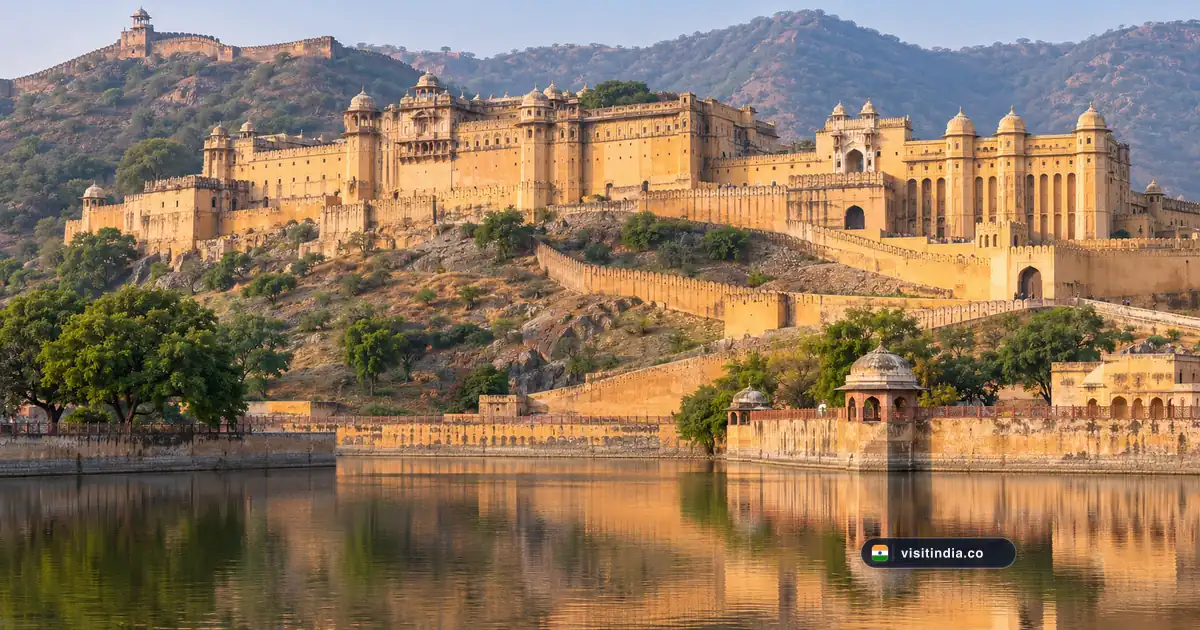
Perched high upon the rugged quartzite bluffs of the Aravalli range north of the Pink City, the historic fortress triad of Amer, Jaigarh, and Nahargarh forms one of the most formidable defensive bastions in northern India. Travelers planning their royal itinerary look for verified amer fort jaipur timings ticket light show details to coordinate visits across palatial mirror halls, hilltop cannon batteries, and sunset view terraces.
Begun in 1592 by Raja Man Singh I and expanded over centuries by Rajput rulers, this interconnected network guarded the Kachhwaha capital with thick stone ramparts, secret subterranean tunnels, and massive rainwater storage reservoirs. Exploring these hill fortresses offers travelers a deep dive into Rajput-Mughal court culture, military engineering, and desert fortifications across Rajasthan.
Visitor & Architectural Essentials
- The Fort Triad: Amer Fort (UNESCO World Heritage residential palace), Jaigarh Fort (military arsenal and foundry), and Nahargarh Fort (Aravalli sunset retreat).
- Operational Hours: Amer Fort operates from 8:00 AM to 5:30 PM for daytime tours and 6:30 PM to 9:15 PM for night tourism; Jaigarh opens from 9:00 AM to 5:00 PM; Nahargarh opens from 10:00 AM to 5:30 PM.
- Evening Light & Sound Show: Conducted daily at Amer Fort across Maota Lake in English (7:30 PM) and Hindi (8:30 PM).
- Ticketing Options: Individual Amer Fort ticket costs ₹100 for Indian citizens and ₹500 for foreign visitors; Rajasthan Department of Archaeology composite pass costs ₹300 for Indians and ₹1,000 for foreigners (valid for two days).
- Underground Link: A preserved 1-kilometer subterranean stone passage connects the palace courtyards of Amer directly to the upper military bastion of Jaigarh Fort.
The Aravalli Fort Triad: Amer, Jaigarh, and Nahargarh Explained
The three forts guarding Jaipur were engineered as a complementary military system rather than independent monuments. Amer Fort served as the opulent royal palace and administrative center, Jaigarh served as the fortified military citadel and cannon foundry protecting the royal treasury, and Nahargarh formed an outlying northern redoubt overlooking the southern plains.
According to architectural surveys preserved by the Department of Tourism, Government of Rajasthan, Amer Fort was inscribed as a UNESCO World Heritage site in 2013 as part of the serial property Hill Forts of Rajasthan. National conservation benchmarks documented by the Archaeological Survey of India protect surrounding buffer zones. The yellow and pink sandstone structures blend traditional Rajput courtyards and marble jali screens with Mughal garden geometries.
Amer Fort: The UNESCO Royal Residence Above Maota Lake
Amer Fort rises dramatically above the waters of Maota Lake, its perimeter walls ascending steep ridgelines to blend seamlessly into the natural rocky crags. The palace is organized around four successive open courtyards entered through ceremonial gateway arches.
Visitors enter through the Suraj Pol (Sun Gate) into the expansive Jaleb Chowk, where victory parades were historically reviewed by royal commanders. A stone flight of stairs leads to the sacred Shila Devi Temple, consecrated by Raja Man Singh I with a black stone idol of Goddess Kali brought from Jessore after a sixteenth-century military victory.
Jaigarh Fort: Victory Bastion and the Royal Armory
Positioned on Cheel ka Teela (Hill of Eagles) roughly four hundred meters above Amer Palace, Jaigarh Fort was constructed in 1726 by Maharaja Sawai Jai Singh II. Named the Fort of Victory, Jaigarh was designed with unadorned, heavy stone ramparts and never fell to enemy siege throughout its history.
The fort housed the royal mint and arms foundry, utilizing natural updrafts from the surrounding hills to fuel massive blast furnaces. Three enormous subterranean water tanks beneath the central courtyard could store six million gallons of rainwater harvested from mountain channels, sustaining the garrison and royal treasury through extended desert droughts.
Nahargarh Fort: The Tiger Citadel Overlooking the Pink City
Constructed in 1734 by Sawai Jai Singh II and expanded in 1868, Nahargarh Fort stands on a sheer precipice overlooking the urban grid of Jaipur. Originally named Sudarshangarh, the fort was renamed Nahargarh (Abode of Tigers) to pacify the spirit of the deceased Rajput prince Nahar Singh Bhomia, whose shrine was established within the ramparts.
The architectural centerpiece of Nahargarh is Madhavendra Bhawan, designed by Maharaja Sawai Madho Singh. This two-story palace contains nine identical two-floor residential apartments constructed for the king’s nine queens, linked by open verandahs and internal corridors that allowed the monarch to visit any queen without the knowledge of the others.
| Fortress Complex | Construction Era / Patron | Primary Function | Distinctive Architectural Marvel | Key Visitor Highlight |
|---|---|---|---|---|
| Amer Fort | 1592 (Raja Man Singh I) | Royal Palace & Administration | Yellow and pink sandstone palatial courts | Sheesh Mahal & Ganesh Pol gate |
| Jaigarh Fort | 1726 (Sawai Jai Singh II) | Military Arsenal & Treasury | Heavy cyclopean masonry walls | World’s largest wheeled cannon (Jaivana) |
| Nahargarh Fort | 1734 (Sawai Jai Singh II) | Defensive Redoubt & Retreat | Two-story palace suites for 9 queens | Madhavendra Bhawan & city sunset views |
Inside Amer Fort: Courtyards, Sheesh Mahal, and Ganesh Pol
Touring Amer Fort requires following a sequential ascent through four primary courtyards, each reflecting distinct levels of royal protocol and privacy. The transition from public military review grounds to private residential quarters is marked by increasingly elaborate architectural decoration.
A comprehensive walking tour through the state apartments takes between two and three hours. Travelers should allow ample time to study the intricate plaster relief work, imported Belgian glass mosaics, and natural vegetable-dye frescoes that adorn the upper gates.
Jaleb Chowk and the Ganesh Pol Gateway
After ascending the cobbled stone ramp from the base road, visitors enter Jaleb Chowk, the first major courtyard where royal bodyguards once assembled. From here, stairs ascend to the second courtyard, dominated by the Diwan-e-Aam (Hall of Public Audience), featuring a double row of red sandstone columns topped by sculpted elephant brackets.
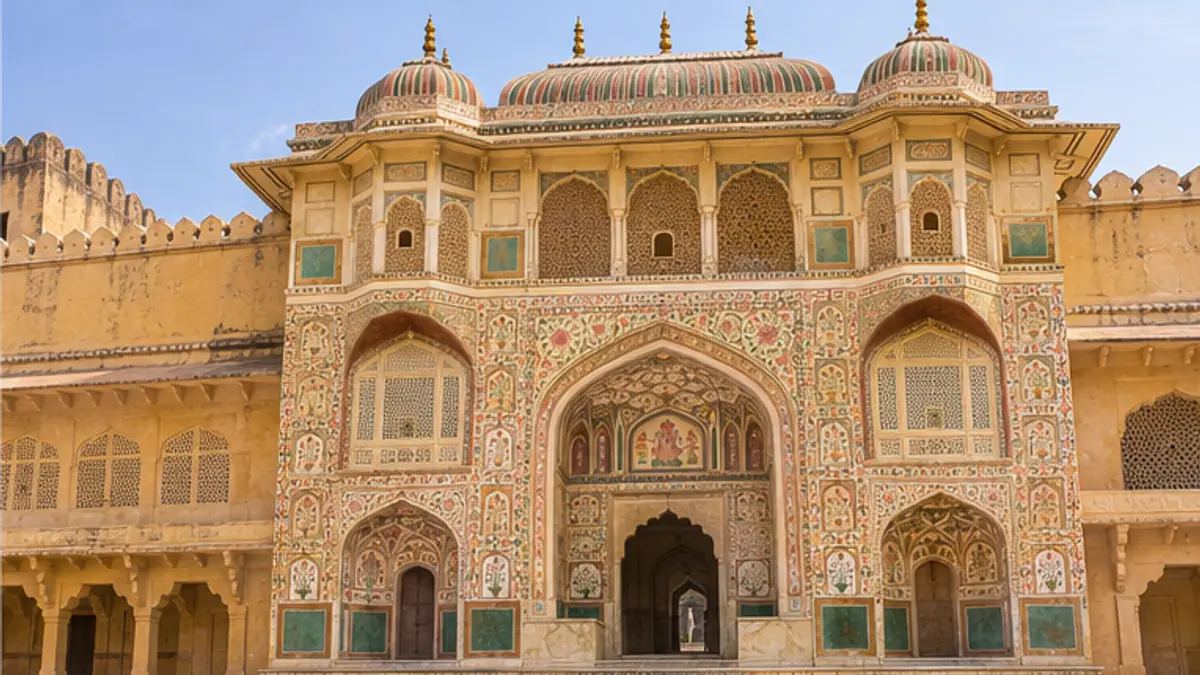
The transition to the inner private apartments is guarded by Ganesh Pol, considered one of the most beautiful palace gateways in India. Commissioned by Mirza Raja Jai Singh in 1640, the multi-story portal is covered in delicate natural frescoes depicting Lord Ganesha and geometric floral bands. Above the archway sits the Suhag Mandir, a latticed marble gallery where royal women watched court proceedings below without being seen.
Sheesh Mahal: The Dazzling Hall of Mirrors
Stepping into the third courtyard brings visitors to the world-renowned Sheesh Mahal (Mirror Palace), constructed under Maharaja Jai Singh I. The walls and ceilings of this pavilion are encrusted with thousands of imported convex glass mirrors set into intricate plaster floral scrollwork.
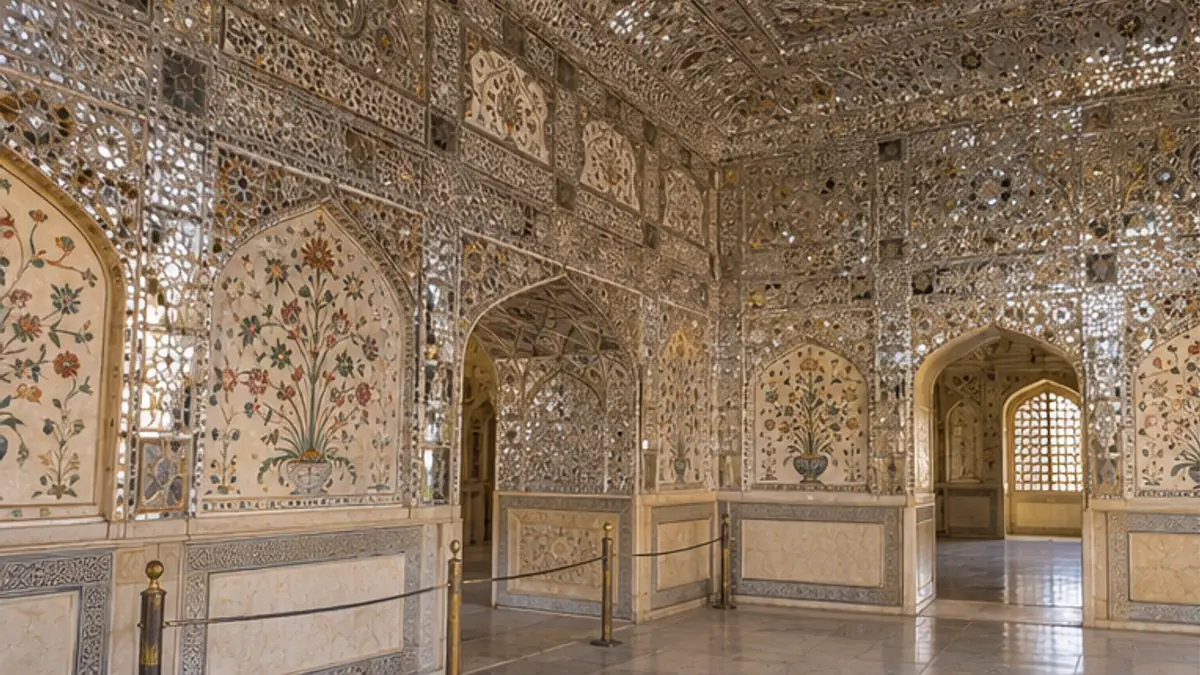
When illuminated by candlelight at night, the faceted mirrors reflect flickering points of light, creating the illusion of a starlit night sky across the ceiling. Directly opposite the Sheesh Mahal sits the Sukh Niwas (Hall of Pleasure), featuring sandalwood doors inlaid with ivory and an indoor marble cascade where chilled water flowed across decorative chutes to cool the desert air.
The Secret Subterranean Tunnel to Jaigarh Fort
Connecting the rear courtyards of Amer Fort to the upper military bastion of Jaigarh is an authentic seventeenth-century underground escape tunnel. Stretching for nearly one kilometer through solid rock, this covered passage was designed to evacuate the royal family and court treasures if Amer Palace ever fell to enemy artillery.
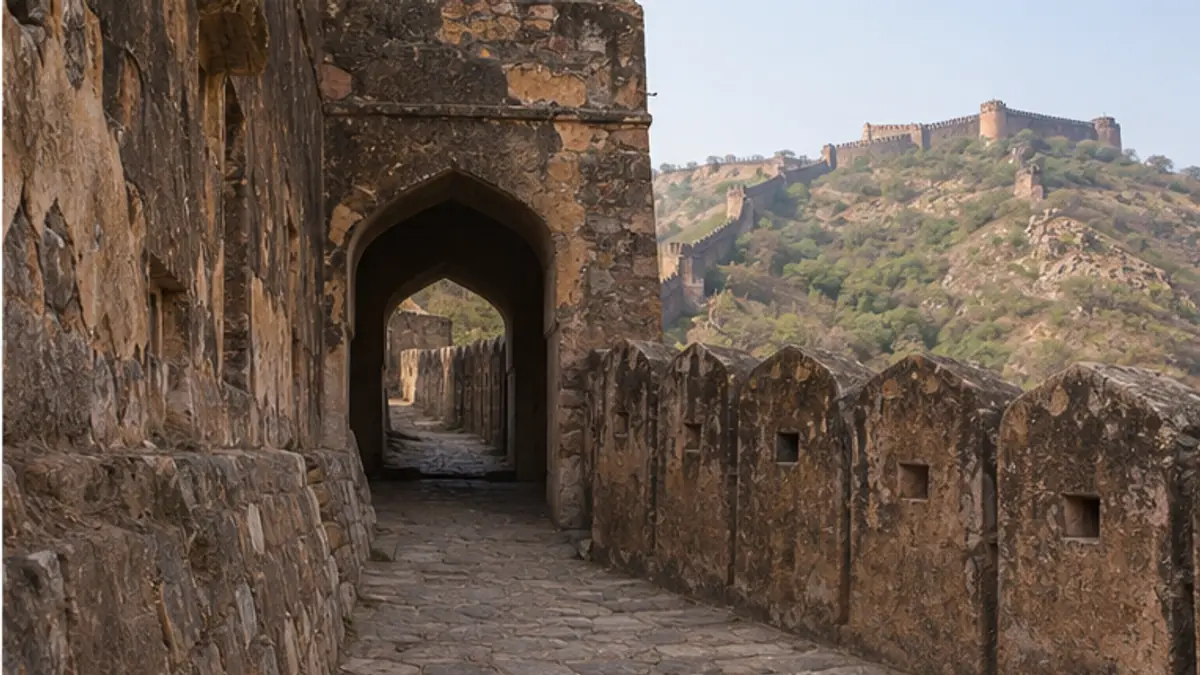
The tunnel has been cleared, lit, and reopened for public exploration, allowing adventurous travelers to walk underground from the Man Singh Palace courtyard all the way up to the Jaigarh entrance gate. Walking the tunnel takes roughly fifteen to twenty minutes and provides an extraordinary perspective on medieval military escape routes.
Pro Tip
Panna Meena ka Kund Stepwell: Located just one kilometer north of Amer Fort along the road to Kunda village sits Panna Meena ka Kund, a stunning sixteenth-century stepwell featuring symmetrical geometric criss-cross staircases. Visiting this quiet stepwell takes only twenty minutes and offers fantastic architectural photography before morning tour crowds assemble.
Jaigarh Fort and the 50-Ton Jaivana Cannon
Positioned atop the Hill of Eagles, Jaigarh Fort offers a stark contrast to the refined domestic luxury of Amer Palace. Built as an impregnable fortress to safeguard the imperial treasury and state armory, Jaigarh features thick unadorned stone ramparts, watchtowers, and military assembly grounds.
The fortress retains its historical cannon foundry, including deep crucibles, boring machines, and mechanical lathes driven by draft bullocks. Weapons enthusiasts can inspect historical muskets, shields, swords, and early gunpowder artillery displayed inside the central armory museum.
The World’s Largest Wheeled Cannon: Jaivana
The primary attraction at Jaigarh Fort is Jaivana, cast on the fort grounds in 1720 during the reign of Maharaja Sawai Jai Singh II. Measuring as the largest wheeled cannon in the world from the early modern era, Jaivana preserves a massive bronze barrel weighing fifty tons and measuring 20.2 feet in length.
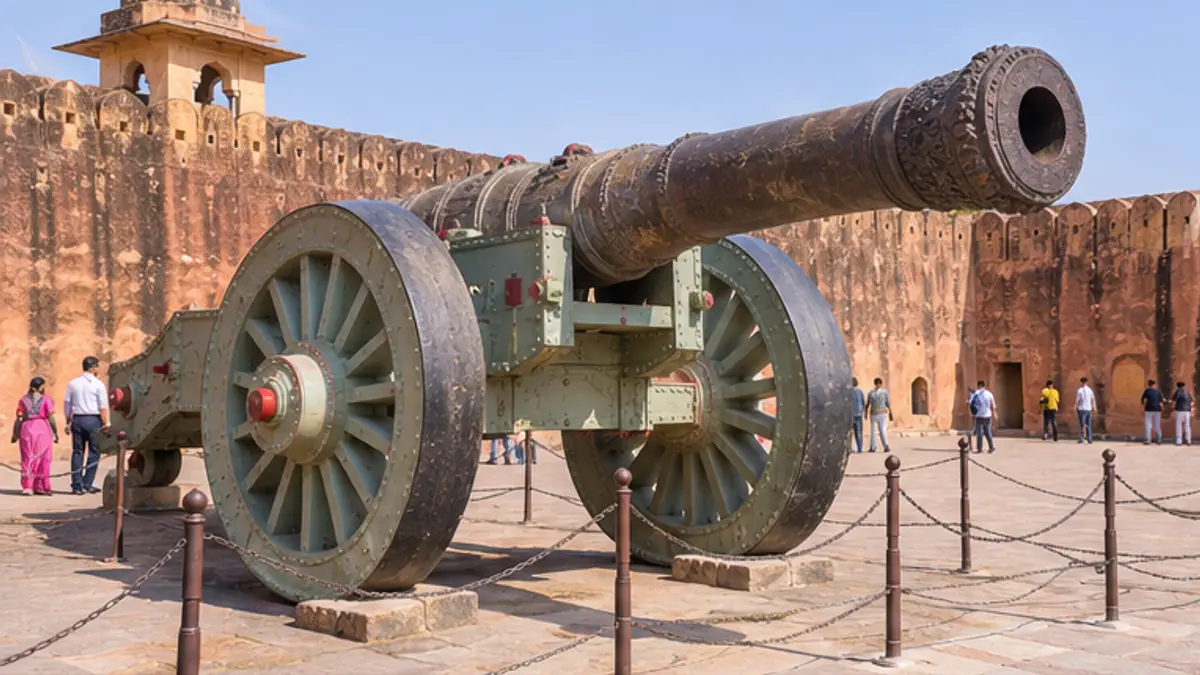
The weapon required an enormous gunpowder charge of one hundred kilograms to fire a fifty-kilogram iron cannonball across an effective range of thirty-five kilometers. Because Jaipur maintained peaceful diplomatic treaties throughout the eighteenth century, the giant cannon was fired only once during a test proofing, with local legends claiming the test shot created a natural lake thirty-five kilometers away near Chaksu.
Subterranean Rainwater Reservoirs and Royal Treasury Lore
Beneath the central courtyard of Jaigarh lie three cavernous stone-lined water reservoirs designed to collect runoff from mountain catchment channels. The largest tank measures 158 feet long, 138 feet wide, and 40 feet deep, holding over six million gallons of water to supply garrisons during protracted sieges.
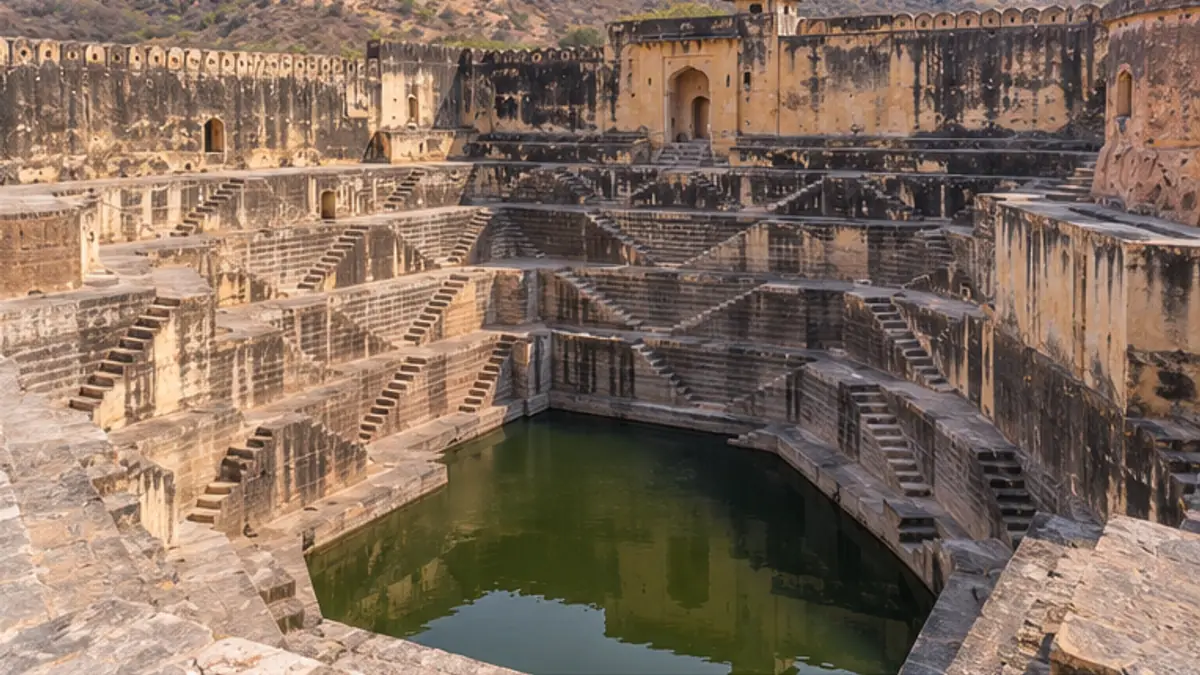
During the national Emergency in 1976, the central government conducted a famous search of these subterranean storage tanks following centuries of rumors that the Kachhwaha rulers had hidden imperial Mughal treasures beneath the stone floors. The excavation concluded without uncovering gold hoards, but revealed the sophisticated hydraulic engineering that sustained desert fortresses.
Nahargarh Fort: Sunset Terraces and Madhavendra Bhawan
Extending along the southwestern brow of the Aravallis, Nahargarh Fort offers the most expansive panoramic views across the geometric street grid of the Pink City. While Amer represents royal ceremony and Jaigarh represents raw military strength, Nahargarh was designed as a tranquil hilltop retreat for royal leisure.
Visitors arriving in the late afternoon can tour the royal suites before settling onto the western stone bastions to watch the sunset over Jaipur. The ancient stepwell tanks (baoris) cut into the rock plateau outside the fort walls provide dramatic settings for photography.
Madhavendra Bhawan: The Nine Royal Queen Suites
Constructed by Maharaja Sawai Madho Singh in the late nineteenth century, Madhavendra Bhawan is an intriguing residential palace divided into nine identical two-story apartments. The suites were built for the maharaja’s nine royal consorts, each named after a different queen, such as Suraj Prakash, Chand Prakash, and Anand Prakash.
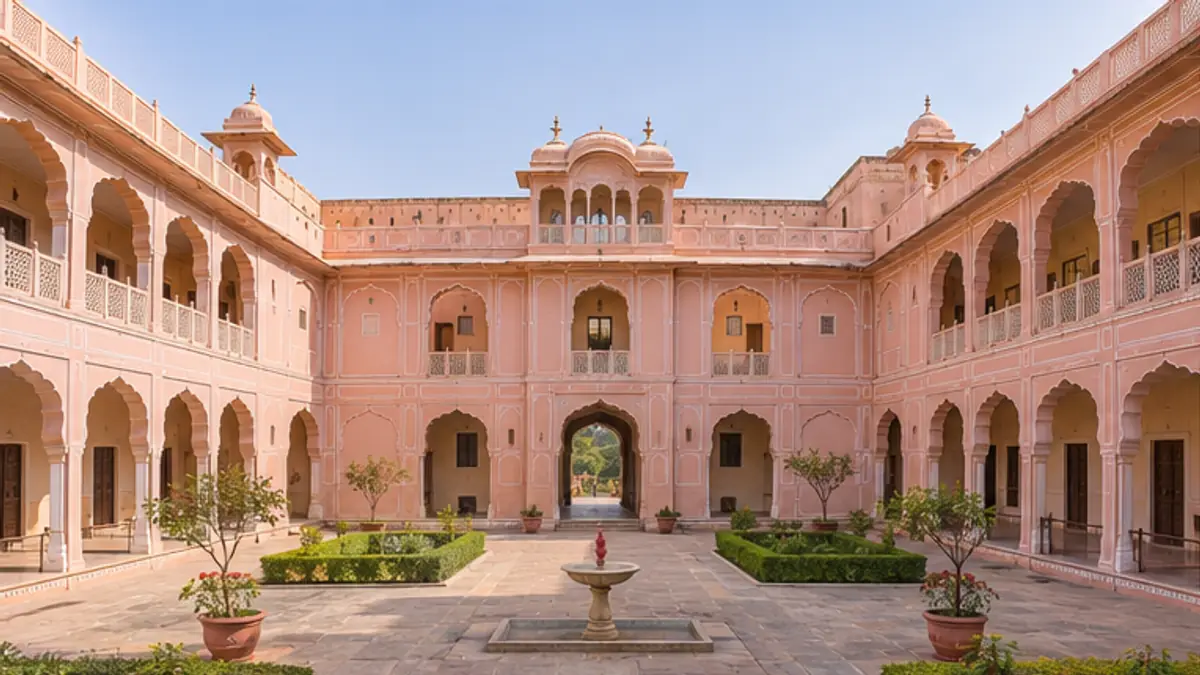
Each self-contained suite includes its own reception lobby, bedroom, kitchen, dressing quarters, and rooftop terrace decorated with delicate Jaipur-school wall frescoes. The individual apartments are connected by narrow private corridors leading to the king’s central bedchamber, allowing the ruler to enter any suite discreetly without the knowledge of the other queens.
Padao Open-Air Restaurant and Sunset City Views
At the western edge of Nahargarh Fort sits the open-air terrace known as Padao, operated by the state tourism corporation. Positioned on the cliff ramparts, Padao charges a modest entry fee that includes a complimentary beverage while visitors sit above the drop.
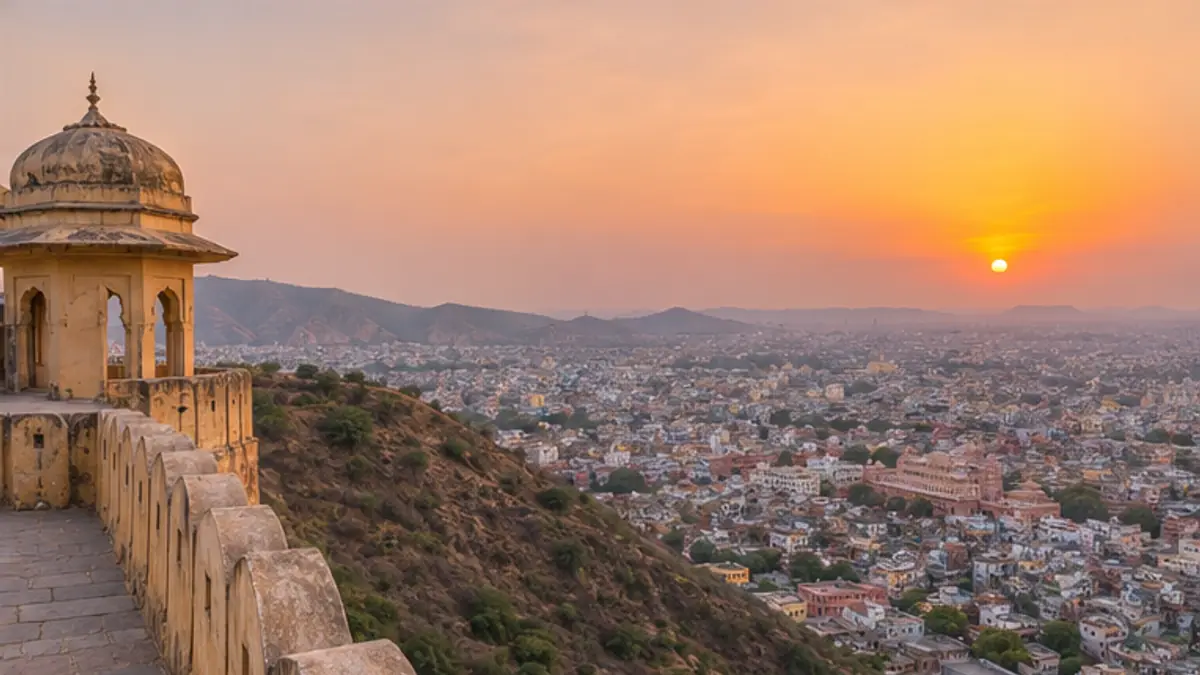
From this high vantage point, travelers watch the evening sun sink below the desert horizon as street lamps illuminate the old walled city, Hawa Mahal, and Albert Hall Museum below. The experience offers a memorable conclusion to a day of hilltop exploration before heading down into the city bazaars.
Amer Fort Jaipur Timings, Ticket Prices, and Light Show Schedule
Understanding the ticketing tiers between individual monuments and composite archaeological passes is crucial for maximizing your travel budget. Individual ticket prices are established by the Rajasthan Department of Archaeology and the private Jaigarh Charitable Trust.
Detailed monument timings and civic preservation updates can be verified through the District Administration Jaipur Official Portal. Booking tickets online through the state tourism portal allows travelers to skip long ticket queues during peak winter holidays.
Daily Visiting Hours Across the Three Forts
Visitors should schedule their travel around the following operating windows:
- Amer Fort (Daytime): Open daily from 8:00 AM to 5:30 PM. Elephant rides up the cobbled ramp operate strictly from 8:00 AM to 11:30 AM (limited to a set number of trips per elephant).
- Amer Fort (Night Tourism): Reopens in the evening from 6:30 PM to 9:15 PM under atmospheric golden floodlights, offering a peaceful walking experience after daytime tour buses depart.
- Jaigarh Fort: Open daily from 9:00 AM to 5:00 PM.
- Nahargarh Fort: Open daily from 10:00 AM to 5:30 PM (Padao sunset viewing terrace remains open until 8:00 PM).
Amer Fort Light and Sound Show Timings and Rates
Every evening, the historic ramparts of Amer Fort and Kesar Kyari garden on Maota Lake form the backdrop for an evocative 52-minute Sound and Light Show (Son et Lumiere). Narrated by Bollywood actor Amitabh Bachchan, the script dramatizes eight hundred years of Kachhwaha Rajput chivalry, royal weddings, and battle heroics:
- English Show: 7:30 PM to 8:22 PM (October to February); 8:00 PM to 8:52 PM (March to September).
- Hindi Show: 8:30 PM to 9:22 PM (October to February); 9:00 PM to 9:52 PM (March to September).
- Show Ticket Pricing: Regular seating tickets cost ₹200 per adult; premium front-row seats cost ₹300 per ticket. Passes can be purchased at the lakeside ticket counter near Maota Lake.
Rajasthan Composite Archaeological Pass Savings
If you plan to visit multiple historical sites in Jaipur, purchasing the Rajasthan Department of Archaeology Composite Ticket saves significant money and time compared to buying single tickets at each entrance gate:
| Ticket Type | Indian Citizens | Indian Students | Foreign Nationals | Foreign Students | Validity Duration |
|---|---|---|---|---|---|
| Amer Fort (Single Entry) | ₹100 | ₹20 | ₹500 | ₹100 | Single entry on purchase date |
| Composite Ticket (7 Sites) | ₹300 | ₹40 | ₹1,000 | ₹200 | Valid for 2 consecutive days |
| Jaigarh Fort (Separate Pass) | ₹50 | ₹35 | ₹100 | ₹50 | Single entry (Private Trust) |
| Amer Night Tourism | ₹100 | ₹100 | ₹100 | ₹100 | Evening entry 6:30 PM – 9:15 PM |
| Amer Light & Sound Show | ₹200 | ₹200 | ₹200 | ₹200 | Regular seating at Maota Lake |
The 2-day Composite Ticket covers seven major state monuments: Amer Fort, Hawa Mahal, Jantar Mantar, Nahargarh Fort, Albert Hall Central Museum, Sisodia Rani Garden, and Vidyadhar Garden. Purchasing this pass saves over ₹250 per Indian traveler and ₹800 per foreign traveler compared to individual admissions.
How to Reach the Forts: Transit Routes and Road Circuits
Amer is located eleven kilometers northeast of central Jaipur along the historic Delhi-Jaipur highway (NH-21), making it easily accessible via taxis, auto-rickshaws, and public low-floor buses. Linking all three forts in a single circuit requires private transport, as the mountain road between Amer, Jaigarh, and Nahargarh traverses high hill passes.
Travelers exploring the state can easily integrate this fortress circuit with our comprehensive guide to Jaipur travel highlights before heading into the central bazaars.
Transit from Jaipur City to Amer Fort Base
Travelers departing from central Jaipur have multiple transportation options to reach Amer:
- AC Low-Floor City Buses: Bus route number AC-1 departs from Ajmeri Gate and Sanganeri Gate every fifteen minutes, dropping passengers right outside the Amer Fort main road for ₹30 per ticket.
- Prepaid Auto-Rickshaws and Cabs: App-based cabs (Uber and Ola) and local auto-rickshaws take approximately 30 minutes to reach Amer from the central Old City, costing ₹250 to ₹450.
- Ascending to Amer Citadel: From the base parking lot, visitors can walk up the cobbled stone staircase (15 minutes), hire a registered four-wheel-drive jeep (₹500 round trip), or book an early morning government-regulated elephant ride (₹1,100 for two passengers).
Connecting Amer, Jaigarh, and Nahargarh by Road
To visit all three forts in a single day, hire a dedicated private taxi for five to six hours:
- Amer to Jaigarh: A paved uphill mountain road connects Amer with Jaigarh Fort across a distance of two kilometers (10-minute drive). Alternatively, trekkers can take the subterranean tunnel.
- Jaigarh to Nahargarh: From Jaigarh, follow the winding scenic ridge highway along the top of the Aravalli range for seven kilometers to reach Nahargarh Fort (15 to 20 minutes).
- Nahargarh Descent: From Nahargarh, a paved serpentine road descends down the southern face of the hills, returning drivers directly to the northern ring road of Jaipur near Jal Mahal.
Recommended 1-Day Jaipur Hill Fort Circuit Itinerary
To experience the forts without exhaustion or heat stress, follow this optimized one-day chronological road itinerary that catches the morning shade at Amer and concludes with sunset at Nahargarh:
Morning: Amer Fort and Panna Meena Stepwell
Arrive at Amer Fort at 8:00 AM just as the gates open. Walk through the Suraj Pol into Jaleb Chowk, tour the Shila Devi Temple, explore the Diwan-e-Aam, and spend time photographing the morning reflections inside the Sheesh Mahal.
Walk downhill to Panna Meena ka Kund to photograph the symmetrical geometric stepwell. Return to the palace and ascend through the underground escape tunnel toward Jaigarh Fort.
Afternoon: Jaigarh Cannon and Nahargarh Sunset
Tour the military armory museum and view the colossal 50-ton Jaivana cannon. Inspect the massive rainwater storage tanks and enjoy lunch at a local restaurant near the fort base.
Drive seven kilometers along the ridge highway to Nahargarh Fort. Explore the nine queen apartments of Madhavendra Bhawan, then secure a table at the Padao open-air terrace to watch the sunset over the Pink City.
Evening: Amer Fort Light and Sound Show
Drive down to Maota Lake to conclude your day with the English Sound and Light Show beneath the illuminated ramparts of Amer Fort.
Travelers visiting northern India frequently connect this one-day fortress circuit with Delhi and Agra along the classic Golden Triangle India Itinerary day-by-day stops.
Frequently Asked Questions About Amer, Jaigarh, and Nahargarh Forts
What are the opening timings of Amer Fort in Jaipur?
Amer Fort is open for daytime sightseeing daily from 8:00 AM to 5:30 PM, with ticket counters closing at 5:00 PM. The fort reopens for night tourism under floodlights between 6:30 PM and 9:15 PM every evening.
Is the Rajasthan composite ticket worth buying for Jaipur forts?
The composite ticket is highly recommended because it costs ₹300 for Indian citizens and ₹1,000 for foreign tourists, remaining valid for two consecutive days. It covers entry to Amer Fort, Nahargarh Fort, Hawa Mahal, Jantar Mantar, Albert Hall Museum, Sisodia Rani Garden, and Vidyadhar Garden, saving substantial money over individual tickets.
What time is the Sound and Light Show at Amer Fort?
The Sound and Light Show at Amer Fort runs daily in two sequential sessions: the English show begins at 7:30 PM, followed by the Hindi show at 8:30 PM during winter months (October to February). Timings shift thirty minutes later during the summer season.
How do visitors reach Jaigarh Fort from Amer Fort?
Visitors can drive two kilometers uphill along a paved road by car or taxi, taking roughly ten minutes. Alternatively, adventurous travelers can walk through the restored seventeenth-century subterranean escape tunnel that connects Amer Palace courtyards directly with Jaigarh Fort in fifteen minutes.
Which is the best fort in Jaipur to watch the sunset?
Nahargarh Fort is widely considered the best sunset viewpoint in Jaipur due to its high stone ramparts directly overlooking the western horizon and city skyline. The open-air Padao restaurant on the ramparts offers outdoor seating and drinks as the sun sets over the valley.
Where is the world’s largest cannon on wheels located?
The world’s largest wheeled cannon, named Jaivana, is located at Jaigarh Fort in Jaipur. Cast on the fort grounds in 1720, the cannon weighs fifty tons, has a 20.2-foot barrel, and was designed with a firing range of thirty-five kilometers.