Places to Visit in Jodhpur: Mehrangarh Fort, Blue City & Palaces
Explore top places to visit in Jodhpur: Mehrangarh Fort museum, Blue City walking tour, Jaswant Thada, Umaid Bhawan Palace, and a curated 3-day travel plan.
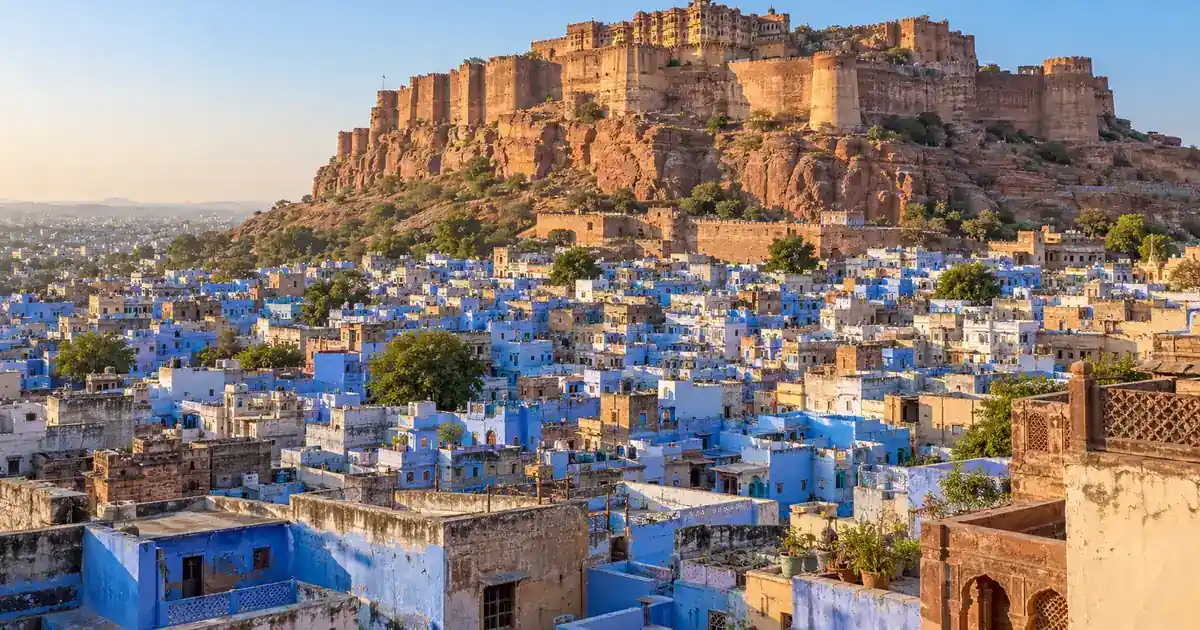
Rising abruptly from a sheer 122-meter perpendicular sandstone cliff above the arid Thar Desert, Jodhpur is one of India’s most dramatic historic cities. Founded in 1459 by Rao Jodha, the leader of the Rathore clan of Rajputs, the city served as the royal capital of the Marwar Kingdom for over five centuries.
Known colloquially as the “Sun City” for its bright sunny weather throughout the year, Jodhpur is equally famous as the “Blue City.” Thousands of historic stone houses in the old quarter surrounding the fortress are coated in vivid indigo lime wash, creating a striking azure carpet beneath the desert sky.
Jodhpur Travel Highlights
- Geographic Setting: Western Rajasthan, situated at an elevation of 231 meters on the eastern edge of the Thar Desert.
- Top Citadel Landmark: Mehrangarh Fort, one of India’s largest and best-preserved fortresses, begun in 1459.
- Signature Heritage Quarter: Navchokiya Brahmin quarter, famous for maze-like alleys lined with indigo-washed walls.
- Key Royal Memorial: Jaswant Thada, an intricately carved white Makrana marble cenotaph built in 1899.
- Modern Royal Residence: Umaid Bhawan Palace, a grand 347-room Art Deco and Indo-Saracenic sandstone palace completed in 1943.
- Transit Hub: Jodhpur Airport (JDH, 5 km from town) and Jodhpur Junction Railway Station (JU).
- Best Season to Visit: October to March, with sunny daytime temperatures between 20°C and 28°C and cool desert nights.
For travelers journeying through western Rajasthan, Jodhpur provides a rich cultural bridge between the royal lake palaces of the south and the sand dunes of the far west. The table below outlines key city attractions, ticket fees, visiting hours, and time requirements.
| Sightseeing Landmark | Location & Distance | Opening Timings | Entry Fee (Adult) | Recommended Duration |
|---|---|---|---|---|
| Mehrangarh Fort & Museum | Fort Hill, central city | 09:00 AM to 05:00 PM | ₹200 (Indians) / ₹600 (Foreigners) + ₹180 Audio | 3 to 4 hours |
| Flying Fox Zipline | North bastions of Mehrangarh | 09:00 AM to 05:00 PM | ₹1,500 to ₹1,900 per person (6 zip lines) | 1.5 to 2 hours |
| Jaswant Thada Cenotaph | 1 km north of Mehrangarh | 09:00 AM to 05:00 PM | ₹50 (Indians) / ₹100 (Foreigners) | 45 to 60 minutes |
| Rao Jodha Desert Rock Park | Base of Mehrangarh cliff | 07:00 AM to 06:30 PM | ₹100 entry / ₹200 naturalist guide | 1.5 to 2 hours |
| Navchokiya Blue City Walk | West of fort, Old City | Best in early morning | Free public access (guided walks ₹500–₹800) | 2 hours on foot |
| Umaid Bhawan Palace Museum | Circuit House Road, 5 km east | 09:00 AM to 05:00 PM | ₹100 (Indians) / ₹300 (Foreigners) | 1 to 1.5 hours |
| Mandore Gardens | 9 km north of Jodhpur | 08:00 AM to 08:00 PM | Free admission (Museum ₹50) | 1.5 to 2 hours |
Jodhpur Overview: The Sun City & Gateway to the Thar Desert
Before Jodhpur was established, the ancient Rathore capital lay at Mandore, a low-lying valley city frequently vulnerable to military raids. In 1459, Rao Jodha decided to build an invincible stronghold on an isolated rocky hill known as Bhakurcheeria, the “Mountain of Birds.”
The city grew outward from the base of the fortress, protected by a massive 10-kilometer stone rampart punctuated by eight fortified gates (pols). Caravans traveling along the lucrative silk, spice, and opium routes between Gujarat ports and northern trade centers paid duties in Jodhpur, bringing immense commercial prosperity to local Marwari merchant families.
Travelers mapping extensive historic journeys across western India can consult our foundational directory of best places to visit in India for seasonal planning calendars, high-altitude advice, and rail booking tips.
Historical Foundation: From Ancient Mandore to Rao Jodha’s Citadel
Rathore oral history preserves a dramatic legend regarding the founding of the citadel. To clear the bird hill for construction, Rao Jodha had to displace a hermit named Cheeria Nathji, who lived in a cave with his pet birds.
Enraged at being evicted, the hermit cursed the ruler, proclaiming: “May your kingdom always suffer from a scarcity of water!” To neutralize the curse, Rao Jodha built a cave temple for the hermit inside the fort and constructed deep stepwells (baolis) and water tanks across the city.
The ruler also followed an ancient Rajput rite by burying a volunteer, a man named Raja Ram Meghwal, alive in the building’s foundation to ensure the eternal security of the ramparts. In return, the Rathore dynasty provided royal care to Meghwal’s descendants for centuries.
Geographic Identity: The Transition Between Scrub Plains and Thar Dunes
Jodhpur marks the distinct geographical boundary where the semi-arid scrub savannah of eastern Rajasthan transitions into the open desert dunes of the Thar.
The surrounding terrain features exposed volcanic rhyolite ridges, thorny kair bushes, and hardy khejri trees (Prosopis cineraria), the state tree of Rajasthan.
The climate is sunny and dry. Winter days from November through February are pleasantly warm under cloudless skies, while evenings bring brisk desert breezes that require light woolen shawls or jackets.
Mehrangarh Fort: Imposing Ramparts, Palaces & Museum Galleries
Towering 400 feet above the city streets, Mehrangarh (meaning “Fort of the Sun” in Sanskrit) is celebrated as one of the world’s most impressive military fortifications. Author Rudyard Kipling famously described the fortress as “the work of giants, of angels, and of magicians.”
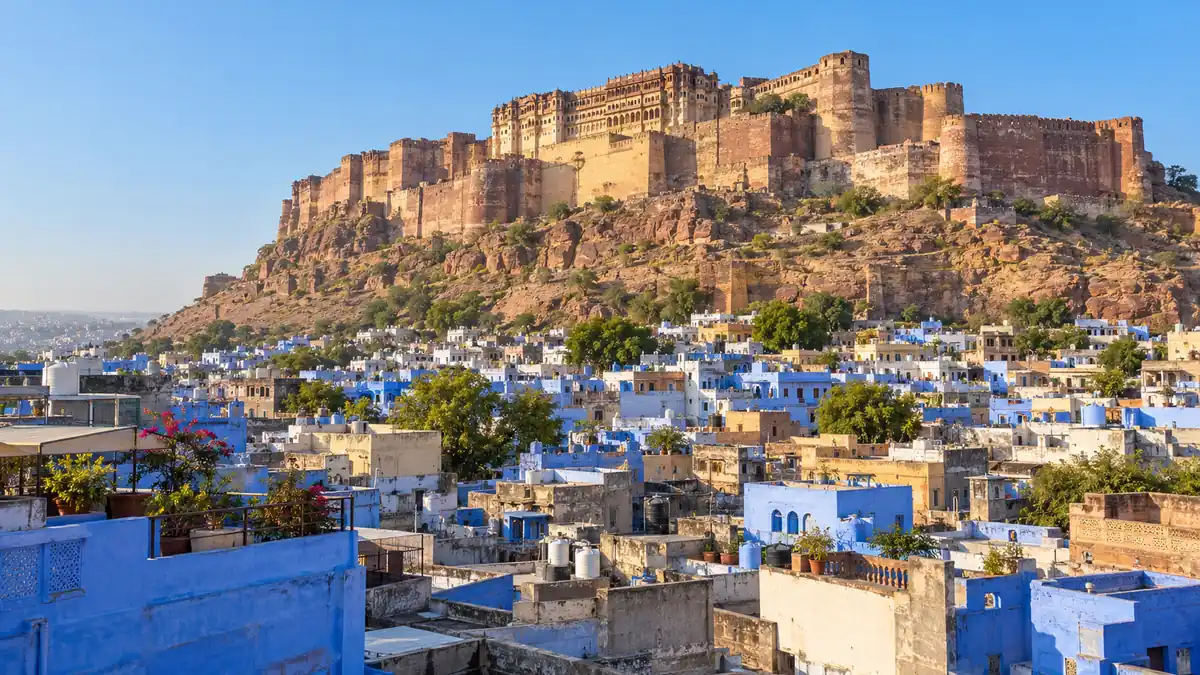
The citadel’s exterior walls are built from massive blocks of local brown-red sandstone, rising seamlessly from the living rock face. At its highest points, the ramparts stand over 36 meters (118 feet) tall and up to 21 meters (70 feet) thick.
State heritage preservation updates, museum exhibitions, and regional festival dates can be cross-checked on the Incredible India Jodhpur Destination Portal.
| Palace Hall / Gallery | Construction Era | Architectural Material & Art Style | Historical & Museum Importance |
|---|---|---|---|
| Moti Mahal (Pearl Palace) | Built 1581–1595 by Raja Sur Singh | Crushed seashell plaster, gold-leaf ceiling, 5 hidden alcoves | Grand audience chamber where royal coronations occurred |
| Sheesh Mahal (Palace of Mirrors) | Early 18th century by Maharaja Ajit Singh | Convex mirror inlays, painted plaster under glass depicting Krishna | Royal private bedchamber lit by single candle reflections |
| Phool Mahal (Flower Palace) | Built 1724–1749 by Maharaja Abhay Singh | Pure gold filigree ceiling, Rathore royal portraits, stained glass | Private pleasure hall for music, poetry, and classical dance |
| Takhat Vilas | Built 1843–1873 by Maharaja Takhat Singh | Traditional timber ceiling, hanging Christmas globes, floor carpet | Intact 19th-century royal living quarters with murals |
| Howdah Gallery | Museum wing | Carved silver and wood elephant seats (howdahs) | Displays the historic silver howdah gifted by Emperor Shah Jahan |
| Daulat Khana (Treasury) | Museum wing | Fine silk textiles, manuscripts, Mughal jade-hilted daggers | Features personal daggers of Emperor Akbar and Tamerlane |
Seven Fortified Gates: Jai Pol, Fateh Pol, and Iron Gate
Visitors ascend to Mehrangarh along a steep, paved road designed with deliberate sharp bends that prevented enemy war elephants from building momentum against the massive gates. The route passes through seven formidable portals:
- Jai Pol (Victory Gate): Built in 1806 by Maharaja Man Singh to commemorate victories over invading armies from Jaipur and Bikaner.
- Fateh Pol: Constructed in 1707 by Maharaja Ajit Singh to mark the defeat of Mughal imperial garrisons.
- Loha Pol (Iron Gate): The final heavy wooden gate leading into the inner royal compound. Beside the gateway wall, visitors can see fifteen small handprints carved in stone; these are the sati marks left by the royal widows of Maharaja Man Singh before they mounted his funeral pyre in 1843.
The Palaces: Moti Mahal, Phool Mahal, and Sheesh Mahal
Inside the fortified walls, rugged defense battlements give way to refined residential luxury. Successive rulers constructed delicate multi-story palaces featuring hand-chiseled red sandstone lattice screens (jalis), which allowed royal women to view courtyard ceremonies without being observed.
In the Moti Mahal, walls were polished with fine lime plaster blended with crushed river seashells, giving the hall a pearly luster that reflects candle glow. Five hidden alcoves high on the balcony walls allowed the queens to listen to council proceedings.
The Phool Mahal represents the absolute peak of 18th-century Rajput opulence. The ceiling is covered in pure gold leaf brought from conquests in Gujarat, while the walls display fine miniature paintings depicting the 36 classical musical ragas.
World-Class Museum Displays: Royal Howdahs, Palanquins & Armory
Managed by the Mehrangarh Museum Trust, the fortress museum is widely regarded as the most professionally maintained palace museum in India.
The Palanquin Gallery exhibits an extraordinary collection of historic royal sedan chairs (palkis), including the ornate Mahadol palanquin captured in battle from the Governor of Gujarat in 1730.
The Armory displays centuries of Rajput and Mughal weaponry, including gem-encrusted swords, Damascus steel scimitars, rhino-hide shields, and the famous personal straight sword (khanda) of Rao Jodha himself.
Flying Fox Zipline & Architectural Highlights Across the Bastions
For adventure seekers, Mehrangarh Fort offers an exciting aerial experience operated by Flying Fox India. A circuit of six high-tensile steel zip lines crosses the northern battlements, soaring over high granite cliffs, deep defensive moats, and natural water reservoirs.
Travelers looking for alternative adventure hubs and mountain activities across the north can examine the paragliding and ski meadows described in our Jaipur visitor itinerary guide.
| Zip Line # | Zip Line Name | Cable Length | Flight Feature & Visual Highlights |
|---|---|---|---|
| Zip 1 | Chokelao Challenge | 115 meters | Glides over the lush green Chokelao terraced palace gardens |
| Zip 2 | Ranisar Rollercoaster | 170 meters | Launches from high battlements over Ranisar Lake with city views |
| Zip 3 | Chhatri Climb | 110 meters | Soars past a historic Rajput stone warrior cenotaph |
| Zip 4 | The Magnificent Marwar | 300 meters | Longest zip; glides over two deep rocky canyons and water bodies |
| Zip 5 | Jai Jodha | 270 meters | Sweeps alongside the sheer 120-meter vertical cliff face of the fort |
| Zip 6 | The Roost | 160 meters | Returns riders directly to the outer defensive walls of Mehrangarh |
Soaring Over Chokelao Gardens and Desert Lakes
The Flying Fox tour takes approximately 90 minutes, beginning with a safety briefing and equipment fitting near the Chokelao Garden gate.
Harnessed riders glide smoothly between ancient stone bastions at heights of over 40 meters, enjoying bird’s-eye views of the blue houses below and the massive granite foundations of the fortress.
Tours operate daily between 09:00 AM and 05:00 PM. Booking tickets online in advance is recommended during holiday months, as group slots are capped at twelve participants per session to ensure safety.
Chamunda Mataji Temple and the Historic Cannon Ramparts
At the southernmost tip of the fortress plateau lies the Chamunda Mataji Temple, housing the protective deity of the Rathore dynasty. Rao Jodha brought the black stone idol of Chamunda Devi from Mandore when he founded the citadel in 1459.
The temple terrace is lined with massive bronze and iron siege cannons, including the legendary Kilkila, Shambhu Baan, and Gajnak. From this breezy vantage point, visitors look directly down upon the vast blue city below, with the domes of Jaswant Thada visible to the north.
Jaswant Thada & Rao Jodha Desert Rock Park: Marble Cenotaphs & Ecology
Located just one kilometer northeast of Mehrangarh along the fort access road, Jaswant Thada is an exquisite royal cenotaph often called the “Taj Mahal of Marwar.”
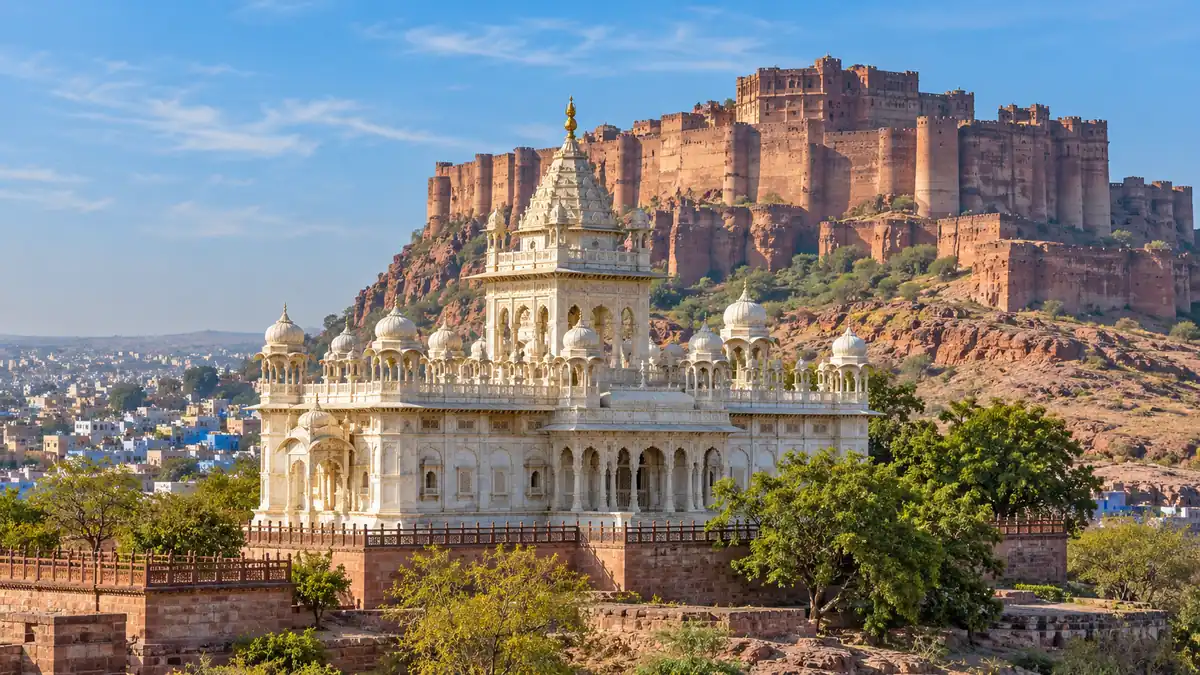
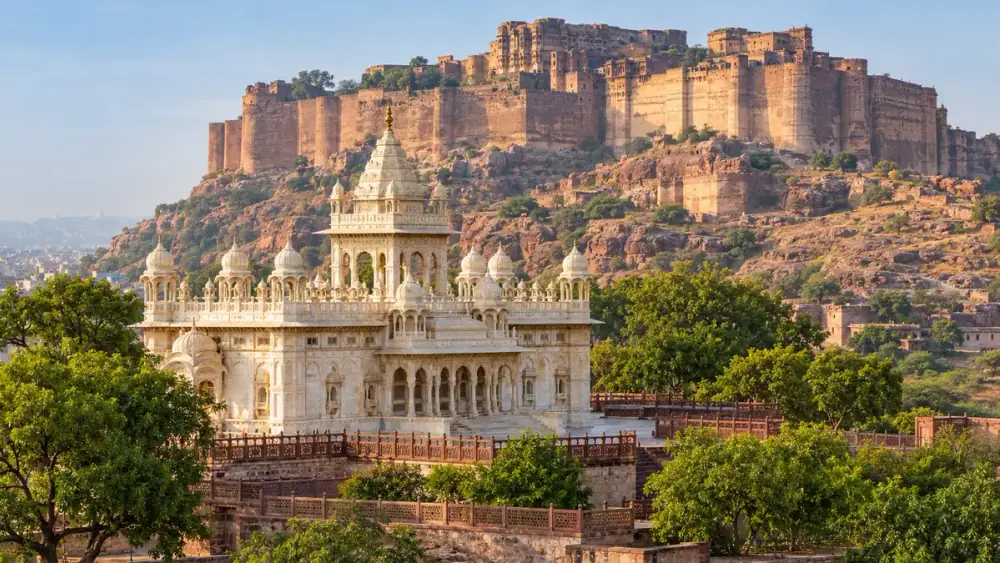
Built in 1899 by Maharaja Sardar Singh to honor his father, Maharaja Jaswant Singh II, this memorial is constructed entirely from finely carved sheets of white Makrana marble.
Comprehensive state tourism guidelines, heritage monument registers, and verified travel contacts are available on the Incredible India Rajasthan State Portal.
| Site / Feature | Operational Hours | Entry Fee | Visual Character & Environmental Importance |
|---|---|---|---|
| Jaswant Thada Cenotaph | 09:00 AM to 05:00 PM | ₹50 (Indians) / ₹100 (Foreigners) | Translucent white Makrana marble, tier pavilions, royal portraits |
| Cenotaph Lake & Gardens | Open during monument hours | Included with Jaswant Thada ticket | Manicured lawns, stone steps, peaceful duck pond, singing birds |
| Rao Jodha Desert Rock Park | 07:00 AM to 06:30 PM | ₹100 entry / ₹200 guided walk | 70 hectares of restored desert ecology on volcanic rock terrain |
| Native Flora Restoration | Year-round ecological walks | Native desert species | Over 250 species of native plants, including thhor and kair shrubs |
The Translucent Makrana Marble Cenotaph of Jaswant Singh II
The marble used to build Jaswant Thada was chosen for its exceptional purity and translucency. The stone panels are cut so thin that when morning or late afternoon sunlight strikes the walls, the stone glows with a warm, golden illumination.
The main memorial is designed in the classical Rajput style, featuring delicate cupolas, carved marble pillars, and intricate stone jali screens. Inside, the central chamber displays historic portraits of Marwar’s rulers, dating from Rao Jodha to modern times.
The cenotaph sits beside a quiet lake surrounded by terraced gardens and multi-tiered stone memorials honoring other royal family members. The grounds offer a peaceful escape from the crowded city markets below.
Ecological Restoration at Rao Jodha Desert Rock Park
Adjacent to the fortress lies the Rao Jodha Desert Rock Park, an inspiring 70-hectare ecological reserve established in 2006 to restore the native vegetation of the rocky desert wasteland.
In earlier decades, the hills around the fort were choked by an invasive Mexican mesquite shrub (Prosopis juliflora), known locally as baavlia (the mad tree). Naturalist Pradip Krishen and team carefully eradicated the weed and re-established more than 250 species of native, drought-resistant desert plants.
Visitors can walk along four well-marked walking trails that wind through deep rock gullies cut into ancient volcanic rhyolite rock that formed over 750 million years ago. A guided tour with a local park naturalist provides fascinating insights into desert ecology, medicinal plants, and desert reptile life.
Walking the Blue City: Navchokiya Alleys, Indigo Walls & Photography
The blue-painted houses of Jodhpur represent one of the most recognizable urban landscapes in the world. While the modern parts of the city feature standard concrete construction, the historic quarter lying beneath the western shadow of Mehrangarh retains thousands of bright indigo-tinted dwellings. For a complementary stop along the same travel corridor, see Shekhawati Havelis visitor overview when mapping out your schedule.
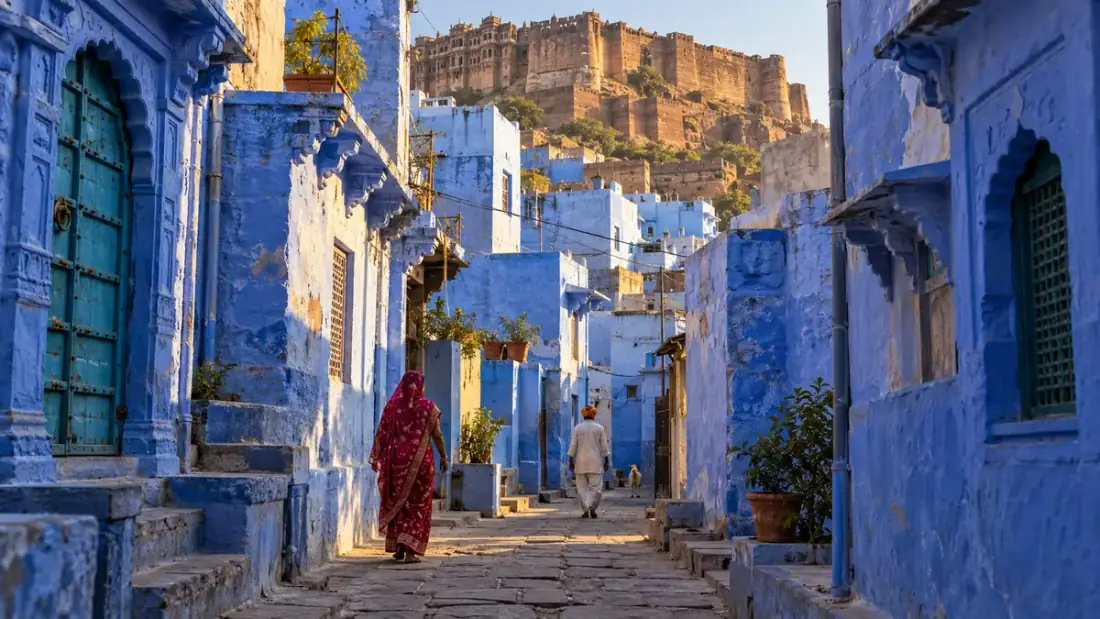
The most scenic area for walking is Navchokiya, a residential district situated northwest of the old city center.
Travelers looking to combine multiple royal desert centers can compare this blue maze with the golden sandstone lanes detailed in our places to visit in Jaisalmer guide.
| Blue City Landmark | Location in Old Town | Photographic Character | Recommended Visiting Time |
|---|---|---|---|
| Navchokiya Quarter | Northwest of Mehrangarh base | Dense clusters of indigo-painted walls, carved wooden doorways | 07:30 AM to 09:30 AM (Soft morning light) |
| Toorji Ka Jhalra | Near Clock Tower | 18th-century stepwell with 200+ geometric stone steps and cafes | Midday for deep stepwell reflections |
| Pachetia Hill Viewpoint | Edge of Navchokiya | Steep hill offering 360° panoramic view of fort and blue rooftops | Sunset golden hour |
| Ranisar & Padamsar Lakes | Directly beneath fort cliffs | Twin historic reservoirs dating to 1459; stone steps and reflections | Early morning quiet |
Why Jodhpur is Blue: Copper Sulphate, Termites & Brahmin Heritage
Travelers frequently ask why the houses of Jodhpur are painted blue. Local historians identify two primary reasons:
- Brahmin Caste Designation: Historically, priests belonging to the Brahmin caste painted their homes with a pale blue wash to distinguish their residences from other social groups. Over centuries, the custom spread throughout the neighborhood.
- Cooling and Insect Repellent: Traditional builders blended limestone wash with copper sulphate (neel). The chemical mixture repelled termites and mosquitoes while providing an effective thermal barrier that deflected intense desert heat, keeping indoor temperatures pleasantly cool during 45°C summer peaks.
Exploring Navchokiya Alleys, Carved Wooden Doors & Stepwells
Walking through Navchokiya feels like stepping back into medieval Rajasthan. The lanes are narrow, winding, and completely closed to four-wheeled vehicles, with only occasional bicycles and sacred cows sharing the stone-paved paths.
Keep your eyes open for hand-carved teakwood doorframes, brass knockers shaped like elephants, and small street-corner shrines dedicated to Lord Ganesha. Local residents sit on open stone stoops (otlas), welcoming respectful photographers with warm smiles.
At the edge of the quarter lies Toorji Ka Jhalra, a 250-year-old stepwell built in the 1740s by Queen Toorji. This architectural marvel features over two hundred carved sandstone steps descending thirty meters into clear turquoise water. The surrounding buildings have been restored into boutique cafes, bakeries, and craft shops.
Photography Etiquette in the Residential Old Quarters
While local residents are accustomed to visitors, travelers should practice respectful photography ethics:
- Always ask for verbal permission before photographing local elders, women, or children in residential alleys.
- Dress modestly with shoulders and knees covered when entering residential streets and neighborhood shrines.
- Avoid flying camera drones, as low-altitude drones disturb privacy in enclosed residential courtyards and are strictly prohibited near defense installations.
Umaid Bhawan Palace, Mandore Gardens & Clock Tower Bazaars
Beyond the historic old city, Jodhpur features monumental 20th-century royal palaces, ancient royal gardens, and lively market squares.
Travelers organizing rail trips across Rajasthan can review connecting express schedules on the IRCTC Tourism Official Portal.
| Landmark Name | Era & Architecture | Key Feature & Activity | Visitor Logistics |
|---|---|---|---|
| Umaid Bhawan Palace | 1928–1943; Art Deco & Indo-Saracenic | Golden Chittar sandstone palace; 347 rooms | Museum open 09:00 AM – 05:00 PM; ₹100 entry |
| Mandore Gardens | 6th century AD ancient capital | High-spired stone royal cenotaphs, Hall of Heroes | 9 km north; open 08:00 AM – 08:00 PM; free entry |
| Ghanta Ghar (Clock Tower) | 1910 by Maharaja Sardar Singh | British-era stone clock tower; views over bazaar | Center of Sardar Market; ₹30 tower climb |
| Sardar Market | Surrounding Clock Tower | Hundreds of shops selling spices, textiles, leather mojris | Open daily 10:00 AM – 09:00 PM |
Umaid Bhawan Palace: One of the World’s Largest Private Residences
Constructed between 1928 and 1943 by Maharaja Umaid Singh, Umaid Bhawan Palace is one of the world’s largest private royal residences. Designed by British architect Henry Vaughan Lanchester, the massive palace blends classical European Art Deco design with traditional Rajput domes and cupolas.
The palace was constructed from golden-yellow “Chittar” sandstone without using mortar, utilizing an interlocking dry-stone technique that employed over 3,000 workers during a severe regional famine.
The palace is divided into three distinct functional wings:
- The private residence of the titular Maharaja of Jodhpur and his family.
- A luxury heritage palace hotel operated by Taj Hotels.
- The Umaid Bhawan Palace Museum, open to the public.
The museum exhibits fascinating collections of Art Deco clocks, cut-glass dinner services, royal polo trophies, and vintage automobiles, including classic Rolls-Royces and Cadillacs used by the royal household.
Mandore Gardens: Ancient Royal Cenotaphs and Hall of Heroes
Located 9 kilometers north of Jodhpur, Mandore was the capital of the Parihar Rajputs before Rao Jodha moved his court to Mehrangarh in 1459.
Today, Mandore Gardens houses the magnificent royal cenotaphs (devals) of Jodhpur’s former rulers. Unlike standard umbrella-shaped chhatris found elsewhere in Rajasthan, the memorials at Mandore are constructed like grand Hindu temples, featuring multi-tiered stone shikhara towers covered in carved deities.
The gardens also contain the Hall of Heroes, where sixteen colossal warrior statues carved out of single rock boulders depict local deities and legendary Rajput chieftains.
Sardar Market and the Historic Ghanta Ghar
At the heart of the old city stands the Ghanta Ghar (Clock Tower), built in 1910 by Maharaja Sardar Singh. Visitors can climb the narrow interior stairs of the tower for ₹30 to inspect the antique pendulum clock mechanism and enjoy views across the lively market below.
Surrounding the tower is Sardar Market, a maze of narrow alleyways where merchant stalls sell regional treasures:
- Mathania Red Chilies: World-famous desert chili peppers known for their deep red color and rich aroma.
- Handmade Leather Mojris: Traditional embroidered leather slippers crafted from camel hide.
- Bandhani and Leheriya Textiles: Authentic tie-dye silk dupattas, turbans, and sarees.
- Handicrafts and Antiques: Brass door hardware, miniature paintings, and carved wooden furniture.
Curated 3-Day Jodhpur Travel Itinerary & Culinary Highlights
A 3-day itinerary allows travelers to explore Jodhpur’s royal citadels, wander the blue city alleys, and savor the region’s rich culinary traditions.
Travelers connecting multiple royal capitals across Rajasthan can easily coordinate this circuit with our top attractions in Udaipur destination guide.
| Itinerary Day | Morning Schedule (08:30 AM – 01:00 PM) | Afternoon Schedule (02:00 PM – 05:30 PM) | Evening Schedule (06:00 PM – 08:30 PM) |
|---|---|---|---|
| Day 1: Fort Citadel & Zipline | Guided audio tour of Mehrangarh Fort Museum and palaces | Flying Fox 6-zipline adventure over fort moats and bastions | Visit Jaswant Thada marble cenotaph; sunset views from Chamunda Temple |
| Day 2: Blue City Walk & Palaces | Early morning guided walking tour of Navchokiya blue alleys | Tour Umaid Bhawan Palace Museum and vintage car gallery | Climb Clock Tower; shopping in Sardar Market; lassi at Mishrilal |
| Day 3: Nature, Heritage & Food | Explore Rao Jodha Desert Rock Park with naturalist guide | Short drive to Mandore Gardens to tour temple-style cenotaphs | Enjoy a traditional Marwari thali at a rooftop restaurant overlooking fort |
Savoring Authentic Marwari Flavors: Mirchi Bada, Mawa Kachori & Makhaniya Lassi
Jodhpur is celebrated across India for its delicious street food and rich vegetarian cuisine:
- Makhaniya Lassi at Shri Mishrilal Hotel: Located inside the southern arch of Clock Tower market, this iconic shop serves ultra-thick, creamy lassi topped with saffron, cardamom, and a dollop of fresh clotted cream (malai).
- Mirchi Bada at Janta Sweet Home: A large, mildly spiced green chili pepper stuffed with seasoned potato mash, dipped in gram flour batter, and fried golden crisp.
- Mawa Kachori: A sweet delicacy invented in Jodhpur, featuring a flaky puffed pastry stuffed with sweetened condensed milk (mawa) and dry fruits, dipped in warm sugar syrup.
- Ker Sangri & Dal Baati Churma: The classic desert feast consisting of baked wheat dumplings soaked in pure ghee, served with spicy lentil curry, wild desert bean curry (ker sangri), and sweet crumbled wheat (churma).
Frequently Asked Questions About Visiting Jodhpur
How many days are ideal to visit Jodhpur?
Two to three days are ideal to experience Jodhpur comfortably. This provides enough time to tour Mehrangarh Fort, Jaswant Thada, and Umaid Bhawan Palace, take a guided Blue City walking tour, experience the Flying Fox zipline, and visit Mandore Gardens without rushing.
What is the entry ticket price for Mehrangarh Fort?
Admission to the Mehrangarh Fort Museum costs ₹200 for Indian nationals and ₹600 for foreign visitors. An audio guide tour is highly recommended and costs ₹180. The Flying Fox zipline circuit is booked separately and costs ₹1,500 to ₹1,900 per person.
Why are houses in Jodhpur painted blue?
Historically, Brahmin priests painted their homes blue with lime wash to indicate their residences. In addition, the blue lime wash incorporates copper sulphate, which deters termites and mosquitoes while keeping interior rooms cool during harsh desert summers.
How far is Jodhpur from Jaipur and Udaipur?
Jodhpur is located approximately 335 kilometers west of Jaipur (5 to 6 hours by road or express train) and 250 kilometers north of Udaipur (4.5 to 5 hours by road via National Highway 62).
What is the best month to visit Jodhpur?
October to March is the best time to visit Jodhpur. Daytime temperatures range from 20°C to 28°C under clear sunny skies, making it comfortable for outdoor sightseeing, while nights are cool and refreshing.
Which airport serves Jodhpur, and how do I get into town?
Jodhpur Airport (airport code JDH) is located just 5 kilometers southeast of the city center. Pre-paid airport taxis and auto-rickshaws reach old city hotels and Clock Tower in approximately 15 to 20 minutes for ₹300 to ₹500.
Can a trip to Jodhpur be combined with the Pushkar Camel Fair?
Yes, Jodhpur is located just 185 kilometers west of Pushkar (a 3.5 to 4-hour highway drive or direct express train via Merta Road); travelers frequently pair fortress exploration in the Blue City with the sacred ghats and camel contests detailed in our Pushkar Camel Fair guide.