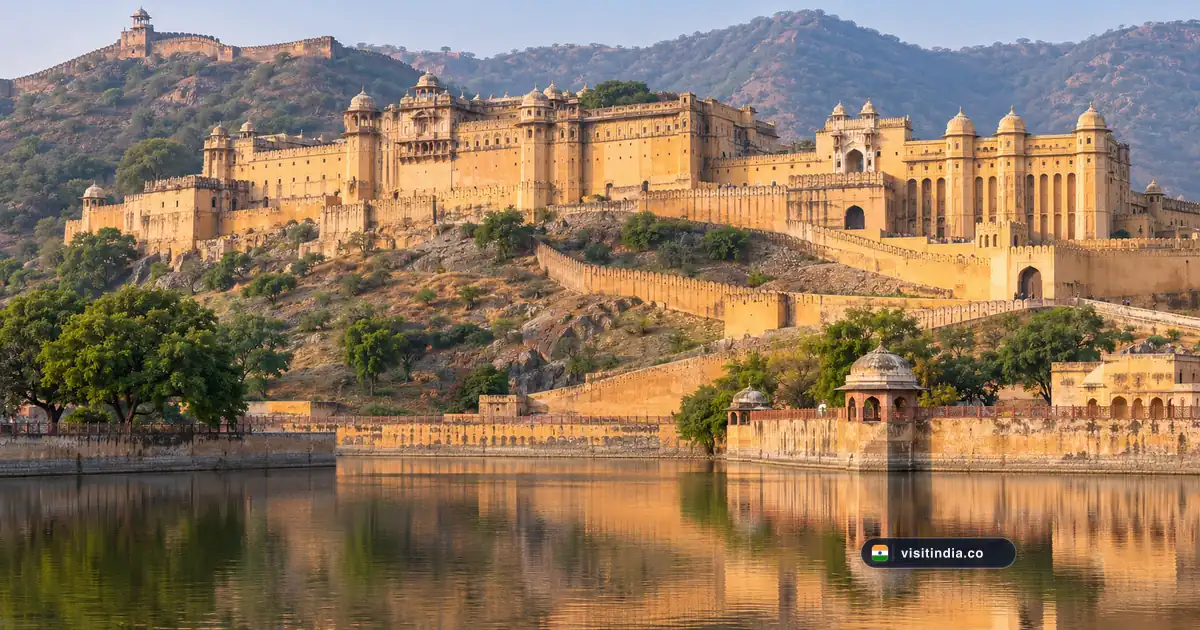
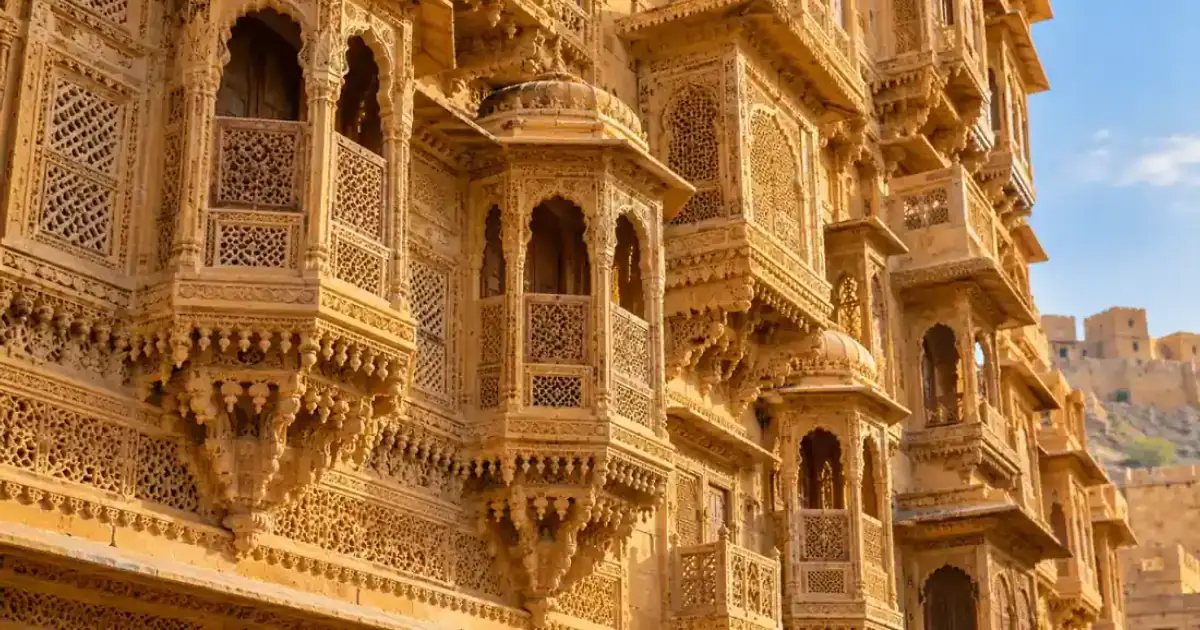
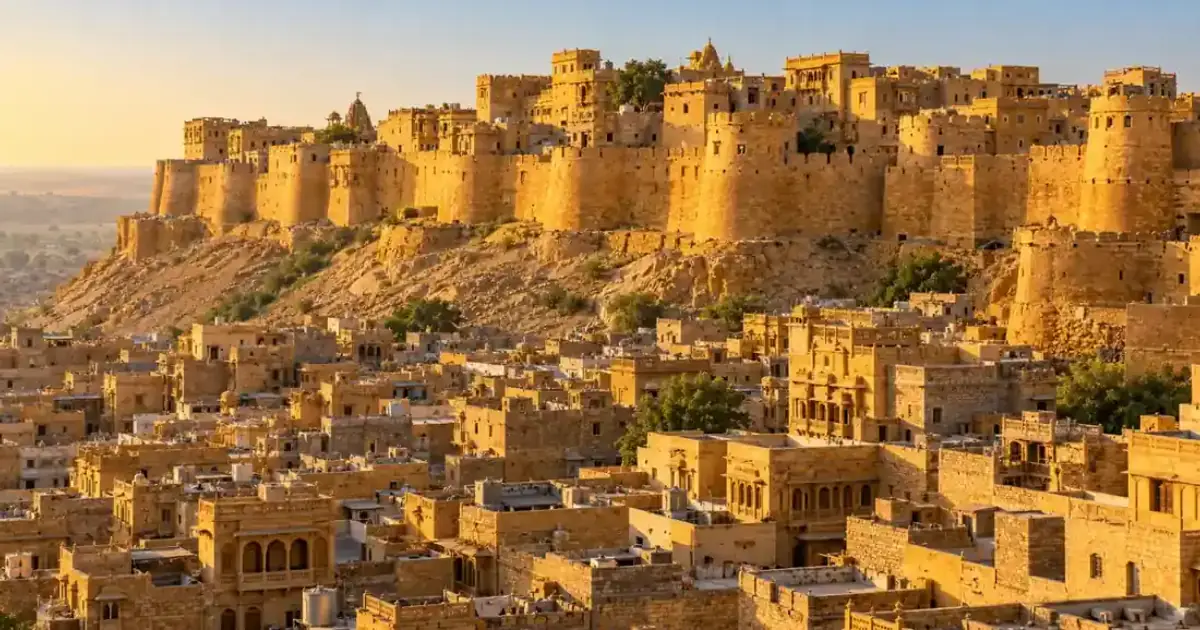
Places to Visit in Udaipur: 3-Day Itinerary, Palaces & Lakes
Top places to visit in Udaipur: City Palace museum, Lake Pichola sunset boat ride, Jag Mandir, Sajjangarh Monsoon Palace, and a curated 3-day travel plan.
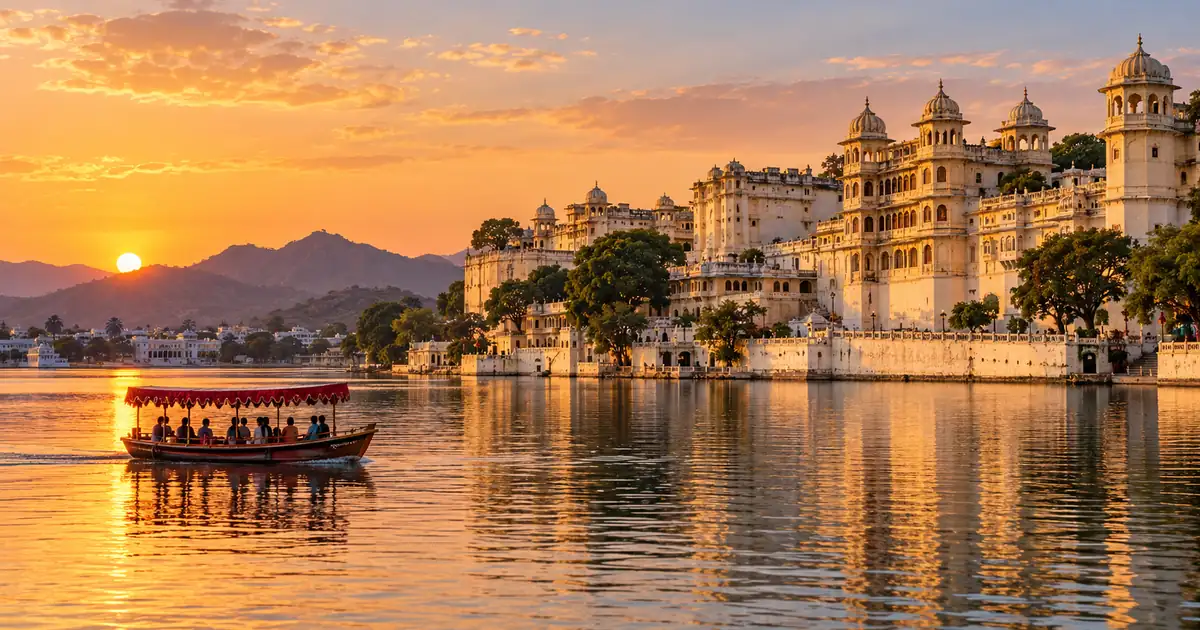
Framed by the ancient rolling hills of the Aravalli Range in southern Rajasthan, Udaipur is universally recognized as the City of Lakes. Founded in 1559 by Maharana Udai Singh II as the historic capital of the Mewar Kingdom, the city centers around a sophisticated network of artificial freshwater lakes.
Unlike desert bastions built primarily of red sandstone, Udaipur is constructed from local white marble and cream-colored plaster. Its sprawling palaces, lakeside havelis, and domed bathing ghats rise directly out of the waters of Lake Pichola, creating one of Asia’s most celebrated heritage settings.
Udaipur Travel Essentials
- Geographic Setting: Southern Rajasthan, elevated at 598 meters (1,962 feet) in the Girwa Valley.
- Primary Royal Landmark: City Palace Complex, India’s largest royal palace enclosure, begun in 1559.
- Signature Water Bodies: Lake Pichola, Fateh Sagar Lake, Swaroop Sagar, and Udai Sagar.
- Key Cultural Experience: Dharohar Rajasthani folk dance and puppet performance at Bagore Ki Haveli.
- Transit Gateway: Maharana Pratap Airport (Dabok, 22 km) and Udaipur City Railway Station (UDZ).
- Ideal Visiting Season: October to March, offering daytime temperatures between 18°C and 28°C.
- Local Transportation: Auto-rickshaws for narrow old city lanes, app-based cabs, and tourist boat cruises.
For travelers exploring northern India, Udaipur offers a peaceful counterpoint to dense metropolitan centers. The table below outlines key city attractions, ticket prices, timings, and recommended visit durations.
| Sightseeing Landmark | Location & Distance | Operating Hours | Entry Fee (Adult) | Recommended Duration |
|---|---|---|---|---|
| City Palace Museum | East bank of Lake Pichola | 09:30 AM to 05:30 PM | ₹400 (Museum) + ₹100 (Palace grounds) | 2.5 to 3.5 hours |
| Lake Pichola Boat Cruise | Rameshwar Ghat (City Palace) | 10:00 AM to 06:00 PM | ₹500 (Day cruise) / ₹800 (Sunset cruise) | 1 hour round-trip |
| Jag Mandir Island Palace | Island inside Lake Pichola | 10:00 AM to 06:00 PM | Included with Lake Pichola boat ticket | 1 to 1.5 hours |
| Bagore Ki Haveli | Gangaur Ghat, Old City | 09:30 AM to 05:30 PM (Museum) / 07:00 PM (Show) | ₹100 (Museum) / ₹100 (Dharohar Dance Show) | 1 hour for evening show |
| Saheliyon Ki Bari | North Udaipur, near Fateh Sagar | 09:00 AM to 07:00 PM | ₹20 (Indians) / ₹100 (Foreigners) | 45 to 60 minutes |
| Sajjangarh (Monsoon Palace) | Bansdara Peak, 9 km west | 09:00 AM to 06:00 PM | ₹110 (Entry + Eco-zone) + ₹200 (Vehicle van) | 2 hours for sunset views |
Udaipur: The City of Lakes and Mewar Royal Heritage
Following the repeated sieges of Chittorgarh by the Mughal Empire, Maharana Udai Singh II wisely relocated the seat of Mewar royalty to the secluded Girwa Valley. Protected by the dense forests and steep passes of the Aravallis, Udaipur proved far easier to defend against invading imperial armies.
The rulers of Mewar demonstrated extraordinary hydraulic engineering skill. Over four centuries, they interconnected natural river flows from the Berach River basin with engineered stone dams, creating seven distinct lakes that provided agricultural water and palace defenses.
Travelers organizing multi-city journeys across the state can consult our foundational directory of historic sights in Rajasthan for interstate railway timetables, heritage hotel booking advice, and regional weather guides.
The Aravalli Mountain Shield and Strategic Foundation by Udai Singh II
Legend states that Maharana Udai Singh II encountered a holy hermit while hunting in the Aravalli hills above the Pichola basin. The hermit blessed the Maharana and advised him to construct his royal palace on that exact rocky crest, prophesying that a kingdom established there would never be conquered.
Work began immediately on the royal citadel. Successive Maharanas maintained an unbroken lineage of sovereign rule, famously resisting complete Mughal vassalage under legendary warrior kings like Maharana Pratap.
Today, Udaipur remains the cultural heartbeat of Mewar, where ancient martial Rajput traditions blend with fine culinary hospitality and living courtly arts.
Interconnected Lakes: Pichola, Fateh Sagar, and Swaroop Sagar
Udaipur’s lake system is a masterpiece of historical water engineering:
- Lake Pichola: Created in 1362 AD by a local Banjara grain merchant and later enlarged by Maharana Udai Singh II. Pichola spans four kilometers in length and accommodates the City Palace along its eastern ramparts.
- Fateh Sagar Lake: Constructed north of Pichola by Maharana Jai Singh in 1687 and rebuilt by Maharana Fateh Singh in 1889. The lake features three small islands, including Nehru Park and the Udaipur Solar Observatory.
- Swaroop Sagar: A narrow link canal that regulates water levels between Lake Pichola and Fateh Sagar, framed by charming arched pedestrian bridges.
This interconnected chain prevents flooding during high monsoon downpours and maintains consistent water reserves throughout arid desert summers.
City Palace Complex: Sheesh Mahal, Mor Chowk & Museum Galleries
The City Palace of Udaipur is the largest royal palace complex in Rajasthan. Extending over 244 meters in length and rising 30 meters above the lakeshore, the colossal granite-and-marble palace presents a uniform facade that hides an intricate labyrinth of courtyards, towers, hanging gardens, and private chambers.
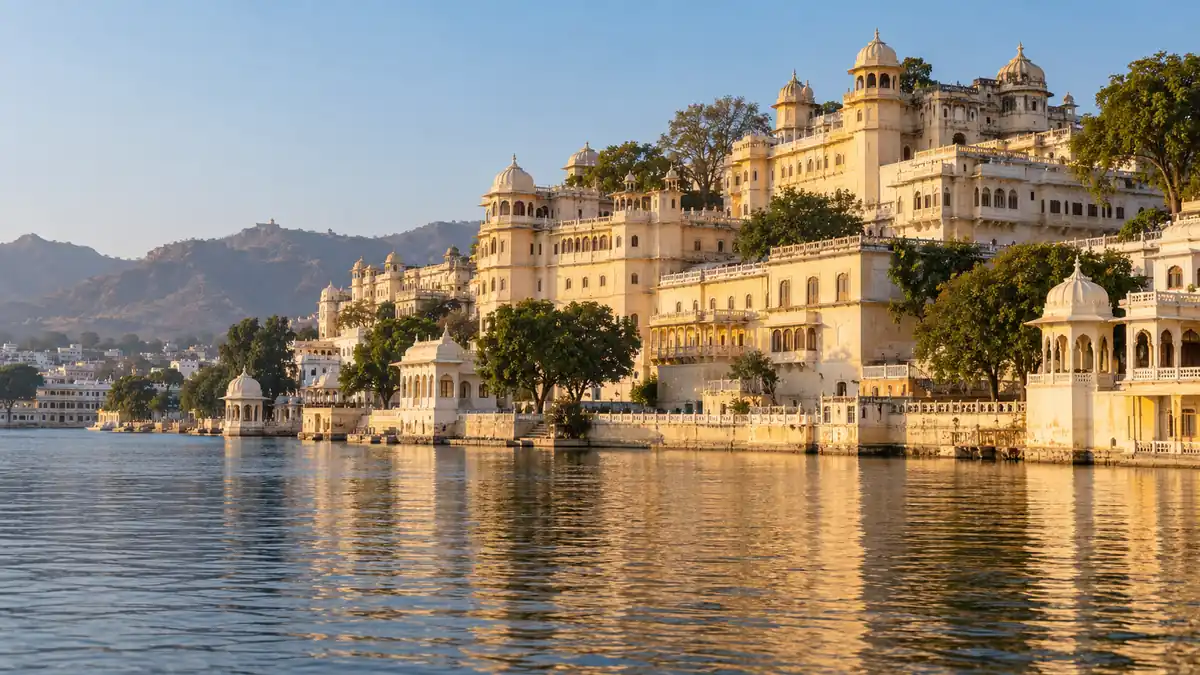
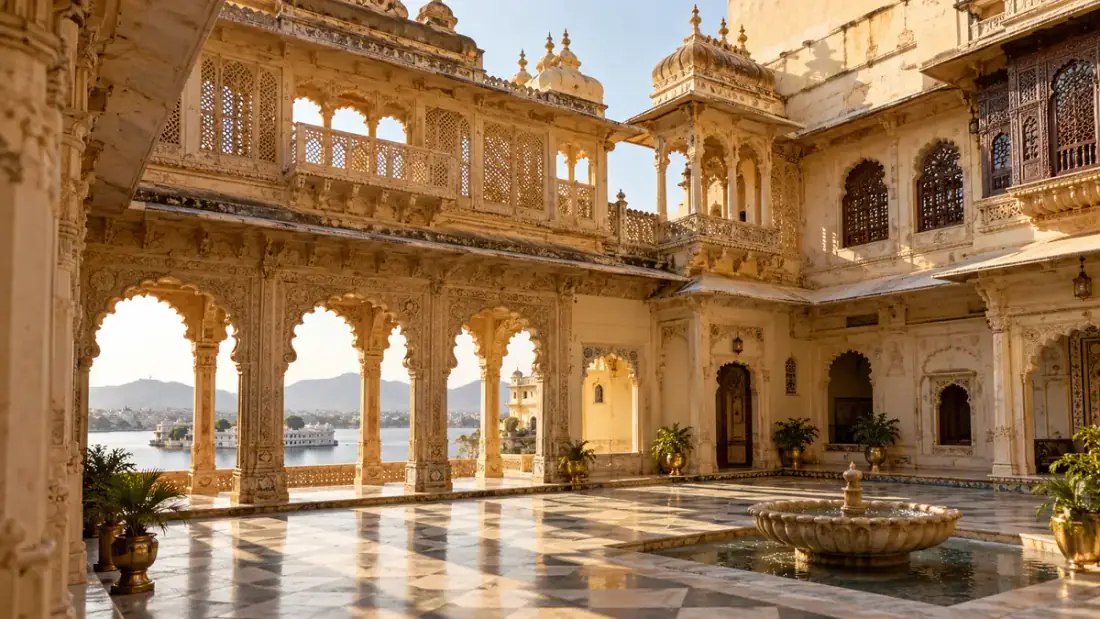
Twenty-two successive rulers added wings to the complex over four centuries, yet the entire structure maintains remarkable architectural harmony.
Official conservation notes, royal collections, and regional heritage circuits are documented on the Incredible India Chittorgarh and Mewar Heritage Portal.
| Palace Gallery / Court | Historic Period | Artistic Highlights & Material | Significance for Visitors |
|---|---|---|---|
| Mor Chowk (Peacock Courtyard) | Built 1645; glass mosaics added 1874 | 5,000 pieces of colored glass depicting three peacocks in rain | Benchmark of Mewar glass mosaic craftsmanship |
| Sheesh Mahal (Palace of Mirrors) | Built 1716 by Maharana Sangram Singh II | Convex mirror inlays and Belgian cut-glass wall panels | Private royal boudoir reflecting candle flames |
| Manak Mahal (Ruby Palace) | Mid-17th century | Red glass embellishments and Mewar sun emblems | Private audience room for royal consultations |
| Badi Mahal (Garden Palace) | Built 1699 by Maharana Amar Singh II | High courtyard with 104 carved marble pillars and live trees | Highest point of the palace; garden built on natural bedrock |
| Zenana Mahal (Queen’s Quarters) | Early 17th century | Multi-columned courtyard with traditional swing galleries | Houses royal carriage exhibits and cultural events |
Architectural Evolution: 400 Years of Rajput and Mughal Fusion
Entering the complex through the triple-arched Tripolia Gate, visitors enter the grand Badi Pol entrance courtyard. Here, historic stone gates were designed narrow and steep to prevent enemy war elephants from gaining ramming speed.
The palace architecture blends traditional Rajput stone masonry, featuring cantilevered balconies (jharokhas), cupolas (chhatris), and scalloped arches, with delicate Mughal-style inlaid marble and wall frescoes. Before establishing this lakeside refuge, the Sisodia dynasty ruled from the colossal plateau citadel detailed in our guide to places to visit in Chittorgarh.
The interior corridors are intentionally narrow and zig-zagging. This strategic defense layout forced armed intruders to advance in single file, allowing palace guards to defend entry doorways easily.
Mor Chowk Glass Mosaics, Badi Mahal, and Zenana Chambers
The artistic highlight of the City Palace Museum is Mor Chowk. Built within an inner courtyard, the chamber features three magnificent relief figures of peacocks crafted from over 5,000 pieces of brilliant blue, green, and gold glass. The peacocks symbolize the monsoon rains, a season celebrated with rejoicing in Mewar.
High above the palace foundation sits Badi Mahal, an open courtyard garden resting on a natural 27-meter rock spur. Massive neem trees and flowering shrubs grow directly out of the stone terrace, surrounded by 104 carved white marble pillars.
In the Zenana Mahal, visitors can admire the royal silver gallery, featuring historic elephant howdahs, ceremonial sedan chairs (palkis), and fine miniature paintings illustrating royal hunts.
Visitor Logistics: Audio Guides, Entry Fees & Museum Photography
Because the City Palace Museum contains hundreds of interconnected rooms, renting an official audio guide at the ticket counter is strongly recommended. Audio tours are available in English, Hindi, French, German, and Spanish for ₹250 to ₹350.
- Opening Timings: 09:30 AM to 05:30 PM daily (Ticket sales close at 04:30 PM).
- Admission Charges: ₹400 for adults, ₹100 for children aged 5 to 12. Photography tickets cost ₹300 for still cameras.
- Estimated Tour Duration: Allow at least 2.5 to 3 hours to tour the primary museum route comfortably without rushing.
Lake Pichola & Jag Mandir: Boat Cruise Tariffs, Sunset Ghats & Gangaur
No visit to Udaipur is complete without experiencing the waters of Lake Pichola. Taking an evening boat cruise as the setting sun casts a golden glow over the marble pavilions of the City Palace is one of India’s most memorable travel experiences.
Cruises depart regularly from Rameshwar Ghat, located inside the southern gardens of the City Palace complex.
Comprehensive interstate transit connections, flight frequencies, and seasonal festival schedules are published on the Incredible India Rajasthan State Portal.
| Boat Service Type | Operating Window | Departure Point | Ticket Cost (Adult) | Cruise Features |
|---|---|---|---|---|
| Regular Day Cruise | 10:00 AM to 03:00 PM | Rameshwar Ghat | ₹500 per person | 45-minute shared ride with stopover at Jag Mandir |
| Sunset Golden Cruise | 04:30 PM to 06:00 PM | Rameshwar Ghat | ₹800 to ₹1,000 per person | Prime golden hour lighting; 30-minute stopover at Jag Mandir |
| Private Charter Boat | Flexible morning / evening | City Palace Jetty | ₹4,000 to ₹8,000 per vessel | Dedicated boat for families and private photography groups |
| Municipal Boat Ride | 10:00 AM to 05:00 PM | Dudh Talai Ghat | ₹150 to ₹300 per person | Budget-friendly lake ride without palace entry ticket |
Boat Ride Tariffs from Rameshwar Ghat vs Dudh Talai
Travelers can choose between two main boat launch sites depending on their schedule and budget:
- Rameshwar Ghat (City Palace): The primary commercial boat counter operated by the royal trust. While tickets are priced higher, the cruise includes close-up views of the Taj Lake Palace and includes an exclusive landing at the Jag Mandir Island Palace.
- Dudh Talai Jetty: Situated at the southeastern corner of Lake Pichola near the Musical Fountain garden. Local municipal boats operate shorter 20-minute rides across the southern lake basin at economical rates, making it an excellent choice for budget backpackers.
During peak holiday months (November to January), purchase sunset cruise tickets by 02:00 PM to secure seats on popular 05:00 PM departures.
Jag Mandir Island: The 17th-Century Marble Water Palace
Rising like a floating marble palace in the southern waters of Lake Pichola, Jag Mandir was constructed between 1551 and 1652 by Maharanas Amar Singh, Karan Singh, and Jagat Singh I.
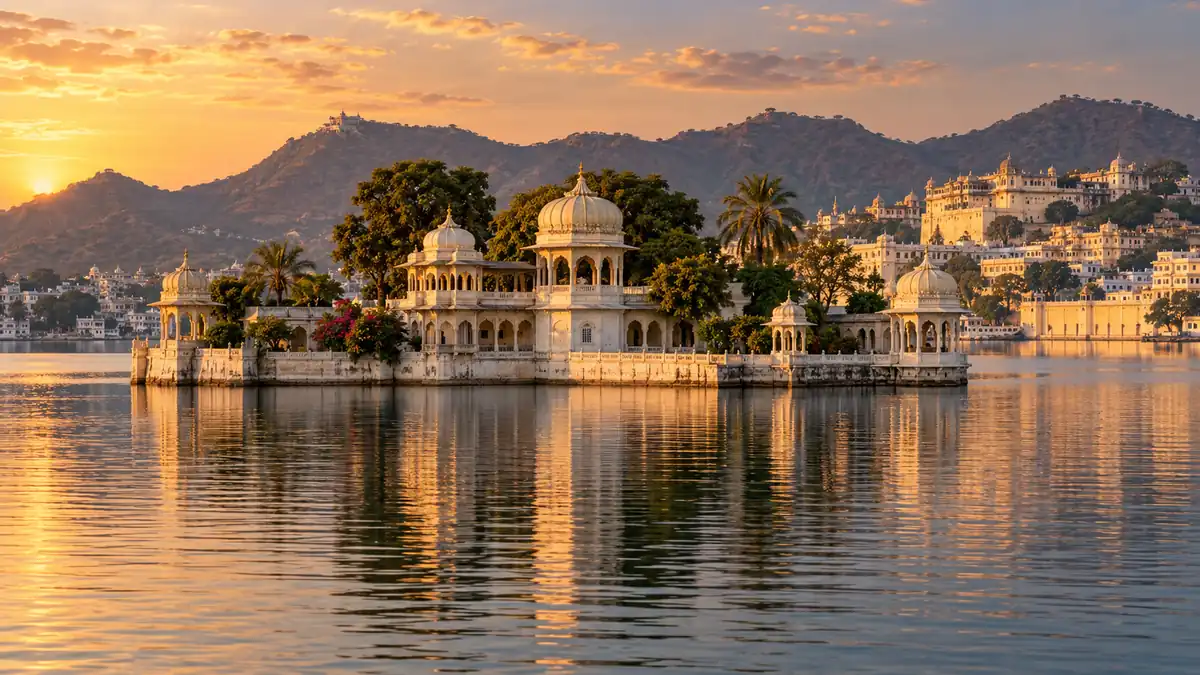
The island features a row of eight colossal stone elephants carved from white marble that stand guard along the water landing. The central pavilion, known as the Gul Mahal, is decorated with inlaid onyx, jasper, and jade.
Historical records note that Mughal Prince Khurram (later Emperor Shah Jahan) sought political asylum at Jag Mandir in 1623 after rebelling against his father, Emperor Jahangir. Historians believe that the domed marble architecture and stone inlays of Jag Mandir inspired Shah Jahan’s design for the Taj Mahal in Agra.
Visitors can explore the island’s courtyards, relax in open garden cafes under royal palms, and take photographs of the Udaipur city skyline across the water.
Sunset Gathering at Ambrai Ghat and Gangaur Ghat
For travelers exploring on foot, Udaipur’s stone bathing ghats provide wonderful vantage points for watching daily life unfold:
- Ambrai Ghat (Manjhi Ghat): Positioned directly opposite the City Palace on the western shore of Lake Pichola. Photographers gather here at dusk as the entire palace facade lights up with yellow spotlights, reflecting on the calm lake surface.
- Gangaur Ghat: Located in the heart of the old city near Bagore Ki Haveli. Local women perform evening prayers here, and during the annual Gangaur and Mewar festivals, colorful religious processions carry sacred idols down the stone steps for ceremonial lake immersion. Travelers seeking to combine lakeside promenades with high-altitude mountain boating can extend their tour to the Aravalli plateau detailed in our places to visit in Mount Abu guide.
Hilltop Citadels & Historic Gardens: Sajjangarh Monsoon Palace & Saheliyon Ki Bari
Beyond Lake Pichola, Udaipur features hilltop fortresses and ornamental royal pleasure gardens that demonstrate Mewar’s mastery of desert landscaping and climate architecture.
Travelers comparing royal fortifications across the region can examine the massive sandstone battlements described in our guide to essential stops across Jaipur.
| Attraction Name | Architectural Type | Primary Attraction | Travel Tip & Timing |
|---|---|---|---|
| Sajjangarh (Monsoon Palace) | Hilltop stone palace fortress | 360-degree panoramic sunset views from 944 meters altitude | Arrive by 04:30 PM; hire forest taxi from base |
| Saheliyon Ki Bari | 18th-century royal maiden garden | Marble elephant fountains, lotus pools, rose pavilions | Visit mid-morning for cool garden walks |
| Fateh Sagar Lake Promenade | Urban lakefront drive | Roadside street food stalls, boat rides to Nehru Park island | Evening strolls and cold coffee at Sukhadia Circle |
| Karni Mata Ropeway | Aerial passenger cable car | High-altitude views over Pichola, Dudh Talai, and City Palace | 09:00 AM to 08:30 PM; ₹120 round-trip ticket |
Sajjangarh Monsoon Palace: Sunset Panoramas Over the Aravalli Hills
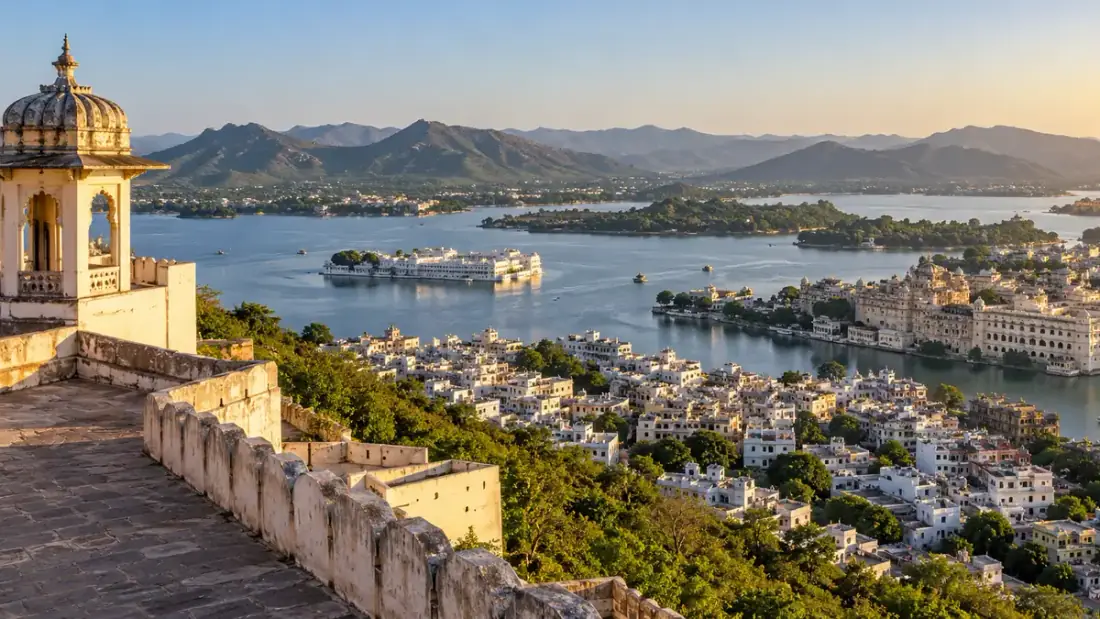
Perched on the crest of Bansdara Peak at an elevation of 944 meters (3,100 feet), the Sajjangarh Palace was built in 1884 by Maharana Sajjan Singh. Designed originally as an astronomical observatory and a seasonal hunting lodge, the palace provided royal family members with cool mountain breezes and sweeping views of gathering monsoon clouds.
The castle is constructed from white marble and features a grand central court with high turrets. From the palace ramparts, visitors enjoy an unobstructed panoramic view over the entire city of Udaipur, the surrounding lake basins, and the green valleys of the Sajjangarh Wildlife Sanctuary.
The hilltop is renowned as Udaipur’s foremost sunset viewpoint. Private vehicles must park at the forest checkpost at the mountain base, where forest department electric vans shuttle visitors up the steep 4-kilometer winding road.
Saheliyon Ki Bari: The Royal Courtyard of the Maidens
Located in northern Udaipur near Fateh Sagar, Saheliyon Ki Bari (Garden of the Maidens) was built between 1710 and 1734 by Maharana Sangram Singh II for a retinue of forty-eight young women who accompanied a Mewar princess as part of her wedding dowry.
The garden was designed as an enclosed sanctuary where royal women could relax away from court politics. It features manicured lawns, fragrant rose beds, marble pavilions, and four central pools filled with blooming water lilies.
The crowning feature of the garden is its hydraulic fountain system. Water is drawn from Fateh Sagar Lake through gravity pipelines without the use of mechanical pumps. When the valves open, water jets spray from the trunks of carved white marble elephants, creating a soothing sound of continuous rainfall that cools the garden courtyards.
Cultural Evenings at Bagore Ki Haveli: Dharohar Folk Dance & Gangaur Ghat
For an authentic immersion into Rajasthan’s performing arts, spending an evening at Bagore Ki Haveli is an essential Udaipur experience.
Situated directly at the edge of Gangaur Ghat on the waterfront of Lake Pichola, this historic 18th-century mansion was built by Amar Chand Badwa, the Prime Minister of Mewar.
State tourism records, museum preservation guidelines, and registered travel agent directories can be verified through the Incredible India Udaipur Destination Portal.
| Haveli Feature | Operational Detail | Highlights & Cultural Value |
|---|---|---|
| Haveli Architecture | 138 rooms, courtyards, balconies | Intricate jharokha fretwork, stained-glass windows, hand-carved pillars |
| Day Museum Exhibit | 09:30 AM to 05:30 PM | Royal turban gallery (world’s largest turban), puppet collections, period weaponry |
| Dharohar Folk Dance Show | 07:00 PM to 08:00 PM daily | Live Chari dance, Terah Taali, Ghoomar, puppet theater, and Bhavai pot dance |
| Show Ticket Pricing | ₹100 (Indians) / ₹200 (Foreigners) | Extremely affordable; tickets go on sale at 05:30 PM at the haveli counter |
| Camera Permit Fee | ₹150 for video/still cameras | Allows photography during the live cultural performance |
The 138-Room Waterfront Mansion of the Prime Minister
Bagore Ki Haveli contains 138 rooms built around three open courtyards. The mansion preserves the living lifestyle of 18th-century Mewar nobility.
During the day, visitors can tour the palace museum to see royal dressing chambers, traditional hookahs, dice games, copper water vessels, and an extraordinary display of regional Rajasthani turbans. The museum also exhibits the world’s largest turban, measuring over fifteen meters in length.
The upper terraces provide clear photography angles looking out across the bathers and pigeons of Gangaur Ghat.
The Dharohar Dance Performance: Bhavai Pot Balancing and Puppetry
Every evening at 07:00 PM, the inner Neem Chowk courtyard transforms into an open-air theater for the Dharohar Dance Show.
The one-hour program presents regional folk dances accompanied by live dholak drums, harmonia, and sarangi:
- Chari Dance: Female dancers balance brass pots with burning cotton seeds on their heads while performing intricate footwork.
- Terah Taali: Traditional devotional dance performed by seated artists holding thirteen small brass cymbals tied across their arms and legs, struck in rhythm with handheld cymbals.
- Rajasthani Puppetry (Kathputli): Skilled puppeteers manipulate wooden marionettes to recount legendary historical tales with humorous sound effects.
- The Bhavai Climax: An elderly folk dancer balances eight to ten earthen water pots atop her head while dancing barefoot on broken glass shards and the sharp edges of a brass platter.
Arrive at the ticket counter by 05:45 PM, as seats on the courtyard floor mats fill to capacity quickly during tourist season.
Curated 3-Day Udaipur Itinerary & Day Trips to Kumbhalgarh
A 3-day itinerary allows travelers to explore Udaipur’s central palace complexes, enjoy leisurely sunset cruises, and undertake a rewarding day excursion into the rugged Aravalli highlands.
Travelers planning an extended road trip across the historic Mewar highlands can consult our comprehensive guide to Kumbhalgarh Fort and Ranakpur for 36-kilometer Great Wall hikes, Jain marble audio guides, and mountain pass taxi fares.
| Itinerary Day | Morning Schedule (08:30 AM – 01:00 PM) | Afternoon Schedule (02:00 PM – 05:30 PM) | Evening Schedule (06:00 PM – 08:30 PM) |
|---|---|---|---|
| Day 1: Royal Palaces & Pichola Cruise | Guided tour of the City Palace Museum and royal courtyards | Stroll through Jagdish Temple and old city handicraft bazaars | Sunset boat cruise from Rameshwar Ghat to Jag Mandir Island; dinner at Ambrai Ghat |
| Day 2: Gardens, Haveli & Hilltop Sunset | Morning walk through Saheliyon Ki Bari and drive along Fateh Sagar | Explore Bagore Ki Haveli museum and shop for silver jewelry | Sunset van ride to Sajjangarh Monsoon Palace; attend Dharohar Dance Show at 7 PM |
| Day 3: Day Trip to Kumbhalgarh & Ranakpur | Early morning drive to Kumbhalgarh Fort; walk along the 36 km Great Wall | Drive through Aravalli passes to Ranakpur Jain Temple (1,444 marble pillars) | Return to Udaipur for rooftop dinner overlooking the illuminated lake palaces |
Day 1: Exploring City Palace, Jagdish Temple & Sunset Cruise
Begin your morning early at the City Palace complex to tour the museum galleries before large tour groups arrive. Admire the glass peacocks of Mor Chowk and the marble pillars of Badi Mahal.
Exiting the palace gates, walk two hundred meters north to Jagdish Temple, a fine example of 1651 Indo-Aryan temple architecture featuring a 79-foot carved stone shikhara dedicated to Lord Vishnu.
In the late afternoon, board the sunset boat cruise from Rameshwar Ghat. Watch the setting sun light up the marble walls of the Lake Palace and explore the courtyards of Jag Mandir Island before enjoying a lakeside dinner at an old city rooftop restaurant.
Day 2: Saheliyon Ki Bari, Monsoon Palace & Cultural Dance
Start your second morning with a tranquil walk through the cooling fountains and lotus ponds of Saheliyon Ki Bari. Afterward, take a leisurely auto-rickshaw ride along the eastern promenade of Fateh Sagar Lake.
In the afternoon, hire a taxi for the scenic 9-kilometer drive to Sajjangarh Monsoon Palace. Enjoy wide views across the Aravalli hills as the sun dips below the western ridges.
Return to the old city by 06:15 PM to purchase tickets for the Dharohar Folk Dance Show at Bagore Ki Haveli. Enjoy the live music, puppetry, and Bhavai pot balancing in the open courtyard.
Day 3: Excursion to Kumbhalgarh Great Wall and Ranakpur Marble Marvel
On your final day, take a day road excursion into the Aravalli range north of Udaipur:
- Kumbhalgarh Fort (85 km / 2 hours): The birthplace of Maharana Pratap, this massive fortress is protected by a 36-kilometer continuous stone wall, recognized as the second-longest unbroken wall in the world after the Great Wall of China. Climb to the Badal Mahal (Palace of Clouds) at the fortress summit for views into the Marwar plains.
- Ranakpur Jain Temple (50 km from Kumbhalgarh): Located in a quiet mountain valley, this 15th-century marble temple is renowned for its 1,444 uniquely carved pillars, no two of which share the same artistic design.
Return to Udaipur by late evening for onward travel connections to Jaipur, Jodhpur, or New Delhi. Wildlife enthusiasts extending their journey into the granite hills of Marwar can consult our Jawai leopard safari guide to track wild leopards living peacefully among Rabari pastoralist communities. Travelers seeking royal heritage often arrive aboard heritage salon trains; explore our India Luxury Trains highlights and timings for itineraries on the Palace on Wheels.
Frequently Asked Questions About Visiting Udaipur
How many days are ideal to explore Udaipur comfortably?
Three days and two nights provide the ideal timeframe to experience Udaipur’s key sights at a relaxed pace. This allows two full days for the City Palace, Lake Pichola boat cruises, Saheliyon Ki Bari, and Bagore Ki Haveli, plus one dedicated day for an excursion to Kumbhalgarh Fort or Ranakpur Jain Temple.
What is the best month to visit Udaipur?
October to March is the best time to visit Udaipur. The weather during these winter months is pleasant and sunny, with daytime highs around 24°C and cool evenings, making it comfortable for lake boat rides, walking tours, and rooftop dining.
How much does the City Palace Udaipur ticket cost?
The City Palace Museum entry ticket costs ₹400 for adults and ₹100 for children aged 5 to 12. Audio guides are available at the entrance counter for ₹250 to ₹350. Personal camera permits cost ₹300.
Where can I book the Lake Pichola sunset boat ride?
Boat tickets can be purchased directly at the official ticket counter inside the City Palace complex at Rameshwar Ghat. Sunset cruise tickets cost approximately ₹800 per person and include a 30-minute stopover at the Jag Mandir Island Palace.
How far is Udaipur from Jaipur and Jodhpur?
Udaipur is located approximately 395 kilometers southwest of Jaipur (6 to 7 hours by road or Vande Bharat train) and 250 kilometers south of Jodhpur (4.5 to 5 hours by road via National Highway 62); explore our comprehensive guide to Jodhpur travel highlights for Mehrangarh Fort tickets and Blue City walking tours.
Which airport serves Udaipur, and how far is it from the city center?
Udaipur is served by Maharana Pratap Airport (airport code UDR) in Dabok, located 22 kilometers east of the city center. Pre-paid airport taxis charge between ₹800 and ₹1,200 to reach old city hotels in approximately 35 to 45 minutes.