Kumbhalgarh Fort & Ranakpur Guide: Great Wall & Marble Pillars
Complete guide to Kumbhalgarh Fort and Ranakpur Jain Temple: 36 km Great Wall of India, 1,444 carved marble pillars, Udaipur day trip routes, and entry timings.
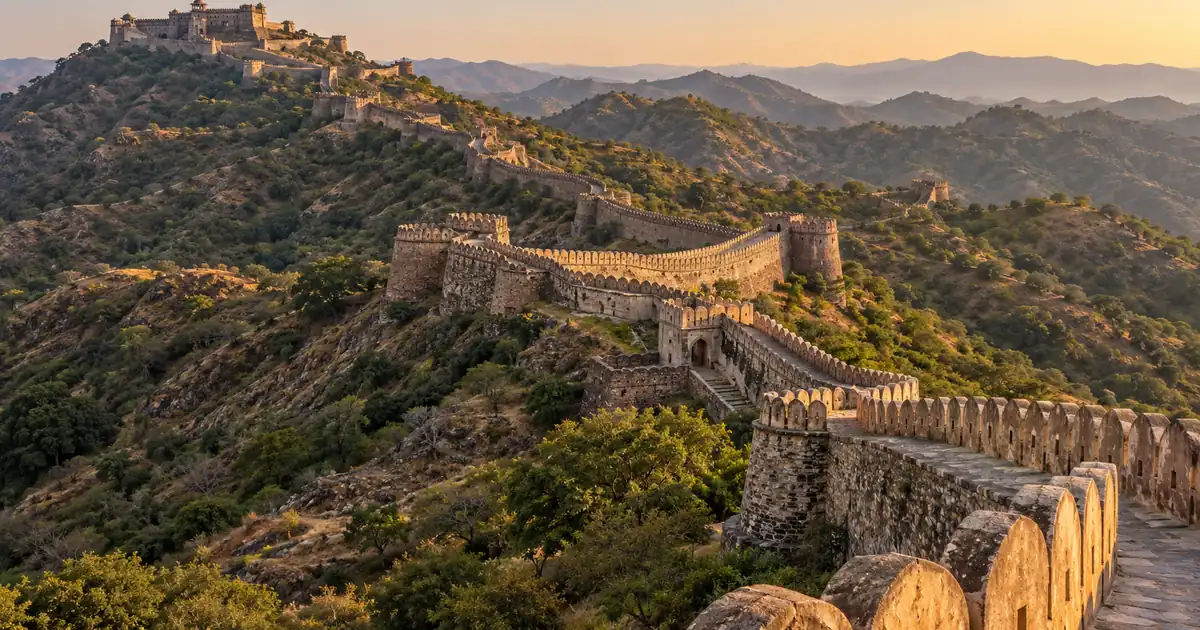
Perched high on the jagged ridges of the western Aravalli Hills in southern Rajasthan, Kumbhalgarh Fort stands as one of the most impregnable fortresses ever constructed in medieval India. Commissioned in the 15th century by Maharana Kumbha, ruler of the Mewar kingdom, the fort is encircled by an astounding 36-kilometer stone wall.
Globally recognized as the second-longest continuous fortification wall in the world after the Great Wall of China, this monumental defensive structure earned Kumbhalgarh its popular title: the Great Wall of India.
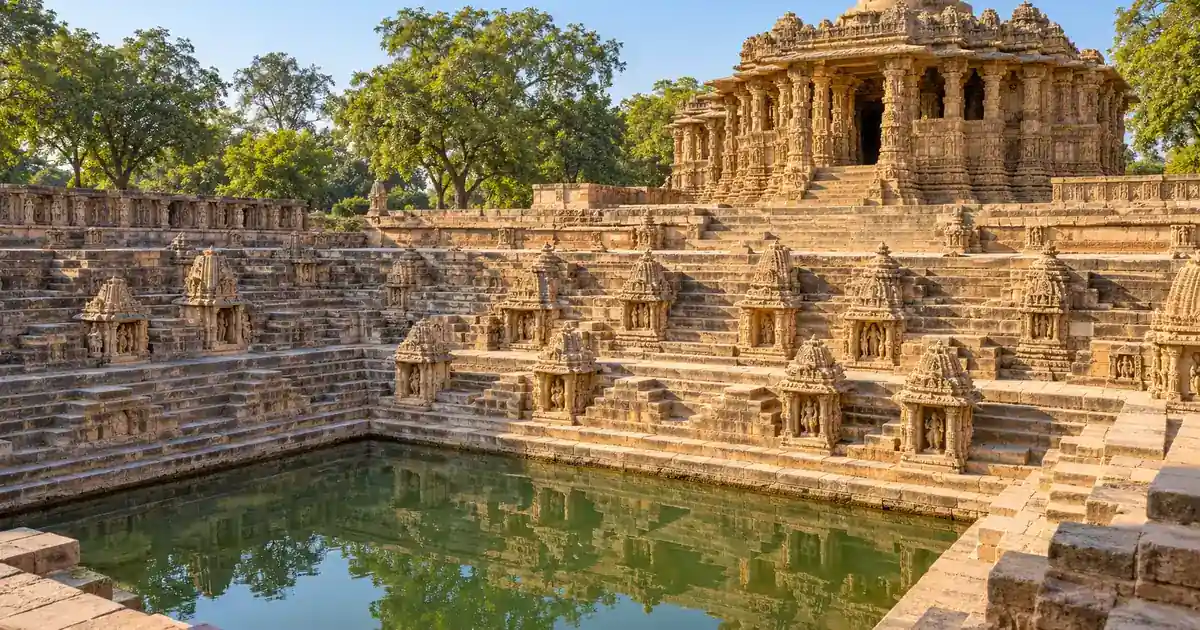
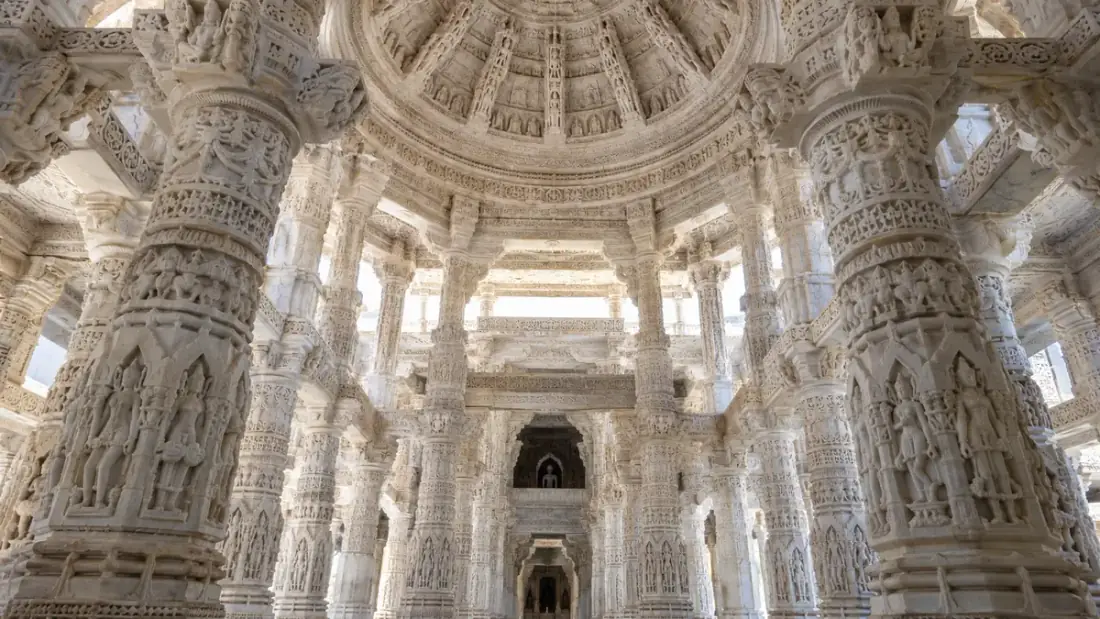
Just 50 kilometers to the west down a winding mountain pass in the forested valley of Pali district lies the Ranakpur Jain Temple (Chaturmukha Dharana Vihara). Built in the 15th century, Ranakpur is considered an architectural masterpiece of Indian stone carving, supported by 1,444 uniquely sculpted marble pillars where no two columns share the same design.
Kumbhalgarh & Ranakpur Circuit Quick Overview
- Primary Geographic Setting: Rajsamand and Pali districts of southern Rajasthan.
- Kumbhalgarh Altitude: 1,100 meters (3,600 feet) above sea level atop thirteen mountain peaks.
- The Great Wall Metric: 36 kilometers long, with battlements measuring 15 to 20 feet in width.
- Historic Significance: Birthplace of legendary warrior king Maharana Pratap in 1540 CE.
- Ranakpur Wonder: 15th-century white marble Adinath temple with 1,444 individually carved pillars.
- Standard Circuit Window: Full-day 10 to 12 hour road trip originating and returning to Udaipur.
Together, Kumbhalgarh and Ranakpur form the ultimate day trip from Udaipur, connecting the martial might of Rajput military engineering with the spiritual tranquility and artistic refinement of Jain marble sculpture. The table below outlines key dimensions, admission fees, and operational parameters for both monuments.
| Monument / Feature | Dimension / Operational Metric | Visitor Significance & Logistical Rule |
|---|---|---|
| Kumbhalgarh Perimeter Wall | 36 kilometers (22.3 miles) | Second-longest continuous wall in the world; wide enough for four horses abreast |
| Fort Elevation | 1,100 meters above sea level | Panoramic views extending across the Aravallis toward the Thar Desert horizon |
| Kumbhalgarh Visiting Hours | 09:00 AM to 06:00 PM daily | Morning light is ideal for walking the outer ramparts before daytime heat builds |
| Kumbhalgarh Entry Ticket | ₹40 (Indians) / ₹600 (Foreigners) | Children under age 15 enter free; online booking available via ASI portal |
| Light and Sound Show | 06:45 PM to 07:30 PM (Hindi) | Atmospheric narration illuminating the palace towers against the dark night sky |
| Ranakpur Pillar Count | 1,444 hand-carved pillars | Light-filtering marble halls with zero identical column carvings throughout |
| Ranakpur Visiting Hours | 12:00 PM to 05:00 PM for tourists | Morning hours (06:00 AM to 12:00 PM) reserved strictly for Jain pilgrim darshan |
| Ranakpur Entry & Audio Guide | ₹200 (Tourists) / Audio Guide ₹200 | Mandatory shoe removal; strict prohibition on all leather articles and short attire |
What is Kumbhalgarh Fort: The 36-Kilometer Great Wall of India
Constructed between 1443 and 1458 CE under the direct patronage of Maharana Kumbha, Kumbhalgarh served as Mewar’s second capital and ultimate refuge during times of war. While the primary royal seat at Chittorgarh was vulnerable to siege warfare on its exposed plateau, Kumbhalgarh was intentionally hidden deep within an impenetrable maze of steep valleys, dense forests, and high peaks.
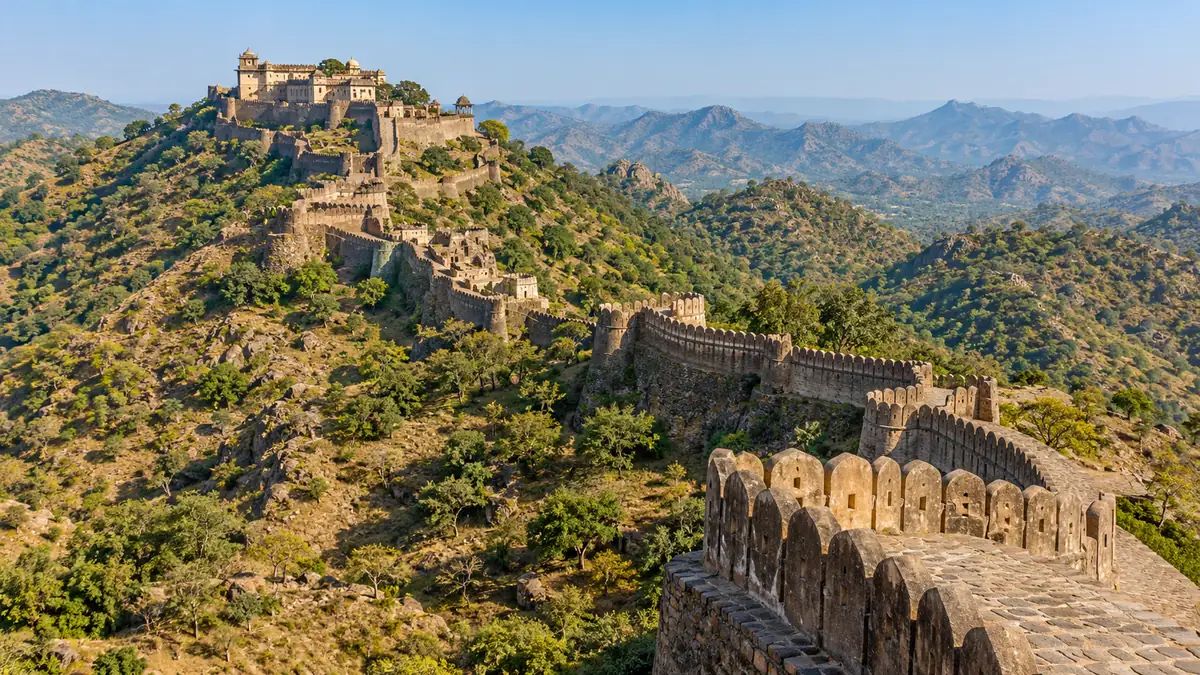
Throughout its entire five-hundred-year military history, the fortress was breached only once. That breach occurred in 1578 when the combined imperial armies of Mughal Emperor Akbar, Raja Man Singh of Amber, and the rulers of Marwar surrounded the citadel for months, finally taking it only after traitors poisoned the fortress’s freshwater reservoirs.
Travelers designing multi-day regional heritage itineraries across northern and western India can review seasonal flight routes and mountain packing advice in our comprehensive guide to the best places to visit in India.
Architectural Ingenuity: 15-Foot-Wide Ramparts Built for Four War Horses
The scale of Kumbhalgarh’s perimeter defenses remains a marvel of medieval military architecture:
- Massive Granite Foundations: The wall is constructed from colossal interlocking blocks of dressed grey granite, mortared with lime and volcanic ash. The foundations are anchored directly into living bedrock along the contours of thirteen mountain ridges.
- Battlement Width: Along its broad upper walkway, the wall measures between fifteen and twenty feet across. Military chronicles note that four armored Rajput cavalrymen could ride abreast along the battlements to reinforce threatened sectors during an enemy assault.
- Loopholed Parapets: The outer parapet features thousands of angled stone arrow-slits (musketry loops) and machicolations through which archers could pour boiling oil, melted lead, and fire projectiles onto climbing attackers.
- Seven Fortified Gates: To reach the royal palace at the summit, an invading force had to fight through seven massive gateway bastions, including Aret Pol, Halla Pol, Hanuman Pol, and Ram Pol, each guarded by iron-spiked doors designed to turn back war elephants.
Birthplace of Maharana Pratap and the Unconquered Citadel of Mewar
Beyond its tactical architecture, Kumbhalgarh holds an emotional place in Rajput history. In 1540 CE, inside the fortified chamber of the Badal Mahal, Rani Jeevant Kanwar gave birth to Maharana Pratap, the legendary warrior who would lead Mewar’s relentless resistance against Mughal expansion for decades.
Earlier in 1535, the infant Prince Udai Singh II was targeted for assassination by the usurper Banvir. His devoted royal nursemaid Panna Dai sacrificed her own biological son to smuggle the young prince to safety inside Kumbhalgarh’s walls.
The citadel sheltered the Mewar dynasty through its darkest hours. This mountain sanctuary preserved the royal bloodline that later established Udaipur.
Badal Mahal, 360 Temples & Evening Light and Sound Show Timings
The interior of Kumbhalgarh Fort is vast, spanning hundreds of acres of hilly terrain containing ancient palaces, water harvesting stepwells, grain storehouses, and more than 360 historic temples.
Official visiting hours, state archaeological excavation updates, and evening ticket rates can be reviewed on the Rajasthan Tourism Kumbhalgarh Portal.
| Inner Monument / Structure | Architectural Style | Historic Purpose & Visitor Highlights |
|---|---|---|
| Badal Mahal (Cloud Palace) | Rajput-Mughal fusion; 19th-century restoration | Two-story palace on the highest ridge with blue and green pastel murals |
| Mardana Mahal | Royal Men’s Quarters | Grand central courtyard with high stone arches and open terraces |
| Zanana Mahal | Royal Women’s Quarters | Enclosed living suites featuring stone lattice jaali screens for privacy |
| Neelkanth Mahadev Temple | 15th-century stone temple | Features a colossal 5-foot-high black stone Shiva lingam worshipped by Rana Kumbha |
| Vedi Temple Complex | Three-story sacrificial pavilion | 36 carved pillars honoring the Vedic fire rites performed at the fort’s completion |
| Parsvanatha Jain Temple | 14th-century Jain sanctuary | Intricate tirthankara carvings dating before Rana Kumbha’s fort expansion |
Badal Mahal: The High-Altitude Cloud Palace on Bansdara Ridge
Crowning the absolute summit of Kumbhalgarh at an elevation of 1,100 meters stands the Badal Mahal, or the “Cloud Palace.” Built in the late 19th century by Maharana Fateh Singh atop the ruins of Rana Kumbha’s original royal quarters, the palace derives its name from its soaring height, where morning monsoon clouds and winter mists drift directly through the open pavilion windows.
The palace is divided into two separate functional wings:
- The Mardana Mahal: Built for royal durbars and meetings of state. Spacious stone verandas offer panoramic views west toward the desert horizon of Marwar.
- The Zanana Mahal: The women’s residential palace, adorned with pastel wall paintings of royal hunting processions, peacocks, and floral arabesques. Stone lattice jaali screens allowed royal women to observe courtyard gatherings without being seen.
Neelkanth Mahadev and Ancient Jain Shrines Inside the Ramparts
Of the 360 religious shrines constructed within the fortress perimeter, approximately 300 are dedicated to Jain tirthankaras, while 60 belong to the Hindu faith. This distribution highlights the generous religious tolerance of Maharana Kumbha, whose chief architect, Mandan, and trusted financial advisors were devout Jains.
The most prominent Hindu shrine is the Neelkanth Mahadev Temple, built in 1458 CE. Situated near the base of the palace hill, the open-pillared hall houses a massive five-foot-high polished black stone Shiva lingam.
Historical legends record that Rana Kumbha was a man of towering physical stature, standing nearly seven feet tall, and could easily pour milk and sacred water over the towering lingam while seated on the temple floor.
The Evening Light and Sound Show
Every evening at sunset, the Archaeological Survey of India (ASI) transforms Kumbhalgarh with a 45-minute multi-media Light and Sound Show (Son et Lumière).
As darkness falls over the Aravallis, powerful golden floodlights illuminate the perimeter towers, the ramparts, and the summit of Badal Mahal against the night sky. The stirring voice of veteran Indian narrator Harish Bhimani guides spectators through the dramatic saga of Mewar: the sacrifice of Panna Dai, the bravery of Rana Kumbha, and the fierce battle charges of Maharana Pratap.
- Show Timings: 06:45 PM to 07:30 PM (Winter: October to March); 07:15 PM to 08:00 PM (Summer: April to September).
- Show Language: Hindi (narrated daily); English headphone guides available upon request.
- Ticket Price: ₹100 per adult; ₹50 for children aged 5 to 12.
Ranakpur Jain Temple: 1,444 Distinctly Carved Marble Pillars
Descending 50 kilometers westward from the heights of Kumbhalgarh through the winding mountain switchbacks of the Aravallis brings you to the tranquil forested valley of the Maghai River in Pali district. Here rises the Ranakpur Jain Temple, universally celebrated as one of the five most sacred pilgrimage shrines of Jainism.
Travelers exploring northern Mewar can combine this day trip with the grand fortress ramparts and Tower of Fame highlighted in our guide to places to visit in Chittorgarh.
Dedicated to Lord Adinath (Rishabhdev), the first Tirthankara of the current cosmic era, Ranakpur was commissioned in the 15th century by Dharna Shah, a wealthy Porwal Jain merchant and chief minister to Maharana Kumbha.
| Architectural Component | Metric / Dimension | Artistic & Structural Significance |
|---|---|---|
| Construction Timeline | 1439 to 1458 CE (Over 50 years) | Financed by merchant Dharna Shah on royal land gifted by Rana Kumbha |
| Temple Footprint | 48,000 square feet (Grand plinth) | Multi-story basement with four directional entrances (Chaturmukha) |
| Total Marble Pillars | 1,444 distinct pillars | Light-filtering layout; no two pillars share the same carved motif |
| Domed Ceilings | 80 ornate marble domes | Layered circular friezes depicting dancing nymphs (apsaras) and lotus buds |
| Miniature Shrines | 29 pillared halls with 84 shrines | Complex geometric layout symbolizing the spiritual journey toward liberation |
| Central Sanctum | 4-faced white marble idol | Four identical icons of Lord Adinath facing the cardinal directions |
The Architectural Miracle of Dharna Shah and Sculptor Depa
The creation of Ranakpur began with a divine vision. According to Jain chronicles, merchant Dharna Shah dreamed of a heavenly vehicle (Nalini-Gulma Vimana) and resolved to build an earthly temple replicating that celestial architecture.
He interviewed dozens of master architects across western India, finding their blueprints unimaginative until he met Depa (or Depaka), an eccentric, deeply spiritual sculptor from the village of Mundara. When Depa presented a layout featuring four directional sanctums (chaturmukha) linked by elevated pillared halls, Dharna Shah knew he had found his master builder.
Maharana Kumbha donated the secluded forest valley for the temple’s construction and granted land revenues for its maintenance, requesting only that the settlement be named Ranakpur in honor of his royal name. Construction required over fifty years, employing thousands of stone cutters, polishers, and master carvers.
The Incomplete Pillar, Kalpavriksha Ceiling & Acoustical Marvels
Walking through the marble forest of Ranakpur reveals extraordinary details that continue to amaze architects:
- The Unique 1,444 Pillars: Every single pillar is carved from local white Makrana and Pali marble. While the overall proportions maintain classical balance, no two pillars have identical carving. Columns are decorated with climbing floral vines, geometric bells, mythical animals, and miniature deities.
- The Deliberately Tilted Pillar: In one of the central halls, a single pillar leans noticeably off-center. When the master sculptor Depa finished the temple, he intentionally tilted this pillar slightly out of alignment to remind visitors that only the divine creator is perfect, and human creations should never claim flawlessness.
- The Wish-Fulfilling Tree (Kalpavriksha): Near the eastern entrance, a single block of marble is carved into an intricate sculpture of the Kalpavriksha, the mythological wish-fulfilling tree. Beneath its branches, carvers depicted 108 heads of snake deities intertwined so smoothly that no seams can be found in the stone.
- Sightlines to the Sanctum: Despite the dense forest of 1,444 pillars, the architects designed the floor plan with open geometric vistas so that from almost any point in the outer halls, worshippers have an unobstructed view of the four-faced idol of Adinath in the central sanctum.
Ranakpur Visitor Guidelines: Dress Code, Timings & Audio Guide Rates
Because Ranakpur remains an active, deeply sacred place of Jain worship, all visitors must respect strict monastic guidelines during their tour.
Official pilgrim trusts, seasonal darshan rules, and registered guest house contacts can be verified on the Rajasthan Tourism Ranakpur Information Desk.
| Visitor Requirement / Rule | Detail / Specification | Reason & Enforcement Protocol |
|---|---|---|
| Visiting Hours for Non-Jains | 12:00 PM to 05:00 PM daily | Morning hours (06:00 AM – 12:00 PM) reserved strictly for Jain worship and rituals |
| Strict Dress Code | Shoulders and knees must be covered | No shorts, sleeveless tops, miniskirts, or transparent garments allowed |
| Footwear Protocol | Barefoot only inside temple | All shoes, socks, and sandals must be checked at the complimentary shoe counter |
| Leather Article Ban | Zero leather allowed | Wallets, leather belts, shoes, and leather camera straps must be deposited in lockers |
| Tourist Admission Fee | ₹200 per adult (Foreign nationals) | Includes high-definition audio guide; ₹50 for Indian visitors |
| Camera & Mobile Charges | ₹100 per camera / smartphone | Photography allowed for architecture; photography of sanctum idols prohibited |
Mandatory Attire Restrictions and Prohibition of Leather Goods
Jainism is founded on the cardinal principle of Ahimsa (absolute non-violence toward all living beings). To preserve the spiritual purity of the sanctuary, temple security guards enforce strict rules at the main gate:
- Deposit All Leather Articles: You will not be permitted to enter if you are wearing a leather belt, carrying a leather purse, or using a camera with a leather strap. Secure lockers are available at the entrance counter where you can safely deposit leather items for a nominal fee of ₹20.
- Appropriate Clothing: Both men and women must wear conservative clothing. If your outfit does not meet the guidelines, the temple administration rents traditional cotton wrap cloths (dhoti or chaddar) for ₹50 at the entry booth.
- Silence and Sanctity: Visitors should speak in low murmurs. Running, shouting, and eating food inside the temple halls are strictly prohibited.
Audio Guide Experience vs Independent Architectural Exploration
Because local human guides are restricted from lecturing inside the sanctum to maintain a quiet atmosphere, the temple trust provides world-class multi-lingual Audio Guides (available in English, French, German, Spanish, Italian, and Hindi).
The audio guide is synchronized with numbered stone plaques positioned throughout the temple halls. Over the course of 45 to 60 minutes, the narration reveals fascinating historical context: how the marble changes from pale golden in the morning light to pearly white at midday and soft silver at dusk; the acoustics of the central dome; and the hidden symbolism behind the stone carvings.
Renting the audio guide is highly recommended to fully appreciate Depa’s architectural genius.
The Curated 1-Day Itinerary from Udaipur: Route, Cab Fares & Ghat Pass
The classic Kumbhalgarh and Ranakpur circuit covers approximately 230 kilometers in a circular loop starting and ending in Udaipur. The journey takes travelers through some of the most scenic mountain landscapes in Rajasthan.
Travelers organizing their multi-day base can plan their city palace tours and sunset boat rides using our complete guide to places to visit in Udaipur.
| Timing Window | Stop / Activity | Route / Distance | Practical Travel Advice |
|---|---|---|---|
| 08:00 AM – 10:15 AM | Udaipur to Kumbhalgarh Fort | 85 km via NH76 & SH32 | Scenic drive through Aravalli valleys; breakfast at highway dhabas |
| 10:15 AM – 01:15 PM | Tour Kumbhalgarh Fort | Inside fort complex | Walk the Great Wall ramparts and climb to the top of Badal Mahal |
| 01:15 PM – 02:00 PM | Traditional Rajasthani Lunch | Near Kumbhalgarh gate | Enjoy Dal Baati Churma and Ker Sangri at local heritage resorts |
| 02:00 PM – 03:15 PM | Drive to Ranakpur via Ghat | 50 km via Ranakpur Pass | Spectacular winding descent down the mountain pass into Pali district |
| 03:15 PM – 05:00 PM | Explore Ranakpur Jain Temple | Inside Ranakpur complex | Audio tour of the 1,444 pillars and Adinath sanctum |
| 05:00 PM – 07:30 PM | Return Drive to Udaipur | 95 km via Sayra & Gogunda | Smooth highway return arriving back in Udaipur for dinner |
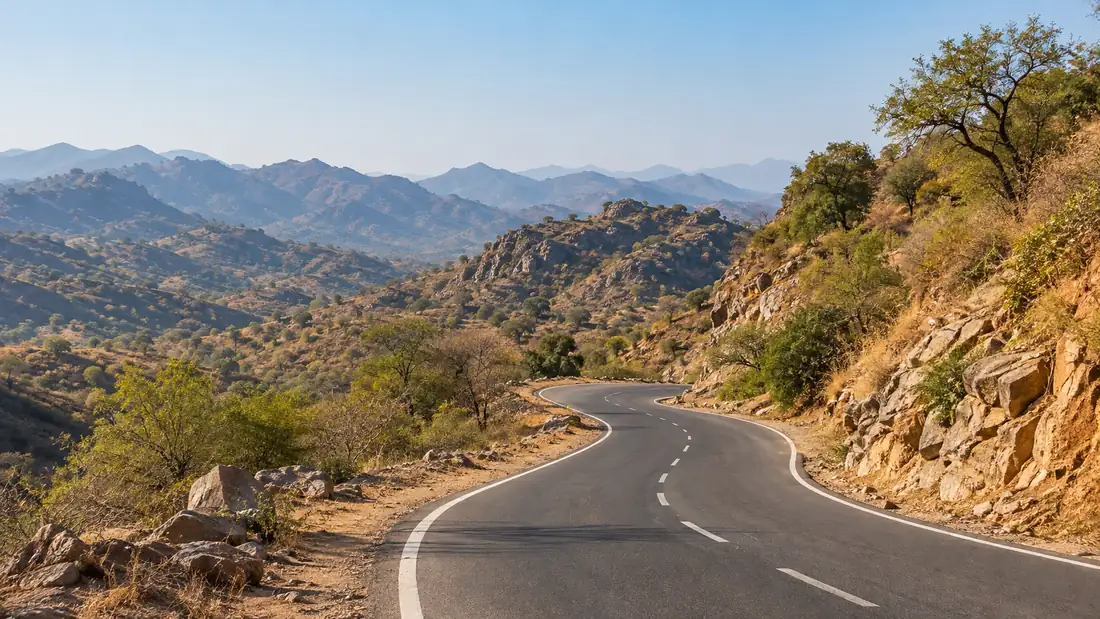
Driving the Scenic Aravalli Mountain Road via Gogunda and Saira
Leaving Udaipur westward, the journey travels along the multi-lane National Highway 76 before branching onto State Highway 32 through the historic town of Gogunda. It was here in Gogunda that Maharana Pratap was officially crowned King of Mewar in 1572 following the passing of his father.
The highway winds through rural tribal hamlets populated by the indigenous Bhil community. You will pass traditional Persian water wheels (rahat) powered by pairs of bullocks drawing well water to irrigate terraced mustard and wheat fields.
Negotiating the Winding Ranakpur Ghat Descent into Pali District
The 50-kilometer mountain drive connecting Kumbhalgarh to Ranakpur is one of the most thrilling road trips in western India. The route descends through the Ranakpur Ghat Pass, featuring dozens of hairpin bends, steep drop-offs, and dense deciduous forests.
- Monkeys Along the Pass: Large troops of gray langur monkeys sit along the stone retaining walls of the pass. Do not feed them from moving vehicles to protect their natural foraging behavior.
- Careful Mountain Driving: The road is narrow in several sections. If you are hiring a private taxi, ensure your driver is experienced with mountain roads and comfortable driving down steep gradients. A private air-conditioned sedan (Swift Dzire or Etios) for the full-day round-trip from Udaipur costs approximately ₹3,200 to ₹4,200, while a larger SUV (Innova) costs ₹4,500 to ₹5,800.
Best Time to Visit, Kumbhalgarh Wildlife Sanctuary & Jungle Safaris
The climate of the southern Aravallis varies markedly between seasons, shaping the travel experience across both monuments.
Regional travel advisories, monsoon weather warnings, and hotel accommodations can be confirmed through the Incredible India Udaipur Regional Portal.
| Travel Season | Temperature Range | Landscape & Climate Character | Ideal Visitor Type |
|---|---|---|---|
| Winter (Oct to March) | 10°C to 26°C | Clear sunny days, cool mountain breezes, crisp nights | Perfect for walking the 36 km ramparts and outdoor sightseeing |
| Monsoon (July to Sept) | 22°C to 30°C | Lush green hills, cascading seasonal waterfalls, dramatic mist | Photographers, road trippers, and nature lovers |
| Summer (April to June) | 28°C to 42°C | Intense desert heat, dry mountain scrub, fewer crowds | Budget travelers; early morning visits recommended |
Monsoon Clouds and Crisp Winter Sunshine Across Mewar Valleys
The winter season from October to March is universally considered the peak window for visiting Kumbhalgarh and Ranakpur. Pleasant daytime temperatures make climbing the steep stone ramps of the fort comfortable, while the marble floors of Ranakpur remain cool underfoot.
However, the monsoon season (July to September) offers a remarkably different, magical atmosphere. The typically arid brown slopes of the Aravallis transform into emerald-green hills, seasonal mountain streams rush through valley gorges, and thick monsoon clouds drift lazily through the high arches of Badal Mahal.
Kumbhalgarh Wildlife Sanctuary & Jeep Safaris
Surrounding the fortress walls lies the Kumbhalgarh Wildlife Sanctuary, spanning 610 square kilometers across Rajsamand, Pali, and Udaipur districts. The sanctuary protects a fragile dry deciduous forest ecosystem that serves as an important wildlife corridor in southern Rajasthan. Travelers seeking dedicated granite-hill leopard tracking without forest gate lotteries can also explore our Jawai leopard safari guide, located just 55 kilometers west in the Bera valley.
Visitors can arrange three-hour open jeep safaris with registered forest guides from the Kumbhalgarh entry gate. Key wildlife species inhabiting the sanctuary include:
- Indian Leopard: The top predator of the Aravalli granite outcrops, frequently spotted on rock ledges at dawn and dusk.
- Indian Wolf: One of the few sanctuaries in Rajasthan supporting a healthy breeding population of this endangered desert canid.
- Striped Hyena & Sloth Bear: Nocturnal foragers roaming the rocky dry deciduous slopes alongside chinkara gazelles.
Frequently Asked Questions About Kumbhalgarh and Ranakpur
Can Kumbhalgarh Fort and Ranakpur Temple be visited together in one day from Udaipur?
Yes, visiting Kumbhalgarh and Ranakpur together is one of the most popular and convenient day trips from Udaipur. By departing at 08:00 AM, you can spend three hours exploring Kumbhalgarh Fort, drive through the scenic mountain pass for lunch, spend two hours at Ranakpur Temple, and return to Udaipur by 07:30 PM.
How long is the Great Wall of India at Kumbhalgarh Fort?
The perimeter wall of Kumbhalgarh Fort measures 36 kilometers (approximately 22.3 miles) in length. It is the second-longest continuous fortification wall in the world, surpassed only by the Great Wall of China.
What are the entry fees and timings for Kumbhalgarh Fort?
Kumbhalgarh Fort is open daily from 09:00 AM to 06:00 PM. Admission costs ₹40 for Indian nationals and ₹600 for foreign visitors. Children under fifteen years of age enter free of charge. The evening Light and Sound show begins at 06:45 PM and costs ₹100 per adult.
Why are the pillars at Ranakpur Jain Temple unique?
Ranakpur Jain Temple contains 1,444 hand-carved white marble pillars supporting its halls and domes. Remarkably, no two pillars share the same carved motif, demonstrating the boundless creativity of 15th-century master sculptor Depa and his stone artisans.
What is the dress code for visiting Ranakpur Jain Temple?
Visitors must dress conservatively with shoulders, chests, and knees completely covered. Sleeveless shirts, shorts, and short skirts are strictly forbidden. In accordance with Jain principles of non-violence, all leather articles (including leather belts, wallets, and shoes) must be deposited in lockers outside the temple.
Can a trip to Kumbhalgarh and Ranakpur be extended to Jodhpur?
Yes, rather than returning to Udaipur in the evening, travelers can drive northward from Ranakpur toward Jodhpur (a 160-kilometer drive taking approximately 3 to 3.5 hours); consult our complete itinerary of Jodhpur sightseeing guide to plan your onward journey through the Blue City.