Places to Visit in Pondicherry: White Town & Auroville Guide
Best places to visit in Pondicherry: French Quarter White Town heritage streets, Auroville Matrimandir booking, Promenade Beach, and Paradise Beach.
Perched along the sun-washed Coromandel Coast of the Bay of Bengal, Pondicherry (officially renamed Puducherry) offers one of the most distinctive cultural atmospheres in the Indian subcontinent. For nearly three centuries until 1954, this coastal enclave served as the chief administrative capital of French settlements in India. For a broader territory overview and multi-day travel routes, consult our complete Puducherry visitor overview.
The legacy of that colonial era endures in its unique urban design. The historic city center is divided into two distinct sectors separated by the old Grand Canal: the French Quarter (Ville Blanche or White Town) bordering the sea, and the Tamil Quarter (Ville Noire or Black Town) lying inland.
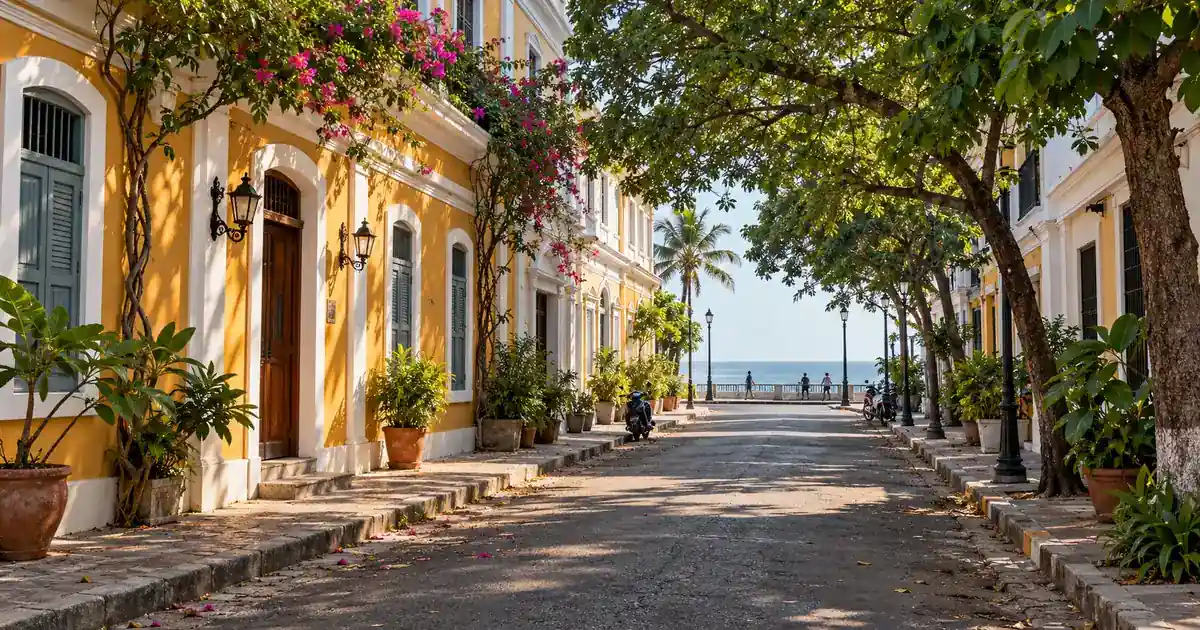
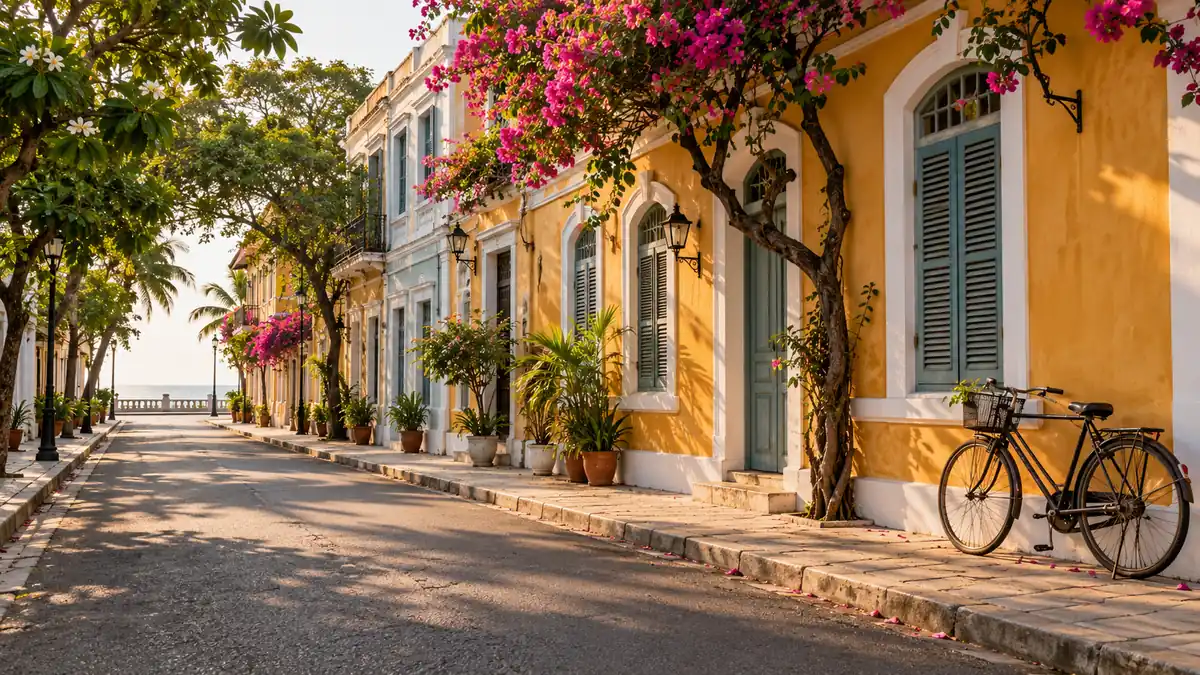
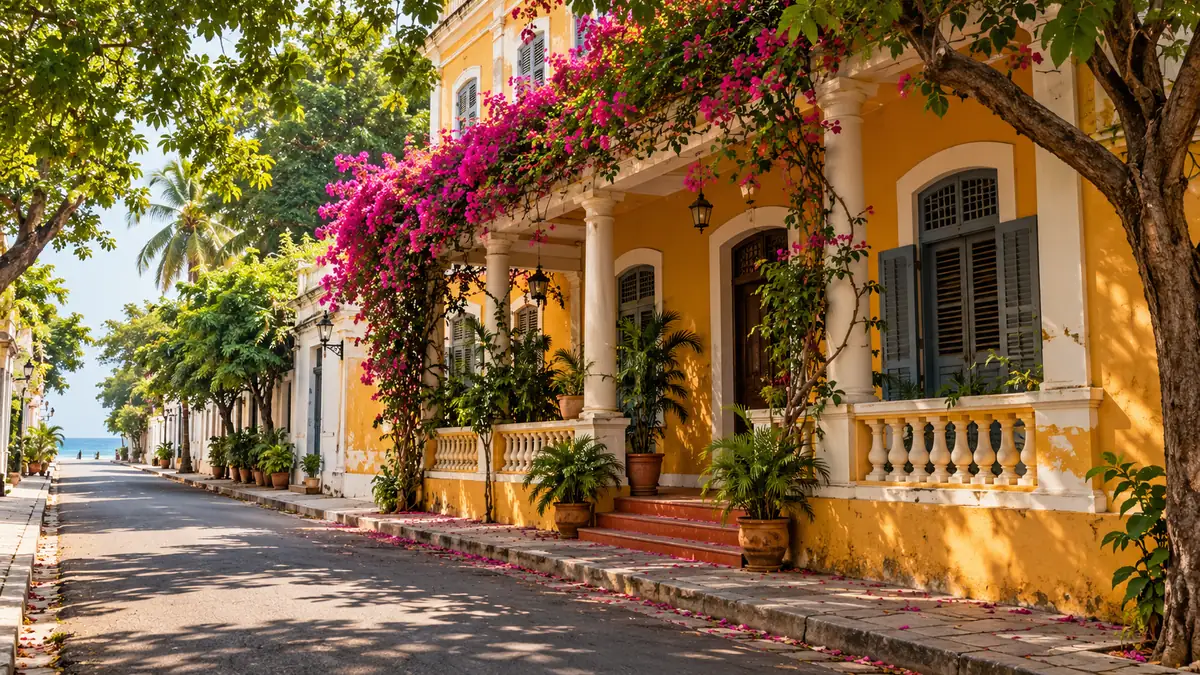
This dual heritage creates a compelling contrast. A morning walk takes you through quiet cobblestone avenues flanked by mustard-yellow colonial mansions draped in bougainvillea, before crossing into lively market streets filled with traditional Tamil verandah homes and aromatic filter coffee stalls.
Pondicherry Sightseeing Essentials
- Geographic Setting: Coastal Union Territory surrounded by Tamil Nadu, 150 kilometers south of Chennai along the East Coast Road.
- Primary Cultural Zones: White Town (French colonial villas and seaside promenade) and Tamil Quarter (traditional thinnai verandah architecture).
- Promenade Motor Curfew: Goubert Avenue closes to all motorized vehicular traffic daily from 06:00 PM to 07:30 AM.
- Auroville Access: Experimental universal township located 12 kilometers north; Matrimandir Inner Chamber passes require prior registration.
- Island Beach Access: Paradise Beach is situated across Chunnambar backwaters, accessible only by government-operated motorboat shuttles.
- Transit Hubs: Puducherry Railway Station (PDY) and Chennai International Airport (MAA, 135 km via ECR).
From exploring 18th-century churches to meditating in quiet ashram gardens or tasting freshly baked French baguettes, Pondicherry rewards unhurried exploration. The table below outlines visiting hours, ticket prices, and core parameters for the top sights.
| Attraction / Destination | Location & Cluster | Operating Timings | Entry Fee / Transport Cost | Signature Highlight |
|---|---|---|---|---|
| White Town Heritage Walk | Seaside French Quarter | Open 24 hours (Daylight best) | Free public access | Mustard-yellow villas, arched windows, and cafe courtyards |
| Promenade Beach (Rock Beach) | Goubert Avenue | Open 24 hours (Closed to cars 6 PM – 7:30 AM) | Free admission | 1.5 km seaside boulevard, Gandhi statue, and French War Memorial |
| Auroville Matrimandir | Bommayapalayam (12 km north) | 09:00 AM to 05:00 PM (Visitor Centre) | Free pass (Booking required for Inner Chamber) | Golden meditation sphere and peaceful amphitheater gardens |
| Sri Aurobindo Ashram | Rue de la Marine, White Town | 08:00 AM – 12:00 PM, 02:00 PM – 06:00 PM | Free admission (Silence required) | White marble Samadhi of Sri Aurobindo and The Mother |
| Paradise Beach (Chunnambar) | 8 km south of town center | 09:00 AM to 05:00 PM (Boats) | ₹350 – ₹400 round-trip ferry ticket | Isolated sandy spit reached via scenic backwater river cruise |
| Basilica of the Sacred Heart | South Boulevard, Subbarayapillai | 06:00 AM to 07:00 PM daily | Free admission | French Gothic architecture with rare biblical stained-glass panels |
| Manakula Vinayagar Temple | Manakula Vinayagar Street | 05:45 AM – 12:30 PM, 04:00 PM – 09:30 PM | Free entry (Special darshan ₹50) | Ancient seaside Ganesha shrine with gold-plated vimana tower |
White Town (French Quarter): Colonial Architecture & Heritage Walk
White Town represents the historic French settlement laid out in a neat grid pattern during the late 17th century by French architect François Martin. The neighborhood runs parallel to the Bay of Bengal, bounded by the sea on the east and the Grand Canal on the west.
Travelers organizing broader cross-country itineraries can discover how this coastal territory connects with other historic regions by reviewing our directory of the best places to visit in India.
Streets of Ochre: Rue Romain Rolland, Rue Suffren & Dumas Street
Exploring White Town is best done on foot or by renting a classic bicycle:
-
Rue Romain Rolland: One of the most photographed avenues in the French Quarter, this street is named after the French dramatist who wrote an early biography of Mahatma Gandhi. It is lined with high stucco compound walls, wrought-iron security grilles, and arched carriage doorways painted in warm ochre, pastel pink, and lime wash.
-
Rue Suffren and Dumas Street: These leafy cross-streets display residential villas dating from the 18th and 19th centuries. Many restored properties have been transformed into boutique heritage hotels and open-air courtyard cafes serving artisan sourdough, crepes, and cold brew coffee.
-
Bougainvillea and Heritage Gates: Private gardens inside these private compounds overflow with magenta and white bougainvillea blooms that spill over high compound walls, creating striking visual contrasts against the yellow facades.
French Institute, Alliance Française & Notre Dame des Anges
White Town preserves several active French cultural and religious institutions:
- Institut Français de Pondichéry (IFP): Located on Rue Saint Louis, this French research institute was established in 1955. It houses one of the world’s most extensive archives of South Indian Indology, including palm-leaf manuscripts and photographic records of ancient temple sculptures.
- Alliance Française de Pondichéry: Anchoring cultural exchanges on Suffren Street, this institution hosts international film festivals, language courses, and live musical evenings overlooking a shaded courtyard.
- Church of Our Lady of Angels (Notre Dame des Anges): Facing the Bay of Bengal on Rue Dumas, this 1855 church is celebrated for its neo-classical facade modeled after the Basilica in Lourdes. The interior features brilliant white marble work finished with egg-white plaster polish and a statue of Joan of Arc gifted by the French government.
Promenade Beach (Rock Beach): Seaside Boulevard & Evening Strolls
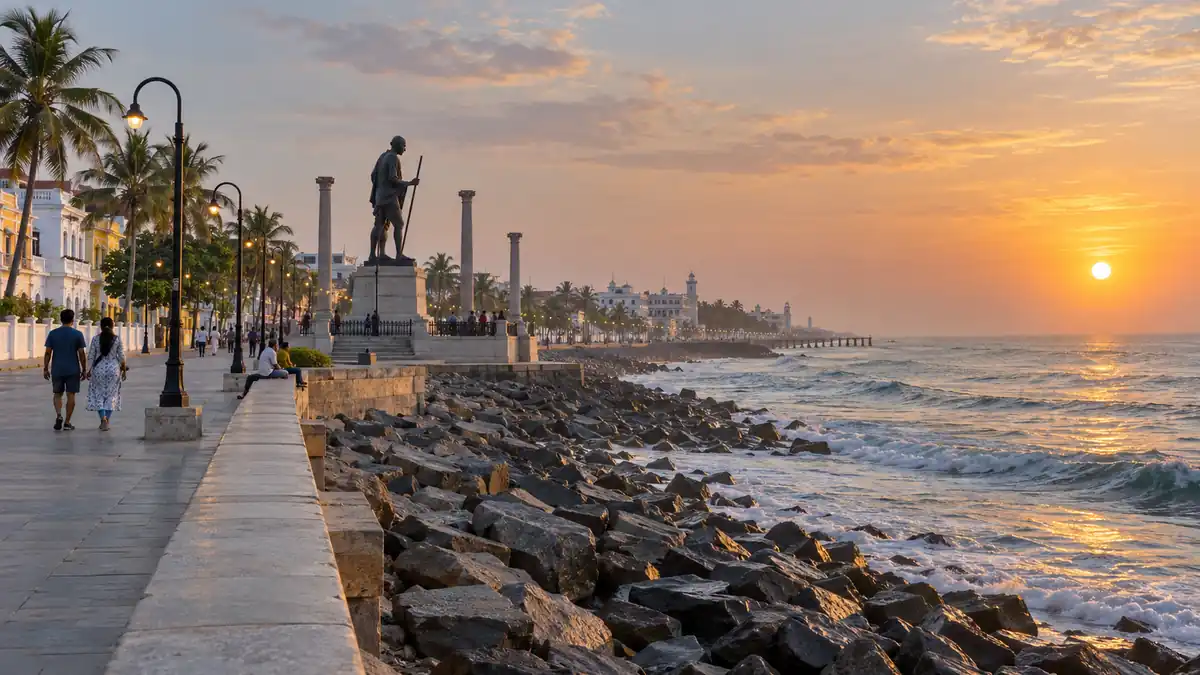
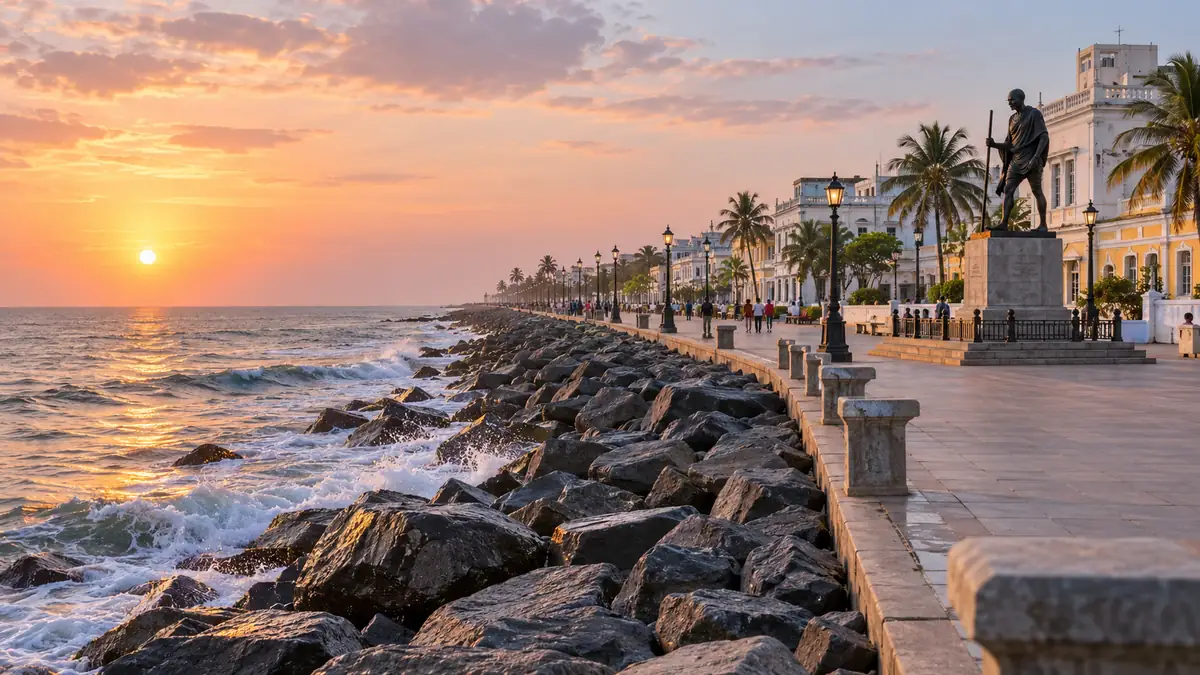
Promenade Beach, also referred to as Rock Beach or Goubert Avenue, stretches along 1.5 kilometers of coastal sea wall directly fronting the Bay of Bengal.
Official tourism events, beach festival dates, and leisure facilities are coordinated through the Puducherry Tourism Chunnambar Directory.
| Promenade Landmark | Specific Location on Boulevard | Historical Era & Architectural Style | Visitor Significance |
|---|---|---|---|
| French War Memorial | Northern Goubert Avenue | Built 1937, Classical Stone Cenotaph | Dedicated to residents of French India who fell during World War I |
| Mahatma Gandhi Statue | Central Promenade Plaza | Erected 1965, 4-meter bronze statue | Surrounded by eight monolithic granite pillars brought from Gingee Fort |
| Old Light House | Near Gandhi Statue Plaza | Built 1836 by engineer Louis Guerre | Historic fluted masonry light tower that guided ships until modern replacement |
| Joan of Arc Park | Opposite Notre Dame Church | 1923 bronze sculpture | Landscaped memorial honoring the French heroine overlooking the ocean |
| Old Town Pier Ruins | Southern Goubert Avenue | 1860 iron-and-timber structure | Historic shipping jetty ruins battered by ocean swells; scenic photography spot |
Vehicle-Free Hours: 06:00 PM to 07:30 AM Regulations
The local administration enforces a strict vehicular ban along Goubert Avenue every evening from 06:00 PM until 07:30 AM the next morning. During these hours, police barricades prevent cars, motorcycles, and auto-rickshaws from entering the seaside road.
This curfew transforms the promenade into a pedestrian reserve. Families, joggers, and international travelers gather to stroll along the ocean breeze, enjoy sea spray crashing against the giant black granite boulders, and sample street snacks from roasted corn and tender coconut vendors.
French War Memorial, Mahatma Gandhi Statue & Old Lighthouse
Promenade Beach serves as an open-air museum of regional history:
- The Mahatma Gandhi Statue: Rising four meters in height, this bronze statue depicts the Father of the Nation in a walking pose. The monument is framed by eight imposing monolithic granite columns, salvaged from the 16th-century ruins of Gingee Fort, located 70 kilometers inland.
- The French War Memorial (Monument aux Morts): Situated opposite the Chief Secretariat, this solemn stone memorial commemorates soldiers who died during the First World War. On Bastille Day (July 14), ceremonial wreaths are laid here by French diplomats and veterans.
- The Old Lighthouse: Standing 29 meters tall with a distinctive round masonry tower, this vintage light tower guided merchant ships entering the Coromandel roadstead until it was decommissioned in 1979 in favor of the new lighthouse at Kirapalayam.
Auroville Universal Township: Matrimandir & Meditation Booking Guide
Located 12 kilometers north of Pondicherry, Auroville is an experimental township founded in 1968 by Mirra Alfassa (revered as “The Mother”), the spiritual collaborator of Sri Aurobindo.
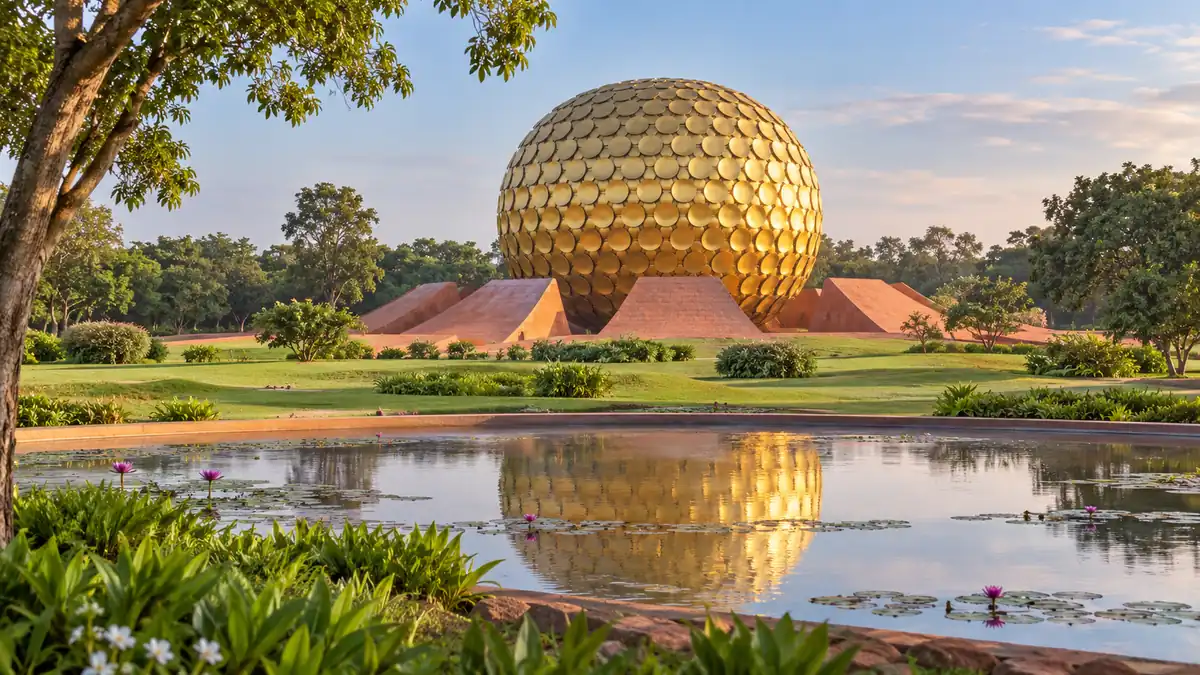
Designed by French architect Roger Anger, the township was established to realize human unity beyond nationalities, politics, and creeds. Today, it hosts approximately 3,300 residents from over 50 nations engaged in organic farming, renewable energy, and sustainable crafts.
Official visitor protocols, town architecture projects, and community volunteer guidelines can be explored on the Auroville Official Portal.
| Matrimandir Access Type | Advance Booking Requirement | Location & Schedule | Key Experience & Rules |
|---|---|---|---|
| Matrimandir Viewing Point | No advance booking required | Visitors Centre (09:00 AM – 04:30 PM) | Free visitor pass collected on arrival; 1 km shaded garden walk to exterior view |
| Matrimandir Inner Chamber | Strictly requires advance booking (3–7 days) | Inner Chamber (09:00 AM – 11:30 AM) | Concentrated silent meditation chamber inside the golden sphere |
| Visitors Centre Exhibitions | Open walk-in access | Entry gates near main parking lot | Video screenings, architecture models, handicraft boutiques, and organic cafes |
| Auroville Botanical Gardens | Open to public (Nominal fee) | 3 km south of Visitors Centre | 50 acres of rescued tropical dry evergreen forest species |
Viewing Point vs Inner Chamber Concentration Passes
Visitors should understand the crucial difference between viewing the Matrimandir from outside and entering the meditation chamber:
-
The Outer Viewing Point: Any day visitor can obtain a free pass directly at the Auroville Visitors Centre without prior notice. After watching an introductory 10-minute video regarding the township’s philosophy, visitors take a shaded 1-kilometer walking trail through peaceful forest gardens to an elevated viewpoint. From here, you can photograph the striking exterior of the giant golden sphere surrounded by green lawns.
-
The Inner Chamber (Concentration Pass): Entering the interior of the golden dome is not treated as a tourist sightseeing excursion, but as an experience of quiet inner contemplation. The chamber is a white marble sanctuary devoid of images, idols, or incense. At its center rests a 70-centimeter optically perfect crystal globe, illuminated by a single beam of natural sunlight guided through an electronically tracked mirror on the roof.
Advance Online Booking System and Visitors Centre Protocol
To enter the Inner Chamber, visitors must secure an individual booking in advance. Step-by-step registration instructions, reporting times, and pass rules are detailed in our dedicated Auroville Matrimandir booking guide.
- Online Booking Portal: Registrations must be made through the official Auroville reservation system between three to seven days prior to your intended visit. Bookings open on rolling weekly schedules and fill rapidly during winter months.
- Strict Personal Presence: Passes are strictly non-transferable and require identity verification. Group bookings by commercial travel agents are not accepted.
- Silence and Attire Protocols: Complete silence must be maintained from the moment you step onto the access pathway. Mobile phones, cameras, and bags must be deposited in lockers. Visitors must wear white socks inside the chamber (available at the entrance if needed). Children below ten years are not admitted to the Inner Chamber.
Sri Aurobindo Ashram: Silent Meditation, Samadhi & Library
Situated in the heart of White Town on Rue de la Marine, the Sri Aurobindo Ashram stands as one of the spiritual focal points of South India. Founded in 1926 by Indian philosopher-revolutionary Sri Aurobindo and The Mother, the ashram continues to attract seekers interested in Integral Yoga.
Detailed cultural circuits and state heritage listings can be referenced through the Incredible India Puducherry Directory.
Samadhi of Sri Aurobindo and The Mother
The central courtyard of the ashram houses the Samadhi, a two-tiered white marble cenotaph where the physical remains of Sri Aurobindo and The Mother rest.
The marble platform is adorned daily with intricate geometric floral mandalas arranged by resident devotees using fresh jasmine, lotus, and marigold petals.
Shaded by a massive, century-old service tree whose branches span the entire open courtyard, visitors sit silently on stone benches or floor mats. Even during peak visiting hours, the courtyard retains absolute silence, broken only by birdsong and the gentle rustle of leaves.
Silence Protocols, Visiting Timings, and Photography Restrictions
Visitors entering the ashram must observe strict institutional decorum:
- Visiting Hours: The ashram welcomes guests daily from 08:00 AM to 12:00 PM and from 02:00 PM to 06:00 PM.
- Footwear and Bags: Footwear must be removed and left at the managed deposit counters outside the entrance. Large backpacks and luggage must also be checked.
- Strict No-Photography Policy: Cameras and mobile phones must be switched off completely before crossing the threshold. Photography within the courtyard and interior bookshops is prohibited.
- Ashram Publications and Perfumes: The adjacent reception building houses an extensive bookstore featuring writings on yoga, philosophy, and Indian culture in dozens of languages, alongside handmade incense and natural fragrances produced by cottage ashram units.
Pondicherry Coastal Beaches: Paradise Beach, Serenity & Eden
Beyond the urban promenade, the coastline around Pondicherry offers contrasting beach environments ranging from secluded sandbars to active surf breaks. Detailed ferry rates, water sports, and safety rules are covered in our comprehensive Pondicherry beaches guide.
Travelers following the scenic East Coast Road northward often combine these sands with the rock-cut cave temples and monolithic shrines featured in our guide to places to visit in Mahabalipuram.
| Beach Destination | Distance from White Town | Water Activities & Highlights | Ideal Visitor Type |
|---|---|---|---|
| Paradise Beach (Plage Paradiso) | 8 km south (via Chunnambar) | Isolated sand spit, clear waters, jet skiing, beach volleyball | Families and day excursionists |
| Serenity Beach | 5 km north (Kottakuppam) | Active surfing schools, breakwater rock pier, fishermen boats | Surfers, backpackers, and sunrise photographers |
| Eden Beach | 10 km south (Chinna Veerampattinam) | Blue Flag certified, clean facilities, watchtowers, lifeguards | Eco-conscious travelers and leisure swimmers |
| Auroville Beach (Auro Beach) | 10 km north (Periyamudaliarchavadi) | Gentle sloping shoreline, morning shells, relaxed ambiance | Casual strollers and morning walkers |
Paradise Beach Ferry from Chunnambar Boat House
Paradise Beach is a secluded peninsula wedged between the Chunnambar River estuary and the Bay of Bengal. Because the beach is cut off from direct road access by backwater channels, arriving here requires a scenic water journey.
Visitors drive eight kilometers south along Cuddalore Road to the Chunnambar Boat House, managed by the Puducherry Tourism Development Corporation (PTDC).
From the boat house jetty, motorized passenger ferries take guests on a 15-minute cruise through mangrove-lined estuaries where kingfishers and sea hawks fish.
The boat docks at Paradise Beach, which features golden sands, thatched beach umbrellas, fresh coconut stalls, and clean changing rooms. Due to strong ocean currents, swimming is restricted to designated shallow zones patrolled by lifeguards.
Serenity Beach Surfing Breaks and Eden Blue Flag Beach
Heading north from town reveals distinct coastal cultures:
- Serenity Beach: Located near Kottakuppam, this beach has evolved into a leading surfing hub on the southeastern coast. Local surf schools provide beginner lessons and board rentals from November through March when consistent beach breaks roll in. A long granite rock pier extends 200 meters into the ocean, offering panoramic coastline views.
- Eden Beach: Situated near Chinna Veerampattinam, Eden Beach earned prestigious international Blue Flag certification for exceptional water quality, environmental management, and accessibility. It offers solar-powered amenities, paved walking tracks, clean restrooms, and continuous lifeguard surveillance.
Heritage Temples & Churches: Sacred Heart, Eglise & Manakula Vinayagar
Pondicherry features an extraordinary concentration of sacred architecture representing French Catholic, French Protestant, and classical Tamil Shaivite traditions within a compact radius.
Pilgrims venturing further south through Tamil Nadu can trace coastal spiritual history by reviewing our detailed guide to the Chidambaram Nataraja Temple, located just 65 kilometers away.
| Sacred Monument | Primary Architecture Style | Year Established / Rebuilt | Key Religious & Artistic Feature |
|---|---|---|---|
| Basilica of the Sacred Heart of Jesus | French Neo-Gothic | Consecrated in 1907 | 28 stained-glass panels depicting the life of Christ; rare Latin cross floor plan |
| Eglise de Notre Dame des Anges | Greco-Roman Neo-Classical | Dedicated in 1855 | Napoleon III style facade, oil paintings, and pastel yellow paintwork |
| Manakula Vinayagar Temple | Dravidian Hindu Temple | Pre-dates French arrival (1688) | Gold-plated vimana, carved pillars depicting 32 Ganesha forms, and festival chariot |
| Sri Gokilambal Thirukameswarar Temple | Chola Temple Architecture | Rebuilt 12th century (Villianur, 10 km) | Enormous 15-meter carved wooden temple car drawn during the annual Brahmotsavam |
Basilica of the Sacred Heart of Jesus: French Gothic Splendor
Standing gracefully on South Boulevard, the Basilica of the Sacred Heart of Jesus is an exceptional example of French Gothic revival architecture in India.
Constructed in 1902 by French missionaries and elevated to the status of minor basilica in 2011, the structure features soaring spires, Corinthian pillars, and pointed arches.
Its interior is illuminated by 28 magnificent stained-glass panels imported directly from France. These artworks depict scenes from the life of Christ and portraits of Christian saints. The church ceiling rests on fluted columns painted in soft terracotta and white tones, creating an atmosphere of quiet grandeur.
Manakula Vinayagar Temple: Golden Chariot and Ancient Heritage
Just two streets west of the seaside promenade on Manakula Vinayagar Koil Street stands the historic Manakula Vinayagar Temple. Historical records indicate this Ganesha shrine pre-dated the arrival of French colonial administrators in the late 17th century.
The name Manakulam translates to “Sand Pond,” referring to a natural freshwater pond bordered by beach dunes that once surrounded the sanctum. According to local lore, French governor François Martin attempted to remove the deity idol to clear land for fortifications, but laborers found the stone idol returning to its original position each morning.
Today, the temple features an elaborately carved vimana (tower) plated with pure gold leaf. The interior stone mandapa houses 32 distinct sculpted manifestations of Lord Ganesha carved on its granite walls.
During the annual Brahmotsavam festival in August, the temple’s magnificent wooden and gold chariot is pulled through the streets of the Tamil Quarter by thousands of singing devotees.
Frequently Asked Questions About Visiting Pondicherry
How many days are ideal for exploring Pondicherry?
A duration of two to three days is ideal to explore Pondicherry comfortably. This allows one full day for White Town walking trails and seaside cafes, a second day for Auroville and nearby beaches, and a third day for heritage temples and backwater boat trips.
What is the best way to travel around White Town and Pondicherry?
Renting a gearless scooter or a vintage bicycle represents the most convenient and authentic way to explore White Town and coastal areas. Auto-rickshaws are readily available throughout the city, though negotiating fares in advance is recommended.
How do I get passes for the Matrimandir Inner Chamber in Auroville?
Inner Chamber concentration passes require prior personal registration through the official Auroville reservation portal between three to seven days before your visit. Walk-in visitors can only obtain passes for the exterior viewing garden at the Visitors Centre.
Which beach is best for swimming in Pondicherry?
Eden Beach and Paradise Beach are the safest and cleanest beaches for swimming, both featuring active lifeguard supervision. Due to steep drops and sharp granite boulders, swimming along Promenade Beach (Rock Beach) is strictly prohibited.
What is the nearest airport to Pondicherry?
Chennai International Airport (MAA) is the primary gateway, located 135 kilometers north along the scenic East Coast Road (ECR). The drive takes approximately two and a half to three hours by taxi or air-conditioned intercity bus.