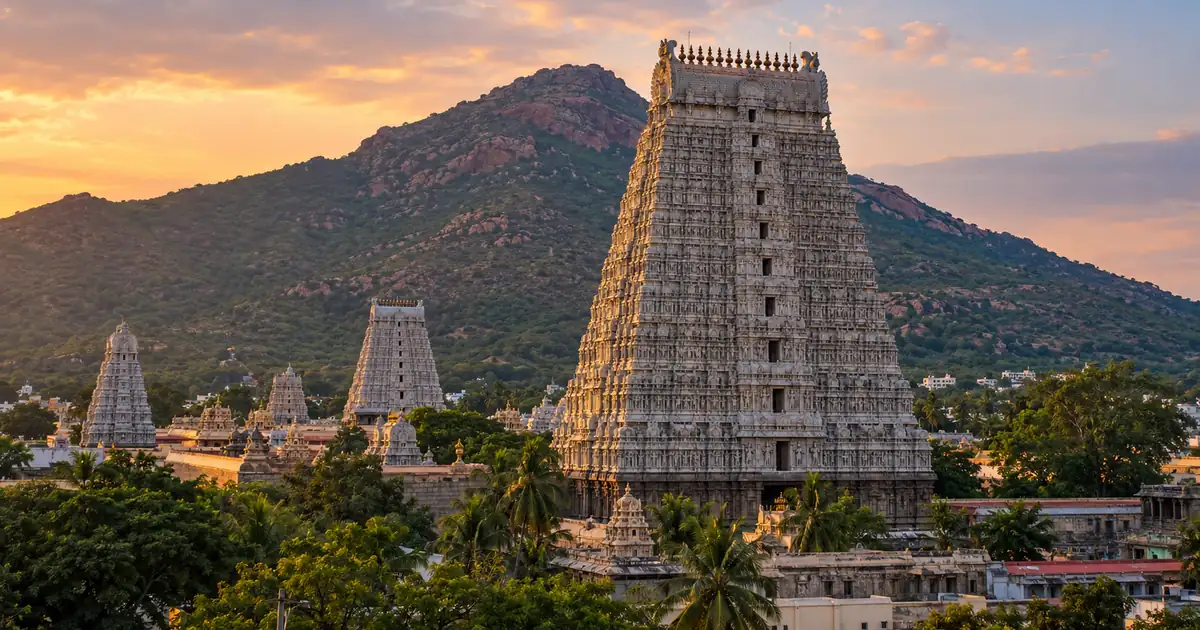
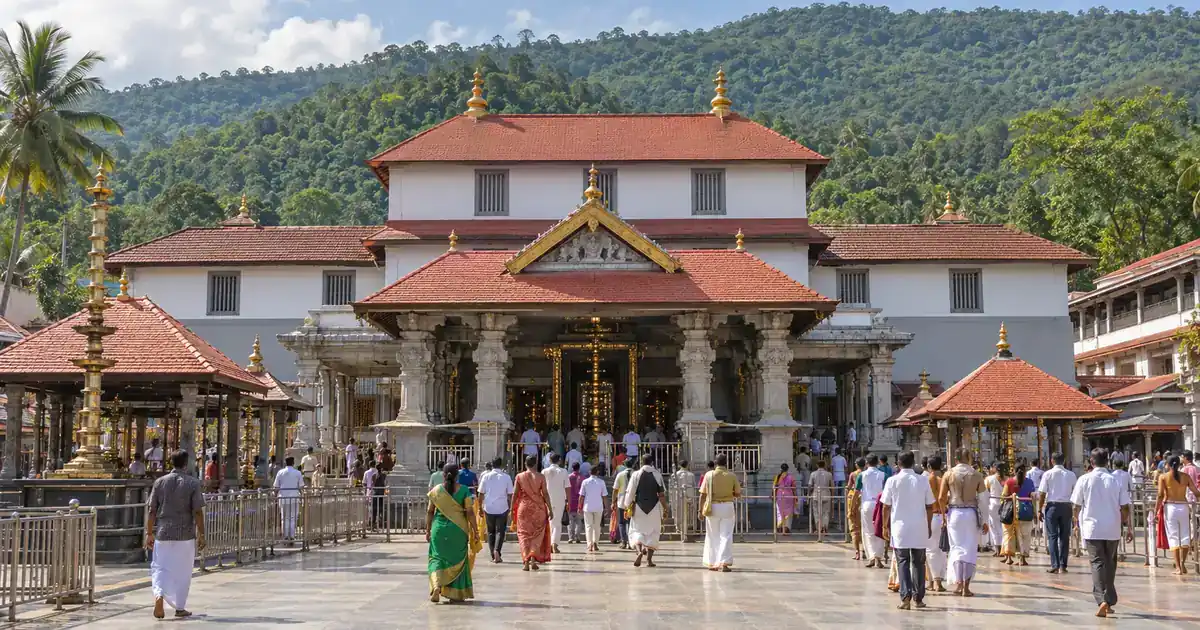
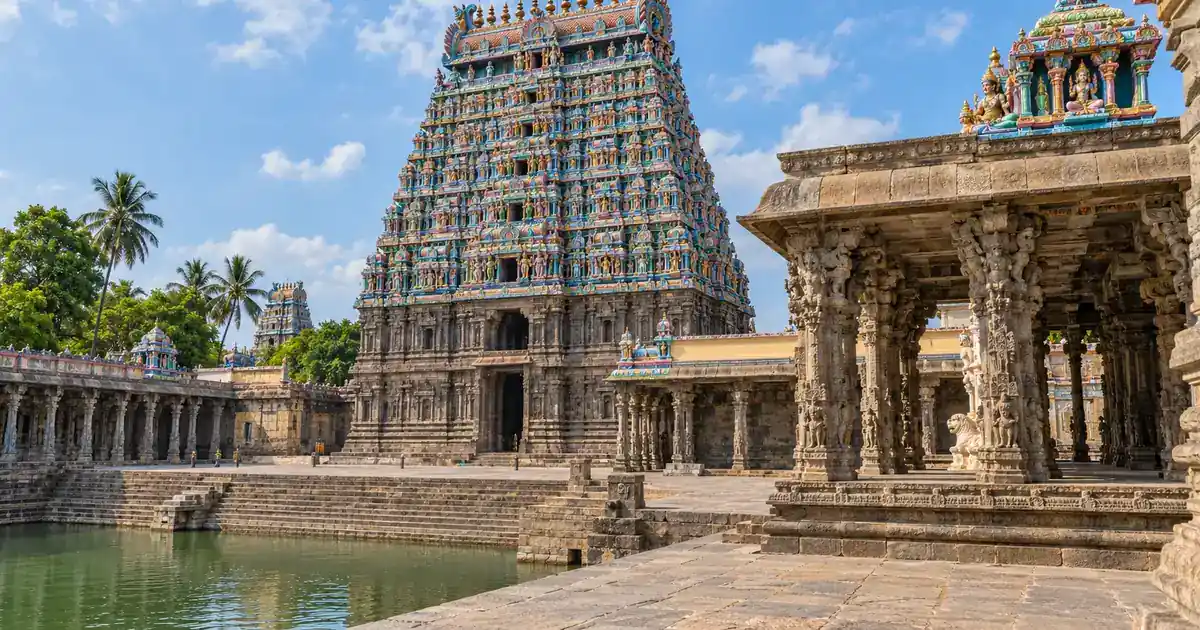
Srirangam Ranganathaswamy Temple: 21 Gopurams, Timings & Guide
Complete guide to Srirangam Ranganathaswamy Temple. 21 gopurams, 7 enclosures, Vishwaroopa darshan timings, Rajagopuram, Vaikunta Ekadasi, and dress code.
Field Advisory & Quick Summary
- World’s Largest Functioning Hindu Temple: Spanning 156 acres (63 hectares) on a river island formed by the Kaveri and Coleroon rivers, Srirangam is larger in perimeter than Vatican City.
- The 21 Soaring Gopurams: The complex features 21 sculpted Dravidian gateway towers across seven concentric walled enclosures (Sapta Prakarams).
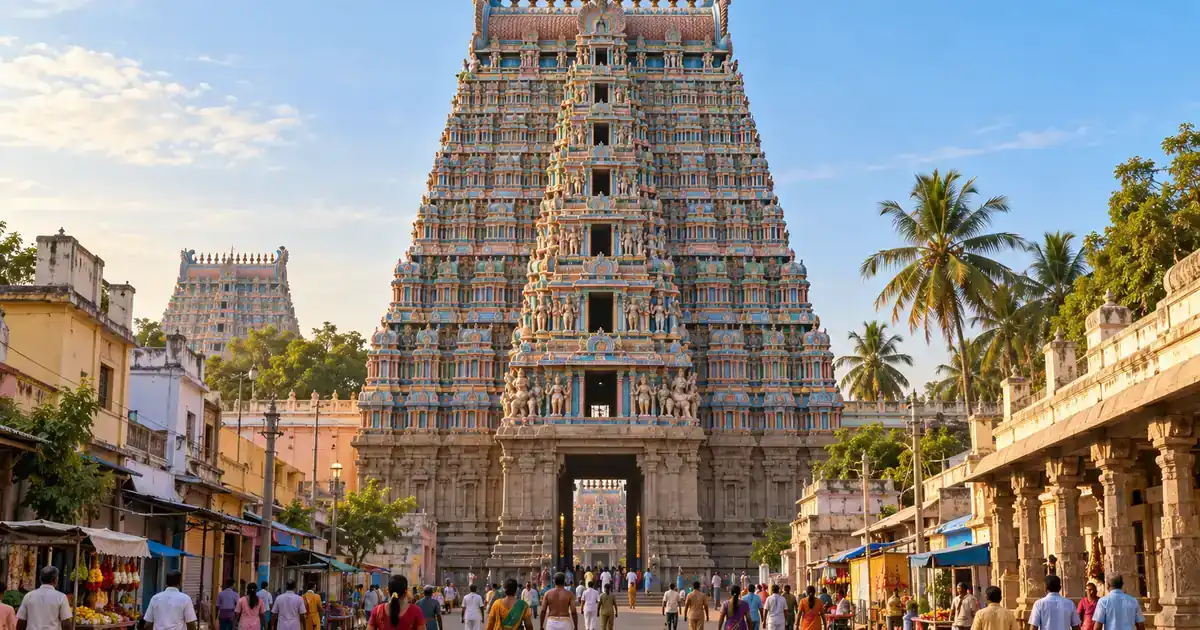
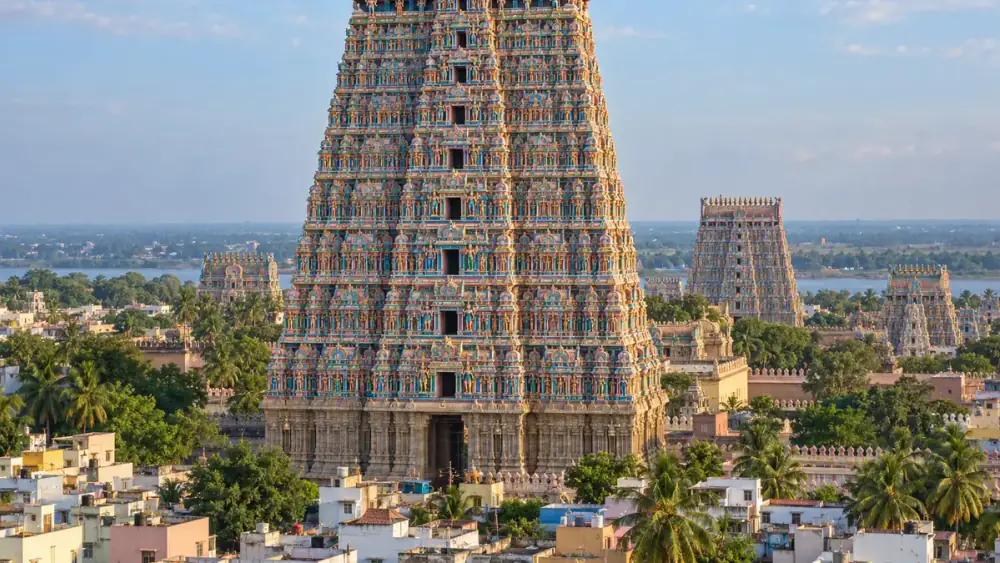
- The 73-Meter Rajagopuram: Completed in 1987 by the 44th Jeeyar of Ahobila Mutt, the southern Rajagopuram ascends 13 tiers to a height of 239.5 feet (73 meters), standing as one of Asia’s tallest temple towers.
- First of the 108 Divya Desams: Revered as Thiruvarangam, Srirangam is the foremost spiritual center of Sri Vaishnavism, housing the mortal body of the 11th-century philosopher-saint Sri Ramanuja.
- Mandatory Dress Code: Strict traditional Indian attire is enforced. Men must wear dhotis or pyjamas; women must wear sarees or modest salwar kameez with dupattas.
Formed by the natural bifurcation of the holy Kaveri River and its tributary, the Coleroon (Kollidam), the island town of Srirangam in Tiruchirappalli (Trichy) cradles the monumental Sri Ranganathaswamy Temple.
Covering an expansive 156 acres enclosed by over ten kilometers of concentric granite ramparts, Srirangam is celebrated globally as the largest functioning Hindu temple complex in existence.
Unlike conventional temples that exist as isolated sanctuaries, Srirangam functions as an entire self-contained temple city. The three outermost residential enclosures house active flower markets, hereditary priest quarters, traditional handicraft shops, and pilgrim rest houses, while the four innermost enclosures preserve sacred liturgical space.
Devotees touring the major temple circuits of central Tamil Nadu can contrast this Vaishnavite metropolis with the Shaivite granite architecture detailed in our Brihadisvara Temple in Thanjavur guide, situated fifty-five kilometers down the Kaveri delta.
The Sapta Prakarams: Seven Concentric Enclosures of the Soul
In Sri Vaishnava metaphysics, the structural layout of Srirangam mirrors the human body and the seven layers of cosmic existence surrounding the supreme soul.
The complex is organized into seven concentric walled courtyards (Sapta Prakarams), through which pilgrims progress sequentially toward the sanctum sanctorum:
| Enclosure Layer | Tamil / Sanskrit Title | Civic & Spiritual Function |
|---|---|---|
| 1st Enclosure (Outermost) | Mada Veethi | Public roads, outer bazaars, residential settlements, and bus bays |
| 2nd Enclosure | Chithirai Veedhi | Historic processional avenue for annual chariot temple festivals |
| 3rd Enclosure | Uthira Veedhi | Residential quarters of hereditary temple servitors and scholars |
| 4th Enclosure | Alinadan Thiruchutru | First strictly consecrated courtyard; houses the Thousand Pillar Hall |
| 5th Enclosure | Kulasekharan Thiruchutru | Contains the sacred temple kitchen (Madapalli) and flagstaff (Dhvajastambha) |
| 6th Enclosure | Rajamahendran Thiruchutru | Houses secondary shrines, pillared corridors, and treasury halls |
| 7th Enclosure (Innermost) | Dharma Varma Thiruchutru | The inner sanctum sanctorum housing Lord Sri Ranganatha beneath the golden vimanam |
As pilgrims pass through successive gateway towers, the atmosphere shifts noticeably from the active civic energy of the outer streets to the quiet, incense-filled reverence of the inner granite cloisters.
Each threshold signifies the progressive shedding of worldly attachments as the devotee draws nearer to the divine center.
The 21 Majestic Gopurams & The 73-Meter Rajagopuram
Surrounding the seven concentric enclosures rise twenty-one elaborately sculpted gateway towers (gopurams), representing the architectural patronage of the Chola, Pandya, Hoysala, and Vijayanagara dynasties over twelve centuries.
| Tower / Landmark | Height & Tiers | Historical Period / Builder | Architectural Distinction |
|---|---|---|---|
| Southern Rajagopuram | 73 meters (239.5 ft, 13 tiers) | Completed in 1987 by Ahobila Mutt | Visible for 20 km across the Kaveri plains; 13 copper kalasams |
| Vellai Gopuram (White Tower) | 44 meters (144 ft, 9 tiers) | Vijayanagara Empire | Dedicated to the memory of the heroic courtesan Vellayi |
| Ranga Ranga Gopuram | 30 meters (98 ft, 7 tiers) | Hoysala / Chola era | Principal northern gateway into the consecrated fourth enclosure |
| Nazhikettan Gopuram | 20 meters (65 ft, 5 tiers) | Pandya Dynasty | Houses the ancient water clock chamber calculating ritual hours |
| Ranga Vimanam (Sanctum Dome) | Gilded gold dome | Chola Dynasty (Parantaka I) | Formed in the sacred shape of the Pranava mantra: Om |
The crowning architectural achievement of the complex is the Southern Rajagopuram. Although the granite base plinth was laid in the 16th century by King Achyuta Deva Raya of the Vijayanagara Empire, the monumental tower remained incomplete for over four centuries.
Between 1979 and 1987, the 44th pontiff of Sri Ahobila Mutt, Sri Vedantha Desika Yatindra Mahadesikan, mobilized nationwide resources to complete the thirteen-tiered superstructure.
Constructed using over 12,000 tonnes of granite, brick, and mortar, the Rajagopuram is crowned by thirteen massive copper pot finials (kalasams), each standing over ten feet tall.
Official municipal heritage surveys and regional architecture records can be examined on the Tiruchirappalli District Administration Tourism Portal.
The Deity of Sri Ranganatha: Reclining on the Serpent Couch
Inside the innermost sanctum, sheltered beneath the golden Pranava Vimanam, rests Lord Sri Ranganatha, a form of Lord Vishnu reclining on the five-headed cosmic serpent, Adisesha.
The colossal idol measures over twenty feet in length, oriented facing southward toward Sri Lanka in fulfillment of a promise made to King Vibhishana following the events of the Ramayana.
Crafted through the ancient mortar technique of Kadu Sharkara Yogam, the idol contains medicinal herbs, natural resins, and unbaked clay. Consequently, no water abhishek is ever poured directly over the principal reclining murti; instead, holy thailam (medicated oil paste) is applied twice a year to preserve the ancient material.
Devotees view the deity in three distinct postures across the annual calendar:
- Sayana Kolam (Reclining Form): The permanent daily form inside the sanctum sanctorum.
- Nirtha Kolam (Standing Form): Manifested by the metallic processional deity (Namperumal) during festive outings.
- Irundha Kolam (Seated Form): Worshipped in specialized mandapams during formal assemblies.
Nearby in the fifth enclosure rests the Sri Ramanuja Sannidhi, preserving the actual physical body (thirumeni) of the great 11th-century philosopher-reformer Sri Ramanuja, preserved through herbal camphor and sandalwood paste for over 900 years.
Devotees exploring the great Vishnu sanctuaries of South India often compare this divine posture with the reclining deity described in our Padmanabhaswamy Temple in Trivandrum guide.
Vishwaroopa Darshan & Daily Liturgical Timings
Sri Ranganathaswamy Temple follows an extensive daily ritual schedule conducted by hereditary priests belonging to the Sri Vaishnava tradition.
- Morning Session: 6:00 AM to 1:00 PM (Sanctum doors open early for Vishwaroopa seva).
- Midday Closure: 1:00 PM to 3:30 PM (Main sanctum closed for deity naivedyam and rest).
- Evening Session: 3:30 PM to 9:00 PM (Concludes with final night arati at 8:45 PM).
| Liturgical Service | Scheduled Hours | Description & Spiritual Significance | Recommended Visitor Strategy |
|---|---|---|---|
| Vishwaroopa Seva | 06:00 AM - 07:15 AM | First morning opening; a sacred cow is presented before the deity | Arrive by 5:30 AM at the Ranga Ranga gopuram gate |
| Morning General Darshan | 07:15 AM - 09:00 AM | Walk-in queue and paid fast-track lanes open | Moderate wait times of 45 to 60 minutes |
| Mid-Morning Seva | 09:00 AM - 12:00 PM | Regular public darshan session | Peak family and pilgrim attendance |
| Noon Darshan | 12:00 PM - 01:00 PM | Final morning session before afternoon closing | Shorter lines as crowds thin before lunch |
| Evening Reopening | 03:30 PM - 05:30 PM | Afternoon opening; lighting of oil lamps | Excellent natural light in the granite corridors |
| Night Sayaratchai | 06:45 PM - 09:00 PM | Concluding evening worship with fragrant flower garlands | Quietest and most contemplative darshan window |
Entry Ticket Options
- General Free Darshan (Dharma Darshan): Free entry through the standard walk-in barricade lane. Typical waiting times range from 1.5 to 3 hours depending on weekday volume.
- Quick Darshan (₹100 Ticket): Fast-track queue that bypasses the outer courtyard lines, reducing waiting time to approximately 30 to 45 minutes.
- Special Viswaroopa Pass (₹250 Ticket): Permits close-proximity viewing during the auspicious first-morning cow darshan between 6:00 AM and 7:15 AM.
Architectural Marvels: The Thousand Pillar Hall & Rearing Horses
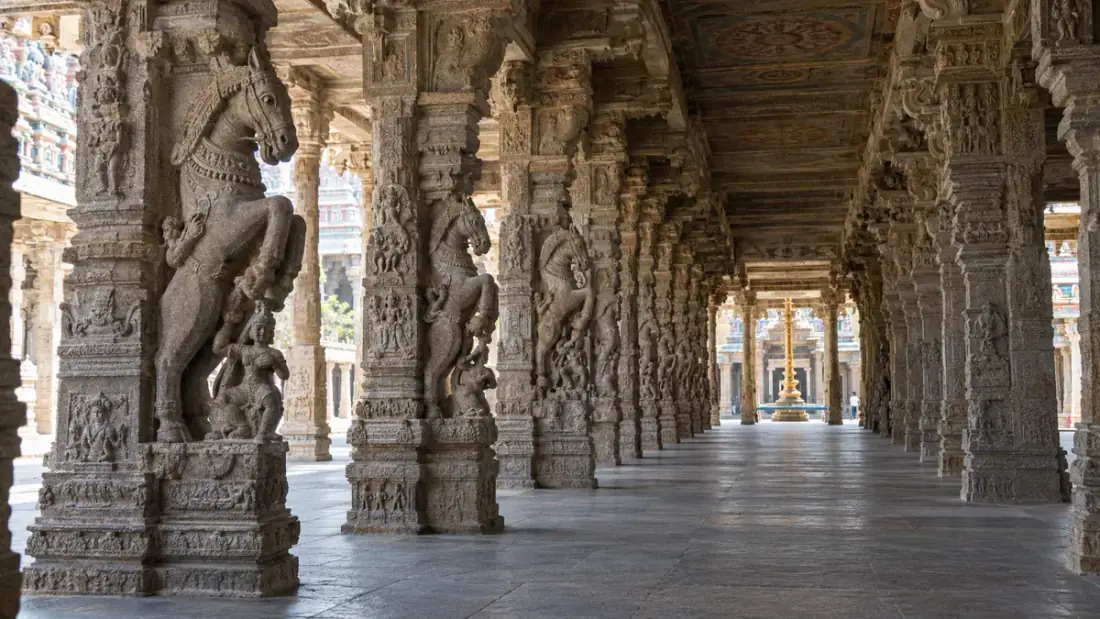
Beyond its gateway towers, Srirangam houses some of the most dynamic stone sculptures in Dravidian art history.
Key Architectural Landmarks Inside the Enclosures:
- The Thousand Pillar Hall (Aayiram Kaal Mandapam): Constructed during the Vijayanagara period between 1336 and 1565 CE, this massive granite pavilion features 953 surviving carved columns arranged in geometric symmetry. The hall serves as the central assembly venue during the grand Vaikunta Ekadasi festival.
- The Sheshagirirayar Mandapam: Situated in the fourth enclosure, this hall is celebrated worldwide for its dramatic monolithic pillars. Each granite pillar is carved as a life-size rearing war horse ridden by a soldier, trampling wild tigers and mythical beasts with astonishing anatomical precision.
- The Garuda Mandapam: Located along the processional axis, this hall features a colossal seated stone statue of Lord Garuda with folded hands, gazing reverently toward the inner sanctum.
- The Kottaram (Ancient Granaries): Four colossal circular stone grain silos built during the Nayaka era, capable of storing thousands of tonnes of paddy to safeguard the temple populace during historical sieges.
Architecture enthusiasts can compare these rearing war-horse colonnades with the Nayaka sculpted pillars featured in our Meenakshi Amman Temple in Madurai guide.
Vaikunta Ekadasi: The Opening of Heaven’s Gate
The principal festival of Srirangam is Vaikunta Ekadasi, celebrated over twenty-one days during the Tamil month of Margazhi (December/January). The festival draws over one million pilgrims from across India.
The celebration divides into two distinct halves:
- Pagal Pathu (Day Ten): Dedicated to the chanting of the Tiruvaimozhi hymns composed by Nammalvar.
- Ira Pathu (Night Ten): Commences on the morning of Vaikunta Ekadasi with the ceremonial opening of the Paramapada Vasal (The Gate of Ultimate Liberation).
At 4:30 AM on Ekadasi day, the processional deity Namperumal, adorned in a dazzling armor of pearls, diamonds, and rubies (Ratnangi), emerges from the inner sanctum.
As temple conches blow and trumpets sound, the heavy silver-plated doors of the Paramapada Vasal swing open. Devotees follow the deity through the gateway, believing that crossing this threshold on Vaikunta Ekadasi secures direct salvation (Moksha) from the cycle of rebirth.
Mandatory Traditional Dress Code & Sanctum Etiquette
In accordance with strict Tamil Nadu temple administration directives, all visitors entering Sri Ranganathaswamy Temple must follow traditional Indian dress codes:
- Male Pilgrims: Must wear a traditional dhoti (veshti) or cotton pyjama. While shirts are permitted in the outer market enclosures, men are strictly required to remove their shirts and vests before entering the innermost fifth and sixth enclosures leading to the sanctum. Jeans, shorts, bermudas, and t-shirts are strictly banned.
- Female Pilgrims: Must wear a traditional saree, half-saree (pavadai), or modest salwar kameez with a dupatta draped across both shoulders. Western clothing such as jeans, mini-skirts, capris, and sleeveless tops are not allowed through security.
Practical Guidelines
- Electronics Policy: Smartphones and cameras are strictly barred inside the fifth enclosure and sanctum corridors. Free and paid locker stalls are situated near the Ranga Ranga gopuram gate.
- Footwear Protocol: Shoes must be deposited at the official footwear counters outside the fourth enclosure. Walking barefoot across the granite flagstones is mandatory.
- Island Mobility: Because the complex spans 156 acres, walking between the outer bus terminus and the inner sanctum takes 15 to 20 minutes. Battery-operated electric buggies are available for senior citizens and disabled pilgrims near the southern Rajagopuram for ₹30 per passenger.
Devotees continuing their pilgrimage toward coastal Tamil Nadu can study the sacred theertham rituals in our guide to the Ramanathaswamy Temple at Rameshwaram.
How to Reach Srirangam by Air, Train, and Road
Situated in the central plains of Tamil Nadu, Srirangam enjoys exceptional transport connectivity through the neighbouring city of Tiruchirappalli (Trichy).
| Starting Hub | Road Distance | Primary Travel Highway | Estimated Transit Time | Recommended Travel Mode |
|---|---|---|---|---|
| Trichy City Center | 9 kilometers | Srirangam Bridge / Gandhi Road | 15 to 20 minutes | City bus (Route 1) or auto-rickshaw |
| Tiruchirappalli Airport (TRZ) | 14 kilometers | NH 336 and Chennai Bypass Road | 30 minutes | Pre-paid airport taxi |
| Thanjavur (Tanjore) | 55 kilometers | NH 83 (four-lane highway) | 1 hour | Direct express bus or rental cab |
| Madurai | 135 kilometers | NH 38 (four-lane expressway) | 2.5 hours | Superfast express train or private cab |
| Chennai | 330 kilometers | NH 45 (Grand Southern Trunk Road) | 5.5 to 6 hours | Vande Bharat Express or overnight bus |
| Bengaluru (Bangalore) | 340 kilometers | NH 44 and NH 81 (via Salem & Namakkal) | 6.5 to 7 hours | Interstate KSRTC bus or express train |
By Air
Tiruchirappalli International Airport (TRZ) is located 14 kilometers south of Srirangam. The airport connects to domestic metros (Chennai, Bengaluru, Mumbai) and international hubs (Singapore, Kuala Lumpur, Dubai, Colombo). Pre-paid taxis outside the arrivals hall reach Srirangam in roughly thirty minutes for approximately ₹500 to ₹700.
By Train
Srirangam has its own dedicated railway station (Station Code: SRGM), situated two kilometers east of the temple gates. Many express trains running along the Chennai-Trichy line halt here.
For comprehensive interstate connections, Tiruchirappalli Junction (Station Code: TPJ), located 9 kilometers south, serves as the major regional rail terminal. Frequent local shuttle buses (Route 1 series) run every three minutes between Trichy Junction railway station and Srirangam bus terminus for ₹15 per ticket.
Train tickets and schedules can be booked via the official IRCTC portal.
State-wide tourism corridors and cultural maps can be accessed through the official Incredible India Tamil Nadu Portal.
Frequently Asked Questions About Srirangam Ranganathaswamy Temple
Why is Srirangam called the largest functioning temple in the world?
Sri Ranganathaswamy Temple covers 156 acres (631,000 square meters) with an exterior perimeter exceeding four kilometers. Unlike ruined historical sites such as Angkor Wat, Srirangam remains an active, fully functioning religious and civic center with active worship, residences, and bazaars within its walls.
What is the height of the Srirangam Rajagopuram?
The southern Rajagopuram rises to a height of 73 meters (239.5 feet) across thirteen receding tiers. Completed in 1987, it is crowned by thirteen copper kalasams and is recognized as one of the tallest temple towers in Asia.
What are the timings for the Vishwaroopa Darshan?
The auspicious Vishwaroopa Darshan takes place daily from 6:00 AM to 7:15 AM. During this first-morning service, a sacred cow is presented before the reclining deity, accompanied by Vedic chanting and traditional mangala vadhyam percussion.
Can non-Hindus enter Srirangam Temple?
Non-Hindu visitors can freely explore the outer three enclosures, admire the 21 gateway gopurams, visit the Thousand Pillar Hall, and climb to the temple rooftop viewpoint for panoramic vistas. However, entry into the fifth and sixth enclosures leading to the sanctum sanctorum is restricted to practicing Hindus.
What is the dress code enforced at Srirangam?
Men must wear traditional dhotis (veshtis) or pyjamas and must remove their shirts before entering the inner sanctum corridors. Women must wear sarees, half-sarees, or modest salwar kameez sets with dupattas. Western clothing such as jeans, shorts, and t-shirts is strictly prohibited.