Morni Hills & Pinjore Gardens Guide: Tikkar Taal & Timings
Complete guide to Morni Hills and Pinjore Gardens in Haryana with verified Tikkar Taal boating rates, Yadavindra Gardens fountain timings, and route.
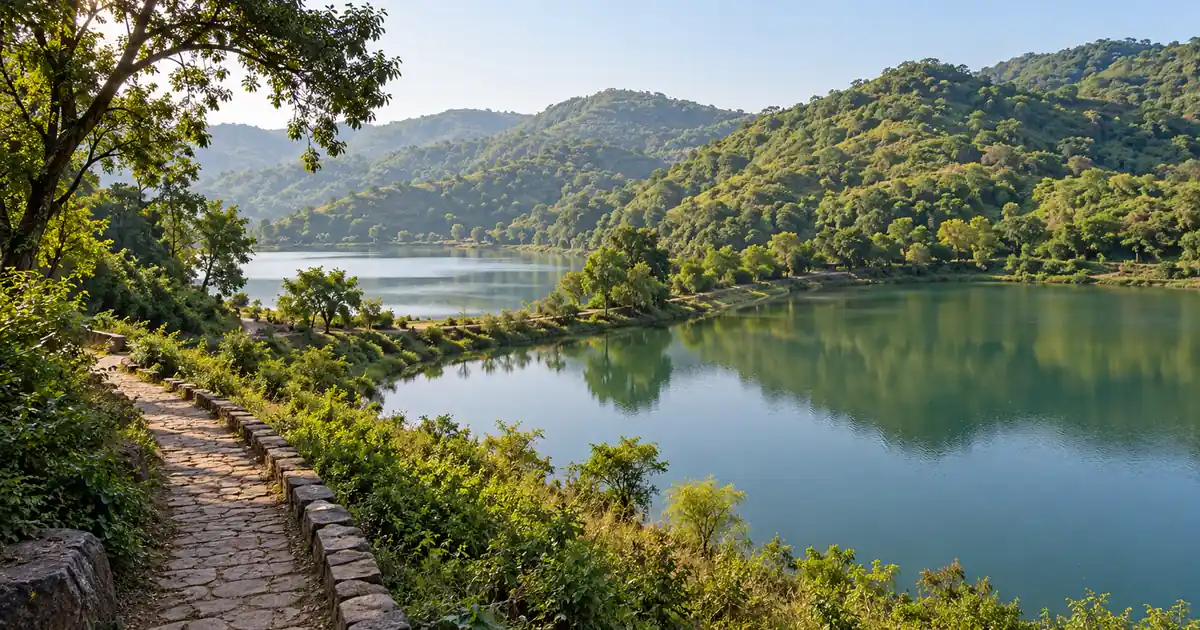
Morni Hills rises 1,220 meters above sea level in northern Panchkula district, providing Haryana with its sole hill station getaway among the outer ridges of the Shivalik range. This comprehensive travel guide details the twin lakes of Tikkar Taal, the 17th-century Mughal terraces of Pinjore Gardens, boating tariffs, forest hikes, and road routes from Chandigarh and Delhi.
Located just 45 kilometers east of Chandigarh and 250 kilometers north of Delhi, the region offers cooler temperatures, pine-forested slopes, and freshwater lakes. Travelers frequently combine a quiet lakeside morning at Tikkar Taal with an afternoon tour through the water cascades and historic pavilions of Yadavindra Gardens in Pinjore.
Hills & Gardens Essentials
- Morni Hills sits at an altitude of approximately 1,220 meters (4,000 feet) in Panchkula district, serving as the only hill station in Haryana.
- Tikkar Taal features twin natural freshwater lakes (Bada Taal and Chhota Taal) offering pedal and motor boating managed by Haryana Tourism from 8:00 AM to 6:00 PM.
- Pinjore Yadavindra Gardens opens daily from 7:00 AM to 9:30 PM, featuring seven descending Mughal-style terraces, historic pavilions, and evening fountain illuminations.
- Admission to Pinjore Gardens costs ₹25 per person for Indian visitors and ₹125 for foreign tourists, while access to the general Morni Hills landscape is completely free.
Travelers can integrate this northern Shivalik excursion into broader regional circuits outlined in our Haryana travel guide.
Morni Hills Geography, Altitude, and Landscape Overview
Morni Hills forms a distinct highland spur of the lower Shivalik mountain system, characterized by rolling hills cloaked in chir pine, oak, and wild harar trees. The highest elevation point reaches approximately 1,220 meters (4,000 feet), creating daytime temperatures that run 4°C to 7°C cooler than the surrounding Punjab and Haryana plains.
The microclimate supports diverse birdlife and small wildlife, including barking deer, wild boars, grey francolins, and migratory waterfowl that frequent local water bodies during winter. Terraced farms cultivate ginger, turmeric, and citrus fruit across sunny hill clearings.
The region takes its name from Queen Morni, who ruled the hill principality during medieval times before its incorporation into the princely state of Sirmaur. Today, Panchkula district manages the hill territory, maintaining asphalted hill roads, forest rest houses, and scenic viewpoints along the crest.
Tikkar Taal Lake: Boating Rates, Kayaking, and Lakeside Trails
Tikkar Taal represents the central tourist attraction of Morni Hills, situated roughly 16 kilometers beyond Morni village along a winding paved descent. The destination features twin natural freshwater lakes known locally as Bada Taal (the larger lake) and Chhota Taal (the smaller lake).
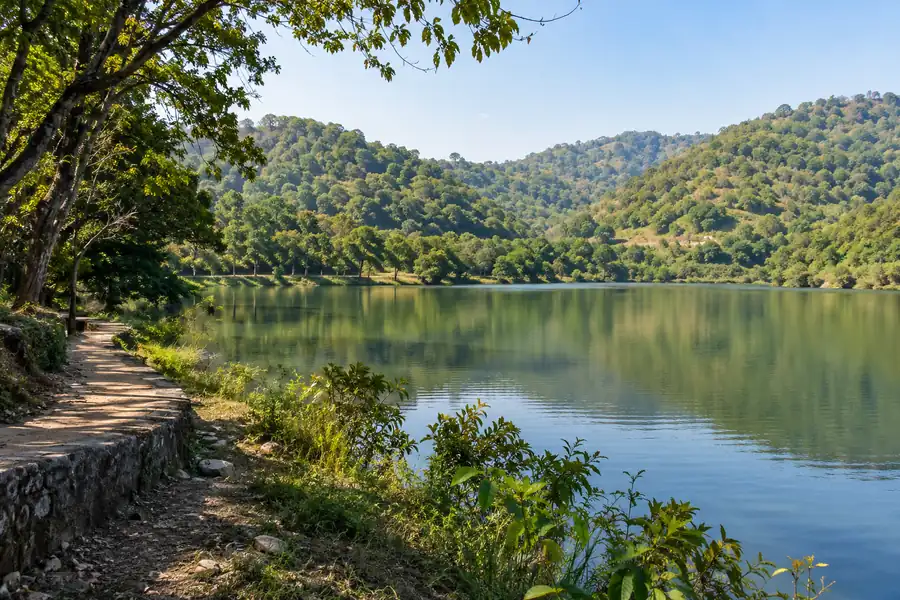
Although separated by a forested hillock, local geological surveys indicate that subterranean water channels connect both basins. The larger lake spans approximately 550 meters in length and 460 meters in width, flanked by grass embankments and hill slopes.
Haryana Tourism manages a dedicated boat club along the western bank of Bada Taal, operating daily from 8:00 AM until 6:00 PM. Boating charges and activities include:
| Activity / Vessel Type | Duration | Operating Tariffs | Key Features |
|---|---|---|---|
| Two-Seater Pedal Boat | 30 Minutes | ₹50 per person | Self-pedaled quiet leisure ride around lake perimeter |
| Four-Seater Pedal Boat | 30 Minutes | ₹100 total (₹25 per person) | Family-friendly exploration across the central water basin |
| Motorized Speedboat | 10 to 15 Minutes | ₹150 per person | Fast piloted circuit of Bada Taal with safety lifejackets |
| Single / Tandem Kayak | 30 Minutes | ₹100 per person | Guided paddling along quieter eastern reed beds |
A 2.5-kilometer dirt walking trail rings the perimeter of the larger lake, providing birdwatchers with quiet spots to observe kingfishers, egrets, and cormorants. Camping operators provide pitching sites on nearby private lawns with basic sanitary facilities.
Official lake guidelines and boat club updates are published on the Haryana Tourism Morni Directory.
Morni Fort, Nature Museum, and Adventure Activities
Perched atop a commanding hill crest overlooking Morni village stands Morni Fort, an ancient stone bastion constructed in the 17th century by the local rulers. The fortress features massive dry-stone ramparts and corner watchtowers that once surveyed historical caravan routes connecting Nahan to the Yamuna river valleys.
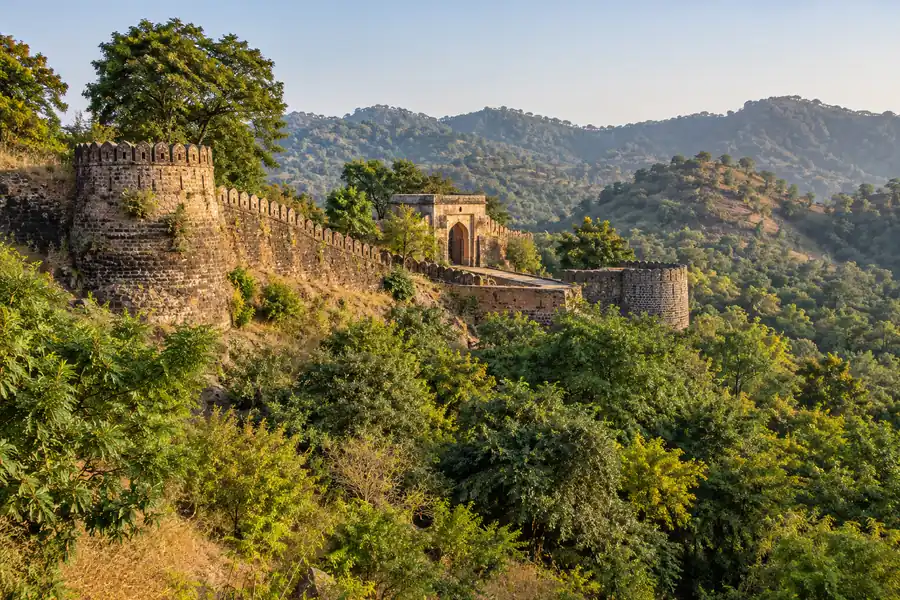
The Haryana Forest Department has restored the inner courtyard of the fort, establishing a modern nature museum and environmental education center. Exhibits highlight the floral biodiversity of the Shivalik foothills, traditional Ayurvedic medicinal plants, and wildlife conservation programs targeting the endangered white-backed vulture.
Below the fort, the Morni Adventure Park offers family activities including zip-lining, rope-course bridges, climbing walls, and an archery range managed by Haryana Tourism. Tickets for individual adventure obstacles range from ₹50 to ₹150, making it an accessible stop for weekend family groups.
Visitors interested in northern wetland reserves can compare this foothill habitat with our dedicated Sultanpur National Park guide in southern Haryana.
Pinjore Yadavindra Gardens: Timings, Ticket Prices, and Mughal Architecture
Situated at the base of the hills along the Kalka highway, Yadavindra Gardens in Pinjore preserves a classic example of terraced Mughal garden design. Built in the late 17th century by Nawab Fidai Khan, architect and trusted general under Mughal Emperor Aurangzeb, the complex covers roughly 100 acres across seven distinct descending levels.
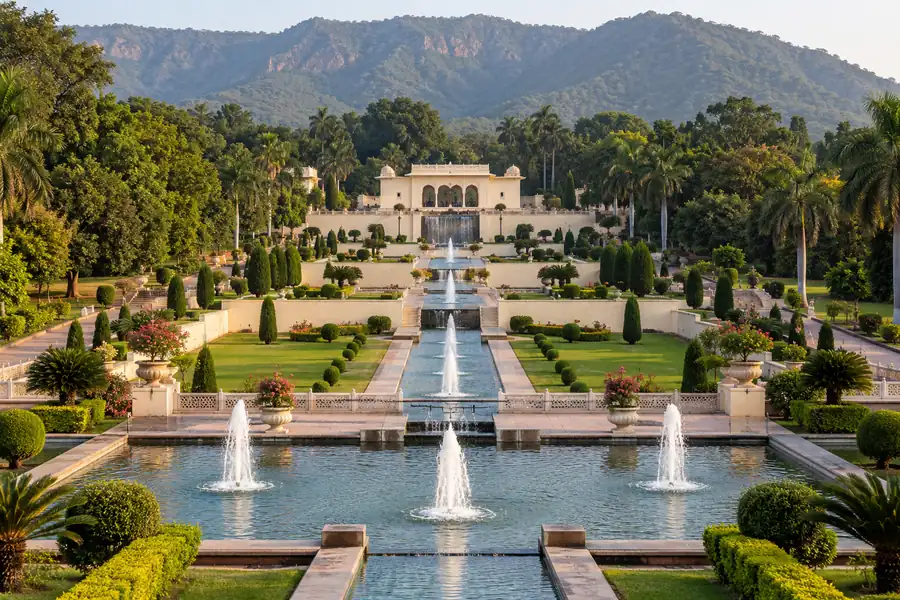
Unlike traditional Mughal plains gardens where visitors ascend toward a central tomb or throne, the Pinjore layout slopes downward from the main entry palace. A central canal running down the main axis feeds over 100 stone fountains, stone water chutes, and cool reflection pools.
Key architectural monuments inside the complex include:
- Shish Mahal (Palace of Mirrors): Located on the first terrace, featuring Mughal arches, jali screens, and historic royal living chambers.
- Hawa Mahal (Palace of Breezes): Positioned on the second terrace with open colonnaded balconies designed to capture cooling mountain drafts.
- Rang Mahal: Situated on the lower level, this painted double-story palace served as a private royal banquet pavilion.
- Jal Mahal: An open-air pillared pavilion standing in the center of a square water tank with arched walkways and submerged fountain heads.
The gardens open daily from 7:00 AM to 9:30 PM. Admission tickets cost ₹25 per person for Indian nationals and ₹125 for foreign tourists, with free entry for children under five.
In the evening, multicolor floodlights illuminate the cascades while the fountains operate to music. Every July, the complex hosts the Haryana Mango Mela, showcasing rare heirloom cultivars and rural music performances.
Official heritage listings can be verified through the Panchkula District Administration Directory and the Archaeological Survey of India Chandigarh Circle.
How to Reach Morni Hills and Pinjore from Chandigarh and Delhi
Both Pinjore and Morni Hills are easily accessible via well-maintained national and state highways:
Route from Chandigarh
Morni Hills lies 45 kilometers east of central Chandigarh. Drivers follow the four-lane Himalayan Expressway toward Panchkula, turn onto the Old Panchkula road, and ascend the well-graded Morni State Highway past Nada Sahib Gurudwara. The drive takes approximately 1 hour and 15 minutes.
Pinjore Gardens is located just 22 kilometers northeast of Chandigarh along National Highway 22 toward Shimla, taking roughly 30 minutes by private car, taxi, or local CTU bus service.
Route from Delhi
Travelers driving from Delhi follow National Highway 44 (the Grand Trunk Road) north through Panipat, Karnal, and Ambala before joining the Zirakpur bypass toward Panchkula. The total distance of 250 kilometers is typically covered in 4.5 to 5 hours.
Railway travelers can board fast morning express trains to Chandigarh Junction or Kalka railway station. Local private taxis from Chandigarh station charge fixed fares between ₹1,500 and ₹2,200 for a same-day return trip covering both Pinjore Gardens and Morni Hills.
Travelers planning extended northern circuits can combine this foothill getaway with historical pilgrimage stops detailed in our guide to places to visit in Kurukshetra.
Best Time to Visit, Seasonal Weather, and Lodging Options
Morni Hills and Pinjore Gardens welcome travelers throughout the year, but seasonal variations shape the visitor experience:
Seasonal Recommendations
- Winter (October to March): The most comfortable season, with crisp sunny days averaging 14°C to 20°C and cool nights dropping to 6°C. Excellent for daytime boating, hill walks, and evening garden strolls.
- Monsoon (July to September): Mountain rains turn the Shivalik hillsides rich emerald green and fill the Tikkar Taal lakes to capacity. Roads remain generally accessible, though drivers should exercise caution on wet hill bends.
- Summer (April to June): While warmer than high-altitude Himalayan resorts, Morni Hills offers a welcome retreat from 42°C heat waves across Delhi and Punjab, with daytime temperatures rarely exceeding 33°C.
Accommodation Options
Haryana Tourism operates the Mountain Quail Resort in Morni village and the Tikkar Taal tourist complex directly beside the lake, offering air-conditioned rooms, family suites, and on-site dining. Private boutique resorts and eco-camps provide hillside cottages with panoramic valley views across the Shivalik ridges.
Travelers can compare these foothill escapes with other celebrated national routes featured among the best places to visit in India.
Frequently Asked Questions About Morni Hills and Pinjore Gardens
What is the best time of year to visit Morni Hills and Tikkar Taal?
The ideal time to visit Morni Hills is from October through March, when clear winter skies and pleasant temperatures between 14°C and 22°C provide ideal conditions for outdoor boating, trekking, and nature photography. The monsoon season between July and September also offers lush green scenery and full lakes.
How far is Morni Hills from Chandigarh and what is the travel time?
Morni Hills is located 45 kilometers east of Chandigarh in Panchkula district, taking roughly 1 hour and 15 minutes to reach by private car or taxi along the well-paved Morni State Highway. Pinjore Gardens is even closer, situated just 22 kilometers from Chandigarh along the Kalka highway.
What are the entry fees and timings for Pinjore Yadavindra Gardens?
Pinjore Gardens is open daily from 7:00 AM to 9:30 PM, with fountains and illuminated lighting operating during evening hours. Entry tickets cost ₹25 per person for Indian citizens and ₹125 for foreign visitors, while children under five enter free.
What activities are available at Tikkar Taal lake?
Visitors to Tikkar Taal can enjoy two-seater and four-seater pedal boating, motorized speedboat rides, kayaking, perimeter nature walks, and lakeside picnics. A children’s play area and Haryana Tourism snack counters operate directly along the water’s edge.
Are hotel accommodations available in Morni Hills?
Haryana Tourism manages the Mountain Quail Resort in Morni village and the Tikkar Taal tourist lodge directly beside the lake, offering comfortable rooms and dining. Several private boutique hotels and eco-resorts also provide hillside rooms and tent stays throughout the ridgeline.