Places to Visit in Kurukshetra: Brahma Sarovar & Jyotisar
Explore top places to visit in Kurukshetra including Brahma Sarovar, Jyotisar birthplace of the Gita, Sheikh Chilli Tomb, temples, and a 1-day Delhi itinerary.
Kurukshetra Sightseeing Essentials
- Sacred Identity: Revered as Dharmakshetra in the opening shloka of the Bhagavad Gita and the legendary battleground of the eighteen-day Mahabharata war.
- Crown Landmark: Brahma Sarovar, one of Asia’s largest man-made sacred tanks measuring 3,600 by 1,800 feet, celebrated for atmospheric sunset aarti ceremonies.
- Birthplace of the Gita: Jyotisar, located 5 kilometers west along the Pehowa highway, where Lord Krishna delivered his immortal discourse beneath a holy banyan tree.
- Architectural Masterpiece: Sheikh Chilli’s Tomb in Thanesar, an elegant seventeenth-century Mughal marble and buff sandstone mausoleum maintained by the Archaeological Survey of India.
- Strategic Access: Situated 155 kilometers north of Delhi along National Highway 44, easily reached within two and a half hours via Vande Bharat or Shatabdi express trains.
Kurukshetra stands among the most storied cultural and spiritual landscapes of northern India. Known from antiquity as Dharmakshetra, this ancient plain in Haryana serves as the setting for the foundational philosophical dialogue of the Bhagavad Gita. Beyond its epic associations, modern Kurukshetra provides a tranquil, walkable heritage journey through vast sacred reservoirs, Mughal architectural complexes, excavated Harappan settlements, and modern multimedia museums.
Because Kurukshetra sits directly along the Grand Trunk Road corridor, travelers frequently overlook it as a mere highway transit stop. Yet spending dedicated time here reveals monumental sacred tanks that rival riverfront ghats, intricate Sufi stonework, and ancient tirthas woven across the traditional forty-eight kos circuit. This guide details the essential landmarks, practical entry rules, local culinary specialties, and an efficient one-day itinerary from Delhi and Chandigarh, which can be integrated into broader regional tours outlined in our Haryana visitor overview.
Spiritual and Historical Legacy of Dharmakshetra Kurukshetra
The cultural memory of Kurukshetra is rooted in classical Sanskrit literature. In the opening verse of the Bhagavad Gita, the blind king Dhritarashtra asks Sanjaya to recount events taking place on the field of righteousness: Dharmakshetre Kurukshetre. According to Puranic traditions, King Kuru, an ancestor of both the Pandavas and Kauravas, performed austere penance here, consecrating the earth as a land where righteous deeds yield enduring spiritual merit.
Historical records confirm that Kurukshetra was a renowned center of learning and pilgrimage for thousands of years. In the eleventh century, the Persian scholar Al-Beruni recorded the immense gathering of pilgrims at the city’s vast stepped reservoirs in his masterwork Kitab al-Hind. Later Mughal chronicles documented royal visits by Emperor Akbar, who marveled at the peaceful confluence of ascetics, scholars, and pilgrims bathing during solar eclipses.
The traditional sacred territory extends far beyond the municipal boundaries, encompassing a historic circuit known as the 48 Kos Parikrama. This circuit includes more than 134 holy tirthas distributed across modern Kurukshetra, Kaithal, Karnal, Jind, and Panipat districts. Together, these sacred ponds and temples preserve ancient oral lineages, seasonal melas, and architectural ruins spanning Vedic, Gupta, Harsha, and medieval eras.
Top Places to Visit in Kurukshetra: The Heritage Circuit
The core heritage circuit of Kurukshetra centers on the twin towns of Kurukshetra and Thanesar. Most key attractions sit within a five-kilometer radius of one another, making local exploration convenient and relaxed.
1. Brahma Sarovar
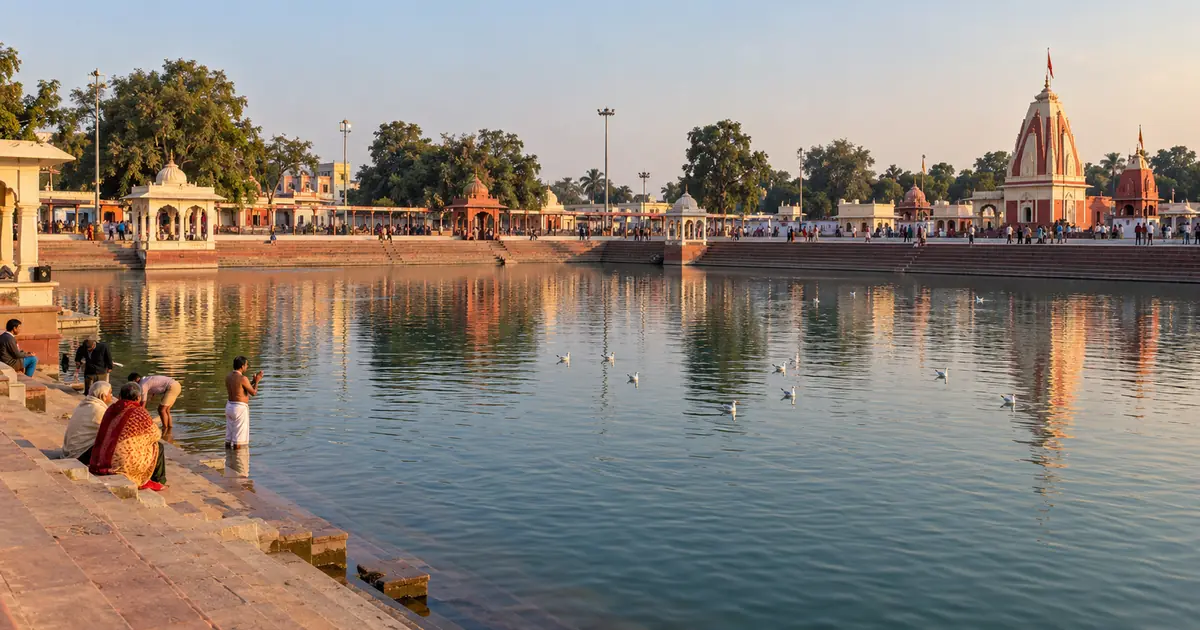
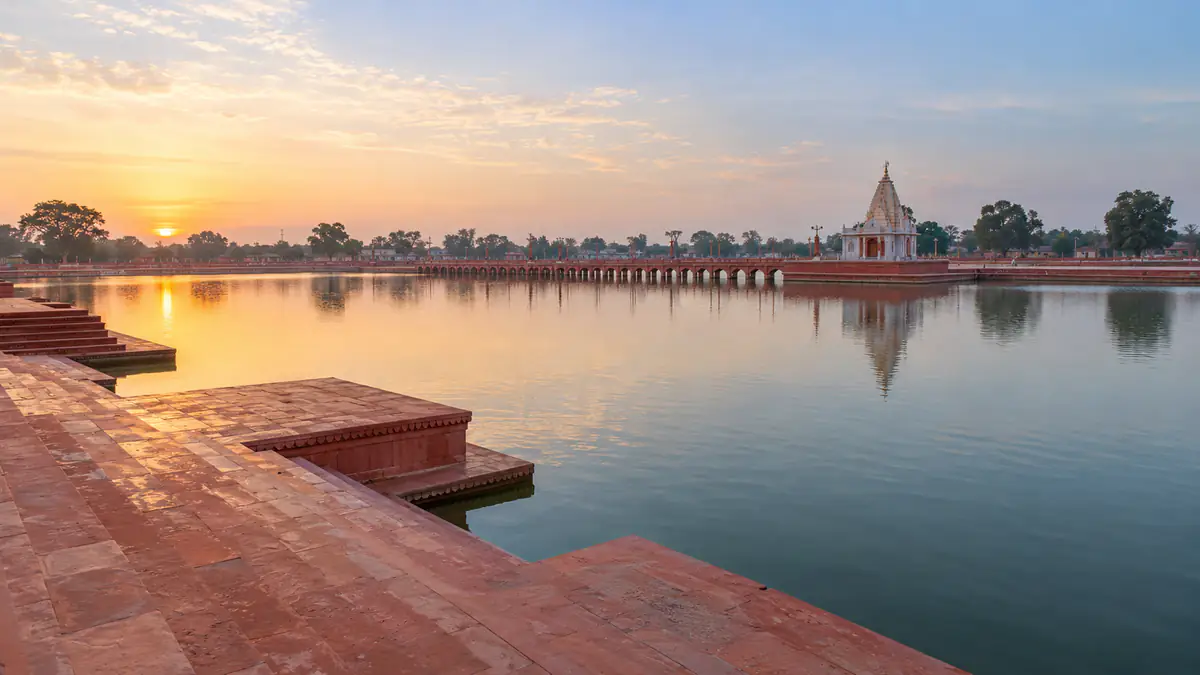
Brahma Sarovar forms the spiritual and visual centerpiece of Kurukshetra. Measuring approximately 3,600 feet in length and 1,800 feet in width, it is recognized as one of the largest man-made sacred water tanks in Asia. According to Hindu belief, Lord Brahma conceived cosmic creation from this water body after performing a grand yajna.
Stepped red sandstone ghats line the perimeter of the reservoir, providing wide promenades for walking and meditation. In the middle of the lake stands the Sarveshwar Mahadev Temple, an ancient Shiva shrine reachable via an arched stone causeway.
A massive bronze chariot sculpture depicting Lord Krishna guiding Arjuna into battle commands the northern bank. Official heritage archives preserved by the District Administration of Kurukshetra highlight that taking a ritual dip here during solar eclipses carries the spiritual merit of an Ashvamedha Yajna.
2. Jyotisar: The Birthplace of the Bhagavad Gita
Situated five kilometers west of Kurukshetra along the Pehowa Road, Jyotisar is venerated as the exact spot where the Bhagavad Gita was spoken. Here, on the brink of the Kurukshetra battle, Lord Krishna revealed his universal form (Virat Swaroop) to remove the inner doubts of the warrior Arjuna.
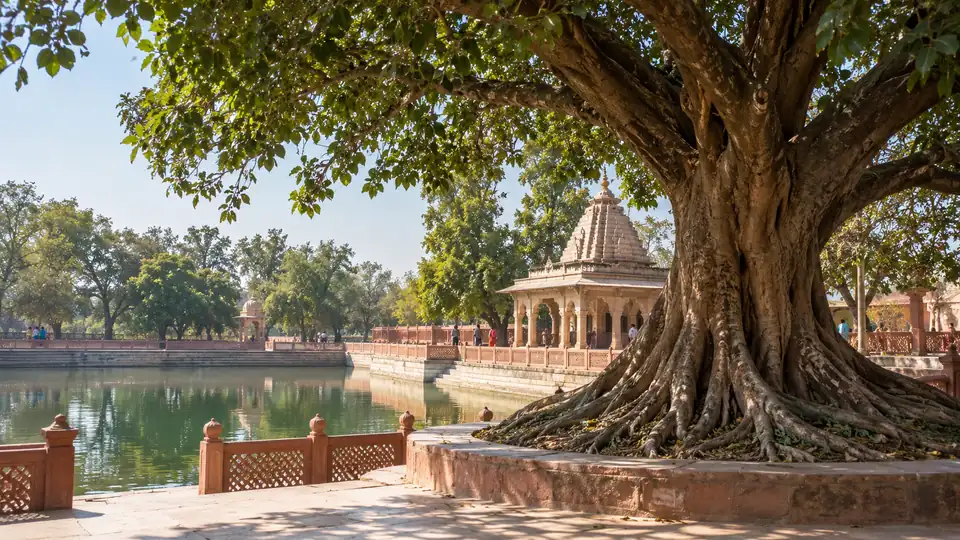
The spiritual focus of Jyotisar is the Akshay Vat, an ancient banyan tree believed to be an offshoot of the original tree under which the Gita was delivered. Marble platforms encircle the trunk, and a polished marble chariot memorial stands beside the sacred pool.
The newly inaugurated Mahabharat Anubhav Kendra offers immersive multimedia galleries. In addition, an open-air light and sound show runs every evening, as recorded on the Jyotisar Official Pilgrimage Portal.
3. Sheikh Chilli’s Tomb and Archaeological Museum
Located in Thanesar, Sheikh Chilli’s Tomb represents one of Haryana’s finest examples of Mughal architectural design. The mausoleum honors Sufi saint Abd-ur-Rahim, popularly known as Sheikh Chilli, who served as the spiritual preceptor to Prince Dara Shikoh, the scholarly eldest son of Emperor Shah Jahan.
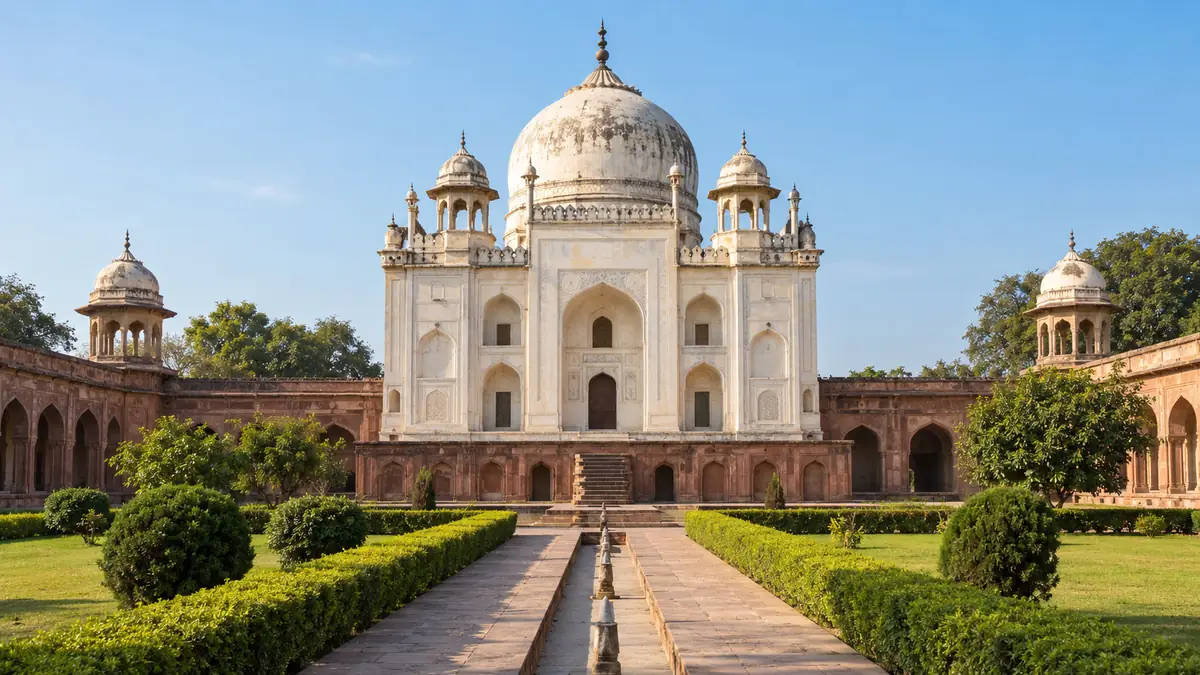
Constructed from buff sandstone and crown marble, the tomb rests atop an elevated octagonal plinth overlooking manicured Mughal charbagh gardens. An adjacent seventeenth-century madrasa features high arched verandahs and central courtyards. The complex houses an Archaeological Survey of India museum displaying excavated pottery, terracotta figurines, and coins recovered from the nearby mound of Harsh Ka Tila, with visitor guidelines cataloged by the Thanesar Monument Directory.
4. Sannihit Sarovar
Located one kilometer east of Brahma Sarovar, Sannihit Sarovar is an expansive rectangular holy tank dedicated to Lord Vishnu. Puranic tradition holds that seven sacred streams of the mythological Saraswati River converge in this reservoir. On new moon days (Amavasya), pilgrims gather to perform ancestral Shraddh rituals and take holy dips believed to grant peace to departed souls.
Surrounding the waters are ancient shrines dedicated to Dhruv Narayan, Sri Rama, Hanuman, and Goddess Durga. The atmosphere here feels distinctly peaceful, characterized by towering peepal trees, resting sadhus, and gentle ripples across the clean water surface.
5. Shri Devikoop Bhadrakali Shaktipeeth
Shri Devikoop Bhadrakali Temple is venerated as one of the fifty-one sacred Shaktipeeths distributed across the subcontinent. Hindu scriptures state that Goddess Sati’s right ankle (gulpha) fell at this holy spot when Lord Vishnu severed her body with the Sudarshan Chakra. Devotees following pan-Indian Shakta pilgrimage routes often connect this site with the supreme Tantric shrine described in our Kamakhya Temple Guwahati guide.
Devotees visit this sacred shrine to offer small ceremonial clay or brass horses upon the fulfillment of personal vows. According to folklore, the Pandavas worshipped Goddess Bhadrakali here before starting the Mahabharata war and offered noble battle horses in thanksgiving following their victory.
6. Sthaneshwara Mahadev Temple
Sthaneshwara Mahadev Temple stands as one of the oldest Shaivite pilgrimage sites in northern India. Located near Thanesar, this temple marks the ancient kingdom of Sthanishvara, which served as the capital of King Harshavardhana in the seventh century.
Legend recounts that the Pandavas prayed before the resident Shiva lingam to seek blessings prior to the war. The temple features a distinctive blue-and-white domed roof and an adjacent sacred pond whose waters were believed by local kings to possess curative medicinal properties.
7. Bhishma Kund at Narkatari
Situated four kilometers outside the city center, Bhishma Kund at Narkatari marks the legendary spot where the patriarch Bhishma lay upon a bed of arrows. Awaiting the auspicious northward movement of the sun (Uttarayana), the wounded elder expressed thirst to the assembled warriors.
In response, Arjuna shot a celestial arrow into the ground, causing a sweet fountain of fresh water to spring forth and quench Bhishma’s thirst. Today, a walled stepwell and an adjacent temple commemorate this dramatic episode from the epic.
| Attraction Name | Primary Cultural Feature | Visiting Hours | Entry Fee | Ideal Time to Spend |
|---|---|---|---|---|
| Brahma Sarovar | Massive sacred lake, Sarveshwar Temple | Open 24 hours (Aarti at sunset) | Free admission | 1.5 to 2 hours |
| Jyotisar | Sacred Banyan Tree, Light & Sound show | 6:00 AM – 8:00 PM | Free (Show: ₹50–₹100) | 1.5 to 2 hours |
| Sheikh Chilli Tomb | Mughal architecture, ASI museum | Sunrise to Sunset | ₹25 (Indians), ₹300 (Foreigners) | 1 hour |
| Sannihit Sarovar | Saraswati confluence, Vishnu shrines | Open 24 hours | Free admission | 45 minutes |
| Bhadrakali Shaktipeeth | Sati ankle relic, horse vow rituals | 5:00 AM – 9:00 PM | Free admission | 45 minutes |
| Sthaneshwara Mahadev | Ancient Shiva lingam, Harsha history | 6:00 AM – 8:00 PM | Free admission | 30 minutes |
| Bhishma Kund | Arrow spring stepwell, Mahabharata site | 6:00 AM – 7:00 PM | Free admission | 30 minutes |
Curated 1-Day Itinerary from Delhi and Chandigarh
Kurukshetra makes an ideal day excursion due to its compact geography and quick highway links. Taking an early morning train from Delhi or driving up National Highway 44 allows travelers to experience all primary landmarks without rushing. Travelers heading further northwest along the Grand Trunk Road into Punjab can consult our detailed visiting Golden Temple Amritsar for sacred pool etiquette and community kitchen timings. Those seeking broader regional travel inspiration can explore our comprehensive directory of the best places to visit in India.
Morning Schedule:
- 7:00 AM to 8:30 AM: Arrive in Kurukshetra via train or road, check into a day hotel or proceed directly toward Thanesar. Enjoy a steaming breakfast of stuffed tandoori paranthas and fresh curd at a local highway dhaba.
- 8:45 AM to 10:15 AM: Begin at Jyotisar along the Pehowa highway. Walk around the venerated Akshay Vat banyan tree, visit the marble chariot, and explore the new multimedia exhibits at Mahabharat Anubhav Kendra while morning crowds remain minimal.
- 10:30 AM to 11:45 AM: Drive back into Thanesar to explore Sheikh Chilli’s Tomb. Stroll through the terraced Persian gardens, admire the carved octagonal marble tomb chamber, and inspect ancient excavated pottery inside the ASI Archaeological Museum.
Midday and Afternoon Schedule:
- 12:00 PM to 1:00 PM: Tour the adjacent Sthaneshwara Mahadev Temple and the sacred Bhadrakali Shaktipeeth. Witness the ceremonial offering of clay horses in the inner sanctum.
- 1:15 PM to 2:30 PM: Pause for an authentic Haryanvi thali featuring warm bajra roti, homemade white butter, fresh paneer, and chilled sweet lassi at a local restaurant near the university road.
- 2:45 PM to 4:00 PM: Visit the Kurukshetra Panorama and Science Centre located beside Brahma Sarovar. The circular auditorium features a massive three-dimensional cyclorama depicting key battle formations of the Mahabharata.
Evening Experience:
- 4:15 PM to 5:45 PM: Explore Sannihit Sarovar before crossing over to the vast banks of Brahma Sarovar. Walk the perimeter causeway to Sarveshwar Mahadev Temple and inspect the bronze chariot of Krishna and Arjuna.
- 6:00 PM to 6:45 PM: Settle on the southern steps of Brahma Sarovar for the magnificent Maha Aarti. Watch priests rotate brass lamps while devotional chanting echoes across the still water.
- 7:15 PM onwards: Enjoy hot desi ghee jalebis in the old market before boarding your evening return train back to Delhi or Chandigarh.
| Time Window | Scheduled Activity | Key Sights Covered |
|---|---|---|
| 7:00 AM – 8:30 AM | Arrival and Highway Breakfast | Fresh paranthas, curd, tea |
| 8:45 AM – 10:15 AM | Spiritual Origins at Jyotisar | Akshay Vat, Marble Chariot, Mahabharat Anubhav Kendra |
| 10:30 AM – 11:45 AM | Mughal Elegance at Sheikh Chilli Tomb | Marble mausoleum, Madrasa, ASI Museum |
| 12:00 PM – 1:00 PM | Ancient Shrines of Thanesar | Sthaneshwara Mahadev, Bhadrakali Shaktipeeth |
| 1:15 PM – 2:30 PM | Traditional Lunch Break | Regional Haryanvi vegetarian thali |
| 2:45 PM – 4:00 PM | Cultural Education | Kurukshetra Panorama & Science Centre |
| 4:15 PM – 5:45 PM | Sacred Waters Walking Tour | Sannihit Sarovar, Brahma Sarovar Causeway |
| 6:00 PM – 6:45 PM | Sunset Grand Finale | Brahma Sarovar Evening Maha Aarti |
International Gita Mahotsav and Annual Cultural Celebrations
While Kurukshetra welcomes pilgrims throughout the year, the city comes alive with exceptional energy during the annual International Gita Mahotsav. Celebrated during Shukla Paksha Ekadashi in the Hindu month of Margashirsha (typically late November to December), this multi-week cultural extravaganza honors the birth of the Bhagavad Gita.
Event Highlights During Gita Mahotsav:
- National Crafts Mela: Artisans and handloom weavers from every Indian state set up stalls along the Brahma Sarovar embankment.
- Gita Shlok Recitation: Thousands of students and scholars gather for mass synchronized recitations of the Gita.
- Water Laser Shows: Modern laser projection mapping projects episodes of the Mahabharata across water curtains at Brahma Sarovar.
- Deepotsav: Thousands of glowing clay diyas illuminate the entire perimeter of Brahma Sarovar during evening ceremonies.
- Folk Dance Stages: Daily folk performances featuring traditional Haryanvi, Rajasthani, and Punjabi musical traditions.
The festive atmosphere at the crafts mela mirrors the artisan spirit observed at the renowned Surajkund Crafts Mela in Faridabad. International pavilions, craft demonstrations, and street food courts make the winter festival an unforgettable cultural experience.
Another major occasion is the Solar Eclipse Fair (Surya Grahan Mela). For centuries, millions of pilgrims from across India have gathered at Brahma Sarovar during solar eclipses, believing the waters connect with sacred celestial rivers during the astronomical alignment.
| Festival or Celebration | Calendar Period | Cultural Highlights | Primary Venue |
|---|---|---|---|
| International Gita Mahotsav | Nov – Dec (Margashirsha) | Crafts fair, mass Gita recitation, laser show | Brahma Sarovar & Jyotisar |
| Gita Jayanti Day | Shukla Ekadashi in Dec | Special morning rituals, holy dip, seminars | Jyotisar Birthplace |
| Solar Eclipse Fair | Variable (Solar eclipses) | Mass holy bath, Vedic chanting, charity | Brahma Sarovar |
| Somvati Amavasya | Variable (Monday new moons) | Ancestral rites, holy dip, charity | Sannihit Sarovar |
| Holi and Janmashtami | March and August | Temple celebrations, ras leela, processions | Bhadrakali & ISKCON temples |
Local Flavors and Traditional Haryanvi Dining
Exploring Kurukshetra provides a wonderful opportunity to sample authentic rural Haryanvi cuisine, known for its unpretentious simplicity and wholesome dairy wealth. The fertile plains surrounding the city produce premium basmati rice, mustard, and wheat, while village buffalo milk yields creamy butter and thick curd.
Culinary Specialties to Taste:
- Bajra Roti with Safed Makkhan: Warm millet flatbreads cooked on earthen griddles, topped with generous dollops of fresh churned white butter and served with spicy garlic tomato chutney.
- Kachri ki Sabzi: A tangy, rustic curry prepared using wild miniature desert cucumbers (kachri), seasoned with dry red chilies, turmeric, and mustard oil.
- Singri ki Sabzi: Dried desert beans stir-fried with mild spices and yogurt, popular in rural dhabas.
- Kadai Doodh and Desi Ghee Jalebis: Fresh whole milk slowly simmered in huge iron pans with crushed cardamom, paired with piping hot, crispy spiral jalebis fried in pure clarified butter.
- Haryanvi Pinni: Traditional winter sweet dumplings made of roasted whole wheat flour, gond, almonds, and desi ghee.
Food enthusiasts who appreciate historic northern street food culture can also compare these rustic dhabas with the famous Mughal food lanes highlighted in our traditional eateries and markets for Old Delhi Street Food. In Kurukshetra, the finest snacks are found along the railway station road and around the old bazaar lanes of Thanesar.
How to Reach Kurukshetra: Train, Road, and Air Travel
Kurukshetra enjoys outstanding connectivity thanks to its strategic location along National Highway 44 (the historic Grand Trunk Road) and the main Delhi-Ambala-Amritsar railway trunk line. Whether traveling by self-drive vehicle, superfast train, or bus, reaching the city from Delhi or Chandigarh is remarkably simple.
Travel Options Overview:
- By Train: Kurukshetra Junction (station code KKDE) is a key railway stop. The New Delhi-Katra Vande Bharat Express, New Delhi-Amritsar Shatabdi Express, and regular intercity trains connect the capital in just two to two and a half hours.
- By Road via NH44: A smooth, multi-lane divided highway connects Delhi to Kurukshetra across 155 kilometers. The drive takes between two and a half to three hours via Panipat and Karnal.
- By State Buses: Haryana Roadways operates continuous air-conditioned and standard bus services from Kashmere Gate ISBT in Delhi, dropping passengers at Pipli Bus Stand on the highway, just five kilometers from the city center.
- By Air: The nearest commercial airports are Chandigarh International Airport (IXC), located 90 kilometers north, and Indira Gandhi International Airport (DEL) in Delhi, situated 165 kilometers south.
Travelers planning an extended exploration of Haryana can combine heritage sightseeing here with wetland birdwatching trips to Sultanpur National Park in Gurugram. Both destinations offer diverse perspectives on Haryana’s rich natural and cultural topography.
| Origin City | Travel Distance | Transport Mode | Approximate Travel Time |
|---|---|---|---|
| New Delhi | 155 kilometers | Vande Bharat / Shatabdi Train | 2 hours 15 minutes |
| New Delhi | 155 kilometers | Road Drive via NH44 | 2 hours 45 minutes |
| Chandigarh | 90 kilometers | Train or NH44 Drive | 1 hour 30 minutes |
| Ambala | 45 kilometers | Train or Highway Bus | 45 minutes |
| Karnal | 35 kilometers | Local Train or Road | 35 minutes |
Local travel within Kurukshetra is handled easily by e-rickshaws, auto-rickshaws, and app-based cabs. Shared e-rickshaws operate along regular routes connecting the railway station, Pipli highway junction, Brahma Sarovar, and Thanesar. Travelers extending their journey north toward the Shivalik foothills can explore the pine forests and lakes described in our Morni Hills and Pinjore Gardens guide.
Essential Visitor Guidelines and Temple Etiquette
Visiting Kurukshetra involves exploring sacred pilgrimage tanks, historical tombs, and functioning temples. Adhering to respectful local etiquette ensures a smooth and culturally sensitive experience.
Traveler Advisories and Protocol:
- Modest Attire: Dress respectfully when visiting temples and sacred water ghats. Keep shoulders and knees covered, and remove footwear before entering sanctums or ascending bathing ghats.
- Footwear Management: Free shoe-keeping counters operate near the main entrances of Brahma Sarovar, Jyotisar, and Bhadrakali Temple. Keep a small coin tip handy for shoe attendants.
- Photography Rules: Photography is broadly permitted along the open ghats of Brahma Sarovar and the garden grounds of Sheikh Chilli’s Tomb. Avoid photographing devotees performing private bathing rituals or taking photos inside inner sanctums.
- Bathing Precautions: Dedicated bathing enclosures with safety railings exist along Brahma Sarovar and Sannihit Sarovar. Follow warning signs, avoid stepping beyond security chains, and supervise young children near water edges.
- Environmental Care: Brahma Sarovar is a clean, eco-sensitive heritage zone. Do not dispose of plastic waste, food packets, or floral offerings in the water. Use designated trash receptacles placed along promenades.
Carrying light cotton clothing with a sun hat is recommended during summer and autumn, while warm woolen layers are essential for chilly winter evenings between December and February.
Frequently Asked Questions About Kurukshetra Sightseeing
What are the most important places to visit in Kurukshetra?
The most essential landmarks are Brahma Sarovar, Jyotisar where Lord Krishna imparted the Bhagavad Gita, and the seventeenth-century marble tomb of Sufi saint Sheikh Chilli in Thanesar. Devotees also prioritize the ancient Bhadrakali Shaktipeeth temple and Sannihit Sarovar.
Can Kurukshetra be explored comfortably as a one-day trip from Delhi?
Yes, Kurukshetra is situated 155 kilometers north of New Delhi and takes approximately two and a half hours by fast morning trains like the Vande Bharat or Shatabdi Express. Visitors can complete all core tirthas, museums, and the evening Brahma Sarovar aarti before returning to Delhi the same night.
What are the timings and entry fees for Sheikh Chilli’s Tomb?
Sheikh Chilli’s Tomb and its adjacent Archaeological Survey of India museum remain open daily from sunrise to sunset. Entry tickets cost ₹25 for Indian citizens and ₹300 for foreign visitors, payable online via official ASI counters or QR ticketing kiosks.
When does the evening aarti take place at Brahma Sarovar?
The grand evening Maha Aarti at Brahma Sarovar takes place daily around sunset, usually between 6:00 PM and 6:45 PM depending on the season. Hundreds of oil lamps float on the calm water as priests chant Vedic hymns from the southern stepped ghats.
What is the best time of year to visit Kurukshetra?
The ideal period to visit is from October through March when daytime temperatures remain pleasant and outdoor walking around the expansive water ghats is comfortable. Visiting during November or December coincides with the grand International Gita Mahotsav celebrations.
What is the legend of Barbarika associated with Kurukshetra?
Before the Mahabharata war, Bhima’s grandson Barbarika offered his head in charity to Lord Krishna on the battlefield of Kurukshetra. His head witnessed the entire 18-day battle from a hilltop, and Lord Krishna blessed him to be worshiped in Kaliyuga under Krishna’s own name, as detailed in our Khatu Shyam Ji Temple darshan and timings.