Sultanpur National Park Gurugram: Timings & Birding Guide
Plan your visit to Sultanpur National Park in Gurugram with winter timings, ticket prices, birdwatching walking trails, watchtower spots, and transit routes.
Sultanpur National Park Essentials
- Operating Schedule: Open daily from 7:00 AM to 4:30 PM during the winter birding season from October to March. Strictly closed every Tuesday for maintenance.
- Entry and Camera Fees: Entry tickets cost ₹5 per Indian adult, ₹2 per Indian child (ages 5 to 11), and ₹40 for international visitors. Personal still cameras incur an extra fee of ₹25 to ₹50.
- Safari Reality: All exploration occurs on foot along a designated 3.5-kilometer paved perimeter trail. Motorized safari jeeps, golf carts, and private bicycles are not permitted inside.
- Peak Birding Season: Late November through mid-February marks peak arrival for over 100 migratory bird species traveling along the Central Asian Flyway.
- Location and Transit: Positioned along the Gurugram-Farrukhnagar Road, roughly 15 kilometers west of Gurugram center and 45 kilometers from central Delhi.
Sultanpur National Park represents the most critical freshwater wetland sanctuary in the National Capital Region. Spanning roughly 142.5 hectares of open lake, reed beds, and acacia scrub, this protected reserve hosts more than 250 bird species across the year. During winter, thousands of migratory waterfowl from northern Eurasia descend on its shallow waters to feed, roost, and escape freezing northern winters.
Unlike larger forest reserves that require complex online vehicle safari bookings, Sultanpur functions entirely as an accessible walking sanctuary. Visiting birdwatchers, wildlife photographers, and weekend travelers explore its quiet water bodies using elevated watchtowers and concealed observation hides. Understanding gate timings, trail navigation, seasonal waterfowl migration patterns, and local transit choices ensures a rewarding wilderness morning just minutes from urban Delhi-NCR, which can be paired with regional weekend getaways in our planning a visit to Haryana.
Overview and Ecological Significance of Sultanpur Wetland
Sultanpur National Park holds global recognition as a Wetland of International Importance under the Ramsar Convention. Registered as Ramsar Site Number 2457, the park provides an essential refuge for birds navigating the Central Asian Flyway. Comprehensive ecological assessments cataloged by the Wildlife Institute of India Wetland Research Division confirm that the shallow seasonal lake supports vulnerable species, including the sarus crane, greater spotted eagle, and black-necked stork.
Conservation Milestones at Sultanpur:
- 1969: British naturalist Peter Jackson alerted Prime Minister Indira Gandhi to the wetland’s global avian significance.
- 1972: Formally declared a bird sanctuary under the Wildlife Protection Act across 1.2 square kilometers.
- 1989: Boundary expanded to protect peripheral water catchment grasslands and acacia groves.
- 1991: Upgraded to a national park under official state wildlife notifications.
- International Era: Designated under the Ramsar Convention to safeguard trans-Himalayan flyway routes.
The wetland owes its protection to veteran naturalist Peter Jackson, who served as honorary secretary of the Delhi Birdwatching Society. In 1969, Jackson brought the ecological richness of the shallow Sultanpur lake to the attention of Prime Minister Indira Gandhi. Recognizing its role as an irreplaceable winter habitat for Siberian birds, the central government declared it a sanctuary in 1972 before granting it national park status in July 1991.
The hydrological basin features shallow natural depressions that collect seasonal monsoon runoff from surrounding agricultural plains. Peripheral bunds, earthen mounds, and planted acacia trees create varied water depths ranging from a few centimeters to over two meters. This layered topography allows diverse waterbirds to feed simultaneously, from long-legged storks wading in deeper pools to small sandpipers foraging in muddy shallows. Naturalists comparing avian wetland habitats across India can contrast these shallow lakes with the vast riverine floodplains detailed in our visiting Kaziranga National Park Safari during peak season.
Sultanpur National Park Timings, Entry Fees, and Ticket Rules
Sultanpur National Park operates on a seasonal timetable managed directly by the Haryana Wildlife Department. Gates open promptly at 7:00 AM and close to incoming visitors at 4:30 PM, with all guests required to exit the sanctuary grounds by 5:00 PM. The park remains strictly closed to the general public every Tuesday to permit quiet habitat upkeep, water level regulation, and ecological inspections.
Operating Schedule Details:
- Winter Hours (October to March): Open 7:00 AM to 4:30 PM daily.
- Campus Evacuation: All visitors must vacate trails by 5:00 PM.
- Weekly Closure: Strictly closed every Tuesday for maintenance.
- Monsoon Closure: Closed July 1 through September 30 annually for breeding bird protection.
Tickets are issued across the physical counter located beside the main entrance gate. Online booking is not mandatory for regular walking visitors, though arriving early on winter weekends helps avoid brief ticketing queues. Official visitor directories managed by the District Administration of Gurugram outline clear differential fee structures for domestic citizens, students, foreign travelers, and photography equipment.
| Visitor or Equipment Category | Applicable Fee (INR) | Operational Notes |
|---|---|---|
| Indian Adults | ₹5 per person | Standard walking entry permit |
| Indian Children (5 to 11 Years) | ₹2 per child | Free admission for infants below 5 |
| Foreign Nationals | ₹40 per person | Passport identification required |
| Still Camera (DSLR or Mirrorless) | ₹25 to ₹50 | Mandatory tag issued at gate |
| Video Camera (Commercial or Pro) | ₹500 | Commercial shoots require prior state approval |
| Binocular Rental (Per Pair) | ₹50 (plus deposit) | Available inside the interpretation center |
| Vehicle Parking (Two-Wheelers) | ₹20 | Gated open lot outside entry gate |
| Vehicle Parking (Cars or SUVs) | ₹50 | Gated open lot outside entry gate |
Visitors planning to rent binoculars should carry a government-issued photo identity card such as an Aadhaar card or driving license. The interpretation center desk holds the identity card as a returnable deposit until you return the optical gear in undamaged condition. Personal optical equipment including spotting scopes and monoculars is permitted without supplementary surcharges beyond the basic still camera pass.
Birdwatching Walking Trails and Watchtower Circuit
Exploring Sultanpur National Park requires no motorized vehicles. The entire visitor zone is structured around an interconnected network of shaded perimeter trails stretching approximately 3.5 kilometers around the central lake. Paved flagstone paths facilitate comfortable walking, while earth-packed secondary trails lead toward quieter reed fringes.
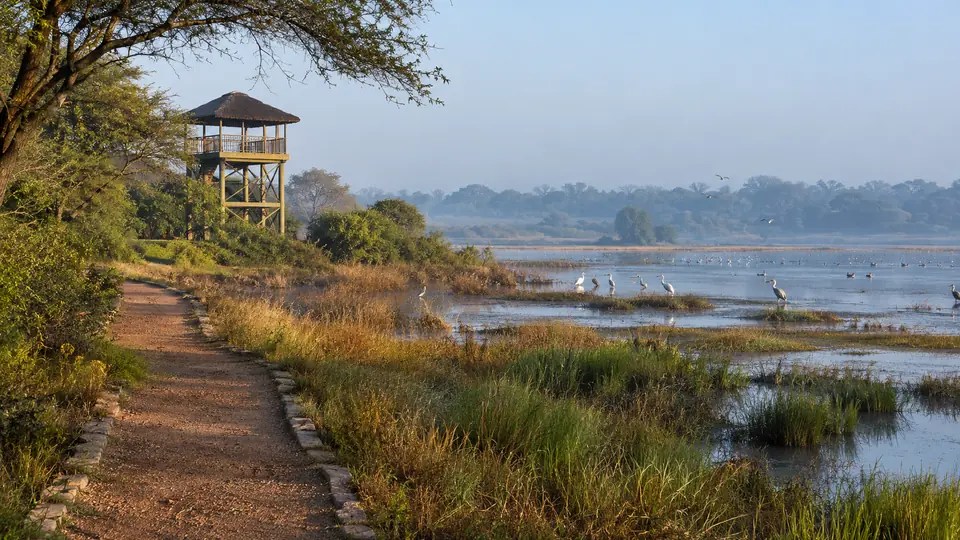
Perimeter Trail Waypoints:
- Entrance Gate and Ticketing Counter
- Wildlife Interpretation Center and Educational Museum
- Watchtower 1 overlooking the Southern Deep Basin
- Southern Marsh Boardwalk and Hiding Blind
- Watchtower 2 facing the Western Shallows and Mudflats
- Island Causeways and Central Mound Overlooks
- Watchtower 3 along the Northern Tree Line
- Peripheral Grasslands and Grazing Clearings
- Watchtower 4 over the Eastern Marsh
- Main Exit Gate and Parking Area
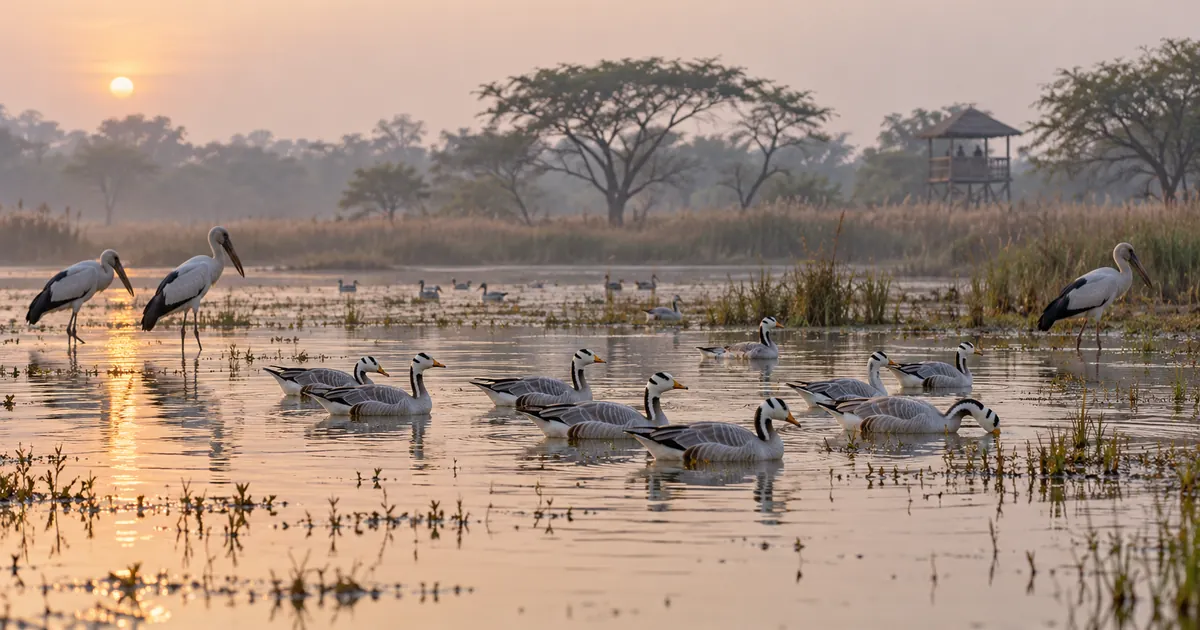
Four elevated steel and masonry watchtowers, known locally as machans, stand at strategic vantage points along the lake margin. Each observation post provides panoramic views across distinct wetland micro-habitats, elevating birdwatchers above shoreline cattails and bushes. Climbing these towers reveals hidden flocks resting on distant water mounds that remain invisible from ground-level trails.
| Watchtower (Machan) | Primary Habitat Overlook | Target Avian Sightings | Recommended Lens Focal Length |
|---|---|---|---|
| Machan 1 (South Bank) | Open deep-water basin | Greylag Geese, Northern Pintails, Shovelers | 300mm to 500mm |
| Machan 2 (Western Shallows) | Mudflats, reed fringes | Common Sandpipers, Snipes, Black-winged Stilts | 400mm to 600mm |
| Machan 3 (Northern Margin) | Acacia islands, dead snags | Painted Storks, Spoonbills, Cormorants, Darters | 200mm to 400mm |
| Machan 4 (Eastern Marsh) | Tall grasslands, peripheral bund | Sarus Cranes, Harriers, Francolins, Pipits | 400mm to 600mm |
Completing the full 3.5-kilometer circuit takes approximately three to four hours at an unhurried birdwatching pace. Wooden resting benches and shaded gazebos appear at 500-meter intervals, offering quiet spaces to pause and scan tree canopies. Visitors should always stay on designated paths, as walking into muddy shallows disturbs nesting birds and degrades sensitive soil structures.
Migratory and Resident Bird Species to Spot
The primary appeal of Sultanpur National Park lies in its rich bird diversity. The sanctuary serves as a key staging post along the Central Asian Flyway, an ancient aerial corridor connecting Arctic breeding grounds with wintering territories across South Asia. Flocks of waterfowl cover thousands of kilometers, crossing Himalayan mountain passes to settle in Haryana wetlands.
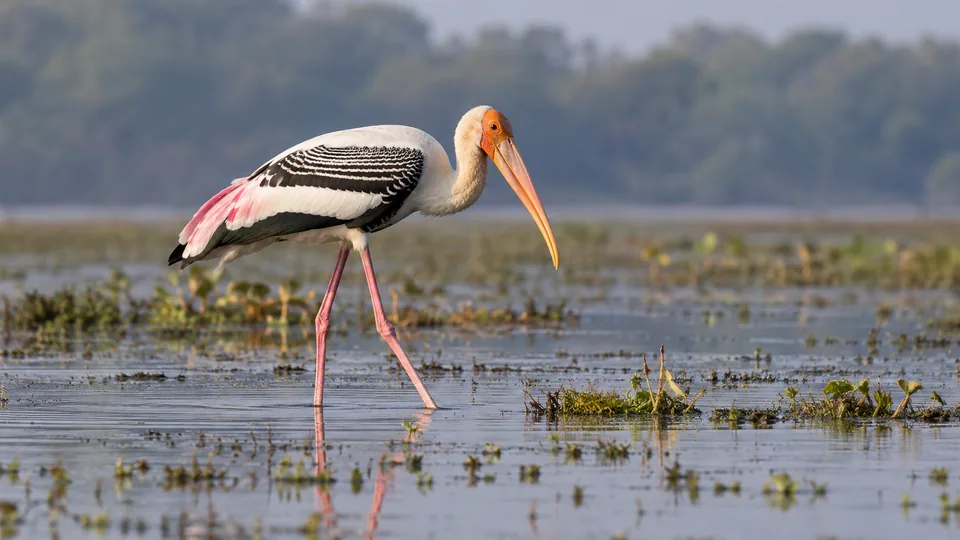
Primary Avian Groups Recorded at Sultanpur:
- Anatidae (Ducks and Geese): Bar-headed goose, greylag goose, northern shoveler, gadwall, and Eurasian wigeon.
- Ciconiidae (Storks): Painted stork, black-necked stork, Asian openbill, and woolly-necked stork.
- Gruidae (Cranes): Sarus crane and common crane.
- Ardeidae (Herons and Egrets): Purple heron, grey heron, great egret, and black-crowned night heron.
- Threskiornithidae (Ibises and Spoonbills): Eurasian spoonbill, black-headed ibis, and glossy ibis.
- Charadriidae (Waders): Red-wattled lapwing, white-tailed lapwing, ruff, and black-tailed godwit.
Bar-headed geese represent the most famous trans-Himalayan migrants arriving at the park. Capable of flying at altitudes exceeding 25,000 feet, these geese settle in family groups across the central mounds. Hundreds of northern shovelers filter shallow water with specialized spatulate bills, while elegant northern pintails dabble in deeper sections.
Enthusiasts exploring wildlife across northern India can compare these wetland patterns with foothill forest birding in Jim Corbett National Park in Uttarakhand. Both protected areas provide complementary ecosystems, moving from aquatic winter wetlands to dense sal jungle canopies.
| Avian Species | Residency Status | Optimal Sighting Window | Key Habitat Within Park |
|---|---|---|---|
| Bar-headed Goose | Migratory | December to February | Central lake islets, grassy mounds |
| Painted Stork | Resident or Local Migrant | Year-round (Nests Nov to Jan) | Acacia trees, northern bunds |
| Sarus Crane | Resident (Vulnerable) | Year-round | Eastern grassland margins |
| Northern Shoveler | Migratory | November to March | Shallow open water bodies |
| Black Francolin | Resident (Haryana State Bird) | Early morning hours | Perimeter scrub and dry hedges |
| Greater Flamingo | Irregular Migrant | Late December to January | Deep open water basins |
| Eurasian Spoonbill | Migratory | November to February | Mudflats and intermediate shallows |
| Spotted Owlet | Resident | Daytime roosts | Hollows in mature peepal and neem trees |
Resident species remain active throughout the park year-round. The black francolin, honored as the official state bird of Haryana, announces its presence during early morning hours with sharp calls from scrub bushes. Kingfishers, including the white-throated kingfisher and pied kingfisher, hover above lake edges before diving for fingerling fish. Colorful purple sunbirds and Indian rollers dart across blooming acacia shrubs near the park exit.
Wildlife Beyond Birds: Mammals and Wetland Flora
While birds command primary attention, Sultanpur supports an active population of terrestrial mammals adapted to semi-arid alluvial plains. The absence of large apex carnivores allows moderate-sized herbivore and mesopredator populations to thrive undisturbed along the perimeter bunds and agricultural borders.
Mammals Observed Inside the Park:
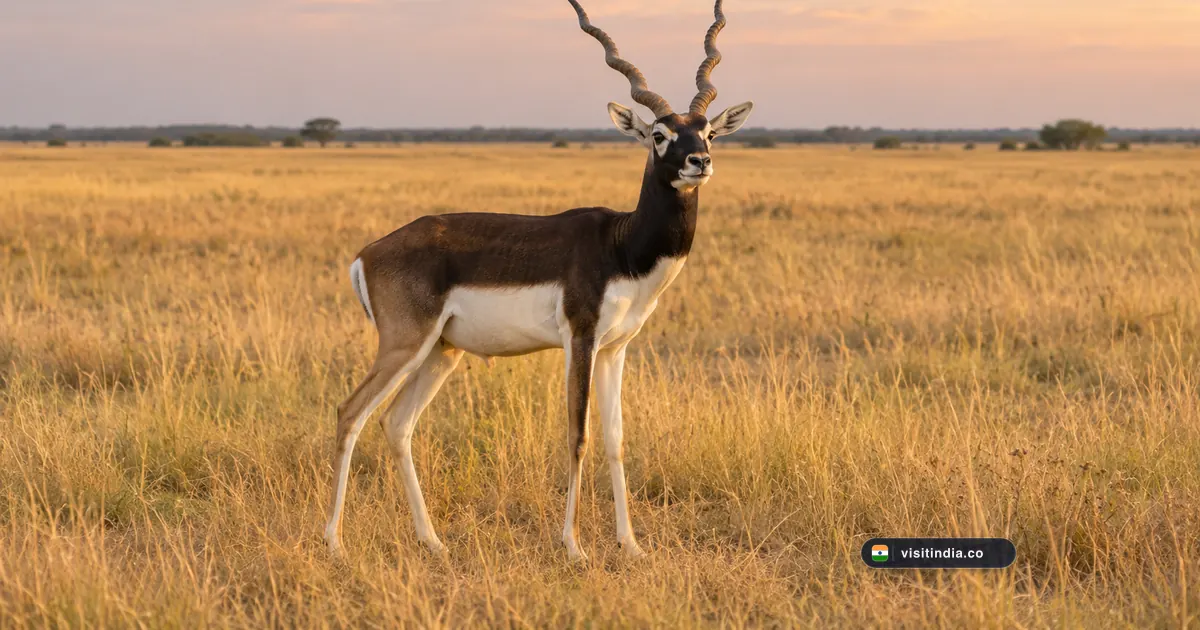
- Blue Bull (Nilgai): The largest Asian antelope, commonly observed grazing in open grassland clearings.
- Golden Jackal: Active along perimeter fringes during dawn and dusk hours.
- Jungle Cat: Stalks ground birds and field rodents within dense reed thickets.
- Indian Grey Mongoose: Forages along paved walkways and beneath dry leaf litter.
- Indian Hare: Frequently seen near acacia groves and sunny meadow borders.
Nilgai herds, also known as blue bulls, are spotted regularly grazing on tender grasses near Watchtower 4. These sturdy antelopes share the open clearings with active groups of Indian hares and foraging mongooses. Golden jackals and secretive jungle cats emerge during early morning hours to hunt along peripheral ditches, retreating into dense acacia scrub once midday foot traffic increases.
Travelers interested in India’s diverse wildlife preserves can also review safari protocols for Asiatic carnivores in Gir National Park in Gujarat. Comparing wetland herbivores with dry deciduous forest wildlife illustrates the incredible breadth of India’s conservation landscape.
Vegetation across the park consists of tropical dry deciduous and thorny scrub species capable of tolerating fluctuating seasonal moisture. Dominant tree varieties include babool (Acacia nilotica), ber (Ziziphus mauritiana), neem, and jamun. Dense stands of Typha reeds and sedges line the lake perimeter, acting as natural filters that stabilize water quality while shielding nesting waterfowl from cold winter breezes.
Best Time to Visit and Seasonal Birding Calendar
Planning your visit around the avian migration calendar guarantees the highest species counts and best viewing conditions. The sanctuary undergoes dramatic seasonal transformations, shifting from a quiet monsoon breeding retreat to an active international waterfowl destination in midwinter.
Seasonal Birding Phases:
- October to November: Early arrivals begin as northern pintails, shovelers, and storks settle across the water.
- December to January: Peak migration window featuring maximum species diversity and large waterfowl flocks.
- February to March: Spring departure phase where birds congregate in bright breeding plumage before flying north.
- April to June: Summer quiet period dominated by resident species as daytime heat rises significantly.
- July to September: Annual monsoon closure for bird breeding and natural wetland regeneration.
The optimal window to visit falls between late November and mid-February. During these months, overnight temperatures hover around 6°C to 12°C, and morning mists gently lift over the water as the sun rises. Thousands of ducks, geese, and waders congregate across the central pools, feeding actively before midday temperatures warm the open grounds.
| Month Range | Weather Conditions | Birding Activity Level | Key Highlights |
|---|---|---|---|
| October to November | Moderate (20°C to 28°C) | Moderate, rising weekly | First arrival of northern shovelers and teal |
| December to January | Cold, crisp (6°C to 18°C) | Peak international migration | Massive flocks of geese, storks, and raptors |
| February to March | Pleasant (16°C to 26°C) | High, decreasing late March | Breeding plumage displays, migratory departures |
| April to June | Hot, dry (28°C to 42°C) | Low (Resident species only) | Francolins, resident doves, nesting lapwings |
| July to September | Humid, rainy (26°C to 35°C) | Closed for visitor entry | Breeding season, water replenishment |
Visitors arriving in December and January should reach the entrance gates by 7:00 AM. Early morning light provides gentle illumination for telephoto photography, while bird activity peaks during the first two hours after sunrise. By 11:30 AM, waterbirds often drift toward deeper water mounds to sleep, reducing shoreline photographic encounters.
How to Reach Sultanpur National Park from Delhi and Gurugram
Sultanpur National Park is located along State Highway 15A (Gurugram-Farrukhnagar Road) in Sultanpur village, Gurugram district, Haryana. Its proximity to major highways, metro transit lines, and Delhi International Airport makes it an effortless morning excursion for regional residents and interstate travelers alike. Road links documented across regional transit guides confirm smooth connections between the sanctuary and major highway arteries.
Driving Routes to the Sanctuary:
- From Gurugram Center (Rajiv Chowk): Follow NH48 toward Hero Honda Chowk, turn right past Sector 10A onto Basai Road, and continue along Farrukhnagar Road (15 kilometers, 30 to 35 minutes).
- From Central Delhi (Connaught Place): Drive via Dhaula Kuan onto NH48 or access the Dwarka Expressway toward Farrukhnagar Road (45 kilometers, 60 to 75 minutes).
- From IGI Airport (Terminal 3): Use the Dwarka Expressway connecting directly toward Farrukhnagar Road (34 kilometers, 45 minutes).
Travelers using public rapid transit can consult the Delhi Metro Rail Network Directory to plan their train journey southward on the Yellow Line toward Millennium City Centre Gurugram. From this terminal station, app-based cabs reach the sanctuary gate in approximately 35 to 45 minutes.
Transit Hub Distances:
- Millennium City Centre Metro Station (Yellow Line): 21 kilometers
- Garhi Harsaru Junction Railway Station: 5 kilometers
- Gurugram Railway Station: 16 kilometers
- Indira Gandhi International Airport (DEL): 34 kilometers
- New Delhi Railway Station (NDLS): 48 kilometers
Private vehicle parking is available in a marked, gated lot situated directly across from the park entrance. The parking facility charges a modest flat fee of ₹20 for two-wheelers and ₹50 for passenger cars. Drivers traveling along the newly opened Dwarka Expressway enjoy smooth multi-lane access that avoids congested central Gurugram surface streets. Travelers continuing their journey across northern Haryana can follow National Highway 44 further north to tour the historic pilgrimage landmarks highlighted in our guide to what to see in Kurukshetra, or explore the Shivalik hill trails in our jeep safari routes in Morni Hills & Pinjore Gardens.
Essential Visitor Guidelines and Bird Photography Etiquette
Preserving the peaceful atmosphere of Sultanpur National Park requires mindful visitor behavior. Because the sanctuary features open walking paths adjacent to shallow water bodies, loud noises and sudden movements immediately cause resting flocks to take flight, wasting vital energy needed for their winter survival.
Field Rules and Wildlife Courtesy:
- Maintain Strict Silence: Speak in whispers along trails and watchtowers to avoid startling feeding flocks.
- Zero Plastic Policy: Single-use plastic bottles, snack wrappers, and polythene bags are prohibited inside.
- Keep to Designated Paths: Never step onto muddy lake edges or climb earthen nesting mounds.
- Dress in Earth Tones: Wear muted greens, browns, and khakis rather than bright neon colors.
- No Feeding or Baiting: Feeding birds, using recorded audio calls, or throwing stones is illegal under the Wildlife Protection Act.
Wildlife photographers should prepare telephoto lenses with focal lengths ranging between 300mm and 600mm to capture sharp details without disturbing birds. Monopods and sturdy tripods are welcome along the broad watchtower platforms, provided they do not obstruct other visitors. Drones and motorized camera stabilizers are strictly banned across the entire national park perimeter.
Carrying adequate water in reusable metal bottles, warm layered clothing for crisp winter mornings, and a field notebook significantly enhances your excursion. Travelers who enjoy exploring regional cultural traditions alongside outdoor pursuits can pair their Haryana itinerary with the famous artisanal fairs documented in our guide to the Surajkund Crafts Mela in Faridabad.
Frequently Asked Questions About Sultanpur National Park
What are the opening and closing timings of Sultanpur National Park?
Sultanpur National Park opens daily from 7:00 AM to 4:30 PM during the peak winter birding season from October to March. The sanctuary remains strictly closed to all visitors every Tuesday for administrative habitat maintenance.
How much does the entry ticket cost at Sultanpur National Park?
Entry tickets cost ₹5 per Indian adult, ₹2 per Indian child between 5 and 11 years, and ₹40 for international visitors. Personal still cameras incur an additional permit fee of ₹25 to ₹50, payable at the entrance counter.
Are jeep safaris or vehicle rides available inside the bird sanctuary?
No motorized safaris, open jeeps, golf carts, or bicycles are permitted inside the core sanctuary grounds. Visitors explore the wetland exclusively on foot along a designated 3.5-kilometer paved walking loop equipped with watchtowers.
What is the best month to visit Sultanpur National Park for birdwatching?
The prime window runs from December through early February when thousands of migratory birds from Siberia and Central Asia populate the shallow waters. Arriving at 7:00 AM ensures the best light conditions and active waterfowl feeding behavior.
Which metro station is nearest to Sultanpur National Park?
Millennium City Centre Gurugram on the Delhi Metro Yellow Line is the closest major station, situated roughly 20 kilometers away. App-based cabs and local auto-rickshaws take approximately 35 to 45 minutes from the station to the park gates.