Haryana Travel Guide: Kurukshetra, Morni Hills & Heritage
Plan your trip with our complete Haryana travel guide covering Kurukshetra sacred tanks, Morni Hills, Pinjore Gardens, Sultanpur birds, and heritage.
Haryana covers 44,212 square kilometers across the fertile Yamuna and Ghaggar river basins in northern India, wrapping around the National Capital Region of Delhi on three sides. This comprehensive Haryana travel guide outlines sacred pilgrimage circuits, Shivalik hill retreats, Mughal-era terraced gardens, and wetland bird sanctuaries across 22 administrative districts.
The state represents an ancient cradle of Vedic civilization, containing legendary battlefields mentioned in the Mahabharata and major archaeological settlements of the Indus Valley Civilization. Travelers find a blend of rustic agricultural heritage, quiet natural lakes, and rapid expressway corridors linking modern industrial hubs to tranquil countryside.
State Travel & Circuit Essentials
- Haryana spans 44,212 square kilometers across northern India, organized into 22 administrative districts under six divisional headquarters.
- Indira Gandhi International Airport (DEL) serves the southern NCR belt of Gurugram and Faridabad, while Shaheed Bhagat Singh International Airport (IXC) serves Panchkula and northern districts.
- The best travel window extends from October through March, when sunny winter days bring comfortable temperatures between 11°C and 23°C.
- Major transit corridors include National Highway 44 (the Grand Trunk Road), National Highway 48 towards Jaipur, and the Kundli-Manesar-Palwal (KMP) expressway.
Modern expressways allow travelers to escape metropolitan congestion in under two hours for weekend exploration. Travelers planning extended northern journeys frequently pair Haryana with heritage routes featured among the pan-India travel planning guide.
Haryana Destinations Master Matrix
Organizing a journey across Haryana requires aligning geographic sectors with distinct transit routes. The following master matrix categorizes the state’s eight primary travel regions by geographic zone, ideal stay duration, signature highlights, and entry transit hubs:
| Destination Region | Geographic Zone | Ideal Duration | Signature Highlights | Primary Transit Gateway |
|---|---|---|---|---|
| Kurukshetra Sacred Belt | Northern Plains | 1 to 2 Days | Brahma Sarovar, Jyotisar, Sheikh Chilli Tomb, Panorama & Science Centre | Kurukshetra Junction (KKDE) / Delhi (DEL) |
| Panchkula & Morni Hills | Shivalik Ridge | 2 Days | Tikkar Taal Lakes, Morni Fort, Pine Forest Trails, Mansa Devi Temple | Chandigarh Station (CDG) / Mohali Airport (IXC) |
| Pinjore Mughal Terraces | Shivalik Foothills | 1 Day | 17th-Century Yadavindra Gardens, Bhima Devi Temple Complex, Kalka Railhead | Kalka Station (KLK) / Chandigarh (IXC) |
| Sultanpur & Gurugram NCR | Southern NCR Border | 1 Day | Sultanpur Bird Sanctuary, Damdama Lake, Vintage Camera Museum, Cyber Hub | Gurugram Station / Delhi Airport (DEL) |
| Surajkund & Faridabad | Eastern Aravalli Belt | 1 Day | 10th-Century Sun Reservoir, Annual International Crafts Mela, Asola Sanctuary | Badarpur Metro / Delhi Airport (DEL) |
| Hisar & Rakhigarhi | Western Agrarian Belt | 1 to 2 Days | Indus Valley Excavation Site, Firoz Shah Palace Complex, Blue Bird Lake | Hisar Junction (HSR) / Hisar Airport |
| Rewari Heritage & Steam Shed | Southwestern Malwa Belt | 1 Day | Rewari Steam Locomotive Shed, Bada Talao, Baoli of Ghaus Ali Shah | Rewari Junction (RE) / Delhi Airport (DEL) |
| Panipat Historic Battlefield | Central Grand Trunk Road | 1 Day | Kabuli Bagh Mosque, Panipat Battle Museum, Hemu Samadhi Sthal, Handloom Hub | Panipat Junction (PNP) / Delhi (DEL) |
Kurukshetra: Dharmakshetra and the Epic Mahabharata Circuit
Kurukshetra functions as the spiritual heart of Haryana, located 160 kilometers north of Delhi along the Grand Trunk Road. Recognized in ancient literature as Dharmakshetra, the district was the setting for the eighteen-day Kurukshetra war and the discourse of the Bhagavad Gita delivered by Lord Krishna to Arjuna.
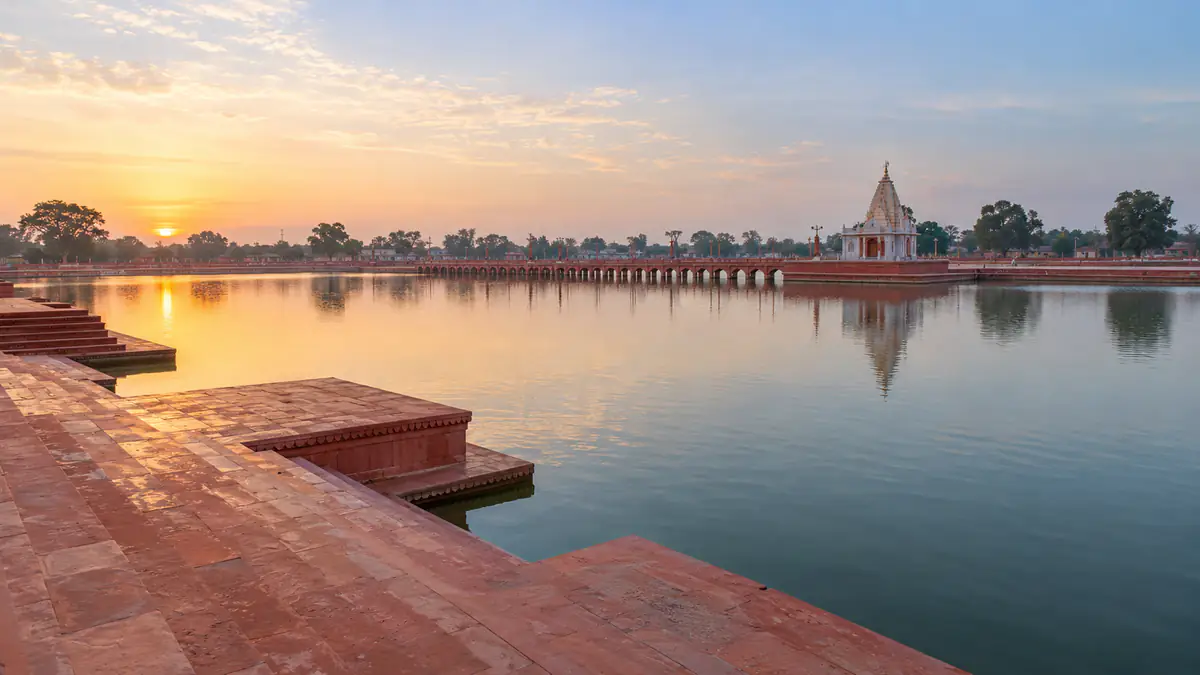
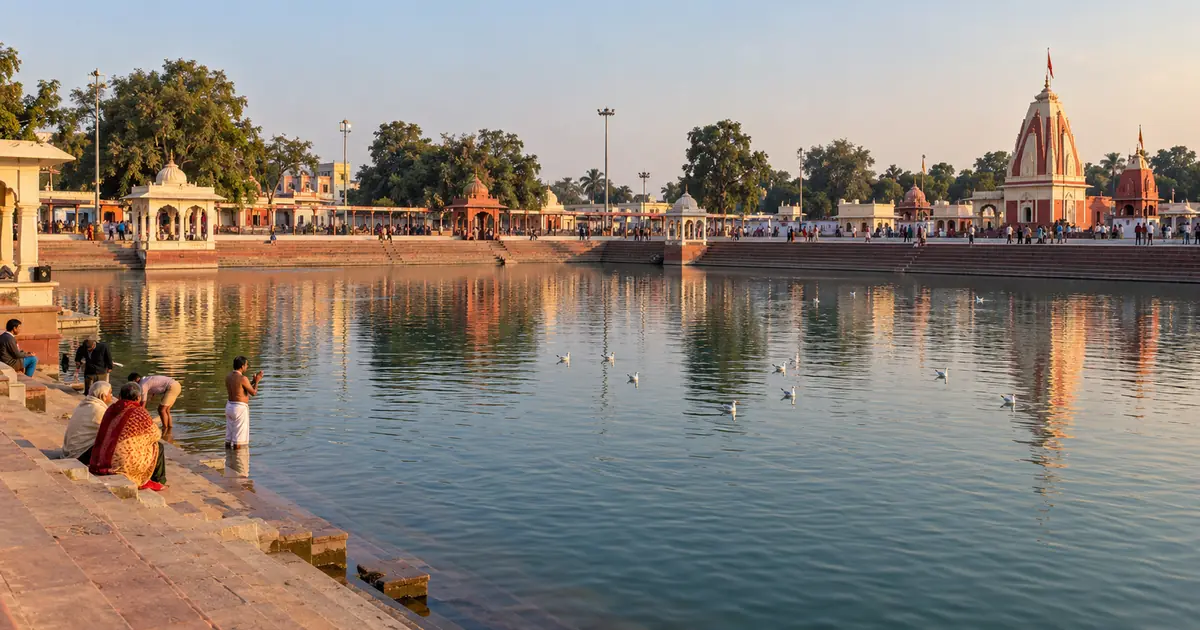
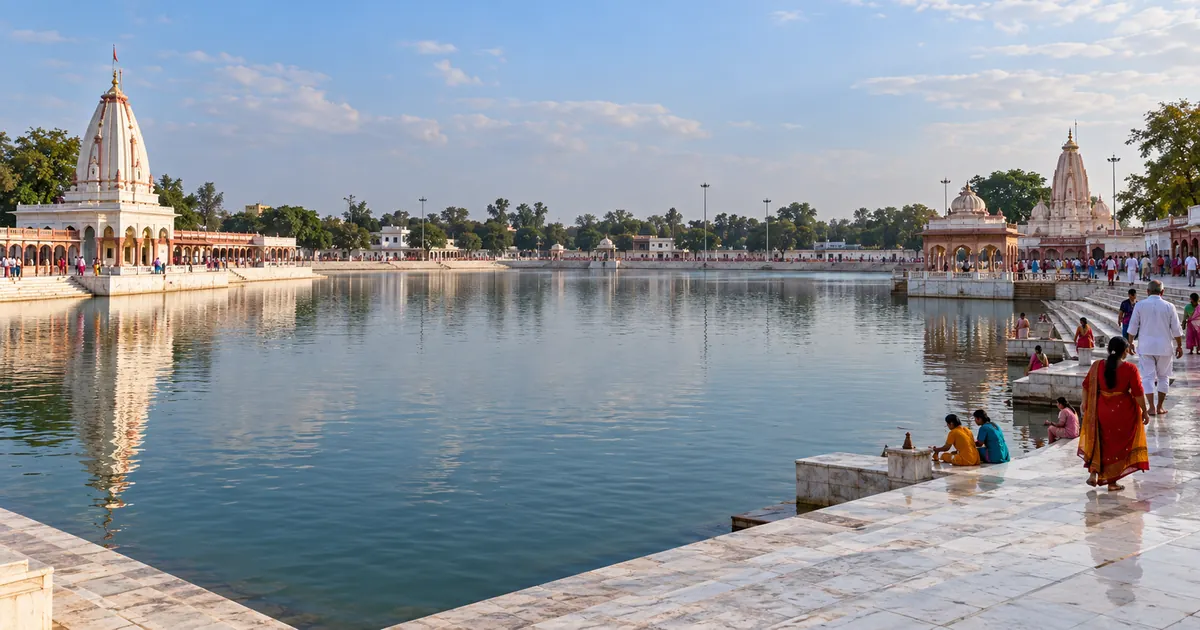
The central destination is Brahma Sarovar, an ancient freshwater reservoir measuring 1,100 meters in length and 550 meters in width. Devotees gather along wide stone ghats for evening Maha Aarti rituals, especially during solar eclipse fairs when hundreds of thousands take ritual purifying baths.
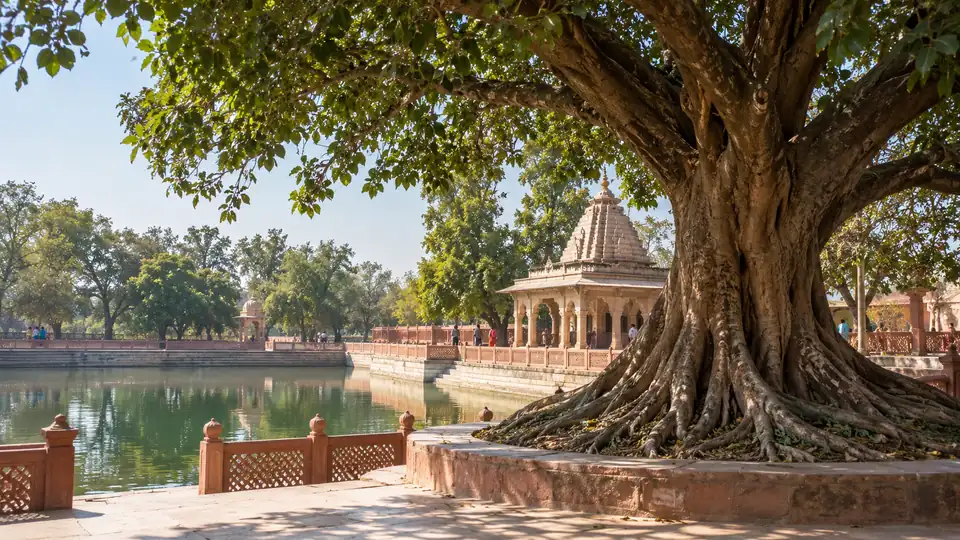
Five kilometers west lies Jyotisar, the hallowed site under an ancient banyan tree where the Bhagavad Gita was expounded. Visitors can consult our comprehensive guide to places to visit in Kurukshetra for detailed walking itineraries, Sheikh Chilli’s Persian-style tomb in Thanesar, and museum entry schedules.
Official pilgrimage schedules and sarovar conservation data are documented directly on the Kurukshetra District Administration Portal.
Panchkula and Morni Hills: The Shivalik Hill Retreat
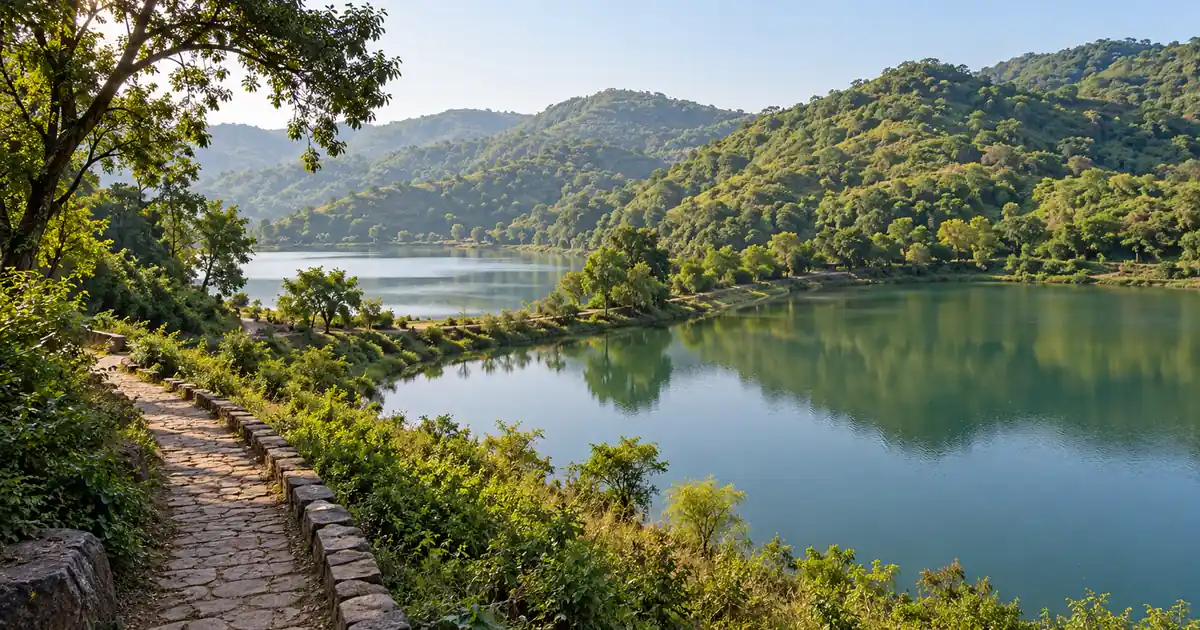
Morni Hills, situated in northern Panchkula district, represents the only hill station in Haryana. Rising to an average elevation of 1,220 meters above sea level, the ridgeline forms part of the lower Shivalik mountain system overlooking dense pine and oak forests.
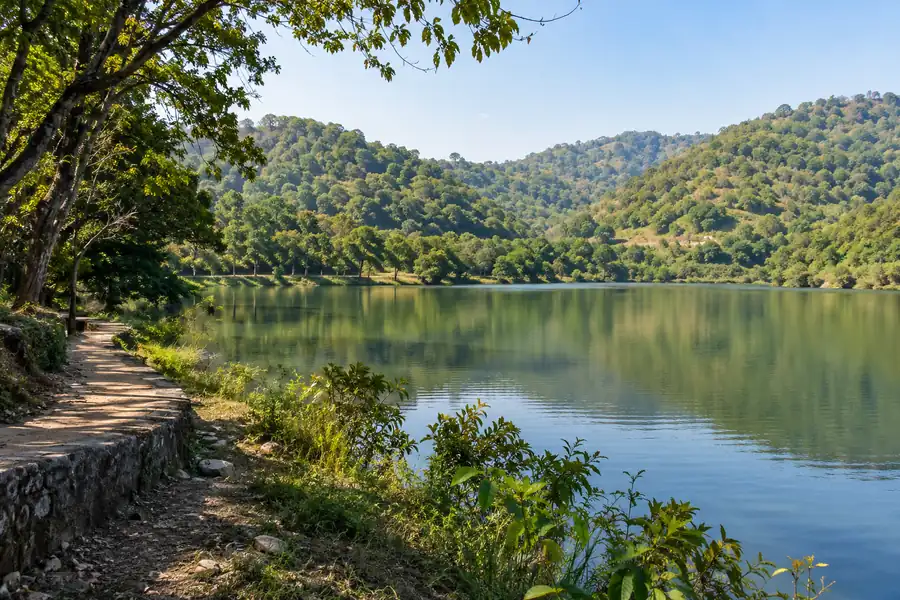
The crown jewel of the hills is Tikkar Taal, a pair of natural freshwater lakes called Chhota Taal and Bada Taal. The lakes are separated by a low hillock, with quiet pedal boating, kayaking, and camping facilities managed directly by Haryana Tourism.
Hikers explore nature trails connecting the lakeside to the 17th-century Morni Fort, which has been restored as an environmental interpretation museum. Travelers can review complete driving directions, boating fees, and lodging advice in our dedicated Morni Hills & Pinjore Gardens permit and entry guide.
Official trekking permits and nature trail hours are cataloged on the Panchkula District Administration Directory.
Pinjore Yadavindra Gardens: 17th-Century Mughal Terraces
Located at the base of the Shivalik hills just 20 kilometers north of Chandigarh, Yadavindra Gardens in Pinjore preserves classic 17th-century Mughal garden architecture. Conceived by Nawab Fidai Khan, architect and governor under Emperor Aurangzeb, the garden descends across seven descending terraces.
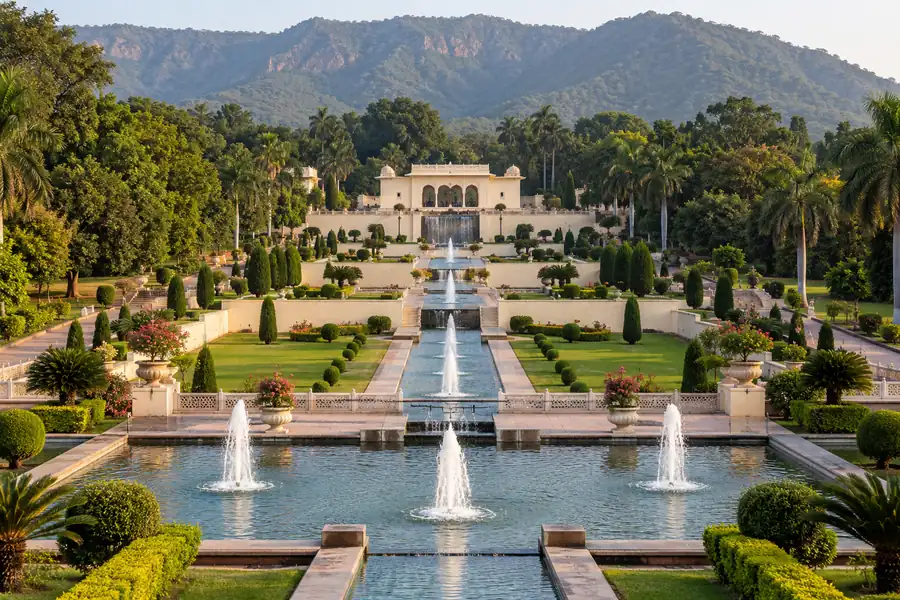
The layout differs from traditional plains gardens by utilizing natural hillside slopes to power gravity-fed water channels, central fountains, and cooling cascades. Historic pavilions, including the Shish Mahal and Hawa Mahal, flank the central water axis beneath towering mango and palm groves.
During the evening, floodlights illuminate the stone fountains, transforming the terraces into an atmospheric walking venue. Each July, the complex hosts the Haryana Tourism Mango Mela, displaying over 500 varieties of mangoes alongside folk dance performances.
Detailed heritage conservation records and visitor rules are maintained on the Haryana Tourism Official Portal.
Sultanpur National Park and Wetland Birding
Sultanpur National Park covers 142 hectares of freshwater wetlands in Gurugram district, approximately 45 kilometers southwest of central Delhi. Recognized as a Ramsar Wetland of International Importance, the sanctuary serves as an essential pitstop along the Central Asian Flyway.
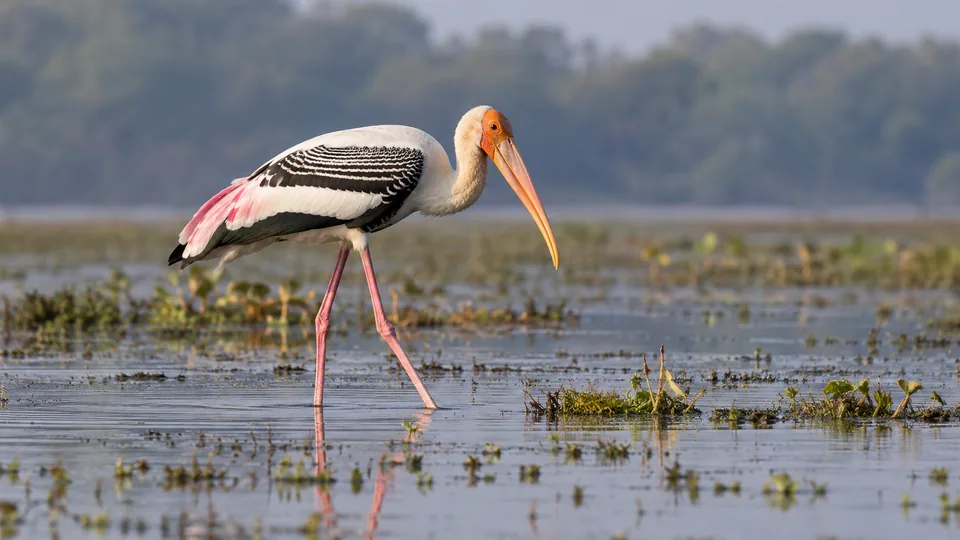
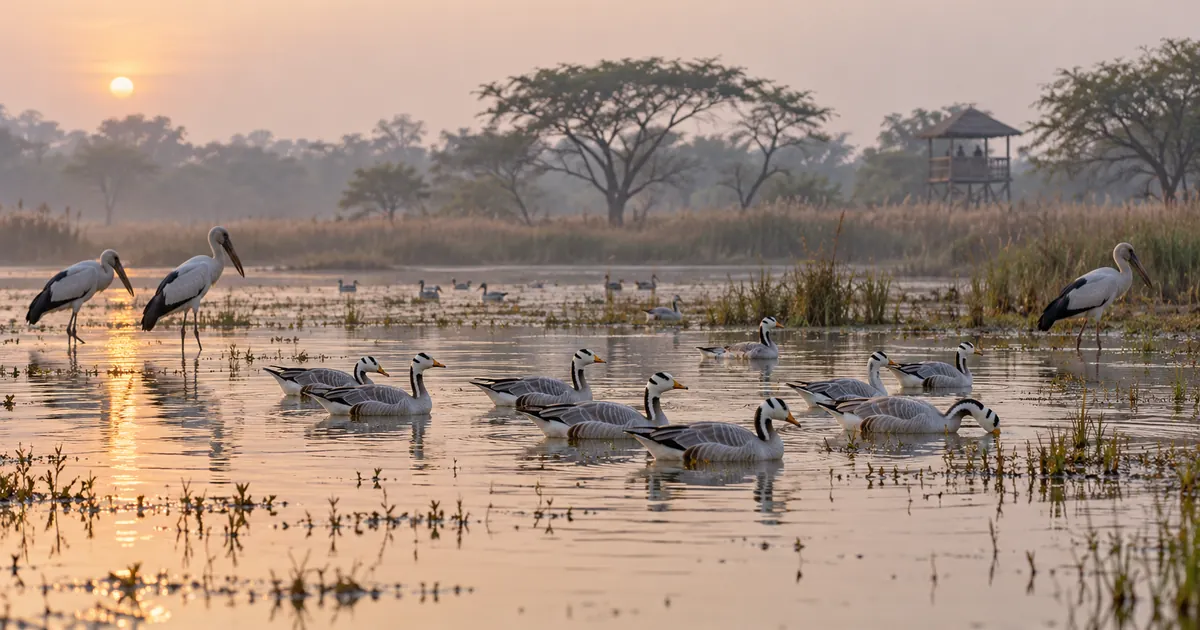
Between October and March, over 250 species of resident and migratory birds gather across the shallow marshes and acacia trees. Birdwatchers regularly observe Siberian cranes, greater flamingos, northern pintails, Eurasian wigeons, and black-necked storks from four elevated watchtowers.
Paved walking paths circle the central lake, providing wheelchair accessibility and quiet viewing hides for nature photographers. Visitors can reference our detailed Sultanpur National Park guide for winter arrival timings, binocular rentals, and vehicle parking rules.
The park remains closed on Tuesdays and throughout the summer breeding season from June to September to ensure undisturbed wildlife nesting.
Surajkund Crafts Mela and Faridabad Heritage
Surajkund rests on the southern perimeter of the ancient Aravalli hill range in Faridabad district, just eight kilometers from South Delhi. The site takes its name from an 11th-century semicircular sun reservoir built by Tomar king Suraj Pal, featuring stepped stone embankments designed to harvest rainwater.
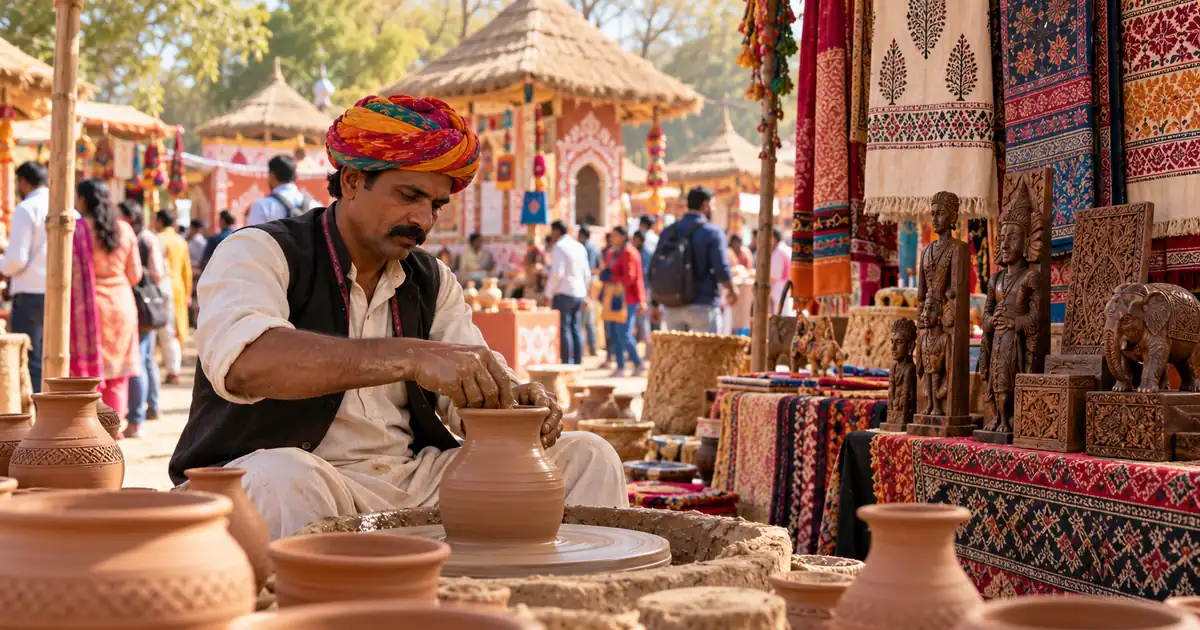
Each February, the forested grounds around the reservoir host the Surajkund International Crafts Mela, recognized as the largest craft fair in the world. More than 1,000 national and international artisans present regional handlooms, terracotta pottery, wood carvings, and metalwork across rustic rural hut stalls.
Cultural stages host folk dance troupes performing Kalbelia, Bihu, Lavani, and Bhangra routines while open-air food courts serve regional delicacies from across India. Travelers can consult our specialized Surajkund Crafts Mela guide for entry ticket booking, shuttle routes, and parking logistics.
Outside festival weeks, Surajkund offers quiet wooded trails connecting to the neighboring Asola Bhatti Wildlife Sanctuary.
Ancient Civilization and Forts: Rakhigarhi to Rewari
Haryana houses some of the subcontinent’s most significant archaeological and mechanical heritage sites outside the standard tourist circuits. History enthusiasts discover deep antiquity spanning five millennia across the central and western districts.
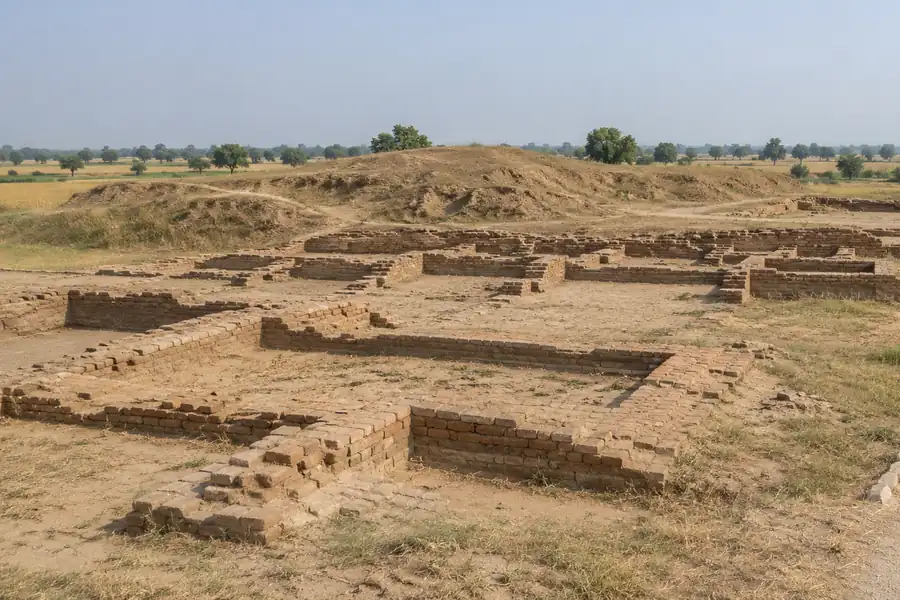
In Hisar district, Rakhigarhi stands as the largest known city of the ancient Indus Valley Civilization, covering over 350 hectares across multiple excavated mounds. Archaeological Survey of India excavations have unearthed planned brick drainage systems, terracotta granaries, and bronze jewelry dating back to 2600 BCE.
Further south in Rewari, the Rewari Steam Locomotive Shed preserves India’s sole surviving heritage roundhouse for steam traction. Built in 1893, the facility houses working steam engines, including the Fairy Queen, constructed in 1855 as the world’s oldest operational steam locomotive.
Near Kurukshetra, the 17th-century Sheikh Chilli Tomb in Thanesar displays Persian marble domes and red sandstone arches honoring the Sufi scholar Abdul Rahim.
Agrarian Food Heritage and Rustic Flavors
Haryana’s culinary traditions reflect its pastoral identity, emphasizing wholesome grains, fresh dairy, and hearty winter greens. Food in Haryana relies on minimal commercial spices, letting the pure flavor of churned butter, milk, and stone-ground flours lead every dish.
During winter, the staple meal centers on bajra khichdi, a slow-simmered pearl millet and moong dal porridge served with a large dollop of homemade white butter and cooling bathua raita. Another regional favorite is kachri ki sabzi, prepared from wild miniature melons that impart a tart, appetizing tang.
Dessert traditions feature churma, made by crumbling hot wheat or bajra rotis with pure desi ghee and powdered jaggery. Meals conclude with heavy earthenware cups of thick sweet lassi or hot sweetened milk boiled with saffron and crushed cardamom.
Highway travelers along National Highway 44 frequently stop at Murthal, where 24-hour dhabas serve tandoor-baked parathas topped with white butter to thousands of road trippers each night.
Recommended Weekend and 4-Day Haryana Itineraries
Because Haryana encircles Delhi, travelers can design focused weekend road trips or broad multi-day state exploration circuits:
The 2-Day Kurukshetra Spiritual Weekend
- Day 1: Historic Kurukshetra: Depart Delhi early via National Highway 44 (approx. 2.5 hours). Check into your hotel and spend the morning exploring Brahma Sarovar and the Sri Krishna Museum. In the afternoon, visit Sheikh Chilli’s Tomb and attend the evening sunset aarti over the lake.
- Day 2: Jyotisar & Return: Visit the sacred banyan tree at Jyotisar and the multimedia Mahabharat Anubhav Kendra. On the return drive to Delhi, stop at Karnal or Murthal for traditional highway dining.
The 4-Day Northern Shivalik & Heritage Circuit
- Day 1: Delhi to Kurukshetra: Tour the battlefields, sarovars, and archaeological museums of Kurukshetra before overnighting near the highway.
- Day 2: Pinjore Mughal Terraces: Drive north past Ambala to Pinjore (90 km). Spend the afternoon exploring the seven descending terraces, cascades, and historic pavilions of Yadavindra Gardens.
- Day 3: Morni Hills Nature Retreat: Ascend 30 kilometers into the Shivalik hills to Morni. Check into a hill resort, enjoy afternoon boating on Tikkar Taal lake, and hike to Morni Fort.
- Day 4: Panchkula & Chandigarh Transit: Tour the historic Mansa Devi shrine in Panchkula before connecting to outbound flights at Chandigarh Airport (IXC) or boarding express trains back to Delhi.
Practical Travel Logistics, Highway Corridors, and Best Season
Traveling across Haryana is fast and reliable due to its network of access-controlled expressways and heavily serviced rail lines. Understanding local weather patterns helps travelers optimize their visit.
Best Time to Visit
The ideal window to explore Haryana extends from October to March. Winter weather brings pleasant daytime temperatures averaging 18°C, making outdoor garden walks, wetland birding, and boat excursions exceptionally comfortable.
Summer lasts from May through July, when hot dry winds (loo) push daytime temperatures past 44°C across the southern plains. Monsoon rainfall arrives between July and September, replenishing reservoirs and turning the Morni hillsides lush green.
Expressways, Rail, and Road Corridors
National Highway 44 (the Grand Trunk Road) provides a direct six-lane connection from Delhi to Panipat, Kurukshetra, and Ambala. Southern NCR destinations connect via the Kundli-Manesar-Palwal (KMP) expressway and the Delhi-Mumbai Expressway.
Electrified rail services operate dozens of daily trains along the northern corridor, including Vande Bharat Express services detailed in our guide to Vande Bharat Express routes. The New Delhi-Chandigarh Vande Bharat stops at Ambala Cantonment, covering the journey in just under three hours.
Delhi Metro lines extend directly into Gurugram (Yellow Line and Rapid Metro), Faridabad (Violet Line), and Bahadurgarh (Green Line), offering convenient public transit access to southern Haryana attractions.
Frequently Asked Questions About Visiting Haryana
What are the top places to visit in Haryana?
The top places to visit in Haryana include the sacred tanks and temples of Kurukshetra, the hill station of Morni Hills, the 17th-century Pinjore Yadavindra Gardens, and the migratory bird marshes of Sultanpur National Park. Cultural visitors also flock to the annual Surajkund International Crafts Mela in Faridabad each February.
Which is the only hill station in Haryana?
Morni Hills in northern Panchkula district is the only hill station in Haryana, situated at an altitude of approximately 1,220 meters in the lower Shivalik ranges. It features the twin freshwater lakes of Tikkar Taal, pine forests, and quiet trekking trails.
What is the best time of year to visit Haryana?
The best time to visit Haryana is from October through March, when pleasant winter days offer temperatures between 11°C and 23°C ideal for sightseeing and nature walks. Visitors traveling in February can also experience the world-famous Surajkund Crafts Mela.
How far is Kurukshetra from Delhi by road?
Kurukshetra is located approximately 160 kilometers north of Delhi along National Highway 44 (the Grand Trunk Road). The driving journey typically takes 2.5 to 3 hours by private car or scheduled intercity bus.
What traditional dishes should visitors try in Haryana?
Visitors should try traditional rural dishes such as bajra khichdi with homemade white butter, kachri ki sabzi, bathua raita, and sweet crushed churma. Highway travelers also enjoy tandoor parathas and sweet lassi at Murthal dhabas.