Places to Visit in Rishikesh: River Rafting, Beatles Ashram & 2-Day Plan
Plan your Rishikesh trip with river rafting stretches, costs, Beatles Ashram tickets, Triveni Ghat aarti timings, Neer Garh falls, and a 2-day itinerary.
Rishikesh Travel Essentials
- World Standing: Internationally recognized as the Yoga Capital of the World and the adventure sports capital of northern India.
- River Rafting Season: Operational from late September through June. Rafting is strictly closed during the monsoon months of July and August for river safety.
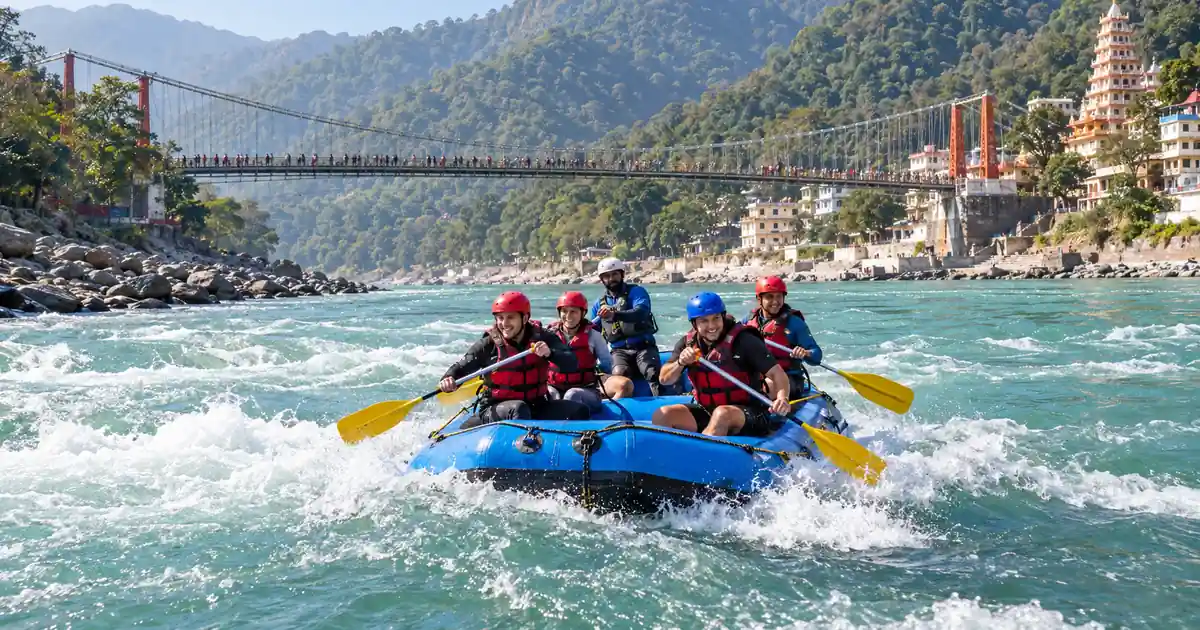
- Rafting Stretches: Four standardized routes range from Brahmpuri (9 km, beginner) and Shivpuri (16 km, most popular) to Marine Drive (24 km) and Kaudiyala (36 km, advanced).
- Key Highlights: The Beatles Ashram (Chaurasi Kutia), Triveni Ghat evening Maha Aarti, Ram Jhula suspension bridge, Neer Garh waterfalls, and 83-meter bungee jumping at Mohan Chatti.
- Alcohol and Meat Prohibition: Because Rishikesh holds holy municipal status, non-vegetarian food and alcohol are strictly prohibited within core town limits and ghat zones.
- Accessibility: Located 240 kilometers northeast of New Delhi (4.5 to 5 hours via highway) and just 21 kilometers from Dehradun’s Jolly Grant Airport.
Rishikesh occupies a unique cultural and physical landscape in northern India. Situated where the emerald waters of the holy Ganga emerge from deep Himalayan gorges onto the plains of Uttarakhand, this legendary town harmoniously brings together ancient Vedic spirituality with high-adrenaline outdoor sports. As highlighted in our comprehensive Uttarakhand travel guide, the town anchors the foothills of Garhwal before the high pilgrimage highways begin.
For centuries, pilgrims, ascetics, and philosophers have gathered along these gravel riverbanks to practice meditation, yoga, and ritual bathing. In 1968, the town achieved international fame when the English rock band The Beatles stayed at the ashram of Maharishi Mahesh Yogi to study Transcendental Meditation.
Today, Rishikesh attracts a diverse global community. On any given morning, you can watch Buddhist monks and Hindu sadhus walking across pedestrian suspension bridges, while teams of helmeted rafters navigate Class III whitewater rapids just a few hundred meters downstream.
Whether you travel for a weekend escape from Delhi or an extended spiritual retreat, Rishikesh offers an unforgettable mountain experience. The following sections outline river rafting stretch choices, Beatles Ashram ticket rules, evening Ganga Aarti ceremonies, natural waterfall hikes, and an efficient 48-hour itinerary.
Travelers building a multi-ashram Uttarakhand circuit often pair Rishikesh’s Ganga hermitages with Kumaon’s foothills. For darshan hours and highway transit further east, see our Kainchi Dham Neem Karoli Baba Ashram guide near Bhowali.
Geographical Setting: Where the Emerald Ganga Leaves the Himalayas
Rishikesh sits at an elevation of 372 meters above sea level in the foothills of the Shivalik range, spanning the districts of Dehradun, Tehri Garhwal, and Pauri Garhwal.
The town’s physical setting defines its unique character:
- The River Gateway: Rishikesh marks the precise geographic point where the Ganga concludes its rapid descent through high Garhwal canyons and enters the wider alluvial plains. The water here is remarkably clear, cool, and turquoise-green, contrasting sharply with the silt-laden river seen downstream in eastern India.
- Twin Riverbank Quarters: The town is divided into two distinct zones connected by suspension bridges. The western bank, comprising Muni Ki Reti and Tapovan, is known for adventure tour operators, boutique cafes, and yoga schools. The eastern bank, centered on Swargashram, preserves monastic hermitages, Sanskrit schools, and temple ghats.
- Microclimate and Katabatic Winds: Surrounded by forested hills, Rishikesh enjoys temperate mountain weather. Winters are crisp with sunny daytime temperatures around 20°C, while summer afternoons reach 35°C. Every evening around sunset, cool mountain breezes blow down the river valley, refreshing the ghats.
For travelers beginning the sacred Himalayan circuit, Rishikesh serves as the staging threshold outlined in our complete Char Dham Yatra pilgrimage guide. Official civic profiles maintained by the Dehradun District Administration emphasize the town’s role as the primary transit staging hub for high-altitude expeditions deeper into the mountains.
Iconic Suspension Bridges: Ram Jhula, Janki Jhula, and the Legacy of Lakshman Jhula
The pedestrian suspension bridges of Rishikesh form the architectural arteries of the town, allowing pilgrims, monks, local commuters, and travelers to cross the wide river expanse without motorized congestion.
Overview of Key Suspension Bridges:
1. Ram Jhula
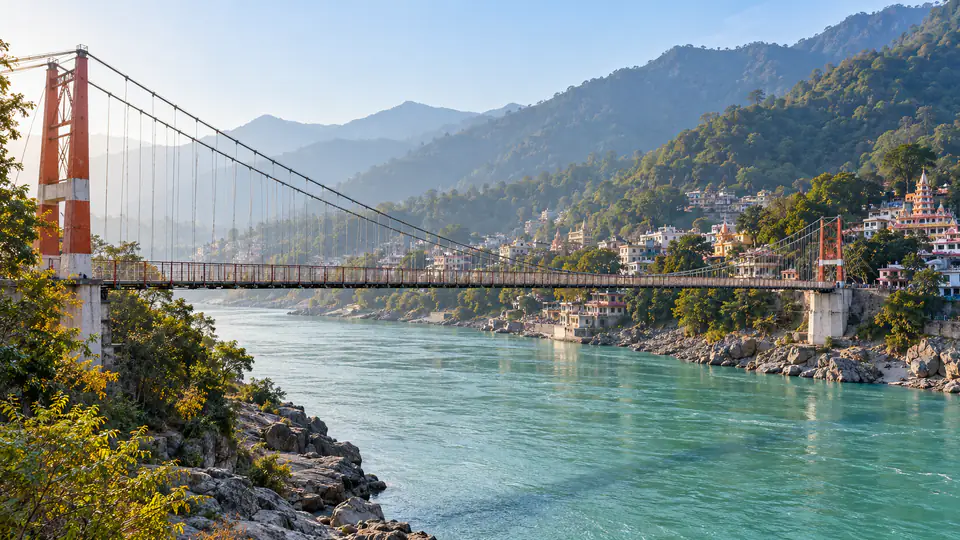
Constructed in 1986, Ram Jhula spans 450 feet across the Ganga, connecting the Sivananda Ashram in Muni Ki Reti on the western bank to Swargashram on the eastern bank.
Walking across Ram Jhula offers a classic Rishikesh spectacle. Pedestrians share the gently swaying bridge deck with wandering cows, saffron-robed sadhus, and local two-wheelers, while the roaring river rushes beneath. The bridge provides unobstructed vistas of riverside ashrams, marble bathing ghats, and temple spires rising against the wooded hillsides.
2. Janki Jhula
Inaugurated recently to expand pedestrian capacity, Janki Jhula is a modern, 346-meter-long three-lane suspension bridge located between Ram Jhula and Lakshman Jhula.
Constructed to relieve pedestrian crowding on older crossings, Janki Jhula features designated separate lanes for pedestrians, electric wheelchairs, and two-wheelers. Its wide wooden-planked viewing bays provide comfortable platforms for photographing the river and evening sunset over the Shivalik hills. Many travelers crossing these bridges are pilgrims preparing for the high-altitude trek detailed in our Kedarnath Jyotirlinga temple guide.
3. The Historic Lakshman Jhula and the New Bajrang Setu
Originally built in 1929 during the British colonial era, the iconic 450-foot iron suspension bridge of Lakshman Jhula stood as the definitive symbol of Rishikesh for ninety years. According to local lore, Lord Rama’s younger brother Lakshmana crossed the roaring river at this exact location using two simple jute ropes.
In July 2019, public works engineers permanently closed Lakshman Jhula to all pedestrian and vehicular traffic after structural safety audits revealed that the supporting cables and anchor blocks had suffered irreparable fatigue from decades of heavy loads.
To preserve connectivity while honoring heritage, the Uttarakhand Public Works Department is completing construction of Bajrang Setu, a state-of-the-art modern cable-stayed suspension bridge directly adjacent to the historic structure. Bajrang Setu features a pioneering toughened glass-floor central walking lane, allowing travelers to look down directly at the rushing river waters below.
White-Water River Rafting: Stretches, Rapids, Costs, and Safety Guidelines
White-water river rafting along the upper Ganga in Rishikesh ranks among the most celebrated adventure activities in Asia. Between September and June, snowmelt runoff from the Gangotri and Satopanth glaciers feeds powerful, highly oxygenated river rapids that surge through narrow limestone canyons.
The Uttarakhand Tourism Development Board and the River Rafting Management Committee regulate operations to ensure strict safety standards. Every commercial raft must be accompanied by certified river guides, a qualified kayaker for rescue support, and international-standard safety gear. For a detailed breakdown of rapid grades, monsoon closure dates, and bridge tickets, consult our dedicated Rishikesh river rafting and Bajrang Setu guide.
The Four Standardized Rafting Stretches:
1. Brahmpuri to Nim Beach (9 km, Grade I and II)
- Ideal For: Families with young children (above 12 years), senior citizens, and first-time rafters seeking a gentle river cruise.
- Key Rapids: Sweet Fall, Black Money, and Body Surfing Rapid.
- Duration: Approximately 1.5 to 2 hours on the water.
- Typical Cost: ₹600 to ₹800 per person.
2. Shivpuri to Nim Beach (16 km, Grade III and III+)
- Ideal For: The most popular and well-balanced rafting route in Rishikesh, suitable for beginners and active travelers seeking exciting rapids.
- Key Rapids: Return to Sender, Roller Coaster, Golf Course, and Club House.
- Duration: Approximately 2.5 to 3 hours on the river.
- Typical Cost: ₹1,000 to ₹1,200 per person.
- Mid-River Activity: Includes a brief stop at a riverbank rock ledge for a monitored twenty-foot cliff jump into deep river pools.
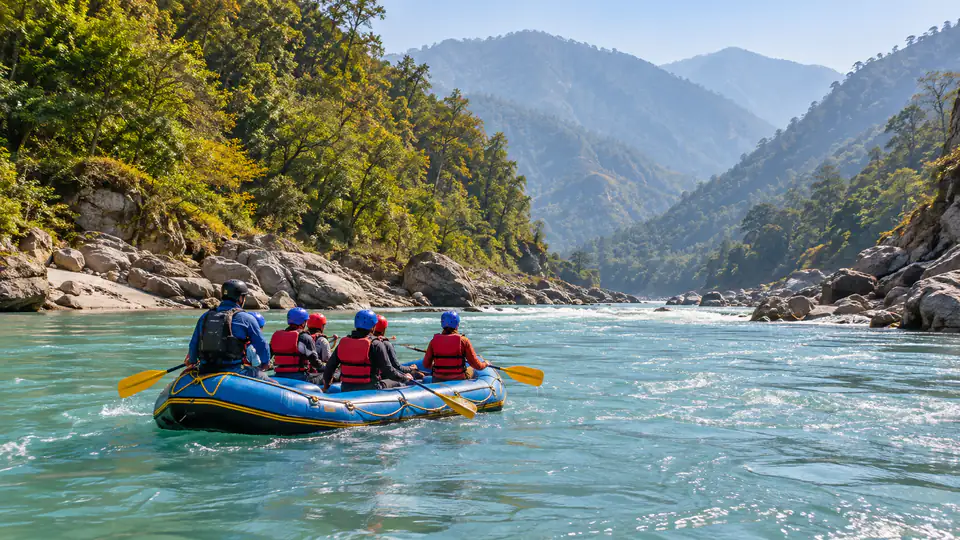
3. Marine Drive to Nim Beach (24 km, Grade III and IV)
- Ideal For: Adventure seekers looking for a longer, physically demanding river experience with continuous whitewater excitement.
- Key Rapids: Three Blind Mice, Crossfire, Roller Coaster, and Golf Course.
- Duration: Approximately 3.5 to 4.5 hours.
- Typical Cost: ₹1,500 to ₹1,800 per person.
4. Kaudiyala to Marine Drive / Nim Beach (36 km, Grade IV and IV+)
- Ideal For: Experienced rafters and strong swimmers seeking the most challenging rapids on the commercial stretch.
- Key Rapid: “The Wall”, an intense Grade IV+ hydraulic drop that requires skilled team paddling and can capsize rafts during high water volumes.
- Duration: Approximately 5 to 6 hours.
- Typical Cost: ₹2,500 to ₹3,000 per person.
| Rafting Route | River Distance | Rapid Classification | Average Time on River | Estimated Cost (INR) | Recommended Skill Level |
|---|---|---|---|---|---|
| Brahmpuri to Nim Beach | 9 kilometers | Grade I to Grade II | 1.5 hours | ₹600 to ₹800 | Beginners & families |
| Shivpuri to Nim Beach | 16 kilometers | Grade II to Grade III+ | 2.5 to 3 hours | ₹1,000 to ₹1,200 | Most popular for all |
| Marine Drive to Nim Beach | 24 kilometers | Grade III to Grade IV | 3.5 to 4 hours | ₹1,500 to ₹1,800 | Adventure enthusiasts |
| Kaudiyala to Nim Beach | 36 kilometers | Grade IV to Grade IV+ | 5 to 6 hours | ₹2,500 to ₹3,000 | Experienced swimmers |
Essential Safety Rules for Rafters:
- Always verify that your tour operator possesses a valid operating license from the Uttarakhand Tourism Development Board.
- Fasten your Type V life jacket tightly so it cannot slip over your head, and keep your safety helmet securely buckled at all times.
- Listen attentively to the guide’s pre-launch briefing at the riverbank, practicing essential paddle commands: “Forward”, “Back paddle”, “Left turn”, and “Get down”.
- Non-swimmers can safely participate in the 9 km and 16 km stretches because certified life jackets keep individuals buoyant in the event of an accidental slip.
The Beatles Ashram (Chaurasi Kutia): History, Meditation Domes, and Pop Culture
Situated on the forested slopes of Swargashram overlooking the river, the Beatles Ashram, known historically as Chaurasi Kutia (The 84 Huts), is one of the most culturally fascinating sites in modern Indian history.
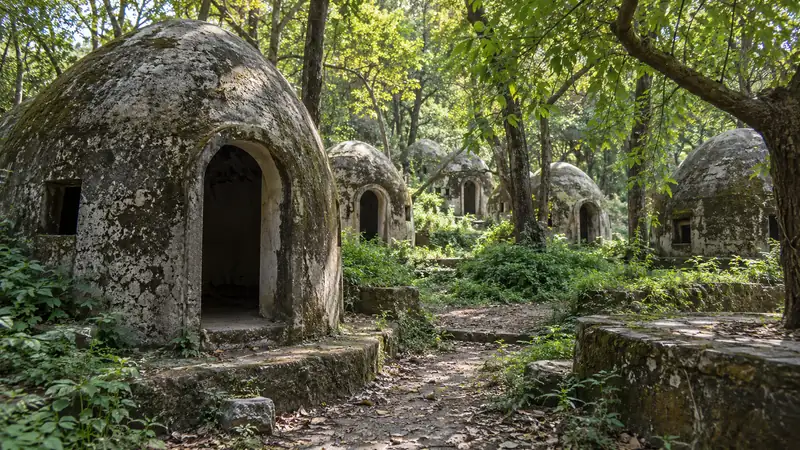
Established in the early 1960s by Maharishi Mahesh Yogi on land leased from the state forest department, the ashram served as the international training academy for Transcendental Meditation.
In February 1968, English rock legends John Lennon, Paul McCartney, George Harrison, and Ringo Starr, accompanied by their partners and fellow musicians Donovan and Mike Love, traveled to the ashram for an intensive meditation retreat.
The band’s stay in Rishikesh sparked one of the most creatively fertile periods in twentieth-century music history. Living in simple stone huts, eating vegetarian meals, and meditating for hours daily, the musicians composed forty-eight new songs. Most of these tracks were later recorded for their celebrated 1968 double album The Beatles (commonly known as The White Album), as well as Abbey Road.
Architectural Highlights and Current Visitor Experience:
- The 84 Meditation Huts (Chaurasi Kutia): Constructed using river rocks and volcanic stones, these small, two-story stone chambers feature winding staircases leading to private domed meditation cells designed for silent contemplation.
- The Inverted Egg Domes: Large, egg-shaped meditation halls built with natural acoustic properties that amplify quiet humming and mantras.
- The Beatles Cathedral Gallery: A massive former lecture hall now adorned with stunning contemporary pop graffiti murals, portraits of the musicians, and psychedelic wall paintings created by visiting international street artists.
- The Photo Museum: Preserves archival black-and-white photographs of the Beatles playing acoustic guitars on the ashram lawns, accompanied by historical interpretive panels.
After the Maharishi relocated his operations to Europe in the late 1970s, the ashram was abandoned and reclaimed by jungle vegetation. In December 2015, the Uttarakhand Forest Department reopened the complex as an eco-tourism destination within the Rajaji Tiger Reserve buffer zone.
Today, its stone architecture and pop culture history make it a prominent stop featured in our overview of best places to visit in India for culture and heritage.
Official visitor regulations outlined by the Dehradun District Administration specify operational rules:
- Visiting Hours: 9:00 AM to 4:00 PM daily.
- Entry Tariffs: ₹150 for Indian citizens; ₹600 for foreign passport holders; ₹75 for senior citizens; ₹40 for students with valid school ID.
- Nature Precautions: Because the ashram borders wild forest corridors of Rajaji Tiger Reserve, visitors must stay on paved stone pathways. Occasional sightings of wild spotted deer, langurs, and peacock displays are common along the forest canopy.
Spiritual Evenings on the Ganga: Triveni Ghat Maha Aarti vs Parmarth Niketan
As late afternoon sunlight softens behind the Himalayan foothills, the spiritual rhythm of Rishikesh centers on the sacred riverbank ghats. The evening Ganga Aarti ceremonies rank among the most emotionally moving spiritual experiences in northern India.
Two major aarti ceremonies are held every evening at sunset:
1. Triveni Ghat Maha Aarti
Located in the historic center of Rishikesh town, Triveni Ghat is the largest and most venerated bathing ghat on the river. Sacred traditions record that three rivers converge here: the visible currents of the Ganga and Yamuna, along with the subterranean flow of the mythical Saraswati.
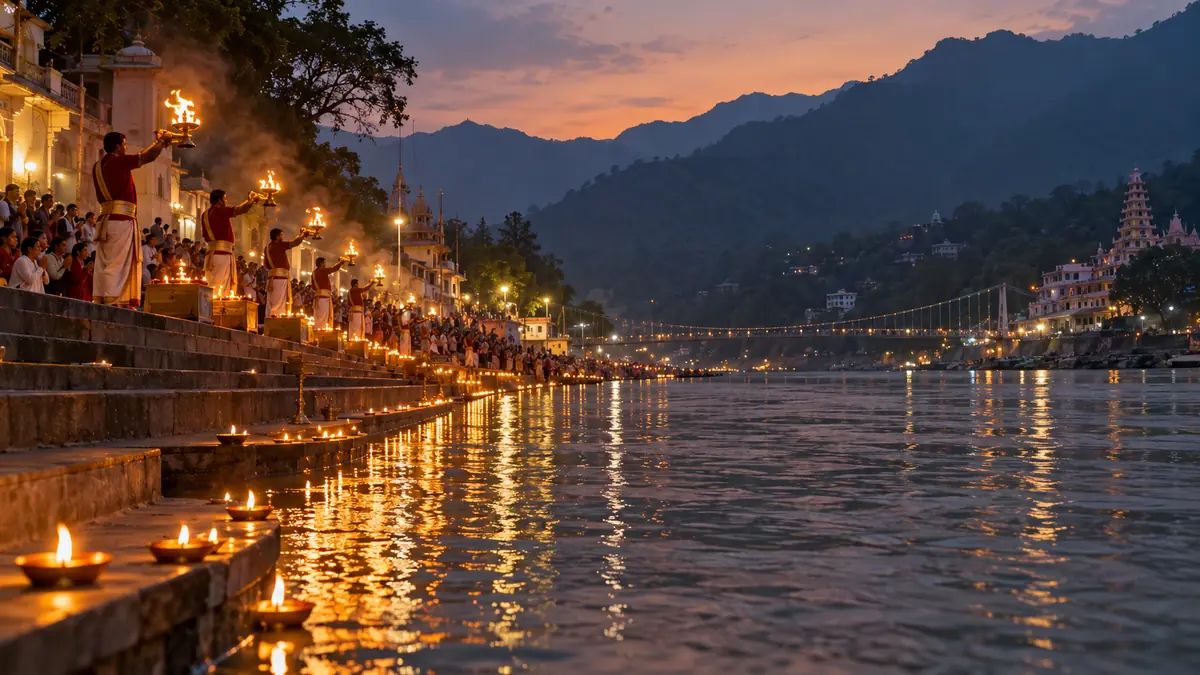
Every evening around sunset (approximately 6:00 PM in winter and 7:00 PM in summer), resident priests dressed in saffron dhotis perform the elaborate Maha Aarti. Standing on raised stone platforms facing the river, priests chant Vedic hymns in synchronized harmony while hoisting enormous multi-tiered brass lamps blazing with camphor fire.
The deep chime of temple bells, the rhythmic beat of brass cymbals, and the resonating blast of conch shells fill the river valley. Devotees purchase small leaf boats filled with fresh marigold petals and burning ghee wicks (diyas), floating them onto the dark, flowing waters of the river until the surface glows with floating points of light.
2. Parmarth Niketan Sunset Aarti
Situated along the eastern bank in Swargashram, Parmarth Niketan is the largest residential ashram in Rishikesh. Its evening Ganga Aarti offers a deeply contemplative, universal atmosphere.
The ceremony takes place on open marble steps facing a colossal white statue of Lord Shiva seated in meditation in the middle of the river. The aarti is led by ashram students and spiritual teachers who lead the assembly in soulful bhajans (devotional songs), universal prayers for peace, and Vedic invocations. The gathering is open to visitors of all nationalities and faiths without distinction.
While travelers may also witness the sacred riverfront devotion described in our guide to Varanasi Ganga Aarti rituals and timings, the Rishikesh ceremony offers a crisp mountain setting where Himalayan breezes carry the fragrance of burning camphor.
Tips for Attending the Ganga Aarti:
- Arrive at the ghat by 5:30 PM (or 6:00 PM in peak summer) to secure a comfortable seated spot on the stone steps before large crowds gather.
- Remove your footwear at designated shoe storage counters located near the entrance of each ghat before stepping onto the marble pavement.
- Leaf boat offerings (diyas) cost ₹20 to ₹30 from roadside vendors; ensure you purchase biodegradable leaf plates rather than plastic-wrapped items to protect river ecology.
High-Adrenaline Adventure Sports: Bungee Jumping, Giant Swing, and Flying Fox
Beyond its roaring river rapids, Rishikesh has emerged as India’s foremost destination for extreme aerial adventure sports. Situated in the rugged mountain hamlet of Mohan Chatti, approximately fifteen kilometers uphill from Tapovan, the adventure zone operated by Jumpin Heights offers international-standard extreme sports facilities.
Key Extreme Adventure Activities:
1. The 83-Meter Fixed-Platform Bungee Jump
Jumpin Heights operates India’s highest fixed-platform bungee jump, constructed on a massive steel cantilever platform projecting over a sheer 83-meter (272-foot) cliff above the rocky Hyul River gorge.
Designed and certified by professional jump masters from New Zealand, the jump incorporates dual redundant safety harness systems. Stepping off the cantilever platform delivers an unforgettable four seconds of pure, exhilarating free-fall acceleration before the elastic cord rebounds smoothly above the riverbed.
2. The 83-Meter Giant Swing
For thrill seekers who prefer a sweeping pendulum arc over a vertical rebound, the Giant Swing uses the same 83-meter cliff platform. Suspended in a seated harness, jumpers are released into a heart-stopping free fall that swings through an enormous 160-meter arc across the mountain gorge. The jump can be performed solo or in tandem with a companion.
3. The 1-Kilometer Flying Fox (Asia’s Longest Zip Line)
Operating across the mountain valley, this one-kilometer-long tandem zip line accelerates participants up to speeds of 140 kilometers per hour, gliding 120 meters above the forest floor and river rapids.
Adventure Guidelines and Booking Advice:
- Advance Reservations: Because daily jump slots are strictly capped to ensure equipment inspection protocols, advance online booking is essential, especially for weekend travel dates.
- Physical Eligibility: Bungee jumping requires a minimum age of 12 years and a body weight between 35 kg and 120 kg. Individuals with hypertension, epilepsy, cardiac conditions, or recent bone fractures are restricted from jumping for medical safety.
- Circuit Extensions: Travelers pairing river and aerial adventure with mountain lake tours across eastern Uttarakhand can explore our guide to Nainital and Bhimtal sightseeing guide.
Forest Hikes and Natural Cascades: Neer Garh, Patna Caves, and Garud Chatti
The forested mountain slopes surrounding Rishikesh are adorned with hidden natural waterfalls and limestone caverns fed by fresh Himalayan springs. These forest trails offer refreshing escapes from crowded riverside markets.
Popular Waterfall Trails:
1. Neer Garh (Neer Gaddu) Waterfall
Situated roughly five kilometers north of Lakshman Jhula along the Rishikesh-Badrinath highway, Neer Garh is a multi-tiered natural jungle cascade. Crystal-clear water flows through dense oak and rhododendron canopies, pooling into natural limestone basins.
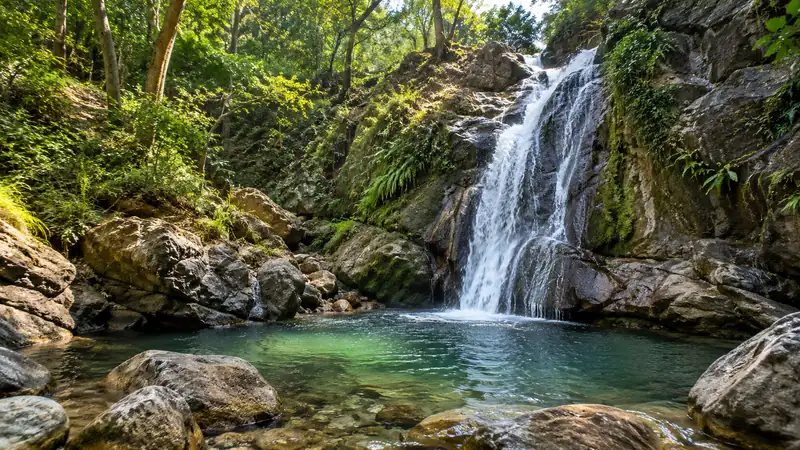
A well-paved uphill hiking trail winds from the roadside ticket counter (entry fee ₹30 per adult) past smaller lower cascades to reach the majestic upper plunge pool, located roughly one kilometer uphill. Travelers can swim in the cool, clear pools or relax at rustic bamboo tea stalls selling fresh lemon soda and mountain herbal tea along the trail.
2. Patna Waterfall and Limestone Caves
Located seven kilometers past Lakshman Jhula near Patna village, this trail features an unpaved, moderately steep fifteen-minute hike through subtropical forest. The waterfall cascades down a moss-covered vertical rock face, surrounded by natural limestone dripstone caves that can be explored with small flashlights.
3. Garud Chatti Waterfall
Positioned four kilometers north of Tapovan along the Neelkanth Temple road, Garud Chatti is a quiet forest cascade that flows vigorously during post-monsoon months (September to November). The short ten-minute approach trail from the highway makes it ideal for unhurried nature photography away from large tourist groups.
Travelers extending their mountain journeys into high-altitude pilgrimage routes can connect their Rishikesh stay with our comprehensive guide to Badrinath Temple opening dates and darshan timings. Rishikesh serves as the official transit gateway where all Char Dham pilgrims begin their highway journey into the high Himalayas.
| Waterfall Name | Distance from Tapovan | Trail Difficulty | Average Hiking Time | Entry Fee (INR) | Primary Attraction |
|---|---|---|---|---|---|
| Neer Garh (Neer Gaddu) | 5.0 kilometers | Easy to Moderate | 30 to 45 minutes | ₹30 per adult | Multi-tiered pools, swimming basins, tea stalls |
| Patna Waterfall | 7.0 kilometers | Moderate incline | 20 to 30 minutes | Free entry | Natural limestone caves, mossy rock cascade |
| Garud Chatti | 4.0 kilometers | Easy forest walk | 15 minutes | Free entry | Quiet woodland setting, uncrowded atmosphere |
| Phool Chatti | 6.5 kilometers | Easy nature stroll | 10 minutes | Free entry | Sandy riverbanks, calm forest surroundings |
Curated 2-Day Rishikesh Weekend Itinerary: Adventure, Ashrams, and Aarti
To experience the perfect harmony of adrenaline and spiritual reflection, this optimized 48-hour circuit balances thrilling river activities with quiet ashram exploration and evening rituals.
Day 1: Whitewater Rapids, Tapovan Cafes, and Sunset Aarti
- 7:00 AM to 8:00 AM: Wake early and enjoy a healthy breakfast at a Tapovan terrace cafe featuring fresh fruit muesli, herbal tea, and organic sourdough toast.
- 8:30 AM to 12:30 PM: Join your pre-booked 16-kilometer Shivpuri river rafting trip. Navigate thrilling Class III rapids like Roller Coaster and Golf Course, try the cliff jump, and finish at Nim Beach.
- 1:00 PM to 2:15 PM: Return to your hotel to change into dry clothes. Enjoy lunch at an Ayurvedic thali restaurant in Tapovan.
- 2:45 PM to 4:45 PM: Walk across Janki Jhula to Swargashram. Explore the historic Beatles Ashram (Chaurasi Kutia), photographing the 84 meditation domes and the Beatles Cathedral graffiti gallery.
- 5:15 PM to 6:45 PM: Walk five minutes to the Parmarth Niketan ghat. Find a comfortable seat on the marble steps to experience the peaceful sunset Ganga Aarti facing the Shiva statue.
- 7:30 PM to 9:00 PM: Savor dinner at a rooftop garden restaurant overlooking the illuminated river bridges before resting.
Day 2: Jungle Waterfalls, Yoga, and the Grand Triveni Ghat Aarti
- 6:30 AM to 7:45 AM: Attend an authentic morning Hatha yoga and pranayama class at an established local ashram.
- 8:15 AM to 11:30 AM: Hire a local scooter or taxi to Neer Garh Waterfall. Hike up the scenic jungle path to the upper cascade and enjoy a refreshing dip in the clear mountain pools.
- 12:00 PM to 1:15 PM: Head to Mohan Chatti for your pre-booked 83-meter bungee jump or Giant Swing experience, or relax in the peaceful craft markets of Swargashram.
- 1:30 PM to 2:45 PM: Enjoy lunch at an organic riverside cafe, sampling wood-fired pizza and fresh Himalayan juices.
- 3:15 PM to 4:45 PM: Browse local shops in Swargashram for natural essential oils, brass singing bowls, wooden prayer beads, and organic Ayurvedic herbs.
- 5:15 PM to 7:15 PM: Take an auto-rickshaw to Triveni Ghat in central Rishikesh. Sit along the holy river steps to witness the multi-tiered brass lamp spectacle of the grand Maha Aarti, floating a leaf diya onto the evening waters.
- 8:00 PM: Depart for Dehradun airport or board an evening express train back to Delhi.
Travelers looking to combine mountain adventure with deep-forest wildlife safaris can also plan a combined journey to Jim Corbett National Park in Uttarakhand. Situated roughly 140 kilometers southeast of Rishikesh, Corbett offers dense sal forests and Royal Bengal tiger habitats.
| Time Window | Day 1 (Rafting, Beatles Ashram & Aarti) | Day 2 (Waterfalls, Bungee & Triveni Ghat) |
|---|---|---|
| Morning (07:00 - 12:30) | 16 km Shivpuri whitewater rafting expedition | Morning yoga session & Neer Garh waterfall hike |
| Midday (13:00 - 14:30) | Healthy Tapovan lunch & hotel freshen-up | Extreme 83m bungee jump at Mohan Chatti / lunch |
| Afternoon (15:00 - 17:00) | Beatles Ashram 84 meditation huts & murals | Craft shopping for singing bowls and oils in bazaar |
| Evening (17:30 - 19:30) | Parmarth Niketan sunset Ganga Aarti | Grand multi-tiered Triveni Ghat Maha Aarti |
| Night (20:00 - 21:30) | Rooftop dinner overlooking illuminated bridges | Departure transfer to airport or railway station |
How to Reach Rishikesh by Road, Train, and Air
Rishikesh is well connected by multi-lane expressways, railway links, and an adjacent domestic airport, providing convenient connectivity from major metropolitan centers across India.
Official transit updates managed by Uttarakhand Tourism outline primary travel routes:
- By Road: The driving distance between New Delhi and Rishikesh is approximately 240 kilometers via the Delhi-Meerut Expressway and National Highway 334 (NH334). The drive takes roughly four and a half to five hours under smooth traffic conditions, passing through Meerut, Muzaffarnagar, and Roorkee. Air-conditioned Volvo buses and ordinary state transport coaches run continuously from Delhi’s Maharana Pratap Inter-State Bus Terminus (ISBT Kashmiri Gate) directly to the Rishikesh bus stand.
- By Train: The town is served by Yog Nagari Rishikesh Railway Station (station code YNRK), a modern terminal facility equipped with expansive passenger amenities. The station handles direct express trains from New Delhi, Jammu, and Ahmedabad. In addition, Haridwar Junction (station code HW) sits just 25 kilometers southwest, handling dozens of daily superfast express trains including the Vande Bharat, Shatabdi, and Jan Shatabdi from New Delhi. Travelers stopping to attend evening prayers can review our guide to Haridwar Ganga Aarti at Har Ki Pauri. Local shared auto-rickshaws, city buses, and taxis connect Haridwar railway station to Rishikesh in forty minutes.
- By Air: The nearest commercial air facility is Jolly Grant Airport in Dehradun (airport code DED), situated only 21 kilometers northwest of Rishikesh. The airport operates frequent daily domestic flights connecting New Delhi, Mumbai, Bengaluru, Hyderabad, and Ahmedabad. Pre-paid airport taxis make the comfortable drive to Rishikesh town in thirty-five minutes.
- Local City Transit: Moving around Rishikesh is simple and affordable. Shared electric auto-rickshaws (vikrams) operate along the main highway routes for ₹10 to ₹20 per ride. For greater independence, travelers can rent automatic scooters (Honda Activa) from numerous licensed rental shops in Tapovan for ₹300 to ₹500 per day.
| Origin City | Distance | Recommended Transport Mode | Typical Travel Duration |
|---|---|---|---|
| Dehradun Airport (DED) | 21 kilometers | Pre-paid airport taxi | 35 minutes |
| Haridwar Railway Station | 25 kilometers | State bus, shared auto, or cab | 45 minutes |
| Dehradun City Center | 45 kilometers | Highway cab via NH07 | 1 hour 15 minutes |
| New Delhi | 240 kilometers | Express Train or Delhi-Meerut Highway cab | 4.5 to 5 hours |
| Chandigarh | 210 kilometers | Highway drive via NH344 and NH73 | 4 hours 30 minutes |
| Badrinath Dham | 295 kilometers | All-weather Char Dham Highway (NH07) | 9 to 10 hours |
Frequently Asked Questions About Rishikesh
What is the best season for river rafting in Rishikesh?
The ideal river rafting season spans from late September through November, and again from February through June. Water conditions in post-monsoon autumn and early summer offer optimal volume, comfortable water temperatures, and reliable rapids. River rafting operations are legally suspended during the monsoon months of July and August for passenger safety.
What are the age and weight limits for bungee jumping in Rishikesh?
For safety reasons, participants must be at least 12 years of age and weigh between 35 kg and 120 kg. All participants undergo pre-jump blood pressure screenings and weight checks at the Mohan Chatti jump zone. Individuals with pre-existing heart conditions, epilepsy, or recent back injuries are restricted from jumping.
Are non-vegetarian food and alcohol allowed in Rishikesh?
No. Because Rishikesh holds recognized sacred holy status under Uttarakhand municipal law, the sale and consumption of alcohol and non-vegetarian food (including meat, poultry, and fish) are strictly prohibited within core town areas and near river ghats. However, the town features a celebrated cafe culture serving vegetarian global cuisine, wood-fired pizzas, and Ayurvedic dishes.
How much time is needed to explore Rishikesh?
A two-day, one-night weekend trip provides sufficient time to experience one river rafting stretch, explore the Beatles Ashram, visit a waterfall, and attend an evening Ganga Aarti. Travelers seeking deeper meditation courses, yoga teacher training, or mountain hikes typically spend five to seven days.
Can tourists rent scooters in Rishikesh without difficulty?
Yes. Rental scooters and motorcycles are widely available throughout Tapovan and Swargashram. Rental rates range from ₹300 to ₹500 per day for automatic gearless scooters. A valid driver’s license and a nominal refundable security deposit are required.
Can a trip to Rishikesh be combined with high-altitude snow destinations in Uttarakhand?
Yes, travelers often use Rishikesh as the mountain road trip launchpad to drive along NH7 toward the alpine ski slopes, cable car ropeway, and snow meadows featured in our guide to Auli sightseeing guide.